

Core Idea
- Difficulty
- Medium
- Read it if
- You are interested in understanding the systemic drivers behind cycles of violence, poor decision-making in high-stakes environments, and the psychological traps that lead individuals and groups down destructive paths.
- Skip it if
- You prefer prescriptive self-help or are looking for a light read; this book offers a stark, analytical look at difficult subjects without offering easy solutions.
Key Takeaways from Deadly Decisions
The Cycle of Chaos
Pavel Ivanovich struggles to escape a life defined by violence and peril.
Ivanovich's journey, following his previous 'debacle' in 'In the Name of Revenge,' shows a protagonist caught in a cycle of danger. Despite wanting change, his environment and relationships constantly pull him back into conflict. This shows how past actions and associations can shape future realities, making a true 'new direction' difficult. The book suggests that escaping a chaotic life requires more than just intent; it demands a complete break from the elements that fuel the chaos, a challenge Ivanovich repeatedly fails to meet.
“Pavel Ivanovich tries to find a new direction. Instead, his days are upended with the constant turmoil of drama.”
In the book: Ivanovich's existence is described as 'an entire commotion of murder and mayhem,' despite his initial attempts to find a 'new direction' after his previous life's 'debacle.'
Try this: Reflect on personal patterns or relationships that consistently lead to negative outcomes. Identify the 'drama' in your own life and consider what fundamental changes are needed to break these cycles, rather than just seeking superficial 'new directions.'
Related ideas: repetition-compulsion, path-dependency, self-sabotage
The Peril of Proximity
Teresa Mancini's involvement escalates the danger for Ivanovich.
Teresa Mancini is not just a love interest; she increases conflict and is a source of Ivanovich's ongoing danger. Her background as a mob boss's daughter links her to dangerous circles, and her 'wanna-be agent' ambition drives her to get involved in Ivanovich's high-stakes cases. Her constant insertion into his dangerous world does not just add 'drama'; it directly contributes to the 'bullets fly, bombs explode and people get hurt' reality. Her presence shows how personal relationships, especially those with unclear professional boundaries, can amplify existing dangers.
“Teresa Mancini—the spoiled daughter of a mob boss, wanna-be agent and Pavel's girlfriend—thrown in the mix. [...] Mancini tries to become involved waist-deep in every one of Pavel’s cases.”
In the book: The summary explicitly states that Mancini is 'thrown in the mix' and 'tries to become involved waist-deep in every one of Pavel’s cases,' immediately followed by descriptions of 'bullets fly, bombs explode and people get hurt.'
Try this: Evaluate the impact of key relationships on your professional or personal challenges. Are there individuals whose desire for involvement, however well-intentioned, inadvertently escalates complexity or risk? Establish clear boundaries to protect yourself from unnecessary complications.
Related ideas: toxic-relationships, boundary-violations, unintended-consequences
Consequences of Entitlement
Mancini's 'spoiled' nature fuels her dangerous pursuit of involvement.
Mancini's 'spoiled' nature helps explain her actions. This is not just a personality trait; it drives her dangerous overreach. Her entitlement, likely from her upbringing, gives her a sense of invincibility and a belief that she can involve herself in any situation without serious personal harm. This lack of realistic self-assessment makes her a liability, turning her 'wanna-be agent' aspirations into a dangerous hobby that endangers her and Ivanovich. Her 'spoiled' nature prevents her from understanding the seriousness of Ivanovich's world.
“Teresa Mancini—the spoiled daughter of a mob boss, wanna-be agent and Pavel's girlfriend—thrown in the mix.”
In the book: The description of Mancini as 'the spoiled daughter of a mob boss' directly precedes her active involvement in Ivanovich's cases, suggesting a causal link between her entitlement and her reckless actions.
Try this: Examine how a sense of entitlement or privilege (whether real or perceived) might be influencing your own risk assessment or the actions of those around you. Recognize that a lack of respect for consequences can lead to dangerous decisions, regardless of intent.
Related ideas: privilege-blindness, reckless-abandon, hubris
The Illusion of Control
Ivanovich frequently faces near-death experiences despite his expertise.
Despite Ivanovich's abilities (implied by his involvement in high-stakes cases), the constant 'near-death experience and many other, narrow escapes' show how little control he has over his life. This is not a story of a hero always winning through skill, but one where survival often depends on luck or sheer determination. The frequency of these close calls suggests that even experienced individuals can be at the mercy of overwhelming external forces. It is a reminder that in a world of 'murder and mayhem,' true control is often an illusion, and survival is a continuous, high-stakes gamble.
“Ivanovich's existence is an entire commotion of murder and mayhem, including a near-death experience and many other, narrow escapes.”
In the book: The summary explicitly mentions 'a near-death experience and many other, narrow escapes,' emphasizing the constant and unpredictable danger Ivanovich faces.
Try this: Acknowledge that even with meticulous planning and skill, unforeseen circumstances can arise. Focus on resilience and adaptability rather than solely on rigid control. Develop contingency plans for when things inevitably go wrong.
Related ideas: stochastic-processes, contingency-planning, risk-management
The Burden of the Past
Ivanovich's 'debacle' continues to shape his present reality.
The reference to Ivanovich's 'debacle of a life in 'In the Name of Revenge'' is not just backstory; it shapes his current situation. The summary implies that despite his attempts to move forward, his past failures and associations continue to haunt him, preventing a clean break. This highlights that some pasts are not easily left behind, and the consequences of previous actions can affect an individual's entire life. It suggests a narrative where redemption or reinvention is complicated by lingering obligations, enemies, or the habits formed in a life of conflict.
“After his debacle of a life in 'In the Name of Revenge', Pavel Ivanovich tries to find a new direction.”
In the book: The phrase 'After his debacle of a life... Pavel Ivanovich tries to find a new direction. Instead, his days are upended...' directly links his past failures to his current turmoil.
Try this: Recognize that unresolved issues or significant past events can have a long-lasting impact. Actively address and reconcile with your past to truly move forward, rather than just attempting to outrun its consequences.
Related ideas: historical-baggage, unresolved-trauma, reputation-management
The Price of Association
Being linked to Ivanovich guarantees exposure to danger.
Mancini's presence in Ivanovich's life clearly shows how dangerous associations can be. While she might be drawn to the excitement or to Ivanovich himself, her proximity to him immediately puts her in danger, and vice versa. The narrative does not suggest Ivanovich can shield her; rather, her involvement seems to intensify existing dangers, making 'bullets fly' and 'bombs explode' more often. This illustrates a key lesson: in high-stakes environments, who you associate with can be as important to your survival as your own skills or decisions. Her role is less of a supportive partner and more of an added risk.
“Teresa Mancini—the spoiled daughter of a mob boss, wanna-be agent and Pavel's girlfriend—thrown in the mix.”
In the book: Mancini's introduction is immediately followed by a description of escalating violence: 'Bullets fly, bombs explode and people get hurt.'
Try this: Carefully consider the company you keep, especially in challenging or high-pressure situations. Understand that your associations can either be a source of strength or a significant vulnerability, and choose wisely.
Related ideas: collateral-damage, guilt-by-association, risk-assessment
Escalation as the Norm
The narrative suggests violence and drama are constant, not episodic.
The phrasing 'Bullets fly, bombs explode and people get hurt' is presented as the normal state of affairs in Ivanovich's world, not a rare event. This indicates that for him, a state of constant danger is the baseline. The narrative establishes a world where dramatic events are not limited to climactic moments but are part of daily life. This 'entire commotion of murder and mayhem' suggests a protagonist who is accustomed to extreme violence, making it hard for him to ever truly escape or find peace.
“Bullets fly, bombs explode and people get hurt. Ivanovich's existence is an entire commotion of murder and mayhem.”
In the book: The summary uses present tense and continuous action verbs ('fly,' 'explode,' 'get hurt') to describe the violence, implying an ongoing state rather than isolated incidents.
Try this: Recognize when a 'normal' state of affairs in your life has become unhealthy or unsustainable. If constant crisis or drama is your baseline, it's a strong indicator that fundamental changes are needed to achieve stability.
Related ideas: normalization-of-deviance, chronic-stress, burnout
The Futility of Half-Measures
Ivanovich's attempts at a 'new direction' are undermined by his inability to fully disengage.
Ivanovich's desire for a 'new direction' is good, but the immediate 'upending' of his days by 'constant turmoil' suggests his efforts are superficial or incomplete. He tries to change his path without fully cutting ties to the sources of his previous 'debacle' and current 'drama' – most notably, his relationship with Mancini. This shows that half-measures are useless when facing deep-seated problems. True change requires a complete approach, addressing not just symptoms but the underlying causes and catalysts that perpetuate unwanted patterns. His failure to make a clean break condemns him to repeat past mistakes.
“Pavel Ivanovich tries to find a new direction. Instead, his days are upended with the constant turmoil of drama with Teresa Mancini [...] thrown in the mix.”
In the book: The direct contrast between 'tries to find a new direction' and 'Instead, his days are upended' by existing drama and relationships demonstrates the failure of his partial attempts.
Try this: When seeking significant change, commit to a comprehensive approach. Identify all contributing factors to a problem and address them directly, rather than making piecemeal adjustments that are easily overwhelmed by existing dynamics.
Related ideas: systemic-change, root-cause-analysis, commitment-bias
The Allure of Danger
Mancini's 'wanna-be agent' ambition drives her towards peril.
Mancini's description as a 'wanna-be agent' is more than just a label; it speaks to a dangerous attraction to Ivanovich's high-stakes world. Her ambition, combined with her 'spoiled' background, suggests she sees danger not as something to avoid, but as an exciting arena for self-fulfillment or thrill-seeking. This romanticization of peril significantly contributes to her 'waist-deep' involvement, indicating a character who actively seeks the very chaos Ivanovich struggles to escape. Her actions serve as a warning about the seductive nature of danger and the potentially disastrous consequences of treating serious situations as a game or an exciting pursuit.
“Teresa Mancini—the spoiled daughter of a mob boss, wanna-be agent and Pavel's girlfriend—thrown in the mix.”
In the book: Her 'wanna-be agent' status is presented as a key aspect of her identity, directly linked to her active and often detrimental involvement in Ivanovich's cases.
Try this: Examine your own motivations or those of others for seeking out high-risk situations. Distinguish between calculated risk-taking and a dangerous fascination with peril that can lead to reckless behavior and negative outcomes.
Related ideas: sensation-seeking, risk-propensity, glamorization-of-violence
Deadly Decisions Quotes
“The city was a beast, and she, a tiny mouse trying to navigate its labyrinthine alleys without being devoured.”
“Sometimes, the most dangerous lies are the ones we tell ourselves.”
“Justice isn't a destination; it's a relentless pursuit through a forest of thorns.”
“The past is a phantom limb, aching with memories of what once was, and what can never be again.”
“Every decision, no matter how small, casts a ripple that can become a tidal wave.”
“Trust is a fragile thing, easily shattered, almost impossible to fully mend.”
“Silence can be louder than any scream when it hides the truth.”
“Even in the darkest corners, a flicker of hope can ignite the will to fight.”
“The line between right and wrong blurs significantly when survival is the only option.”
“Fear is a powerful master, but courage is its only true rebellion.”
“The truth has a way of surfacing, no matter how deep it's buried.”
“Not all monsters lurk in the shadows; some wear the most convincing smiles.”
“To forgive is not to forget, but to release the burden of the past.”
“Power is a double-edged sword; it can protect or destroy, depending on the hand that wields it.”
Quiz
10 questions on the main ideas. Each answer comes with a short explanation.
Question 1
What is Pavel Ivanovich attempting to find at the beginning of 'Deadly Decisions'?
- Revenge against his former enemies
- A new direction after his previous life's debacle
- A way to escape Teresa Mancini
- More involvement in the mob world
Show answer
B. A new direction after his previous life's debacle The synopsis states that after his debacle in 'In the Name of Revenge', Pavel Ivanovich 'tries to find a new direction'.
Question 2
How is Teresa Mancini primarily characterized in 'Deadly Decisions'?
- A quiet, supportive partner
- A seasoned, professional agent
- A spoiled daughter of a mob boss and wanna-be agent
- An independent investigator who avoids Pavel's cases
Show answer
C. A spoiled daughter of a mob boss and wanna-be agent The synopsis describes Teresa Mancini as 'the spoiled daughter of a mob boss, wanna-be agent and Pavel's girlfriend'.
Question 3
What kind of events are a common occurrence in Ivanovich's daily life, according to the synopsis?
- Quiet contemplation and peaceful reflection
- Constant turmoil and drama with Teresa Mancini
- Routine office work and bureaucratic challenges
- Relaxing vacations and leisurely pursuits
Show answer
B. Constant turmoil and drama with Teresa Mancini The synopsis explicitly states that Ivanovich's days 'are upended with the constant turmoil of drama with Teresa Mancini'.
Question 4
What is the nature of the relationship between Pavel Ivanovich and Teresa Mancini?
- They are estranged former colleagues.
- They are rivals in the mob world.
- They are in a romantic relationship, with Mancini being Pavel's girlfriend.
- Mancini is Ivanovich's reluctant handler.
Show answer
C. They are in a romantic relationship, with Mancini being Pavel's girlfriend. The synopsis clearly states that Teresa Mancini is 'Pavel's girlfriend'.
Question 5
Which phrase best describes the general atmosphere and events surrounding Ivanovich's existence?
- A tranquil and uneventful journey
- An entire commotion of murder and mayhem
- A series of fortunate coincidences
- A quest for spiritual enlightenment
Show answer
B. An entire commotion of murder and mayhem The synopsis states, 'Ivanovich's existence is an entire commotion of murder and mayhem'.
Question 6
What specific dangers does Ivanovich face, as mentioned in the synopsis?
- Only verbal threats and minor disputes
- Financial ruin and legal battles
- Bullets flying, bombs exploding, people getting hurt, a near-death experience, and many narrow escapes
- The threat of boredom and monotony
Show answer
C. Bullets flying, bombs exploding, people getting hurt, a near-death experience, and many narrow escapes The synopsis details the physical dangers: 'Bullets fly, bombs explode and people get hurt. ... including a near-death experience and many other, narrow escapes'.
Question 7
How does Teresa Mancini typically involve herself in Pavel's professional life?
- She offers advice from a distance but never gets directly involved.
- She actively tries to become involved waist-deep in every one of Pavel’s cases.
- She intentionally sabotages his cases to protect him.
- She only gets involved when explicitly asked by Pavel.
Show answer
B. She actively tries to become involved waist-deep in every one of Pavel’s cases. The synopsis highlights Mancini's proactive involvement: 'Mancini tries to become involved waist-deep in every one of Pavel’s cases'.
Question 8
Considering Pavel's past 'debacle' from 'In the Name of Revenge' and his current situation, what is a likely overarching theme of 'Deadly Decisions'?
- The peaceful resolution of past conflicts.
- The difficulty of escaping a life of danger and the cyclical nature of chaos.
- The triumph of love over all obstacles and a quiet domestic life.
- The pursuit of academic knowledge and personal growth.
Show answer
B. The difficulty of escaping a life of danger and the cyclical nature of chaos. Despite trying to find a 'new direction', Pavel's days are filled with 'constant turmoil', 'murder and mayhem', suggesting a struggle to escape his dangerous past and present, making the cyclical nature of chaos a strong theme.
Question 9
The phrase 'Trouble and misery can be part of life's ordeals, but for Ivanovich and Mancini they are everyday concerns' implies what about their lives?
- They are unusually resilient to common difficulties.
- Their lives are exceptionally fraught with severe and constant difficulties.
- They are exaggerating their minor daily inconveniences.
- They find joy and humor in their constant troubles.
Show answer
B. Their lives are exceptionally fraught with severe and constant difficulties. This opening statement sets the tone, indicating that for them, what others experience as 'ordeals' are merely 'everyday concerns', implying a heightened and pervasive level of danger and suffering.
Question 10
Given the description of Teresa Mancini as a 'spoiled daughter of a mob boss' and 'wanna-be agent' who gets 'waist-deep in every one of Pavel’s cases,' what is a likely source of conflict or complication in Pavel's life?
- Her unwavering loyalty and professional competence make his work easier.
- Her inexperience, impulsive nature, and connections to organized crime likely create additional risks and challenges for Pavel.
- Her ability to mediate conflicts with rival mob families simplifies his investigations.
- She acts as a calming influence, reducing the overall mayhem in his life.
Show answer
B. Her inexperience, impulsive nature, and connections to organized crime likely create additional risks and challenges for Pavel. Her 'spoiled' nature and 'wanna-be' status suggest a lack of professional skill, while her mob boss father ties her to dangerous circles. Her tendency to get 'waist-deep' implies she's not just a passive observer, but an active, potentially problematic, participant.
Deadly Decisions FAQ
Who are the main characters in 'Deadly Decisions'?
'Deadly Decisions' primarily follows Pavel Ivanovich, a character trying to rebuild his life after past events, and Teresa Mancini, the headstrong daughter of a mob boss and Pavel's girlfriend, who often finds herself involved in his dangerous world.
Is 'Deadly Decisions' a sequel to another book?
Yes, 'Deadly Decisions' continues the story of Pavel Ivanovich, with references to his previous experiences in 'In the Name of Revenge,' suggesting it builds upon events from that earlier work.
What kind of genre is 'Deadly Decisions'?
The book falls into the thriller/crime fiction genre, characterized by constant action, violence, dramatic conflicts, and high-stakes situations involving organized crime and personal danger.
Does Pavel Ivanovich successfully find a new direction in 'Deadly Decisions'?
While Pavel attempts to find a new direction, his life is constantly disrupted by the chaotic drama involving Teresa Mancini and a relentless stream of murder, mayhem, and narrow escapes, making a peaceful new path elusive.
What role does Teresa Mancini play in Pavel's cases?
Teresa Mancini, despite being the daughter of a mob boss and Pavel's girlfriend, actively tries to become deeply involved in every one of Pavel's dangerous cases, often complicating situations with her ambition to be an agent.
Does 'Deadly Decisions' feature graphic violence?
Based on descriptions of 'bullets fly, bombs explode and people get hurt,' 'Deadly Decisions' does contain elements of graphic violence and intense action sequences.
How does the relationship between Ivanovich and Mancini impact the plot?
Their relationship is a central driver of the plot, creating constant turmoil and drama that upends Pavel's life, as Mancini's involvement in his dangerous world leads to many of the book's conflicts and near-death experiences.
Is 'Deadly Decisions' a standalone story or part of a series?
While it can likely be enjoyed on its own for the immediate plot, it is implied to be part of a series, continuing Pavel Ivanovich's story from 'In the Name of Revenge' and building on his past experiences.
Similar books
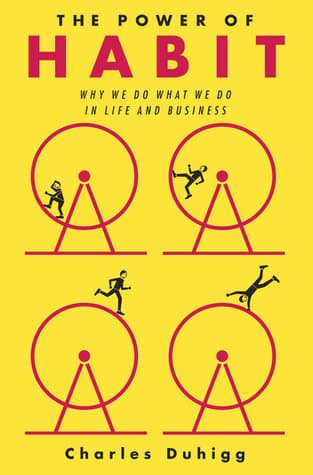
- The Power of Habit: Why We Do What We Do in Life and Business
Charles Duhigg
4.1 (343k) average on GoodreadsBusiness"Deadly Decisions" presents a more fatalistic view of human behavior trapped by patterns, contrasting with Duhigg's optimistic emphasis on understanding and changing habits. While Duhigg offers tools for agency, Gardinier highlights the crushing weight of circumstance.
- The Diary of a Young Girl
Anne Frank
4.2 (2.7M) average on GoodreadsBiographyDuring the Nazi occupation, a teenage girl's diary, written from a secret annex, shares observations on humanity, hope, and the wait for freedom.
- Twisted 1. Twisted love
Ana Huang
3.7 (1.7M) average on GoodreadsA quiet billionaire with a difficult past finds his guarded heart opening to the woman he must protect, but their growing passion uncovers dangerous secrets and a shared, traumatic history.
- Eat, Pray, Love
Elizabeth Gilbert
3.6 (1.5M) average on GoodreadsLifestyleA heartbroken writer leaves her conventional life for a year-long global search for pleasure in Italy, spiritual devotion in India, and unexpected love and balance in Bali.
- Night
Elie Wiesel
4.3 (970k) average on GoodreadsBiographyIn the darkness of Auschwitz and Buchenwald, a teenage Elie Wiesel faces the extermination of his family, the loss of his faith, and the lasting scars of humanity's deepest cruelty.
- Steve Jobs
Walter Isaacson
4.1 (957k) average on GoodreadsBusinessSteve Jobs was a visionary who fused creativity and technology to revolutionize six industries and shape our digital world.





Enjoyed the summary?
A summary gives you the shape of the book. The book itself has the detail, the examples and the voice.
Find Deadly Decisions on AmazonAs an Amazon Associate, BookBrief earns from qualifying purchases. How we're funded