
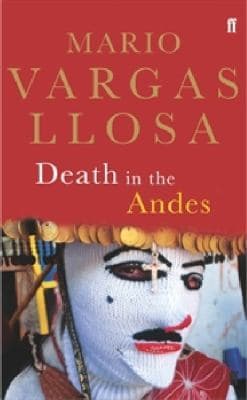
Synopsis
Covers the whole plot, including the ending.
- Difficulty
- Medium
- Pacing
- Variable
- Mood
- Atmospheric, Dark, Intriguing, Reflective
- Read it if
- You enjoy literary mysteries that blend political commentary, cultural exploration, and a touch of the macabre in a historical setting.
- Skip it if
- You prefer straightforward detective stories without extensive digressions into character backstories or complex cultural allegories.
Death in the Andes Plot Summary
Covers the whole plot, including the ending.
The Arrival in Naccos
Corporal Lituma, a character from previous Vargas Llosa novels, is stationed in the isolated Andean mining settlement of Naccos with his deputy, Tomás. Three men – Pedrito Tinoco, a mute, Casimiro Huarcaya, a foreman, and Demetrio Chanca, a road engineer – have vanished. The local population, mainly indigenous Quechua speakers, is superstitious and attributes the disappearances to malevolent mountain spirits or 'apus,' and some fear a local legend of pishtacos, legendary killers who extract human fat. Lituma, a man from the coast, is skeptical, convinced that the Shining Path Maoist guerrillas are responsible, given the region's political instability.
The Investigation Begins
Lituma and Tomás begin their investigation, facing silence and fear from the villagers. They interview Dionisio, the owner of the local tavern, and his wife, Doña Adriana, who are central figures in the community. Dionisio, a charismatic but enigmatic man, often makes cryptic remarks about the 'apus' and local legends. The villagers are reluctant to speak openly, fearing both the Shining Path and supernatural forces. Lituma struggles to reconcile his rational, military perspective with the deep indigenous beliefs and the palpable dread in Naccos. Tomás, meanwhile, tries to lighten the mood by recounting stories of his past love affairs.
Tomás's Love Story: Mercedes
As the investigation slowly progresses, Tomás distracts Lituma with a detailed and often humorous account of his past love life. He describes his intense and complicated relationship with Mercedes, a woman he met in Piura. Their romance was marked by passionate encounters, jealousy, and frequent separations. Tomás’s narrative, full of vivid descriptions and emotional ups and downs, contrasts with the bleak and violent reality of Naccos. His stories offer Lituma a temporary escape from the grim atmosphere and reveal Tomás's own vulnerability and longing, providing insight into his character beyond his role as a deputy.
Discovering the First Body
The investigation takes a grim turn when the body of Pedrito Tinoco, the mute, is found near the village. This discovery terrifies Naccos and confirms the villagers' worst fears. The body shows no clear signs of guerrilla violence, further fueling the local belief in supernatural explanations or the legendary pishtacos. Lituma is frustrated by the lack of conventional evidence and the villagers' unwavering adherence to their superstitions. The discovery intensifies the pressure on Lituma and Tomás to find answers, while also making them question the true nature of the threats in this isolated region.
The Second Body and Mounting Evidence
Shortly after Tinoco's discovery, the body of Casimiro Huarcaya, the foreman, is also found. Like Tinoco, his death is mysterious and lacks clear signs of Shining Path involvement. The cumulative evidence, or lack thereof, makes Lituma doubt his initial assumption about the guerrillas. He starts to consider the possibility that the disappearances are not politically motivated but stem from something darker and more ingrained within the local community. The villagers' fear and their whispers about ancient rituals and sacrifices become more prominent in Lituma's thoughts, forcing him to confront a reality far removed from his urban experiences.
Dionisio and Adriana's Rituals
Lituma's suspicions increasingly turn towards Dionisio and Do༚ Adriana, the tavern owners. He observes them engaging in strange, ritualistic practices, particularly involving animal sacrifices and offerings to the 'apus.' These observations, coupled with their cryptic remarks and their central position in the community, make them prime suspects in Lituma's eyes. He grapples with the idea that the disappearances could be linked to ancient, possibly cannibalistic, indigenous rituals, a concept that challenges his rational worldview and the military's understanding of the conflict. The true nature of their activities remains veiled, adding to the growing sense of unease.
The Confession of Dionisio
Under interrogation by Lituma, Dionisio eventually confesses to the murders of Pedrito Tinoco, Casimiro Huarcaya, and Demetrio Chanca. He reveals that the killings were not random acts of violence but ritualistic sacrifices intended to appease the 'apus' and restore balance to the community, which he believed was suffering due to the disruption caused by modern development and political conflict. Dionisio explains that he and Do༚ Adriana, acting as intermediaries between the human and spiritual worlds, believed these sacrifices were necessary to prevent greater calamities from befalling Naccos. His confession intertwines ancient beliefs with a desperate attempt to protect his people.
The Third Victim and Cannibalism
Dionisio further elaborates on the nature of the sacrifices, revealing the horrifying detail that the rituals involved a form of cannibalism, where parts of the victims were consumed. This revelation profoundly shocks Lituma, pushing him to the limits of his comprehension. Dionisio explains that this act was not for sustenance but a sacred communion, a way to fully integrate the sacrifice into the earth and appease the mountain gods. The confession paints a chilling picture of a belief system that demands extreme measures, exposing the stark cultural chasm between Lituma's modern, Westernized perspective and the deep-seated indigenous traditions of the Andes.
The Political Context
As the truth about the murders unfolds, the novel continuously weaves in the broader political context of Peru during the Shining Path insurgency. While the immediate cause of death is ritualistic sacrifice, the underlying desperation and breakdown of social order that enabled such acts are directly linked to the violence and instability brought by the guerrillas and the state's counter-insurgency. The novel suggests that the Shining Path's presence, the abandonment by the state, and the resultant chaos pushed the indigenous communities to revert to ancient beliefs and extreme measures in their search for order and meaning, highlighting the complex interplay between tradition and modern conflict.
The Departure from Naccos
With Dionisio's confession, the immediate mystery of the disappearances is solved, though the profound implications linger. Lituma and Tomás prepare to leave Naccos, their mission seemingly accomplished. However, Lituma is deeply disturbed by what he has witnessed and learned. The experience has forced him to confront the limits of his understanding and the brutal realities of a culture vastly different from his own, where ancient beliefs hold sway amidst modern conflict. Tomás's stories of love and loss, though a stark contrast, have also provided a human counterpoint to the horror, emphasizing the enduring human need for connection even in the darkest of times.
Death in the Andes Characters
Corporal Lituma
Protagonist
A pragmatic coastal police corporal investigating disappearances in the Andes.
Lituma is a pragmatic and somewhat cynical police corporal from the Peruvian coast, previously featured in Vargas Llosa's 'The Green House'. He represents the modern, rational, and often skeptical perspective, struggling to comprehend the deep-seated indigenous beliefs and superstitions of the Andean people. He is dedicated to his duty but often feels alienated and frustrated by the cultural chasm separating him from the villagers. His experiences in Naccos challenge his worldview, forcing him to confront the limits of logic and the pervasive influence of ancient traditions.
Relationships: Tomás (His deputy and confidant, providing distraction and human connection through his stories.); Dionisio (His prime suspect, whose actions and beliefs profoundly challenge Lituma's understanding of justice and culture.)
Tomás
Supporting
Lituma's deputy, a romantic storyteller who provides a human counterpoint to the grim investigation.
Tomás is Lituma's young, garrulous deputy, characterized by his romantic and often sentimental nature. He constantly regales Lituma with stories of his past love affairs, particularly with Mercedes, providing a stark contrast to the grim reality of Naccos. His narratives offer Lituma a temporary escape and reveal Tomás's own vulnerability and longing for connection. While not directly involved in the primary investigation, his presence and storytelling serve as a crucial emotional and thematic anchor, highlighting the universal human experiences of love and desire amidst violence and cultural alienation.
Relationships: Corporal Lituma (His superior and listener, to whom he confides his personal stories.); Mercedes (His great love, whose story he frequently recounts.)
Dionisio
Antagonist/Supporting
The enigmatic tavern owner, deeply entrenched in indigenous beliefs, who becomes the central figure in the disappearances.
Dionisio is the charismatic and enigmatic owner of the local tavern in Naccos, and a central figure in the community. He is deeply connected to the indigenous spiritual world, frequently speaking of the 'apus' (mountain spirits) and ancient traditions. Beneath his seemingly benevolent exterior, he and his wife, Doña Adriana, are the perpetrators of the ritualistic murders, believing these sacrifices are necessary to appease the gods and restore balance to their community amidst the chaos of modern life and the Shining Path insurgency. He embodies the clash between ancient beliefs and modern realities.
Relationships: Doña Adriana (His wife and accomplice in the ritualistic sacrifices.); Corporal Lituma (His interrogator, to whom he eventually confesses his motives and actions.)
Doña Adriana
Supporting
Dionisio's wife and accomplice, also deeply rooted in indigenous spiritual practices.
Doña Adriana is Dionisio's wife and an active participant in the ritualistic sacrifices. She shares her husband's deep-seated belief in the 'apus' and the necessity of appeasing them through ancient customs. While less vocal than Dionisio, her actions and complicity underscore the profound influence of indigenous spirituality and the desperation felt by the community to restore order. She represents the silent, unwavering adherence to tradition, even when it demands horrific acts, highlighting the communal aspect of these beliefs.
Relationships: Dionisio (Her husband and co-conspirator in the ritualistic murders.)
Pedrito Tinoco
Mentioned
The mute villager, the first victim of the disappearances.
Pedrito Tinoco is a mute villager and the first of the three men to disappear. His vanishing sets the initial mystery in motion and fuels the local fears of both the Shining Path and supernatural forces. His discovery later in the novel confirms the grim reality of the disappearances and begins to shift Lituma's investigation away from purely political motives.
Casimiro Huarcaya
Mentioned
A foreman, the second victim whose disappearance deepens the mystery.
Casimiro Huarcaya is a foreman in Naccos and the second man to disappear. His absence, like Tinoco's, initially points towards Shining Path activity but later becomes part of the pattern of ritualistic sacrifices. His death further intensifies the fear within the community and pushes Lituma to consider alternative explanations beyond political violence.
Demetrio Chanca
Mentioned
A road engineer, the third victim, confirming the pattern of disappearances.
Demetrio Chanca is a road engineer and the third man to disappear in Naccos. His disappearance solidifies the pattern of missing persons, leading Lituma closer to uncovering the true, ritualistic nature of the crimes. Chanca's role represents the intrusion of modernity and development into the traditional Andean world, which Dionisio believes disrupts the natural order.
Mercedes
Mentioned
Tomás's great love, whose tumultuous story is recounted throughout the novel.
Mercedes is the central figure in Tomás's numerous love stories. She is depicted as a passionate, fiery, and somewhat mercurial woman with whom Tomás shares a deeply intense and complicated relationship. Her character, though never physically present, is brought to life through Tomás's vivid and often humorous recollections, providing a counterpoint of human desire and emotion against the backdrop of violence and despair in Naccos. She embodies the enduring power of love and personal narrative.
Relationships: Tomás (His passionate lover, whose memory he cherishes and frequently shares.)
Death in the Andes Themes
The Clash of Cultures and Worldviews
The novel portrays the stark conflict between modern, rational, Westernized thought (represented by Lituma) and ancient, spiritual, indigenous beliefs (represented by the villagers, especially Dionisio and Adriana). Lituma struggles to understand the villagers' adherence to 'apus' and pishtaco legends, initially dismissing them as superstition. However, the revelation of ritualistic cannibalism forces him to confront a reality beyond his comprehension, highlighting the profound cultural chasm and the inability of one worldview to fully grasp another. This theme is central to the entire investigation, as Lituma's initial assumptions are systematically dismantled.
“There are things that happen, Corporal, that have nothing to do with the police or the military.”
Violence and Its Origins
The novel explores multiple facets of violence: the political violence of the Shining Path insurgency, the historical violence of colonial subjugation, and the ritualistic violence rooted in ancient beliefs. Initially, Lituma attributes the disappearances to the Shining Path, reflecting the pervasive political conflict in Peru. However, the true nature of the murders, driven by Dionisio's desire to appease the 'apus' and restore cosmic balance, reveals a different, more ancient form of violence. The novel suggests that the chaos of modern political violence might even push communities back towards these older, more primal forms of sacrifice, blurring the lines between different types of societal breakdown.
“Every time men disappear like this, the guerrillas are behind it. Or the army.”
The Power of Storytelling and Memory
Tomás's constant recounting of his love affairs, particularly with Mercedes, serves as a crucial thematic counterpoint to the grim reality of Naccos. His stories are a form of escapism, providing Lituma with a temporary relief from the horrors of the investigation, but also a reminder of enduring human connection and desire. Storytelling is also evident in the villagers' legends of pishtacos and 'apus,' which shape their understanding of events. The novel illustrates how narratives – both personal and mythical – are essential for making sense of the world, for preserving identity, and for coping with unbearable truths.
“A man without stories is a man without a soul, Corporal.”
Identity and Belonging
The novel examines identity, particularly for the indigenous Quechua people of the Andes. They are caught between their ancient traditions and the encroaching modern world, represented by mining operations, roads, and the state's military presence. Their identity is deeply intertwined with the land, the 'apus,' and their traditional beliefs, which they cling to as a source of meaning and order amidst chaos. Lituma, as a coastal 'outsider,' struggles with his place in this world, highlighting the sense of alienation and the difficulty of truly belonging to a culture not your own. The sacrifices performed by Dionisio are an extreme expression of a desperate attempt to preserve their identity and connection to their ancestral land.
“The mountains are alive, Corporal. They demand their due.”
The Limits of Rationality
Corporal Lituma represents rationality and scientific deduction, constantly seeking logical explanations for the disappearances, initially attributing them to the Shining Path. However, the unfolding events in Naccos systematically challenge and ultimately shatter his rational framework. The discovery of ritualistic cannibalism, motivated by ancient beliefs in appeasing mountain gods, pushes Lituma to the very edge of his comprehension. The novel argues that not all phenomena can be explained through modern logic, and that some realities, especially those rooted in deep cultural and spiritual traditions, lie beyond the grasp of conventional reason, highlighting the limitations of a purely rational worldview.
“What kind of savages are these, Tomás? What kind of country is this?”
Plot Devices & Literary Techniques
Frame Narrative (Tomás's Stories)
Tomás's personal anecdotes and love stories serve as a narrative counterpoint to the main plot.
Tomás's frequent and detailed recounting of his past love affairs, especially with Mercedes, functions as a frame narrative within the larger mystery. These stories interrupt the grim investigation, providing moments of levity, human connection, and emotional depth. This device offers a stark contrast to the bleak and violent reality of Naccos, highlighting the enduring human capacity for love and desire amidst chaos. It also serves to develop Tomás's character and provides Lituma, and the reader, a temporary escape from the psychological weight of the disappearances, emphasizing the resilience of the human spirit.
Unreliable Narration (Villagers' Accounts)
The villagers' explanations of the disappearances are steeped in superstition and fear, challenging Lituma's rational investigation.
The villagers' explanations for the disappearances are heavily influenced by local legends, superstitions about 'apus' (mountain spirits), and fears of pishtacos. Their accounts, while genuinely held beliefs, are often cryptic, contradictory, and not based on empirical evidence, making them 'unreliable' from Lituma's rational perspective. This device creates a sense of mystery and confusion for both Lituma and the reader, forcing them to question what is real and what is folklore. It also underscores the cultural clash and the difficulty of uncovering truth when confronted with deeply ingrained, non-Western worldviews.
Foreshadowing (Dionisio's Cryptic Remarks)
Dionisio's ambiguous statements about the 'apus' and necessary sacrifices hint at the true nature of the crimes.
Throughout the early parts of the investigation, Dionisio makes numerous cryptic remarks about the 'apus' demanding sacrifices, the need to restore balance, and the dangers of disturbing ancient ways. These statements, initially dismissed by Lituma as superstitious ramblings, serve as significant foreshadowing. They subtly hint at Dionisio's deeper involvement and the ritualistic nature of the murders, preparing the reader for the eventual shocking confession. This device builds suspense and allows the author to gradually reveal the profound cultural and spiritual motivations behind the crimes.
Cultural Juxtaposition
The stark contrast between coastal Peruvian culture and Andean indigenous culture.
The novel constantly juxtaposes the modern, Western-influenced coastal culture, represented by Lituma, with the ancient, indigenous Quechua culture of the Andes. This device highlights the profound differences in worldview, belief systems, and social structures. Lituma's rational, legalistic approach clashes with the villagers' spiritual explanations and traditional customs. This juxtaposition is central to the novel's themes, illustrating the cultural chasms within Peru and the challenges of governance and understanding across such divides. It underscores how different groups interpret reality and respond to crisis.
Death in the Andes Quotes
“The memory of the dead is a heavy burden, but also a source of strength.”
“In the Andes, even the stones seem to have eyes and ears.”
“Truth is a dangerous thing in a place where everyone has something to hide.”
“Fear has many faces, and in the mountains, it often wears the mask of superstition.”
“The past is never truly past; it simply waits for the right moment to resurface.”
“Justice, like the mountain air, is thin and hard to grasp here.”
“There are wounds that time can never heal, only cover with a thin scab.”
“The highest peaks are often the loneliest, and the most revealing.”
“Every silence holds a story, especially in a town that has learned to keep them.”
“To forget is a luxury that few in these parts can afford.”
“The line between the living and the dead is blurrier here than anywhere else.”
“Violence leaves its mark not just on bodies, but on the very soul of a place.”
“Even in the darkest corners, there is always a flicker of humanity, however small.”
“The mountains watch, and they remember what men try to bury.”
Quiz
10 questions on the plot and the characters. Each answer comes with a short explanation.
Question 1
Who are the two main investigators trying to solve the disappearances in Naco?
- Don Felipe and Doña Adriana
- Corporal Lituma and Deputy Tomás
- Pedro and Dionisio
- The Shining Path commanders
Show answer
B. Corporal Lituma and Deputy Tomás Corporal Lituma and his deputy Tomás are the two military men tasked with investigating the disappearances in the isolated Andean community of Naco.
Question 2
What is the primary initial suspicion of Lituma and Tomás regarding the disappearances?
- A natural disaster or avalanche
- Revenge killings by rival indigenous communities
- The Shining Path guerrillas
- Local bandits looking for gold
Show answer
C. The Shining Path guerrillas Lituma and Tomás, representing the state, initially suspect the Shining Path guerrillas are responsible for the disappearances, a common concern during that period in Peru.
Question 3
What kind of stories does Deputy Tomás entertain Lituma with during their investigation?
- Detailed reports of military strategy
- Surreal tales of a precarious love affair
- Local ghost stories and legends
- Historical accounts of the Inca Empire
Show answer
B. Surreal tales of a precarious love affair Deputy Tomás often entertains Lituma with the surreal tale of a precarious love affair, which serves as a counterpoint to the grim reality of their investigation.
Question 4
Which unusual couple is involved in 'strange cannibalistic sacrifices' according to the book's description?
- The mayor and his wife
- The innkeepers, Dionisio and Adriana
- Two disenfranchised Indians
- A pair of Shining Path recruits
Show answer
B. The innkeepers, Dionisio and Adriana The innkeepers, Dionisio and Adriana, are the couple implicated in the strange cannibalistic sacrifices, adding to the mystery and local beliefs about the disappearances.
Question 5
What is the name of the isolated community where the disappearances occur?
- Chaupi
- Rúpac
- Naco
- Pucallpa
Show answer
C. Naco The mysterious disappearances take place in the isolated Andean community of Naco, which is the setting for the novel's main plot.
Question 6
Beyond being a detective novel, 'Death in the Andes' is also described as what kind of allegory?
- A religious allegory
- A social class allegory
- A political allegory
- A psychological allegory
Show answer
C. A political allegory The novel is explicitly described as 'both a fascinating detective novel and an insightful political allegory,' reflecting the broader social and political turmoil in Peru.
Question 7
What cultural influences from Peru's past are explored in the novel, alongside recent social upheaval?
- Spanish colonial architecture
- Pre-Columbian myths and indigenous beliefs
- The rubber boom of the Amazon
- The legacy of the War of the Pacific
Show answer
B. Pre-Columbian myths and indigenous beliefs Vargas Llosa's novel offers a panoramic view of Peruvian society, including 'cultural influences in its past,' which heavily feature indigenous myths and beliefs that intertwine with the mystery.
Question 8
What kind of 'unforgettable characters' are mentioned as populating the novel's world?
- Wealthy urban elites and foreign diplomats
- Disenfranchised Indians and eccentric local folk
- Corrupt government officials and international aid workers
- Scholars studying ancient Andean civilizations
Show answer
B. Disenfranchised Indians and eccentric local folk The novel is filled with 'unforgettable characters, among them disenfranchised Indians, eccentric local folk, and a couple performing strange cannibalistic sacrifices,' highlighting the diverse and often marginalized populations.
Question 9
How does the novel portray the relationship between modern state authority (represented by Lituma and Tomás) and traditional Andean beliefs?
- As mutually exclusive, with one completely discrediting the other.
- As a clear conflict where state authority always prevails.
- As a complex interplay where ancient beliefs often challenge or explain official narratives.
- As entirely separate spheres that never intersect.
Show answer
C. As a complex interplay where ancient beliefs often challenge or explain official narratives. The novel contrasts the official investigation with the townspeople's beliefs about supernatural forces, showing a complex interplay where traditional Andean beliefs often provide alternative explanations or challenges to modern state authority.
Question 10
What is a significant aspect of the novel's structure, hinted at by Tomás's storytelling?
- A linear, chronological narrative focusing solely on the investigation.
- The intertwining of a realistic detective plot with surreal, non-linear narratives.
- Multiple perspectives from various Shining Path members.
- A series of newspaper clippings and official reports.
Show answer
B. The intertwining of a realistic detective plot with surreal, non-linear narratives. Tomás's 'surreal tale of a precarious love affair' interwoven with the main investigation suggests a narrative structure that blends realism with more fantastical or non-linear storytelling, characteristic of Vargas Llosa's style.
Death in the Andes FAQ
What is the central mystery Corporal Lituma and his deputy Tomás investigate in 'Death in the Andes'?
Lituma and Tomás are investigating the mysterious disappearances of three men—Pedrito, Fructuoso, and don Medardo—from the remote Andean village of Naccos. Initially, they suspect the Shining Path guerrillas, but the lack of bodies and the villagers' superstitions complicate their search, pointing towards a more sinister and ancient local force at play.
Who are the primary suspects or alternative theories for the disappearances, according to the Naccos villagers?
The villagers of Naccos attribute the disappearances to the pishtacos, mythical beings who are believed to murder travelers and extract their fat. This ancient belief clashes with Lituma's military-rational perspective, creating a tension between modern conflict and indigenous folklore as potential explanations for the deaths.
How does the Shining Path guerrilla movement influence the setting and atmosphere of the novel?
The Shining Path's presence casts a long shadow over Naccos, creating an atmosphere of fear, suspicion, and political instability. Their violent ideology and actions are the initial, logical explanation for the disappearances, but the novel uses this context to explore deeper societal issues and the clash between different belief systems in Peru.
What role do Dionisio and his wife, Doña Adriana, play in the unfolding events?
Dionisio and Doña Adriana are central to the novel's most disturbing revelations. They are the proprietors of the local tavern and are eventually revealed to be performing ancient sacrificial rituals, involving the murder and consumption of human flesh, believing it will appease the Apus (mountain spirits) and bring prosperity to their community.
How does Tomás's storytelling contribute to the narrative structure and themes of the novel?
Tomás entertains Lituma with a lengthy, surreal tale of his love affair with Mercedes, a woman from Piura. This embedded narrative serves as a counterpoint to the grim realities of Naccos, offering moments of beauty and escape, while also exploring themes of love, desire, and the human need for connection amidst chaos. It also provides a structural break from the main mystery.
What is the significance of the character of the mute, Demetrio, and his connection to the sacrificial rituals?
Demetrio, the mute, is a crucial figure who serves as the executioner for Dionisio and Doña Adriana's sacrifices. His silence and physical strength make him an ideal, terrifying instrument of their will. His involvement highlights the complicity and fear that bind the community to these ancient, horrific practices.
How do the 'apus' (mountain spirits) function within the belief system of Naccos and the novel's plot?
The apus are powerful mountain spirits revered and feared by the indigenous people of Naccos. They are believed to control the land, weather, and prosperity. Dionisio and Doña Adriana's cannibalistic sacrifices are performed to appease these spirits, demonstrating the deep-seated animist beliefs that persist and influence actions in the community.
Are there any subtle connections between Tomás's love story and the main mystery of Naccos?
While seemingly disparate, Tomás's love story subtly mirrors themes of obsession, violence, and the pursuit of an elusive 'other' present in the main mystery. The intensity of his desire for Mercedes can be seen as a parallel to the villagers' desperate attempts to control their fate through ritual, both representing fundamental human drives, albeit expressed differently.
What is the implied fate of the missing men—Pedrito, Fructuoso, and don Medardo—and how does it connect to the pishtaco myth?
The novel strongly implies that Pedrito, Fructuoso, and don Medardo were victims of Dionisio and Doña Adriana's sacrificial rituals. Their bodies were dismembered and consumed. This gruesome reality provides a 'rational' (though horrifying) explanation for the disappearances, while simultaneously validating the villagers' belief in the pishtacos, as the victims' fat was indeed symbolically (and literally) taken.
Analyze Corporal Lituma's psychological journey throughout the investigation.
Lituma, initially a pragmatic and somewhat detached urban policeman, undergoes a profound psychological transformation. He struggles to reconcile his military training and rational worldview with the deeply ingrained superstitions and brutal realities of Naccos. His encounter with the cannibalistic rituals challenges his understanding of justice and humanity, leaving him deeply disturbed and questioning his own sanity.
How does the novel explore the psychological impact of isolation and extreme poverty on the Naccos villagers?
The extreme isolation and poverty of Naccos contribute to a sense of desperation and a clinging to ancient beliefs for survival. The villagers' fear of both the Shining Path and the Apus, coupled with their economic hardship, creates a psychological environment where extreme measures, like human sacrifice, can be seen as a desperate attempt to regain control or ensure prosperity.
Discuss the psychological motivations behind Dionisio and Doña Adriana's cannibalistic acts.
Dionisio and Doña Adriana are driven by a profound, albeit twisted, faith in the Apus and a desire to protect their community from suffering. Psychologically, their acts are rooted in a desperate attempt to appease powerful, unseen forces and maintain a sense of order and control in a chaotic world, even if it means resorting to horrific violence and cannibalism.
How does Tomás's recounting of his love story serve as a psychological coping mechanism for Lituma?
Tomás's stories act as a psychological balm and a distraction for Lituma from the gruesome realities of Naccos. The romantic tales offer an escape into a world of passion and human connection, providing a necessary counterpoint to the violence and despair. They allow Lituma moments of mental respite, preventing him from succumbing entirely to the darkness of his investigation.
In what ways can 'Death in the Andes' be interpreted as a political allegory for Peruvian society?
The novel functions as a powerful political allegory, reflecting the deep divisions within Peruvian society—between indigenous and mestizo cultures, rural and urban perspectives, and ancient beliefs versus modern rationalism. The Shining Path represents ideological extremism, while the cannibalistic rituals symbolize the enduring, brutal undercurrents of violence and desperation that plague the nation.
How does the novel challenge or reinforce stereotypes about indigenous cultures?
Vargas Llosa challenges simplistic stereotypes by presenting the indigenous culture of Naccos with both its profound spiritual depth and its capacity for extreme brutality. He avoids romanticizing or demonizing, instead portraying a complex society where ancient beliefs, poverty, and isolation can lead to horrifying practices, forcing readers to confront uncomfortable truths about cultural survival.
Is the ending of the novel conclusive regarding the fate of the Shining Path in Naccos, or does it leave ambiguity?
The ending leaves a significant degree of ambiguity regarding the ultimate fate of the Shining Path in Naccos. While the immediate threat of the cannibalistic cult is exposed, the broader political struggle and the deep-seated issues that fuel the guerrillas' presence remain unresolved, suggesting that the cycle of violence and ideological conflict will likely continue.
What is the author's stance on the clash between modern rationality and ancient folklore as depicted in the novel?
Vargas Llosa doesn't explicitly endorse one view over the other but rather highlights the irreconcilable tension between them. He suggests that modern rationality often fails to comprehend or effectively address the deep-rooted beliefs and desperate realities of isolated communities, while ancient folklore, though sometimes leading to horrific acts, provides a framework for meaning and survival in a chaotic world.
How does the novel's blend of mystery, historical fiction, and literary fiction contribute to its overall message?
The blend of genres allows 'Death in the Andes' to operate on multiple levels. The mystery hooks the reader, the historical fiction provides a critical backdrop of political turmoil, and the literary fiction elevates the narrative with psychological depth and symbolic resonance. This combination enables Vargas Llosa to deliver a multifaceted critique of Peruvian society, exploring both its immediate conflicts and its enduring cultural complexities.
About the author
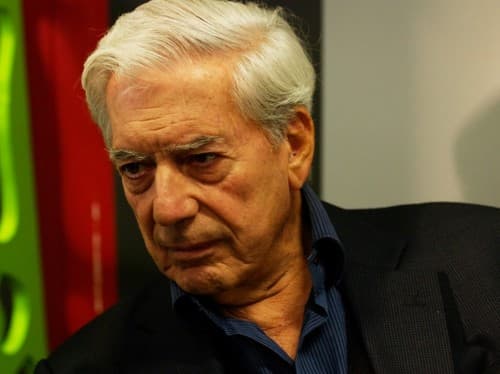
Jorge Mario Pedro Vargas Llosa, 1st Marquess of Vargas Llosa, more commonly known as Mario Vargas Llosa, is a Peruvian novelist, journalist, essayist and former politician, who also holds citizenship of Spain and the Dominican Republic. Vargas Llosa is one of Latin America's most significant novelists and essayists, and one of the leading writers of his generation. Some critics consider him to have had a larger international impact and worldwide audience than any other writer of the Latin American Boom. In 2010 he won the Nobel Prize in Literature, "for his cartography of structures of power and his trenchant images of the individual's resistance, revolt, and defeat." He also won the 1967 Rómulo Gallegos Prize, the 1986 Prince of Asturias Award, the 1994 Miguel de Cervantes Prize, the 1995 Jerusalem Prize, the 2012 Carlos Fuentes International Prize, and the 2018 Pablo Neruda Order of Artistic and Cultural Merit. In 2021, he was elected to the Académie française.
Similar books
- The Feast of the Goat
Mario Vargas Llosa
4.3 (26k) average on GoodreadsPoliticsExplores political power, historical events, and complex characters in a Latin American context.
- One Hundred Years of Solitude
Gabriel García Márquez
4.1 (753k) average on GoodreadsLiterary FictionFeatures magical realism, a rich cultural setting, and multi-layered storytelling about a community.
- The House of the Spirits
Isabel Allende
4.2 (190k) average on GoodreadsFantasyCombines historical events, family sagas, and elements of magical realism in a Latin American setting.
- The War of the End of the World
Mario Vargas Llosa
4.2 (9k) average on GoodreadsHistorical FictionLike "Death in the Andes," Vargas Llosa's earlier work "The War of the End of the World" (1981) also explores the brutal clash of ideologies, fanatical beliefs, and historical events in a remote, rural setting (the Canudos rebellion in Brazil). Both novels utilize a sprawling, multi-perspective narrative to depict widespread violence and societal breakdown, and both feature characters driven by fervent, often destructive, convictions. However, "Death in the Andes" is more concentrated on the psychological impact of specific murders and the immediate political insurgency, whereas "The War of the End of the World" is a grander historical epic.
- The Old Man and the Sea
Ernest Hemingway
3.8 (831k) average on GoodreadsLiterary FictionA Cuban fisherman's long struggle with a giant marlin becomes a story of endurance and dignity, now retold for young adults with illustrations, phonetic guides, and writing prompts in Traditional Chinese.
- The Goldfinch
Donna Tartt
3.9 (720k) average on GoodreadsLiterary FictionHaunted by a tragic explosion and clutching a stolen Dutch masterpiece, a young orphan navigates the opulent drawing rooms of New York and the gritty underbelly of the art world, desperately seeking connection and redemption amidst a life spiraling into crime and obsession.




Enjoyed the summary?
A summary gives you the shape of the book. The book itself has the detail, the examples and the voice.
Find Death in the Andes on AmazonAs an Amazon Associate, BookBrief earns from qualifying purchases. How we're funded