
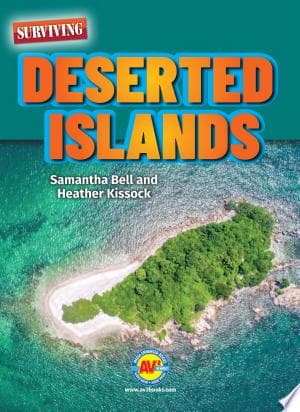
Core Idea
- Difficulty
- Medium
- Read it if
- You're fascinated by survival psychology, the science of perception, or the practical challenges of extreme isolation, and want to understand the strategic thinking behind effective distress signaling.
- Skip it if
- You're looking for a general survival guide with broad tips, or a thrilling adventure narrative; this book is a dense, analytical exploration of a specific aspect of survival.
Key Takeaways from Deserted Islands
The Dual Challenge of Rescue
Being seen isn't enough; you must also be heard and understood.
The main problem of a deserted island is not just seeing a potential rescuer, but the important next step: effectively signaling your presence. Many imagine the relief of a distant ship or plane, but these vessels often move fast, and their crews are not actively looking for tiny things in vast oceans or lands. A survivor's visibility is limited by size, weather, and natural environmental 'noise'. So, the effort shifts from waiting to active, attention-grabbing communication, requiring cleverness and persistence in a place with few resources. This often means understanding the limits of human perception and how rescue teams operate.
“Seeing rescuers is not enough. Survivors must also be able to get their attention.”
In the book: The book emphasizes the distinction between 'being seen' and 'getting attention,' implying that visual confirmation by the survivor doesn't equate to detection by the rescuer. This highlights the psychological trap of false hope if signals are inadequate.
Try this: When in a survival situation, prioritize not just visibility, but also methods of creating contrast or movement that are unmistakably artificial and indicative of human presence. Think beyond simple waving to sustained, high-impact signaling.
Related ideas: signaling-strategies, visual-communication, rescue-psychology
The Tyranny of Scale
From a distance, a human is insignificant; the island itself is the primary visual cue.
One of the biggest problems for a castaway is the huge difference in size between a human and the vastness of the ocean or an uninhabited island. From a passing ship or plane, a single human is almost invisible. Rescuers look for larger, more obvious signs of distress: smoke, big reflective surfaces, or organized patterns that stand out from natural chaos. The survivor must use the island itself to help signal, turning parts of the landscape into a message. This means thinking about visibility not as personal presence, but as creating a large, clear 'billboard' that shows human activity.
“Rescuers are often looking for anomalies in the natural landscape, not individual people.”
In the book: The book implies that rescue efforts often involve aerial or distant maritime surveys, where individual survivors are too small to be spotted. The focus shifts to 'anomalies' in the natural environment.
Try this: Focus on creating large-scale signals. Use natural materials to spell out SOS, build large fires for smoke, or create contrasting patterns on the beach that are visible from miles away. Think big, not small.
Related ideas: large-scale-signaling, aerial-detection, environmental-leverage
The Imperative of Contrast
To be seen, a signal must sharply deviate from its natural surroundings.
In a world of greens, blues, and browns, any good signal must create a sharp contrast. This applies to both visual and sound signals. A bright orange life raft works because that color is rare in the open ocean. Similarly, a thick plume of dark smoke against a clear sky, or a rhythmic flash of light in the dark, gets attention because it breaks the normal pattern. The survivor must become skilled at creating visual or sound 'disruptions' that cannot be easily mistaken for natural things. This requires understanding the weather and choosing signaling methods that maximize this contrast, whether it is color, movement, sound, or light.
“Signals must stand out. They must be different from the natural environment.”
In the book: The book's emphasis on 'getting attention' strongly suggests that signals must be distinct and non-natural to be effective, distinguishing them from random environmental occurrences.
Try this: Prioritize materials that offer high contrast. If you have a brightly colored item, wave it. If you build a fire, add green foliage to create dark, dense smoke. If you use light, ensure it's a sharp, repeated flash, not just a steady glow.
Related ideas: visual-contrast, signal-effectiveness, pattern-disruption
The Power of Repetition
A single signal can be missed; sustained, repeated signals confirm intent.
Human perception makes mistakes, especially when looking across long distances or in changing environments. A single flash, a solitary wave, or a brief puff of smoke can easily be dismissed as a trick of light, a bird, or a passing cloud. But repetition turns an anomaly into a deliberate message. The international distress signal SOS (three short, three long, three short) works because its rhythmic repetition confirms it is intentional. Survivors must understand that their efforts need to be continuous, not just occasional. This requires not only physical stamina but also mental strength to keep signaling even when hope fades.
“Consistent, repeated signals are more likely to be noticed and understood as a deliberate call for help.”
In the book: The inherent nature of distress signaling (like SOS) relies on repetition to convey meaning and overcome observational errors.
Try this: If using light, flash it in a consistent pattern (e.g., three short, three long, three short). If using sound, repeat a distinct call. If using smoke, maintain a steady, intermittent plume rather than a single burst. Consistency validates the signal.
Related ideas: distress-signals, signal-recognition, persistence-survival
Leveraging the Senses of the Rescuer
Think beyond sight; sound and even smell can be powerful, albeit challenging, signals.
While visual signals are often the main focus, a truly complete signaling strategy considers all possible senses of a rescuer. Sound, for example, can travel far, especially over water, and a distinct, unnatural sound (like a whistle or shouts) can cut through fog or darkness where visual cues fail. Less commonly thought of, but potentially strong, is smell – a large, smoky fire could carry its scent downwind. The challenge is creating sensory inputs that are strong enough to travel far and distinct enough to be recognized as human-made. This requires understanding environmental factors like wind direction, atmospheric conditions, and how far human hearing can reach.
“Beyond visual cues, sound and other sensory signals can play a role in attracting attention.”
In the book: The book, by focusing on 'getting attention,' implies a multi-sensory approach, even if not explicitly detailing every sense. The 'AV2 media enhanced books' aspect suggests a broader sensory engagement.
Try this: If you have a whistle, use it consistently. If you build a fire, consider how its smoke might carry its scent downwind. Don't rely solely on visual cues; combine them with auditory signals when possible.
Related ideas: multi-sensory-signaling, auditory-signals, environmental-acoustics
The Resourcefulness Imperative
Improvise with limited materials; every item is a potential signaling tool.
A deserted island offers few manufactured tools, forcing survivors to be very resourceful. The ability to signal well often depends on creatively reusing natural elements and any salvaged items. A shiny piece of metal becomes a heliograph; dry leaves and green foliage make smoke thicker; rocks and driftwood become giant letters. This demands a constant mindset of evaluation and innovation, seeing potential where others see only raw materials. The key is to understand the basic rules of signaling (contrast, repetition, scale) and then adapt whatever is available to meet those needs. This cleverness is not just about survival, but about actively planning a rescue.
“Every item available on a deserted island, no matter how small, can potentially be used to signal for help.”
In the book: The context of 'deserted islands' inherently implies a lack of conventional tools, necessitating improvisation for survival and signaling.
Try this: Always assess your surroundings for potential signaling materials. A broken piece of glass can be a mirror, a brightly colored shirt can be a flag, dry palm fronds can be fuel for a smoke signal. Think creatively about how to maximize their visibility or sound-producing potential.
Related ideas: improvisation-survival, resource-utilization, creative-signaling
Strategic Location for Signals
Where you signal is as important as how you signal.
The effectiveness of any signal is greatly affected by where it is placed. A signal fire hidden by thick jungle, or an SOS message covered by a tidal wave, is useless. Survivors must carefully choose locations that offer the best visibility to rescuers, considering common flight paths, shipping lanes, and prevailing winds. High ground offers wider views, while open beaches provide clear spaces for ground-to-air signals. Understanding typical rescue search patterns can also help in choosing the best placement, increasing the chance of a signal being seen within a rescuer's scanning area. This requires a basic understanding of geography, weather, and potential rescue logistics.
“Choosing the right location for your signal can dramatically increase its chances of being seen.”
In the book: The emphasis on 'getting attention' implies that effective signaling isn't random but requires thoughtful execution, including optimal placement.
Try this: Always prioritize the highest, most open ground for smoke signals. For ground-to-air messages, choose the largest, clearest beach or open area. Consider prevailing winds for smoke dispersal and potential flight paths for aerial detection.
Related ideas: signal-placement, geographical-advantage, rescue-logistics
The Psychological Burden of Signaling
Maintaining hope and effort in the face of repeated failure is a critical survival skill.
Beyond the physical demands of gathering materials and sending signals, the psychological impact of repeated, unnoticed efforts is huge. Each failed signal can reduce hope, leading to despair and an end to effort. The book touches on this by focusing on the 'attention' aspect, suggesting the difficulty involved. A castaway must develop strong determination, understanding that rescue is a numbers game and that every signal, even if unseen, is a necessary try. This mental resilience is as important as any physical skill, as it drives the persistence needed to eventually succeed. Keeping a routine of signaling, even without immediate reward, can also provide a sense of purpose and control in a chaotic situation.
“The act of signaling is not just a physical challenge, but a profound test of mental fortitude.”
In the book: The very premise of 'seeing them is not enough' implies the difficulty and potential for discouragement in getting attention.
Try this: Set realistic expectations for signaling; understand that multiple attempts will likely be necessary. Celebrate small victories (like a well-built fire) and maintain a consistent schedule for signaling to combat despair and maintain a sense of purpose.
Related ideas: psychological-resilience, hope-survival, mental-fortitude
Deserted Islands Quotes
“The true measure of an island's isolation isn't its distance from shore, but the depth of the sea around it.”
“Every grain of sand holds the memory of a wave, a storm, a quiet tide. It is a library of forgotten moments.”
“To be truly alone is not a punishment, but an invitation to listen to the whispers of your own untamed self.”
“The most dangerous currents are not always visible; they lie beneath the surface, pulling at the unwary.”
“Survival isn't about what you have, but what you can do with what little remains.”
“The silence of a deserted island is not empty; it is filled with the symphony of the natural world, if only you learn to hear it.”
“Hope, like a message in a bottle, can travel vast distances on the smallest of currents.”
“The greatest freedom is found not in escape, but in embracing the limits of your own small world.”
“Before you can conquer the wilderness, you must first conquer the wilderness within yourself.”
“Every sunset on a deserted island is a masterpiece painted for an audience of one, or none.”
“The ocean does not distinguish between a king's ship and a fisherman's skiff; it claims all impartially.”
“Loneliness is a choice when companionship is absent; solitude is a state of being when it is embraced.”
“The true map of an island is not drawn on parchment, but etched into the heart of those who survive its embrace.”
“Even the most barren rock can harbor life, if you look closely enough, and wait patiently.”
Quiz
10 questions on the main ideas. Each answer comes with a short explanation.
Question 1
According to the book 'Deserted Islands', what crucial action must castaways take in addition to spotting rescuers?
- Prepare a feast for their arrival
- Hide from them to avoid capture
- Get their attention
- Build a new shelter
Show answer
C. Get their attention The book explicitly states, 'But seeing them is not enough. Survivors must also be able to get their attention.' This highlights the dual challenge of sighting and signaling.
Question 2
What is the title of the series that 'Deserted Islands' belongs to?
- Island Adventures
- Lost at Sea
- Surviving
- Deserted Journeys
Show answer
C. Surviving The description clearly states, 'Deserted Islands, one of the titles in the Surviving series.'
Question 3
What kind of content does a unique book code from 'Deserted Islands' unlock?
- Additional chapters of the book
- Multimedia content like video, audio, and activities
- A discount for future book purchases
- Access to a forum for discussing the book
Show answer
B. Multimedia content like video, audio, and activities The text states, 'A unique book code printed on page 2 unlocks multimedia content. These books come alive with video, audio, weblinks, slideshows, activities, hands-on experiments, and much more.'
Question 4
Why is 'Deserted Islands' considered an 'AV2 media enhanced book'?
- It is written for an auditory audience only.
- It includes a unique code for unlocking digital multimedia content.
- It features advanced printing technology for better visuals.
- It requires special eyeglasses to read the text.
Show answer
B. It includes a unique code for unlocking digital multimedia content. The description mentions, 'Surviving is a series of AV2 media enhanced books. A unique book code printed on page 2 unlocks multimedia content.' This directly links the AV2 enhancement to the digital content.
Question 5
Which of the following is NOT listed as a type of multimedia content unlocked by the book code for 'Deserted Islands'?
- Video
- Interactive games
- Weblinks
- Hands-on experiments
Show answer
B. Interactive games The list of unlocked content includes 'video, audio, weblinks, slideshows, activities, hands-on experiments.' 'Interactive games' are not specifically mentioned, though 'activities' is a broader term.
Question 6
On which page of 'Deserted Islands' would a reader find the unique book code?
- The cover page
- The last page
- Page 2
- The table of contents
Show answer
C. Page 2 The text explicitly states, 'A unique book code printed on page 2 unlocks multimedia content.'
Question 7
Based on the description, what is the primary goal for castaways on deserted islands as presented in the book?
- To establish a permanent settlement
- To explore the entire island's geography
- To be rescued by getting the attention of potential rescuers
- To document their experiences for future survivors
Show answer
C. To be rescued by getting the attention of potential rescuers The core message is about rescue: 'Castaways on deserted islands must always be on the lookout for rescuers. But seeing them is not enough. Survivors must also be able to get their attention.'
Question 8
What is the implication of 'These books come alive with video, audio, weblinks, slideshows, activities, hands-on experiments, and much more' in the context of learning about survival?
- The book primarily focuses on theoretical knowledge without practical application.
- The series aims to provide an immersive and interactive learning experience beyond just reading text.
- The multimedia content is purely for entertainment and not educational.
- Readers are expected to purchase additional equipment to access the content.
Show answer
B. The series aims to provide an immersive and interactive learning experience beyond just reading text. The phrase 'come alive' and the extensive list of interactive media types (video, activities, experiments) imply a rich, multi-sensory learning approach designed to enhance comprehension and engagement beyond traditional reading.
Question 9
Given the title 'Deserted Islands' and its placement in the 'Surviving' series, what kind of practical advice or information would you anticipate finding within the book's content?
- Detailed history of island colonization
- Instructions on how to signal for help and attract rescuers' attention
- Recipes for gourmet island cuisine
- Guides for commercial fishing in tropical waters
Show answer
B. Instructions on how to signal for help and attract rescuers' attention The book's focus on castaways needing to 'get their attention' strongly suggests that practical methods for signaling rescuers would be a primary topic. The 'Surviving' series title further reinforces this practical, how-to aspect.
Question 10
What distinguishes the 'Surviving' series, including 'Deserted Islands', from a standard print book without media enhancement?
- It is exclusively available in digital format.
- It offers a blend of physical text with unlockable digital multimedia experiences.
- It is much shorter in length than traditional books.
- It is only intended for very young children.
Show answer
B. It offers a blend of physical text with unlockable digital multimedia experiences. The description highlights the 'AV2 media enhanced books' and the unique book code that 'unlocks multimedia content' (video, audio, etc.), indicating a hybrid format that combines a physical book with digital interactive elements, setting it apart from a purely print book.
Deserted Islands FAQ
What is the main focus of 'Deserted Islands' by Samantha Bell?
'Deserted Islands' by Samantha Bell focuses on the critical aspect of getting rescuers' attention once they are spotted by castaways. It emphasizes that simply seeing a rescue vessel or aircraft is not enough; survivors must employ effective methods to signal their presence.
Does waving a shirt always work to attract rescuers on a deserted island?
While waving a shirt can be a basic signal, its effectiveness depends on various factors like visibility, distance, and the color contrast against the environment. 'Deserted Islands' explores more reliable and diverse signaling techniques beyond simple waving to maximize chances of being seen.
What kind of multimedia content is available with 'Deserted Islands'?
'Deserted Islands' is an AV2 media-enhanced book, offering a rich multimedia experience. By using a unique book code, readers can unlock videos, audio clips, weblinks, slideshows, interactive activities, and hands-on experiments related to survival on deserted islands.
What is the 'Surviving' series that 'Deserted Islands' belongs to?
The 'Surviving' series is a collection of AV2 media-enhanced books designed to educate readers on various survival topics. 'Deserted Islands' is one title within this series, providing in-depth information and interactive content on the specific challenges of island castaways.
How does 'Deserted Islands' differ from other general survival guides?
Unlike general survival guides that cover broad topics, 'Deserted Islands' specifically hones in on the often-overlooked challenge of signaling for rescue once sighted. It provides detailed strategies and techniques tailored to the unique context of isolated island environments, going beyond basic survival skills.
What are some effective ways to signal for help discussed in the book?
The book delves into various effective signaling methods, including creating large ground signals, using mirrors or reflective surfaces, building signal fires, and understanding the best times and conditions for each. It emphasizes strategies that maximize visibility from air and sea.
Is 'Deserted Islands' suitable for young readers?
As part of the AV2 media-enhanced 'Surviving' series, 'Deserted Islands' is designed to be engaging and accessible, often appealing to a younger audience interested in non-fiction and adventure. The multimedia content further enhances its educational value for various age groups.
What is the importance of a 'book code' in 'Deserted Islands'?
The unique book code printed on page 2 of 'Deserted Islands' is crucial for unlocking its multimedia content. This code provides access to exclusive online resources like videos, audio, and interactive activities, making the reading experience more dynamic and educational.
Does the book cover how to survive while waiting for rescue, or only signaling?
While the primary focus of 'Deserted Islands' is on the critical act of signaling for rescue, it implicitly covers aspects of survival by emphasizing the importance of being prepared to signal effectively, which is a key part of the overall survival strategy on an island.
Similar books
- The Diary of a Young Girl
Anne Frank
4.2 (2.7M) average on GoodreadsBiographyDuring the Nazi occupation, a teenage girl's diary, written from a secret annex, shares observations on humanity, hope, and the wait for freedom.
- Twisted 1. Twisted love
Ana Huang
3.7 (1.7M) average on GoodreadsA quiet billionaire with a difficult past finds his guarded heart opening to the woman he must protect, but their growing passion uncovers dangerous secrets and a shared, traumatic history.
- Eat, Pray, Love
Elizabeth Gilbert
3.6 (1.5M) average on GoodreadsLifestyleA heartbroken writer leaves her conventional life for a year-long global search for pleasure in Italy, spiritual devotion in India, and unexpected love and balance in Bali.
- Night
Elie Wiesel
4.3 (970k) average on GoodreadsBiographyIn the darkness of Auschwitz and Buchenwald, a teenage Elie Wiesel faces the extermination of his family, the loss of his faith, and the lasting scars of humanity's deepest cruelty.
- Steve Jobs
Walter Isaacson
4.1 (957k) average on GoodreadsBusinessSteve Jobs was a visionary who fused creativity and technology to revolutionize six industries and shape our digital world.
- The Glass Castle
Jeannette Walls
4.3 (903k) average on GoodreadsBiographyJeannette Walls's memoir describes her unusual childhood with brilliant, free-spirited parents whose poverty-stricken life shaped her independence and love despite family problems.






Enjoyed the summary?
A summary gives you the shape of the book. The book itself has the detail, the examples and the voice.
Find Deserted Islands on AmazonAs an Amazon Associate, BookBrief earns from qualifying purchases. How we're funded