

Synopsis
Covers the whole plot, including the ending.
- Difficulty
- Medium
- Pacing
- Moderate
- Mood
- Angsty, Intense, Suspenseful, Emotional, Dark
- Read it if
- You love a long, angsty enemies-to-lovers romance with a revenge plot, significant emotional turmoil, and a slow burn.
- Skip it if
- You dislike cruel heroes, extensive internal monologue, or very long books where the romance takes a considerable amount of time to develop.
Devious Lies Plot Summary
Covers the whole plot, including the ending.
The Wrong Prescott Brother
Seventeen-year-old Emmaline 'Emmy' Bloom, a privileged Eastridge socialite, plans to lose her virginity to her best friend, Reed Prescott, the younger son of her family's groundskeeper. She sneaks into what she believes is Reed's bedroom in the Prescott's cottage on her family's estate. However, the person in the bed is Nash Prescott, Reed's older brother, who is 27. Nash, burdened by a difficult life and resentment towards the Blooms, recognizes Emmy immediately. Despite her protests and realization of her mistake, Nash takes her virginity. His act is fueled by his own pain and a twisted sense of revenge against the Bloom family. Emmy is left traumatized and confused, while Nash's actions set a dark foundation for their future.
Four Years Later: A Desperate Return
Four years later, Emmy's life has changed. The Bloom family fortune is gone, her father is in prison, and her mother is gravely ill. Emmy is penniless and desperate to pay for her mother's medical care and avoid homelessness. She sees an advertisement for an executive assistant position at Prescott Industries, a multi-billion dollar company now run by Nash Prescott, who has transformed himself from the help's son into a powerful businessman. Swallowing her pride and the haunting memory of their past encounter, Emmy applies for the job, knowing it is her only option, despite the deep animosity and fear she feels towards Nash.
The Interview from Hell
Emmy arrives for her interview, only to find Nash waiting for her. The interview is a cruel display of his power and contempt. He interrogates her about her past, her family's downfall, and her current destitute state, enjoying her discomfort. Nash makes it clear that he remembers their past and that hiring her is not charity, but a calculated move. He offers her the job, with a warning: he will make her life miserable, and she will suffer for her family's past actions against his. Emmy accepts, desperate for the income, bracing herself for the torment to come.
A Web of Cruelty and Control
Nash immediately begins his campaign of psychological torture. He assigns Emmy tasks that are demeaning, physically demanding, or directly exploit her past vulnerabilities. He forces her to clean his apartment, work long hours, and constantly reminds her of her fall from grace. He even makes her wear a specific, revealing uniform that makes her uncomfortable. These actions are not just about revenge; Nash is subtly testing her resilience, pushing her to her limits, and forcing her to confront the harsh realities of a life without privilege, a life he knows well. Despite the cruelty, Emmy endures, her determination fueled by her mother's desperate need for care.
Uncovering the Truth About the Bloom Fortune
As Emmy works for Nash, she starts to overhear conversations and sees documents that hint at a deeper conspiracy behind her family's financial ruin. She learns that her father was not solely responsible for the collapse of Bloom Industries, and that Nash's father, David Prescott, was also involved. Nash, wanting to clear his father's name and avenge his family's suffering, has been meticulously working to uncover the full truth and bring down those truly responsible. Emmy starts to realize that Nash's vendetta is more complex than simple hatred, and that their families' fates are intertwined in a much darker way than she imagined.
The Unbreakable Bond with Reed
Throughout her ordeal, Reed Prescott remains a supportive friend to Emmy. He does not know the full extent of Nash's cruelty or the past encounter between Emmy and his brother. Reed offers Emmy emotional support, a place to stay when she needs it, and a sense of normalcy amidst the chaos. His loyalty and affection create a complex dynamic, as Emmy is caught between her lingering feelings for Reed and the undeniable, albeit twisted, pull she feels towards Nash. Reed's presence also highlights the stark contrast between the two brothers and their differing approaches to Emmy.
Moments of Vulnerability and Connection
Amidst the cruelty, there are brief moments where Nash's hardened exterior cracks, revealing glimpses of the man beneath. He occasionally shows Emmy a surprising kindness, offers her a brief respite, or shares a personal detail that hints at his own pain and struggles. These moments, often charged with an intense sexual tension, confuse Emmy and make her question her perception of him. Nash, too, finds himself unexpectedly drawn to Emmy's resilience and spirit, despite his initial intentions. These shared vulnerabilities begin to chip away at their carefully constructed walls, blurring the lines between hate and something more.
The Revelation of David Prescott's Betrayal
Emmy finally uncovers the full truth: David Prescott, Nash's father, was not just an innocent victim but an active participant in the scheme that ruined the Bloom family. He embezzled funds and manipulated both families, ultimately orchestrating the downfall of Bloom Industries to benefit himself. This revelation is a devastating blow to Emmy, as it implicates someone she once trusted. It also reframes Nash's revenge. While he initially sought to avenge his father, he now understands the truth of his father's betrayal and is seeking justice for both families, albeit in his own brutal way. This shared understanding of betrayal becomes a new, dark bond between Nash and Emmy.
A Reckoning and a Confession
Nash finally lays bare the entire conspiracy, detailing David Prescott's treachery and the intricate web of lies that destroyed both their families. He reveals that his initial act of taking her virginity was not just about revenge for his family's perceived mistreatment by the Blooms, but also a desperate, misguided attempt to claim something from the 'princess' he secretly desired. He confesses that despite his cruel actions, he has been deeply drawn to her since that night and that his torment was a twisted way of keeping her close. This raw confession forces Emmy to confront her own complex feelings for Nash, blurring the lines between victim and accomplice, hate and love.
The Climax: Confronting the True Culprit
With the full truth revealed, Nash and Emmy unite to expose the true mastermind behind the financial fraud and betrayals that devastated both their families. They gather evidence, leveraging Nash's resources and Emmy's intimate knowledge of her family's past. The climax involves a tense confrontation with the real villain, who is revealed to be a seemingly innocuous figure from their past, who manipulated David Prescott and others for personal gain. This collaborative effort strengthens their bond, transforming their relationship from one of torment and victimhood into a partnership built on shared trauma and a desire for justice.
Aftermath and Healing
The exposure of the true culprit leads to legal repercussions and a public scandal that rocks Eastridge. Nash ensures that justice is served, and his family's name is cleared. Emmy's mother receives the medical care she needs, and Emmy begins to process the trauma of her family's downfall and her tumultuous relationship with Nash. While the immediate danger is over, their path to a healthy relationship is difficult. They must navigate the deep scars left by their past, the non-consensual nature of their first encounter, and the years of mutual animosity. It is a slow, arduous journey towards understanding and forgiveness.
A Future Forged in Fire
In the end, Emmy and Nash choose to pursue a relationship, understanding that it will be unconventional and challenging. They acknowledge the darkness of their beginnings but commit to building a future based on honesty and a deep, albeit complicated, love that grew from shared pain and resilience. Emmy, no longer the naive princess, embraces her strength and independence, while Nash, shedding some of his hardened exterior, learns to trust and open himself to love. Their future is not a fairytale, but a testament to enduring love forged in the crucible of revenge, betrayal, and unexpected passion.
Devious Lies Characters
Emmaline 'Emmy' Bloom
Protagonist
The 'Eastridge princess' who falls from grace and seeks redemption.
Emmy begins as a naive, sheltered, and privileged young woman, accustomed to a life of luxury and social standing. Her world is shattered by her family's financial ruin and the traumatic encounter with Nash. She is initially fragile and overwhelmed but possesses an underlying strength and resilience. Driven by her love for her ailing mother and a fierce desire for independence, she endures Nash's cruelty, slowly transforming into a resourceful and determined woman. She struggles with the trauma of her past and the conflicting feelings Nash evokes in her.
Relationships: Nash Prescott (complex, enemies-to-lovers, trauma-bonded, intense sexual tension); Reed Prescott (childhood best friend, unrequited love (on her part initially), constant support); Mrs. Bloom (Mother) (deeply loving and protective, driving force for Emmy's actions)
Nash Prescott
Antagonist/Love Interest
The vengeful billionaire driven by a desire for justice and a hidden passion.
Nash is a formidable, ruthless, and highly intelligent man, scarred by a childhood of poverty and perceived mistreatment by the Bloom family. He is driven by a powerful desire for revenge and to clear his father's name, having transformed himself into a successful, cold-hearted billionaire. Beneath his hardened exterior and cruel demeanor lies a deep-seated pain, a sense of loyalty, and a secret, intense attraction to Emmy. He uses control and manipulation as coping mechanisms, struggling to reconcile his thirst for vengeance with his growing feelings.
Relationships: Emmaline 'Emmy' Bloom (complex, enemies-to-lovers, trauma-bonded, intense sexual tension); Reed Prescott (younger brother, protective but sometimes distant); David Prescott (Father) (complicated, initially driven by loyalty and desire to clear his name, later by betrayal and desire for justice)
Reed Prescott
Supporting
Emmy's loyal best friend and Nash's younger brother.
Reed is kind, gentle, and fiercely loyal, especially to Emmy. He represents a stark contrast to his older brother, Nash, in temperament and ambition. He deeply cares for Emmy and remains her steadfast friend and confidant, unaware of the full extent of the complex, dark history between Emmy and Nash. His presence provides Emmy with a sense of comfort and normalcy, but also complicates her emotional landscape as she navigates her feelings for both brothers. He is protective of Emmy and often tries to shield her from the harsh realities of her new life.
Relationships: Emmaline 'Emmy' Bloom (childhood best friend, unrequited love (on her part initially), constant support); Nash Prescott (older brother, sometimes distant but with an underlying bond)
David Prescott
Mentioned/Antagonist (posthumous)
Nash and Reed's father, whose actions trigger much of the plot.
Initially presented as a victim of the Bloom family's machinations, David Prescott is later revealed to be a key instigator in the financial fraud that ruined both his and the Bloom families. He was the groundskeeper for the Blooms, but secretly harbored resentment and ambition, leading him to participate in a scheme to embezzle funds. His actions directly lead to Nash's quest for revenge and the subsequent suffering of Emmy and her family. He is a catalyst for the central conflict, his betrayal fueling Nash's rage and the complex web of deceit.
Relationships: Nash Prescott (son, initially revered, later seen as a betrayer); Reed Prescott (son, less directly impacted by his betrayal than Nash)
Mrs. Bloom
Supporting
Emmy's ailing mother, whose medical needs drive Emmy's desperation.
Emmy's mother is a fragile, loving woman whose severe illness becomes the primary motivation for Emmy's desperate need for money. She represents the innocent victim of the Bloom family's downfall and serves as a constant reminder to Emmy of what she has to lose. Her deteriorating health emphasizes the high stakes for Emmy and justifies her willingness to endure Nash's cruelty. She embodies the lost elegance and vulnerability of the Bloom family, contrasting sharply with Emmy's newfound resilience.
Relationships: Emmaline 'Emmy' Bloom (daughter, deeply loved and protected)
Devious Lies Themes
Revenge vs. Justice
The novel explores the line between personal revenge and the pursuit of justice. Nash's initial actions are fueled by a desire for revenge against the Bloom family for perceived wrongs. As the truth about David Prescott's betrayal emerges, Nash's motivation shifts towards uncovering the full truth and seeking justice for all involved, including those truly responsible. Emmy, too, grapples with her initial anger and hurt, eventually understanding the broader implications of the betrayals. This theme is evident in Nash's calculated torment of Emmy, which gradually transforms into a joint quest for truth.
“She could enjoy her pretty, perfect world a little longer. Soon enough, everything she owned would be mine.”
Trauma and Healing
Both Emmy and Nash carry significant trauma from their pasts. Emmy's trauma comes from the non-consensual encounter with Nash and the subsequent loss of her family's fortune and social standing. Nash's trauma is rooted in his impoverished childhood, his father's perceived dishonor, and the weight of responsibility. The novel examines how these traumas shape their personalities and actions, and how their shared, albeit painful, experiences eventually lead to a form of healing. Their relationship, though born of pain, becomes a place for confronting and processing their wounds, suggesting that healing can emerge from unexpected places.
“I had no idea how many ways a person could break until I met you.”
Power Dynamics and Control
The shifting power dynamics between Emmy and Nash are central to the story. Initially, Emmy possesses social power and privilege, while Nash is the 'help's son.' This is inverted after her family's downfall, with Nash gaining immense financial and emotional power over a destitute Emmy. He uses this power to control, manipulate, and torment her, forcing her to confront her past and endure his will. However, as Emmy's resilience grows and she uncovers truths, she begins to reclaim her agency, shifting the dynamic towards a more equal, albeit still intense, partnership. The uniform Nash forces her to wear is a stark symbol of this control.
“At twenty-two, I’m broke, in need of a job. At thirty-two, he’s a billionaire, in need of revenge.”
The Nature of Love and Obsession
The book explores a dark and complex form of love that borders on obsession. Nash's feelings for Emmy, even before their second encounter, are intense and possessive, intertwined with his desire for revenge. His cruelty is a twisted manifestation of his inability to process these feelings healthily. Emmy, despite her fear and hatred, finds herself inexplicably drawn to Nash, a connection born from shared trauma and an undeniable chemistry. Their relationship challenges conventional notions of romance, suggesting that love can emerge from the darkest corners of human experience, albeit in a painful and unconventional way. It is a love that requires immense forgiveness and understanding.
“Who cares if he looks at me with pure loathing? Who cares if every task he assigns me is designed to torture? I need the money. Simple as that. I’ll suffer his cruelty in silence, knowing there’s one thing he wants more than revenge… Me.”
Plot Devices & Literary Techniques
Mistaken Identity
The initial catalyst for the central conflict.
The story opens with Emmaline's mistaken identity of Nash for Reed, leading to a pivotal, non-consensual encounter. This device immediately establishes the dark and complicated foundation of Emmy and Nash's relationship, fueling Nash's initial desire for a twisted form of revenge and leaving Emmy traumatized. It is the 'original sin' that sets the entire narrative in motion, ensuring their paths are irrevocably intertwined, long before their paths cross again in a professional capacity.
The Fallen Princess Trope
Emmy's dramatic reversal of fortune.
Emmy's transformation from a privileged 'Eastridge princess' to a penniless, desperate woman serves as a powerful plot device. This reversal of fortune forces her into Nash's orbit, creating the necessary conditions for their complex dynamic. It strips her of her comfortable life and forces her to confront harsh realities, driving her character development and making her vulnerable to Nash's machinations. This trope highlights themes of class, privilege, and resilience, providing the external pressure that forces Emmy to grow.
The Revenge Plot
Nash's meticulously planned retribution.
Nash's elaborate revenge plot against the Bloom family, and specifically Emmy, is the driving force behind much of the early and middle sections of the novel. It dictates his actions, his cruelty, and the tasks he assigns Emmy. This device creates constant tension and conflict, as Emmy is forced to endure his torment while Nash slowly unravels the truth. The evolving nature of this revenge plot, from personal vendetta to a pursuit of justice, is central to the narrative's progression and character development.
The Unreliable Narrative (Partial)
Information withheld or revealed strategically.
While not a fully unreliable narrator, the story strategically withholds crucial information, particularly regarding the full truth of the Bloom and Prescott families' pasts. Readers, like Emmy, are initially led to believe one version of events (e.g., the Blooms ruined David Prescott) only for deeper, more complex truths to be revealed later (e.g., David Prescott's own betrayal). This device creates suspense and allows for significant plot twists, constantly re-contextualizing characters' motivations and actions, especially Nash's.
Devious Lies Quotes
“I wasn’t a good man. I was the wolf, and she was my little lamb.”
“Love wasn’t a choice. It was a compulsion. A need. A want that clawed at your insides until you were nothing but a hollow shell without it.”
“He was the beautiful lie I wanted to believe, even if it meant my own destruction.”
“Some lies were so sweet, you wanted to drown in them.”
“My heart was a cage, and she was the only one with the key.”
“I didn’t just want her. I needed her like a junkie needed his fix.”
“He was the villain in my story, and I was foolish enough to fall in love with him.”
“Every touch was a promise, every kiss a betrayal.”
“We were two broken pieces, trying to fit together into a whole that was never meant to be.”
“He didn’t just steal my heart; he stole my sanity.”
“The truth was a weapon, and sometimes, the most dangerous lies were the ones we told ourselves.”
“I would burn the world down for her, and then I would build her a new one from the ashes.”
“His darkness was a comfort, a familiar shadow I craved.”
“There was no escaping him, not when he was written into every fiber of my being.”
“Some secrets were meant to stay buried, no matter how much they clawed at the surface.”
Quiz
10 questions on the plot and the characters. Each answer comes with a short explanation.
Question 1
What was the protagonist's initial plan to escape the friend zone with Reed?
- Confess her feelings to him directly.
- Ask him on a formal date.
- Sneak into his room and sleep with him.
- Write him a letter expressing her love.
Show answer
C. Sneak into his room and sleep with him. The book explicitly states, 'I had a plan to escape the friend zone. Step one: sneak into Reed’s room. Step two: sleep with him.'
Question 2
Whose eyes did the protagonist see when the lights turned on, instead of Reed's?
- Her father's.
- Nash Prescott's, Reed's older brother.
- A stranger's.
- Her best friend's.
Show answer
B. Nash Prescott's, Reed's older brother. The description states, 'But when the lights turned on, it wasn’t familiar blue eyes I saw. These were dark, angry, and full of demons. And they belonged to Reed’s much older brother.'
Question 3
How many years pass between the initial encounter in Reed's room and when the protagonist and Nash meet again?
- Two years.
- Three years.
- Four years.
- Five years.
Show answer
C. Four years. The synopsis clearly states, 'Four years later, Nash Prescott is no longer the help’s angry son. I’m no longer the town’s prized princess.'
Question 4
What is Nash Prescott's financial status when he encounters the protagonist four years later?
- Struggling to make ends meet.
- A successful businessman.
- A billionaire.
- Still the help's son.
Show answer
C. A billionaire. The text describes Nash: 'At thirty-two, he’s a billionaire, in need of revenge.'
Question 5
What is the protagonist's financial situation when she reconnects with Nash?
- She is still the town's prized princess.
- She is broke and in need of a job.
- She has inherited a large fortune.
- She owns a successful business.
Show answer
B. She is broke and in need of a job. The synopsis states, 'At twenty-two, I’m broke, in need of a job.'
Question 6
What is the primary motivation behind Nash Prescott's desire for revenge?
- The protagonist rejected him years ago.
- The protagonist's family ruined his family.
- He was jealous of Reed and the protagonist's friendship.
- He wants to take over her family's business.
Show answer
B. The protagonist's family ruined his family. The text asks, 'Who cares if my family ruined his?' clearly indicating the reason for his revenge.
Question 7
Despite Nash's cruelty and loathing, what does the protagonist ultimately believe he wants more than revenge?
- Her family's remaining wealth.
- Her public humiliation.
- Her.
- Her heartfelt apology.
Show answer
C. Her. The protagonist's internal thought is, 'I’ll suffer his cruelty in silence, knowing there’s one thing he wants more than revenge… Me.'
Question 8
What specific genre characteristics are highlighted for 'Devious Lies' in the book description?
- Friends-to-lovers, fast-burn, lighthearted.
- Enemies-to-lovers, slow-burn, revenge.
- Forbidden love, instant connection, mystery.
- Second chance romance, secret baby, humorous.
Show answer
B. Enemies-to-lovers, slow-burn, revenge. The description explicitly states, 'From USA Today bestselling author Parker S. Huntington comes an enemies-to-lovers, slow-burn romance full of revenge and a dash of fate.'
Question 9
What is the name of the series 'Devious Lies' belongs to, and is it a standalone?
- The Prescott Saga, not a standalone.
- The Eastridge Chronicles, a standalone.
- The Cruel Crown series, a standalone.
- The Lies We Tell, not a standalone.
Show answer
C. The Cruel Crown series, a standalone. The note states, 'Devious Lies is a 145,000-word standalone in the Cruel Crown series.'
Question 10
What personal trait does the protagonist exhibit by agreeing to suffer Nash's cruelty in silence for money?
- Naivety, believing he will eventually be kind.
- Desperation and a strong will to survive.
- A deep-seated desire for punishment.
- A manipulative nature, planning her own revenge.
Show answer
B. Desperation and a strong will to survive. Her statement, 'I need the money. Simple as that. I’ll suffer his cruelty in silence,' indicates her desperate circumstances and her resilience in enduring hardship for financial survival.
Devious Lies FAQ
What is the core premise of 'Devious Lies' and the relationship between the main characters?
Devious Lies centers on the intense, enemies-to-lovers romance between Lia and Nash Prescott. Lia, once a 'town princess,' finds herself broke and working for Nash, the 'help's angry son' who is now a billionaire seeking revenge against her family for past wrongs. Their relationship is fraught with animosity, power imbalances, and a simmering attraction.
What pivotal event sets the stage for Nash's revenge against Lia's family?
The inciting incident for Nash's revenge is the ruin of his family by Lia's. Specifically, his father, who worked for the Prescott family, was framed for embezzlement by Lia's father, Mr. Prescott. This led to his father's imprisonment and the destruction of their family's reputation and livelihood, fueling Nash's deep-seated desire for retribution.
How does the initial mistaken identity incident in Reed's room impact Lia and Nash's dynamic?
The mistaken identity incident, where Lia intends to sleep with Reed but ends up with Nash, is a crucial turning point. It establishes an intense, forbidden connection and a layer of secrecy and shame for Lia, while for Nash, it's a moment of unexpected intimacy with the daughter of the man he despises. This event foreshadows their complex future and fuels their initial animosity.
What is Lia's motivation for enduring Nash's cruel tasks and accepting his employment?
Lia's primary motivation for enduring Nash's cruelty is financial necessity. After her family loses their fortune, she is broke and desperate for a job to support herself and potentially help her family. Despite Nash's clear disdain and the torturous nature of his assignments, she accepts the employment because she needs the money, simple as that.
How does the 'Cruel Crown series' connect to 'Devious Lies', despite it being a standalone?
'Devious Lies' is a standalone novel within the broader 'Cruel Crown series,' meaning it features a complete story arc with a definitive ending for Lia and Nash. While it shares the dark, angsty, and often revenge-driven themes common to the series, readers do not need to read other books in the series to understand or enjoy this particular story.
What specific 'torture' tasks does Nash assign Lia, and what do they reveal about his character?
Nash assigns Lia tasks designed to humiliate and inconvenience her, such as forcing her to clean his apartment, organize his vast library, or act as his personal assistant for demeaning errands. These tasks reveal his meticulous planning for revenge, his desire to exert control, and his deep-seated anger, but also subtly hint at his need to keep her close.
Are there any subtle hints about Nash's true feelings for Lia early in the book, despite his overt hatred?
Despite his pure loathing, subtle hints of Nash's true feelings for Lia emerge through his possessiveness, the intensity of his gaze, and the fact that he consistently seeks her out and keeps her in his orbit. The narration often notes that 'there’s one thing he wants more than revenge… Me,' suggesting his desire for her is a powerful, underlying force from the beginning.
How does the setting of 'Eastridge' contribute to the novel's atmosphere and themes?
Eastridge is depicted as a town with a stark class divide, where old money and social status dictate much of the interactions. This setting highlights the disparity between Lia's former 'princess' status and Nash's 'help's son' background, emphasizing the social injustices that fueled his revenge and creating a backdrop for their forbidden dynamic.
What is the significance of the 'friend zone' and Lia's initial plan with Reed in understanding her character?
Lia's initial plan to escape the 'friend zone' with Reed by sleeping with him highlights her youthful naiveté and her desire for validation or a deeper connection. It reveals a certain impulsiveness and vulnerability in her character, which contrasts sharply with the harsh realities she faces later and sets up the dramatic mistaken identity.
How does Nash's pursuit of revenge impact his own psychological well-being and relationships?
Nash's all-consuming pursuit of revenge isolates him, making him emotionally guarded and prone to anger. While it gives him a purpose, it also prevents him from forming healthy relationships and enjoying his success. His psychological state is characterized by a constant internal battle between his need for retribution and his burgeoning feelings for Lia, creating significant internal conflict.
Discuss the psychological aspects of the power dynamic between Lia and Nash, particularly how it shifts throughout the story.
Initially, Nash holds all the power as Lia's employer and tormentor, leveraging her financial desperation. However, as their emotional connection deepens, the power dynamic subtly shifts. Lia gains a different kind of power through her vulnerability and her ability to affect Nash's emotions, challenging his control and forcing him to confront his feelings, creating a more balanced, albeit still complex, relationship.
What role does guilt play in Lia's character arc, especially regarding her family's actions?
Guilt plays a significant role in Lia's character arc, particularly concerning her family's past actions that led to Nash's suffering. While she wasn't directly involved, she feels the weight of her family's wrongdoing and a sense of responsibility. This guilt drives her to accept Nash's terms and endure his cruelty, seeking a form of atonement or understanding.
Is Nash's revenge ultimately justified, or does the narrative suggest a more nuanced perspective?
The narrative suggests a nuanced perspective on Nash's revenge. While the initial injustice against his family is clearly depicted as wrong, his methods of retribution, especially against Lia, are often cruel. The story explores the cyclical nature of revenge and whether it truly brings peace, ultimately implying that love and forgiveness offer a more constructive path than pure vengeance.
How does the 'dash of fate' mentioned in the synopsis manifest in the story?
The 'dash of fate' is evident in the serendipitous, yet traumatic, way Lia and Nash's paths repeatedly intertwine, particularly the mistaken identity incident and Lia's desperate need for a job leading her directly to Nash. It suggests that despite their families' feud and their mutual animosity, their connection was somehow destined, pushing them together against all odds.
How does 'Devious Lies' challenge or adhere to typical romance tropes, particularly 'enemies-to-lovers'?
'Devious Lies' adheres to the 'enemies-to-lovers' trope with its initial animosity, power struggles, and eventual emotional surrender. However, it challenges typical portrayals by delving into darker themes of revenge, explicit psychological torment, and a significant age gap, pushing the boundaries of what is acceptable within the genre and creating a more morally ambiguous romance.
What is the ultimate message or theme the author conveys through Lia and Nash's journey?
The author conveys themes of forgiveness, the destructive nature of revenge, and the power of love to heal deep wounds. Through Lia and Nash's journey, the book suggests that while past injustices can define us, it is ultimately our choices to break free from cycles of hatred and embrace vulnerability that lead to true redemption and happiness.
Discuss the significance of the age gap between Lia (22) and Nash (32) in their relationship dynamic.
The ten-year age gap between Lia and Nash is significant, particularly in the context of their initial encounter and the power imbalance. It contributes to Nash's protective, albeit often cruel, demeanor, and Lia's initial naiveté. The gap emphasizes Nash's established wealth and experience versus Lia's vulnerability, adding another layer to their complex dynamic and the potential for manipulation.
How does the author use banter to develop the characters and their relationship?
The author uses sharp, witty banter as a primary tool to develop Lia and Nash's characters and their relationship. Their exchanges are often laced with sarcasm and veiled threats, revealing their intelligence, their underlying attraction, and their refusal to back down. This banter serves as a form of foreplay and emotional fencing, slowly chipping away at their defenses and building intimacy.
Similar books
- Twisted Love
Ana Huang
3.7 (1.7M) average on GoodreadsFeatures an intense, possessive hero with a dark past and an enemies-to-lovers dynamic.
- Verity
Colleen Hoover
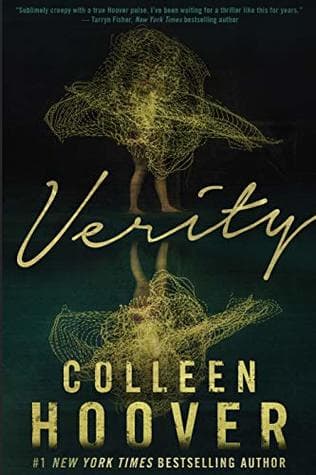
4.3 (158k) average on GoodreadsThriller'Verity' and 'Devious Lies' both explore dark themes of manipulation, psychological torment, and unraveling truths within a romantic context. Hoover's 'Verity' is lauded for its unreliable narrator and shocking twists, particularly the ambiguous ending that leaves readers questioning the protagonist's sanity and the veracity of events. Huntington's novel, while featuring significant betrayals and a 'web of cruelty,' tends towards a more definitive resolution and clear-cut villains. 'Devious Lies' focuses more on external forces of control and the protagonist's fight for freedom and truth, whereas 'Verity' delves deeper into the internal psychological horror and moral ambiguity of its characters, often blurring the lines between victim and perpetrator in a more unsettling way. Huntington's emotional stakes are high, but Hoover's are often more existentially disturbing.
- The Hunger Games
Suzanne Collins
4.3 (6.4M) average on GoodreadsFantasyIn a future where children fight to the death on live television, Katniss Everdeen volunteers for the arena, turning a death sentence into a fight for survival and a spark of rebellion.
- The Great Gatsby
F. Scott Fitzgerald
3.9 (3.8M) average on GoodreadsHistorical FictionIn the opulent Roaring Twenties, a mysterious millionaire's lavish parties hide his desperate, tragic pursuit of a lost love, exposing the emptiness within the American Dream.
- The Fault in Our Stars
John Green
4.2 (3.6M) average on GoodreadsYoung AdultA girl with a terminal illness finds her story rewritten when a charming boy with a similar past enters her life at a cancer support group, leading to a star-crossed romance.
- Pride and Prejudice
Jane Austen
4.3 (3M) average on GoodreadsHistorical FictionIn a society focused on status and money, Elizabeth Bennet navigates love and pride, challenging Mr. Darcy and social expectations to find true affection.




Enjoyed the summary?
A summary gives you the shape of the book. The book itself has the detail, the examples and the voice.
Find Devious Lies on AmazonAs an Amazon Associate, BookBrief earns from qualifying purchases. How we're funded