
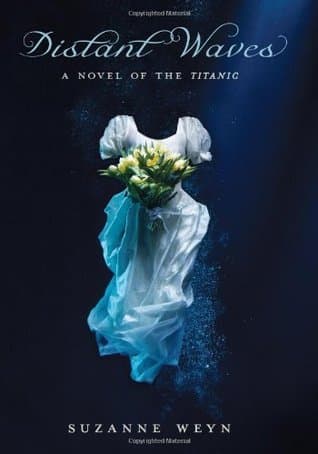
Synopsis
Covers the whole plot, including the ending.
- Difficulty
- Easy
- Pacing
- Moderate
- Mood
- Mysterious, Romantic, Suspenseful, Tragic
- Read it if
- You enjoy historical fiction with a supernatural twist, are fascinated by the Titanic, and appreciate a blend of romance, science, and spiritualism.
- Skip it if
- You prefer pure historical accuracy without fantastical elements or aren't interested in Young Adult romance.
Distant Waves Plot Summary
Covers the whole plot, including the ending.
The Move to Lily Dale and the Gift
After their father's sudden death leaves them poor, the five sisters – Annie, Florrie, Molly, Kitty, and Mary – and their mother, Eleanor, move from New York to Lily Dale, a spiritualist town. Eleanor hopes to use her medium abilities to earn money. Annie, the oldest, discovers she has a unique gift: she can see and hear 'distant waves' – visions and sounds from the future, often linked to water. This ability first scares her, but she starts to understand its meaning, though she largely keeps it secret from her family.
A Vision of Disaster and the London Opportunity
In Lily Dale, Annie has a vivid and troubling vision of a grand ship sinking in icy waters, filled with screaming passengers. This vision deeply disturbs her. Soon after, the family receives an unexpected invitation from John Jacob Astor IV, a rich industrialist, to come to London. Astor is interested in Eleanor's medium talents and wants her to hold a séance for his society friends, hoping to contact his deceased first wife. This gives the family a chance to escape their money problems and start fresh, despite Annie's growing unease about her premonitions.
London Encounters: Tesla and Stead
In London, the sisters meet the inventor Nikola Tesla, who is working on his 'world wireless system' – a device that can send energy and information wirelessly over long distances. Annie feels drawn to Tesla's brilliant, if somewhat distant, mind. They also meet journalist and spiritualist W.T. Stead, who is very interested in Eleanor's abilities and communicating with the spirit world. Stead is particularly fascinated by using Tesla's technology to connect the living and the dead, an idea that both excites and worries Annie.
The Titanic's Maiden Voyage
Through Astor's connections and their own growing fame, the entire family – Eleanor and her five daughters – gets passage on the Titanic, the supposedly unsinkable ship, for their return trip to America. John Jacob Astor IV is also on board with his new, pregnant wife, Madeleine. W.T. Stead has booked passage to attend a peace conference in New York. Unknown to most, Nikola Tesla has also arranged a secret lab in the ship's cargo hold, where he plans to do experiments with his wireless technology, hoping for a breakthrough.
Tesla's Experiment and Annie's Growing Fears
As the Titanic sails, Tesla secretly activates his 'world wireless' device in the ship's hold. He intends to send energy across the Atlantic, but the immense power he releases accidentally creates a strong electromagnetic field that interferes with the ship's navigation and communication systems. Annie experiences increasingly vivid and terrifying visions of the ship's coming doom, the screams of passengers, and the biting cold of the ocean. She tries to warn her family and others, but her warnings are dismissed as nervous thoughts or the result of her spiritualist upbringing, leaving her feeling alone and desperate.
The Iceberg and the Collision
On the night of April 14th, 1912, Annie's premonitions reach their peak. She feels an overwhelming dread and tries one last time to alert her mother and sisters, but they are caught up in the ship's parties. Suddenly, the Titanic hits an iceberg with a jarring impact. The collision, made worse by Tesla's device interfering with the ship's ability to react quickly, confirms Annie's worst fears. Chaos slowly begins as passengers and crew realize what is happening. Annie understands that her visions were not just premonitions, but actual warnings of the catastrophe.
The Struggle for Survival and Separation
As the Titanic begins to sink, the sisters and their mother struggle to find a lifeboat. The 'women and children first' rule is enforced, leading to painful separations. Molly, the most practical, fights for a place for her younger sisters. Annie, driven by her visions and a need to help, tries to guide people towards lifeboats, using her knowledge of the ship's layout and the coming disaster. She meets John Jacob Astor, who ensures his pregnant wife is safely in a lifeboat before facing his own fate. Annie also sees W.T. Stead, who remains calm, seeming to accept his destiny.
Tesla's Desperation and a Moment of Connection
Nikola Tesla, seeing the tragedy unfold, realizes with horror that his wireless device, meant for progress, has accidentally helped sink the Titanic by disrupting its systems and making it more vulnerable to the iceberg. He rushes back to his secret lab in the hold, trying to disable or change the device, hoping to lessen the disaster or send a strong distress signal. In a moment of shared terror and understanding, Annie briefly connects with Tesla, seeing his genius and his despair, sensing his immense guilt.
The Lifeboat and the Rescue
Eleanor, Florrie, Kitty, and Mary manage to get onto a lifeboat, but Annie and Molly are separated from them in the chaos. Molly, resourceful, finds a way onto a partially submerged collapsible lifeboat. Annie, after helping many others, finds herself in the freezing water, clinging to debris. She uses her 'distant waves' ability to navigate the dark, icy expanse, searching for her family and any sign of rescue. The wait in the lifeboats and the water is agonizing, as survivors endure the cold and the sounds of the dying.
Aftermath and Reunion
The RMS Carpathia arrives hours later, rescuing survivors from the lifeboats and the frigid water. Annie is pulled from the ocean, barely alive, suffering from hypothermia. She is eventually reunited with her mother, Florrie, Kitty, and Mary, and later, Molly, who was also rescued. The family is devastated by the loss of life and the trauma. They are forever changed by the Titanic disaster, but they are also bound closer by their shared experience. Annie's gift is now clear, and she begins to understand its future implications.
The Legacy and the Future
Afterward, the surviving sisters deal with their trauma and the meaning of their survival. Annie's 'distant waves' ability is no longer a secret, and she grapples with its responsibility. The experience strengthens their belief in the unseen and the connection of life and death. They reflect on the lives lost, including John Jacob Astor and W.T. Stead, and the role of human ambition and unforeseen forces in the tragedy. The family, though scarred, looks toward a future where their understanding of the world will shape their paths.
Principal Figures
Annie
Protagonist
The eldest sister with the gift of 'distant waves'.
Annie is the eldest of the five sisters, burdened by the responsibility of her family after her father's death. She is initially reserved and a bit overwhelmed by her emerging psychic ability to perceive 'distant waves' – visions and sounds from the future, often related to water. She is intelligent, empathetic, and increasingly driven by a sense of urgency and a desire to warn others. Her internal conflict stems from her inability to convince people of her visions and her struggle to understand the nature of her gift.
Relationships: Eleanor (Daughter, often tries to protect her mother.); Molly (Sister, often in conflict due to differing personalities but deeply caring.); Nikola Tesla (Intellectual connection, a mutual understanding of unseen forces.); John Jacob Astor IV (Acquaintance, respected for his kindness.)
Eleanor
Supporting
The mother and a spiritualist medium.
Eleanor is the mother of the five sisters, a strong-willed woman who turns to spiritualism to support her family after her husband's death. She possesses genuine mediumistic abilities, which she uses professionally in Lily Dale and later for John Jacob Astor. She is a loving mother, though sometimes preoccupied with her work and the family's financial struggles. She believes firmly in the spirit world and the power of communication beyond the veil, which initially makes her somewhat dismissive of Annie's visions as simply 'nervousness' rather than a distinct gift.
Relationships: Annie (Mother, initially dismisses Annie's unique visions.); John Jacob Astor IV (Client, respected for his patronage and kindness.)
Molly
Supporting
The practical and pragmatic sister.
Molly is one of Annie's younger sisters, characterized by her pragmatism, sharp wit, and strong sense of self-preservation. She is less inclined towards spiritualism than her mother and Annie, often questioning or scoffing at the unseen. Molly is fiercely independent and resourceful, always looking for practical solutions and ensuring the well-being of her younger siblings. Her skepticism provides a contrast to Annie's more ethereal nature, but her loyalty to her family is unwavering.
Relationships: Annie (Sister, often clashes due to differing views, but deeply cares for her.); Florrie (Sister, often protective of her.)
Nikola Tesla
Supporting
The brilliant but eccentric inventor.
Nikola Tesla is portrayed as a genius inventor, driven by his vision of wireless power and communication. He is brilliant, visionary, and somewhat detached from social norms, often consumed by his experiments. His 'world wireless system' is a central plot device, demonstrating both the potential and danger of unchecked scientific ambition. He forms an intellectual connection with Annie, recognizing her unique sensitivity. Tesla is ultimately wracked with guilt when he realizes his invention may have contributed to the Titanic's fate.
Relationships: Annie (Intellectual connection, a mutual understanding of unseen forces.)
John Jacob Astor IV
Supporting
The wealthy industrialist and benefactor.
John Jacob Astor IV is a prominent and wealthy American industrialist who invites Eleanor and her daughters to London. He is kind, cultured, and genuinely interested in Eleanor's mediumistic abilities, hoping to connect with his deceased first wife. He is depicted as a gentleman, concerned for the welfare of others, particularly his pregnant wife, Madeleine. His presence on the Titanic adds a touch of historical authenticity and underscores the vast social spectrum of the passengers.
Relationships: Eleanor (Patron and client, respectful relationship.); Madeleine Astor (Husband, deeply devoted and protective.)
W.T. Stead
Supporting
The spiritualist journalist.
W.T. Stead is a real-life British journalist and spiritualist who becomes acquainted with Eleanor and her family in London. He is depicted as a passionate believer in the spirit world and a keen observer of human nature. Stead is particularly interested in the intersection of spiritualism and new technologies, seeing Tesla's work as a potential bridge to the beyond. He is a calm and philosophical presence, even in the face of the Titanic disaster, appearing to accept his fate with a quiet dignity.
Relationships: Eleanor (Fellow spiritualist, intellectual discussion.)
Florrie
Supporting
The beautiful and romantic sister.
Florrie is one of Annie's younger sisters, known for her beauty and romantic inclinations. She is more focused on social interactions and finding love than on spiritual matters or the family's financial plight. Her youthful optimism and desire for a grand romance provide a contrast to Annie's more serious nature. She is often seen dreaming of a better life and enjoying the luxuries of their new experiences, particularly aboard the Titanic.
Relationships: Annie (Sister, looks up to her but often doesn't understand her deeper concerns.)
Kitty
Supporting
The quiet and artistic sister.
Kitty is one of the younger sisters, characterized by her quiet nature and artistic talents. She often expresses herself through drawing and sketching, observing the world around her with a keen, sensitive eye. She is more attuned to the emotional atmosphere than her more outwardly expressive sisters, often finding solace in her art. Her gentle demeanor makes her particularly vulnerable to the trauma of the Titanic disaster.
Relationships: Annie (Sister, often looks to Annie for comfort and guidance.)
Mary
Supporting
The youngest and most innocent sister.
Mary is the youngest of the five sisters, still a child and largely shielded from the family's deeper struggles and the complexities of the adult world. Her innocence and vulnerability highlight the tragedy of the Titanic, as she represents the many children lost or traumatized. She often provides moments of levity or simple observation, reminding the older sisters of what they are fighting to protect.
Relationships: Annie (Sister, often looked after and protected by Annie.)
Themes & Insights
The Interplay of Science and Spirituality
The novel explores the tension and overlap between scientific advancement and spiritual beliefs. Nikola Tesla's wireless technology, meant for progress, accidentally helps sink the Titanic, while Annie's 'spiritual' gift of premonition offers warnings science cannot explain. W.T. Stead embodies this theme, trying to bridge the two worlds. The story suggests that both realms hold powerful, sometimes dangerous, truths that humanity is only beginning to understand, and that one should not dismiss the other. For instance, Tesla's scientific pride leads to disaster, while Annie's intuitive, 'spiritual' warnings are ignored to their peril.
“Perhaps the future is not something we merely stumble into, but a tapestry woven with threads of both the seen and the unseen.”
The Weight of Premonition and the Burden of Knowledge
Annie's 'distant waves' gift is both a help and a burden. It lets her foresee disaster, but her inability to convince others creates a huge psychological weight. This theme highlights the isolation that often comes with extraordinary perception and the frustration of knowing a terrible truth that others refuse to believe. Her visions of the Titanic sinking are clear to her, yet she is dismissed as 'nervous' or 'overly sensitive,' showing the difficulty of sharing subjective, supernatural knowledge in a rational world. This burden forces Annie to mature quickly and deal with her unique place in the world.
“To see the future, and yet be powerless to change it, is a torment I would wish on no one.”
Human Hubris vs. Nature's Indifference
The 'unsinkable' Titanic itself symbolizes human hubris – the belief that technology can conquer nature. The novel compares this overconfidence with the power of the natural world (the iceberg, the freezing ocean) and the unforeseen results of human invention (Tesla's device). The sinking is a stark reminder that even the grandest human efforts are fragile against nature, and that technological progress, while impressive, can have unintended and catastrophic side effects. The belief in the ship's invincibility blinds many to the danger, making Annie's warnings even more impactful.
“They called her unsinkable. A testament to man's triumph over the sea. But the sea always has the last word.”
Family Bonds and Survival
At its core, the novel is about family strength, especially the bond between the five sisters and their mother, when facing hardship. Their journey from poverty in Lily Dale to the Titanic's luxury, and then to the fight for survival, tests their relationships. The tragedy forces them to rely on each other, showing individual strengths and weaknesses, and ultimately strengthening their connections. The painful separations during the sinking and the relief of reunion emphasize the value of these family ties and the instinct to protect loved ones above all else. Each sister contributes differently to their collective survival.
“No matter how far we traveled, or how great the storm, we were always, irrevocably, each other's anchor.”
Plot Devices & Literary Techniques
Distant Waves (Premonition)
Annie's psychic ability to see and hear future events, especially those involving water.
Annie's 'distant waves' ability serves as the primary supernatural plot device. It functions as both a foreboding element, building suspense and dread, and a catalyst for Annie's character development. It provides the audience with dramatic irony, as Annie's accurate visions are dismissed by other characters. This device also allows the narrative to explore themes of fate, free will, and the burden of knowledge, directly foreshadowing the Titanic disaster and guiding Annie's actions during the event.
Nikola Tesla's World Wireless System
A revolutionary but unstable invention that inadvertently affects the Titanic's fate.
Tesla's wireless system acts as a scientific plot device that introduces an element of technological danger. It serves to intertwine the historical event with a speculative scientific explanation, suggesting that human ambition and scientific experimentation can have unforeseen, catastrophic consequences. The device's interference with the ship's systems provides a unique, fictionalized reason for the Titanic's vulnerability and adds a layer of moral complexity to Tesla's character, highlighting the responsibility that comes with groundbreaking invention.
The RMS Titanic
The iconic, 'unsinkable' ship that serves as the central setting and symbol.
The Titanic functions as more than just a setting; it is a powerful symbol of human hubris and technological overconfidence. Its maiden voyage, meant to be a triumph, becomes a stage for tragedy, highlighting the fragility of life and the unpredictable nature of fate. As a plot device, it creates inherent dramatic tension, given its historical outcome, and forces the characters into extreme situations that reveal their true nature and test their resilience. The ship itself becomes an antagonist in the story, a beautiful but doomed vessel.
Lily Dale Spiritualist Community
A real-life spiritualist town that grounds the family's supernatural background.
Lily Dale serves as an important backdrop for the family's origins and establishes their connection to spiritualism. As a plot device, it legitimizes Eleanor's mediumistic abilities and provides context for Annie's emerging gift, making it seem less anomalous within their family's world. It introduces the theme of spiritualism versus skepticism early on and sets the stage for the family's interactions with figures like W.T. Stead, who share their beliefs, and provides a contrast to the more 'scientific' world they encounter in London and aboard the Titanic.
Distant Waves Quotes
“The ocean has a way of calling to those who truly belong to it, no matter how far they stray.”
“Sometimes, the greatest adventures begin with the most ordinary goodbyes.”
“Love, like the sea, can be both a gentle current and a raging storm.”
“The future is a tapestry woven with threads of choice and threads of fate.”
“Even in the grandest of ships, the human heart remains the most complex vessel.”
“Some moments are so vivid, they feel like they were painted with starlight.”
“History isn't just dates and names; it's the echoes of lives lived, loves lost, and dreams pursued.”
“The greatest magic isn't in spells, but in the connections we forge with others.”
“There are some truths that the heart knows long before the mind can comprehend them.”
“To truly live is to embrace the uncertainty, to dance with the unknown.”
“The past is a whisper, but it can shape the loudest of futures.”
“Even in the darkest depths, there can be a glimmer of hope, a beacon to guide you home.”
“Some goodbyes are not endings, but merely the turning of a page to a new chapter.”
“The most powerful journeys are not always across oceans, but within the landscape of the heart.”
Quiz
10 questions on the plot and the characters. Each answer comes with a short explanation.
Question 1
Which historical figure do the four sisters and their mother first become acquainted with in London?
- Nikola Tesla
- John Jacob Astor
- W. T. Stead
- Guglielmo Marconi
Show answer
C. W. T. Stead The synopsis states that they become acquainted with journalist W. T. Stead, scientist Nikola Tesla, and industrialist John Jacob Astor, implying Stead is among the first connections made in London.
Question 2
What is the primary setting for the initial part of the sisters' journey before they reach London?
- A bustling city in England
- A spiritualist town in New York
- A remote village in Ireland
- A scientific laboratory in Paris
Show answer
B. A spiritualist town in New York The description clearly states they make their way 'from a spiritualist town in New York to London'.
Question 3
Which major historical event serves as the climactic setting for the novel?
- The sinking of the Lusitania
- The eruption of Mount Vesuvius
- The sinking of the Titanic
- The San Francisco earthquake
Show answer
C. The sinking of the Titanic The core premise of the book is that the sisters' lives are 'intertwined with the sinking of the Titanic', and they all find themselves on the Titanic.
Question 4
What is the primary genre combination of 'Distant Waves'?
- Science Fiction, Mystery, Thriller
- Fantasy, Historical Fiction, Young Adult, Romance
- Contemporary, Slice of Life, Drama
- Dystopian, Adventure, Comedy
Show answer
B. Fantasy, Historical Fiction, Young Adult, Romance The provided information explicitly lists the genres as 'Fantasy, Historical Fiction, Young Adult, Romance'.
Question 5
How many sisters are central to the story in 'Distant Waves'?
- Three
- Four
- Five
- Six
Show answer
B. Four The description specifies 'Four sisters and their mother make their way...'.
Question 6
Which of Nikola Tesla's contributions plays a dual role in the Titanic disaster, both dooming and potentially saving characters?
- His alternating current (AC) power system
- His remote control technology
- One of his inventions
- His work on X-rays
Show answer
C. One of his inventions The synopsis states, 'When they all find themselves on the Titanic, one of Tesla's inventions dooms them...and one could save them.' The specific invention is not detailed in the synopsis but its role is highlighted.
Question 7
What specific elements are described as intertwining within the novel's narrative?
- Politics, economics, and warfare
- Science, spiritualism, history, and romance
- Art, philosophy, and environmentalism
- Mythology, folklore, and psychology
Show answer
B. Science, spiritualism, history, and romance The description explicitly states: 'Science, spiritualism, history, and romance intertwine in Suzanne Weyn's newest novel.'
Question 8
Given the author's previous work 'REINCARNATION' and the description of 'Distant Waves', what supernatural element is likely to be a recurring theme or plot device?
- Vampirism
- Werewolves
- Spiritualism / Psychic abilities
- Time travel
Show answer
C. Spiritualism / Psychic abilities The book begins in a 'spiritualist town in New York' and the author's previous book 'REINCARNATION' is also a 'supernatural romance', strongly suggesting spiritualism or related psychic elements will be prominent.
Question 9
How does the author, Suzanne Weyn, connect 'Distant Waves' to her previous work 'REINCARNATION' in the provided description?
- By stating 'Distant Waves' is a direct sequel to 'REINCARNATION'.
- By mentioning both are historical, supernatural romances.
- By implying they share the same main characters.
- By revealing a crossover event between the two books.
Show answer
B. By mentioning both are historical, supernatural romances. The description states, 'From the author of REINCARNATION, another historical, supernatural romance, this time focusing on five sisters...' explicitly linking them by genre and style.
Question 10
Which of the following describes the relationship between Nikola Tesla's invention and the Titanic's fate in the narrative?
- His invention caused the iceberg collision directly.
- His invention had no impact on the Titanic's fate.
- One of his inventions both contributes to the disaster and offers a potential solution.
- His invention was meant to prevent the disaster but failed entirely.
Show answer
C. One of his inventions both contributes to the disaster and offers a potential solution. The synopsis clearly states, 'When they all find themselves on the Titanic, one of Tesla's inventions dooms them...and one could save them,' indicating a dual, impactful role.
Distant Waves FAQ
What is the central premise of 'Distant Waves'?
'Distant Waves' centers on four sisters and their mother, who travel from a spiritualist community in New York to London. Their journey intertwines them with historical figures like W.T. Stead, Nikola Tesla, and John Jacob Astor, ultimately leading them all aboard the ill-fated Titanic, where one of Tesla's inventions plays a crucial role in their fate.
Who are the main protagonists, the four sisters?
The main protagonists are the four O'Connell sisters: Mary, the eldest and most pragmatic; Nora, who possesses psychic abilities; Tessa, interested in science and invention; and Violet, the youngest and most romantic. Each sister experiences unique encounters and challenges leading up to and during the Titanic voyage.
How does spiritualism factor into the plot?
The O'Connell family originates from Lily Dale, a real-life spiritualist community in New York, and the mother is a medium. Nora, one of the sisters, inherits and develops psychic abilities, which provide premonitions and insights throughout the story, often clashing with scientific explanations and historical events.
What role does Nikola Tesla play in the narrative?
Nikola Tesla is a key historical figure in the novel, encountered by the O'Connell family in London. His advanced scientific inventions, particularly one involving wireless energy or a death ray, are central to the plot, becoming both a potential cause of the Titanic's sinking and a possible means of salvation.
What is the significance of the Titanic in the story?
The Titanic serves as the climactic setting where all the character arcs converge. It's not just a backdrop for a historical tragedy, but a stage where Tesla's invention is activated, the sisters' relationships are tested, and their individual fates are sealed or altered by the catastrophic event.
Is there a specific historical invention by Tesla that influences the plot?
Yes, the novel features a fictionalized version of Tesla's real-life work on wireless energy transmission and resonance, often referred to as a 'death ray' or a device capable of creating powerful vibrations. This invention is depicted as being inadvertently or directly responsible for weakening the Titanic's hull, contributing to its sinking.
How do W.T. Stead and John Jacob Astor connect with the O'Connell family?
W.T. Stead, a journalist and spiritualist, connects with the O'Connell family due to their spiritualist background and his interest in the supernatural. John Jacob Astor, a wealthy industrialist, becomes involved through social circles and potentially a romantic interest for one of the sisters, bringing him into close proximity with Tesla's work.
Are there any subtle foreshadowing elements related to the Titanic's fate?
Beyond Nora's explicit psychic visions, there are subtle hints throughout the book, such as discussions about the 'unsinkable' nature of modern ships, Tesla's experiments causing unexpected vibrations, and perhaps metaphorical warnings from the spiritualist world that hint at impending disaster, building suspense for the inevitable.
How does each sister's personality influence their choices during the disaster?
Mary's practicality might lead her to seek immediate, logical solutions; Nora's psychic insights could guide her to specific actions or people; Tessa's scientific curiosity might make her try to understand or even manipulate Tesla's device; and Violet's romantic nature could influence her to stay with a loved one or make a selfless sacrifice.
What psychological impact does living in a spiritualist community have on the sisters?
Growing up in Lily Dale instills a unique worldview in each sister. It likely cultivates Nora's psychic gifts but might also create skepticism in Mary, scientific curiosity in Tessa, and a longing for conventional romance in Violet, shaping their individual responses to both the supernatural and the scientific.
How do the themes of science vs. spiritualism affect the characters' internal conflicts?
The clash between scientific explanation and spiritual belief creates internal conflict, particularly for Tessa and Nora. Tessa might struggle to reconcile her scientific understanding with her sister's psychic abilities, while Nora might question if her visions are truly supernatural or rooted in psychological phenomena, forcing them to navigate their own truths.
What is the psychological journey of the mother figure in the novel?
The O'Connell mother, a medium, likely undergoes a profound psychological journey. Her reliance on spiritualism might be challenged by the real-world dangers of the Titanic and the tangible effects of Tesla's science, forcing her to confront the limitations or strengths of her beliefs in a crisis.
Is Tesla portrayed as a villain or a tragic figure in the story?
Tesla is likely portrayed as a complex, tragic figure rather than a villain. His genius and ambition lead to an invention with unintended, catastrophic consequences, suggesting that his motivations are driven by scientific progress rather than malice, making him a victim of his own brilliance.
How does the novel reinterpret the historical sinking of the Titanic?
The novel reinterprets the Titanic sinking by introducing a supernatural/sci-fi element: Tesla's invention. Instead of solely focusing on iceberg impact and human error, it suggests a deeper, more mysterious cause, intertwining known history with speculative fiction and giving a new dimension to the tragedy.
What is the ultimate message about fate versus free will in 'Distant Waves'?
The book explores the tension between fate, perhaps hinted at by Nora's visions and the historical inevitability of the Titanic's sinking, and free will, represented by the choices the sisters make in the face of disaster. It likely suggests that while some events are destined, individual actions can still alter personal outcomes.
Does the novel offer any hope or redemption amidst the tragedy?
Despite the inherent tragedy of the Titanic, the novel likely offers hope through individual acts of courage, love, and sacrifice among the sisters. It might also suggest a form of redemption for characters like Tesla, or a continuation of life and love for those who survive, emphasizing resilience.
How does the romance element develop for each sister?
The romance element varies: Violet, the youngest, likely experiences a more traditional, idealized romance. Other sisters might find love with historical figures like John Jacob Astor or other passengers, adding personal stakes to their survival. Each romance develops uniquely, reflecting their individual personalities and circumstances.
What commentary does the book make on technological advancement?
The book uses Tesla's invention and the 'unsinkable' Titanic to comment on the double-edged sword of technological advancement. It highlights humanity's hubris in believing technology can conquer nature, but also its potential for both destruction and extraordinary innovation, urging caution and responsibility in scientific pursuits.
About the author

Suzanne Weyn is an author known for her works of fiction, including "The Bar Code Tattoo," "Distant Waves," and "Reincarnation." Her writing often explores themes of identity and the impact of technology on society. Weyn's books have garnered attention for their imaginative storytelling and thought-provoking concepts.
Similar books
- A Great and Terrible Beauty
Libba Bray
3.8 (208k) average on GoodreadsFantasyBray's novel offers a more overtly magical and gothic take on historical YA, with a stronger emphasis on a secret society and darker supernatural abilities. While Bray explores female friendships and rebellion against societal norms, Weyn's novel prioritizes external disaster and the scientific-mystical convergence.
- Salt to the Sea
Ruta Sepetys
4.3 (123k) average on GoodreadsHistorical FictionSepetys' book excels in its gritty, realistic portrayal of historical tragedy (WWII) without any fantastical elements, offering a more somber and character-driven exploration of survival. Distant Waves, in contrast, injects a sense of wonder and speculative possibility into its historical catastrophe, blending fact with psychic phenomena.
- Harry Potter and the Sorcerer's Stone
J.K. Rowling
4.5 (7M) average on GoodreadsFantasyRescued from a miserable life under the stairs, an orphaned boy discovers he's a wizard destined for a magical school, where he uncovers a dangerous secret tied to the dark wizard who murdered his parents.
- The Hunger Games
Suzanne Collins
4.3 (6.4M) average on GoodreadsFantasyIn a future where children fight to the death on live television, Katniss Everdeen volunteers for the arena, turning a death sentence into a fight for survival and a spark of rebellion.
- 1984
George Orwell
4.2 (3.1M) average on GoodreadsPoliticsIn a future where surveillance and thought control are absolute, a man's search for truth clashes with the Party, showing that hope can be a form of rebellion.
- Divergent
Veronica Roth
4.2 (2.9M) average on GoodreadsFantasyIn a society divided by virtues, a sixteen-year-old's difference from the norm starts a rebellion that threatens her world.





Enjoyed the summary?
A summary gives you the shape of the book. The book itself has the detail, the examples and the voice.
Find Distant Waves on AmazonAs an Amazon Associate, BookBrief earns from qualifying purchases. How we're funded