

Synopsis
Covers the whole plot, including the ending.
- Difficulty
- Medium
- Pacing
- Variable
- Mood
- Atmospheric, Melancholy, Reflective, Intimate
- Read it if
- You enjoy lyrical prose, complex character studies, and narratives that explore memory, identity, and the lasting impact of trauma across generations and geographies.
- Skip it if
- You prefer fast-paced plots, clear-cut resolutions, or straightforward linear storytelling.
Divisadero Plot Summary
Covers the whole plot, including the ending.
The Farm and the Foundling
In 1970s Northern California, Anna narrates her upbringing on a remote farm with her father, Claire (adopted after her parents' murder), and Coop, a young man who arrived at their farm as a child. Anna and Claire, though not blood sisters, share a deep bond, and Coop is an important, if quiet, presence. The story establishes their isolated life, filled with farm work, the girls' growing up, and unspoken tensions beneath the surface of their unique family. Anna often feels like an observer, detailing the interactions and subtle shifts in their relationships, especially as the two girls grow closer to Coop, setting the stage for the inevitable end of their fragile peace.
The Discovery and the Betrayal
The farm family's delicate balance shatters when Anna's father finds Claire and Coop together in the barn. Enraged by what he sees as a deep betrayal, especially given Claire's adopted status and Coop's place in the family, he violently attacks Coop with a shovel. Claire intervenes, shielding Coop, and is also struck. Anna, watching the brutal scene, is frozen by shock and fear. The violence is sudden and devastating, permanently changing their relationships and ending their innocent, isolated life on the farm. This event is the central trauma from which all later stories branch.
Aftermath and Separation
After the violent incident, Coop flees the farm, disappearing. Claire, badly injured and traumatized, is sent away by her father to live with relatives, effectively banished from their home. Anna is left alone with her father, who is consumed by guilt, anger, and a deep sense of loss. The farm, once a place of shared work and quiet routines, becomes a desolate space filled with unspoken grief. Anna struggles to process the sudden break-up of her family, haunted by the images of violence and the sudden absence of the two people she loved most, her sister and Coop.
Anna's New Life in San Francisco
Years after the farm incident, Anna lives in San Francisco, working as a researcher and archivist. She immerses herself in the lives of others, particularly an obscure French writer named Lucien Segura. Her work allows her to explore fragmented histories, mirroring her own fragmented past. She lives a solitary life, still deeply affected by the trauma of her youth. Her narrative is mixed with her present-day thoughts as she gathers information and tries to understand the reasons for the violence that shattered her family, constantly searching for clues about Coop and Claire, whom she has not seen since that night.
Coop's Wanderings and Casino Life
The story shifts to Coop's perspective, revealing his life after fleeing the farm. He goes to Nevada, where he quickly adapts to the casino world, becoming a skilled card player and a professional gambler. He lives a transient, dangerous life, always moving, haunted by the violence he experienced. Coop's story is about survival, cleverness, and a desperate attempt to outrun his past. He forms temporary alliances and relationships in the gambling world, but his deep trauma and the memory of Claire and Anna continue to shape his decisions and his solitary life.
Claire's Reappearance and New Identity
Years later, Coop encounters Claire by chance in a casino. She is a different woman now, married to a respectable man, having seemingly built a new life. Their reunion is full of unspoken history, grief, and a lingering attraction. Claire initially appears to have moved on, but the encounter reawakens dormant feelings and trauma from their shared past. This meeting shows how deeply the farm incident continues to affect both of them, no matter their separate paths, and hints at their lasting connection.
Anna's Obsession with Lucien Segura
Anna's professional life becomes more connected with her personal search for understanding. Her research into Lucien Segura, a minor French writer from the early 20th century, becomes an obsession. Segura's life, marked by fragmentation, hidden relationships, and a connection to the French countryside, begins to mirror Anna's own experiences. She uncovers details of his affairs, his literary circles, and his isolated life, finding parallels between his emotional state and her own. This research is a metaphorical journey for Anna, a way to process her own fractured identity and search for meaning in her past.
Journey to France
Driven by her research and an unspoken need for distance from her past, Anna travels to the south of France. She visits the places where Lucien Segura lived and wrote, immersing herself in the physical landscape that shaped his life. This journey is not just academic; it is personal. She hopes to find insights into Segura's life and a clearer understanding of her own, a way to connect the pieces of her family's story. The French countryside, with its history and quiet beauty, contrasts sharply with the California farm, yet both landscapes hold secrets and memories.
Uncovering Segura's Family Secrets
In France, Anna explores Segura's life more deeply, uncovering a hidden and complex family history. She learns about his close and possibly incestuous relationship with his half-sister, Marie-Neige, and the illegitimate child they may have had. This discovery resonates with Anna's own family trauma, particularly the forbidden love between Claire and Coop. Segura's story, filled with unspoken desires, betrayals, and the consequences of hidden passions, offers a historical echo to Anna's personal experiences, helping her to understand the destructive forces that tore her own family apart.
The Weaver's Tale and Shared Histories
While in France, Anna meets a local woman who shares a story about a blind weaver, a man whose life was connected to the region's history. This tale emphasizes connection, fate, and how lives intertwine across generations and places. The weaver's story is a metaphor for the novel, suggesting that individual lives, though seemingly separate, are threads in a larger, complex fabric. This encounter reinforces Anna's understanding that her own story is part of a broader human experience of love, loss, and the search for meaning.
Coop's Return and Reconciliation
After years of wandering and a life shaped by gambling and solitude, Coop eventually returns to the abandoned California farm. He goes back to the place where his life with Anna and Claire was tragically severed, seeking some form of closure. His return is a quiet, reflective act, a confrontation with his past. He finds the farm in disrepair, a stark reminder of what was lost. This pilgrimage shows his attempt to reconcile with the violence and heartbreak that defined his youth, hinting at a potential for healing or at least an end to his restless flight.
Claire's Fate and Final Connections
The novel implies, through various reflections and fragmented narratives, that Claire's life after the farm incident, despite her attempts to build a new identity, remained deeply marked by the trauma and her connection to Coop. Her encounter with Coop in the casino is a poignant reminder of their unbreakable bond. While a definitive reunion of all three characters is not explicitly shown, the narrative leaves the reader with a sense of their lasting, if often painful, interconnectedness. The story ends with the understanding that the past, especially moments of intense love and violence, continues to shape Anna, Claire, and Coop, even across continents and years.
Principal Figures
Anna
Protagonist/Narrator
The observant, reflective sister who seeks to understand her fractured past.
Anna is the primary narrator for much of the novel, an introspective and observant character who meticulously details the events of her childhood and her subsequent quest for understanding. She is a researcher and archivist, a profession that reflects her need to piece together fragmented histories, both her own and those of others. Haunted by the violence that tore her family apart, Anna is driven by a profound need to make sense of the past and the fates of Claire and Coop. She often feels like an outsider, a witness to the intense emotional lives of others, yet her quiet determination is central to the narrative's unfolding.
Relationships: Claire (Adopted sister, deep emotional bond, complex love and rivalry); Coop (Farmhand, object of unspoken affection, witness to her family's destruction); Father (Biological father, source of both love and violence, strained relationship after the incident)
Claire
Supporting/Central Figure
Anna's beautiful, passionate adopted sister, whose forbidden love sparks the family's tragedy.
Claire is Anna's adopted sister, brought to the farm after her parents' murder. She is depicted as beautiful, passionate, and somewhat wild, possessing a magnetic quality that draws both Coop and, in a more complex way, her father. Her intense, forbidden relationship with Coop is the catalyst for the violent event that shatters their family. Claire's life after the farm is one of reinvention and an attempt to escape her past, but the trauma and her connection to Coop continue to define her. She represents the raw, untamed aspects of love and desire, and the destructive power they can wield.
Relationships: Anna (Adopted sister, deep emotional bond, complex love and rivalry); Coop (Lover, intense and forbidden romantic relationship, central to the tragedy); Father (Adoptive father, complex and possessive love, ultimate source of violence)
Coop
Supporting/Central Figure
The enigmatic farmhand, whose love for Claire leads to a violent confrontation and a life of wandering.
Coop is the quiet, hardworking farmhand who becomes an integral part of Anna's family. Arriving as a child, he grows up alongside the girls, developing a deep, unspoken bond with both, but ultimately a passionate, forbidden love with Claire. He is a man of few words, strong and capable, but also carrying a hidden emotional depth. After the violent incident, he flees the farm and embarks on a life as a professional gambler, constantly on the move, trying to outrun his past. Coop represents the struggle for survival, the weight of guilt, and the enduring power of first love.
Relationships: Anna (Childhood companion, unacknowledged affection); Claire (Lover, intense and forbidden romantic relationship, central to the tragedy); Father (Employer, surrogate father figure, ultimately his attacker)
Anna's Father
Supporting/Antagonist
The patriarch of the farm, whose possessive love and violent outburst shatter his family.
Anna's father is a hardworking, stoic farmer who takes in Claire and Coop, creating a makeshift family. He is a man of strong emotions, capable of deep affection but also explosive violence. His possessive love for Claire, combined with his sense of betrayal when he discovers her relationship with Coop, leads to the brutal attack that serves as the novel's central trauma. After the incident, he is consumed by guilt and loss, becoming a shadow of his former self. He embodies the destructive potential of unchecked emotion and the profound impact of violence on a family unit.
Relationships: Anna (Biological daughter, strained and distant after the incident); Claire (Adopted daughter, object of his possessive love, catalyst for his violence); Coop (Farmhand, surrogate son, victim of his violence)
Lucien Segura
Mentioned/Thematic Figure
An obscure French writer whose life and relationships mirror Anna's own family drama.
Lucien Segura is a fictional early 20th-century French writer whose life and work become the focus of Anna's research. Though he never appears directly, his story is extensively detailed, serving as a parallel narrative and a thematic echo to Anna's own family trauma. Segura's complex relationships, particularly with his half-sister, and his fragmented existence, provide Anna with a historical lens through which to understand forbidden love, betrayal, and the lasting impact of secrets. He represents the idea that personal histories are often intertwined with broader human patterns of desire and consequence.
Relationships: Marie-Neige (Half-sister, possibly incestuous relationship); Various lovers and literary figures (Complex romantic and professional connections)
Marie-Neige
Mentioned/Thematic Figure
Lucien Segura's half-sister, with whom he had a complex and possibly incestuous relationship.
Marie-Neige is Lucien Segura's half-sister, a figure central to the hidden complexities of his life that Anna uncovers. Her relationship with Segura, hinted to be incestuous and leading to a child, serves as a direct parallel to the forbidden love between Claire and Coop. She represents the taboo aspects of desire and the profound, often destructive, impact of such relationships on individuals and families. Marie-Neige's story, though historical and distant, provides Anna with a framework for understanding the powerful, irrational forces at play in her own past.
Relationships: Lucien Segura (Half-brother, possibly incestuous lover)
Themes & Insights
The Enduring Power of the Past and Memory
The novel explores how past events, especially traumatic ones, continue to shape characters' present lives. Anna's entire professional and personal quest is driven by her need to understand the violent incident on the farm, sifting through memories and historical records. Coop's life as a transient gambler is a direct result of his flight from the farm, and Claire's attempts to build a new life are always shadowed by her past. The fragmented narrative structure reflects the fractured nature of memory and how individuals try to reconstruct their histories. The past is not just remembered; it actively informs every decision and relationship.
“What had happened in that house, in that barn, never stopped happening. It was just in a different room now.”
Forbidden Love and its Destructive Consequences
Central to the novel's conflict is the theme of forbidden love, specifically the incestuous-coded relationship between Claire and Coop (given their family situation and Anna's father's reaction). This love, seen as a betrayal by Anna's father, starts a violent chain of events that shatters the family. The parallel story of Lucien Segura and his half-sister Marie-Neige reinforces this theme, showing how intense, transgressive desires, whether acknowledged or suppressed, can lead to deep suffering and permanently change lives. The novel suggests that such love, while powerful, often comes with a high, destructive price.
“That was the night we became a family, and the night we ceased to be one.”
The Nature of Family and Belonging
Divisadero examines the fluid and often unconventional nature of family. The core unit of Anna, Claire, Coop, and their father is a 'makeshift family' formed by circumstance rather than blood (except for Anna and her father). The novel questions what truly makes a family, exploring the bonds of affection, loyalty, and shared experience that can be as strong as, if not stronger than, biological ties. When this unit is violently broken, each character searches for a new sense of belonging, whether through solitary wandering (Coop), reinvention (Claire), or historical investigation (Anna). The absence of a traditional family structure highlights the characters' deep longing for connection.
“We were a family, though not by blood, and that made us more fragile, perhaps, more fiercely loyal, more easily broken.”
Storytelling, History, and the Search for Truth
Anna's profession as a researcher and her deep dive into Lucien Segura's life highlight the novel's interest in storytelling and the construction of history. The narrative itself is fragmented, told from multiple perspectives and across different timelines, reflecting the difficulty of ever finding a single, definitive 'truth.' Characters, especially Anna, try to make sense of their past by piecing together fragments, much like an archivist reconstructs a life from different documents. The novel suggests that truth is often subjective, layered, and found in the act of narration itself, with each story offering a different view of shared events.
“Every story, even the one you tell yourself, changes with time and the telling.”
Landscape as Memory and Character
The novel uses landscape not just as a setting but as a powerful holder of memory and an active 'character' influencing the protagonists. The Northern California farm, with its barn and fields, is filled with the innocence and subsequent trauma of the characters' youth. Later, the stark casinos of Nevada reflect Coop's transient, dangerous existence, while the quiet, historical landscapes of southern France provide Anna with a space for reflection and historical connection. The physical environment mirrors the characters' internal states and holds the echoes of their past actions, becoming a silent witness to their lives.
“The land remembers what the people forget.”
Plot Devices & Literary Techniques
Fragmented Narrative Structure
The story is told non-linearly, shifting between characters, timelines, and perspectives.
The novel employs a fragmented narrative, jumping between Anna's present-day life in San Francisco and France, Coop's experiences in Nevada, and flashbacks to their shared childhood on the farm. This non-linear approach mirrors the characters' own fractured memories and their struggle to piece together their past. It creates a sense of mystery and allows the reader to gradually uncover the full scope of the tragedy and its aftermath from multiple viewpoints, highlighting the subjective nature of truth and memory. The shifts in perspective also emphasize the lasting, pervasive impact of the central trauma on each character's individual journey.
Parallel Narratives (Lucien Segura's Story)
The historical account of a French writer's life mirrors the main characters' experiences.
Anna's extensive research into the obscure French writer, Lucien Segura, functions as a parallel narrative. Segura's life, particularly his complex and possibly incestuous relationship with his half-sister, Marie-Neige, directly echoes the forbidden love between Claire and Coop and the resulting family breakdown. This device provides a historical and literary context for the emotional turmoil of the main characters, suggesting that their experiences are part of a broader human pattern of desire, transgression, and consequence. It allows Anna, and the reader, to explore themes of forbidden love and fractured families from a detached, yet deeply resonant, perspective.
Symbolism of the Divisadero Street
The street name signifies division, separation, and the splitting of paths.
The title 'Divisadero,' a Spanish word meaning 'division' or 'lookout point,' is highly symbolic. It refers to a street in San Francisco, but metaphorically represents the central theme of separation and the divergent paths taken by Anna, Claire, and Coop after the traumatic incident on the farm. It also suggests a 'lookout point' from which characters (especially Anna) observe and reflect on their past, trying to gain perspective on the divisions in their lives. The name encapsulates the novel's core concerns: the splitting of a family, the fragmentation of identity, and the geographical and emotional distances that separate people.
The Unreliable/Limited Narrator
Anna's perspective is dominant but incomplete, requiring the reader to synthesize information.
While Anna narrates a significant portion of the novel, particularly the childhood scenes and her research, her perspective is limited by her own trauma, observations, and lack of full knowledge about Claire and Coop's lives post-farm. The narrative occasionally shifts to Coop's internal thoughts or provides glimpses of Claire, but a single, omniscient voice is absent. This forces the reader to actively participate in constructing the story, filling in gaps, and inferring motivations, mirroring Anna's own struggle to piece together a coherent truth from fragmented memories and elusive facts. It highlights the subjective nature of memory and personal history.
Divisadero Quotes
“The past is a country we all inhabit, whether we know it or not.”
“There are always two stories, two memories, two sets of facts. The truth lies somewhere between them, or perhaps nowhere at all.”
“You can never truly know a place until you've loved someone there.”
“We are all just fragments of stories, trying to make sense of the whole.”
“The silence was not empty; it was full of what had been said, what had been done.”
“Sometimes the most important things are those you choose to forget.”
“Every landscape holds a secret, a buried history that whispers to those who listen.”
“Love is not a straight line, but a labyrinth of desires and misunderstandings.”
“He carried his past like a shadow, always there, sometimes visible, sometimes not.”
“The trick was not to escape the past, but to learn how to live within its echoes.”
“We invent our histories as much as we discover them.”
“There are moments when the world seems to crack open, and you can see the machinery beneath.”
“A house is not just walls and a roof; it's a container of lives, both lived and imagined.”
“The light itself seemed to hold memories, illuminating the dust of forgotten days.”
Quiz
10 questions on the plot and the characters. Each answer comes with a short explanation.
Question 1
What is the initial setting where Anna, Claire, and their father live with Coop?
- A suburban house in San Francisco
- A farm in Northern California
- A remote cabin in the Nevada desert
- An apartment building in southern France
Show answer
B. A farm in Northern California The novel begins in the 1970s with Anna, Claire, and their father living on a farm in Northern California, where Coop also resides.
Question 2
What event shatters the makeshift family dynamic between Anna, Claire, their father, and Coop?
- The father deciding to sell the farm
- An incident of violence involving Coop and Anna
- Claire running away from home
- The death of their mother
Show answer
B. An incident of violence involving Coop and Anna The family is shattered by an incident of violence, specifically when the father discovers Coop and Anna together, leading to a brutal attack.
Question 3
What is Claire's profession later in life, after the initial family trauma?
- A professional gambler in Nevada casinos
- A writer studying the life of a French author
- A farmer continuing her father's legacy
- A social worker in San Francisco
Show answer
B. A writer studying the life of a French author Claire eventually travels to France and becomes a writer, specifically researching and documenting the life of a lesser-known French author.
Question 4
Which of the following locations is NOT one of the primary settings explored in the novel?
- Northern California
- Nevada's casinos
- Southern France
- New York City
Show answer
D. New York City The narrative spans Northern California, Nevada (specifically its casinos), and southern France. New York City is not a primary setting.
Question 5
What is the nature of the relationship between Anna and Coop before the violent incident?
- They are distant acquaintances living in the same house.
- They have a secret romantic and sexual relationship.
- They are close siblings, unaware of their true relation.
- Coop acts as Anna's mentor for farm work.
Show answer
B. They have a secret romantic and sexual relationship. Anna and Coop develop a secret romantic and sexual relationship, which is discovered by their father, leading to the pivotal violent event.
Question 6
What is the significance of the 'Divisadero' street name in San Francisco, as it relates to the novel's themes?
- It is where the family's farm was located.
- It symbolizes division, crossroads, and the splitting of paths for the characters.
- It is the name of a casino where Coop spends time.
- It refers to a specific type of tree found in southern France.
Show answer
B. It symbolizes division, crossroads, and the splitting of paths for the characters. The title 'Divisadero' refers to a street in San Francisco but also conceptually to the idea of division, separation, and the divergent paths taken by the characters after the initial trauma.
Question 7
What happens to Coop after the violent incident with Anna and her father?
- He remains on the farm and reconciles with the family.
- He is sent to prison and later becomes a professional gambler.
- He flees to southern France with Anna.
- He becomes a reclusive writer, mirroring Claire's later life.
Show answer
B. He is sent to prison and later becomes a professional gambler. After the violence, Coop is imprisoned. Upon his release, he makes a new life for himself in the world of professional gambling in Nevada.
Question 8
The novel frequently uses a narrative structure that moves 'back and forth through time and place.' What effect does this have on the reader's understanding of the characters?
- It makes the characters' motivations clear and predictable from the start.
- It emphasizes how past events continuously shape their present identities and choices.
- It suggests that the characters are entirely disconnected from their pasts.
- It primarily serves to confuse the reader and obscure character development.
Show answer
B. It emphasizes how past events continuously shape their present identities and choices. The non-linear structure highlights how the 'present shadowed by the past' directly influences the characters' lives, showing how their origins and experiences continue to define them.
Question 9
What is the central theme related to identity that the characters grapple with throughout the novel?
- The struggle for financial success and social status.
- The search for belonging and the construction of self after trauma and displacement.
- The importance of maintaining traditional family structures.
- The pursuit of revenge against those who wronged them.
Show answer
B. The search for belonging and the construction of self after trauma and displacement. A core theme is the characters' individual journeys to redefine themselves and find a sense of belonging or home after the shattering events of their youth, often in new places and roles.
Question 10
How does the author, Michael Ondaatje, typically use language and imagery in 'Divisadero' to convey the characters' internal states?
- Through straightforward, journalistic prose that avoids metaphor.
- By relying heavily on explicit declarations of emotion rather than subtle hints.
- Through poetic, fragmented descriptions and sensory details that reflect memory and longing.
- Primarily through extensive dialogue and direct character introspection.
Show answer
C. Through poetic, fragmented descriptions and sensory details that reflect memory and longing. Ondaatje is known for his poetic, evocative language, using rich imagery and fragmented narratives to delve into the characters' inner lives, memories, and emotional landscapes, rather than direct statements.
Divisadero FAQ
What is the central premise of 'Divisadero' and how does the family dynamic begin?
'Divisadero' centers on a makeshift family in 1970s Northern California: a father, his biological daughter Claire, his adopted daughter Anna, and Coop, a young man who works and lives with them. Their seemingly idyllic, if unconventional, farm life is the foundation before a violent event shatters it, setting the stage for the characters' disparate futures.
What is the 'incident of violence' that shatters the family, and what are its immediate consequences?
The violent incident involves the father discovering Anna and Coop in a sexual relationship. In a fit of rage, he brutally beats Coop with a shovel, believing Coop has defiled his adopted daughter. This act leads to Anna's immediate departure, Coop's severe injury and subsequent flight, and the permanent fracturing of the family unit, leaving Claire alone with her father.
How does Anna's life diverge after leaving the farm, and what path does she pursue?
After the violent incident, Anna leaves California and eventually finds herself in France, where she dedicates her life to researching and writing about the obscure 19th-century French writer Lucien Segura. Her pursuit of Segura's history becomes a way for her to process her own past and create a new identity away from the trauma of her youth.
What happens to Coop after he flees the farm, and what kind of life does he build?
Following the beating, Coop flees the farm and eventually lands in Nevada, where he becomes a professional card player and, later, a dealer in the backrooms of casinos. He lives a transient, often solitary life, marked by his physical scars and the emotional weight of his past with Anna and the family.
How does Claire's life unfold after the family's disintegration, and what is her role in the narrative?
Claire remains with her father in California but eventually moves to San Francisco, where she works as a legal researcher. Her narrative thread often acts as a more grounded counterpoint to Anna's literary pursuits, and she becomes the character who actively tries to piece together the fragments of their shared history, often through memory and investigation.
What is the significance of Lucien Segura in Anna's story, and how does his life mirror hers?
Lucien Segura is a fictional 19th-century French writer whose life Anna meticulously researches. Segura's own experiences with loss, displacement, and unconventional relationships, particularly with a woman named Marie-Neige, resonate deeply with Anna's fragmented past, allowing her to explore themes of identity and connection through his narrative.
How do the parallel narratives of Anna/Segura and Coop/Claire connect thematically?
The parallel narratives explore themes of loss, memory, and the search for belonging after trauma. Anna's reconstruction of Segura's life allows her to process her own fractured identity, while Coop and Claire, though physically separated, are bound by the shared violent past and their individual struggles to reconcile with it, demonstrating how history shapes present lives.
Are there any subtle indications of the father's complex feelings towards Anna before the violent incident?
Yes, there are subtle hints of the father's possessiveness and an almost paternalistic, yet intensely emotional, attachment to Anna. His reaction to her relationship with Coop is disproportionate and suggests a deeper, perhaps unconscious, jealousy or a profound sense of betrayal beyond simple parental disapproval, hinting at the unspoken complexities of their adoptive bond.
How does the setting of Divisadero Street in San Francisco relate to the novel's title and themes?
Divisadero Street, meaning 'division' or 'lookout point' in Spanish, directly reflects the novel's themes of division, separation, and different perspectives. It symbolizes the fracturing of the family, the characters' divergent paths, and their individual efforts to look back at and understand their shared past from different vantage points.
How does Anna's deep dive into Lucien Segura's life serve her psychological coping mechanism?
Anna's obsession with Segura's life provides a psychological refuge, allowing her to project her own unresolved trauma and identity crisis onto another's narrative. By meticulously reconstructing his past, she gains a sense of control and purpose, indirectly processing her own sense of being an outsider and the painful memory of her original family's dissolution.
What psychological impact does the violent incident have on Coop, particularly regarding trust and intimacy?
The brutal beating by the father deeply scars Coop, both physically and emotionally. Psychologically, it leaves him with a profound sense of betrayal and makes him wary of intimacy and lasting connections. He adopts a nomadic, solitary lifestyle, using gambling and transient relationships as a way to avoid true vulnerability and the risk of further emotional pain.
How does Claire's role as a researcher reflect her psychological need for understanding and closure?
Claire's work as a legal researcher reflects her innate desire for order, truth, and understanding, which extends to her personal life. She unconsciously seeks to 'research' her own past, piecing together fragments of memory and information about Anna and Coop, as a way to achieve psychological closure and make sense of the chaotic event that defined her youth.
In what ways does the novel explore the concept of memory and its unreliability?
The novel constantly interrogates memory through its fragmented structure and multiple perspectives. Characters recall the same events differently, or only remember parts, highlighting how personal biases and trauma shape recollection. This unreliability underscores the subjective nature of truth and the difficulty of ever fully grasping a shared past.
Is Lucien Segura a real historical figure, and what does his fictional nature add to the novel?
No, Lucien Segura is a fictional creation by Ondaatje. His fictional nature is crucial because it allows Anna (and by extension, the author) to construct a narrative that perfectly mirrors and explores the themes of the main story without being constrained by historical fact. It emphasizes the power of storytelling and the fluidity between personal history and invented narrative.
How does 'Divisadero' challenge traditional notions of family and belonging?
'Divisadero' profoundly challenges traditional family structures by presenting a makeshift family that is both loving and deeply dysfunctional. The violent breakup and subsequent individual journeys show that family is not solely defined by blood or proximity, but by indelible connections, shared trauma, and the continuous search for belonging, even across vast distances and time.
What is the significance of the novel's structure, moving back and forth in time and place?
The non-linear structure, with its shifts between past and present, California and France/Nevada, mirrors the fragmented nature of memory and trauma. It allows Ondaatje to slowly reveal details, build suspense, and show how past events continuously echo in the characters' present lives, emphasizing that time does not heal all wounds but rather reshapes their impact.
To what extent is the novel a meditation on the nature of storytelling itself?
The novel is a profound meditation on storytelling, particularly through Anna's career as a writer and her immersion in Segura's life. It explores how narratives (both true and imagined) are constructed, how they shape identity, and how they can be used to make sense of, or even escape from, a complex and painful reality. The novel itself is a testament to the power of narrative.
About the author

Philip Michael Ondaatje is a Sri Lankan-born Canadian poet, fiction writer, essayist, novelist, editor, and filmmaker.
Similar books
- The English Patient
Michael Ondaatje
3.9 (113k) average on GoodreadsLiterary FictionShares Ondaatje's signature lyrical prose, fragmented narrative, and themes of memory and interconnected lives.
- Austerlitz
W.G. Sebald
4.0 (14k) average on GoodreadsHistorical FictionExplores themes of memory, history, and identity through a reflective, meandering narrative style.
- Fugitive Pieces
Anne Michaels
3.9 (14k) average on GoodreadsLiterary FictionFocuses on the lingering effects of trauma, the power of storytelling, and the search for meaning in a fragmented world.
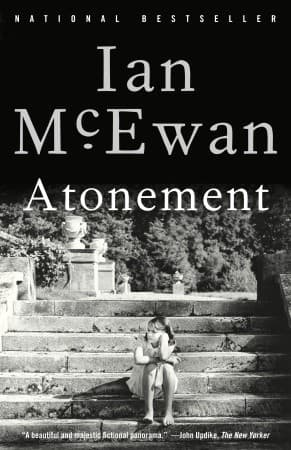
- Atonement
Ian McEwan
4.4 (70) average on GoodreadsBoth Divisadero and Atonement (2001) grapple with the profound and lasting consequences of a single traumatic event and a subsequent betrayal, examining how these moments ripple through characters' lives. However, McEwan's novel employs a more conventional, albeit structurally clever, narrative arc, with a clear central protagonist (Briony) whose perspective largely drives the story. Divisadero, in contrast, fragments its perspective more widely and delves into a more overtly postmodern exploration of authorship and the construction of truth through its Segura sections. While both meditate on guilt and redemption, Divisadero's resolution is far less explicit and more open to interpretation than Atonement's.
- The Old Man and the Sea
Ernest Hemingway
3.8 (831k) average on GoodreadsLiterary FictionA Cuban fisherman's long struggle with a giant marlin becomes a story of endurance and dignity, now retold for young adults with illustrations, phonetic guides, and writing prompts in Traditional Chinese.
- One Hundred Years of Solitude
Gabriel García Márquez
4.1 (753k) average on GoodreadsLiterary FictionThrough the multi-generational story of the Buendía family, a mythical town deals with the repeating patterns of time, love, and solitude, as the extraordinary mixes with the ordinary.




Enjoyed the summary?
A summary gives you the shape of the book. The book itself has the detail, the examples and the voice.
Find Divisadero on AmazonAs an Amazon Associate, BookBrief earns from qualifying purchases. How we're funded