
Synopsis
Covers the whole plot, including the ending.
- Difficulty
- Easy
- Pacing
- Moderate
- Mood
- Heartwarming, Reflective, Relatable, Gentle
- Read it if
- You enjoy heartwarming stories about sibling relationships, personal growth, and finding your own identity.
- Skip it if
- You prefer high-stakes fantasy or complex mysteries over character-driven domestic dramas.
Double Act Plot Summary
Covers the whole plot, including the ending.
A Life in Tandem
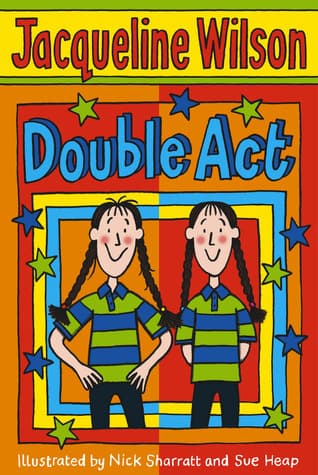
Ten-year-old identical twins, Ruby and Garnet, live with their father and Gran after their mother's death three years ago. Ruby is outgoing, theatrical, and dreams of becoming a famous actress, often pulling Garnet into her elaborate role-playing games. Garnet, in contrast, is quiet, bookish, and content to live in Ruby's shadow, though she secretly wants her own identity. Their father, consumed by grief and money problems, often leaves the twins alone, relying on Gran for support. The girls' world centers on their shared bedroom and their imaginative play, which helps them escape and cope with their loss. Their close bond, though, starts to show cracks as Ruby's assertiveness increasingly overshadows Garnet's quiet wishes.
The Move to the Country
The twins' father, dealing with debt and memories of their mother, suddenly decides to move the family from their familiar city home to an old house in the countryside. This news upsets both girls, especially Garnet, who finds comfort in routine and her books. Ruby, at first against it, soon sees the move as a new stage for her acting goals. Gran, though supportive, has doubts about the big change. The move greatly disrupts the twins' established life, making them leave their school, friends, and the last parts of their life with their mother, further isolating them as a pair.
New School and New Challenges
At their new country school, Ruby quickly makes friends, charming her classmates with her personality and acting skill. She gets the lead role in the school play, 'The Princess and the Pea,' which she loves. Garnet, however, struggles to fit in. She finds the other children loud and scary, and her quiet nature makes her an easy target for a bully named Rosie. Garnet retreats further into her books, feeling more and more alone and overshadowed by Ruby's success. The school environment shows the growing differences in their personalities and how each twin handles new social situations, straining their previously inseparable bond.
Audition Dreams
Ruby's acting goals grow when she sees an ad for auditions for a children's TV show, 'The Kids' Club.' Convinced this is her big chance, she practices her lines and prepares for the audition. She gets Garnet to help, making her act as her scene partner, which Garnet does reluctantly. Their father, seeing Ruby's passion, supports her and arranges for them to travel to London for the audition. This chance fuels Ruby's dreams but also creates new tension between the twins, as Garnet feels increasingly used and ignored in Ruby's chase for fame.
The Audition and Disappointment
The twins, with their father, travel to London for Ruby's audition. Ruby performs with her usual flair and confidence, believing she has the role. However, a few weeks later, a letter arrives, saying she wasn't chosen. Ruby is completely crushed, her dreams of stardom broken for a moment. Garnet tries to comfort her, but Ruby's disappointment is deep. This setback tests Ruby's strength and makes her face the hard parts of her ambition, while Garnet watches her sister's pain, feeling both sympathy and a quiet relief that the pressure of Ruby's acting career might lessen.
Garnet's Quiet Rebellion
Feeling more and more stifled by Ruby's strong personality and the constant pressure to join her games, Garnet starts to show her independence. She spends more time alone with her books, actively resisting Ruby's attempts to get her to act. She also finds comfort in drawing and writing, discovering her own creative interests. This new assertiveness, though gentle, causes friction with Ruby, who is used to Garnet's easy compliance. Garnet's growing desire for her own identity marks a big change in their relationship, challenging the very idea of their 'double act.'
The Friendship Pact
After the audition disappointment, Ruby finds comfort and new friends at school. She becomes close with two other girls, Angela and Rose, who share her outgoing personality and interest in fashion and pop music. They form a 'friendship pact,' purposely leaving Garnet out. This exclusion deeply hurts Garnet, who feels abandoned and even more alone. She watches their activities from a distance, reinforcing her feeling of being an outsider. Ruby, caught up in her new friendships, doesn't fully understand Garnet's deep pain, further widening the emotional gap between the twins.
A Secret Life
Looking for a break from Ruby and her new friends, Garnet finds a hidden, overgrown greenhouse in the garden, which she turns into her secret place. Here, she can read, draw, and be herself without interruption. One day, she meets a boy named Lewis, who is also an outsider at school and shares her love for books and quiet activities. They form a tentative friendship, spending time together in the greenhouse, discussing books and their feelings. This new connection gives Garnet her first truly independent friendship, a place where she is valued for who she is, not as part of a 'double act.'
The Argument
The growing tensions between the twins finally turn into a fierce argument. Ruby accuses Garnet of being boring and unsupportive, while Garnet responds by saying she resents always being forced into Ruby's plans and feeling invisible. Harsh words are exchanged, showing the deep frustrations and hurt each twin had been holding. The argument is a peak in their relationship, forcing them to face the fact that their 'double act' can no longer continue as it is. Their father and Gran are upset by the conflict, realizing how far apart the once inseparable sisters have grown.
Separation and Reflection
After the big argument, Ruby and Garnet go to their separate spaces. Ruby spends more time with her new friends, exploring her interests alone. Garnet finds comfort in her greenhouse with Lewis, continuing to build her own identity. This time apart, though painful, allows both twins to think about what they need and want individually. Ruby begins to understand that Garnet has a right to her own life, while Garnet realizes she can thrive alone. Their father and Gran encourage them to find their own paths, gently guiding them toward a more balanced relationship.
The School Play
The time for the school play, 'The Princess and the Pea,' arrives. Ruby, as the lead, performs wonderfully, captivating the audience with her talent and stage presence. Garnet, despite their recent tensions, attends the play and genuinely claps for her sister's success. Seeing Ruby shine on stage without feeling the need to be part of the spotlight herself is a big moment for Garnet. It shows her ability to support Ruby while keeping her own distinct identity, and for Ruby, it's a confirmation of her talent, separate from her twin.
A New Understanding
After the play and their time apart, Ruby and Garnet slowly begin to make up. They acknowledge their differences and the need for individual space. Ruby, having experienced both the good times with her friends and the disappointment of her audition, starts to appreciate Garnet's quiet strength. Garnet, having gained confidence through her friendship with Lewis and her own pursuits, no longer feels the need to hide. They have an honest conversation, realizing that while they will always be twins, they can also be two distinct individuals. Their 'double act' becomes a relationship based on mutual respect and understanding, rather than codependency.
Gran's Wisdom
Throughout their struggles, Gran acts as a steady and wise presence. She offers both twins comfort and gentle advice, reminding them that while they are identical, they are also unique individuals. Gran shares stories of her own life and the importance of finding one's own path, while also stressing the lasting bond of family. Her wisdom helps Ruby and Garnet understand that growing apart doesn't mean growing less close, but rather growing into their true selves. Gran's insights help the twins manage their changing relationship and accept their individual futures.
Looking to the Future
By the end of the book, Ruby and Garnet have found a new balance. Ruby continues to pursue her acting dreams, now with a clearer understanding of the effort involved and a greater appreciation for her sister's support. Garnet continues to find joy in her books, writing, and friendship with Lewis, confident in her own identity. They still share a room and a deep love for each other, but they no longer feel the need to do everything together. Their 'double act' has changed into a more mature and strong sisterly bond, where their individuality strengthens, rather than weakens, their connection.
Principal Figures
Ruby
Protagonist
The outgoing, ambitious, and theatrical twin.
Ruby is one of the ten-year-old identical twins. She is vivacious, bossy, and full of energy, constantly dreaming of becoming a famous actress. She loves being the center of attention and often strong-arms Garnet into participating in her elaborate games and acting exercises. While her ambition can be overwhelming, it stems from a genuine passion and a desire to make her mark on the world. She struggles with disappointment but is resilient, always finding new ways to pursue her dreams. Ruby's outgoing nature makes it easy for her to make friends, but she sometimes overlooks the feelings of those closest to her.
Relationships: Garnet (Identical twin, initially codependent but evolves to mutual respect.); Father (Supportive of her acting dreams, though often preoccupied.); Gran (Loving caregiver, offers gentle guidance.); Angela & Rose (New friends at school, part of her 'friendship pact'.)
Garnet
Protagonist
The quiet, bookish, and sensitive twin.
Garnet is the other ten-year-old identical twin, who is the polar opposite of Ruby. She is introverted, sensitive, and finds solace in books and her own imagination. Garnet often feels overshadowed by Ruby's dominant personality and struggles to assert her own desires. She longs for her own identity and space, often feeling invisible or used in Ruby's schemes. Despite her quiet nature, Garnet possesses a strong inner world and a gentle resilience. She is observant and compassionate, often the first to notice the emotional undercurrents in their family.
Relationships: Ruby (Identical twin, initially overshadowed by her, but develops into an independent relationship.); Father (Loves him, but feels his preoccupation with grief.); Gran (Comforting and understanding caregiver.); Lewis (First independent friend, shares her love for books.)
Father (Mr. Willis)
Supporting
The twins' grief-stricken and well-meaning father.
The twins' father is a well-meaning but often overwhelmed single parent. He is still deeply grieving the loss of his wife three years prior, which affects his ability to fully engage with his daughters' emotional needs. He makes impulsive decisions, like moving the family to the countryside, in an attempt to start fresh and escape his debts. He is supportive of Ruby's acting ambitions but struggles to understand Garnet's quiet nature. His love for his daughters is evident, but his emotional unavailability often leaves them to navigate their challenges largely on their own, relying on Gran for stability.
Relationships: Ruby & Garnet (Loving father, but often emotionally distant due to grief.); Gran (Relies heavily on her for support and childcare.)
Gran
Supporting
The wise and nurturing grandmother.
Gran is the twins' paternal grandmother and a vital figure in their lives. She is a source of unwavering love, comfort, and practical support, effectively stepping into a maternal role after her daughter-in-law's death. Gran is observant and wise, often sensing the underlying tensions between Ruby and Garnet. She offers gentle advice and a grounding presence, helping them navigate their individual identities and their changing relationship. Her calm demeanor and understanding nature make her the family's emotional anchor, providing stability amidst their father's struggles and the twins' evolving dynamic.
Relationships: Ruby & Garnet (Loving grandmother and primary caregiver.); Father (Supportive mother, helps him manage the household.)
Lewis
Supporting
Garnet's first independent friend.
Lewis is a quiet, bookish boy at the twins' new school who shares many similarities with Garnet. He is also somewhat of an outsider, preferring reading and solitary activities to the boisterous games of other children. He befriends Garnet when they discover a shared love for books and a quiet space in the old greenhouse. Lewis provides Garnet with her first independent friendship, a relationship where she feels seen and valued for her own personality, rather than as part of Ruby's 'double act.' His presence helps Garnet gain confidence and further define her individuality.
Relationships: Garnet (Close friend, shares interests and provides emotional support.)
Angela & Rose
Supporting
Ruby's new, outgoing friends.
Angela and Rose are two girls at the new school who quickly befriend Ruby. They are outgoing, fashion-conscious, and share Ruby's interest in pop culture and social activities. They form a 'friendship pact' with Ruby, often excluding Garnet. While they provide Ruby with a sense of belonging and validation for her more extroverted interests, their exclusive nature inadvertently contributes to Garnet's feelings of isolation and the growing rift between the twins. They represent Ruby's burgeoning independent social life outside of her twin.
Relationships: Ruby (Close friends, part of a social clique.); Garnet (Acquaintances, often exclude her.)
Rosie
Mentioned
A minor bully at the new school.
Rosie is a minor character at the twins' new school who bullies Garnet. Her actions highlight Garnet's vulnerability and her struggles to adapt to the new environment. Rosie's teasing further pushes Garnet into herself and reinforces her feeling of being an outsider, contrasting sharply with Ruby's easy integration into the school's social scene.
Relationships: Garnet (Bully.)
Themes & Insights
Identity vs. Individuality
The main theme explores how identical twins try to create separate identities while keeping their deep bond. Ruby's desire for fame and Garnet's quiet love for books show their different personalities. The book shows how their mother's death first made their 'double act' a way to cope, but as they grow, the need for individual expression becomes most important. Garnet's retreat to her secret greenhouse and her friendship with Lewis are key steps in her journey to self-discovery, while Ruby's audition and new friendships also mark her independent path. The story suggests that true sisterhood can only thrive when individuality is respected.
“We were identical twins. We were so alike that even our own dad got us muddled up sometimes. But inside, we were different.”
Grief and Loss
The story is deeply tied to the twins' experience of losing their mother three years ago. Their father's ongoing grief shows in his detachment and quick decisions, like moving to the countryside. For Ruby and Garnet, their 'double act' first helps them cope and cling to their past. However, the move and the challenges of a new school make them face their grief more individually. Their mother's absence leaves a void that affects their behaviors – Ruby's drive for attention, Garnet's retreat into books – and shapes their changing relationship, as they both look for comfort and stability in different ways.
“Three years ago, when our Mum died, we wore black dresses and black shoes and black tights. We looked like two little ravens.”
Sibling Relationships
The complex and changing relationship between Ruby and Garnet is central to the novel. It explores the unique bond of identical twins, marked by intense closeness, shared experiences, and also inevitable conflict as they grow. At first, their relationship is codependent, with Ruby often leading and Garnet following. The challenges of a new environment, new friends, and individual goals strain this dynamic, leading to arguments and temporary separation. Ultimately, the theme emphasizes that a healthy sibling relationship can adapt and grow by recognizing and celebrating individual differences, moving from an inseparable 'double act' to a bond of mutual respect.
“We were a double act. Always had been, always would be. Or so I thought.”
The Power of Imagination and Creativity
Both twins use imagination to cope and express their personalities. Ruby channels her imagination into her acting, constantly creating elaborate scenes and dreaming of stardom. This creativity drives her, allowing her to escape the everyday and the pain of her loss. Garnet, though quieter, finds her own creative outlet in reading, writing, and drawing. Her secret greenhouse becomes a sanctuary for her imagination, where she can build her own world. The book shows how different forms of creativity allow children to express themselves, process emotions, and build their own sense of self.
“I used to make up stories in my head all the time, but Ruby was the one who acted them out.”
Plot Devices & Literary Techniques
First-Person Narration (Garnet)
The story is told entirely from Garnet's perspective.
The novel is narrated in the first person by Garnet. This device allows readers deep insight into Garnet's inner world, her quiet observations, her struggles with self-identity, and her feelings of being overshadowed by Ruby. It frames Ruby's actions and personality through Garnet's eyes, emphasizing the impact Ruby has on her sister. This perspective makes Garnet's journey of self-discovery particularly poignant and allows the reader to intimately understand the emotional nuances of their twin bond and its eventual evolution. The reader experiences Garnet's vulnerability and her growing strength directly.
The 'Double Act' Metaphor
The twins' relationship is frequently referred to as a 'double act'.
The recurring metaphor of the 'double act' highlights the inseparable nature of Ruby and Garnet's relationship, particularly after their mother's death. It signifies their shared identity and their mutual reliance. As the story progresses and the twins begin to assert their individuality, the 'double act' comes to symbolize the stifling aspects of their codependency. The eventual dismantling and redefinition of this 'double act' represent their growth into independent individuals who can still maintain a strong, albeit different, sisterly bond. It's a central symbol of their journey to find individual identities within their twinship.
The Secret Greenhouse
Garnet's personal sanctuary and symbol of her independence.
The dilapidated greenhouse in the garden, which Garnet discovers and transforms, serves as a powerful symbol and plot device. It becomes Garnet's secret sanctuary, a physical space where she can escape Ruby's dominance, read her books, draw, and develop her own interests without interruption. It represents her growing need for privacy and her burgeoning individuality. The greenhouse is also where she forms her first independent friendship with Lewis, further solidifying her separate identity. Its existence visually marks Garnet's separation from the 'double act' and her creation of her own world.
The Move to the Country
A significant setting change that acts as a catalyst for conflict and growth.
The family's unexpected move from their familiar urban home to a rundown house in the countryside serves as a major catalyst for the plot. This drastic change disrupts the twins' established routines and social circles, forcing them to adapt to a new environment. For Ruby, it presents new opportunities for her theatrical ambitions, while for Garnet, it intensifies her feelings of displacement and isolation, pushing her further into herself. The move strips away their comfortable old life, forcing the twins to confront their individual needs and the growing differences between them, ultimately accelerating their journey towards separate identities.
Double Act Quotes
“We were twins, but we weren't identical, not really. We looked a bit alike, I suppose, but our personalities were miles apart.”
“Sometimes I wished I was Garnet. She always knew what to say, what to do. She was the one who was good at everything.”
“It was like she was shining a light on me, and I was just a shadow.”
“Mum always said we were two halves of a whole. But sometimes I felt like I was the smaller, less important half.”
“I tried to be brave, like Garnet. I really did. But it was hard when you felt like you were going to burst into tears at any moment.”
“It's funny how you can live with someone your whole life and still not really know them, not completely.”
“Sometimes I just wanted to be me, Ruby, not 'Ruby-and-Garnet' or 'Garnet's sister'. Just me.”
“I knew Garnet loved me, even when she was being bossy or annoying. And I loved her, even when I wanted to punch her.”
“Being twins was like having a built-in best friend, but sometimes it felt like having a built-in rival too.”
“I wished I could tell her everything, but some things were just too private, even for your twin.”
“It's not fair that some people get a mum and a dad and a happy family, and some people just get bits and pieces.”
“Maybe being different wasn't so bad after all. Maybe it was actually quite good.”
“I didn't want to be a double act anymore. I just wanted to be me.”
Quiz
10 questions on the plot and the characters. Each answer comes with a short explanation.
Question 1
What significant event happened to Ruby and Garnet three years before the story begins, which drew them closer together?
- They moved to a new town.
- Their mother died.
- They started at a new school.
- Their father remarried.
Show answer
B. Their mother died. The death of their mother three years prior is a central event that deeply impacts Ruby and Garnet's relationship and their lives.
Question 2
What is Ruby's main ambition and passion?
- To become a famous writer.
- To be a famous actress.
- To be a brilliant scientist.
- To travel the world.
Show answer
B. To be a famous actress. Ruby is described as 'desperate to be a famous actress,' which is a key aspect of her character.
Question 3
What activity does Garnet enjoy most, reflecting her quiet and academic nature?
- Playing sports outdoors.
- Attending drama classes.
- Curling up with one of her favourite books.
- Organizing parties.
Show answer
C. Curling up with one of her favourite books. Garnet is described as loving 'nothing more than to curl up with one of her favourite books,' highlighting her introverted and intellectual personality.
Question 4
What is a significant difference between Ruby and Garnet despite being identical twins?
- Their hair colour.
- Their eye colour.
- Their personalities and interests.
- Their height.
Show answer
C. Their personalities and interests. The book explicitly states 'they couldn't be more different' in terms of their personalities, with Ruby being 'bossy, bouncy, funny' and Garnet 'quiet, sensitive, academic.'
Question 5
What is the central theme explored by the question 'can being a double act work for ever?'
- The importance of fame and success.
- The challenges of growing up and developing individual identities within a close relationship.
- The benefits of always agreeing with your sibling.
- The difficulties of moving to a new home.
Show answer
B. The challenges of growing up and developing individual identities within a close relationship. The question 'can being a double act work for ever?' directly addresses the theme of individual growth and how the twins' evolving personalities might strain their joint identity as they face changes.
Question 6
At what age are Ruby and Garnet at the beginning of the story?
- Eight years old.
- Nine years old.
- Ten years old.
- Eleven years old.
Show answer
C. Ten years old. The description states, 'Ruby and Garnet are ten-year-old twins,' establishing their age.
Question 7
How does Ruby's 'bossy' nature often manifest in her relationship with Garnet?
- She encourages Garnet to read more books.
- She often takes the lead and makes decisions for both of them.
- She always lets Garnet choose their activities.
- She avoids speaking to Garnet.
Show answer
B. She often takes the lead and makes decisions for both of them. Ruby is described as 'bossy' and loving 'to take charge,' implying she often dictates their shared activities and decisions, sometimes to Garnet's quiet discomfort.
Question 8
Why is the phrase 'everything around the twins is changing so much' particularly significant in the context of their 'double act'?
- It implies they are about to go on a long holiday.
- It suggests external pressures and personal growth will challenge their established identical bond.
- It refers to daily weather changes.
- It means their parents are redecorating their house.
Show answer
B. It suggests external pressures and personal growth will challenge their established identical bond. The changes refer to the twins growing up, potentially new family dynamics (like their father finding a new partner), and the development of their individual identities, all of which threaten the 'double act' they've maintained.
Question 9
What is the primary conflict that arises from Ruby and Garnet being 'identical' yet 'couldn't be more different'?
- They constantly argue over who looks better.
- Their shared appearance often leads to others treating them as one entity, despite their distinct personalities and desires.
- They struggle to find clothes that fit them both.
- They are often mistaken for other children.
Show answer
B. Their shared appearance often leads to others treating them as one entity, despite their distinct personalities and desires. The core conflict is that their identical appearance encourages others to see them as a single 'double act,' which clashes with their increasingly divergent personalities and individual aspirations, especially Ruby's desire for the spotlight and Garnet's need for quiet individuality.
Question 10
How does the death of their mother likely influence the twins' initial 'double act' dynamic?
- It made them want to spend more time apart.
- It strengthened their reliance on each other as a primary source of comfort and shared identity.
- It led them to seek out new, separate friendships.
- It caused them to forget their individual interests.
Show answer
B. It strengthened their reliance on each other as a primary source of comfort and shared identity. The text states they do 'EVERYTHING together, especially since their mother died three years earlier,' indicating that the loss cemented their 'double act' as a coping mechanism and source of mutual support.
Double Act FAQ
What is the central conflict driving the story of Ruby and Garnet?
The central conflict revolves around the identical twins, Ruby and Garnet, navigating their differences and evolving identities following their mother's death. Ruby yearns for the spotlight and acting fame, while Garnet prefers solitude and books, creating tension as they struggle to maintain their 'double act' amidst changing life circumstances, particularly their father's new relationship and moving house.
How does the death of their mother impact Ruby and Garnet differently?
Their mother's death three years prior profoundly shapes both girls. Ruby channels her grief into a flamboyant desire for attention and a career in acting, perhaps as a way to fill the void or keep her mother's memory alive through performance. Garnet, conversely, retreats into books and quiet observation, using literature as a coping mechanism and a source of comfort, highlighting their divergent emotional processing.
What role does their father play in the twins' lives and their evolving dynamic?
Their father struggles with his own grief and the responsibility of raising two very different ten-year-olds. His new relationship with Rose and the subsequent decision to move house act as significant catalysts, forcing the twins to confront the reality of their changing family unit and pushing them further apart as they each react to these shifts.
What specific event or opportunity sparks Ruby's ambition to become an actress?
Ruby's ambition is ignited when a new girl, Angela, moves to their school and introduces her to the idea of auditioning for a local drama group or a play. This external influence provides Ruby with a concrete outlet for her dramatic flair and her longing for recognition, setting her on a distinct path away from Garnet's quiet world.
How does the 'double act' manifest in their daily lives, and when does it begin to break down?
The 'double act' is evident in their shared experiences, identical appearance, and the expectation from others that they are inseparable. It begins to break down significantly when Ruby starts pursuing acting and making new friends in that circle, while Garnet finds solace and new connections through her love of reading and a new best friend, eventually leading to separate bedrooms and distinct interests.
Are there any subtle clues early in the book that hint at the twins' underlying differences despite their identical appearance?
Yes, even before major plot points, subtle clues like Ruby's immediate dominance in conversations, her more expressive reactions, and Garnet's preference for quiet observation or retreating to a book, rather than engaging in boisterous play, foreshadow their contrasting personalities and future divergence. Their choices in activities, even when together, often highlight Ruby's leadership and Garnet's compliance.
Is there a specific scene where the twins' differing coping mechanisms for grief become starkly apparent?
A scene where Ruby might loudly recount a fond memory of their mother, perhaps embellishing details for dramatic effect, while Garnet silently clutches a cherished item or retreats to read a book that reminds her of their mother, would highlight their contrasting grief responses. Ruby seeks external validation and performance, Garnet internal solace and quiet remembrance.
How does the introduction of Angela, Ruby's new friend, subtly affect Garnet's perception of her own identity?
Angela's arrival and her immediate connection with Ruby for their shared acting ambition subtly makes Garnet feel even more like an outsider to Ruby's world. This new friendship, which doesn't include Garnet, forces Garnet to confront her own distinct interests and perhaps even her own desire for individual friendships, rather than being part of a packaged 'double act'.
Does the book offer any subtle hints about the father's emotional state beyond his visible grief and new relationship?
The book might subtly hint at the father's emotional state through his occasional absentmindedness, his efforts to overcompensate with the girls, or moments of quiet sadness when he thinks they aren't looking. His decision to move might also be subtly portrayed as an attempt to escape lingering memories in their old home, suggesting his own struggle to move forward.
How does Ruby's desire for fame and attention relate to her psychological need for validation?
Ruby's relentless pursuit of fame and attention stems from a deep psychological need for validation, possibly intensified by the loss of her mother. Performing allows her to feel seen, appreciated, and perhaps even loved by an audience, filling an emotional void and asserting her individuality in a way that being one half of a twin pair does not.
Analyze Garnet's preference for books and solitude from a psychological perspective.
Garnet's retreat into books and solitude is a psychological coping mechanism, offering her a safe, controlled world where she can process emotions, escape overwhelming reality, and find comfort. Her academic inclination and sensitivity suggest an introverted personality, finding solace and understanding in fictional narratives that mirror or help her understand her own experiences.
How does the concept of 'identity' play out for both twins, especially as they grow apart?
For both twins, identity is a central theme. Initially, their identity is largely shared as a 'double act.' As they grow apart, Ruby asserts her individual identity through her acting career and boisterous personality, while Garnet finds hers through intellectual pursuits, quiet reflection, and forging independent friendships, moving from a collective 'we' to a distinct 'I'.
What psychological impact does the father's new relationship with Rose have on the twins?
The father's new relationship with Rose triggers complex psychological reactions. For Ruby, it might feel like a betrayal or a further loss, making her crave external attention even more. For Garnet, it could be another unsettling change, forcing her to adapt and possibly deepen her retreat into her inner world or seek new forms of stability.
Is the ending ambiguous regarding whether the 'double act' can truly work forever, or does it offer a definitive resolution?
The ending likely offers a nuanced resolution rather than a definitive 'forever' answer. It probably suggests that while the original 'double act' of inseparable identical twins doing everything together cannot last, their bond as sisters will endure, albeit in a transformed, more individualistic way, acknowledging their separate paths while affirming their familial connection.
Could Ruby's bossiness and desire to take charge be interpreted as a form of control in a world she perceives as out of control?
Yes, Ruby's bossiness and need to take charge can absolutely be interpreted as a psychological need for control. After the profound loss of their mother and the subsequent changes in their lives, asserting control over situations, even small ones, provides her with a sense of agency and stability in a world that has felt unpredictable and overwhelming.
Does the book suggest that growing apart is an inevitable part of twin development, or is it specific to Ruby and Garnet's circumstances?
The book likely suggests that while some degree of individual identity development is inevitable for all siblings, including twins, the dramatic separation of Ruby and Garnet is particularly amplified by their specific circumstances: their mother's death, their father's new relationship, and their inherently contrasting personalities, making their divergence more pronounced than typical.
How does the narrative perspective (first-person from Garnet) influence the reader's understanding of Ruby?
The first-person narrative from Garnet's perspective profoundly shapes the reader's understanding of Ruby. We see Ruby through Garnet's eyes – her adoration, frustration, and eventual understanding. This perspective might initially make Ruby seem more self-centered or overwhelming, but it also allows for Garnet's eventual empathy and deeper insight into Ruby's motivations, offering a more complex portrayal.
What is the significance of the title 'Double Act' beyond the obvious twin connection?
Beyond the literal twin connection, 'Double Act' signifies the performative aspect of their lives, especially for Ruby, and the societal expectation that they function as a unified entity. It also alludes to the internal 'double act' within each girl – their public persona versus their private self, and the struggle to reconcile these as they mature.
Does the book advocate for embracing individuality even at the cost of traditional family bonds, or does it seek a balance?
The book primarily advocates for embracing individuality as a necessary part of growth, but it strives for a balance. It shows that while the traditional 'double act' must evolve, the deep bond between sisters can and should endure, transforming into a more mature, respectful relationship that celebrates their differences rather than being defined solely by their sameness.
About the author

Jacqueline Wilson is a British author known for her engaging children's fiction. Her notable works include "The Story of Tracy Beaker," "Double Act," "The Illustrated Mum," "Hetty Feather," "Queenie," and "Diamond." Wilson's stories often explore themes of friendship, family, and personal growth, resonating with young readers.
Similar books
- The Illustrated Mum
Jacqueline Wilson
3.8 (14k) average on GoodreadsPsychologyExplores complex family dynamics and the challenges of growing up with a unique parent.
- Harry Potter and the Sorcerer's Stone
J.K. Rowling
4.5 (7M) average on GoodreadsFantasyRescued from a miserable life under the stairs, an orphaned boy discovers he's a wizard destined for a magical school, where he uncovers a dangerous secret tied to the dark wizard who murdered his parents.
- The Hobbit, or There and Back Again
J.R.R. Tolkien
4.3 (2.9M) average on GoodreadsFantasyA comfort-loving hobbit named Bilbo Baggins is whisked away by a mischievous wizard and a band of dwarves on an unexpected journey to reclaim stolen treasure from a fearsome dragon, discovering courage and a magical ring along the way.
- Harry Potter and the Goblet of Fire
J.K. Rowling
4.6 (2.6M) average on GoodreadsFantasyA bewildered Harry Potter, underage and thrust into a deadly Triwizard Tournament, must brave dragons, mermaids, and a resurgent dark magic to survive a year that will forever alter the wizarding world.
- Harry Potter and the Order of the Phoenix
J.K. Rowling
4.5 (2.5M) average on GoodreadsFantasyIn a year of oppressive secrets and the threat of Voldemort, Harry Potter and Dumbledore's Army secretly train for war, shown through Jim Kay and Neil Packer's dark illustrations.
- The Lightning Thief
Rick Riordan
4.3 (2M) average on GoodreadsFantasyThrust into a world of mythological monsters and divine treachery, an ordinary boy discovers he's the son of Poseidon and must embark on a perilous quest across modern America to prevent an Olympian war.





Enjoyed the summary?
A summary gives you the shape of the book. The book itself has the detail, the examples and the voice.
Find Double Act on AmazonAs an Amazon Associate, BookBrief earns from qualifying purchases. How we're funded