
Synopsis
Covers the whole plot, including the ending.
- Difficulty
- Easy
- Pacing
- Moderate
- Mood
- Heartbreaking, Hopeful, Realistic, Emotional
- Read it if
- You enjoy poignant, realistic stories about family, mental health, and sisterly bonds from a child's perspective.
- Skip it if
- You prefer light-hearted stories without serious themes of parental mental illness and neglect.
The Illustrated Mum Plot Summary
Covers the whole plot, including the ending.
A Colourful Home Life
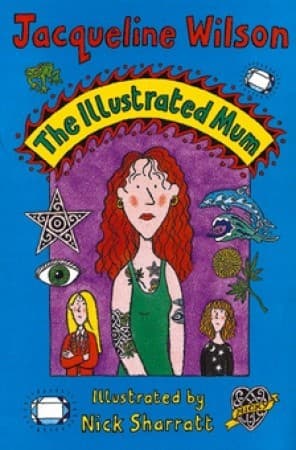
Ten-year-old Dolphin loves her mother, Marigold, a woman with many tattoos, dyed hair, and a flamboyant personality. They live with Dolphin's older sister, Star, in a small flat. Marigold is often chaotic and unpredictable, but also loving and creative, often making up stories and games for Dolphin. Star, a more responsible teenager, often cares for both Dolphin and Marigold. Despite the problems, the sisters are loyal to their mother, who once lived a wild, punk life and still rejects conventional norms. Their lives combine fun, imaginative play with instability due to Marigold's behavior.
The Arrival of Micky
Marigold meets Micky, a man at a pub, and quickly falls for him. For a while, Micky brings calm to their home. He helps with chores, brings groceries, and encourages Marigold to be more responsible. Star is wary but hopeful Micky will be a good influence on her mother. Dolphin also likes Micky. This period offers a glimpse of 'normal' family life, with Marigold even trying to cook and keep a routine, surprising the girls.
Micky's Departure and Marigold's Decline
Micky's stability is short-lived. He suddenly leaves Marigold, causing her great heartbreak and a rapid decline. Marigold stops eating, sleeping, and caring for herself or her daughters. Her vibrant personality gives way to deep depression, and her erratic behavior worsens. She drinks heavily and neglects her responsibilities, often staying in bed or wandering off. Star is left to manage the household, care for Dolphin, and increasingly, care for Marigold, who becomes withdrawn, aggressive, and unpredictable, creating a stressful environment for the girls.
Star's Rebellion
Overwhelmed by Marigold's worsening condition and the burden of responsibility, Star's patience runs out. She resents having to care for her mother and protect Dolphin, feeling her own childhood slip away. Star decides she can no longer cope and seeks out her father, whom she hasn't seen in years. She finds him living a conventional life with a new family. Star hopes to find a stable home with him, a contrast to the chaos she has known, believing it is the only way to escape the cycle with Marigold.
Dolphin's Loyalty and Isolation
Despite Marigold's increasingly erratic and frightening behavior, Dolphin remains loyal to her mother. She tries to care for Marigold, bringing her food and trying to cheer her up, still seeing the 'fun' mother she once knew beneath the illness. When Star leaves to live with her father, Dolphin feels abandoned and isolated. She struggles to understand why Star would leave Marigold, seeing it as a betrayal. Dolphin is left alone to deal with Marigold's mood swings, hallucinations, and self-neglect, bearing the full weight of her mother's illness.
The Halloween Incident
Marigold's mental health reaches a critical point on Halloween. She insists on taking Dolphin trick-or-treating, despite being unwell and disoriented. She wears a bizarre costume, and her behavior becomes erratic in public. She argues with strangers, makes inappropriate comments, and struggles to tell reality from her delusions. Dolphin is embarrassed and frightened, witnessing her mother's public breakdown. This incident shows the severity of Marigold's illness and the danger she poses to herself and Dolphin, making it clear the situation is not sustainable.
Marigold's Hospitalization
The Halloween incident ends in a public confrontation where Marigold becomes aggressive and delusional. Concerned people and then authorities intervene. Marigold is taken to a psychiatric hospital, upsetting Dolphin. Dolphin is placed in temporary foster care, a confusing experience for her. She struggles to adapt to the new environment and misses her mother, despite the problems. This is a turning point, as the girls are separated from their mother and chaotic home, facing the reality of Marigold's illness.
Star's Return and Reconciliation
Star, despite her initial relief at escaping, finds that life with her father is not as good as she hoped. She feels like an outsider in his new family and misses Dolphin. Learning of Marigold's hospitalization and Dolphin's foster care, Star realizes she cannot abandon her sister or mother. She returns to London, overcoming her resentment, and takes on the responsibility of supporting Dolphin and visiting Marigold in the hospital. This shows Star's maturity, as she understands that family loyalty, even with its challenges, is important.
Marigold's Recovery and Relapse
In the hospital, Marigold receives treatment for her mental illness. She begins to stabilize, and the girls see glimpses of their old mother – lucid, humorous, and affectionate. They visit her regularly, hoping for a full recovery. However, mental illness is complex. After her release, Marigold struggles to maintain her medication and therapy. Despite her love for her daughters, she gradually slips back into her old habits, neglecting herself and becoming erratic again. This shows the cyclical nature of her illness and the ongoing challenge the family faces.
A New Beginning, Together
The sisters accept that Marigold's illness is part of who she is, and despite the challenges, their love for her remains. They understand that a 'normal' life might not be possible, but a life together, with love and support, is. Star, now more mature, takes on a permanent guardian role for Dolphin and supports Marigold, ensuring she takes her medication and receives care. Dolphin continues to love her mother, finding joy in her creative spirit despite her illness. The book ends with the sisters living with Marigold, having found a way to navigate their unique family dynamics with resilience and affection, embracing their unconventional life.
The Illustrated Mum Characters
Dolphin
Protagonist
The younger daughter who adores her mother and struggles to accept her illness.
Dolphin is a ten-year-old girl with an imaginative and sensitive nature. She idolizes her mother, Marigold, viewing her tattoos and eccentricities as signs of beauty and individuality. Dolphin thrives on Marigold's creative stories and games, often living in a world of fantasy to cope with the reality of their unstable home life. She is fiercely loyal and struggles deeply when Marigold's illness becomes undeniable, feeling abandoned by Star and desperately trying to keep her mother happy. Her innocence allows her to see the best in Marigold, even amidst the chaos.
Relationships: Marigold (Daughter-mother; Dolphin idolizes and loves Marigold unconditionally.); Star (Sister; Dolphin relies on Star but feels abandoned when Star leaves.)
Star
Protagonist/Co-protagonist
The older, responsible sister who shoulders the burden of caring for her family.
Star is a teenage girl, around fifteen, who has been forced to mature quickly due to Marigold's unpredictable behavior. She is practical, responsible, and often resentful of the burden placed upon her to care for both Dolphin and Marigold. While she loves her mother, she also recognizes the severity of Marigold's mental health issues and yearns for a normal, stable life. Her desire for stability leads her to seek out her estranged father, but she ultimately realizes her loyalty lies with her sister and mother, demonstrating immense growth and a strong sense of family duty.
Relationships: Marigold (Daughter-mother; Star loves Marigold but is often frustrated and burdened by her.); Dolphin (Sister; Star is protective of Dolphin and eventually returns for her.); Micky (Briefly a potential stepfather; Star is wary but hopeful of his positive influence.)
Marigold
Supporting/Central Figure
The eccentric, mentally ill mother covered in tattoos, whose illness drives the plot.
Marigold is Dolphin and Star's mother, a flamboyant and artistic woman in her thirties, known for her vibrant tattoos, dyed hair, and punk aesthetic. She is charismatic and loving when well, full of imaginative stories and games, but she suffers from severe mental illness, likely bipolar disorder or schizophrenia, which manifests in extreme mood swings, depression, delusions, and neglect. Her illness makes her unpredictable and, at times, frightening. Despite her struggles, she deeply loves her daughters, though her capacity to care for them is severely compromised by her condition.
Relationships: Dolphin (Mother-daughter; Marigold is loving but her illness impacts her ability to parent.); Star (Mother-daughter; Marigold relies on Star, often unknowingly, for care.); Micky (Ex-boyfriend; his departure triggers her severe decline.)
Micky
Supporting/Mentioned
Marigold's charming, but ultimately unreliable, boyfriend.
Micky is a man Marigold meets who initially brings a semblance of stability and normalcy to the family's life. He is charming, kind, and seems genuinely fond of Marigold and the girls. For a brief period, he offers hope for a more settled future, encouraging Marigold to be more responsible. However, his departure, unexplained and abrupt, serves as a major catalyst for Marigold's severe mental decline, highlighting his unreliability and the fragility of Marigold's emotional state. He represents a fleeting promise of a 'normal' life that quickly dissolves.
Relationships: Marigold (Boyfriend; his abandonment devastates her.); Star (Potential stepfather figure; Star is cautiously hopeful about him.); Dolphin (Potential stepfather figure; Dolphin likes him.)
Star's Father
Supporting
Star's estranged biological father, living a conventional life.
Star's father is a largely absent figure in the girls' lives until Star seeks him out. He lives a conventional, middle-class life with a new family, a stark contrast to Marigold's chaotic existence. He initially offers Star a place to stay, but his new family struggles to integrate her, and he seems uncomfortable with the reality of Marigold's situation. While he provides a temporary refuge, he cannot offer Star the emotional understanding or stable family unit she truly needs, ultimately reinforcing Star's bond with her original family.
Relationships: Star (Father-daughter; Star seeks refuge with him but feels like an outsider.); Marigold (Ex-partner; their past relationship is fraught with unspoken history.)
The Illustrated Mum Themes
Mental Illness and its Impact on Family
The main theme is Marigold's severe mental illness and its effects on her daughters, Dolphin and Star. The story shows the unpredictable nature of the illness, from Marigold's creative periods to her delusions and self-neglect. It explores the burden on children, especially Star, who is forced into a parental role, and Dolphin, who struggles to understand her mother's illness. The story shows how mental illness can erode normalcy, create fear, and test love and loyalty, as seen in Marigold's hospitalization and the girls' struggles.
“She was so beautiful, my mum. But sometimes she was so horrible too. And it was all mixed up inside her, the good bits and the bad bits, like her tattoos.”
Unconditional Love and Loyalty
Despite the challenges and heartbreak from Marigold's illness, the enduring love and loyalty within the family, especially between the sisters and their mother, is a strong theme. Dolphin's adoration and Star's return to support her family, even after seeking escape, highlight this. Their loyalty is not blind; they acknowledge Marigold's flaws and illness, but choose to stand by her. This theme is clear when Star returns to care for Dolphin and visit Marigold in the hospital, and when Dolphin finds joy in Marigold's creative spirit, showing that love can last even in difficult times.
“I loved my mum so much, even when she was mad. Even when she was really, really mad.”
The Loss of Innocence and Forced Maturity
Both Dolphin and Star lose their innocence early due to their mother's illness. Star is forced into a maternal role, sacrificing her teenage years to care for her sister and mother, leading to resentment and a desire for a 'normal' life. Dolphin, though younger, also loses her carefree childhood as she sees her mother's decline and tries to keep Marigold happy. The Halloween incident, where Dolphin is scared by Marigold's public breakdown, is an example of this. The girls lose the protection and stability children usually have, forcing them to face harsh realities too soon.
“I was only fifteen, but I felt like I was fifty. I was always having to be the grown-up.”
Family Identity and Unconventional Living
The book explores what makes a family and how identity is shaped by unconventional circumstances. Marigold's tattoos and punk style are central to her identity and, by extension, the family's unique identity. The girls initially like this, seeing their mother as special and exciting. However, as Marigold's illness worsens, this 'specialness' becomes a source of shame and difficulty. The theme questions societal norms of family life, suggesting that a family does not have to fit a conventional mold to be loving and strong, especially as the sisters choose to stay together and support their mother, defining their own version of family.
“We weren't like other families. We were a bit mad, a bit wild, a bit… tattooed.”
Plot Devices & Literary Techniques
First-Person Narrative (Dolphin's Perspective)
The story is primarily told through the eyes of the younger daughter, Dolphin.
Telling the story from Dolphin's perspective allows the reader to experience the chaos and heartbreak of Marigold's illness through a child's innocent, often idealized, lens. This creates a powerful contrast between Dolphin's unwavering love and the increasingly disturbing reality. Her narration highlights the confusion and fear children feel when a parent is mentally ill, and her imaginative inner world provides a coping mechanism for the harsh external reality. It also allows the author to gradually reveal the severity of Marigold's condition as Dolphin slowly comes to understand it, rather than presenting it as a fully formed problem from the outset.
Symbolism of Tattoos
Marigold's tattoos symbolize her vibrant personality, individuality, and ultimately, her mental state.
Marigold's numerous, colorful tattoos are a powerful symbol throughout the novel. Initially, they represent her unique, artistic, and free-spirited personality, adored by Dolphin as markers of her 'specialness.' They embody her rejection of conventional norms and her vibrant, albeit chaotic, life. As Marigold's mental health deteriorates, the tattoos take on a darker symbolism, reflecting the 'muddled' and 'horrible' aspects of her illness. They become a visual representation of the internal turmoil and the inability to 'erase' her struggles, much like the permanence of the ink on her skin. They are a constant reminder of who she is, both good and bad.
Foreshadowing (Marigold's erratic behavior)
Early instances of Marigold's unpredictable behavior hint at her underlying mental illness.
From the beginning, Marigold's character is established as eccentric and unpredictable, but these early traits subtly foreshadow the severity of her mental illness. Her extreme mood swings, sudden bursts of creativity followed by periods of lethargy, and her sometimes inappropriate public behavior, initially perceived as just 'being Marigold,' gradually intensify. This foreshadowing builds tension and allows the reader, alongside Star, to recognize the escalating seriousness of the situation long before Dolphin fully grasps it. It prepares the reader for the eventual breakdown, making it a tragic culmination rather than a sudden, unexplained event.
Contrast (Star's vs. Dolphin's perspective)
The differing views of the sisters on their mother's condition highlight the complexities of mental illness.
The novel cleverly uses the contrasting perspectives of Star and Dolphin to explore the multifaceted impact of Marigold's mental illness. Dolphin, the younger and more innocent sister, initially sees her mother's eccentricities as charming and exciting, struggling to accept the harsh reality of her illness. Star, the older and more burdened sister, is acutely aware of the danger and instability, yearning for a normal life. This contrast illuminates how different ages and roles within a family perceive and cope with such a challenging situation, adding depth to the narrative and showcasing the varying emotional burdens each sister carries.
The Illustrated Mum Quotes
“My mum isn't like other mums. She's got tattoos and piercings and bright pink hair. She wears ripped tights and old army boots and a short denim skirt even in winter. She looks like a punk rocker.”
“I used to think my mum was the best mum in the whole wide world. She was always so much fun. She'd dance around the kitchen and sing at the top of her voice and make up silly stories just for us.”
“It's like she's got two different sides to her, like a coin. One side is all sparkly and exciting and lovely, and the other side is dark and scary and makes me want to hide under my bed.”
“Sometimes I wish she was just a normal mum, with normal hair and normal clothes and a normal job. But then I think, no, I wouldn't want her to be anyone else. She's my mum.”
“Star was always the pretty one, with her long blonde hair and her big blue eyes. Everyone always said she looked just like Mum, before Mum started getting all her tattoos.”
“You can't choose your family, can you? You just get stuck with them. And sometimes, you get stuck with a really, really weird one.”
“I don't think Mum means to be mean. I think she just... forgets. Or she gets mixed up. Or she's just sad inside.”
“Her tattoos aren't just pictures. They're like a map of her life. Every single one tells a story, she says.”
“I wish I could make her better. I wish I could just magic her back to how she used to be.”
“It's hard to be brave when your mum is the one who's supposed to be brave for you, and she's not.”
“Sometimes you have to look after yourself, even if you're only little. Sometimes you have to be the grown-up.”
“I always thought tattoos were cool. Now I just think they're a bit sad. Like Mum's trying to hide herself behind all the colours.”
“Maybe being different isn't always a good thing. Maybe sometimes it just makes everything harder.”
“I love her, even when she's mad. I love her even when she doesn't make sense. I just wish she was happy.”
“It's like having a secret, a big, heavy secret that you can't tell anyone because they wouldn't understand.”
Quiz
10 questions on the plot and the characters. Each answer comes with a short explanation.
Question 1
What is Dolphin's mother's name?
- Star
- Marigold
- Marmalade
- Daisy
Show answer
B. Marigold Dolphin's mother is named Marigold, and she is known for her vibrant appearance and personality.
Question 2
What significant event causes Marigold's mental health to deteriorate more noticeably?
- She loses her job.
- Her friend Micky leaves her.
- She gets into a fight with Star.
- Dolphin runs away from home.
Show answer
B. Her friend Micky leaves her. Marigold's mental state significantly worsens after Micky, a man she was involved with, leaves her, leading to a severe breakdown.
Question 3
Which of the following best describes Dolphin's initial view of her mother's tattoos and colourful appearance?
- She finds them embarrassing.
- She thinks they are wonderful and unique.
- She wishes her mother looked more conventional.
- She is indifferent to them.
Show answer
B. She thinks they are wonderful and unique. Dolphin adores her mother's unique style, including her tattoos and bright hair, seeing them as part of her wonderful, colourful life.
Question 4
What does Star eventually decide is the best course of action for her and Dolphin?
- To move to a different city with Marigold.
- To try and get Marigold to change her appearance.
- To seek help from social services to ensure their safety.
- To run away and live on the streets.
Show answer
C. To seek help from social services to ensure their safety. Star, realizing the instability and danger of their home life, ultimately makes the difficult decision to contact social services for help.
Question 5
What is a major theme explored through Marigold's character and her relationship with her daughters?
- The importance of material wealth.
- The challenges of mental illness and its impact on families.
- The pursuit of fame and celebrity.
- The benefits of a bohemian lifestyle.
Show answer
B. The challenges of mental illness and its impact on families. The book deeply explores the theme of mental illness, particularly bipolar disorder, and how Marigold's condition affects her daughters and their lives.
Question 6
Where do Dolphin and Star often go when their mother's behaviour becomes particularly erratic?
- To their grandmother's house.
- To a local community center.
- They hide in the shed or seek refuge with neighbors.
- They go to school and stay late.
Show answer
C. They hide in the shed or seek refuge with neighbors. When Marigold has an episode, the girls often hide in the shed or seek temporary shelter with their kind neighbor, Mrs. Peters, to escape her unpredictable temper.
Question 7
What is Star's primary internal conflict throughout much of the story?
- Whether to pursue her artistic dreams or get a stable job.
- Balancing her loyalty and love for her mother with the need to protect herself and Dolphin.
- Deciding which boy she wants to date.
- Her desire to leave home versus her fear of the outside world.
Show answer
B. Balancing her loyalty and love for her mother with the need to protect herself and Dolphin. Star constantly grapples with her deep love for Marigold and the responsibility she feels for Dolphin, against the growing realization that their mother's mental state makes their home unsafe and unstable.
Question 8
What is the significance of the tattoos on Marigold's body?
- They are a symbol of her rebellion against societal norms and her free spirit.
- They represent her past relationships.
- They are a secret code only she understands.
- They are a way to hide scars.
Show answer
A. They are a symbol of her rebellion against societal norms and her free spirit. Marigold's vibrant tattoos are a key part of her 'illustrated mum' persona, symbolizing her unique, unconventional, and often rebellious personality, which initially fascinates Dolphin.
Question 9
When Marigold has a severe manic episode, what does she sometimes do that puts the girls at risk?
- She forces them to go on long, dangerous car trips.
- She throws lavish parties and invites strangers into their home.
- She demands they perform for her friends.
- She leaves them alone for days without food.
Show answer
B. She throws lavish parties and invites strangers into their home. During her manic phases, Marigold's impulsivity leads her to invite numerous strangers into their home for parties, creating an unsafe and chaotic environment for Star and Dolphin.
Question 10
What is the ultimate outcome for Marigold at the end of the story?
- She fully recovers and lives happily with her daughters.
- She runs away and is never seen again.
- She is admitted to a psychiatric hospital for treatment.
- She finds a new partner who helps stabilize her life.
Show answer
C. She is admitted to a psychiatric hospital for treatment. Following a severe breakdown and intervention by social services, Marigold is admitted to a psychiatric hospital to receive the professional help she needs for her mental illness.
The Illustrated Mum FAQ
What is the central conflict driving the narrative of 'The Illustrated Mum'?
The central conflict revolves around the two sisters, Dolphin and Star, navigating their mother Marigold's increasingly erratic behavior due to her undiagnosed mental illness, likely bipolar disorder. While Dolphin idealizes Marigold's vibrant personality, Star recognizes the instability and danger, leading to a struggle for the girls' safety and well-being.
Who are the main characters and what are their primary relationships?
The main characters are Marigold, the titular 'Illustrated Mum,' and her two daughters, Dolphin and Star. Dolphin is the younger daughter who deeply loves and admires her mother, while Star is the older, more responsible sister who worries about Marigold's mental health. There's also Micky, Marigold's ex-boyfriend and the girls' father, who is largely absent but reappears later.
How does Marigold's 'illustrative' nature manifest beyond her tattoos?
Marigold's 'illustrative' nature extends beyond her tattoos to her flamboyant personality, her dramatic mood swings, her artistic flair (seen in her drawings and storytelling), and her generally unconventional lifestyle. Her vivid appearance mirrors her internal world, which is often chaotic and intense, making her a captivating but unpredictable figure.
What significant event prompts Star to seriously consider leaving Marigold?
Star seriously considers leaving Marigold after Marigold has a severe manic episode, which culminates in her disappearing for an extended period, leaving the girls to fend for themselves. This abandonment, coupled with Marigold's previous erratic behavior and neglect, forces Star to prioritize her and Dolphin's safety over loyalty to their mother.
What is the role of the girls' absent father, Micky, in the story?
Micky, the girls' absent father, represents a potential, albeit flawed, escape route for Star. He is initially a distant figure, but Star eventually seeks him out, hoping he can provide a stable home. His reappearance highlights the girls' desperate need for a functional parent, even if Micky himself is not entirely reliable.
Are Marigold's tattoos purely aesthetic, or do they hold deeper symbolic meaning?
Marigold's tattoos are not purely aesthetic; they are deeply symbolic, representing her identity, past relationships, and emotional landscape. Each tattoo tells a story, often linked to her romantic history or significant life events, and collectively they form a visual autobiography, reflecting her unconventional spirit and sometimes her pain.
How does the book subtly hint at Marigold's mental health issues before they become explicit?
The book subtly hints at Marigold's mental health issues through her dramatic mood swings, impulsive decisions, periods of intense creativity followed by deep depression, and her inability to maintain a stable environment. Star's growing anxiety and her attempts to manage Marigold's behavior also serve as early indicators.
Is there any symbolism behind the names 'Dolphin' and 'Star'?
While not explicitly stated, the names 'Dolphin' and 'Star' can be interpreted symbolically. Dolphin, a creature of the sea, might represent freedom and a carefree spirit, mirroring her initial adoration for her mother's wildness. Star, a celestial body, could symbolize guidance, hope, and a more grounded, protective nature, consistent with her role as the responsible older sister.
What is the significance of the girls' living conditions and their frequent moves?
The girls' unstable living conditions and frequent moves underscore Marigold's inability to provide a secure environment, a direct consequence of her mental illness. It highlights the transient nature of their lives, their lack of roots, and the constant disruption that impacts their sense of stability and belonging.
How does Dolphin's idealization of Marigold protect her psychologically in the early stages?
Dolphin's idealization of Marigold serves as a psychological coping mechanism, allowing her to overlook her mother's flaws and instability by focusing on her vibrant, artistic, and loving aspects. This idealization provides her with a sense of security and belonging, even if it's built on a fragile foundation, shielding her from the harsher realities of their situation.
Analyze Star's 'parentification' and its impact on her development.
Star experiences significant parentification, taking on the role of caregiver for both Dolphin and, to some extent, Marigold. This forces her to mature prematurely, sacrificing her own childhood needs and leading to chronic stress, anxiety, and a deep sense of responsibility. It stunts her emotional development by making her overly cautious and protective.
How does Marigold's mental illness affect her parenting style and the girls' emotional needs?
Marigold's mental illness leads to an inconsistent and often neglectful parenting style. During manic phases, she can be fun and engaging but also impulsive and reckless; during depressive phases, she is withdrawn and unable to care for her daughters. This inconsistency leaves the girls with unmet emotional needs, particularly for stability, security, and reliable affection.
What psychological effect does the constant uncertainty have on both Dolphin and Star?
The constant uncertainty creates chronic stress and anxiety for both girls. For Star, it manifests as hyper-vigilance and a desperate need for control. For Dolphin, it initially leads to denial and a desperate clinging to fantasy, but eventually results in confusion and emotional distress when her idealized view of Marigold shatters.
Discuss the ethical dilemma Star faces regarding seeking external help for Marigold.
Star faces an ethical dilemma between loyalty to her mother and protecting herself and Dolphin. Seeking external help means exposing Marigold's vulnerabilities and potentially breaking up their family, which is a terrifying prospect. However, not seeking help puts their safety and well-being at severe risk, forcing Star to weigh difficult choices.
Is Marigold depicted as a 'bad' mother, or is the portrayal more nuanced?
Marigold's portrayal is nuanced rather than simply 'bad.' While her mental illness leads to neglect and instability, the book also shows her loving, artistic, and vibrant side, which Dolphin adores. The narrative emphasizes that her struggles are often due to illness rather than malice, making her a tragic figure rather than a villain.
How does the ending offer a sense of resolution, if any, for the characters?
The ending offers a bittersweet, open-ended resolution. While Marigold receives professional help and begins a path toward recovery, and the girls find a more stable, albeit temporary, living situation, their future remains uncertain. It suggests that healing is a process, and the family dynamic will continue to evolve, without a neat 'happily ever after.'
To what extent does the book challenge traditional notions of family and motherhood?
The book challenges traditional notions of family and motherhood by presenting a non-nuclear, unconventional family unit where the mother, despite her love, struggles profoundly with her responsibilities due to mental illness. It explores the complexities of maternal love, the resilience of children, and the idea that family can take many forms, even if imperfect.
Could Marigold be seen as a symbol of artistic freedom and its potential costs?
Yes, Marigold can be seen as a symbol of artistic freedom and its potential costs. Her vibrant tattoos, creative spirit, and unconventional lifestyle embody a fierce independence. However, this freedom comes at the price of stability and responsibility, ultimately highlighting how unchecked artistic impulses, especially when intertwined with mental illness, can have detrimental effects on those around her.
About the author

Jacqueline Wilson is a British author known for her engaging children's fiction. Her notable works include "The Story of Tracy Beaker," "Double Act," "The Illustrated Mum," "Hetty Feather," "Queenie," and "Diamond." Wilson's stories often explore themes of friendship, family, and personal growth, resonating with young readers.
Similar books
- A Little Princess
Frances Hodgson Burnett
4.2 (4k) average on GoodreadsFantasyFeatures a strong, imaginative young girl coping with adversity and maintaining an optimistic spirit.
- The Perks of Being a Wallflower
Stephen Chbosky
4.2 (1.3M) average on GoodreadsPsychologyThrough letters, a shy high school freshman learns to navigate first love, trauma, and self-discovery, stepping off the sidelines and into life.
- Eleanor Oliphant Is Completely Fine
Gail Honeyman
4.3 (708k) average on GoodreadsLiterary FictionA lonely woman's structured life changes when an IT guy and an elderly man help her learn to open her heart.
- One Flew Over the Cuckoo's Nest
Ken Kesey
4.2 (631k) average on GoodreadsPsychologyIn a mind-bending asylum, the boisterous Randle McMurphy wages a defiant war against the tyrannical Nurse Ratched, inspiring his fellow inmates, including the seemingly catatonic Chief Bromden, to reclaim their lost humanity.
- The Bell Jar
Sylvia Plath
4.0 (591k) average on GoodreadsPsychologyIn the suffocating grip of 1950s expectations, a brilliant young woman's descent into mental illness is painted with such vivid, internal clarity that her 'insanity' feels terrifyingly rational and inevitable.
- The Subtle Art of Not Giving a F*ck: A Counterintuitive Approach to Living a Good Life
Mark Manson
3.9 (530k) average on GoodreadsBusinessEmbrace your flaws and stomach life's lemons, because true happiness isn't about relentless positivity, but about choosing what truly matters to give a f*ck about.





Enjoyed the summary?
A summary gives you the shape of the book. The book itself has the detail, the examples and the voice.
Find The Illustrated Mum on AmazonAs an Amazon Associate, BookBrief earns from qualifying purchases. How we're funded