
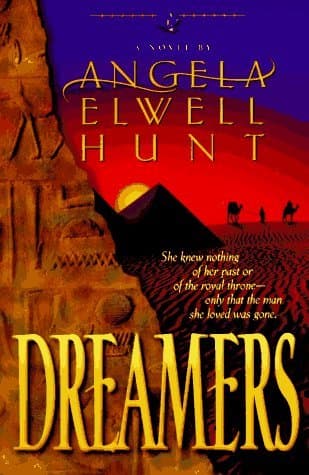
Synopsis
Covers the whole plot, including the ending.
- Difficulty
- Medium
- Pacing
- Moderate
- Mood
- Hopeful, reflective, spiritual, romantic, historical
Dreamers Plot Summary
Covers the whole plot, including the ending.
A Gift for Potiphar
Tuya, a young girl with no memory of her past beyond being a slave, is given to Potiphar, captain of Pharaoh's guard, as a gift from the Pharaoh. She is assigned to his wife, Zuleika, a woman known for her beauty and temper. Tuya quickly learns the household's complex dynamics, observing Zuleika's vanity and the other slaves' struggles for favor and survival. Despite her difficult circumstances, Tuya has an unusual inner peace and a surprising ability to observe and understand people, which sets her apart from the other servants and sometimes draws Zuleika's anger and curiosity. Her arrival causes a shift in the household's balance.
The Arrival of Joseph
A new slave, Joseph, a young Hebrew man, is brought to Potiphar's house. Unlike the other slaves, Joseph carries himself with quiet dignity and strong faith in his God, which immediately interests Tuya. He quickly shows exceptional administrative skills and honesty, earning Potiphar's trust and soon becoming the overseer of his entire estate. Joseph's presence brings a different spiritual dimension to the household, as he openly speaks of his God. This contrasts sharply with the Egyptian beliefs common among the other slaves and masters. Tuya is drawn to Joseph's character and his faith, observing him closely.
Zuleika's Obsession
Zuleika, growing bored and unhappy with her life, begins to notice Joseph's handsome appearance and good character. Her initial interest soon becomes a dangerous obsession. She makes repeated advances toward him, trying to seduce him with promises and threats. Joseph, firm in his commitment to his God and his loyalty to Potiphar, consistently rejects her. This causes Zuleika's desire to turn into bitter resentment. Tuya, serving Zuleika daily, witnesses these increasingly tense encounters, fearing the inevitable trouble for Joseph and the entire household. Her silent observations fill her with dread.
The False Accusation
Driven by her wounded pride and a desire for revenge after Joseph's repeated rejections, Zuleika invents a story, accusing Joseph of attempted rape. She presents his cloak as 'evidence' of his supposed assault. Enraged and humiliated, Potiphar believes his wife's account and, without a trial, has Joseph thrown into Pharaoh's prison. Tuya, though unable to help, knows the truth and is devastated by the injustice. The household is in turmoil, and Zuleika's act has serious consequences, not only for Joseph but for the morality of Potiphar's home. Tuya watches Joseph's departure to prison with a heavy heart, knowing he is innocent.
Life in Prison and Tuya's Growing Faith
Joseph endures his unjust imprisonment with the same strong faith and honesty, eventually earning the chief jailer's trust. He interprets the dreams of two of Pharaoh's officials imprisoned with him: the chief baker and the chief cupbearer. His interpretations are accurate; the baker is executed, and the cupbearer is restored to his position, though the cupbearer forgets Joseph. Meanwhile, back in Potiphar's house, Tuya continues to think about Joseph's teachings about his God. The injustice Joseph suffered, combined with his consistent faith, begins to impact Tuya, leading her to question her own beliefs and consider the God of Abraham, Isaac, and Jacob. She finds comfort in the thought of Joseph's God.
Pharaoh's Dreams
Two years after the cupbearer's release, Pharaoh has two disturbing dreams that none of his wise men or magicians can interpret. The forgotten chief cupbearer suddenly remembers Joseph and his ability to interpret dreams. Pharaoh, desperate for answers, sends for Joseph from prison. Joseph, saying his ability comes from God, successfully interprets Pharaoh's dreams as seven years of abundant harvests followed by seven years of severe famine. He also advises Pharaoh on a plan to store grain during the years of plenty. This moment sets the stage for Joseph's dramatic rise to power and the salvation of Egypt and his family.
Joseph's Elevation to Power
Impressed by Joseph's wisdom and the divine insight behind his interpretations, Pharaoh immediately makes Joseph Vizier, the second most powerful man in Egypt, after Pharaoh himself. He is given Pharaoh's signet ring, fine linen garments, a gold chain, and a chariot, and is married to Asenath, the daughter of Potiphera, priest of On. Joseph quickly implements his plan, organizing the storage of vast quantities of grain during the seven years of abundance. This sudden reversal of fortune shows God's care and Joseph's strong faith, demonstrating how God uses even the worst circumstances for His ultimate plan.
The Famine and Tuya's Revelation
The prophesied famine strikes Egypt and the surrounding lands, causing widespread suffering. Tuya, now older and still serving in Potiphar's household, hears whispers of a powerful vizier who manages the grain distribution. During this time, a chance encounter or overheard conversation reveals a surprising truth: Tuya is not merely a slave, but a princess, the daughter of Pharaoh Amenemhat III. She was taken from the palace as a child for unknown reasons, possibly to protect her from political plots or a curse. This revelation shatters her identity and forces her to re-evaluate her entire life and past, connecting her to the very power structure Joseph now serves.
Tuya's Quest for Truth and Love
With the knowledge of her true lineage, Tuya feels she must seek out Joseph, not only for food during the famine but also for answers and guidance. She finds him in his position of power, and their reunion is important. Tuya reveals her identity and her long-held feelings for him. Joseph, now a powerful and respected leader, is initially surprised but recognizes the woman who observed his suffering with quiet compassion. Their shared history and Tuya's new understanding of her royal heritage, combined with her embrace of Joseph's God, create a deep connection between them, growing into love. They discuss their pasts and their future together.
Reconciliation and Future
Tuya and Joseph, having both endured great hardship and injustice, find reconciliation and a shared future. Tuya, now a princess by birth and a believer in the one true God, and Joseph, the Vizier of Egypt, unite in love and faith. Their union symbolizes the triumph of faith, perseverance, and divine care over adversity. Tuya's journey from an anonymous slave to a recognized princess, and her spiritual change, culminates in her marriage to Joseph. They commit to building a future together, guided by their shared faith and the lessons learned from their extraordinary lives, serving God and the people of Egypt. Their story shows God's plan.
Dreamers Characters
Tuya
Protagonist
A slave girl who discovers her royal lineage and faith.
Tuya is introduced as a young, introspective slave girl in Potiphar's household, a gift from Pharaoh. She has no memory of her past before slavery but possesses an unusual inner peace and keen observational skills. Initially a quiet observer, she is deeply impacted by Joseph's unwavering faith and integrity. Her journey is one of self-discovery, both of her true royal heritage as Pharaoh's daughter and, more profoundly, of her spiritual identity as she embraces the God of Joseph. She is compassionate, intelligent, and resilient, enduring hardship with grace.
Relationships: Joseph (Love interest, spiritual mentor); Zuleika (Mistress, antagonist); Potiphar (Master); Pharaoh Amenemhat III (Biological father)
Joseph
Protagonist
A Hebrew slave who rises to become Vizier of Egypt.
Joseph is a young Hebrew man sold into slavery by his brothers, ending up in Potiphar's household. He is characterized by his profound faith in God, his integrity, wisdom, and exceptional administrative abilities. Despite being falsely accused and imprisoned, he never loses hope or wavers in his devotion. His ability to interpret dreams is a divine gift that ultimately leads to his elevation as Vizier of Egypt, saving the nation from famine. He is a man of strong moral character, forgiveness, and immense resilience, guided by his spiritual convictions.
Relationships: Tuya (Love interest, spiritual companion); Potiphar (Master, employer); Zuleika (Antagonist, accuser); Pharaoh (Employer, benefactor)
Zuleika
Antagonist
Potiphar's beautiful, manipulative, and jealous wife.
Zuleika is the wife of Potiphar, a woman of great beauty but also vanity, boredom, and a volatile temperament. Dissatisfied with her life and seeking excitement, she develops an intense and inappropriate obsession with Joseph. Her advances are repeatedly rejected, leading to her wounded pride and a vengeful spirit. She fabricates a false accusation against Joseph, leading to his unjust imprisonment. Zuleika represents the dangers of unbridled desire, jealousy, and the abuse of power within the domestic sphere. Her actions are the primary catalyst for Joseph's suffering and a significant obstacle in the narrative.
Relationships: Potiphar (Husband); Joseph (Object of obsession, victim); Tuya (Mistress, employer)
Potiphar
Supporting
Captain of Pharaoh's guard and Joseph's master.
Potiphar is the captain of Pharaoh's guard and a powerful, respected official. He initially recognizes Joseph's talent and integrity, elevating him to oversee his entire household. He is a man of authority, but also susceptible to manipulation and anger, as seen when he believes Zuleika's false accusation against Joseph. While he acts rashly in sending Joseph to prison, his earlier trust in Joseph suggests a man capable of discernment, though clouded by personal honor and his wife's influence. He represents the worldly power structure within which Joseph and Tuya navigate their lives.
Relationships: Zuleika (Wife); Joseph (Slave, overseer, falsely accused); Tuya (Slave, servant)
Pharaoh
Supporting
The ruler of Egypt who elevates Joseph.
The Pharaoh of Egypt (likely Amenemhat III, given the historical context of Tuya's lineage) is depicted as a powerful, absolute monarch. He is troubled by enigmatic dreams that none of his advisors can interpret, leading him to seek Joseph's help. Impressed by Joseph's divine wisdom and practical advice, Pharaoh demonstrates good judgment by swiftly elevating Joseph to the position of Vizier, entrusting him with immense power and responsibility. He is a pragmatic leader, willing to recognize and reward talent, even in a former slave, for the good of his kingdom.
Relationships: Joseph (Vizier, advisor); Tuya (Biological father (unbeknownst to him for most of the story))
Asenath
Supporting
Joseph's Egyptian wife, daughter of a priest.
Asenath is the daughter of Potiphera, the priest of On, and is given to Joseph as his wife by Pharaoh. Her role is primarily to solidify Joseph's integration into Egyptian society and to bear him children, Manasseh and Ephraim. She represents the new life and family Joseph builds in Egypt, a symbol of his restored fortune and God's blessings. While not a central character in terms of internal conflict, her presence is significant as part of Joseph's journey and his establishment as a powerful figure in Egypt.
Relationships: Joseph (Wife)
Chief Cupbearer
Supporting
Pharaoh's official whose dream Joseph interprets.
The Chief Cupbearer is one of Pharaoh's officials imprisoned with Joseph. Joseph interprets his dream, accurately predicting his restoration to Pharaoh's service. Despite promising to remember Joseph once freed, he forgets him for two years. His eventual recollection of Joseph's abilities is crucial, as it leads to Joseph being called before Pharaoh. He serves as a plot device to facilitate Joseph's release from prison and his subsequent rise to power.
Relationships: Joseph (Fellow prisoner, dream interpreter); Pharaoh (Master, employer)
Chief Baker
Supporting
Pharaoh's official whose dream Joseph interprets.
The Chief Baker is another of Pharaoh's officials imprisoned alongside Joseph. Joseph interprets his dream, accurately foretelling his execution. His fate serves as a stark contrast to the Chief Cupbearer's and further demonstrates the accuracy of Joseph's divine gift of dream interpretation. His character highlights the dire consequences of Pharaoh's displeasure and reinforces the power of Joseph's prophetic abilities, setting the stage for Pharaoh's reliance on him.
Relationships: Joseph (Fellow prisoner, dream interpreter); Pharaoh (Master)
Dreamers Themes
Faith and Providence
This theme explores Joseph's strong faith in the face of suffering and injustice, and how God's plan unfolds despite human cruelty and setbacks. Joseph consistently says his abilities and rise come from God, showing that even in the worst circumstances, God is at work. Tuya's journey also reflects this, as she moves from a life without spiritual grounding to embracing Joseph's God, finding hope and purpose. The story suggests that seemingly random events are part of a larger, divinely ordered plan, leading to good and justice.
“God sent me ahead of you to preserve for you a remnant on earth and to save your lives by a great deliverance.”
Justice and Injustice
The story examines the contrast between human injustice and divine justice. Joseph is unjustly sold into slavery, falsely accused, and imprisoned, highlighting the arbitrary and cruel nature of human power and deceit. However, the story ultimately shows God's justice prevailing, as Joseph is eventually cleared and elevated to a position of great power, allowing him to save not only Egypt but also his own family. Tuya's initial status as a slave, despite her royal birth, also shows this theme, as her true identity eventually comes to light, correcting a past injustice.
“Though men meant it for evil, God meant it for good.”
Identity and Self-Discovery
Tuya's journey is central to this theme. She begins the story as an amnesiac slave, unaware of her true origins. Her interactions with Joseph and her observations of his faith lead her to question her own beliefs and spiritual identity. The revelation of her royal lineage forces her to confront who she truly is, blending her past as a slave with her birthright as a princess. This search for identity is not just about her social status but also about her spiritual awakening, finding her true self in faith and purpose alongside Joseph.
“I am not merely a slave; I am a daughter of Egypt, and more, a child of the One God.”
Love and Forgiveness
Despite the betrayals and suffering, love, both romantic and familial, and the power of forgiveness are central. Joseph's ability to forgive his brothers, who sold him into slavery, shows his character and faith. His eventual love for Tuya, a woman who understands his past struggles, symbolizes a new beginning founded on shared faith and mutual respect. The story suggests that true love and lasting peace can only be achieved through forgiveness and an embrace of divine principles, overcoming past hurts and injustices.
“How could I not forgive, when my God has forgiven me so much?”
Plot Devices & Literary Techniques
Dream Interpretation
A divine gift that drives the plot.
Joseph's ability to interpret dreams is a central plot device, serving as the primary catalyst for his rise to power. It first establishes his divine connection in prison, accurately predicting the fates of the chief cupbearer and baker. More critically, it allows him to interpret Pharaoh's dreams, saving Egypt from famine and leading to his elevation as Vizier. This device highlights God's direct intervention in human affairs and demonstrates Joseph's unique role as a conduit for divine messages, propelling the narrative forward and fulfilling prophecy.
The False Accusation
A turning point leading to Joseph's imprisonment.
Zuleika's false accusation of assault against Joseph is a crucial plot device that plunges him into deeper suffering and tests his faith. It serves to remove him from Potiphar's household, a place of relative comfort, and place him in prison, where he can then encounter the individuals (the cupbearer and baker) whose dreams he will interpret. This act of injustice, while devastating, is ultimately shown to be part of God's larger plan to position Joseph for his future role in saving Egypt, making it a dramatic and ironic turning point.
Hidden Identity
Tuya's unknown royal lineage.
Tuya's hidden royal identity as Pharaoh's daughter is a significant plot device, particularly for her personal journey and the romantic subplot. It adds layers of mystery to her past and elevates her status from a mere slave to someone of immense importance. The revelation of her true lineage provides a powerful moment of self-discovery and allows for a more fitting and symbolic union with Joseph, who himself has risen to power. This device enriches the themes of identity, destiny, and divine providence, showing that even the lowliest can possess hidden greatness.
Quiz
10 questions on the plot and the characters. Each answer comes with a short explanation.
Question 1
What is the name of the main character introduced in the excerpt?
- Angela
- Potiphar
- Tuya
- Pharaoh
Show answer
C. Tuya The excerpt explicitly states, 'Tuya came as a teenaged slave...'
Question 2
From whom did Tuya come to Potiphar's household?
- Her parents
- The Pharaoh
- Another slave
- A merchant
Show answer
B. The Pharaoh The text mentions, 'Tuya came as a teenaged slave... a personal gift from the Pharaoh.'
Question 3
What is Tuya's known past, according to the excerpt?
- She was a princess who was overthrown.
- She was a farmer's daughter.
- She knew nothing about her past except that she had always been a slave.
- She was a runaway noblewoman.
Show answer
C. She knew nothing about her past except that she had always been a slave. The excerpt clearly states, 'She knew nothing about her past, except that she had always been a slave.'
Question 4
What physical characteristic of Tuya is highlighted?
- Her dark, curly hair
- Her bright, golden eyes
- Her small, delicate hands
- Her strong, muscular build
Show answer
B. Her bright, golden eyes The description mentions, 'Tall and slender, the young girl had eyes that shone like a stream of gold.'
Question 5
What was Tuya's status upon arriving at Potiphar's household?
- A honored guest
- A servant
- A slave
- A student
Show answer
C. A slave The text states, 'Tuya came as a teenaged slave to Potiphar's household.'
Question 6
The genre of the book is identified as Historical Fiction, Spirituality, and Romance. Based on the excerpt, which of these genres is most immediately suggested?
- Romance
- Spirituality
- Historical Fiction
- All are equally suggested
Show answer
C. Historical Fiction The setting (Potiphar's household, Pharaoh) and Tuya's status as a slave point strongly to a historical context. Spirituality and romance are not explicitly demonstrated in this short excerpt.
Question 7
Tuya was described as 'tall and slender'. What does this combination of traits suggest about her?
- She was weak and frail.
- She was physically imposing but graceful.
- She was athletic and muscular.
- She was short and stocky.
Show answer
B. She was physically imposing but graceful. Tall and slender describes a person who is of significant height and has a lean, graceful build, often implying elegance rather than brute strength.
Question 8
The phrase 'eyes that shone like a stream of gold' is a metaphor. What does this metaphor primarily emphasize about Tuya's eyes?
- Their color
- Their size
- Their shape
- Their expressiveness
Show answer
A. Their color While it could imply expressiveness, the primary comparison is to the color and brilliance of gold, suggesting a unique and striking hue.
Question 9
Given that Tuya knew nothing of her past except being a slave, what psychological state might she be in?
- Confident and self-assured
- Curious and hopeful for answers
- Resigned and lacking a sense of identity
- Angry and rebellious
Show answer
C. Resigned and lacking a sense of identity A complete lack of knowledge about one's past, coupled with the status of being a slave, would likely lead to a feeling of being adrift, lacking a firm identity, and possibly resignation.
Question 10
The excerpt mentions Tuya was a 'personal gift from the Pharaoh'. What does this imply about her value or significance?
- She was a common item given away by the Pharaoh.
- She was considered valuable enough to be a direct offering from the highest authority.
- She was a political prisoner sent as a diplomatic gesture.
- She was a religious artifact of importance.
Show answer
B. She was considered valuable enough to be a direct offering from the highest authority. A 'personal gift from the Pharaoh' suggests that Tuya was not a mundane item but was deemed significant or special enough for the ruler himself to bestow. This implies a certain value.
Dreamers FAQ
What is "Dreamers" by Angela Elwell Hunt about?
"Dreamers" is a historical fiction novel that tells the story of Tuya, a young slave girl gifted to Potiphar's household by the Pharaoh. The story explores her life, her unknown past, and her spiritual journey within a richly imagined ancient Egyptian setting.
What are the main themes in "Dreamers"?
The novel delves into themes of spirituality, romance, and the challenges of overcoming a past shrouded in mystery and enslavement. It also explores faith and personal growth.
Who is the main character in "Dreamers"?
The central character is Tuya, a teenage slave girl with striking golden eyes who has no memory of her past and is brought to Potiphar's household as a gift from the Pharaoh.
What time period does "Dreamers" take place in?
The story is set in ancient Egypt during the time of the Pharaohs, specifically within the household of Potiphar.
Is "Dreamers" a romance novel?
While romance is a significant element in the story, "Dreamers" also blends historical fiction and spiritual themes, offering a multifaceted narrative.
What is the spiritual aspect of "Dreamers"?
The spiritual aspect focuses on Tuya's journey of self-discovery and her developing understanding of faith and her place in the world, often in the context of ancient Egyptian beliefs and practices.
How does the historical setting influence the story?
The ancient Egyptian setting provides a rich backdrop for the narrative, influencing the characters' lives, societal structures, and the spiritual and cultural elements woven throughout the plot.
What kind of challenges does Tuya face?
Tuya faces the challenges of being a slave with an unknown past, navigating the complexities of Potiphar's household, and seeking her own identity and purpose.
Is "Dreamers" based on a true story?
While inspired by historical and biblical contexts, "Dreamers" is a work of historical fiction, meaning the characters and specific plot points are imagined by the author within a historical framework.
About the author

Angela Elwell Hunt is a prolific author of Christian fiction, known for her ability to weave compelling narratives with spiritual depth. Her notable works include the "Dreamers" series and "The Tale of Three Trees," which have resonated with readers seeking faith-based storytelling. Hunt's extensive bibliography and consistent presence in the inspirational fiction market highlight her significant contribution to the genre.
Similar books
- A Voice in the Wind
Francine Rivers
4.6 (75k) average on GoodreadsHistorical FictionBoth 'Dreamers' and Rivers' 'A Voice in the Wind' are powerful works of historical fiction with significant spiritual undertones. However, Rivers' novel, set in ancient Rome, delves into more intense persecution and overt evangelism, often portraying the stark contrast between paganism and early Christianity with dramatic flair. 'Dreamers,' while exploring faith, does so within a predominantly Christian-leaning society, focusing more on personal conviction and the quiet struggle of belief amidst war and hardship. Hunt's romance is also more understated and less central than the passionate, often tragic, love stories found in Rivers' work. 'Dreamers' feels more introspective and reflective, while 'A Voice in the Wind' is more epic and confrontational in its spiritual themes.
- To Kill a Mockingbird
Harper Lee
4.3 (4.5M) average on GoodreadsHistorical FictionIn the 1930s Jim Crow South, Harper Lee writes about racial injustice, moral growth, and the quiet courage of a lawyer father, Atticus Finch, as seen through his young daughter's eyes.
- The Great Gatsby
F. Scott Fitzgerald
3.9 (3.8M) average on GoodreadsHistorical FictionIn the opulent Roaring Twenties, a mysterious millionaire's lavish parties hide his desperate, tragic pursuit of a lost love, exposing the emptiness within the American Dream.
- Pride and Prejudice
Jane Austen
4.3 (3M) average on GoodreadsHistorical FictionIn a society focused on status and money, Elizabeth Bennet navigates love and pride, challenging Mr. Darcy and social expectations to find true affection.
- Angels & Demons
Dan Brown
3.9 (2.7M) average on GoodreadsThrillerA Harvard symbologist races through Rome's ancient sites, deciphering cryptic clues to unmask the Illuminati and stop a vengeful plot to destroy the Vatican with a stolen antimatter weapon.
- The Kite Runner
Khaled Hosseini
4.3 (2.4M) average on GoodreadsHistorical FictionIn pre-Taliban Afghanistan, a wealthy boy's betrayal of his servant's son during a kite-running tournament starts a lifelong journey for amends as his country collapses.






Enjoyed the summary?
A summary gives you the shape of the book. The book itself has the detail, the examples and the voice.
Find Dreamers on AmazonAs an Amazon Associate, BookBrief earns from qualifying purchases. How we're funded