
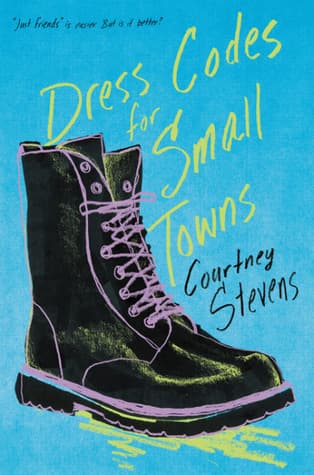
Synopsis
Covers the whole plot, including the ending.
- Difficulty
- Easy
- Pacing
- Moderate
- Mood
- Heartwarming, Reflective, Authentic, Sweet
- Read it if
- You enjoy coming-of-age stories about self-discovery, queer romance, and complex friendships in a small-town setting.
- Skip it if
- You prefer fast-paced plots with minimal introspection, or are uncomfortable with themes of sexual fluidity and friendship drama.
Dress Codes for Small Towns Plot Summary
Covers the whole plot, including the ending.
The Woods and the Creek
Billie McCaffrey, a tomboy and the daughter of the town preacher, spends her days with her close friends: Woods, Mash, Davey, Fifty, and Janie Lee. They are a constant presence in her life, a refuge from the expectations of her conservative small town, Common. Billie often finds peace in the woods, a place of shared memories, especially with Woods. Their bond is deep, built on years of experiences and an unspoken understanding. As summer begins, the group's usual carefree activities change slightly, particularly Janie Lee's behavior, which Billie watches with curiosity and a growing, undefined anxiety about her own feelings.
Janie Lee's Confession
One night, Janie Lee tells Billie she is deeply in love with Woods. This revelation shocks Billie. While she sees herself as 'one of the guys' and is used to easy friendships with her male friends, Janie Lee's words force Billie to face her own long-held feelings for Woods. At the same time, Billie realizes something new: she also has romantic feelings for Janie Lee. This dual attraction leaves Billie confused and scared, as she grapples with emotions that do not fit the simple understanding of love common in her town.
The Weight of Secrecy
Overwhelmed by her conflicting attractions, Billie decides to keep her feelings secret. She fears that revealing her love for both Woods and Janie Lee would break their friendship group and expose her to judgment in their small, conservative town. Her internal struggle is made worse by her father, Pastor McCaffrey's, traditional views on gender roles and relationships. Billie feels increasingly alone, burdened by her secret, while trying to act normal within her friend group, especially as Janie Lee's affection for Woods becomes clearer.
The Chapel Project
To cope with her emotional turmoil, Billie focuses on a demanding physical project: helping her father build a chapel. This project becomes a symbol for her internal struggle—building something meaningful while dealing with her own spiritual and emotional foundations. The act of building, using her hands and strength, offers a temporary escape and a sense of control amid her chaotic feelings. It also brings her closer to her father, who, despite his traditional views, values her skills. This project allows Billie to process her feelings in a tangible way.
Navigating Group Dynamics
As summer continues, Billie sees subtle changes in the group's dynamics. Janie Lee pursues Woods more directly, and Woods, initially unaware, starts to notice Janie Lee's attention. Billie finds herself watching, a silent participant in a love triangle where her own feelings are hidden. She struggles to maintain her usual carefree attitude, often withdrawing or focusing on her woodworking projects. The easy friendship she once shared with her friends now feels strained, filled with unspoken tensions and the pain of her own unacknowledged desires.
The Dance and the Almost Kiss
A school dance becomes a major turning point, raising the emotional stakes for Billie. During the dance, Billie and Woods share a close moment, almost kissing. This confirms Billie's deep romantic feelings for Woods, further complicating her emotions. Their connection is clear, but the moment is interrupted, leaving Billie with hope and deep confusion. This event forces her to face her attraction to Woods and the difficulty of denying it, even as Janie Lee continues to pursue him.
The Truth Emerges
The truth about Billie's feelings for Woods eventually comes out, implied through growing tensions. This revelation leads to a painful and confusing confrontation with Woods. Woods is surprised, having always seen Billie as 'one of the guys,' and struggles to accept her confession. Their conversation is filled with misunderstanding and unexpressed emotions, leaving Billie feeling vulnerable and rejected, while Woods deals with his changing understanding of their friendship and his own feelings.
Confronting Janie Lee
After the emotional talk with Woods, Billie finds the courage to tell Janie Lee her feelings. Janie Lee reacts with surprise and some understanding. Despite her feelings for Woods, she has a deep bond with Billie. Their conversation is gentle but complicated, as Janie Lee processes the news while still pursuing Woods. This confession is a significant step for Billie in acknowledging her sexual fluidity, even if it does not lead to an immediate, simple resolution. It adds a new layer of complexity to their friendship.
The Aftermath and Reflection
After her confessions, Billie spends time reflecting. Her relationships with Woods and Janie Lee are changed, and the group dynamic is strained. Billie must face the consequences of her honesty, including the discomfort and confusion it causes, especially in Woods. She spends time alone, processing her emotions, her identity, and what love truly means to her. This period is important for her personal growth, as she begins to understand that love and identity are not always simple or easily categorized, moving beyond her small town's expectations.
Rebuilding and Understanding
As time passes, Billie, Woods, and Janie Lee begin to rebuild their friendships, with new understandings and boundaries. There is no immediate, clear romantic resolution, but a deeper acceptance of their individual complexities emerges. Billie embraces her identity as someone whose love does not fit into neat boxes. She finds strength in her authenticity and the support of her closest friends, who, despite the initial turmoil, remain by her side. The ending suggests a hopeful future where Billie continues to define love and herself on her own terms, free from societal constraints.
Principal Figures
Billie McCaffrey
Protagonist
The tomboy preacher's daughter grappling with her identity and sexual fluidity.
Billie is a strong-willed, independent, and physically capable young woman who prefers building furniture and wearing sweats to conforming to feminine expectations. As the daughter of a preacher in a conservative small town, she feels the constant pressure to fit a mold she doesn't belong in. She is deeply loyal to her friends and initially struggles to articulate her complex feelings, often internalizing her emotions. Her journey is defined by her quest for self-understanding in love and identity, challenging societal norms and her own preconceived notions.
Relationships: Woods (Childhood best friend, unrequited romantic interest, complicated by his perception of her as 'one of the guys'.); Janie Lee (Close female friend, unacknowledged romantic interest, complicated by Janie Lee's feelings for Woods.); Pastor McCaffrey (Father) (Loving but traditional father, whose expectations clash with Billie's emerging identity.); Mash (Loyal and supportive friend, part of her core group.); Davey (Loyal and supportive friend, part of her core group.); Fifty (Loyal and supportive friend, part of her core group.)
Woods
Supporting
Billie's childhood best friend, initially oblivious to the romantic tensions around him.
Woods is a kind, somewhat naive, and deeply loyal member of Billie's friend group. He shares a profound, almost telepathic bond with Billie, built on years of shared experiences and unspoken understanding. He sees Billie as his best friend, 'one of the guys,' and struggles to comprehend her romantic feelings for him when they are revealed. His journey involves coming to terms with the changing dynamics of his relationships and understanding the complexities of love beyond simple categories. He is a good listener but can be slow to recognize emotional cues.
Relationships: Billie McCaffrey (Childhood best friend, later a romantic interest for Billie, which initially confuses him.); Janie Lee (Friend, later the object of Janie Lee's romantic affection.); Mash (Close friend.); Davey (Close friend.); Fifty (Close friend.)
Janie Lee
Supporting
Billie's close friend who confesses her love for Woods.
Janie Lee is a more traditionally feminine character compared to Billie, but she is also a loyal and integral part of their friend group. She is open about her feelings and bravely confesses her love for Woods, setting much of the plot in motion. Her honesty and directness contrast with Billie's initial secrecy. While she pursues Woods, she also cares deeply for Billie, and her reaction to Billie's eventual confession is complex, reflecting a genuine understanding and affection for her friend. She represents a more conventional path of love that Billie struggles to fit into.
Relationships: Billie McCaffrey (Close female friend, later the object of Billie's romantic affection.); Woods (Friend, and the object of her romantic affection.)
Pastor McCaffrey
Supporting
Billie's traditional but loving father, the town's preacher.
Pastor McCaffrey is Billie's father and the moral compass of the small town of Common. He holds traditional values regarding gender roles and relationships, which often puts him at odds with Billie's independent spirit and emerging identity. Despite his conservative views, he is a loving and supportive father who values Billie's unique talents, especially her skills in woodworking. His presence in Billie's life represents the societal expectations and pressures she feels to conform, but also a foundation of love and family that she ultimately relies on.
Relationships: Billie McCaffrey (Father-daughter relationship, marked by love, respect for her skills, and differing views on life.)
Mash
Supporting
One of Billie's loyal and easygoing friends.
Mash is a reliable and supportive member of Billie's core group of friends. He provides a steady presence and often lightens the mood with his easygoing nature. While not as central to the romantic plot, his unwavering friendship is crucial to Billie, offering her a sense of normalcy and belonging amidst her internal turmoil. He represents the comfort and stability of her established friendships, which, despite the romantic complications, endure.
Relationships: Billie McCaffrey (Close friend.); Woods (Close friend.); Janie Lee (Friend.); Davey (Close friend.); Fifty (Close friend.)
Davey
Supporting
Another of Billie's dependable male friends.
Davey is an integral part of Billie's close-knit friend group, offering a sense of stability and camaraderie. Like Mash and Fifty, he helps to ground Billie and provides a consistent social circle that predates her romantic complications. His role is primarily to support the group dynamic and offer a constant presence, highlighting the strength of their collective bond even as individual relationships within it are tested. He is reliable and generally goes along with the group's plans.
Relationships: Billie McCaffrey (Close friend.); Woods (Close friend.); Janie Lee (Friend.); Mash (Close friend.); Fifty (Close friend.)
Fifty
Supporting
The final member of Billie's core group of loyal friends.
Fifty completes the quintet of Billie's closest friends, representing another facet of her supportive network. He contributes to the overall sense of enduring friendship and shared history that defines the group. While his individual personality isn't deeply explored, his presence reinforces the idea that Billie's friendships are a foundational element of her life, providing a safe space even when her internal world is in chaos. He is a consistent and reliable companion.
Relationships: Billie McCaffrey (Close friend.); Woods (Close friend.); Janie Lee (Friend.); Mash (Close friend.); Davey (Close friend.)
Themes & Insights
Sexual Fluidity and Identity
The main theme is Billie's realization that her attractions are not limited to one gender. She loves Woods, a boy, but also Janie Lee, a girl, challenging traditional views of sexuality. Her conservative small town, Common, expects clear labels and traditional relationships, which makes this internal conflict worse. Billie's journey is about accepting her true feelings, despite outside pressure, and defining her own identity and capacity for love. This is seen when she finally tells both Woods and Janie Lee how she feels, regardless of the outcome.
“Love wasn’t a dress code. It didn’t fit into a box or a label. It was a feeling, a choice, a wild thing.”
The Pressure of Conformity vs. Authenticity
Billie constantly struggles with the expectations placed on her by her small town and her preacher father. She is expected to be a 'good girl,' perhaps more feminine, and to eventually fall in love with a boy. Her tomboy nature and non-conforming attractions directly challenge these societal norms. The theme explores the internal battle to live authentically when faced with strong pressure to conform. Billie's long-held secret, and her eventual courage to reveal it, highlight this tension. Her woodworking projects, like building the chapel, symbolize her desire to create her own path and identity.
“Common was a town of labels. Good girl. Bad boy. Christian. Sinner. I just wanted to be Billie.”
The Nature of Friendship and Love
The novel explores the complex lines between platonic friendship and romantic love within a close group. Billie's initial fear is that her romantic feelings will 'ruin' the group dynamic, showing how love can complicate existing friendships. The book questions whether deep friendships can become or exist with romantic feelings, and how these relationships can survive big changes. The lasting bond between Billie and her friends, despite the romantic entanglements and confessions, suggests that true connection can adapt and grow, even if it means redefining boundaries and expectations, as seen in the slow rebuilding of trust after the truth comes out.
“Friendship was the foundation, but what if the foundation started to crack under the weight of something else?”
Coming of Age in a Small Town
The setting of 'Common' is important to the story. It represents both a safe, familiar world and a restrictive environment. Small towns often have strong community ties but also strict social norms and gossip. Billie's self-discovery is heightened by the feeling of being constantly watched and the fear of judgment. The limited exposure to diverse perspectives makes her internal struggle with sexual fluidity feel particularly isolating. Her growth involves learning to navigate these constraints and find her voice and identity within, or despite, her upbringing, realizing that her worth is not defined by her town's expectations.
“In a town like Common, everyone knew your business, and everyone had an opinion about it.”
Plot Devices & Literary Techniques
The Chapel Construction
A physical project symbolizing Billie's internal struggle and growth.
Billie's commitment to helping her father build a chapel serves as a powerful extended metaphor. The physical labor and the act of construction mirror her internal process of building and understanding her own identity and feelings. It's a tangible outlet for her emotional turmoil, allowing her to channel her frustrations and confusion into something productive. The chapel, as a place of worship, also represents the spiritual and moral framework she is both part of and rebelling against, symbolizing her search for a personal faith and truth amidst her father's traditional beliefs.
The 'Dress Codes' Metaphor
Symbolic representation of societal expectations and labels.
The title itself, 'Dress Codes for Small Towns,' acts as a central metaphor for the unspoken rules and expectations that govern behavior, identity, and relationships in Billie's conservative town. These 'dress codes' are not just about clothing but about how one should act, love, and exist within the community. Billie's tomboy nature and her fluid sexuality directly challenge these metaphorical dress codes. The device highlights the pressure to conform and the struggle to break free from restrictive labels, emphasizing the theme of authenticity versus societal conformity.
The Woods/Nature as Sanctuary
A recurring setting providing solace and a space for self-reflection.
The woods and natural settings, particularly the creek, serve as a recurring motif and a significant plot device. For Billie and her friends, these natural spaces are a sanctuary, a place where they can escape the watchful eyes of the town and simply be themselves. For Billie especially, the woods are a place of quiet contemplation, where she can process her complex emotions and find moments of peace. It symbolizes freedom, wildness, and a connection to her authentic self, contrasting sharply with the structured, judgmental environment of the town.
First-Person Narrative (Billie's Perspective)
Provides intimate access to Billie's internal world and emotional turmoil.
The story is told entirely from Billie McCaffrey's first-person point of view, which is crucial for immersing the reader in her complex emotional journey. This narrative choice allows for an intimate exploration of her internal struggles, her confusion, her fears, and her eventual self-acceptance. We experience her conflicting attractions, her anxieties about disappointing her father, and her deep loyalty to her friends directly through her thoughts and feelings, making her journey of sexual fluidity and identity particularly poignant and relatable.
Dress Codes for Small Towns Quotes
“There are some things you can't undo, no matter how many times you try to get it right.”
“Maybe the bravest thing you can do is admit you're scared.”
“Small towns are like that. Everyone knows your business, and everyone has an opinion on it.”
“Love isn't a straight line. It's a messy, winding road with unexpected detours.”
“Sometimes the hardest person to forgive is yourself.”
“Being different isn't a curse; it's a superpower if you know how to wield it.”
“The truth has a way of coming out, no matter how deep you bury it.”
“You can't choose who you love, but you can choose how you love them.”
“Grief is a tricky thing. It doesn't follow rules, and it doesn't care about your timeline.”
“Maybe home isn't a place, but a feeling you carry inside you.”
“Sometimes the things you run from are the very things that make you who you are.”
“Friendship isn't about being perfect; it's about being present.”
“The greatest stories are often found in the spaces between the lines, in the unspoken.”
“It's never too late to start over, even if 'starting over' just means starting to be honest with yourself.”
Quiz
10 questions on the plot and the characters. Each answer comes with a short explanation.
Question 1
What is Billie McCaffrey's father's profession?
- A teacher
- A carpenter
- A preacher
- A doctor
Show answer
C. A preacher Billie is described as the tomboy daughter of the town’s preacher, which is a key detail influencing her struggles with fitting in.
Question 2
Which of the following activities does Billie prefer over traditional feminine roles?
- Attending church socials
- Building furniture
- Shopping for dresses
- Baking cookies
Show answer
B. Building furniture The description explicitly states Billie would rather wear sweats, build furniture, and get into trouble, highlighting her non-traditional interests.
Question 3
Which two characters does Billie realize she has romantic feelings for?
- Woods and Davey
- Woods and Janie Lee
- Mash and Fifty
- Janie Lee and Fifty
Show answer
B. Woods and Janie Lee Billie realizes she is in love with Woods, and 'maybe with Janie Lee, too,' after Janie Lee confesses her feelings for Woods.
Question 4
Why does Billie initially keep her romantic feelings to herself?
- She wants to move away from her small town first.
- She fears ruining the group dynamic and wants to understand her sexuality on her own terms.
- She believes her friends would not approve of her choices.
- She is shy and prefers to express her feelings through actions.
Show answer
B. She fears ruining the group dynamic and wants to understand her sexuality on her own terms. Billie keeps her feelings to herself 'for fear of ruining the group dynamic' and because she doesn't want a label on her sexuality before she understands it herself.
Question 5
What is the primary conflict Billie faces regarding her identity?
- Her desire to leave her small town versus her loyalty to her family.
- Her struggle to fit the mold of what others expect her to be versus her authentic self.
- Her academic ambitions versus her social life.
- Her financial struggles versus her dreams of travel.
Show answer
B. Her struggle to fit the mold of what others expect her to be versus her authentic self. Billie 'has always struggled with fitting the mold of what everyone says she should be,' which is a central conflict related to her identity and gender expression.
Question 6
Which of Billie's friends confesses her love for Woods, sparking Billie's own realization?
- Mash
- Davey
- Janie Lee
- Fifty
Show answer
C. Janie Lee The plot summary states, 'But when Janie Lee confesses to Billie that she’s in love with Woods, Billie’s filled with a nagging sadness as she realizes that she is also in love with Woods…and maybe with Janie Lee, too.'
Question 7
The book is described as a 'John Hughes-esque exploration' of what concept?
- Socioeconomic class differences
- Political activism in small towns
- Sexual fluidity
- Intergenerational family conflict
Show answer
C. Sexual fluidity The description explicitly calls it a 'John Hughes-esque exploration of sexual fluidity,' highlighting a key thematic element.
Question 8
How does Billie primarily view the traditional definition of love, as presented in the book's premise?
- As an exciting and universal experience.
- As something simple and easily attainable.
- As always defined as a boy and a girl falling in love, which isn't simple for her.
- As irrelevant to her personal life.
Show answer
C. As always defined as a boy and a girl falling in love, which isn't simple for her. The text states that love 'has always been defined as a boy and a girl falling in love and living happily ever after. For Billie—a box-defying dynamo—it’s not that simple.' This indicates her struggle with traditional definitions.
Question 9
What phrase is used to describe Billie's internal conflict regarding her sexuality before she understands it herself?
- A 'moral dilemma'
- Not wanting 'anyone slapping a label on her sexuality'
- A 'crisis of faith'
- An 'unresolved mystery'
Show answer
B. Not wanting 'anyone slapping a label on her sexuality' Billie 'doesn’t want anyone slapping a label on her sexuality before she can understand it herself,' emphasizing her desire for self-discovery without external pressure.
Question 10
The book's premise suggests that Billie's journey will involve coming to terms with the 'gray areas' of which three concepts?
- Politics, religion, and career
- Love, gender, and friendship
- Family, education, and community
- Art, music, and literature
Show answer
B. Love, gender, and friendship The final sentence states, 'Readers will be drawn to Billie as she comes to terms with the gray areas of love, gender, and friendship,' directly identifying these three key thematic elements.
Dress Codes for Small Towns FAQ
What is the central conflict Billie McCaffrey faces at the beginning of the story?
Billie, the tomboy daughter of the town preacher, grapples with societal expectations of femininity while realizing she has romantic feelings for two of her closest friends: Woods and Janie Lee. This internal conflict is heightened when Janie Lee confesses her love for Woods to Billie, creating a complex emotional dilemma.
Who are Billie's core group of friends, and what is their dynamic?
Billie's tight-knit group consists of Woods, Mash, Davey, Fifty, and Janie Lee. They are a close group, often getting into minor trouble and sharing a strong bond, with Billie often feeling like 'one of the guys' due to her preferences for sweats and building furniture.
How does Janie Lee's confession impact Billie's emotional state and her relationships?
Janie Lee's confession of love for Woods creates a significant internal crisis for Billie, as it forces her to confront her own burgeoning feelings for both Woods and Janie Lee. This revelation introduces a deep sadness and fear of disrupting the established group dynamic, leading Billie to initially keep her own complex emotions hidden.
What societal or personal expectations does Billie try to defy throughout the book?
Billie actively defies traditional gender roles and the 'dress codes' of her small town, preferring comfort and practicality over conventional femininity. She also resists the pressure to label her sexuality before she fully understands it herself, challenging the heteronormative ideal of 'boy meets girl' love.
What role does Billie's father, the preacher, play in her struggle with identity?
As the daughter of the town preacher, Billie feels an implicit pressure to conform to an image of 'good girl' or 'proper' behavior. While her father's direct influence on her sexuality isn't explicitly detailed, his position contributes to the conservative atmosphere she navigates, making her journey of self-discovery more challenging.
Are there any subtle hints about Billie's attraction to Janie Lee before Janie Lee's confession about Woods?
The narrative subtly foreshadows Billie's attraction to Janie Lee through Billie's intense loyalty and protective feelings towards her, along with an underlying awareness of Janie Lee's presence and actions within the group. These moments, while not explicit romantic thoughts, set the stage for Billie's later realization of her feelings.
How does Billie's passion for building furniture relate to her internal journey?
Billie's love for building furniture symbolizes her desire to construct her own identity and relationships on her own terms, rather than fitting into pre-made molds. It represents her hands-on, practical approach to life and her resistance to superficiality, reflecting her struggle to define love and gender authentically.
Is there a specific 'dress code' incident that highlights Billie's non-conformity?
While not a single incident, Billie's constant preference for sweats and practical clothing over dresses or more traditionally feminine attire serves as an ongoing 'dress code' defiance. This consistent choice underscores her discomfort with gendered expectations and her desire for authenticity.
How does Billie's internal monologue evolve as she comes to terms with her sexual fluidity?
Initially, Billie's internal monologue is characterized by confusion, fear, and a desire to suppress her feelings to maintain harmony. As the story progresses, her thoughts shift towards exploration, self-acceptance, and a determined effort to understand love and her identity on her own terms, embracing the 'gray areas' rather than fearing them.
What psychological impact does 'being one of the guys' have on Billie's emotional development regarding romance?
Being perceived as 'one of the guys' likely contributed to Billie's delayed recognition or suppression of her own romantic feelings, especially towards Janie Lee. This label might have made her feel she couldn't express vulnerability or non-heteronormative attractions without disrupting her established identity and friendships.
How does the fear of 'ruining the group dynamic' manifest in Billie's behavior?
Billie's fear of ruining the group dynamic manifests as extreme secrecy and emotional suppression. She avoids discussing her feelings for Woods and Janie Lee, isolates herself emotionally at times, and prioritizes the group's perceived stability over her own emotional needs, leading to internal turmoil.
What is the significance of the 'John Hughes-esque exploration' in the context of Billie's journey?
The 'John Hughes-esque exploration' signifies a focus on authentic, character-driven emotional drama, often within a high school setting, where complex friendships, first loves, and identity crises are central. For Billie, it means a deep dive into the messy, relatable aspects of coming-of-age and self-discovery, emphasizing genuine human connection over simple plot points.
Does the book suggest that Billie definitively labels her sexuality by the end, or does it leave it open-ended?
The book emphasizes Billie's journey of understanding love and her sexuality 'on her terms,' focusing on the acceptance of 'gray areas.' While she gains clarity and self-acceptance, the narrative likely prioritizes the fluidity of her experience over a rigid, definitive label, reflecting her resistance to being boxed in.
How does the small-town setting contribute to the pressures Billie feels?
The small-town setting likely intensifies the pressures Billie feels, as it often implies a close-knit community with traditional values and limited anonymity. This environment makes it harder for Billie to explore her identity privately and without judgment, making her non-conformity and sexual fluidity more conspicuous.
What message does the book convey about love and its definitions?
The book powerfully conveys that love is multifaceted and defies simplistic definitions, particularly the traditional 'boy meets girl' narrative. It champions the idea that love can exist in various forms, including same-sex attractions and complex emotional bonds, encouraging readers to embrace its fluidity and individuality.
How do Mash, Davey, and Fifty contribute to the story beyond just being part of the friend group?
While perhaps not as central to Billie's romantic arc, Mash, Davey, and Fifty represent the unwavering foundation of her platonic friendships. Their presence provides a sense of normalcy and stability, highlighting the importance of enduring bonds even as Billie navigates her personal turmoil and redefines her understanding of love.
What is the significance of the title 'Dress Codes for Small Towns'?
The title is symbolic, referring not just to literal clothing but to the unspoken rules and expectations of conformity in a small community. These 'dress codes' encompass gender roles, relationship norms, and societal pressures that Billie constantly pushes against in her quest for authentic self-expression and understanding of love.
Does Billie's relationship with her mother influence her journey of self-discovery?
The provided synopsis doesn't detail Billie's relationship with her mother, but typically, parental figures, even if not central to the plot, can subtly influence a protagonist's development. If present, her mother's views or lack thereof on gender and relationships could either reinforce or challenge Billie's internal struggles.
Similar books
- Simon vs. the Homo Sapiens Agenda
Becky Albertalli
4.3 (288k) average on GoodreadsYoung AdultExplores a teen's journey of coming out and first love amidst high school friendships.
- I'll Give You the Sun
Jandy Nelson
4.1 (254k) average on GoodreadsYoung AdultDeals with complex sibling relationships, art, and self-discovery in a unique narrative.
- The Hate U Give
Angie Thomas
4.5 (504k) average on GoodreadsYoung AdultBoth novels feature protagonists grappling with significant, life-altering events and secrets that force them to confront uncomfortable truths. While Thomas addresses systemic racism and social justice, Stevens's work, though less overtly political, shares a commitment to exploring the emotional complexity and moral dilemmas faced by young people in response to profound revelations.
- Harry Potter and the Sorcerer's Stone
J.K. Rowling
4.5 (7M) average on GoodreadsFantasyRescued from a miserable life under the stairs, an orphaned boy discovers he's a wizard destined for a magical school, where he uncovers a dangerous secret tied to the dark wizard who murdered his parents.
- The Hunger Games
Suzanne Collins
4.3 (6.4M) average on GoodreadsFantasyIn a future where children fight to the death on live television, Katniss Everdeen volunteers for the arena, turning a death sentence into a fight for survival and a spark of rebellion.
- To Kill a Mockingbird
Harper Lee
4.3 (4.5M) average on GoodreadsHistorical FictionIn the 1930s Jim Crow South, Harper Lee writes about racial injustice, moral growth, and the quiet courage of a lawyer father, Atticus Finch, as seen through his young daughter's eyes.




Enjoyed the summary?
A summary gives you the shape of the book. The book itself has the detail, the examples and the voice.
Find Dress Codes for Small Towns on AmazonAs an Amazon Associate, BookBrief earns from qualifying purchases. How we're funded