
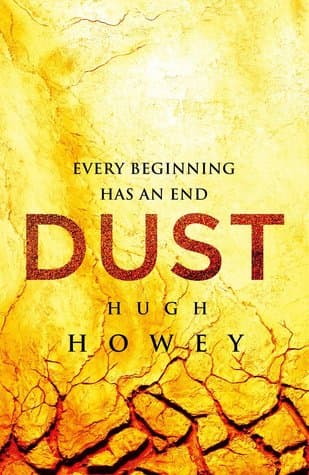
Synopsis
Covers the whole plot, including the ending.
- Difficulty
- Medium
- Pacing
- Variable
- Mood
- Dystopian, Suspenseful, Hopeful, Revelation
- Read it if
- You enjoy dystopian futures, unraveling grand conspiracies, and stories of rebellion against oppressive systems, with a focus on character-driven action and the search for truth.
- Skip it if
- You prefer lighthearted reads or intricate magic systems over technological dystopias and psychological tension.
Dust Plot Summary
Covers the whole plot, including the ending.
The Breach and the Warning
Jules, back in Silo 18 after surviving the cleaning, is now its reluctant head of Mechanical. Her actions, showing the outside world on the monitors, have caused conflict. She struggles with the fact that the world is toxic, a truth that was a lie to the inhabitants but real to the silo builders. Solo, the last survivor of Silo 17, remains in solitary confinement, his mind fragile, haunted by his silo's end. Jules, wanting transparency and feeling a deep sense of injustice, starts to uncover the larger conspiracy, understanding that the silos are an experiment.
Silo 1's Awakening
In the sterile chambers of Silo 1, Donald, one of the silo system's original architects, awakens from cryosleep. Thurman, Silo 1's current leader, immediately confronts him with his cold, calculating nature, reminding him of their mission: to preserve humanity, no matter the cost. Donald remembers the old world, the betrayals, and the decisions he made to secure the silos' future. He feels immense guilt for overseeing the initial construction and the strict rules that govern all other silos, including the periodic culling of their populations.
The Seeds of Rebellion
Jules, despite her weariness and trauma, refuses to let the truth die. She experiments with the silo's communication systems, trying to reach other silos, especially Silo 17, knowing Solo is its only survivor. Some in Silo 18 view her actions with suspicion and resistance, fearing the chaos she might cause. Lukas, who also saw the outside world on the monitors, becomes a cautious ally, disturbed by the lies. Together, they investigate the silo's secrets, focusing on encrypted files and the cleanings' true purpose.
Donald's Reawakening Conscience
From Silo 1, Donald and Thurman monitor all other silos. Donald watches the cycle of hope and despair, the uprisings, and the brutal cleanings, including the one Jules survived. The cold efficiency of Silo 1's operations, especially Thurman's willingness to purge entire silos for the 'greater good,' slowly affects Donald. He remembers the faces of those he betrayed in the old world and sees parallels in Thurman's actions. A growing unease pushes him to subtly question Thurman's authority and their mission's morality.
The Unveiling of Solo's Past
Jules, with Lukas's help, connects with Silo 17. Through old, corrupted data and fragmented video files, she learns the truth of Silo 17's demise: a genetic plague, intentionally released by Silo 1 to test its effects, wiped out almost everyone, leaving Solo as the sole survivor. This discovery strengthens Jules's resolve. She understands that Silo 1 is not a benevolent overseer but a ruthless manipulator, and that her silo, and all others, are pawns in a cruel experiment. This revelation fuels her determination to expose them.
Donald's First Act of Defiance
Donald, increasingly disturbed by Thurman's plans for Silo 18 (which include another culling due to Jules's 'destabilizing' influence), makes a bold move. He uses his knowledge of the system to subtly manipulate information between Silo 1 and Silo 18, trying to send a warning to Jules. This defiance is risky, as Thurman constantly monitors. Donald knows that if caught, his life, and potentially the lives of those he seeks to protect, will be lost. This marks a turning point for Donald, moving him from observer to participant.
The Truth of the Pact
Through her investigations and recovered data, Jules learns about 'The Pact' – the silos' original agreement and protocol. She discovers that the silos were temporary, meant for re-emergence onto a cleansed Earth after a specific period, a period that has long passed. The cleanings, lies, and control were part of a plan to preserve genetic diversity and ensure the experiment's longevity. The realization that Silo 1 has deviated from this plan, choosing perpetual control over freedom, enrages her and strengthens her resolve to fight.
Donald's Escape and the Revelation of Silo 0
As Thurman tightens his grip and prepares a final solution for the remaining 'problem' silos, Donald realizes he must act. He evades Thurman's watch and descends into Silo 1, discovering a hidden level: Silo 0. This chamber holds the cryogenically preserved bodies of the original architects and their families, awaiting 're-emergence.' He also finds detailed logs and journals that reveal the conspiracy's full extent, the silos' original purpose, and the truth about Thurman and his predecessors' prolonged manipulation of the other silos.
The Final Stand
Armed with knowledge of Silo 1's true intentions and the silos' original purpose, Jules rallies the people of Silo 18. She reveals the lies and manipulations, preparing them for a final stand. They prepare for a direct confrontation, not just with the threat of a cleaning from Silo 1, but with the ideology that enslaved them. Jules, now a true leader, inspires her people to fight for their freedom and the right to their own truth, even if it means facing the unknown dangers of the outside world.
The Great Escape
Donald, now committed to undoing his damage, communicates with Jules and Solo, providing critical information about the outside world and a potential safe zone. He guides them through the complex systems, helping them activate the massive drilling machine meant for re-emergence. Jules, with Solo, leads a group of Silo 18's inhabitants out of the silo, through the toxic dust, and towards an uncertain but free future. The journey is dangerous, but the hope of a new beginning drives them.
A New Beginning
The survivors, led by Jules and Solo, emerge from their silo into a world changed by centuries of dust and decay, yet showing signs of slow recovery. They find a desolate landscape, but also the promise of clean air in certain areas. They discover other silos, abandoned or active, and begin to understand the experiment's true scale. The ending is not a clean resolution but a new beginning, as Jules and her people, along with Solo, face the challenges of building a new society in a world they barely recognize, carrying their past but looking towards a future of genuine freedom.
Dust Characters
Juliette 'Jules' Nichols
Protagonist
The determined mechanic who becomes the leader of Silo 18 and seeks the truth.
Jules is fiercely independent, intelligent, and possesses an unwavering sense of justice. She is a skilled mechanic, practical and resourceful. Her experiences in the previous books, especially surviving a cleaning and seeing the outside world, have hardened her but also fueled her desire for truth and freedom. She carries the burden of leadership with reluctance but also with a fierce protectiveness for her people. She is driven by the desire to dismantle the lies that have governed their lives and to ensure a better future for humanity, even if it means facing immense personal danger.
Relationships: Lukas Kyle (Romantic interest and intellectual partner, sharing her pursuit of truth.); Solo (Jimmy) (Fellow survivor and an ally in understanding the larger conspiracy.); Donald (Unseen ally and mentor from Silo 1, guiding her towards freedom.)
Donald
Protagonist/Former Antagonist
One of the original architects of the silos, now awakened and grappling with his past.
Donald is a complex character, burdened by immense guilt and the weight of his past decisions. He was instrumental in designing the silos and implementing 'The Pact,' believing it was for humanity's survival. Upon awakening in Silo 1, he is initially a detached observer, but witnessing Thurman's ruthless control and the suffering of the other silos reignites his conscience. He is intelligent, methodical, and possesses a deep understanding of the silo systems. His journey is one of redemption, as he works to undo the very system he helped create, driven by a desperate need to atone.
Relationships: Thurman (Former colleague turned ideological adversary.); Jules (Unseen protégé and a catalyst for his redemption.); Anna (His deceased sister, a constant reminder of his past and the sacrifices made.)
Thurman
Antagonist
The ruthless, calculating leader of Silo 1, committed to maintaining control at any cost.
Thurman is the embodiment of cold, utilitarian logic. He believes absolutely in the necessity of the silo system and the 'Pact' as interpreted by Silo 1, which prioritizes the preservation of humanity's genetic material over individual lives or freedom. He is cunning, manipulative, and utterly devoid of empathy for the inhabitants of the other silos, viewing them merely as data points in an experiment. His control is absolute within Silo 1, and he sees any deviation or rebellion as a threat to the entire project, justifying extreme measures, including the culling of entire silos.
Relationships: Donald (Former colleague and now a direct threat to his authority and ideology.)
Lukas Kyle
Supporting
Jules's romantic interest and a former IT specialist who aids her in uncovering the truth.
Lukas is intelligent, analytical, and deeply loyal to Jules. He initially worked in IT and was privy to some of the silo's secrets, though not the full scope. His love for Jules and his own growing disillusionment with the silo's lies drive him to assist her in her investigations. He provides technical expertise and emotional support, often acting as a grounding force for Jules's more impulsive tendencies. He is cautious but brave, willing to risk his life for the truth and for the woman he loves.
Relationships: Jules Nichols (Romantic partner and close confidante.)
Solo (Jimmy)
Supporting
The sole survivor of Silo 17, a traumatized but vital source of information.
Solo, whose real name is Jimmy, is a deeply traumatized individual, scarred by the horrific events that led to the demise of Silo 17. He is initially withdrawn and mentally fragile, communicating primarily through fragmented thoughts and drawings. However, he possesses crucial knowledge about Silo 17's fate and the genetic manipulation experiments conducted by Silo 1. His presence is a living testament to Silo 1's cruelty, and his eventual recovery and willingness to help Jules become a powerful symbol of resilience and hope. He is quiet but observant, and his unique perspective is invaluable.
Relationships: Jules Nichols (His rescuer and a trusted friend who helps him heal.)
Anna
Mentioned/Flashback
Donald's sister, whose death fuels his guilt and desire for atonement.
Anna is Donald's deceased sister, appearing primarily in his memories and flashbacks. She represents Donald's past and the personal cost of his involvement in the silo project. Her death, a result of the old world's conflicts and the desperate measures taken to secure the silos, is a constant source of guilt for Donald. She embodies the innocent lives lost and the moral compromises made, serving as a powerful motivator for Donald's ultimate decision to dismantle the system he helped create. Her memory is a driving force behind his redemption.
Relationships: Donald (Sister, whose memory guides his actions.)
Marnes
Supporting/Mentioned
The former sheriff of Silo 18, a loyal and wise figure.
Marnes was the sheriff of Silo 18 and a close confidante of Jules. Though he dies in the previous book, his memory and the impact he had on Jules are significant. He was a man of integrity, deeply committed to the well-being of his silo. His skepticism of the authority and his quiet support for Jules's investigations laid some of the groundwork for her later discoveries. His wisdom and moral compass continue to influence Jules's decisions, even in his absence, serving as a reminder of the kind of leadership she strives for.
Relationships: Jules Nichols (Mentor and trusted friend.)
Shirley
Supporting
A mechanic in Silo 18 who remains loyal to Jules.
Shirley is a steadfast and practical mechanic in Silo 18, loyal to Jules. She represents the hardworking, common people of the silo who, despite their initial skepticism or fear, eventually rally behind Jules. Shirley is not a leader, but her unwavering support and dedication to her work and to Jules are crucial. She helps maintain the silo's critical infrastructure during times of crisis and provides a stable presence amidst the chaos. Her loyalty signifies the trust Jules earns from her community.
Relationships: Jules Nichols (Loyal colleague and friend.)
Dust Themes
The Nature of Truth and Lies
The main theme is the impact of institutional lies and the fight to uncover the truth. The entire silo system is built on deception, from the 'toxic' outside world to the cleanings' true purpose. Jules's journey is a relentless pursuit of truth, often at great personal cost, as she challenges established narratives. Donald's story also highlights this, as he deals with the lies he helped perpetuate. The book explores how truth, once revealed, can be both freeing and terrifying, forcing individuals to confront uncomfortable realities about their existence and their leaders' morality. For example, the revelation of Silo 17's fate (a genetic plague) shatters any remaining illusions of benevolence.
“The truth was a weapon, and it could cut both ways.”
Freedom vs. Security
This theme explores the conflict between wanting absolute security, even at the cost of individual liberty, and the human need for freedom. Silo 1, led by Thurman, represents extreme security, where lives are expendable for the experiment's 'greater good.' The other silos, especially Silo 18 under Jules, embody the desire for freedom, even if it means facing the unknown dangers outside. The narrative questions whether a life lived in a controlled, safe lie is truly living, or if the struggle for self-determination, with all its risks, is more valuable. This is clear in the choice Jules's people make to leave the silo.
“Better to die free than live a lie.”
Redemption and Atonement
Donald's character arc is the main way this theme is shown. As one of the silo system's original architects, he feels immense guilt for the suffering and deception he helped cause. His journey is a slow, painful awakening and a desperate attempt to make up for his past by actively working to dismantle the system and help the silo dwellers gain freedom. His internal struggle shows that even those involved in great wrongs can find a path to redemption, if they confront their past and make sacrifices. His actions in guiding Jules are a direct effort to atone for his involvement.
“He had built the cage. Now he would tear it down.”
The Responsibility of Power
The book examines the moral responsibilities that come with wielding great power, especially over others' lives. Thurman, as Silo 1's leader, shows the corrupting influence of unchecked power, believing himself justified in making life-or-death decisions for entire populations. In contrast, Jules, as Silo 18's reluctant head, struggles with the weight of her leadership, always striving to act in her people's best interests and with transparency. The narrative suggests that true leadership involves empathy, accountability, and empowering others, rather than absolute control. The contrast between Thurman's and Jules's leadership styles highlights this theme.
“Power corrupts, and absolute power corrupts absolutely. But truth... truth sets you free, or it destroys you.”
Plot Devices & Literary Techniques
The Monitors
Screens displaying the 'toxic' outside world, used for control and manipulation.
The monitors are a crucial plot device, initially serving as a tool for control, reinforcing the lie of the toxic outside world. They are used to punish 'cleaners' by forcing them to witness the 'dead' landscape. However, they also become a catalyst for rebellion and truth-seeking, particularly when Jules and others realize the images are manipulated or incomplete. Eventually, they facilitate communication between silos and reveal glimpses of the true, slowly recovering world, transforming from a tool of oppression into a means of liberation and shared understanding.
The Cleaning Protocol
The ritualistic banishment of individuals outside the silo to 'clean' the external monitors.
The cleaning protocol is a central, recurring plot device that symbolizes the silo's oppressive nature and the illusion of choice. It is presented as a punishment for those who break the rules, but also as a necessary ritual to maintain visibility. The truth behind the cleaning – that those sent outside are not intended to survive and are merely part of the larger control mechanism – is a major revelation. Jules's survival of a cleaning shatters this illusion, making the device a powerful symbol of defiance against the system and the breaking of its most sacred lies.
Cryosleep Chambers
Technology used to preserve the original architects and leaders of the silo system.
The cryosleep chambers in Silo 1 and Silo 0 are a significant plot device, allowing characters like Donald and Thurman to span centuries and provide continuity to the overarching narrative. They represent the long-term planning and the deliberate, multi-generational nature of the silo experiment. Their existence highlights the vast timescale of the deception and the immense power wielded by a select few. The awakening of characters from cryosleep also serves to introduce fresh perspectives and historical context, driving the plot forward by connecting the past decisions with present consequences.
The Drill Machine
A massive excavation machine designed for eventual re-emergence from the silos.
The drill machine, hidden deep within the silo system, is a potent symbol of hope and the ultimate escape. It represents the original, intended purpose of the silos – a temporary refuge, not a permanent prison. Its discovery and activation by Jules and her people signify a rejection of Silo 1's perpetual control and a commitment to the original 'Pact' of eventual re-emergence. As a plot device, it provides the physical means for the climax of the story, allowing the survivors to break free and face the outside world, literally drilling their way to freedom.
Dust Quotes
“Funny, how you could live your whole life in a place and not really see it until you were about to leave.”
“The truth was a weapon, and it was being aimed at them.”
“It was amazing how much could be done with a little bit of hope, and a lot of desperation.”
“Every secret kept was a potential bomb, ticking away.”
“The greatest prison was a mind that believed itself free.”
“Sometimes the only way to save a thing was to break it first.”
“Fear was a powerful motivator, but hope was even stronger.”
“They had built their world on lies, and now it was crumbling.”
“You couldn't truly appreciate the light until you'd spent time in the dark.”
“Love was a choice, not just a feeling. A choice you made every day.”
“The greatest act of rebellion was to think for yourself.”
“Even in the dust, there was life. A stubborn, defiant pulse.”
“The past wasn't just behind them; it was beneath them, around them, woven into the very fabric of their existence.”
“Silence could be a weapon, or a shield, depending on who wielded it.”
Quiz
10 questions on the plot and the characters. Each answer comes with a short explanation.
Question 1
What is the primary motivation for Jules's actions at the beginning of 'Dust'?
- To escape the Silo and explore the outside world.
- To expose the truth about the Silos and their creators.
- To gain power and control over Silo 18.
- To find a cure for the 'poison' growing within Silo 18.
Show answer
B. To expose the truth about the Silos and their creators. Jules knows what her predecessors created and that they are the reason life has to be lived in this way. She won't stand for it, indicating her primary motivation is to expose the truth.
Question 2
Which Silo is specifically mentioned as having a 'poison' growing from within?
- Silo 1
- Silo 18
- Silo 17
- Silo 49
Show answer
B. Silo 18 The synopsis explicitly states, 'A poison is growing from within Silo 18.'
Question 3
Who is Jules fighting against in her quest for truth?
- The inhabitants of Silo 1
- The creators of the Silos and the system they established.
- External threats from the toxic world.
- A rival faction within Silo 18.
Show answer
B. The creators of the Silos and the system they established. Jules knows what her predecessors created and believes they are the reason life is lived in this way, indicating her conflict is with the system and its architects.
Question 4
What is the nature of the world outside the Silo walls, according to the synopsis?
- Lush and fertile, but dangerous.
- A barren wasteland with no life.
- A toxic and dangerous environment.
- Filled with other human settlements.
Show answer
C. A toxic and dangerous environment. The synopsis mentions 'the toxic world beyond her walls,' clearly indicating the external environment is poisonous.
Question 5
What is the implied role of 'Silo 1' in the narrative?
- It is the source of the 'poison' in Silo 18.
- It is a potential savior or intervener for Silo 18.
- It is another Silo struggling with the same issues as Silo 18.
- It is the primary antagonist of Jules.
Show answer
B. It is a potential savior or intervener for Silo 18. The synopsis states, 'Unless Silo 1 step in,' suggesting Silo 1 has the power or knowledge to intervene and potentially stop the 'poison' in Silo 18.
Question 6
What is the central theme highlighted by the phrase 'secrets and lies were the foundations of life'?
- The importance of tradition and established order.
- The dangers of misinformation and concealed truths.
- The necessity of deception for survival.
- The complexity of human relationships.
Show answer
B. The dangers of misinformation and concealed truths. The opening line establishes that the foundation of life is built on 'secrets and lies,' and Jules's discovery of 'the truth' directly challenges this, highlighting the theme of concealed truths and their impact.
Question 7
What does the phrase 'Jules no longer has supporters' imply about her journey?
- She has been exiled from Silo 18.
- She is facing her challenges in isolation.
- She has successfully convinced everyone of the truth.
- Her mission has failed completely.
Show answer
B. She is facing her challenges in isolation. The statement 'Jules no longer has supporters' directly indicates that she is alone in her efforts, implying isolation in her struggle.
Question 8
What specific action has Jules's predecessors taken that she opposes?
- They created the 'poison' within Silo 18.
- They established the system of living in the Silos and the associated lies.
- They prevented anyone from leaving the Silos.
- They hoarded resources for themselves.
Show answer
B. They established the system of living in the Silos and the associated lies. The synopsis states, 'Jules knows what her predecessors created. She knows they are the reason life has to be lived in this way.' This implies they created the entire Silo system and the deceptive way of life within it.
Question 9
The description suggests a conflict between individual agency and what larger force?
- The forces of nature.
- A dystopian, controlling societal structure.
- Inter-silo warfare.
- The spread of a literal disease.
Show answer
B. A dystopian, controlling societal structure. Jules is fighting against a system where 'secrets and lies were the foundations of life,' and 'her predecessors created' this way of living. This points to a conflict against a controlling, dystopian societal structure.
Question 10
What is the primary internal threat to Silo 18, distinct from external dangers or Jules's truth-telling?
- A rebellion led by Jules.
- The 'poison' growing from within.
- A lack of resources.
- The breakdown of mechanical systems.
Show answer
B. The 'poison' growing from within. The synopsis clearly states, 'A poison is growing from within Silo 18. One that cannot be stopped. Unless Silo 1 step in.' This 'poison' is presented as an internal threat separate from the sociopolitical issues.
Dust FAQ
What is the central conflict Jules faces at the beginning of 'Dust'?
Jules, now head of Silo 18, is burdened by the knowledge of her predecessors' deception regarding the outside world. Her main conflict is her desire to reveal this truth and lead her people out, despite the overwhelming dangers and the lack of support from her own silo, especially after the events of 'Shift'.
How has the 'rebellion' from the previous book, 'Shift', impacted Jules's position in Silo 18?
The failed uprising led by Solo in 'Shift' has left Silo 18 fractured and suspicious, largely against Jules due to her association with Solo and her unconventional leadership. She struggles to regain the trust and unity of her people, who are wary of further disruption and the dire consequences of challenging the established order.
Who is Lukas and what role does he play in Jules's journey?
Lukas is a key figure in Silo 18, initially serving as a deputy and later becoming a close confidante and romantic interest for Jules. He provides her with crucial emotional support and helps her navigate the political landscape of the silo, though he sometimes struggles with her radical ideas.
What is the 'poison growing from within Silo 18' mentioned in the synopsis?
The 'poison' refers to a deadly airborne pathogen that begins to spread rapidly through Silo 18, causing widespread illness and death. This biological threat is a silent killer, adding a new layer of urgency and despair to Jules's already challenging situation, as it threatens to wipe out her entire population.
What is the significance of Silo 1 and its inhabitants in 'Dust'?
Silo 1 is revealed as the command center and the original architects of the silo system, housing the founders and their descendants in cryo-sleep. They are the ultimate puppet masters, monitoring all other silos and intervening when their grand plan is threatened, viewing the other silos as experiments rather than communities.
How does Solo's past in Silo 18 connect to the current events in 'Dust'?
Solo (formerly Jimmy), having been an anomaly and a survivor of Silo 18's previous uprising, possesses unique knowledge of the silo's layout, its secrets, and the outside world. His experiences and his eventual return to Silo 18 provide crucial insights and a different perspective for Jules, bridging past rebellions with her current one.
What is the true nature of the 'cleaning' process and how is it finally revealed?
The 'cleaning' is a deceptive ritual where individuals sent outside are forced to 'clean' the camera sensors, giving the impression that the world is toxic and reinforcing the need to stay inside. It's finally revealed to be a psychological manipulation, with the 'cleaners' unknowingly using their final moments to perpetuate the lie for future generations.
How do the 'reboot' protocols of the silos function, and what is their ultimate purpose?
The 'reboot' protocols are a mechanism controlled by Silo 1 to reset or depopulate other silos that deviate too far from their intended purpose or become unstable. Their ultimate purpose is to maintain the long-term viability of the silo experiment and ensure that humanity survives, even if it means sacrificing entire populations.
What is the significance of the gas being released in Silo 18, beyond simply killing its inhabitants?
The gas released in Silo 18 isn't just a simple poison; it's a deliberate act by Silo 1 to terminate an 'unstable' experiment. It serves as a stark reminder of Silo 1's control and their willingness to sacrifice thousands for the perceived greater good of the overall project, highlighting the ruthlessness of their long-term plan.
How does Jules's leadership style evolve throughout the book, particularly under duress?
Jules begins as a determined but somewhat isolated leader, struggling to gain buy-in for her radical ideas. Under the duress of the spreading illness and external threats, her leadership evolves; she becomes more decisive, willing to take extreme risks, and ultimately inspires a core group through her unwavering commitment to truth and survival, even if it means sacrificing herself.
Analyze the psychological impact of the 'silo mentality' on the inhabitants of Silo 18.
The 'silo mentality' instills deep-seated fear, distrust of the outside world, and a strong adherence to rules and traditions, making change incredibly difficult. It fosters a sense of learned helplessness and conformity, where questioning authority or seeking truth is seen as a dangerous, even suicidal, act, leading to internal conflict and resistance against Jules's efforts.
Discuss the psychological motivations behind the actions of the leaders in Silo 1.
The leaders in Silo 1 are driven by a complex mix of guilt, a sense of immense responsibility, and a belief in the necessity of their cruel grand plan for humanity's survival. They operate under extreme long-term pressure, leading to a detached, utilitarian mindset where individual lives in other silos are expendable for the perceived greater good of the species.
How does the theme of hope versus despair manifest in the characters of 'Dust'?
Jules embodies hope, driven by her belief in truth and a better future, even against overwhelming odds. Many inhabitants of Silo 18 succumb to despair, especially with the spreading illness, clinging to the familiar safety of the silo. The constant tension between these two forces defines the emotional landscape of the narrative and the characters' choices.
Is Jules's decision to leave the silo ultimately a triumph or a tragic necessity?
Jules's decision to leave the silo is a complex blend of triumph and tragic necessity. It's a triumph of will and truth, breaking generations of lies. However, it's also a tragic necessity, forced by the imminent demise of Silo 18, highlighting the devastating consequences of the founders' original deception and the limited choices left to her people.
Does the ending of 'Dust' offer a truly hopeful future for humanity, or is it more ambiguous?
The ending of 'Dust' offers a cautiously hopeful but ambiguous future. While Jules and a few survivors find a way out and discover other silos, the immediate challenges of the toxic world, the lack of communication, and the unknown intentions of other survivors create significant uncertainty. It suggests a new beginning, but one fraught with immense difficulties.
How does the final reveal of the outside world challenge or confirm the reader's expectations from previous books?
The final reveal of the outside world both challenges and confirms expectations. It confirms the toxicity and devastation hinted at, but also challenges the absolute hopelessness by showing pockets of life and the unexpected possibility of other surviving silos. It reframes the scope of the disaster and the potential for recovery.
What ethical questions does the existence and actions of Silo 1 raise regarding long-term societal control?
Silo 1 raises profound ethical questions about the right to self-determination versus the 'greater good.' Is it ethical to deceive and control entire populations for generations, even if the intention is to save humanity? It forces readers to consider the moral implications of sacrificing individual freedom and truth for perceived survival.
How does the romance between Jules and Lukas contribute to the overall themes of the story?
The romance between Jules and Lukas provides a personal, human anchor amidst the grander themes of survival, truth, and rebellion. It highlights the importance of trust, companionship, and emotional connection in a world defined by isolation and deception, reinforcing the idea that even in the bleakest circumstances, human bonds can offer strength and purpose.
About the author

Hugh Howey is an American author known for his work in speculative fiction. He gained significant recognition for the "Wool" series, which includes the "Wool Omnibus," "Wool," "Dust," and "Shift," exploring themes of survival and society in dystopian settings. His writing has garnered a dedicated readership and has been adapted into various media.
Similar books
- Wool
Hugh Howey
4.1 (76k) average on GoodreadsFantasyThe direct prequel, essential for understanding the world and characters.
- The Hunger Games
Suzanne Collins
4.3 (6.4M) average on GoodreadsFantasyFeatures a strong female protagonist fighting against an oppressive system in a dystopian future.
- Divergent
Veronica Roth
4.2 (2.9M) average on GoodreadsFantasyExplores a society built on lies and the struggle of individuals who don't fit in, leading to rebellion.
- The Road
Cormac McCarthy
4.0 (716k) average on GoodreadsScience FictionWhile both Dust and The Road are post-apocalyptic, their approaches differ significantly. McCarthy's work is stark, brutal, and focuses intensely on survival and the human cost of collapse, with minimal explanation of the catastrophe itself. Howey, conversely, meticulously constructs the pre-catastrophe world and the complex societal structures designed to endure it. Dust offers a more optimistic, albeit hard-won, vision of hope and rebuilding, whereas The Road remains relentlessly bleak. Howey's narrative is driven by uncovering secrets and rebellion, while McCarthy's is a primal journey of endurance.
- Harry Potter and the Sorcerer's Stone
J.K. Rowling
4.5 (7M) average on GoodreadsFantasyRescued from a miserable life under the stairs, an orphaned boy discovers he's a wizard destined for a magical school, where he uncovers a dangerous secret tied to the dark wizard who murdered his parents.
- 1984
George Orwell
4.2 (3.1M) average on GoodreadsPoliticsIn a future where surveillance and thought control are absolute, a man's search for truth clashes with the Party, showing that hope can be a form of rebellion.





Enjoyed the summary?
A summary gives you the shape of the book. The book itself has the detail, the examples and the voice.
Find Dust on AmazonAs an Amazon Associate, BookBrief earns from qualifying purchases. How we're funded