
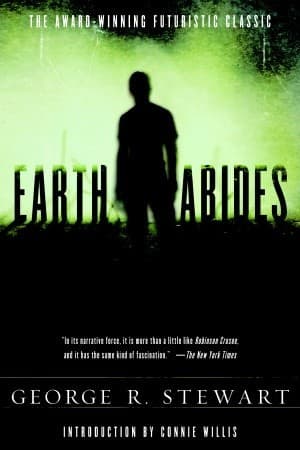
Synopsis
Covers the whole plot, including the ending.
- Difficulty
- Medium
- Pacing
- Slow
- Mood
- Melancholy, Reflective, Hopeful, Thought-provoking
- Read it if
- You're fascinated by post-apocalyptic settings that focus on the rebuilding of society and the psychological impact of survival, rather than action or zombies.
- Skip it if
- You prefer fast-paced thrillers or stories with a clear, external antagonist and a strong plot-driven narrative.
Earth Abides Plot Summary
Covers the whole plot, including the ending.
The Awakening and the Silence
Isherwood Williams, a geography graduate student, gets bitten by a rattlesnake during a solo research trip. He is sick for several days. When he recovers, he notices a strange quiet: no cars, planes, or radio. Going outside, he finds empty towns and cities, open homes, and abandoned cars. He slowly understands the truth: a strong, fast-moving plague has killed almost everyone. He looks for survivors, hoping to find his family, but finds only empty houses and civilization's decaying remains.
A Lonely Journey Through a Dying World
Ish travels widely across California, from the Sierras to the coast. He sees human structures quickly falling apart and nature rapidly returning. Weeds grow through pavement, animals take over suburban gardens, and erosion and decay happen silently and steadily. He visits his childhood home, finding it empty, and later his university, where he gets books and supplies. He realizes the huge loss of knowledge and culture. His journey is marked by deep loneliness and a growing understanding of how fragile humanity is and how little the planet cares about its absence. He starts collecting useful items, preparing for long-term survival.
Encountering the First Survivors
After months alone, Ish meets other survivors. He first meets Ezra, a traumatized man obsessed with finding gold, which Ish realizes is now useless. Later, he finds a small family: George, his wife, and their children, living simply. Ish tries to share his knowledge and encourage them to save books and skills, but they care more about immediate survival and practical matters. He sees the big difference between his intellectual understanding and their practical, almost animalistic way of life, showing how fast human society is going backward.
Emmett and the Formation of a Community
Ish eventually settles in a secluded valley near a good spring, knowing a stable water source is important. He carefully cleans and repairs a house, making it his base. His quiet, resourceful presence slowly attracts other survivors. Emmett, a practical, strong black man, is the first to join him. Emmett becomes Ish's most trusted friend and a key member of the new community. Emmett's common sense and physical strength go well with Ish's intelligence. They start clearing land, planting crops, and organizing resources, building the foundation for a more permanent settlement.
Meeting Emma and Starting a Family
Ish meets Emma, a young woman who also survived the plague. Their shared loneliness and desire for companionship quickly turn into love; they become partners. Emma is strong, resilient, and can have children, representing hope for a new generation. They have children, starting with their son, Joey. Their family grows, and other survivors, including women and children, slowly join their growing community. Ish, Emma, and Emmett become the leaders, guiding the group toward a more organized, though simple, life. The focus changes from just surviving to keeping the human race going.
The Growth of the Tribe and Loss of Knowledge
Years pass, and the community, which Ish calls 'the Tribe,' grows a lot. The children born after the plague, including Ish's own, grow up not knowing the old world. They cannot read, are superstitious, and rely only on practical skills taught by their parents. Ish tries to teach reading, writing, and the old civilization's complexities, but he has little success. The children, like Joey, are more interested in hunting, gathering, and their environment's immediate realities. The old ways and humanity's vast knowledge quickly start to disappear.
Challenges and Internal Conflicts
The Tribe faces many problems. They deal with wild animals, occasional lone, dangerous survivors, and structures that keep falling apart. Conflicts also arise within the group, especially as younger, stronger men challenge Ish's authority. They see him as old and relying on 'useless' knowledge. Bill, a younger member, shows this practical, almost harsh, way of thinking. Ish, now an elder, tries to keep order and guide the community, often relying on Emmett's steady loyalty and physical strength to make decisions. The community's survival often depends on their ability to live a more primitive, tribal life.
The Decline of Ish and the Rise of the New World
As Ish gets older, his physical abilities lessen, and his intellectual pursuits become less important to the younger generation. He keeps trying to save books and teach, but the children and young adults show little interest. They are developing their own customs, superstitions, and a new language, simplifying complex ideas. Ish sees the slow return to a pre-technological, almost Stone Age, life. Old world items, like cars and machines, become mere curiosities or sources of raw materials. Their original purpose is forgotten or misunderstood. He realizes his role is changing from leader to a living relic.
The Symbol of the Armageddon Bell
As his life nears its end, Ish thinks about humanity's legacy and his own part. He finds an old church bell, a symbol of the lost civilization and its sounds. With the younger men's help, he hangs it in a tree near their settlement. This 'Armageddon Bell' is his final, silent message to future generations—a physical reminder of a world that once was, a world of technology, religion, and complex societies. It is a mix of hope and sadness, acknowledging both the unavoidable decline and the small chance of future rediscovery.
The End of an Era, the Beginning of Another
In his last days, Ish is with his family and the Tribe. He thinks about his journey from a lone survivor to the head of a new human society. He has seen one civilization die and another start painfully and simply. His final thoughts are about life's strength and how existence repeats itself. Ish dies, and his death marks the complete shift from the old world to the new. The Tribe, now fully living its pre-industrial life, continues on, guided by its new traditions and practical wisdom, but mostly without the complex knowledge Ish tried so hard to save.
Principal Figures
Isherwood 'Ish' Williams
Protagonist
A geography graduate student who survives the plague and witnesses humanity's decline
Ish is an intellectual and introspective man, a geography graduate student whose academic background initially makes him ill-equipped for survival in a post-apocalyptic world. He is driven by a profound sense of loss and a desperate desire to preserve the knowledge and culture of the old world. He struggles with loneliness and the overwhelming task of restarting civilization. As he ages, he becomes a reluctant leader and patriarch, often frustrated by the inability of the new generation to grasp the value of literacy and abstract thought. His journey is one of adaptation, from an academic to a primal survivor, and finally to a revered, yet increasingly irrelevant, elder.
Relationships: Emma (Wife and mother of his children); Emmett (Closest friend and trusted companion); Joey (Eldest son, representing the new generation)
Emma
Supporting
Ish's wife and the resilient mother of the new generation
Emma is one of the few women survivors Ish encounters, and she becomes his wife and the mother of their children. She is practical, strong, and deeply maternal, representing the hope for the continuation of the human race. Unlike Ish, she is less concerned with preserving the abstract knowledge of the old world and more focused on the immediate needs of her family and the community. She is a grounding force for Ish, providing companionship and the emotional anchor he needs to rebuild a semblance of life. Her fertility and resilience are key to the Tribe's growth and survival.
Relationships: Isherwood Williams (Husband and partner); Joey (Son)
Emmett
Supporting
Ish's loyal, practical, and physically strong right-hand man
Emmett is a large, strong black man who becomes Ish's most trusted friend and companion. He is practical, resourceful, and possesses excellent hunting and survival skills. Emmett is loyal to Ish and often acts as the enforcer of Ish's decisions, especially as the younger generation begins to challenge Ish's authority. He represents the physical strength and common sense essential for survival in the post-apocalyptic world, contrasting with Ish's intellectualism. His unwavering support is crucial for the stability and initial growth of the Tribe.
Relationships: Isherwood Williams (Closest friend and companion)
Joey
Supporting
Ish and Emma's eldest son, representing the illiterate new generation
Joey is Ish and Emma's first child, born after the plague. He grows up with no memory or understanding of the old world. He is intelligent and capable within the context of his primitive environment, excelling at hunting and practical skills. However, he is illiterate and uninterested in the abstract knowledge Ish tries to impart, embodying the rapid decline of civilization's accumulated wisdom. Joey represents the new generation—resourceful, adaptable, but culturally regressed, destined to build a different kind of human society.
Relationships: Isherwood Williams (Father); Emma (Mother)
Bill
Supporting
A young, strong member of the new generation who challenges Ish's authority
Bill is a younger man in the Tribe, strong and capable but also aggressive and pragmatic. He represents the growing impatience and disregard for the old ways among the post-plague generation. Bill often challenges Ish's authority, prioritizing immediate physical needs and a more primitive, instinctual way of life over Ish's attempts to maintain order and preserve knowledge. He embodies the shift towards a more tribal, less intellectual leadership within the community, highlighting the power struggles that emerge in the absence of established societal structures.
Relationships: Isherwood Williams (Rival for influence)
Ezra
Mentioned
A deranged survivor obsessed with worthless gold
Ezra is one of the first survivors Ish encounters during his initial travels. He is clearly traumatized and mentally unstable, obsessed with finding gold, which Ish immediately recognizes as having no value in the new world. Ezra's delusion serves to highlight the immediate and profound shift in societal values and the psychological toll the plague has taken on some survivors. He is a brief, but stark, example of humanity's rapid descent into madness and irrelevance in the face of utter collapse.
George
Mentioned
A pragmatic family man focused on immediate survival
George is a man Ish encounters early in his journey, living with his wife and children. He represents the pragmatic, non-intellectual approach to survival. George is focused on immediate needs like food and shelter, showing little interest in Ish's attempts to preserve books or knowledge. His simple, self-sufficient lifestyle contrasts with Ish's broader concerns about civilization, illustrating the divergent paths survivors take and the difficulty of uniting them under a common goal beyond basic existence.
Relationships: Wife (Spouse); Children (Offspring)
Molly
Supporting
A younger woman in the Tribe, representing the emerging social dynamics
Molly is one of the younger women in the Tribe, often seen in the company of Bill and other younger men. She represents the social dynamics and reproductive needs of the burgeoning new society. While not as developed as Ish or Emma, her presence underscores the re-establishment of family units and the focus on procreation to ensure the survival of the human species. She is part of the generation that grows up without the old world's knowledge, adapting to the new, more primitive way of life.
Relationships: Bill (Associated with)
Themes & Insights
The Fragility of Civilization and the Resilience of Nature
The novel shows how quickly human civilization, with its complexities and technology, can fall apart after a disaster. Ish sees cities decay, roads crack, and nature reclaim human spaces in months. This theme highlights humanity's temporary effect on the planet and nature's lasting power to regrow. The rapid loss of knowledge and skills among the new generation further shows how fragile civilization's foundations are, depending on constant teaching and practice, which the plague stopped.
“The wind blew through the empty streets, carrying with it the dust of a thousand forgotten lives. The grass grew green, and the birds sang, and the world went on, oblivious.”
The Loss of Knowledge and the Regression of Humanity
A main theme is the quick and permanent loss of human knowledge. Ish, an intellectual, tries to save books and teach children to read, but he mostly fails. The new generation, like Joey, cannot read and does not care about abstract ideas, focusing instead on immediate survival skills. This return from an advanced technological society to a pre-industrial, almost tribal life shows how fast humanity can go back to a simpler state when knowledge sharing stops. The novel questions what 'progress' and 'civilization' really mean when facing big threats.
“The memory of the world was fading, not with a bang, but with the soft rustle of forgotten pages.”
The Definition of Humanity and Community
The novel explores what it means to be human and how communities form without an established society. Ish's initial loneliness and meetings with distressed survivors like Ezra show how isolation affects people. The slow formation of the Tribe around Ish, Emma, and Emmett shows the human need for connection and group survival. However, the community that forms is very different from the old world's, driven by basic needs, practical choices, and new superstitions. The internal power struggles and the shift from intellectual leadership to physical strength show how human values and social structures change.
“Man was not meant to be alone. The very word 'man' implied a multitude.”
Hope and Despair in the Face of Extinction
Ish's journey moves between hope for humanity's future and sadness over its lasting decline. He finds hope in Emma and their children, the new generation that will continue the species. But he also feels deep sadness as he sees knowledge lost, superstition grow, and the unavoidable return to a simpler life. His act of raising the Armageddon Bell is a mix of both: a desperate try to leave a sign of the old world, but also an acceptance that those who come after may never truly understand its meaning. The novel ends with acceptance, not strong optimism or pessimism.
“And the world began again, not as it had been, but as it must be.”
Plot Devices & Literary Techniques
The Plague/Apocalypse
The inciting incident that wipes out humanity and sets the stage for the narrative
The rapid, devastating plague is the central plot device, serving as the catalyst for the entire story. It instantaneously removes the vast majority of humanity, creating a blank slate for Ish's journey and the subsequent rebuilding of society. The ambiguity of its origin and rapid spread emphasizes humanity's vulnerability and the suddenness with which an established world can vanish. This device allows the author to explore the fundamental questions of human nature and civilization without the complexities of a gradual decline or conflict, focusing solely on the aftermath.
The Lone Survivor Narrative
Focuses on a single individual's experience of a catastrophic event
The story begins with Ish as the sole conscious survivor in a vast, empty world. This narrative choice allows the reader to experience the apocalypse through his eyes, emphasizing the profound loneliness, the shock of discovery, and the immense scale of loss. It provides an intimate perspective on the immediate aftermath, contrasting the individual's psychological journey with the global catastrophe. This device is crucial for establishing the emotional weight of the new world and Ish's unique intellectual perspective on its decay and rebirth.
The Armageddon Bell
A symbolic object representing the lost world and Ish's enduring hope
The church bell that Ish has installed in a tree near the Tribe's settlement is a powerful symbol. It represents the lost sounds, knowledge, and institutions of the old world—religion, community, and the ability to create complex artifacts. For Ish, it is a final, desperate attempt to leave a tangible marker of what once was, a message to future generations. For the Tribe, it becomes a mysterious, almost sacred object, but its true meaning is lost. It functions as a poignant reminder of the chasm between the old and new worlds, and Ish's enduring, yet ultimately unfulfilled, desire to bridge that gap.
Generational Divide
Highlights the stark contrast between the pre- and post-plague generations
The stark contrast between Ish's generation (those who remember the old world) and the new generation (those born after the plague) is a key plot device. This divide drives much of the narrative's conflict and thematic exploration. It illustrates the rapid erosion of knowledge, the emergence of new values, and the inevitable regression of society. The children's illiteracy and lack of interest in the old world's complexities emphasize the fragility of culture and the challenges of transmitting sophisticated knowledge across a societal rupture. This device allows the author to show, rather than tell, the profound impact of the apocalypse on human development.
Earth Abides Quotes
“The world is a great book, of which they that never stir from home read only a page.”
“Man is a tool-using animal. Without tools he is nothing, with tools he is all.”
“The world is not a wilderness. It is a garden, and we are the gardeners.”
“We are the last of the old world, and the first of the new.”
“The great thing about the world is that it is so big, and there is so much of it.”
“We are not the masters of the earth; we are its children.”
“The past is a foreign country; they do things differently there.”
“We must learn to live with the earth, not on it.”
“The only thing that is constant is change.”
“We are the inheritors of a great legacy, and we must not squander it.”
“The earth abides, and we must abide with it.”
“In the end, it is not the things we have, but the things we are, that matter.”
“We are all storytellers, and our stories are what bind us together.”
“The future is not something we enter; it is something we create.”
Quiz
10 questions on the plot and the characters. Each answer comes with a short explanation.
Question 1
What is the name of the protagonist who survives the global pandemic in 'Earth Abides'?
- John Isherwood
- Ish Williams
- Robert Neville
- George Stewart
Show answer
B. Ish Williams The protagonist is Ish Williams, a graduate student in geography who becomes one of the few survivors after a deadly pandemic wipes out most of humanity. His full name is Isherwood Williams, often shortened to Ish.
Question 2
What event triggers Ish's realization that civilization has collapsed when he returns from the mountains?
- He finds his family dead at home
- He discovers that all electricity has failed
- He sees abandoned cars on the highway
- He hears no radio broadcasts
Show answer
B. He discovers that all electricity has failed After being in the mountains during the pandemic, Ish returns to find that the electricity has gone out, which symbolizes the breakdown of modern infrastructure and confirms the collapse of society.
Question 3
What symbolic object does Ish carry with him throughout the story as a reminder of the old world?
- A pocket watch
- A hammer
- A Bible
- A photograph of his family
Show answer
B. A hammer Ish carries a hammer, which represents tools and knowledge from the old civilization. It becomes a symbol of his role in trying to preserve and pass on human technology and culture to the new community.
Question 4
Why does Ish initially struggle to teach the children in the community to read and write?
- They are more interested in survival skills
- They lack the cognitive ability to learn
- They see no practical use for it in their post-apocalyptic world
- Ish is a poor teacher
Show answer
C. They see no practical use for it in their post-apocalyptic world The children, born after the collapse, view reading and writing as irrelevant because they don't see its immediate application in their daily lives focused on survival, highlighting the theme of cultural loss.
Question 5
What major change occurs in the community's lifestyle after they settle in the San Francisco Bay Area?
- They become nomadic hunters
- They adopt a tribal structure with rituals and a new language
- They rebuild industrial factories
- They isolate themselves from other survivors
Show answer
B. They adopt a tribal structure with rituals and a new language The community evolves into a tribal society with its own customs, rituals, and a simplified language, reflecting how human societies can regress or transform after a catastrophic event.
Question 6
How does the character Em represent a contrast to Ish's ideals in the community?
- She advocates for rebuilding technology immediately
- She focuses on practical survival and rejects Ish's emphasis on preserving knowledge
- She wants to leave the community to find other survivors
- She believes in a religious revival to guide the community
Show answer
B. She focuses on practical survival and rejects Ish's emphasis on preserving knowledge Em, Ish's wife, prioritizes immediate needs like food and shelter over Ish's efforts to teach reading and history, symbolizing the tension between preserving culture and adapting to a new reality.
Question 7
What does the recurring image of the rusting car in the driveway symbolize in the novel?
- The hope for technological revival
- The decay of human civilization and the passage of time
- A warning against environmental destruction
- The community's reliance on scavenged resources
Show answer
B. The decay of human civilization and the passage of time The rusting car serves as a powerful symbol of the gradual erosion of the old world's artifacts, emphasizing themes of entropy and the transient nature of human achievements.
Question 8
What is the significance of the 'Great Disaster' that Ish recalls early in the novel?
- It refers to a nuclear war that preceded the pandemic
- It is Ish's term for the pandemic that wiped out humanity
- It describes a massive earthquake that destroyed cities
- It was a financial collapse that led to societal breakdown
Show answer
B. It is Ish's term for the pandemic that wiped out humanity Ish uses 'the Great Disaster' to denote the rapid global pandemic that caused the near-extinction of humans, framing it as a historical turning point in the story.
Question 9
In the later part of the novel, what does Ish realize about the role of humans in the ecosystem?
- That humans are essential for maintaining ecological balance
- That nature quickly reclaims the land and adapts without humanity
- That without humans, all species will go extinct
- That humans must dominate nature to survive
Show answer
B. That nature quickly reclaims the land and adapts without humanity Ish observes how plants and animals thrive in the absence of human interference, leading him to understand that Earth can persist and even flourish without mankind, a key theme of the book.
Question 10
What ultimately happens to Ish's dream of preserving knowledge and civilization by the end of the novel?
- It succeeds as the community rebuilds a advanced society
- It fails as the younger generations reject it and revert to a primitive state
- It is taken up by a new leader after Ish's death
- It leads to a conflict that destroys the community
Show answer
B. It fails as the younger generations reject it and revert to a primitive state Despite Ish's efforts, the community's descendants lose interest in written knowledge and technology, symbolizing the inevitable decline of complex civilization and the cyclical nature of human history.
Earth Abides FAQ
What is 'Earth Abides' about?
The novel follows Ish Williams, one of the few survivors of a global pandemic that wipes out most of humanity. After exploring the empty world, Ish forms a small community in California and witnesses the gradual decline of civilization and the rise of a primitive new society over decades, grappling with themes of legacy, nature's resilience, and what it means to be human.
Why should I read 'Earth Abides'?
It's a profound and thoughtful post-apocalyptic classic that focuses less on action and more on sociological and philosophical exploration. Stewart's detailed depiction of nature reclaiming the world and the slow evolution of a new society offers a unique, meditative take on the genre that remains influential today.
What is the background/setting of 'Earth Abides'?
The story begins in the late 1940s in the United States, primarily in the San Francisco Bay Area. After the pandemic, the setting shifts to a world where infrastructure crumbles, cities are overgrown, and nature rapidly reasserts itself, spanning several decades as Ish's community settles in the Berkeley hills.
What are the most memorable quotes?
Key quotes include: 'The world is too much with us; late and soon, Getting and spending, we lay waste our powers' (epigraph from Wordsworth), and Ish's reflection, 'Man is gone, but Earth abides.' These encapsulate the novel's themes of human transience and nature's endurance.
What writing style does the author use?
Stewart employs a detached, almost documentary-like prose that blends scientific observation with lyrical descriptions of nature. The narrative is episodic, spanning generations with a focus on environmental and societal changes rather than personal drama, giving it a timeless, mythic quality.
What minor details add significant meaning?
The recurring image of the hammer—initially a tool of civilization that later becomes a sacred, misunderstood relic for Ish's descendants—symbolizes the loss of knowledge and the shift to a primitive mindset. Similarly, the gradual decay of books and roads underscores the erosion of human achievement.
What are some subtle foreshadowing moments?
Early scenes where Ish observes animals reclaiming spaces, like deer in suburbs, foreshadow nature's ultimate dominance. The children's lack of interest in reading or technology hints at the community's future decline into a pre-literate society, emphasizing the fragility of culture.
What unexpected character connections exist?
Ish's relationship with Em, a woman he meets early on, becomes the foundation of the new community, yet their descendants gradually lose touch with their origins. The character of Joey, a boy born after the pandemic, symbolizes the new generation's disconnect from the old world, creating a poignant generational divide.
What are unspoken character motivations?
Ish is driven by a deep-seated need to preserve knowledge and meaning, but he often suppresses his loneliness and fear of irrelevance. Em, while pragmatic, harbors a quiet desire for stability and family, which motivates her to build the community despite the overwhelming odds.
What psychological complexities do characters exhibit?
Ish grapples with intellectual isolation and the burden of being a 'last man' of the old world, leading to moments of depression and detachment. The younger generations, like his children, exhibit a simplified worldview, free from historical baggage but also devoid of curiosity, highlighting the trade-offs in human evolution.
What are the major emotional turning points?
Key moments include Ish's initial shock upon discovering the pandemic's scale, the birth of his first child symbolizing hope, the death of Em marking the end of an era, and his final realization that his legacy is fading as his descendants revert to a tribal, superstitious lifestyle.
How do relationship dynamics evolve?
Ish and Em's partnership shifts from survival-based cooperation to a deep, though often unspoken, bond as they raise a family. Over time, Ish's authority wanes as the community becomes more insular and ritualistic, leading to his alienation from the very society he helped create.
Which parts remain ambiguous or open-ended?
The exact origin of the pandemic is never explained, leaving it as a mysterious force of nature. The fate of other survivors worldwide is ambiguous, and the novel ends without clarifying whether humanity will relearn civilization or remain in a primitive state, emphasizing uncertainty.
What are controversial scenes or decisions?
Ish's decision not to aggressively educate the children or enforce old-world values is debated, as it leads to cultural loss. Some readers also question the community's passive acceptance of decline, viewing it as a failure rather than a natural evolution.
'Earth Abides' ending explained: how it ends & what it means
The novel ends with an elderly Ish witnessing his tribe using his hammer as a ceremonial object, unaware of its original purpose. This symbolizes the complete erosion of knowledge and the cyclical nature of history, suggesting that while human civilizations rise and fall, Earth endures in a state of perpetual renewal.
About the author
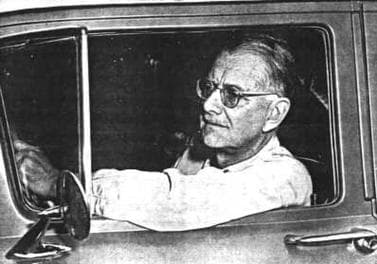
George R. Stewart was an American author known for his contributions to fiction, particularly in the genre of speculative literature. He is best recognized for his novel "Earth Abides," which explores themes of civilization and survival in a post-apocalyptic world. Stewart's work often reflects his interests in nature and the environment.
Similar books
- Station Eleven
Emily St. John Mandel
4.0 (322k) average on GoodreadsLiterary FictionExplores humanity's struggle to retain culture and art after a devastating pandemic.
- The Road
Cormac McCarthy
4.0 (716k) average on GoodreadsScience FictionA poignant and stark depiction of survival in a desolate, post-apocalyptic landscape.
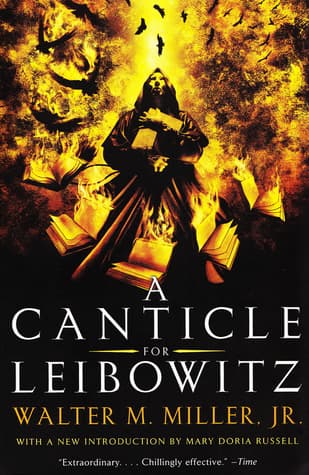
- A Canticle for Leibowitz
Walter M. Miller Jr.
4.0 (93k) average on GoodreadsFantasyExamines the cyclical rise and fall of civilization and the preservation of knowledge after a global catastrophe.
- On the Beach
Nevil Shute
3.9 (35k) average on GoodreadsScience FictionShute's novel focuses on the immediate psychological and social impact of an impending nuclear holocaust and the inevitability of total extinction, offering a poignant lament for what is lost. Earth Abides, in contrast, explores humanity's continuation in a radically altered form, focusing on long-term adaptation and the persistence of life rather than ultimate demise.
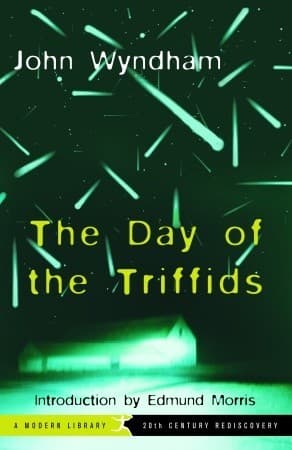
- The Day of the Triffids
John Wyndham
4.0 (90k) average on GoodreadsFantasyWyndham's book features a global catastrophe but leans into speculative horror with an active external threat (triffids) and focuses on immediate, active survival against a dangerous new species. Earth Abides is more contemplative, depicting passive adaptation to a world fundamentally changed by the absence of human dominance, with nature itself being the primary 'antagonist' rather than a monstrous threat.
- Harry Potter and the Sorcerer's Stone
J.K. Rowling
4.5 (7M) average on GoodreadsFantasyRescued from a miserable life under the stairs, an orphaned boy discovers he's a wizard destined for a magical school, where he uncovers a dangerous secret tied to the dark wizard who murdered his parents.




Enjoyed the summary?
A summary gives you the shape of the book. The book itself has the detail, the examples and the voice.
Find Earth Abides on AmazonAs an Amazon Associate, BookBrief earns from qualifying purchases. How we're funded