
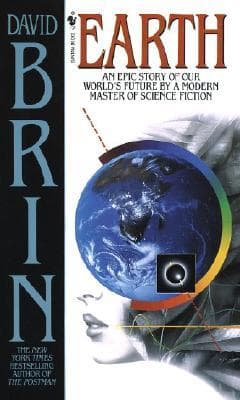
Synopsis
Covers the whole plot, including the ending.
- Difficulty
- Hard
- Pacing
- Variable
- Mood
- Apocalyptic, Thought-Provoking, Urgent, Complex
- Read it if
- You enjoy hard science fiction with complex global stakes, ecological themes, and philosophical questions about humanity's place in the universe.
- Skip it if
- You prefer character-driven narratives over intricate plot and scientific exposition, or find densely packed information overwhelming.
Earth Plot Summary
Covers the whole plot, including the ending.
The Black Hole's Descent
The story begins with news of a fast-growing crisis: a micro-black hole, accidentally made in a physics experiment decades ago, has fallen into Earth's core and is eating matter at a faster rate. Dr. Alex Lustig, a smart but disgraced physicist, leads the effort to understand this event. He works with a global team, including the ambitious Dr. Cindi Lu, to track its progress and guess when Earth will be destroyed. Early calculations suggest the planet has less than a year before it collapses. This coming disaster causes widespread fear and a desperate search for solutions, showing the arrogance of humanity's unchecked scientific advances.
The World Net and Information Overload
The WorldNet, a common and advanced global information system, becomes both a tool and a source of confusion during the crisis. It provides real-time updates on the black hole's progress, helps scientists worldwide work together, and allows access to knowledge. However, it also spreads wrong information, conspiracy theories, and radical ideas. Benjamin 'Ben' Bova, a young 'Net-diver' and historian, sorts through this flood of data, looking for truth and patterns. His skill in finding historical records and old data helps the scientific community deal with the unusual threat.
The Ark and the Seed Ships
As the destruction date gets closer, two main survival plans become popular. The 'Ark' project, backed by powerful companies and governments, aims to build a large space habitat to save a chosen part of humanity and its genes. At the same time, the 'Seed Ship' plan, a more spread-out and hopeful effort, focuses on launching smaller, self-sufficient ships carrying genes and cultural records to distant stars. Dr. Cindi Lu is involved with the Ark project, seeing it as the most practical choice, while Alex Lustig, tired of political games, sees both as possibly flawed. He focuses instead on directly solving the black hole problem.
The Eco-Radicals and 'Reset'
Amidst the global fear, a powerful and vocal eco-radical movement, called the 'Greens' or 'Gaia's Avengers,' gains many followers. Led by strong speakers, they argue that humanity itself is the problem, and the black hole, though human-made, offers a chance for Earth to 'reset' its evolutionary clock. They believe that letting humanity die would clean the planet and let nature return to normal. This idea causes strong ethical debates and conflicts with those trying to save human civilization, adding another layer of conflict to the already bad situation. Their actions often involve sabotage, making rescue efforts harder.
Discovering the Uplifted Animals
A big discovery happens when it becomes clear that humanity has secretly 'uplifted' various animal species, giving them better intelligence and communication skills. These uplifted animals, including chimpanzees, dolphins, and some birds, have formed their own groups and are now, facing doom, asking for their own rights. Fido, an uplifted dog, becomes a key figure, sharing complex ideas and moral questions. This discovery challenges human uniqueness and forces a rethink of what makes 'humanity' and who deserves a place in any survival plan, especially given the limited space on the Ark and Seed Ships.
The Search for the Missing Data
Dr. Alex Lustig, more and more sure that the original black hole experiment's data holds important clues, teams up with Ben Bova. They go on a dangerous journey through the WorldNet's old layers and forgotten data centers, fighting both digital firewalls and physical barriers. They suspect that important information was hidden or lost because of the sensitive nature of the first experiment and the cover-up after. Their search leads them to powerful groups who want to keep the past hidden, fearing the political and social problems of revealing the full truth about the black hole's creation and its less destructive early phase.
The Alien Probe's Arrival
Adding another layer of complexity and possible hope, an ancient alien probe, long inactive in the outer solar system, activates and starts sending signals. Global observatories detect its arrival, and it quickly becomes a focus of scientific and public interest. The probe's transmissions are complex and at first hard to understand, but they suggest a vast interstellar civilization and advanced technologies. Humanity deals with the meaning of this first contact, wondering if these aliens could offer a solution, or if their presence is just another factor in an already impossible situation, or even a threat. Alex Lustig sees it as a possible source of knowledge.
The Black Hole's Growth and the World's Response
The micro-black hole keeps growing, causing more earthquakes, gravity changes, and widespread environmental damage. Earthquakes become more frequent and strong, and the planet's rotation starts to shift. Governments and science groups work non-stop, trying desperate measures to stabilize the core or remove the singularity. However, these efforts are constantly hindered by human conflicts: the Greens' sabotage, political fights over Ark spots, and the general breakdown of social order in many areas. The coming doom brings out both the best and worst in humanity.
The Revelation of the 'Ghost' Theory
Through his research and the recovered data, Alex Lustig develops a radical and controversial theory: the micro-black hole might not be a simple, inactive singularity. Instead, he thinks it is a 'ghost' black hole, a piece of a much larger, more complex event, possibly even a form of conscious or highly organized information entity. This theory suggests the black hole's behavior isn't just random physical consumption but might be affected by outside factors or even have a basic form of 'awareness' or 'purpose.' This idea is at first met with doubt but gains support as traditional physics cannot explain the anomaly.
Communicating with the Alien Probe and the Black Hole
Guided by Alex's 'ghost' theory and ideas from the alien probe's signals, humanity tries a desperate, two-part communication plan. Scientists work to understand the alien messages, hoping for advanced tech solutions or advice. At the same time, Alex and a special team try to 'communicate' with the black hole itself, treating it not just as a physical thing but as something that might respond to information or patterns. This means sending complex data streams and math sequences into the core, hoping to affect its behavior or understand its 'intent,' if any. The stakes are incredibly high, with Earth's fate on the line.
The Uplifted Animals' Plea
As the crisis reaches its peak, the various uplifted animal species, having organized through their own networks, make a powerful, united request to humanity. They demand to be included in any survival plan, arguing that they too are conscious beings with a right to exist and a future. Fido, the uplifted dog, speaks for their shared desires, stressing their unique views and possible help in a post-disaster world. This forces humanity to face its duties to the species it has changed, adding another layer of ethical complexity to the already difficult Ark and Seed Ship selections, and showing the moral cost of their own scientific actions.
The Final Gambit and the 'Escape'
In a final, last-ditch effort, Alex Lustig's radical theory is tested. The plan involves not destroying the black hole, but 'guiding' it. Using complex information from the alien probe and insights into the black hole's 'ghost' nature, humanity tries to direct the singularity, or part of it, out of Earth's core. This means a huge, coordinated effort to control gravity fields and energy, effectively 'launching' the black hole into space, or at least away from Earth's core. The success of this move redefines what 'survival' means, not just for humanity, but for Earth itself, and possibly even the black hole.
The Aftermath and New Beginnings
Earth is saved, but at a huge cost. The planet shows the scars of the near-disaster, with big geological and environmental changes. The black hole, or what is left of it, is either safely sent into space or changed into something less harmful. After this, humanity must rethink its relationship with technology, nature, and other conscious beings. The Ark and Seed Ship projects continue, but with new purpose and inclusion. A new era begins, with closer work with the uplifted animals, a more careful approach to science, and a deeper understanding of humanity's place in the cosmos, possibly guided by the alien probe's wisdom.
Principal Figures
Dr. Alex Lustig
Protagonist
A brilliant but disgraced physicist leading the efforts to understand and save Earth from the micro-black hole.
Alex Lustig is a highly intelligent and unconventional physicist, initially disgraced for his involvement in the original black hole experiment. Despite his past, he possesses a unique insight into the black hole's behavior, often challenging conventional scientific wisdom. He is driven by a deep sense of responsibility and a desire for redemption, prioritizing the truth and genuine solutions over political expediency. He is fiercely independent and often clashes with authority, but his brilliance is undeniable. His journey is one of scientific discovery intertwined with personal atonement.
Relationships: Dr. Cindi Lu (Scientific colleague and initial rival, later a begrudging collaborator and potential romantic interest.); Ben Bova (Young historian and net-diver, who becomes Alex's crucial assistant and confidant in data retrieval.); Fido (Uplifted dog, whose intelligence and perspective challenge Alex's human-centric views.)
Dr. Cindi Lu
Supporting/Antagonist (initially)
A pragmatic and ambitious scientist, initially focused on the 'Ark' project and often at odds with Alex Lustig.
Cindi Lu is a sharp, politically savvy, and highly competent physicist. She represents the more establishmentarian approach to the crisis, initially advocating for the 'Ark' project as the most realistic path to human survival. While she respects Alex's brilliance, she often finds his methods and disregard for protocol frustrating. She is driven by a desire to preserve humanity and secure her place in history, but as the crisis deepens, her pragmatism is tempered by a growing understanding of the black hole's true nature and the need for unconventional solutions.
Relationships: Dr. Alex Lustig (Scientific colleague and initial rival, later a begrudging collaborator and potential romantic interest.); Various governmental and corporate leaders (Works closely with them to secure resources and push the Ark project.)
Benjamin 'Ben' Bova
Supporting
A young, exceptionally skilled 'Net-diver' and historian, crucial for navigating the vast WorldNet.
Ben Bova is a bright and resourceful young man, possessing an almost intuitive understanding of the WorldNet and its vast archives. He is a 'Net-diver,' capable of sifting through unimaginable amounts of data, rumors, and historical records to find critical information. Ben is idealistic and empathetic, often providing a moral compass for the more cynical scientists. His skills are invaluable in uncovering hidden truths about the black hole's origins and the alien probe. He represents the younger generation, inheriting a world on the brink of collapse but still holding onto hope and the power of information.
Relationships: Dr. Alex Lustig (Alex's assistant and crucial partner in data retrieval and theoretical exploration.); Fido (Develops a bond with the uplifted dog, respecting his intelligence and perspective.)
Fido
Supporting
An uplifted golden retriever, representing the sentient animal species created by humanity.
Fido is an uplifted golden retriever, granted enhanced intelligence and communication abilities through human intervention. He is highly intelligent, articulate, and possesses a unique perspective on the unfolding crisis, often offering insights that humans overlook. Fido is loyal but also deeply concerned with the fate of his own kind and all uplifted animals. He serves as a powerful symbol of humanity's past ethical dilemmas and future responsibilities, advocating for the inclusion and rights of non-human intelligences. His calm demeanor and reasoned arguments often cut through human panic.
Relationships: Dr. Alex Lustig (Engages in intellectual discussions, challenging human-centric views.); Ben Bova (A trusted confidant and ally in understanding the human world.); Other Uplifted Animals (A leader and spokesperson for their collective interests.)
The Green/Gaia's Avengers Leader (e.g., Dr. Arlene Gault)
Antagonist
The charismatic leader of the eco-radical movement advocating for humanity's extinction to save Earth.
This character (often represented by a composite or a specific figure like Dr. Arlene Gault) leads the radical environmentalist faction known as the 'Greens' or 'Gaia's Avengers.' They possess a deep, almost spiritual, reverence for Earth and believe humanity is a destructive plague. Their philosophy, though extreme, is rooted in a profound despair over human impact on the planet. They are intelligent and articulate, capable of swaying large populations, but their methods are often ruthless, involving sabotage and direct action to hinder human survival efforts, believing that the black hole offers a necessary 'reset.'
Relationships: Humanity as a whole (Views humanity as the primary antagonist to Earth's health.); Followers of the Green movement (Inspires and commands a devoted following.)
The Alien Probe
Supporting/Plot Device
An ancient, enigmatic alien artifact whose activation provides crucial information and challenges human understanding.
The Alien Probe is not a character in the traditional sense but acts as a powerful, non-human intelligence that observes and, eventually, interacts with humanity. It represents an ancient, highly advanced civilization. Its activation and subsequent transmissions provide humanity with cryptic clues, advanced knowledge, and a broader cosmic perspective. The probe challenges humanity's self-perception and forces them to consider possibilities beyond their current scientific understanding. Its presence is a catalyst for new theories and a potential source of salvation, but its intentions and true nature remain largely mysterious.
Relationships: Humanity (An observer and provider of information, indirectly influencing humanity's fate.); Dr. Alex Lustig (His theories are often informed by the probe's cryptic data.)
The WorldNet
Supporting/Setting
The ubiquitous global information network that shapes human communication and knowledge.
The WorldNet is a pervasive and highly advanced global information system, essentially the internet evolved into a fully immersive and intelligent entity. It serves as humanity's primary means of communication, education, and entertainment. In the context of the crisis, it becomes a double-edged sword: a vital tool for scientific collaboration and data sharing, but also a breeding ground for misinformation, panic, and radical ideologies. It reflects the collective consciousness of humanity, amplifying both its brilliance and its flaws. It is a character in how it influences events and perceptions, acting as a living, breathing backdrop.
Relationships: Ben Bova (His primary domain and tool for discovery.); Humanity (Connects and influences all human interactions and knowledge.)
The Black Hole
Antagonist/Plot Device
A micro-black hole, accidentally created, that threatens to consume Earth from within.
The micro-black hole is the central antagonist of the story, a silent, relentless force of nature inadvertently unleashed by human science. It is a singularity, consuming Earth's core from within, threatening to collapse the planet. Its existence forces humanity to confront the consequences of its unchecked scientific ambition and its place in the cosmos. Initially perceived as a purely physical threat, Alex Lustig's 'ghost' theory suggests it might be more complex, perhaps even a form of information entity, transforming it from a simple destructive force into a mysterious, almost sentient, challenge.
Relationships: Dr. Alex Lustig (His primary focus of study and the entity he seeks to understand and control.); Earth (Its direct victim and the source of its sustenance.); Humanity (The existential threat that forces humanity to unite or perish.)
Themes & Insights
Responsibility of Scientific Advancement
The novel looks at the ethical issues and unexpected results of uncontrolled scientific progress. The micro-black hole itself is a direct outcome of a past experiment, showing humanity's arrogance in changing basic forces of nature without fully knowing the risks. Creating 'uplifted' animals also fits this theme, as humanity deals with its responsibility to the conscious beings it has made. The story constantly questions if humanity has the wisdom to use the power it creates, as seen in Alex Lustig's guilt and the global rush for solutions.
“We poked the universe, and it poked back, with a vengeance.”
The Nature of Intelligence and Sentience
Brin explores the limits of intelligence, going beyond human definitions. The 'uplifted' animals, especially Fido, challenge human uniqueness, showing complex thought, communication, and moral reasoning. The alien probe further expands this, suggesting vast and ancient forms of intelligence. Even Alex Lustig's 'ghost' theory about the black hole hints at a non-biological, information-based form of 'consciousness.' This theme makes characters and readers think again about what makes a 'person' or a being worthy of survival, especially with the Ark's limited space and the Greens' radical views.
“Is it truly wisdom to save only ourselves, when we have sown sentience in others?”
Information Overload and the Search for Truth
The WorldNet, a main part of the setting, shows the difficulties of living in a time of constant information. While it helps global cooperation, it also creates wrong information, conspiracy theories, and radical ideas. Ben Bova's role as a 'Net-diver' highlights how hard and important it is to sort through vast amounts of data to find true facts. The novel suggests that in a world full of information, critical thinking and good judgment are most important, and finding and understanding historical data is key to understanding current threats and future solutions.
“The Net holds all knowledge, and all lies, in equal measure. The trick is knowing the difference.”
Humanity's Place in the Cosmos
Earth's coming destruction and the alien probe's arrival force humanity to face its smallness and fragility in the universe. The debate over the Ark and Seed Ships shows humanity's desperate attempt to keep itself going, while the Greens' idea suggests giving up to cosmic forces. The alien probe's existence hints at a vast, ancient interstellar civilization, putting humanity in a much bigger context. This theme explores humanity's fears about existence, its ability for both self-preservation and self-destruction, and its potential for growth and understanding beyond its planet.
“We are but a whisper in the cosmic wind, yet we scream for our survival.”
Plot Devices & Literary Techniques
The Micro-Black Hole
The central existential threat driving the entire narrative.
The micro-black hole serves as the ultimate ticking clock and the primary antagonist. It is a physical manifestation of humanity's scientific hubris, created by past experiments. Its relentless consumption of Earth's core creates an escalating crisis, forcing humanity to unite, innovate, or perish. It acts as a catalyst for all major plot points, from scientific research and survival projects to ethical debates and radical movements. Its mysterious nature also allows for the introduction of Alex Lustig's 'ghost' theory, shifting it from a purely physical threat to a potentially communicable entity.
The WorldNet
A ubiquitous global information network that shapes communication, knowledge, and conflict.
The WorldNet functions as both a setting and a crucial plot device. It is the primary means by which characters gather and disseminate information, collaborate scientifically, and experience the global crisis. It allows for rapid communication and data access, but also amplifies misinformation and radical ideologies, reflecting the chaos of the times. Ben Bova's unique skills in navigating the Net are essential for uncovering hidden truths. The Net's pervasive nature underscores the theme of information overload and the challenge of discerning truth amidst a deluge of data.
The Uplifted Animals
Sentient animal species created by humans, who challenge human exceptionalism and ethical responsibilities.
The uplifted animals, particularly Fido, serve as a powerful ethical and philosophical plot device. Their existence forces humanity to confront the moral implications of its scientific advancements and its definition of sentience. They are not merely background elements but active participants, advocating for their own rights and contributing unique perspectives to the survival debate. Their presence complicates the 'humanity-first' approach to survival, adding another layer of conflict and forcing a re-evaluation of what constitutes a 'person' and who deserves a future on a saved Earth or in space.
The Alien Probe
An ancient extraterrestrial artifact that provides cryptic clues and a broader cosmic context.
The alien probe acts as a deus ex machina in a more subtle, informational sense. Its activation and transmission of complex data provide crucial, albeit cryptic, insights that help Alex Lustig develop his 'ghost' theory and ultimately guide humanity's efforts to 'communicate' with the black hole. It expands the narrative's scope beyond Earth, hinting at a vast, ancient interstellar civilization and offering a glimmer of hope or a new understanding of the universe. It challenges human scientific paradigms and forces a re-evaluation of humanity's place in the cosmos.
Earth Quotes
“The greatest danger of all is to mistake the present for the future.”
“Every tool, every advance, every new way of seeing, also brings new ways to make mistakes.”
“We are the sum of our stories, and the stories we tell ourselves about who we are.”
“The universe doesn't care about your plans. It just is.”
“Sometimes the best way to save something is to let it change.”
“Ignorance is not bliss when the consequences are global.”
“Hope is a terrible thing to waste, but it's even worse to not have any.”
“The past is not dead. It's not even past. It's just a different layer of the present.”
“True freedom isn't the absence of rules, but the ability to choose which rules you live by.”
“We don't inherit the Earth from our ancestors; we borrow it from our children.”
“The most dangerous lies are the ones we tell ourselves.”
“A civilization is only as strong as its weakest link, and its weakest link is usually its ability to adapt.”
“To truly see, you must first be willing to be blind to what you thought you knew.”
“The greatest irony of all is that the more we try to control nature, the more we become subject to its whims.”
Quiz
10 questions on the plot and the characters. Each answer comes with a short explanation.
Question 1
What is the primary catastrophic event threatening Earth in the novel?
- A massive asteroid collision
- An artificial black hole has fallen into the Earth's core
- Global warming leading to irreversible climate collapse
- An alien invasion aiming to terraform the planet
Show answer
B. An artificial black hole has fallen into the Earth's core The core premise of the book involves an artificial black hole that has fallen into the Earth's core, threatening to destroy the planet within a year.
Question 2
What is the estimated timeframe for Earth's complete destruction if the disaster is not averted?
- A decade
- A century
- A year
- Several millennia
Show answer
C. A year The synopsis explicitly states that scientists discover the entire planet could be destroyed within a year.
Question 3
What extreme solution do some individuals propose as the only way to save Earth?
- Mass evacuation to another planet
- Developing advanced anti-gravity technology
- Letting human inhabitants become extinct to reset the evolutionary clock
- Negotiating with an advanced alien civilization for help
Show answer
C. Letting human inhabitants become extinct to reset the evolutionary clock A faction within the story argues that the only way to save Earth is to allow humanity to go extinct, effectively resetting the planet's evolutionary clock.
Question 4
What specific type of scientific entity is causing the impending doom for Earth?
- A rogue neutron star
- An artificially created black hole
- A naturally occurring micro black hole
- A dark matter singularity
Show answer
B. An artificially created black hole The threat is specifically an 'artificial black hole' that has fallen into the Earth's core, indicating it was man-made.
Question 5
What ethical dilemma is central to the proposed 'extinction' solution?
- The ethics of space colonization versus preserving Earth
- The value of human life versus the survival of the planet's ecosystem
- The morality of scientific experimentation without oversight
- The rights of artificial intelligences in a crisis
Show answer
B. The value of human life versus the survival of the planet's ecosystem The proposed solution of human extinction highlights the conflict between preserving humanity and ensuring the long-term survival of the planet itself, touching on the value of human life versus the Earth's ecosystem.
Question 6
The story is set 'Decades from now'. What does this imply about the technological and social context?
- Humanity has regressed to a pre-industrial state.
- Technology has advanced significantly, allowing for the creation of artificial black holes and complex global communication.
- Society is largely unchanged, with only minor technological improvements.
- Aliens have integrated into human society, sharing their advanced technology.
Show answer
B. Technology has advanced significantly, allowing for the creation of artificial black holes and complex global communication. The creation of an 'artificial black hole' implies a highly advanced technological state, consistent with a setting 'decades from now' where scientific capabilities have progressed significantly.
Question 7
What is the primary role of scientists in the immediate crisis depicted?
- To document Earth's final moments for future generations
- To develop interstellar travel for humanity's escape
- To frantically work to prevent the ultimate disaster caused by the black hole
- To manage the societal collapse and maintain order
Show answer
C. To frantically work to prevent the ultimate disaster caused by the black hole The synopsis states that 'scientists frantically work to prevent the ultimate disaster,' indicating their central role in finding a solution to the black hole problem.
Question 8
The phrase 'reset the evolutionary clock' suggests what about the long-term view of the proponents of human extinction?
- They believe humanity will eventually re-evolve in a better form.
- They want to bring back extinct species from Earth's past.
- They advocate for genetic engineering to accelerate human evolution.
- They are trying to revert Earth to its geological conditions from millions of years ago.
Show answer
A. They believe humanity will eventually re-evolve in a better form. To 'reset the evolutionary clock' implies a belief that by removing humanity, nature would eventually produce new, perhaps more suitable, life forms, or even a 'better' version of humanity, given enough time.
Question 9
Given the nature of the threat, what scientific field would be most crucially involved in the crisis response?
- Sociology and Political Science
- Particle Physics and Geophysics
- Astrology and Metaphysics
- Botany and Zoology
Show answer
B. Particle Physics and Geophysics An artificial black hole in the Earth's core directly involves the principles of particle physics (for understanding black holes) and geophysics (for understanding the Earth's interior and its interaction with such a phenomenon).
Question 10
What is the inherent conflict implied by the title 'Earth' in the context of the synopsis?
- The conflict between different nations over resources.
- The struggle for the physical survival of the planet itself, distinct from its inhabitants.
- The battle against extraterrestrial invaders for control of the planet.
- The internal political struggles of Earth's global government.
Show answer
B. The struggle for the physical survival of the planet itself, distinct from its inhabitants. The title 'Earth' suggests the planet itself is the central character or the primary focus of the conflict, especially when contrasted with the proposed solution of human extinction for its survival. This highlights the struggle for the physical planet's existence.
Earth FAQ
What is the central catastrophic threat facing Earth in the story?
The primary threat is an artificial black hole, created in a particle physics experiment decades prior, which has fallen into the Earth's core. It is slowly consuming the planet's mass, threatening to destroy Earth within approximately one year if a solution isn't found.
Who are some of the key characters involved in the scientific effort to save Earth?
Dr. Alex Lu is a prominent scientist working on the black hole problem, leading some of the critical research. Dr. Teresa Tikhana is another key figure, often clashing with Alex but equally dedicated to finding a solution. Senator Robert Singh also plays a crucial role, navigating the political and ethical dimensions of the crisis.
What radical proposal emerges as a potential 'solution' from some factions?
A controversial faction, often referred to as the 'Reseters' or 'Extinctionists,' proposes that the only way to save Earth is to allow humanity to go extinct. They believe this would 'reset' the evolutionary clock, allowing the planet to heal and life to restart without human interference.
How does the story explore the role of advanced technology and artificial intelligence?
Advanced AI, particularly the 'net' and various expert systems, plays a critical role in data analysis, communication, and even governance. It helps scientists process vast amounts of information related to the black hole, but also complicates ethical debates and the spread of radical ideologies.
What is the significance of the 'Grandfather Paradox' in the context of the black hole?
The Grandfather Paradox is explored in relation to time travel and the black hole's properties, particularly as some characters consider manipulating spacetime to avert the disaster. It highlights the inherent dangers and logical inconsistencies of attempting to alter past events, even for planetary survival.
Are there any deeper connections between the black hole's creation and specific characters or organizations?
The black hole's creation is tied to a past experiment, and some characters, like Alex Lu, have personal connections to the scientists or institutions involved in its original formation. This creates a sense of inherited responsibility and adds a layer of personal stakes to the global crisis, hinting at past scientific hubris.
How does the concept of 'ecological consciousness' manifest throughout the narrative?
Ecological consciousness is a recurring theme, often amplified by the 'Reseters' who advocate for Earth's inherent value over human life. It manifests in the widespread use of bio-monitors, environmental regulations, and a pervasive societal guilt over past ecological damage, even influencing decisions on the black hole.
What role do the 'Watchers' or non-human intelligences play, if any, in the background?
While not directly intervening, the existence of 'Watchers' or advanced non-human intelligences is hinted at, observing Earth's predicament from a distance. Their presence suggests a broader cosmic context to humanity's struggle and raises questions about humanity's place in the galactic community, without offering direct solutions.
How do characters like Senator Singh grapple with the immense ethical dilemmas presented by the crisis?
Senator Singh faces intense pressure to balance scientific solutions with political realities and moral imperatives. He struggles with the utilitarian calculus of sacrificing some for the many, particularly when confronted with the 'Reseters' ideology, and the immense responsibility of deciding humanity's fate.
What psychological impact does the looming annihilation have on the general population?
The impending doom creates widespread panic, despair, and a fragmentation of society, with some embracing hedonism, others radical ideologies, and many seeking solace in spirituality or denial. This societal breakdown highlights the fragility of human institutions under existential threat, influencing political and scientific efforts.
How does the relationship between Alex Lu and Teresa Tikhana evolve under pressure?
Alex and Teresa's relationship is characterized by professional rivalry and personal tension, but also deep mutual respect and shared urgency. The crisis forces them to confront their differences, revealing underlying admiration and a common dedication to saving Earth, despite their clashing methodologies and personalities.
What motivates the 'Reseters' beyond a simple desire for environmental preservation?
The 'Reseters' are driven by a complex mix of deep ecological reverence, a profound disillusionment with humanity's past failures, and a near-religious conviction that Earth has a right to exist unburdened by human interference. Their motivation stems from a perceived moral imperative to atone for humanity's destructive history, even at the cost of its future.
Is the novel primarily a cautionary tale about scientific hubris, or something more complex?
While it certainly serves as a cautionary tale about unchecked scientific ambition, particularly concerning the black hole's creation, the novel delves deeper. It explores humanity's resilience, ethical responsibilities, and the complex interplay between technology, ecology, and societal values, suggesting a more nuanced critique of human progress.
How does Brin use the 'black hole' as a metaphor beyond its literal threat?
The black hole can be interpreted metaphorically as humanity's collective self-destructive tendencies, or the ultimate consequence of neglecting long-term environmental and ethical responsibilities. It represents an inescapable reckoning, forcing humanity to confront its past actions and decide its future, both literally and figuratively.
Does the ending offer a clear resolution, or does it leave room for ambiguity and future challenges?
The ending provides a resolution to the immediate black hole crisis, but it leaves significant room for ambiguity regarding humanity's long-term future and the societal changes wrought by the near-extinction event. It suggests that while one threat is averted, new challenges and ethical dilemmas will undoubtedly arise, hinting at a transformed world.
What philosophical questions does the book raise about the value of human life versus planetary life?
The book intensely debates whether human life holds intrinsic value above that of the planet itself, particularly through the 'Reseters' arguments. It forces readers to consider the moral weight of species extinction, the definition of 'progress,' and humanity's stewardship role versus its right to exist, challenging anthropocentric views.
How does the book portray the future of global governance and international cooperation?
The book depicts a future where global governance is strained but ultimately necessary, with international bodies and scientific collaborations attempting to coordinate efforts against the black hole. It highlights the difficulties of achieving consensus and cooperation amidst existential threats, but also the potential for humanity to unite in crisis.
Are there elements of satire or social commentary woven into the narrative?
Yes, Brin subtly integrates satire and social commentary, particularly regarding media sensationalism, political maneuvering, and humanity's often short-sighted approach to long-term problems. The public's reactions and the 'Reseters' extreme views offer a critical lens on contemporary societal trends and anxieties.
About the author
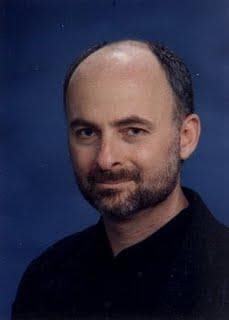
David Brin is a renowned science fiction author, best known for his award-winning novels "Startide Rising" and "The Postman." He holds a Ph.D. in astrophysics from the University of California, San Diego, which informs his scientifically grounded and thought-provoking narratives. Brin's work often explores themes of humanity's future, societal evolution, and the nature of intelligence.
Similar books
- Seveneves
Neal Stephenson
4.0 (95k) average on GoodreadsFantasyFeatures a global catastrophe, scientific problem-solving, and humanity's struggle for survival.
- Snow Crash
Neal Stephenson
4.0 (237k) average on GoodreadsFantasyBoth novels explore advanced information technology and virtual spaces. However, Stephenson's Snow Crash uses sharp satire and cyberpunk aesthetics to critique societal dysfunction and corporate power, while Brin's Earth takes a more earnest, hard sci-fi approach to global existential threats and the ethical implications of technology and environmental collapse.
- Harry Potter and the Sorcerer's Stone
J.K. Rowling
4.5 (7M) average on GoodreadsFantasyRescued from a miserable life under the stairs, an orphaned boy discovers he's a wizard destined for a magical school, where he uncovers a dangerous secret tied to the dark wizard who murdered his parents.
- The Hunger Games
Suzanne Collins
4.3 (6.4M) average on GoodreadsFantasyIn a future where children fight to the death on live television, Katniss Everdeen volunteers for the arena, turning a death sentence into a fight for survival and a spark of rebellion.
- 1984
George Orwell
4.2 (3.1M) average on GoodreadsPoliticsIn a future where surveillance and thought control are absolute, a man's search for truth clashes with the Party, showing that hope can be a form of rebellion.
- Divergent
Veronica Roth
4.2 (2.9M) average on GoodreadsFantasyIn a society divided by virtues, a sixteen-year-old's difference from the norm starts a rebellion that threatens her world.




Enjoyed the summary?
A summary gives you the shape of the book. The book itself has the detail, the examples and the voice.
Find Earth on AmazonAs an Amazon Associate, BookBrief earns from qualifying purchases. How we're funded