
Core Idea
- Difficulty
- Medium
Key Takeaways from Eating Animals
The Moral Incoherence of 'Humane Meat'
Foer argues that the concept of 'humane meat' often serves to alleviate consumer guilt rather than fundamentally alter animal suffering.
Foer closely examines the marketing and reasoning behind 'humane' or 'sustainable' meat. He shows that while these labels might be minor improvements over typical factory farming, they often do not address the main ethical problem: the violence of taking a life for food when other options exist. He notes that even 'humanely' raised animals still face a frightening and often brutal slaughter. The book asks readers to consider if the desire for meat, even from a 'better' source, justifies supporting an industry that involves the exploitation and killing of animals. This argument is one of the book's best points, forcing a look at the uncomfortable fact that 'humane' is a very subjective and often self-serving word in this situation.
“The problem with 'humane' meat is that it is still meat. And the problem with meat, when viewed from the animal's perspective, is that it is the result of killing.”
In the book: Foer's visits to various 'humane' farms and slaughterhouses, contrasting their practices with the idealized images presented to consumers. He details the psychological toll on workers in these facilities, regardless of their 'humane' aspirations.
Try this: Consumers should critically examine 'humane' labels, researching specific farm practices and questioning whether the term genuinely aligns with their ethical boundaries, or if it merely assuages guilt. Consider whether the act of killing for food can ever truly be 'humane' if it's not a necessity.
The Hidden Costs of Factory Farming
Beyond animal welfare, factory farming inflicts devastating environmental, public health, and social costs.
Foer broadens his criticism of animal agriculture beyond individual animals, showing the wide-reaching effects of industrial farming. He details the large environmental cost, including clearing land for feed crops, huge water use, and methane from livestock, all of which add to climate change. The public health dangers, such as antibiotic resistance from regular drug use in animals and the possibility of diseases spreading from animals to humans, are also fully explored. Further, Foer points out the economic effects on rural communities and the hard, often dangerous, working conditions for slaughterhouse staff. This full look at the failures of factory farming provides a strong argument against its continuation, regardless of one's personal views on animal rights, making it a key part of the book's power.
“Factory farming is a system that creates a product that is environmentally unsustainable, publicly unhealthy, and morally reprehensible.”
In the book: Citations of scientific studies on methane emissions, water usage in meat production, and the rise of antibiotic-resistant bacteria linked to livestock. Descriptions of working conditions in slaughterhouses, including high injury rates and psychological trauma.
Try this: Recognize that food choices have systemic impacts. Support policies that promote sustainable agriculture and reduce reliance on factory farming. Consider reducing or eliminating meat consumption as a way to mitigate these broader harms.
The Power of Narrative in Food Choices
Our decisions about what to eat are deeply influenced by cultural stories, traditions, and self-serving fictions.
Foer clearly shows how ingrained stories shape our eating habits. He explores how family traditions, holidays, and advertising create strong stories around certain foods, especially meat. These stories often hide how the food is made, letting consumers stay comfortably distant from the unpleasant facts of animal agriculture. For example, the story of the 'happy pig' or 'free-range chicken' allows us to enjoy bacon or eggs without facing the animal's suffering. Foer argues that these stories are not accidental; they are built to encourage consumption. Understanding these stories is important for breaking old habits and making more thoughtful, ethical food choices, showing the psychological basis of our diets.
“What we eat is a story. It tells us who we are, where we come from, and what we believe.”
In the book: Foer's personal anecdotes about his grandmother's cooking and the emotional weight of family meals. Analysis of common advertising tropes for meat products that romanticize animal lives on farms.
Try this: Identify the narratives that influence your own food choices. Question the stories behind your food. Seek out alternative narratives that align with ethical and sustainable values, such as the stories of plant-based cuisine.
The Unspoken Agreement: Knowing vs. Not Knowing
Many people choose to remain ignorant about the origins of their food, creating an 'unspoken agreement' that perpetuates cruelty.
This idea is central to Foer's argument: the widespread lack of knowledge, or even willful ignorance, about factory farming helps the system continue. He suggests that society has an 'unspoken agreement' to ignore the suffering in animal agriculture. This is not necessarily due to bad intentions but a mix of convenience, cultural habit, and the discomfort of facing harsh realities. Foer's investigation makes him, and by extension the reader, 'know' what is happening, breaking this agreement. This knowledge, he argues, brings a moral weight and a need to act differently. It is a strong criticism of societal inaction and a call for individual responsibility, asking the reader to acknowledge the moral effects of their consumption.
“Most of us are not cruel people. We are just in the habit of not knowing.”
In the book: Foer's descriptions of his own previous ignorance and the shock of witnessing actual factory farm conditions. The widespread public unawareness of standard industry practices, despite their scale and impact.
Try this: Actively seek out information about where your food comes from. Don't shy away from uncomfortable truths. Use this knowledge to inform your choices and advocate for change, rather than succumbing to willful ignorance.
The Speciesism Dilemma: Why Some, Not Others?
Foer confronts the arbitrary lines we draw between animals we eat and animals we cherish.
One of the most thought-provoking questions Foer raises is the speciesism in our food choices. He highlights the clear contradiction between our emotional connection to pets like dogs and cats and our willingness to cause great suffering to other intelligent, feeling beings like pigs, chickens, and cows for food. Foer does not offer a simple answer but makes the reader confront the arbitrary nature of these differences. Is it intelligence? Cuteness? Cultural familiarity? He shows that most reasons for eating certain animals while being against eating others are weak and inconsistent. This argument is effective because it appeals to a shared sense of empathy, asking readers to apply their compassion consistently across species, making it a strong ethical foundation of the book.
“If we would not do it to a dog, why would we do it to a pig?”
In the book: Stories of individuals rescuing farm animals and forming bonds with them, mirroring pet ownership. Comparisons between the intelligence and emotional capacity of pigs and dogs, often citing scientific studies.
Try this: Reflect on your own biases regarding different animal species. Consider whether your justifications for eating certain animals hold up under scrutiny. Extend compassion and empathy beyond traditionally 'pet' animals.
The Personal Journey as a Moral Imperative
Foer's transformation from ambivalent eater to advocate is driven by his desire to provide coherent answers for his children.
The memoir part of 'Eating Animals' is important, as Foer frames his investigation through the lens of becoming a father. His personal struggle to balance his love for his child with the moral effects of his diet offers a relatable entry point for readers. It is not an abstract philosophical paper but a deeply personal search for ethical clarity. This framing makes the difficult subject matter more accessible and emotionally impactful. His journey emphasizes that ethical eating is not just about abstract rules but about living consistently with one's values, especially when raising a new generation. This personal story strengthens the book's impact, making the ethical questions feel urgent and immediate, showing that moral inquiry often starts with personal reasons.
“I didn't want my children to grow up in a world where I couldn't explain to them why we eat some animals and not others.”
In the book: Foer's recurring reflections on his son's future, his conversations with his wife about food choices, and his internal monologues about the difficulty of making principled decisions.
Try this: Consider how your food choices reflect your values and what legacy you are passing on to future generations. Use personal milestones or responsibilities as catalysts for deeper ethical reflection.
The Illusion of Choice in a Controlled System
The food industry actively limits consumer choice and information, making ethical eating a challenge.
Foer exposes how the industrial food system, especially factory farming, operates without transparency, limiting consumers' ability to make informed choices. Through extensive lobbying and strong marketing, the industry controls the narrative and hides the realities of animal production. This creates an illusion of choice within a system designed for efficiency and profit over animal welfare or environmental health. Foer argues that this control over information and options is a significant barrier to ethical eating, placing the burden of discovery and resistance almost entirely on the individual consumer. This point highlights the systemic challenges individuals face when trying to eat more ethically, suggesting that true change requires more than just individual will.
“The choices we are given are often not real choices at all, but rather variations on a theme of exploitation.”
In the book: Detailed descriptions of the lack of public access to factory farms, the use of misleading labels, and the industry's resistance to regulations that would increase transparency.
Try this: Be skeptical of marketing claims. Actively seek out independent sources of information about food production. Support organizations working to expose industry practices and advocate for greater transparency and regulation.
The Role of Fishermen in the Animal Kingdom
Foer extends his critique to fishing, exposing the often-overlooked suffering of aquatic animals and environmental devastation.
While much of the talk about ethical eating focuses on land animals, Foer gives significant attention to the fishing industry. He highlights the often-ignored ability of fish and other water creatures to feel, challenging the common idea that they do not feel pain or fear. More importantly, he exposes the terrible environmental impact of industrial fishing, such as bycatch (catching unintended species), habitat destruction from bottom trawling, and the depletion of fish populations. This expansion of his argument is vital, as many who eat less or no red meat still eat fish, believing it to be a more ethical or sustainable option. Foer shows that the amount of suffering and environmental damage in fishing can be as severe as, or more severe than, in land-based factory farming, making this a crucial and often overlooked part of ethical food choices.
“If fish could scream, the oceans would be silent.”
In the book: Descriptions of bycatch statistics, the intelligence and pain perception of fish (citing scientific research), and the ecological collapse of certain ocean ecosystems due to overfishing.
Try this: Re-evaluate seafood consumption. Research sustainable fishing practices, or consider eliminating fish from your diet. Advocate for stronger marine conservation and stricter regulations on industrial fishing.
The Vegetarian/Vegan Imperative (with Nuance)
While not dogmatic, Foer strongly implies that vegetarianism or veganism is the most consistent ethical response.
While Foer avoids telling people what to do, his thorough investigation into animal suffering, environmental damage, and public health risks from animal agriculture leads to an undeniable conclusion: eating fewer or no animal products is the most ethically consistent choice. He does not shame readers but presents the evidence, letting the moral weight settle. While he acknowledges that change is hard and meat has cultural meaning, the vast amount of evidence he gathers points to a plant-based diet as the most responsible path. This balanced approach, presenting the need for change through strong evidence rather than strict rules, makes his argument more convincing and less off-putting to a wide audience, encouraging personal thought rather than demanding immediate conversion.
“The question is not 'Can they reason?' nor 'Can they talk?' but 'Can they suffer?'”
In the book: The cumulative weight of all the evidence presented throughout the book regarding animal suffering, environmental impact, and health risks, which collectively build a strong case for plant-based eating.
Try this: Consider transitioning to a vegetarian or vegan diet, or significantly reducing animal product consumption. Explore the vast array of plant-based foods and recipes available.
The Power of Individual Action in a Collective Problem
Foer emphasizes that while systemic change is needed, individual choices create ripples of impact.
Despite the enormous size of the factory farming industry, Foer believes that individual actions are not pointless. He argues that collective change starts with individual choices, which, when combined, can shift markets, influence policy, and change cultural norms. By choosing not to eat animals, individuals stop financially supporting a harmful system and show demand for alternatives. This view empowers readers, turning what might feel like an overwhelming global problem into a series of personal decisions that can be made. While acknowledging the need for broader systemic reform, Foer's book ultimately concludes that personal responsibility and conscious consumption are key parts of any meaningful ethical progress. This balance of individual power and systemic criticism is a main strength of the book.
“The single most effective thing an individual can do to reduce global warming, improve public health, and prevent the abuse of animals is to stop eating them.”
In the book: Examples of how shifts in consumer demand have led to changes in product availability or industry practices, albeit slowly. The idea that every meal is a vote.
Try this: Recognize the power of your consumer choices. Talk to others about your decisions. Advocate for legislative changes that support ethical and sustainable food systems, but start with what's on your plate.
Quiz
10 questions on the main ideas. Each answer comes with a short explanation.
Question 1
What is the primary genre of the book "Eating Animals" by Jonathan Safran Foer?
- Science Fiction
- Memoir and Investigative Report
- Historical Fiction
- Self-Help Guide
Show answer
B. Memoir and Investigative Report The book is described as 'Part memoir and part investigative report.'
Question 2
What event prompted Foer to explore the moral dimensions of food more deeply?
- A health scare related to meat consumption.
- Starting a family and facing the prospect of explaining eating traditions.
- Reading a controversial scientific study about animal agriculture.
- A personal encounter with factory farming.
Show answer
B. Starting a family and facing the prospect of explaining eating traditions. The text states, 'Once he started a family, the moral dimensions of food became increasingly important. Faced with the prospect of being unable to explain why we eat some animals and not others, Foer set out to explore the origins of many eating traditions.'
Question 3
What does the book aim to explore regarding our eating habits?
- The nutritional benefits of different types of meat.
- The history of vegetarianism as a global movement.
- The origins of eating traditions and the fictions involved.
- The economic impact of the meat industry.
Show answer
C. The origins of eating traditions and the fictions involved. Foer 'set out to explore the origins of many eating traditions and the fictions involved with creating them.'
Question 4
The description of Foer's personal history with food suggests he was:
- Consistently vegetarian throughout his life.
- Strictly vegan before writing the book.
- Uncertain and fluctuating in his dietary choices.
- A lifelong advocate for veganism.
Show answer
C. Uncertain and fluctuating in his dietary choices. The text states, 'Jonathan Safran Foer spent much of his life oscillating between enthusiastic carnivore and occasional vegetarian.'
Question 5
What does the phrase "darkest corners of our dining habits" imply about the book's content?
- It focuses on obscure gourmet recipes.
- It delves into the less discussed or uncomfortable aspects of how we consume food.
- It explores ancient culinary practices from remote regions.
- It primarily covers the hygienic standards of kitchens.
Show answer
B. It delves into the less discussed or uncomfortable aspects of how we consume food. This phrase suggests the book investigates less pleasant, perhaps hidden or ethically challenging, aspects of our food choices and practices.
Question 6
The Los Angeles Times quote places Foer 'at the table with our greatest philosophers.' What does this suggest about the book's approach?
- The book is purely academic and dry.
- It engages with profound ethical and philosophical questions.
- It focuses on the practical application of philosophical theories to cooking.
- It is a collection of interviews with philosophers.
Show answer
B. It engages with profound ethical and philosophical questions. Being 'at the table with our greatest philosophers' implies the book tackles deep, thoughtful, and potentially complex ethical and moral issues related to food, similar to philosophical inquiry.
Question 7
The book raises 'the unspoken question behind every fish we eat, every chicken we fry, and every burger we grill.' This suggests the central theme is:
- The variety of cooking methods for different meats.
- The economic factors influencing food prices.
- The ethical considerations and justifications for consuming certain animals.
- The history of popular meat dishes.
Show answer
C. The ethical considerations and justifications for consuming certain animals. The phrasing points to the underlying reasons and moral implications behind our choices to eat specific animals, which are often not explicitly considered.
Question 8
According to the provided text, what is one of the 'fictions' Foer explores in relation to eating traditions?
- The idea that all animal products are equally healthy.
- The belief that we cannot explain why we eat some animals and not others.
- The notion that vegetarianism is a modern invention.
- The myth that factory farming is more humane than traditional methods.
Show answer
B. The belief that we cannot explain why we eat some animals and not others. The text states Foer explores 'the origins of many eating traditions and the fictions involved with creating them,' and then immediately follows with 'Faced with the prospect of being unable to explain why we eat some animals and not others.' This implies the difficulty in explaining our choices is a kind of 'fiction' or self-deception we engage in.
Question 9
The book's description as 'part memoir' suggests that:
- Foer recounts personal anecdotes and experiences related to his investigation.
- It is solely focused on his childhood memories of food.
- The book is a fictionalized account inspired by his life.
- It is a collection of letters written by Foer to his family.
Show answer
A. Foer recounts personal anecdotes and experiences related to his investigation. A memoir involves personal recollections and experiences. Therefore, the 'part memoir' aspect indicates that Foer includes his own life story and reflections within the book's broader investigation.
Question 10
Considering the book's themes and Foer's personal journey, which of the following is the most likely underlying tension explored in "Eating Animals"?
- The conflict between personal pleasure derived from eating meat and the ethical implications of animal agriculture.
- The debate between traditional farming methods and modern industrial food production.
- The scientific evidence for and against the health benefits of a meat-based diet.
- The cultural differences in meat consumption across various societies.
Show answer
A. The conflict between personal pleasure derived from eating meat and the ethical implications of animal agriculture. Foer's oscillation between carnivore and vegetarian, his family's influence, and the exploration of moral dimensions and 'unspoken questions' all point to the internal and external conflict between the enjoyment of eating meat and the ethical questions raised by its production.
Eating Animals FAQ
What is Eating Animals by Jonathan Safran Foer about?
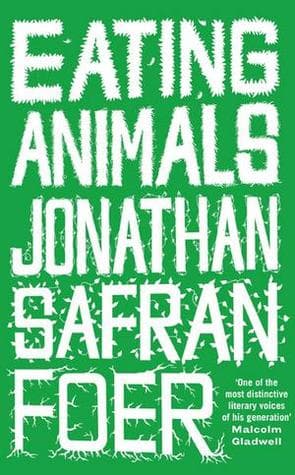
Eating Animals is a book that explores the ethical, philosophical, and practical reasons behind why humans eat certain animals and not others. It's part memoir, part investigative report, delving into the origins of eating traditions and the moral dimensions of our food choices.
Is Eating Animals a vegetarian cookbook?
No, Eating Animals is not a cookbook. It is a philosophical and investigative exploration of the meat industry and our relationship with animal consumption.
What are the main arguments in Eating Animals?
Foer examines the ethical implications of factory farming, the history of our eating habits, and the justifications people use to continue consuming meat. He questions the arbitrary nature of which animals we deem 'food' and the suffering involved in their production.
Does Jonathan Safran Foer advocate for vegetarianism in Eating Animals?
While Foer personally grapples with his own dietary choices throughout the book, the primary aim is to encourage readers to think critically about where their food comes from and the ethical considerations involved, rather than strictly advocating for vegetarianism.
What kind of research does Foer conduct in Eating Animals?
Foer travels to various farms and facilities, interviews farmers and experts, and researches the history and science behind animal agriculture and our dietary traditions. He aims to uncover the often-hidden realities of meat production.
What is the tone of Eating Animals?
The tone is deeply personal and reflective, as Foer shares his own journey and struggles with the topic. It is also investigative and thought-provoking, aiming to challenge the reader's assumptions about food.
Who is the target audience for Eating Animals?
The book is for anyone interested in the ethics of food, the meat industry, philosophy, and personal responsibility. It's particularly relevant for those who have started questioning their dietary choices or the impact of their consumption.
How does Eating Animals compare to other books on animal ethics?
Eating Animals stands out for its blend of memoir and investigative journalism, making complex ethical arguments accessible through personal narrative and direct reporting from the field. It bridges philosophical inquiry with tangible realities.
Does Eating Animals discuss the health aspects of eating meat?
While the primary focus is on ethics and philosophy, the book touches upon the health implications of industrial meat production and consumption as part of its broader examination of our food system.
What does Foer mean by 'fictions' in Eating Animals?
Foer refers to the stories and justifications we tell ourselves to distance ourselves from the reality of animal agriculture. These 'fictions' allow us to maintain our eating habits without confronting the ethical consequences.
About the author

Jonathan Safran Foer is an American novelist. He is known for his novels Everything Is Illuminated (2002), Extremely Loud & Incredibly Close (2005), Here I Am (2016), and for his non-fiction works Eating Animals (2009) and We Are the Weather: Saving the Planet Begins at Breakfast (2019). He teaches creative writing at New York University.
Similar books
- The Omnivore's Dilemma: A Natural History of Four Meals
Michael Pollan
4.2 (182k) average on GoodreadsPoliticsWhile both Foer and Pollan explore the origins of our food, Foer's "Eating Animals" is far more focused on the ethical and moral implications of animal agriculture, particularly factory farming. Pollan's "The Omnivore's Dilemma" offers a broader, more academic survey of various food chains (industrial, organic, hunter-gatherer), providing a comprehensive landscape of modern eating. Foer, by contrast, delves deeper into the psychological and emotional aspects of eating animals, using his personal journey as a lens. Pollan is more of an investigative journalist, while Foer is a novelist turned investigator, bringing a distinct literary sensibility.
- Animal Liberation
Peter Singer
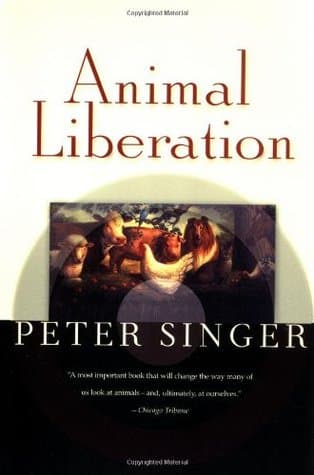
4.3 (7k) average on GoodreadsPoliticsPeter Singer's "Animal Liberation" is a foundational philosophical text that rigorously argues for animal rights based on utilitarian ethics, focusing on the concept of 'speciesism.' Foer's "Eating Animals" builds upon the ethical groundwork laid by Singer but approaches the topic with a more narrative and accessible style. While Singer's work is a direct philosophical argument, Foer uses personal anecdotes, interviews, and vivid descriptions to illustrate the practical consequences of industrial animal farming, making the ethical considerations less abstract and more emotionally resonant for a general audience. Foer's book is an application of many of Singer's principles to the specific context of food production, making the philosophical tangible.
- The Diary of a Young Girl
Anne Frank
4.2 (2.7M) average on GoodreadsBiographyDuring the Nazi occupation, a teenage girl's diary, written from a secret annex, shares observations on humanity, hope, and the wait for freedom.
- Eat, Pray, Love
Elizabeth Gilbert
3.6 (1.5M) average on GoodreadsLifestyleA heartbroken writer leaves her conventional life for a year-long global search for pleasure in Italy, spiritual devotion in India, and unexpected love and balance in Bali.
- Night
Elie Wiesel
4.3 (970k) average on GoodreadsBiographyIn the darkness of Auschwitz and Buchenwald, a teenage Elie Wiesel faces the extermination of his family, the loss of his faith, and the lasting scars of humanity's deepest cruelty.
- The Glass Castle
Jeannette Walls
4.3 (903k) average on GoodreadsBiographyJeannette Walls's memoir describes her unusual childhood with brilliant, free-spirited parents whose poverty-stricken life shaped her independence and love despite family problems.





Enjoyed the summary?
A summary gives you the shape of the book. The book itself has the detail, the examples and the voice.
Find Eating Animals on AmazonAs an Amazon Associate, BookBrief earns from qualifying purchases. How we're funded