
Synopsis
Covers the whole plot, including the ending.
- Difficulty
- Easy
- Pacing
- Moderate
- Mood
- Heartbreaking, Hopeful, Realistic, Thought-provoking
- Read it if
- You're looking for a heartfelt and realistic story about family, immigration, and the resilience of a young boy facing immense challenges.
- Skip it if
- You prefer lighthearted stories without significant emotional conflict or mature themes related to immigration.
Efrén Divided Plot Summary
Covers the whole plot, including the ending.
A Normal Morning Shattered by Absence
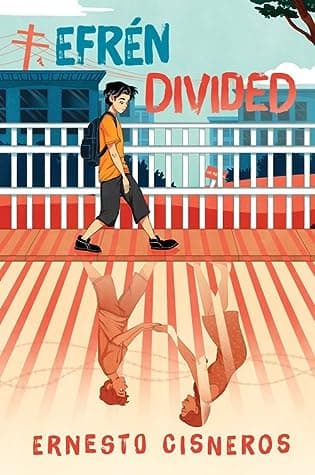
Efrén Nava, a seventh-grader in Southern California, lives a busy but happy life. He balances school with caring for his younger siblings, Max and Mía, while his parents, Amá and Apá, work long hours. Amá is his 'Soperwoman,' a loving and strong person. One morning, as Efrén gets ready for school, he notices his parents are tense, talking about 'la migra.' Later that day, Amá does not come home from her cleaning job. Apá, clearly upset, confirms Efrรén's worst fear: Amá has been detained by immigration officials and likely deported. The family's world changes instantly, and Efrén, despite being young, immediately feels the weight of new responsibilities.
New Responsibilities and Growing Pains
With Amá gone, Efrén's daily routine changes greatly. He becomes the main caregiver for Max and Mía, making sure they are fed, dressed, and ready for school. He learns to cook simple meals, do household chores, and help his siblings with homework, all while trying to keep up with his own schoolwork. Apá, sad and burdened with supporting the family alone, becomes quiet and works even longer hours. Efrén carries much of the emotional and practical load. Efrén tries to keep his siblings' lives as normal as possible, but Amá's absence creates a noticeable emptiness in their home.
The Tijuana Connection and a Glimmer of Hope
After several difficult days, Apá gets a call confirming Amá's location: she has been deported to Tijuana, Mexico. This news, though sad, offers a small bit of hope, as they now know where she is. Apá starts to arrange visits to Amá in Tijuana, a hard and costly task. Efrén, wanting to help, begins to think of ways to contribute. He overhears talks about high legal fees and the difficulties of crossing the border. He feels a strong need to bring his family back together, using his inner 'Soperboy' to find solutions.
The Challenges of Communication and School Life
Efrén finds it very hard to focus at school. He worries constantly about Max and Mía, and the emotional impact of Amá's absence affects him deeply. He tries to hide his problems from his friends, David and Jennifer, but his grades start to drop, and he often falls asleep in class. Communication with Amá is irregular and heartbreakingly short, usually through collect calls from Tijuana. These calls only make Efrén's longing stronger and his resolve to help her greater. He feels alone, unable to fully share his family's crisis with anyone outside his home.
A Desperate Plan and a Difficult Journey
Overwhelmed by the situation and missing his mother greatly, Efrén suggests to Apá that they go to Tijuana to visit Amá. Apá is at first unsure, mentioning the dangers and the difficulty of traveling with young children. However, seeing Efrén's strong resolve and sensing the family's need for connection, he finally agrees. They plan a trip during a school holiday, a journey that will need careful planning and financial sacrifice. Efrén is both nervous and excited, knowing that seeing Amá, even for a short time, will bring some comfort to his sad family.
The Reality of Tijuana and a Heartbreaking Reunion
The Nava family's trip to Tijuana is a harsh awakening for Efrén. He sees the poverty, the crowded streets, and the visible struggle of many people trying to cross the border. The reunion with Amá is emotional and bittersweet. They meet in a public park, unable to truly hug or spend private time together. Amá is thin and tired, but her spirit is still strong. She tries to comfort her children, but Efrén sees the pain in her eyes. The visit, though short, strengthens Efrén's decision to bring her home, but also shows the huge challenges they face.
The Weight of Secrecy and a Friend's Support
Back home, Efrén continues to struggle with his responsibilities and the secret of his family's situation. One day, during a very stressful moment, a small comment from Max accidentally reveals part of their truth to Efrén's best friend, David. Instead of judgment, David offers strong support and understanding. David's friendship becomes a main support for Efrén, giving him someone to talk to and a feeling of not being completely alone in his struggle. This moment is a turning point, as Efrén realizes he does not have to carry the burden by himself.
A Community Rallies and a New Plan Emerges
News of the Nava family's trouble begins to spread, and the local community, led by compassionate adults and some of Efrén's teachers, starts to help them. A local organization offers legal advice and support, and a fundraiser is planned to help cover the growing legal fees. Efrén, inspired by the generosity, decides he wants to help in his own way. He starts selling his mother's famous sopes, using his cooking skills to raise money for Amá's legal defense. This effort gives him a sense of purpose and control in a situation where he often feels powerless.
Hope and Uncertainty in the Legal Battle
Apá and Efrén meet with immigration lawyers, who explain the long, complex, and expensive process of trying to bring Amá back legally. They learn about the various legal paths, the difficulties of proving hardship, and the long wait times. While the legal process offers a way, it is full of uncertainty and needs great patience and money. Efrén continues to help with the sopes fundraiser, seeing every dollar raised as a step closer to his mother's return. The family holds onto hope, even as they face the realities of the immigration system.
The Power of Family and a Future Unknown
As the story ends, Amá is still in Tijuana, and the legal fight for her return continues. However, the Nava family has found new strength in their unity and the unexpected support from their community. Efrén has grown greatly, changing from a dependent child into a responsible and strong young man. He continues to care for his siblings and help with the family's efforts, embodying the 'Soperboy' spirit. While the future is uncertain, the family faces it together, bound by their love and the hope that one day, Amá will be able to return home to them in California.
Efrén Divided Characters
Efrén Nava
Protagonist
A responsible seventh-grader who steps up to care for his family after his mother's deportation.
Efrén is a compassionate and mature seventh-grader, thrust into adult responsibilities after his mother's deportation. Before the crisis, he was a typical middle schooler, but his love for his family, especially his younger siblings Max and Mía, drives him to become their primary caregiver. He is resourceful, learning to cook and manage the household, and shows immense courage in facing the emotional and practical challenges. His inner 'Soperboy' emerges as he navigates school, family duties, and the complex immigration system, always striving to reunite his family.
Relationships: Amá (Devoted son, deeply misses and strives to reunite with his mother); Apá (Supportive son, helps his father cope and shoulder family responsibilities); Max (Protective and caring older brother); Mía (Protective and caring older brother); David (Best friend, confidant, and source of emotional support)
Amá (Elena Nava)
Supporting
Efrén's loving mother, deported to Tijuana, who remains a source of strength and inspiration.
Amá, whose real name is Elena, is Efrén's 'Soperwoman,' a hardworking and devoted mother who instilled strong family values in her children. She works tirelessly as a cleaner to provide for her family. Her deportation to Tijuana is the central catalyst for the story's events. Despite the physical separation and the hardships she faces in Mexico, she remains a pillar of strength and hope for her children through phone calls and brief visits, always trying to reassure them and maintain her loving presence.
Relationships: Efrén Nava (Beloved son, her absence deeply impacts him); Apá (Devoted wife, partner in raising their children); Max (Beloved son); Mía (Beloved daughter)
Apá (Arturo Nava)
Supporting
Efrén's father, who struggles to cope with his wife's deportation and the burden of single parenthood.
Apá, Arturo Nava, is Efrén's hardworking father. Initially, he struggles greatly with the emotional and practical fallout of Amá's deportation, becoming withdrawn and working even longer hours. He feels the immense pressure of providing for his family alone and navigating the complex immigration system. Despite his initial struggles, he demonstrates deep love for his family and eventually rallies, making difficult trips to Tijuana and seeking legal help, showing his commitment to reuniting his family.
Relationships: Efrén Nava (Father, relies on Efrén for help with the younger children); Amá (Devoted husband, deeply misses and strives to bring his wife home); Max (Loving father); Mía (Loving father)
Max Nava
Supporting
Efrén's younger brother, who is initially unaware of the full gravity of Amá's absence.
Max is Efrén's younger brother, a curious and energetic child. He is less aware of the political and legal complexities of his mother's deportation than Efrén, often asking innocent questions about when Amá will return. His youthful innocence highlights the stark reality of the situation for Efrén and Apá. He relies heavily on Efrén for care and comfort in Amá's absence, and his occasional slip-ups inadvertently help Efrén confide in David.
Relationships: Efrén Nava (Younger brother, cared for by Efrén); Amá (Beloved son, misses his mother); Apá (Beloved son); Mía (Brother)
Mía Nava
Supporting
Efrén's youngest sister, who deeply misses her mother and struggles with the separation.
Mía is the youngest of the Nava siblings, often depicted as fragile and particularly affected by Amá's absence. She frequently cries for her mother and struggles to understand why Amá isn't home. Her vulnerability highlights the emotional toll the deportation takes on the entire family, especially the youngest members. Efrén and Apá go to great lengths to comfort and protect her, making her well-being a priority.
Relationships: Efrén Nava (Youngest sister, cared for by Efrén); Amá (Beloved daughter, deeply misses her mother); Apá (Beloved daughter); Max (Sister)
David
Supporting
Efrén's loyal best friend who offers unwavering support and understanding.
David is Efrén's best friend and a constant source of support. Initially unaware of the full extent of Efrén's family struggles, he becomes a crucial confidant when the truth is revealed. David's loyalty, empathy, and non-judgmental attitude provide Efrén with a much-needed emotional outlet and a sense of normalcy amidst his chaos. He represents the power of true friendship and community support, offering practical help and moral encouragement.
Relationships: Efrén Nava (Best friend and confidant)
Jennifer
Supporting
Efrén's classmate and friend, initially a source of distraction and later understanding.
Jennifer is one of Efrén's classmates and friends. She is part of Efrén's social circle, initially representing a more carefree aspect of his life before the crisis. While not as central as David, she offers another layer of normalcy and peer interaction for Efrén. When she learns about his family's situation, she, along with other classmates and teachers, contributes to the community support system, showing collective empathy.
Relationships: Efrén Nava (Classmate and friend)
Ms. Salazar
Supporting
Efrén's compassionate teacher who notices his struggles and offers support.
Ms. Salazar is Efrén's observant and empathetic teacher. She notices Efrén's declining grades and increased fatigue, recognizing that something significant is happening in his life. Instead of simply reprimanding him, she approaches him with care and concern, eventually becoming a key figure in mobilizing community support for the Nava family. She represents the positive impact that understanding and supportive educators can have on students facing hardship.
Relationships: Efrén Nava (Empathetic teacher and mentor)
Grandma
Mentioned
Amá's mother, living in Tijuana, who provides support to Amá after her deportation.
Efrén's maternal grandmother lives in Tijuana, Mexico. After Amá's deportation, she provides a place for Amá to stay and offers emotional support. While she doesn't appear directly in many scenes, her presence is crucial as she represents the family ties that extend across the border and the network of support available to Amá in her time of need.
Relationships: Amá (Mother, provides shelter and support to her daughter); Efrén Nava (Grandmother, met during Tijuana visits)
Efrén Divided Themes
Family Unity and Sacrifice
The main theme is the Nava family's strong commitment to staying united despite the challenges of Amá's deportation. Efrén's sacrifices, taking on adult duties, and Apá's hard work show how much each member does to keep the family together. The difficult trips to Tijuana and the emotional cost of separation show the deep love that drives their efforts to reunite. Family ties go beyond physical borders.
“He was Soperboy, and Soperboy didn’t give up. Not on his family.”
Resilience and Responsibility in Childhood
Efrén's journey shows strength, as he adapts to unexpected and huge responsibilities. He quickly learns to cook, clean, and care for his younger siblings, all while dealing with his own emotions and school. His change from a typical middle schooler to a 'Soperboy' shows how much children can step up and endure hardship when their families are in crisis. He shows maturity beyond his years.
“He was too tired to be mad, but not too tired to worry.”
The Impact of Immigration Policies
The novel directly addresses the human cost of strict immigration policies, especially family separation. Amá's sudden deportation breaks the Nava family, showing the emotional, financial, and practical difficulties faced by undocumented families. The story shows the complexities of the legal system, the dangers of border crossings, and the uncertain lives of those living in the shadows. It makes a strong statement about how these policies affect children and communities.
“One minute, Amá was here. The next, she was gone. Just like that, their lives had changed forever.”
Community and Compassion
Despite personal struggles, the novel shows the power of community support and kindness. Efrén's friends, teachers, and local organizations help the Nava family, offering emotional support, practical aid, and money. This group effort shows that even with systemic injustice, acts of kindness and solidarity can provide important help and hope. It reinforces that no one has to face such challenges alone.
“He realized then that he wasn’t alone. He had friends, family, and a whole community that cared.”
Identity and Belonging
Efrén, an American-born child of undocumented parents, deals with his identity. He lives in two worlds: his American school life and his Mexican heritage and family's undocumented status. Amá's deportation makes him more aware of his family's vulnerability and his own place in a society that both claims him and threatens his loved ones. The story explores what it means to belong when your family is divided by a border and when your identity is shaped by both cultures.
“He was Soperboy, and that meant he had to be strong for his family, for his Amá.”
Plot Devices & Literary Techniques
The 'Soperwoman' and 'Soperboy' Metaphor
A symbolic representation of strength, love, and family resilience.
The 'Soperwoman' metaphor, initially applied to Amá, represents her unwavering strength, nurturing nature, and ability to provide for her family, drawing a parallel to the delicious sopes she makes. After Amá's deportation, Efrén adopts the mantle of 'Soperboy,' symbolizing his own emergence as a responsible, resilient, and protective figure for his siblings. This device personalizes and simplifies complex themes of responsibility and heroism for a young audience, giving Efrén a clear internal motivation and identity to embrace.
Dual Perspective/Focus (Efrén's Internal vs. External Struggles)
Highlights Efrén's emotional turmoil alongside his practical actions.
The narrative primarily focuses on Efrén's internal struggles – his worries, fears, and longing for his mother – while simultaneously depicting his external actions of caring for his siblings, managing the household, and contributing to the family's efforts. This dual perspective allows readers to deeply empathize with Efrén's emotional burden and appreciate the immense strength required to maintain a brave face and fulfill adult responsibilities while still being a child himself. It underscores the hidden challenges faced by children in similar situations.
The Tijuana Visits
A physical manifestation of the family's division and the harsh realities of deportation.
The trips to Tijuana serve as a crucial plot device, physically illustrating the border that divides the Nava family and the stark contrast between their lives in California and Amá's new reality. These visits are not just reunions but also powerful learning experiences for Efrén, exposing him to the poverty and struggles faced by many in Tijuana. They underscore the emotional pain of separation while also fueling Efrén's determination to bring his mother home, making the abstract concept of deportation concrete and visceral.
The Sopes Fundraiser
A symbol of cultural heritage, resourcefulness, and community solidarity.
Efrén's decision to sell his mother's sopes to raise money for legal fees is a multi-layered plot device. It symbolizes his connection to his cultural heritage and his mother's legacy. It also demonstrates his resourcefulness and entrepreneurial spirit, giving him agency in a situation where he often feels powerless. Furthermore, the success of the fundraiser highlights the power of community, as friends and neighbors support his efforts, turning a family recipe into a symbol of hope and collective action.
Efrén Divided Quotes
“But sometimes, being brave means doing the right thing even when you're scared.”
“We are not illegal. We are human beings.”
“Home isn't just a place. It's the people who make you feel safe.”
“Sometimes the strongest walls are the ones we build around our hearts.”
“A family divided is still a family.”
“Fear is a heavy backpack to carry to school every day.”
“Love doesn't need papers to be real.”
“The quietest voices often have the most important things to say.”
“Hope is the breakfast of champions, but sometimes it's hard to swallow.”
“A promise to a parent is a chain that can't be broken.”
“Borders on a map don't change the borders of the heart.”
“The strongest glue in the world is a family's love.”
“Sometimes you have to be the adult even when you're still a kid.”
“Dreams don't have expiration dates.”
Quiz
10 questions on the plot and the characters. Each answer comes with a short explanation.
Question 1
What is the nickname Efrén gives his mother based on her cooking?
- Superwoman
- Soperwoman
- Tortilla Queen
- Amá Hero
Show answer
B. Soperwoman Efrén calls his mother 'Soperwoman' because she makes delicious Mexican sopes, combining 'sope' with 'Superwoman' to create this affectionate nickname that reflects her strength and cooking.
Question 2
What happens to Efrén's mother that triggers the main conflict of the story?
- She loses her job
- She gets sick and is hospitalized
- She is deported to Tijuana, México
- She decides to return to México voluntarily
Show answer
C. She is deported to Tijuana, México Efrén's worst nightmare comes true when his Amá doesn't return from work one day because she has been deported across the border to Tijuana, México, which forces Efrén to step up as 'Soperboy' to help his family.
Question 3
What are the names of Efrén's younger siblings?
- Carlos and Sofia
- Max and Mía
- Luis and Ana
- Diego and Elena
Show answer
B. Max and Mía Efrén has two younger siblings named Max and Mía, who he helps care for after his mother's deportation, highlighting his new responsibilities in the family.
Question 4
Why does Efrén worry about his parents even before his mother's deportation?
- Because they argue frequently
- Because they are undocumented immigrants
- Because they work too many hours
- Because they are in poor health
Show answer
B. Because they are undocumented immigrants Efrén is American-born, but his parents are undocumented, which creates constant anxiety and fear of separation, as seen when his mother is deported.
Question 5
What role does Efrén take on after his mother's deportation to help his family?
- He becomes the main breadwinner by getting a job
- He channels his inner 'Soperboy' to care for his siblings and try to reunite the family
- He moves to México to be with his mother
- He focuses solely on his schoolwork to make his parents proud
Show answer
B. He channels his inner 'Soperboy' to care for his siblings and try to reunite the family Inspired by his mother's 'Soperwoman' nickname, Efrén embraces the role of 'Soperboy,' taking on more responsibilities at home and working to bring his family back together.
Question 6
How does the book highlight the theme of family resilience?
- By showing Efrén giving up on his family to focus on himself
- By depicting the family falling apart completely after the deportation
- By emphasizing how Efrén and his father work together to maintain stability and hope
- By having the family rely entirely on government assistance
Show answer
C. By emphasizing how Efrén and his father work together to maintain stability and hope Despite the trauma of deportation, the Nava family shows resilience as Efrén and his Apá collaborate to care for Max and Mía and strive to reunite with Amá, demonstrating strength in adversity.
Question 7
What is a key challenge Efrén faces in trying to reunite his family?
- Learning to cook sopes as well as his mother
- Navigating the complex and often frightening immigration system
- Convincing his siblings to move to México
- Finding a new home for his family in the U.S.
Show answer
B. Navigating the complex and often frightening immigration system Efrén must deal with the daunting realities of immigration laws and procedures, which adds tension and urgency to his efforts to bring his mother back.
Question 8
In what way does Efrén's American-born status create a contrast in his experience?
- It makes him feel superior to his parents
- It allows him to travel freely to México without issues
- It highlights the divide between his security and his parents' vulnerability due to their undocumented status
- It means he doesn't understand Mexican culture
Show answer
C. It highlights the divide between his security and his parents' vulnerability due to their undocumented status As an American citizen, Efrén has legal protections that his parents lack, emphasizing the injustice and fear that undocumented families face, which deepens the emotional impact of the story.
Question 9
What does the metaphor of 'Soperboy' symbolize in Efrén's journey?
- His desire to become a famous chef
- His transformation into a superhero who can fix all problems instantly
- His embrace of responsibility and courage inspired by his mother's strength
- His rejection of his Mexican heritage
Show answer
C. His embrace of responsibility and courage inspired by his mother's strength 'Soperboy' represents Efrén stepping up to fill his mother's role, showing growth, resilience, and love for his family, much like 'Soperwoman' did for him.
Question 10
How does the setting of Tijuana, México, function in the story after Amá's deportation?
- As a vacation spot where the family reconnects
- As a barrier that physically and emotionally separates the family
- As a place where Efrén decides to live permanently
- As a symbol of the family's wealth and success
Show answer
B. As a barrier that physically and emotionally separates the family Tijuana becomes a poignant symbol of division, representing the border that splits the Nava family and the challenges they face in overcoming geographical and legal obstacles to reunite.
Efrén Divided FAQ
What is 'Efrén Divided' about?
'Efrén Divided' follows 12-year-old Efrén Nava, an American-born boy whose undocumented mother (Amá) is suddenly deported to Tijuana, Mexico. The story centers on Efrén's struggle to care for his younger siblings Max and Mía while his father (Apá) works multiple jobs, and his determined efforts to reunite his family despite immigration barriers.
Why should I read 'Efrén Divided'?
This book provides a powerful, child's-eye view of family separation due to immigration policies, blending authentic cultural details with universal themes of resilience. Ernesto Cisneros creates an emotionally resonant story that educates while celebrating Mexican-American family bonds and a young protagonist's courage.
What is the background/setting of 'Efrén Divided'?
The story is set in contemporary Southern California, primarily in Efrén's working-class neighborhood where his undocumented parents juggle multiple jobs. Key scenes also occur in Tijuana, Mexico after Amá's deportation, highlighting the physical and emotional border dividing the family.
What are the most memorable quotes?
Notable quotes include Amá calling herself 'Soperwoman' while making sopes ('With great flavor comes great responsibility'), and Efrén's realization: 'I used to think superheroes wore capes. Now I know they wear aprons and work two jobs.' These capture the book's themes of everyday heroism and cultural pride.
What writing style does the author use?
Cisneros employs accessible, heartfelt prose with vivid sensory details of Mexican food and family life, balancing difficult themes with age-appropriate warmth. The narrative shifts between Efrén's domestic struggles and tense border scenes, using Spanish phrases naturally woven into dialogue.
What minor details add significant meaning?
The recurring motif of sopes (Mexican dishes Amá prepares) symbolizes nurturing and cultural identity. Efrén's careful counting of household money highlights childhood responsibilities thrust upon him, while his father's worn work boots silently convey exhaustion from multiple jobs.
What are some subtle foreshadowing moments?
Early scenes show Efrén anxiously checking his phone whenever Amá is late, hinting at deportation fears. His mother's insistence on teaching him to cook sopes ('in case I'm not here one day') becomes tragically prescient after her removal.
What unexpected character connections exist?
Efrén's classmate David, initially portrayed as a bully, reveals his own family's immigration struggles, creating an unexpected alliance. A sympathetic teacher, Ms. Salazar, secretly assists with border paperwork, representing community support networks often invisible to children.
What are unspoken character motivations?
Apá's emotional distance stems from overwhelming guilt about failing to protect his wife, not indifference. Efrén's compulsive caretaking of his siblings masks his terror of total family collapse, while Amá's cheerful letters from Tijuana hide her desperation to shield her children from pain.
What psychological complexities do characters exhibit?
Efrén grapples with dual identities: a typical seventh-grader and a premature adult managing household crises. His younger sister Mía develops selective mutism after their mother's deportation, expressing trauma through silence, while Max's clinginess reveals attachment anxiety.
What are the major emotional turning points?
Key moments include Efrén's first tearful phone call with his deported mother, his decision to risk crossing the border to see her, and the heartbreaking scene where Apá breaks down admitting helplessness. The family's makeshift celebration of Mía's birthday via video call underscores their fractured connection.
How do relationship dynamics evolve?
Efrén and Apá's relationship shifts from traditional parent-child roles to a strained partnership burdened by shared responsibility. Sibling bonds intensify as Max and Mía depend entirely on Efrén, while Efrén's friendship with David evolves from hostility to mutual support over shared immigration fears.
Which parts remain ambiguous or open-ended?
The book doesn't specify whether Amá will ever legally return, leaving her immigration status unresolved. It's unclear how long the family can sustain their separated existence, or whether Efrén's childhood sacrifices will ultimately reunite them, reflecting real-life uncertainties for mixed-status families.
What are controversial scenes or decisions?
Efrén's dangerous attempt to cross the border alone sparks debate about child agency versus recklessness. Some readers question Apá's decision to have Efrén manage adult responsibilities, while the depiction of immigration authorities as faceless antagonists has drawn political discussion.
'Efrén Divided' ending explained: how it ends & what it means
The novel concludes with Efrén and his siblings visiting Amá in Tijuana through a supervised border program, offering temporary reunion but no permanent solution. This bittersweet ending emphasizes that family love persists across borders, while systemic immigration barriers remain, mirroring realities for thousands of divided families.
What cultural traditions are highlighted in the story?
The novel richly depicts Mexican traditions through food (sopes, tamales), language (code-switching between English and Spanish), and family rituals like weekend cooking sessions. These elements ground the story in specific cultural identity while showing how traditions sustain families during crisis.
How does the book handle themes of childhood versus adulthood?
Efrén's forced maturation is shown through practical details: budgeting groceries, calming sibling nightmares, and hiding stress from friends. Contrasts between his school life and home responsibilities highlight how immigration policies rob children of typical childhood experiences.
What role does food play symbolically?
Food represents cultural heritage, maternal love, and resilience. Amá's sopes connect the family across borders, Efrén's cooking attempts show him preserving traditions, and shared meals become rare moments of normalcy amidst chaos, illustrating how nourishment transcends physical separation.
Similar books
- Front Desk
Kelly Yang
4.4 (15k) average on GoodreadsChildren'sBoth feature young protagonists navigating challenges related to immigration and poverty while working to support their families.
- Harry Potter and the Sorcerer's Stone
J.K. Rowling
4.5 (7M) average on GoodreadsFantasyRescued from a miserable life under the stairs, an orphaned boy discovers he's a wizard destined for a magical school, where he uncovers a dangerous secret tied to the dark wizard who murdered his parents.
- The Hobbit, or There and Back Again
J.R.R. Tolkien
4.3 (2.9M) average on GoodreadsFantasyA comfort-loving hobbit named Bilbo Baggins is whisked away by a mischievous wizard and a band of dwarves on an unexpected journey to reclaim stolen treasure from a fearsome dragon, discovering courage and a magical ring along the way.
- Harry Potter and the Goblet of Fire
J.K. Rowling
4.6 (2.6M) average on GoodreadsFantasyA bewildered Harry Potter, underage and thrust into a deadly Triwizard Tournament, must brave dragons, mermaids, and a resurgent dark magic to survive a year that will forever alter the wizarding world.
- Harry Potter and the Order of the Phoenix
J.K. Rowling
4.5 (2.5M) average on GoodreadsFantasyIn a year of oppressive secrets and the threat of Voldemort, Harry Potter and Dumbledore's Army secretly train for war, shown through Jim Kay and Neil Packer's dark illustrations.
- The Lightning Thief
Rick Riordan
4.3 (2M) average on GoodreadsFantasyThrust into a world of mythological monsters and divine treachery, an ordinary boy discovers he's the son of Poseidon and must embark on a perilous quest across modern America to prevent an Olympian war.





Enjoyed the summary?
A summary gives you the shape of the book. The book itself has the detail, the examples and the voice.
Find Efrén Divided on AmazonAs an Amazon Associate, BookBrief earns from qualifying purchases. How we're funded