
Synopsis
Covers the whole plot, including the ending.
- Difficulty
- Easy
- Pacing
- Moderate
- Mood
- Magical, Whimsical, Nostalgic, Heartwarming, Dreamlike
- Read it if
- You love heartwarming Christmas stories about the magic of belief, beautiful illustrations, and a sense of wonder. Perfect for reading aloud to children during the holidays.
- Skip it if
- You prefer complex plots, stories with intense conflict, or are not a fan of traditional holiday themes.
The Polar Express Plot Summary
Covers the whole plot, including the ending.
A Mysterious Train Arrives on Christmas Eve
On Christmas Eve, a young boy lies awake, trying to hear the sound of Santa's sleigh bells, but instead hears a different sound. He looks out his window to see a large, old-fashioned train, the Polar Express, stopped right in front of his house. The conductor, a tall man with a friendly smile, invites him aboard, explaining that the train is headed to the North Pole. Hesitantly, the boy puts on his bathrobe and slippers and steps outside. He finds the train filled with other children, all in their pajamas, equally excited and surprised by the journey.
The Journey to the North Pole Begins
The boy climbs aboard the Polar Express, finding a seat among other children. The train is warm and inviting, with hot cocoa and candies served by the conductors. As the train pulls away, it speeds through dark forests, over tall mountains, and across a large, barren desert of ice. The landscapes outside are beautiful and fantastical, with wild animals watching from the woods and grand, lit cities appearing in the distance. The children marvel at the journey, their initial surprise giving way to wonder and excitement as they realize this is no ordinary trip.
Arrival at the North Pole
After what seems like an endless journey, the Polar Express finally arrives at the North Pole. The boy looks out to see a massive city of factories and workshops, all busy with elves preparing for Christmas. Thousands of elves are gathered, cheering and celebrating, as Santa Claus is about to depart on his annual journey. The sight is overwhelming and spectacular, confirming the boy's hopes and silencing his earlier doubts about Santa Claus. The children disembark, filled with awe and anticipation.
Santa's First Gift
A huge crowd of elves parts, and Santa Claus himself appears, coming from the workshop. He is a majestic figure, just as the boy had always imagined. Santa approaches the waiting children and, to the boy's astonishment, points directly at him. Santa explains that he has chosen the boy to receive the first gift of Christmas. Overwhelmed and unsure what to ask for, the boy considers what would truly make him happy.
The Boy Asks for a Bell
When asked what he wants for Christmas, the boy, after a moment of thought, requests a bell from Santa's sleigh. He explains that he wants a symbol, something to remind him of the magic and wonder he has experienced. Santa smiles, pleased with the boy's choice, and instructs an elf to retrieve a small silver bell from his sleigh's harness. Santa then hands the shiny bell to the boy, who clutches it tightly, feeling its smooth surface and the promise it holds.
The Journey Home
With the first gift of Christmas received, Santa departs on his sleigh, and the children reboard the Polar Express for the journey home. The boy, tired but excited, holds his precious bell. However, as he reaches into his pocket, he discovers that there's a hole, and the bell is gone. A wave of sadness washes over him, fearing that the magic might now be lost. Despite searching, he cannot find it, and the train continues its journey back through the night.
Christmas Morning Surprise
The next morning, Christmas Day, the boy wakes up. He and his sister run to the Christmas tree to open presents. Among the gifts, he finds a small package wrapped in silver paper with his name on it. Inside, nestled on a bed of cotton, is the silver bell he lost on the train. A note from Santa explains that he found it on his sleigh and fixed the boy's pocket, ensuring the bell wouldn't be lost again. The boy is overjoyed, the magic restored.
The Bell's Special Sound
The boy excitedly rings the silver bell. To his delight, it produces a beautiful sound. He shows it to his parents, but they remark that it's broken, as they cannot hear anything. He then shows it to his sister, Sarah, and she too can hear the exquisite sound. The boy realizes that only those who believe in Christmas magic, and in Santa Claus, can hear the bell's enchanting ring. This strengthens his own belief and the special nature of his gift.
The Fading of Belief
As the years go by, the boy continues to cherish his silver bell. He notices that his friends, one by one, stop hearing its sound as they grow older and their belief in Santa lessens. Even his sister, Sarah, eventually no longer hears the bell's beautiful ring. The boy holds onto the bell, understanding that it requires a certain kind of faith to perceive its magic, and he feels a pang of sadness as others lose that connection.
The Enduring Sound of Belief
Many years pass, and the boy grows into an old man. He still possesses the silver bell, and even though everyone else around him has long since ceased to hear its sound, he can still hear it. For him, it rings as beautifully as it did on that magical Christmas morning when he first received it. The bell is a constant reminder of Christmas wonder, the importance of belief, and the extraordinary journey he took on the Polar Express, a journey that taught him the true spirit of the season.
The Polar Express Characters
The Boy (Narrator)
Protagonist
A young boy who embarks on a magical journey to the North Pole.
The unnamed protagonist is initially a skeptical yet hopeful child, on the verge of losing his belief in Santa Claus. He is curious and a little timid but ultimately brave enough to step onto the mysterious Polar Express. His journey to the North Pole and his encounter with Santa solidify his belief. He is thoughtful, choosing a symbolic gift (a bell) over toys, and cherishes its meaning throughout his life, becoming a symbol of enduring faith. He represents the innocent belief of childhood.
Relationships: The Conductor (Guide and facilitator of his journey); Santa Claus (Giver of the first gift and reaffirmation of belief); Sarah (Sister) (Shared belief in the bell, which she later loses); Parents (Unknowing of his magical journey, unable to hear the bell)
The Conductor
Supporting
The authoritative yet kind leader of the Polar Express.
The Conductor is a tall, confident man with a warm smile and a reassuring presence. He is the gatekeeper of the magic, inviting children onto the train and ensuring their safe passage to the North Pole. He serves as a guide, providing structure and comfort during the extraordinary journey. His calm demeanor and clear instructions help ground the fantastical elements of the story, making the incredible journey feel real and accessible to the children.
Relationships: The Boy (Narrator) (His initial point of contact and guide on the journey); Other Children (Responsible for their magical experience)
Santa Claus
Supporting
The iconic figure of Christmas, residing at the North Pole.
Santa Claus is portrayed as a grand, benevolent, and wise figure. He embodies the spirit of Christmas and the magic of belief. His appearance at the North Pole is majestic, and his interaction with the boy is pivotal, as he chooses him to receive the first gift. Santa's act of finding the lost bell and returning it to the boy, along with his note, reinforces his omniscience and kindness, solidifying the boy's belief and the magic of the season.
Relationships: The Boy (Narrator) (The recipient of his special attention and gift); Elves (His dedicated helpers at the North Pole)
Sarah
Supporting
The boy's younger sister, who initially shares his belief.
Sarah represents a younger stage of childhood belief. She is present on Christmas morning and, like her brother, is initially able to hear the beautiful sound of the silver bell. Her ability to hear the bell reinforces the boy's experience. However, as she grows older, she eventually loses the ability to hear it, mirroring the common trajectory of fading childhood belief, which contrasts with her brother's enduring faith.
Relationships: The Boy (Narrator) (Sibling, initially sharing a secret of belief)
Other Children on the Train
Mentioned
Fellow passengers on the Polar Express, sharing the magical journey.
These children are mostly unnamed and serve as a collective representation of childhood wonder and excitement. They are dressed in their pajamas, eager and amazed by the journey. Their presence emphasizes that the boy's experience is shared, yet his personal encounter with Santa and the bell makes his journey unique. They highlight the universal appeal of Christmas magic for children.
Relationships: The Boy (Narrator) (Fellow passengers on the magical journey)
Elves
Supporting
Santa's industrious helpers at the North Pole.
The elves are depicted as countless, bustling figures, working diligently and celebrating at the North Pole. They are integral to the machinery of Christmas, preparing gifts and assisting Santa. Their joyful and energetic presence adds to the magical atmosphere of the North Pole, confirming the traditional image of Santa's workshop and the vastness of his operation.
Relationships: Santa Claus (His dedicated workers and assistants)
Parents
Mentioned
The boy's parents, unaware of his magical adventure.
The parents are briefly mentioned on Christmas morning, unable to hear the sound of the silver bell. They represent the adult world that has lost its direct connection to childhood magic. Their inability to hear the bell underscores the theme that belief is key to perceiving the extraordinary, and that some wonders are reserved for those who hold onto that faith.
Relationships: The Boy (Narrator) (Family members who cannot share in his unique experience)
The Polar Express Themes
Belief and the Power of Imagination
The central theme is the importance of believing in the seemingly impossible, especially the magic of Christmas. The boy's journey on the Polar Express shows the power of belief, as only those who believe can hear the bell's sound. His initial doubt is overcome by the experience of the North Pole, yet the ultimate test of belief comes when he must continue to hear the bell even when others cannot. The story suggests that maintaining belief is a choice that enriches life and keeps wonder alive.
“At one time, most of my friends could hear the bell, but as years passed, it fell silent for them. Even Sarah found one Christmas that she could no longer hear its sweet sound. Though I've grown old, the bell still rings for me, as it does for all who truly believe.”
The Transition from Childhood to Adulthood
The story subtly explores the bittersweet change from childhood innocence to adult doubt. The boy's journey happens at an age when he is about to lose his belief in Santa. His friends and sister gradually losing the ability to hear the bell as they age shows the common loss of childhood wonder. However, the boy's lasting ability to hear it means one can choose to carry that sense of magic and belief into adulthood, making it a story about preserving one's inner child.
“I was awakened by a sound. A sound I hadn't heard before. And I knew what it was. It was the sound of a train. But not just any train. It was the Polar Express.”
The Spirit of Giving and Receiving
While not overtly about material gifts, the story highlights the act of giving and receiving. Santa's 'first gift of Christmas' is not a toy but a simple silver bell, which the boy specifically requests. This choice shows that the most meaningful gifts are often symbolic and intangible, representing hope, belief, and memory. The bell itself is a gift that keeps on giving, as it continues to ring for the boy, reminding him of the true spirit of Christmas and the joy of sincere belief.
“The most important part of Christmas is not the presents, but the spirit of Christmas itself. And that spirit is in your heart, always.”
Wonder and Awe
The entire journey on the Polar Express is designed to create wonder and awe. From the unexpected appearance of the train to its fantastical journey through impossible landscapes, and finally to the busy, magical North Pole, the story immerses the reader in a world of marvels. The boy's reactions—his initial hesitation, then his growing excitement and reverence for Santa—mirror the reader's own experience of being transported to a place where anything is possible, showing that wonder is a vital part of life.
“We swished through valleys, and we swept over mountains. The train went so fast, it seemed to be flying. Past towns and farms, past forests and fields, we sped toward the North Pole.”
Plot Devices & Literary Techniques
The Polar Express Train
A magical vehicle that transports children to the North Pole.
The train itself is the primary plot device, serving as the catalyst for the entire adventure. It's not just transportation; it's a symbol of the journey of faith. Its unexpected arrival outside the boy's home, its fantastical route through diverse landscapes, and its destination at the North Pole all signify a departure from the mundane into the magical. The train represents the path one takes when choosing to believe, and its presence alone is enough to spark wonder and challenge skepticism.
The Silver Sleigh Bell
A tangible symbol of belief in the magic of Christmas.
The silver bell is the central symbolic object in the story. It is Santa's 'first gift of Christmas' and its unique property—only being heard by those who truly believe—makes it a powerful metaphor for faith. Its loss and subsequent return reinforce the idea of a test of belief and the enduring nature of true magic. The bell's fading sound for others as they age highlights the transient nature of childhood wonder and the protagonist's unique ability to preserve it.
First-Person Narration
The story is told from the adult perspective of the boy who experienced the journey.
The use of first-person narration from the perspective of the boy, now an old man, is crucial. It immediately establishes a sense of nostalgia and reflection. This narrative choice allows the story to bridge the gap between childhood wonder and adult understanding, emphasizing the lasting impact of the experience. It also lends credibility to the fantastical events, as the narrator is recounting a cherished personal memory, making the magic feel more real and enduring.
Dreamlike Atmosphere
The narrative employs evocative imagery to create a sense of unreality and wonder.
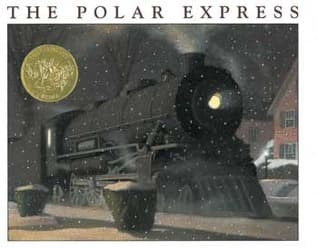
Chris Van Allsburg's distinctive illustration style and descriptive prose create a profound dreamlike atmosphere. The train's silent arrival, the surreal landscapes, the sleeping children, and the magical events all contribute to a feeling of being in a dream. This atmosphere blurs the lines between reality and imagination, inviting the reader to suspend disbelief and fully immerse themselves in the wonder of the story, much like the boy himself experiences the journey.
The Polar Express Quotes
“On Christmas Eve, many years ago, I lay quietly in my bed.”
“The Polar Express is a magical train that takes children to the North Pole on Christmas Eve.”
“All aboard!”
“The train was filled with children, all in their pajamas and nightgowns.”
“Hot chocolate thick and rich as melted chocolate bars.”
“The North Pole! It was a huge city standing alone at the top of the world.”
“Santa Claus! The elves!”
“One gift of Christmas was the bell from Santa's sleigh.”
“At one time, most of my friends could hear the bell, but as years passed, it fell silent for all of them.”
“Though I've grown old, the bell still rings for me, as it does for all who truly believe.”
“The train rolled on, wheels whispering over the rails.”
“We drank hot cocoa as thick and rich as melted chocolate bars.”
“Santa handed me the bell. I put it in my pocket.”
“The bell made a beautiful sound, a sound that made me smile.”
Quiz
10 questions on the plot and the characters. Each answer comes with a short explanation.
Question 1
What is the name of the boy who is the main character in 'The Polar Express'?
- Billy
- Chris
- The boy is never named
- Liam
Show answer
C. The boy is never named In the book, the protagonist is simply referred to as 'the boy' or 'I' in the first-person narration, emphasizing the universal experience of belief and wonder.
Question 2
What award did 'The Polar Express' win in 1986?
- Newbery Medal
- Caldecott Medal
- Pulitzer Prize
- National Book Award
Show answer
B. Caldecott Medal The book received the Caldecott Medal, which honors the most distinguished American picture book for children, recognizing Chris Van Allsburg's illustrations.
Question 3
Where does the Polar Express train take the children?
- To a magical winter carnival
- To the North Pole to see Santa Claus
- To a secret toy factory
- To a holiday parade in New York City
Show answer
B. To the North Pole to see Santa Claus The train journey's destination is the North Pole, where Santa Claus gives the first gift of Christmas to the protagonist.
Question 4
What gift does the boy ask Santa for on the Polar Express?
- A new toy train
- A bell from Santa's sleigh
- A ticket to ride the Polar Express again
- A magical snow globe
Show answer
B. A bell from Santa's sleigh The boy requests a silver bell from Santa's sleigh, which becomes a symbol of belief as it rings only for those who truly believe.
Question 5
Why does the boy lose the bell initially after returning home?
- He gives it away to a friend
- It falls through a hole in his pocket
- Santa takes it back as a lesson
- It disappears magically at sunrise
Show answer
B. It falls through a hole in his pocket The bell slips out through a hole in the pocket of the boy's robe, adding to the story's theme of fleeting magic and the importance of holding onto belief.
Question 6
What happens to the bell that makes it special for the boy and his sister?
- It glows in the dark
- It rings only for those who believe in Santa
- It changes color with the seasons
- It plays a Christmas carol when shaken
Show answer
B. It rings only for those who believe in Santa The bell's magical property is that it rings for believers, symbolizing the enduring power of faith and imagination, as noted when the boy's parents cannot hear it.
Question 7
How does the boy prove his belief in Santa Claus during the story?
- By reciting a Christmas poem
- By choosing the bell as his gift
- By helping Santa load the sleigh
- By singing carols with the other children
Show answer
B. By choosing the bell as his gift When Santa offers him any gift he wants, the boy asks for a bell from the sleigh, demonstrating his belief in the magic of Christmas.
Question 8
What is significant about the setting of the story's beginning?
- It takes place in a bustling city during a snowstorm
- The boy is lying in bed, listening for Santa's sleigh
- The boy is already on the train when the story starts
- It begins with the boy writing a letter to Santa
Show answer
B. The boy is lying in bed, listening for Santa's sleigh The story opens with the boy in bed on Christmas Eve, trying to hear Santa's sleigh bells, which sets the tone for his journey of belief and anticipation.
Question 9
What role do the other children on the Polar Express play in the story?
- They are all siblings of the main character
- They compete to get the best gifts from Santa
- They represent a community of believers sharing the journey
- They are figments of the boy's imagination
Show answer
C. They represent a community of believers sharing the journey The diverse group of children on the train symbolizes the collective experience of wonder and belief, enhancing the theme that magic is shared among those who embrace it.
Question 10
How does the story conclude regarding the boy's belief as he grows older?
- He forgets about the bell and stops believing
- The bell continues to ring for him, but not for others
- He gives the bell to his children to continue the tradition
- Santa visits him every year to renew his belief
Show answer
B. The bell continues to ring for him, but not for others In the ending, the boy reflects that as he grew older, his friends stopped hearing the bell, but he still can, illustrating the lasting power of childhood belief and imagination.
The Polar Express FAQ
What is 'The Polar Express' about?
The story follows a young boy who, on Christmas Eve, boards a magical train called the Polar Express that takes him and other children to the North Pole. There, he receives the first gift of Christmas from Santa Claus—a silver bell from Santa's sleigh—which only those who truly believe can hear ring.
Why should I read 'The Polar Express'?
It's a timeless holiday classic that beautifully captures the magic and wonder of Christmas through stunning illustrations and a heartwarming story about belief. The book's message about maintaining childhood faith resonates with both children and adults, making it a cherished read-aloud tradition.
What is the background/setting of 'The Polar Express'?
The story is set on a snowy Christmas Eve in an unnamed American town, likely in the mid-20th century based on the illustrations. The magical journey occurs at night, traveling through dark forests and over mountains to the glowing North Pole, where elves and Santa await.
What are the most memorable quotes from 'The Polar Express'?
Key quotes include: 'Though I've grown old, the bell still rings for me as it does for all who truly believe,' and Santa's words, 'This bell is a wonderful symbol of the spirit of Christmas, as am I.' These lines underscore the book's central theme of enduring belief.
What writing style does Chris Van Allsburg use in 'The Polar Express'?
Van Allsburg employs a simple, lyrical narrative with a dreamlike quality, complemented by detailed, realistic pencil illustrations that create a sense of magic and nostalgia. The prose is spare yet evocative, allowing the visuals to enhance the story's emotional impact.
What minor details add significant meaning to 'The Polar Express'?
The boy's pajamas—striped with a robe—symbolize his ordinary world before the magical journey. The conductor's pocket watch, which always shows midnight, emphasizes the timeless, suspended nature of Christmas Eve and the adventure.
What are some subtle foreshadowing moments in 'The Polar Express'?
Early in the story, the boy lies awake listening for Santa's sleigh bells, hinting at his deep desire to believe. Later, the conductor's cryptic smile when punching the boy's ticket foreshadows that this journey will test and ultimately affirm his faith.
What unexpected character connections exist in 'The Polar Express'?
The boy and the lonely boy in the back of the train share a silent bond; both are seeking reassurance about Christmas magic. Their brief interaction highlights that belief is a personal yet shared experience among children on this journey.
What are the unspoken character motivations in 'The Polar Express'?
The boy's motivation is not just to see Santa, but to resolve his lingering doubt about Christmas magic. The conductor serves as a guide who understands each child's need for proof, subtly steering them toward their own moments of belief.
What psychological complexities do characters exhibit in 'The Polar Express'?
The boy embodies the tension between childhood wonder and growing skepticism. The lonely boy represents isolation and the fear of being left out of the magic, while Santa himself is portrayed not as a mere gift-giver but as a symbol of faith that requires active belief.
What are the major emotional turning points in 'The Polar Express'?
Key moments include: the boy's decision to board the train (curiosity overcoming fear), receiving the bell from Santa (awarding his belief), and discovering he can still hear the bell ring as an adult (affirming that faith endures beyond childhood).
How do relationship dynamics evolve in 'The Polar Express'?
The boy starts as a solitary doubter but bonds with other children on the train, sharing in their collective awe. His relationship with Santa shifts from distant admiration to personal connection when Santa chooses him for the first gift, validating his belief.
Which parts of 'The Polar Express' remain ambiguous or open-ended?
It's unclear whether the journey is a dream, a real magical event, or a metaphor. The fate of the other children is left open, and the story doesn't specify why the boy loses the bell initially, leaving room for interpretation about the fragility of belief.
What are controversial scenes or decisions in 'The Polar Express'?
Some readers debate Santa's selection of the boy for the first gift, wondering if it rewards doubt over innate belief. Others question the lonely boy's minimal role, seeing it as a missed opportunity to explore themes of inclusion more deeply.
'The Polar Express' ending explained: how it ends & what it means
The story ends with the boy, now an adult, reflecting that the silver bell still rings for him and all who believe. This signifies that the magic of Christmas and childhood wonder can endure throughout life if one holds onto faith, with the bell serving as a tangible symbol of that belief.
About the author

Chris Van Allsburg is a celebrated author and illustrator known for his whimsical and often surreal children's books. He has won the Caldecott Medal twice for his distinctively illustrated works, "Jumanji" and "The Wretched Stone." His other notable books include "The Polar Express" and "The Sweetest Fig," which have captivated readers with their imaginative storytelling and unique visual style.
Similar books
- How the Grinch Stole Christmas!
Dr. Seuss
4.4 (330k) average on GoodreadsFantasyBoth are classic Christmas stories with a strong message about the spirit of the holiday.
- The Night Before Christmas
Clement C. Moore
4.4 (109k) average on GoodreadsFantasyA quintessential Christmas Eve tale that evokes a similar sense of wonder and anticipation.
- Harry Potter and the Sorcerer's Stone
J.K. Rowling
4.5 (7M) average on GoodreadsFantasyRescued from a miserable life under the stairs, an orphaned boy discovers he's a wizard destined for a magical school, where he uncovers a dangerous secret tied to the dark wizard who murdered his parents.
- The Hunger Games
Suzanne Collins
4.3 (6.4M) average on GoodreadsFantasyIn a future where children fight to the death on live television, Katniss Everdeen volunteers for the arena, turning a death sentence into a fight for survival and a spark of rebellion.
- 1984
George Orwell
4.2 (3.1M) average on GoodreadsPoliticsIn a future where surveillance and thought control are absolute, a man's search for truth clashes with the Party, showing that hope can be a form of rebellion.
- Divergent
Veronica Roth
4.2 (2.9M) average on GoodreadsFantasyIn a society divided by virtues, a sixteen-year-old's difference from the norm starts a rebellion that threatens her world.






Enjoyed the summary?
A summary gives you the shape of the book. The book itself has the detail, the examples and the voice.
Find The Polar Express on AmazonAs an Amazon Associate, BookBrief earns from qualifying purchases. How we're funded