
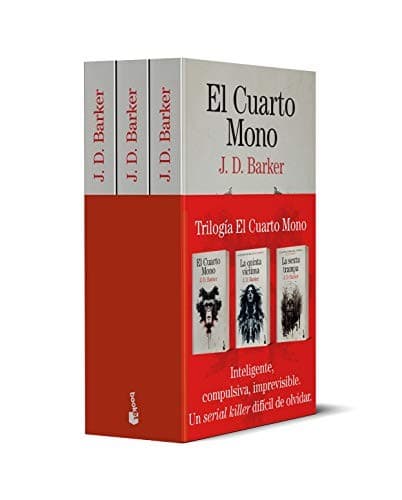
Core Idea
- Difficulty
- Medium
- Read it if
- You enjoy dark, gritty psychological thrillers with complex serial killers, obsessive detectives, and morally ambiguous themes. If you like narratives that delve deep into the killer's psyche through journals and explore the lasting impact of past trauma on both the hunter and the hunted.
- Skip it if
- You prefer lighthearted mysteries, shy away from graphic descriptions of violence and torture, or dislike morally grey characters and plots that challenge traditional notions of good and evil. If you're not a fan of stories with a strong focus on psychological manipulation and the dark side of human nature.
Key Takeaways from El Cuarto Mono (Pack)
The Three Wise Monkeys Killer
A serial killer's signature based on an ancient proverb, leaving behind unique 'gifts.'
The novel introduces a chilling premise: a serial killer known as 'The 4MK' (The Fourth Monkey Killer) who meticulously stages his crimes around the 'three wise monkeys' proverb. Each victim's family receives a package containing a piece of the victim's body, along with a 'gift' designed to torment them. The first package contains the victim's ears, the second their eyes, and the third their tongue, all leading up to the final, fatal act. This methodical and symbolic approach sets a terrifying tone and provides a unique signature for the killer, making the investigation a race against time to decipher his twisted logic before the ultimate sacrifice.
“The first monkey sees no evil, the second hears no evil, the third speaks no evil. But what about the fourth?”
In the book: The initial discovery of the 4MK's 'kill kit' containing a journal detailing his plans, and the subsequent packages delivered to victims' families, each containing a specific body part (ears, eyes, tongue) and a taunting message.
Try this: When encountering complex problems, look for underlying patterns or symbolic meanings that might reveal the perpetrator's motives or next steps.
Related ideas: serial-killer-profiling, symbolic-crime, psychological-thriller
Detective Porter's Obsession
A detective's personal connection and relentless pursuit of a killer, blurring professional boundaries.
Detective Sam Porter is the central figure in the hunt for the 4MK. He carries a heavy burden of past failures and personal demons, which are intricately linked to his obsession with this particular case. Porter's dedication borders on the unhealthy, often leading him to disregard protocol and put himself in harm's way. His personal history, revealed through flashbacks and internal monologues, suggests a profound connection to the killer's methodology or motivations, making the pursuit not just a job, but a deeply personal vendetta. This adds a layer of psychological depth to the detective character, making his quest for justice both compelling and fraught with peril.
“Some cases get under your skin. This one? This one was a part of him.”
In the book: Porter's flashbacks to past unresolved cases and his persistent disregard for warnings from his colleagues and superiors regarding his involvement.
Try this: Understand how personal biases and past experiences can influence decision-making, both positively and negatively, in high-stakes situations.
Related ideas: detective-fiction, character-driven-narrative, psychological-profiling
The Killer's Journal
An intimate and disturbing look into the mind of a serial killer through his own words.
A pivotal plot device is the discovery of the 4MK's journal, found at the scene of his latest crime. This journal provides direct access to the killer's thoughts, motivations, and twisted philosophy. It reveals his childhood trauma, the events that shaped his dark worldview, and the meticulous planning behind his macabre acts. The entries are chillingly articulate, offering insights into his rationalizations and the profound sense of injustice that fuels his rampage. This narrative technique allows the reader to delve deep into the antagonist's psyche, creating a complex and terrifying portrait of a killer who believes he is acting with a higher purpose.
“I am not a monster. I am a messenger.”
In the book: The detailed excerpts from the 4MK's journal, which are interspersed throughout the narrative, revealing his childhood and the genesis of his twisted ideology.
Try this: To truly understand complex problems, one must attempt to comprehend the underlying motivations and perspectives of all parties involved, even those that seem abhorrent.
Related ideas: antagonist-perspective, true-crime-analysis, psychopathy
Moral Ambiguity
The blurred lines between justice and revenge, and the ethical dilemmas faced by investigators.
The novel constantly challenges the reader's perception of right and wrong. The 4MK, despite his heinous acts, believes he is delivering a form of justice or enlightenment. This moral ambiguity extends to Detective Porter, whose methods often skirt the edges of legality and ethics. The book forces readers to question whether the end justifies the means, and how far one can go in the pursuit of a killer without becoming a monster themselves. The victims are not randomly chosen, and their connections to past events raise questions about collective responsibility and the ripple effects of earlier injustices.
“When you stare into the abyss, the abyss stares back at you.”
In the book: The 4MK's justifications for his crimes, outlined in his journal, and Porter's willingness to break rules and compromise his career to catch the killer.
Try this: In ethical decision-making, consider the long-term consequences of actions and how they might challenge established moral frameworks.
Related ideas: moral-philosophy, ethical-dilemmas, vigilante-justice
The Trauma of the Past
How unresolved childhood trauma can manifest in devastating ways in adulthood.
Both the killer and, to a lesser extent, Detective Porter are products of their traumatic pasts. The 4MK's journal vividly details a childhood filled with abuse, neglect, and a profound sense of abandonment, which directly informs his adult pathology and his mission. This exploration highlights how early-life experiences can shape an individual's entire trajectory, leading to extreme behaviors and distorted worldviews. The book serves as a stark reminder of the lasting impact of trauma and the cycle of violence it can perpetuate, emphasizing the psychological roots of criminal behavior.
“The past isn't dead. It's not even past.”
In the book: The detailed accounts in the 4MK's journal of his abusive upbringing and the specific events that led to his psychological break.
Try this: Recognize the profound impact of childhood experiences on adult behavior and consider how early intervention or support could alter negative trajectories.
Related ideas: childhood-trauma, psychological-development, cycle-of-violence
Intricate Plotting and Red Herrings
A masterclass in suspense, misdirection, and complex narrative threads.
J.D. Barker masterfully constructs a plot filled with unexpected turns, false leads, and meticulously placed red herrings. The narrative constantly shifts perspectives, primarily between Porter's investigation and the 4MK's journal entries, creating a multi-layered mystery. Just when the reader believes they have unraveled a piece of the puzzle, a new revelation emerges, challenging previous assumptions. This intricate plotting keeps the reader on edge, forcing them to re-evaluate clues and suspects repeatedly, making the eventual reveal both shocking and satisfyingly earned. The author's ability to maintain suspense through complex narrative arcs is a hallmark of the book.
“Every twist was a new knot, and every knot was designed to mislead.”
In the book: Numerous instances where a character is strongly implicated, only for new information to completely shift suspicion to another individual or a different motive.
Try this: When analyzing complex systems, be wary of premature conclusions and always consider alternative explanations or hidden variables.
Related ideas: suspense-building, narrative-structure, mystery-genre
The Price of Obsession
The personal cost of relentless pursuit and the toll it takes on a detective's life.
Detective Porter's obsession with the 4MK case comes at a significant personal cost. His relationships suffer, his physical and mental health deteriorate, and his career is constantly at risk. The book vividly portrays the psychological toll that such a high-stakes investigation can take on an individual, especially one with pre-existing vulnerabilities. Porter's willingness to sacrifice everything for the case highlights the dangerous line between dedication and self-destruction, emphasizing that even in the pursuit of justice, there are limits to what one can endure before breaking. This theme adds a human element to the police procedural aspect of the novel.
“He knew the cost, but he couldn't stop. Not until it was over.”
In the book: Porter's strained relationship with his ex-wife, his reliance on medication, and the warnings from his captain about his erratic behavior.
Try this: Recognize the importance of maintaining work-life balance and seeking support to prevent burnout and protect mental well-being in demanding roles.
Related ideas: mental-health-awareness, burnout-syndrome, personal-sacrifice
The Nature of Evil
Exploring whether evil is born or made, and the societal factors that contribute to its emergence.
A central question posed by the narrative is the origin of evil. Through the 4MK's journal, the reader witnesses the gradual transformation of a traumatized child into a calculating killer. The book suggests that while some individuals may have predispositions, it is often a confluence of severe environmental factors – abuse, neglect, and a lack of empathy from others – that cultivates true monstrosity. This exploration challenges simplistic views of good versus evil, instead presenting a nuanced perspective on how societal failures and personal suffering can create the very villains we fear. It delves into the sociological and psychological underpinnings of criminal behavior.
“Monsters are not born, they are made.”
In the book: The detailed accounts of the 4MK's childhood abuse and the specific incidents that triggered his descent into darkness, as documented in his journal.
Try this: Consider the systemic factors and societal conditions that contribute to crime and violence, rather than solely focusing on individual culpability.
Related ideas: nature-vs-nurture, sociology-of-crime, psychological-etiology
The Unreliable Narrator
Questioning the truth in a story told from multiple, potentially biased, perspectives.
The narrative structure, which alternates between Detective Porter's perspective and the 4MK's journal entries, introduces an element of unreliability. Both characters are deeply flawed and emotionally compromised, leading to the question of how much of their 'truth' can be trusted. The journal, while seemingly offering direct insight into the killer's mind, is still a subjective account, potentially skewed by self-justification or delusion. Similarly, Porter's judgments are clouded by his personal struggles. This narrative technique forces the reader to actively engage with the text, scrutinizing every detail and questioning the authenticity of the information presented, enhancing the overall suspense and mystery.
“Memory is a tricky thing. It bends, it breaks, it lies.”
In the book: Discrepancies between Porter's deductions and later revelations from the journal, or moments where the journal's account seems too convenient or self-serving.
Try this: Always consider the source and potential biases when evaluating information, especially in complex or emotionally charged situations.
Related ideas: unreliable-narration, perspective-bias, critical-thinking
The Art of the Twist Ending
A shocking conclusion that recontextualizes the entire narrative.
J.D. Barker is known for his masterful use of twist endings, and 'El Cuarto Mono' delivers a finale that is both unexpected and deeply impactful. The conclusion unravels the carefully constructed layers of the mystery, revealing connections and identities that challenge everything the reader thought they knew. This final revelation not only provides a shocking resolution to the immediate case but also recontextualizes the entire story, forcing a re-evaluation of characters' motives and actions from the very beginning. The twist serves as a powerful commentary on perception, identity, and the intricate web of fate, leaving a lasting impression on the reader.
“Sometimes, the monster you're hunting is closer than you think. Sometimes, it's you.”
In the book: The climactic reveal of the 4MK's true identity and his unexpected connection to Detective Porter, which redefines their entire dynamic.
Try this: Be prepared for unexpected outcomes and consider how new information can fundamentally alter your understanding of a situation.
Related ideas: plot-twist, narrative-reversal, surprise-ending
El Cuarto Mono (Pack) Quotes
“The past is a monster that devours the present if you let it.”
“Some secrets are meant to stay buried, no matter how much they beg to be found.”
“Every monster has a beginning, and often, it's not the one you expect.”
“Justice isn't always about righting wrongs; sometimes, it's about balance.”
“The devil you know is still the devil, and sometimes, he's just wearing a different face.”
“Fear is a powerful motivator, but it can also be the most blinding.”
“There's a fine line between obsession and dedication, and sometimes, it's impossible to tell the difference.”
“The truth is rarely simple, and often, it's far more disturbing than any lie.”
“We all carry our own prisons, built from our choices and our regrets.”
“Even in the darkest places, a flicker of humanity can remain, or be rekindled.”
“The past isn't just behind us; it's woven into the fabric of who we are.”
“Sometimes the only way to catch a monster is to understand what drives it.”
“Silence can be the loudest scream, if you know how to listen.”
Quiz
10 questions on the main ideas. Each answer comes with a short explanation.
Question 1
Which detective is the protagonist in 'El Cuarto Mono'?
- Detective Miller
- Detective Sam Porter
- Detective John Doe
- Detective Jane Rizzoli
Show answer
B. Detective Sam Porter The main detective pursuing the 4MK killer is Detective Sam Porter.
Question 2
What is the nickname given to the serial killer in 'El Cuarto Mono'?
- The Zodiac Killer
- The 4MK Killer
- The Bone Collector
- The Red Dragon
Show answer
B. The 4MK Killer The serial killer is known as the 4MK Killer, which stands for 'The Fourth Monkey Killer'.
Question 3
The killer's modus operandi is inspired by which ancient proverb?
- An eye for an eye
- See no evil, hear no evil, speak no evil
- Do unto others as you would have them do unto you
- The early bird catches the worm
Show answer
B. See no evil, hear no evil, speak no evil The 4MK Killer's actions are directly linked to the 'see no evil, hear no evil, speak no evil' proverb, adding a fourth victim to represent 'do no evil'.
Question 4
What significant item is found at each crime scene, linked to the killer?
- A white rose
- A small, carved wooden monkey
- A cryptic note
- A single strand of hair
Show answer
B. A small, carved wooden monkey The killer leaves a small, carved wooden monkey at each scene, symbolizing the proverb.
Question 5
What is the primary motivation behind the 4MK Killer's actions?
- Revenge for a past injustice
- A desire for fame
- Random acts of violence
- A political statement
Show answer
A. Revenge for a past injustice The killer's elaborate scheme is revealed to be a deeply personal vendetta for past wrongs.
Question 6
How does the 4MK Killer deliver the victims' body parts to their parents?
- By mail
- Left on their doorsteps
- Via a courier service
- Through a designated drop-off point
Show answer
A. By mail The killer sends the body parts to the victims' parents by mail, creating a horrifying trail.
Question 7
What personal connection does Detective Porter have to the case that makes it more complex for him?
- He knew one of the victims personally.
- His own family is targeted by the killer.
- He has a past history with the killer's family.
- The killer specifically targets him with personal taunts and messages.
Show answer
D. The killer specifically targets him with personal taunts and messages. The killer seems to have a particular interest in taunting and communicating directly with Detective Porter, making the investigation deeply personal.
Question 8
What is the final 'evil' that the killer's victims represent in the proverb sequence?
- See no evil
- Hear no evil
- Speak no evil
- Do no evil
Show answer
D. Do no evil The 4MK Killer adds a fourth victim, representing the 'do no evil' aspect, completing their twisted interpretation of the proverb.
Question 9
Where is the killer's journal discovered, providing crucial insights into their motives?
- At a victim's house
- Inside the killer's car
- In a briefcase found on a bus
- Hidden in a public library
Show answer
C. In a briefcase found on a bus The killer's journal is found inside a briefcase on a bus, which becomes a key piece of evidence for Porter.
Question 10
What is the ultimate fate of the 4MK Killer at the end of the book?
- They are apprehended and imprisoned.
- They escape and remain at large.
- Their true identity is revealed, but their capture is ambiguous, leading to a cliffhanger.
- They commit suicide before being caught.
Show answer
C. Their true identity is revealed, but their capture is ambiguous, leading to a cliffhanger. The book ends with the killer's identity revealed, but their capture is left open, setting up future installments in the series.
El Cuarto Mono (Pack) FAQ
What is 'El Cuarto Mono (Pack)' about?
'El Cuarto Mono (Pack)' is a thrilling crime novel by J.D. Barker, often referred to as 'The Fourth Monkey' in English. It follows Detective Sam Porter as he hunts a serial killer known as 'The Four Monkey Killer' (4MK), who bases his gruesome acts on the 'see no evil, hear no evil, speak no evil' proverb, with a terrifying fourth element.
Who is the main protagonist in 'El Cuarto Mono'?
The main protagonist is Detective Sam Porter, a seasoned and somewhat troubled detective from the Chicago PD. He is relentless in his pursuit of the 4MK and carries his own personal demons that sometimes intertwine with the case.
What kind of genre does 'El Cuarto Mono' belong to?
This novel firmly belongs to the psychological thriller and crime fiction genres. It features intense suspense, intricate detective work, a high body count, and delves into the minds of both the hunter and the hunted.
Is 'El Cuarto Mono' part of a series?
Yes, 'El Cuarto Mono' (The Fourth Monkey) is the first book in the Detective Sam Porter series. It introduces the main characters and sets the stage for subsequent thrilling investigations.
What makes the 'Four Monkey Killer' unique?
The 4MK is unique due to his ritualistic killings, which are inspired by the three wise monkeys proverb. He leaves specific 'gifts' with each victim, representing 'see no evil,' 'hear no evil,' and 'speak no evil,' before adding a chilling fourth element that escalates the horror.
Is 'El Cuarto Mono' a standalone story, or do I need to read the whole series?
While 'El Cuarto Mono' has a satisfying conclusion to its central mystery, it also sets up ongoing character arcs and introduces elements that continue into the subsequent books. For the full experience and understanding of the characters' development, reading the series is recommended, but it can be enjoyed as a standalone.
How does J.D. Barker build suspense in the novel?
J.D. Barker builds suspense through multiple narrative perspectives, including the killer's diary entries, which offer chilling insights into his motives and past. He also employs a fast pace, unexpected twists, and constant psychological tension to keep readers on the edge of their seats.
Is this book suitable for all readers?
Due to its graphic nature, violence, and disturbing themes, 'El Cuarto Mono' is recommended for mature readers. It contains elements common in dark psychological thrillers and may not be suitable for those sensitive to such content.
Similar books
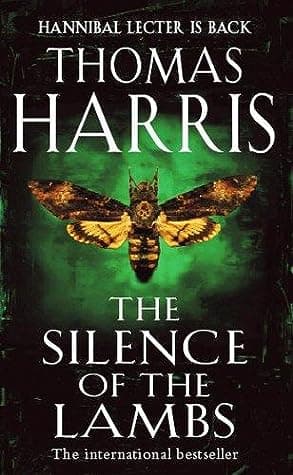
- The Silence of the Lambs
Thomas Harris
4.2 (464k) average on GoodreadsThrillerFeatures a brilliant, manipulative serial killer and an investigator who must delve into their psyche. Explores psychological profiling and the dark underbelly of humanity.
- Gone Girl
Gillian Flynn
4.1 (2.3M) average on GoodreadsThrillerExplores moral ambiguity, the dark psychological games between characters, and features a narrative that keeps the reader guessing about true motives and identities.
- The Diary of a Young Girl
Anne Frank
4.2 (2.7M) average on GoodreadsBiographyDuring the Nazi occupation, a teenage girl's diary, written from a secret annex, shares observations on humanity, hope, and the wait for freedom.
- Twisted 1. Twisted love
Ana Huang
3.7 (1.7M) average on GoodreadsA quiet billionaire with a difficult past finds his guarded heart opening to the woman he must protect, but their growing passion uncovers dangerous secrets and a shared, traumatic history.
- Eat, Pray, Love
Elizabeth Gilbert
3.6 (1.5M) average on GoodreadsLifestyleA heartbroken writer leaves her conventional life for a year-long global search for pleasure in Italy, spiritual devotion in India, and unexpected love and balance in Bali.
- Night
Elie Wiesel
4.3 (970k) average on GoodreadsBiographyIn the darkness of Auschwitz and Buchenwald, a teenage Elie Wiesel faces the extermination of his family, the loss of his faith, and the lasting scars of humanity's deepest cruelty.





Enjoyed the summary?
A summary gives you the shape of the book. The book itself has the detail, the examples and the voice.
Find El Cuarto Mono (Pack) on AmazonAs an Amazon Associate, BookBrief earns from qualifying purchases. How we're funded