
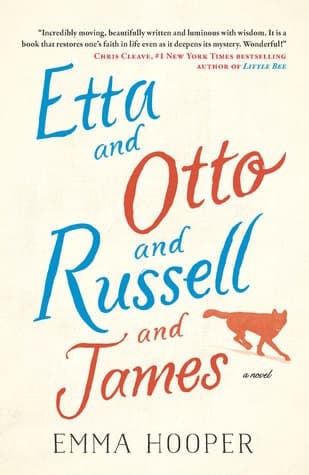
Synopsis
Covers the whole plot, including the ending.
- Difficulty
- Medium
- Pacing
- Slow
- Mood
- Atmospheric, Poignant, Reflective, Whimsical
- Read it if
- You enjoy contemplative literary fiction, stories about aging and memory, or narratives that blend reality with magical realism.
- Skip it if
- You prefer fast-paced plots, clear-cut resolutions, or strictly realistic narratives.
Etta and Otto and Russell and James Plot Summary
Covers the whole plot, including the ending.
Etta's Departure
Eighty-two-year-old Etta leaves her farm in Saskatchewan, planning to walk the 3,232 kilometers to the Atlantic Ocean, a dream she's had her whole life. She leaves a simple note for Otto, her husband: 'I will try to remember to come back.' She takes only a rifle, some chocolate, and her best boots. She starts early, before Otto wakes, showing an unexpected act of independence in her old age. This first act sets up the main quest and introduces the ideas of memory and achieving dreams.
Otto's Solitude and Memories
Otto wakes to Etta's note and understands her desire for the ocean. Instead of following her, he deals with her absence by cooking and baking, which keeps him busy. Her leaving brings back many memories from their early life, the hard times of the Depression, and his difficult experiences in a war. His kitchen becomes a place where past and present mix, as he remembers important times with Etta and his childhood friend, Russell.
Russell's Pursuit
Russell, who lives on a nearby farm and has loved Etta for sixty years, hears she's gone. Despite his quiet nature and a life of following rules, Etta's journey sparks something in him. He decides to follow her, believing she needs him. This is the first truly rebellious act of his life. His decision adds a third viewpoint to the story and sends him on his own trip, driven by worry, longing, and unfulfilled love for Etta.
Etta's Companion: James
As Etta continues her difficult walk, her memories become clearer and more broken, blurring the lines between past and present, real and imagined. She starts talking to a coyote she calls James. James becomes her constant friend, giving her mysterious advice and company. His presence shows Etta's weakening mind but also adds a magical part to her journey, symbolizing her connection to nature and her inner world as she crosses Canada.
Otto's Past: The War
While Etta walks and Russell follows, Otto's memories grow stronger, especially those about his time in World War II. He clearly remembers the horrors of battle, the friendship with other soldiers, and the deep impact of seeing death. His war memories mix with his longing for Etta and his attempts to understand his life. These flashbacks show the deep emotional scars he carries and the historical background of his generation.
Russell's Journey and Art
Russell's chase after Etta takes an artistic turn. As he travels, he carefully makes hundreds of papier-mâché animals, leaving them at different spots along Etta's likely path. These animals, from small birds to larger creatures, become a quiet, heartfelt message to Etta, showing his love and presence. This act turns his journey into a unique artistic trip, different from Etta's physical endurance and Otto's home life.
Etta's Fading Grip on Reality
As Etta walks further east, the physical strain of her journey combines with her worsening dementia. She often loses track of where she is, who she's with, and what time period it is. Talks with James become more central, and her memories of Otto, Russell, and their shared history mix with the current scenery. The reader sees her slow decline, highlighting the sadness of her quest and the fragile nature of memory.
Otto's Reflections on Etta and Russell
Alone in the farmhouse, Otto thinks about Etta and Russell. He remembers their childhood together, their shared upbringing, and the unspoken understanding between them. Otto subtly acknowledges Russell's lasting love for Etta, a love he's known about for decades. These thoughts show the deep, complex bonds that have held the three of them together throughout their lives, marked by unspoken feelings, loyalty, and sacrifices, especially in their rural Canadian lives.
The Ocean's Edge
After months of walking, Etta finally reaches the Atlantic Ocean. But her arrival isn't a clear win. Because of her advanced dementia, the experience is very personal and internal. The real ocean blends with her broken memories and James's presence. She sees not just the water but a mix of her past, present, and imagination. Achieving her dream is less about the physical act and more about the end of her inner journey and the stories she has lived.
The Aftermath and Lingering Presence
The book ends without saying exactly if Etta returns or what happens to her after reaching the ocean. Instead, it focuses on how her journey affects Otto and Russell. Otto continues his home routines, changed by Etta's absence and the return of his memories. Russell, having finished his own quiet trip, finds a new sense of purpose and self-awareness. Etta's walk becomes a strong, almost mythical event that changes the lives of those she left behind, showing themes of memory, love, and the lasting human spirit.
Etta and Otto and Russell and James Characters
Etta
Protagonist
An 82-year-old woman who embarks on a cross-Canada walk to see the ocean.
Etta is an octogenarian driven by a lifelong desire to see the ocean. She is characterized by her quiet determination, resilience, and a deep connection to her memories. As her journey progresses, her grip on reality loosens due to dementia, and she increasingly lives in a world where past and present, real and imagined, merge. Her journey is not just physical but a profound internal exploration of her life, love, and identity. She carries the weight of a generation's experiences, from the Depression to wartime separations.
Relationships: Otto (Husband, source of lifelong love and shared history.); Russell (Lifelong friend and secret admirer, representing unfulfilled love and quiet devotion.); James (Imaginary/symbolic companion, a talking coyote who guides and reflects her inner state.)
Otto
Protagonist
Etta's husband, who remains at home, recalling their past and his wartime experiences.
Otto is a steadfast and introspective man, deeply devoted to Etta. His life has been shaped by the Great Depression and the trauma of fighting in World War II. After Etta leaves, he copes with her absence by immersing himself in domestic routines, particularly cooking, which becomes a meditative act. His narrative thread is primarily one of memory, as he reconstructs their shared past, his wartime horrors, and his understanding of Etta's profound need for her journey. He represents resilience and the quiet endurance of love.
Relationships: Etta (Wife, the anchor of his life and the subject of his deepest love and memories.); Russell (Lifelong friend, almost a brother, with a complex, unspoken understanding.)
Russell
Protagonist
Otto's childhood friend, who secretly loves Etta and follows her across Canada.
Russell is a quiet, unassuming man who has lived a life of quiet longing. He has loved Etta from afar since childhood, a secret devotion that has defined his existence. Etta's departure spurs him into an unprecedented act of defiance and adventure. He follows her across Canada, expressing his unspoken love through the creation and placement of hundreds of papier-mâché animals along her route. Russell embodies unrequited love, loyalty, and the transformative power of a lifelong dream, even if it's not his own.
Relationships: Etta (Object of his lifelong, unrequited love and silent devotion.); Otto (Lifelong friend, almost a brother, with a shared history and an unspoken understanding of Russell's feelings for Etta.)
James
Supporting
A talking coyote who accompanies Etta on her journey, possibly a figment of her imagination.
James is a wise, often cryptic talking coyote who becomes Etta's primary companion on her walk. He serves as a confidante, a guide, and a symbol of Etta's fading grip on reality and her deep connection to the natural world. Whether he is real or a manifestation of Etta's dementia, James plays a crucial role in externalizing Etta's internal struggles, her memories, and her subconscious thoughts. He represents the blurring of boundaries between reality and illusion, a key element of Etta's journey.
Relationships: Etta (Companion and confidante, possibly an extension of her own mind.)
Mrs. Finch
Mentioned
Etta's childhood teacher.
Mrs. Finch is Etta's former teacher, primarily existing in Etta's memories. She represents a figure of early influence and education, particularly Etta's learning about the world beyond Saskatchewan. Her presence in Etta's fragmented thoughts highlights the importance of early aspirations and the way foundational experiences shape lifelong dreams. She is a touchstone to Etta's younger self and her initial yearning for the ocean.
Relationships: Etta (Former teacher, a figure from Etta's past who inspired her.)
The Children
Mentioned
The children Etta taught in a one-room schoolhouse.
The children Etta taught are significant figures in her memories, representing her past role as an educator and the simple, fulfilling life she once led. Their presence in her recollections underscores the importance of community and the impact she had on others. They are a reminder of a time when her mind was sharp and her purpose clear, contrasting with her current journey and deteriorating mental state. They symbolize the innocence and hope of a bygone era.
Relationships: Etta (Former students, a source of cherished memories and her past identity as a teacher.)
Etta and Otto and Russell and James Themes
The Nature of Memory and Time
The book mixes past and present, often blurring them, especially through Etta's fading mind. Otto's memories of the war and his early life with Etta are clear, while Etta's journey shows her internal struggle with dementia, where childhood, marriage, and the present exist together. The broken story structure reflects how memory isn't linear, suggesting our past is always with us, shaping how we see things and act. The story implies that memory is not just recalling facts but a changing, often unreliable, force that defines who we are.
“I will try to remember to come back,”
Love and Longing
At its core, the book looks deeply at different kinds of love: the lasting, quiet devotion between Etta and Otto, Russell's unreturned but loyal love for Etta, and Etta's love for a lifelong dream. Etta's walk is an act of love for herself and her unfulfilled wish. Otto's home routines are acts of love and remembrance. Russell's papier-mâché animals are a quiet, artistic expression of his deep longing. The story shows how love, spoken or not, forms the basis of human connection and drives amazing actions.
“He had loved Etta for sixty years. He would find her.”
Pilgrimage and Purpose
Each main character goes on a kind of pilgrimage. Etta's physical walk across Canada is a literal journey toward a lifelong dream, symbolizing a search for purpose in old age. Otto's journey is internal, a trip through his memories to understand his past and his relationship with Etta. Russell's journey is both physical and spiritual, as he follows Etta, finding his own purpose and showing his hidden feelings through art. These journeys suggest that finding purpose, even late in life, can be a life-changing experience.
“She had never seen the ocean. So she would walk.”
The Power of Storytelling
The book itself shows the power of storytelling, both in its structure and the characters' inner lives. Etta's journey becomes a story she tells herself, a way to understand her broken reality. Otto puts his life together through his memories, creating his own story of love and survival. Russell's papier-mâché animals are a form of silent storytelling, leaving a trail of his devotion. The book shows how stories—personal, shared, and imagined—give shape to our experiences and help us deal with the complexities of life and memory.
“The stories we tell ourselves, they matter.”
Aging and Mortality
The challenges of aging, especially dementia, are central to Etta's journey. Her physical decline and mental worsening are shown with care and realism. The book explores the fear of forgetting, losing oneself, and trying to keep dignity in old age. It also touches on how relationships end and the bittersweet feeling of looking back on a long life, reminding readers that time is precious and it's important to fulfill dreams before it's too late.
“The mind is a tricky thing. It remembers what it wants to remember, and forgets what it doesn't.”
Plot Devices & Literary Techniques
Non-linear Narrative
The story jumps back and forth in time, interweaving past and present.
The novel frequently shifts between different time periods, often within the same chapter or even paragraph, reflecting the fragmented nature of memory, particularly Etta's experience with dementia and Otto's vivid recollections of the past. This device allows for a deeper exploration of character backstories and thematic resonance, showing how past events continuously inform the present. It creates a dreamlike quality, blurring the boundaries of reality and emphasizing the subjective experience of time.
Magical Realism (James the Coyote)
The presence of a talking coyote introduces a fantastical element into an otherwise realistic narrative.
The character of James, Etta's talking coyote companion, is a key element of magical realism. He is presented as a real presence to Etta, offering advice and dialogue, yet his existence is ambiguous to the reader, suggesting he might be a manifestation of Etta's mind or a symbolic guide. This device allows the author to explore Etta's internal world and the effects of her dementia in a unique way, while also adding a layer of wonder and folklore to her epic journey.
Symbolism of Papier-Mâché Animals
Russell creates and leaves hundreds of papier-mâché animals along Etta's route.
Russell's act of creating and leaving papier-mâché animals serves as a powerful symbol of his unspoken love and devotion to Etta. Each animal represents a silent message, a tangible trace of his presence and care. They also symbolize the fragility and beauty of life, and the creative expression of deep emotion. This device transforms Russell's pursuit into an artistic pilgrimage, creating a poignant and unique testament to unrequited love and the desire to connect across vast distances.
Multiple Perspectives
The story is told through the alternating viewpoints of Etta, Otto, and Russell.
The novel employs a shifting narrative perspective, primarily focusing on Etta's journey, Otto's domestic life and memories, and Russell's pursuit. This allows the reader to gain a comprehensive understanding of the central events and their emotional impact on each character. It highlights the different ways individuals cope with loss, longing, and the passage of time, and reveals the complex interconnections between their lives, even when physically separated. The differing perspectives enrich the thematic exploration of love, memory, and purpose.
Etta and Otto and Russell and James Quotes
“It’s funny how you can forget the things that no one else knew.”
“The world is full of things that can’t be explained, and some things are better left that way.”
“You can carry a lot of things on your back, but you can’t carry time.”
“Sometimes the things you leave behind are the things that define you.”
“It’s not the distance that matters, it’s the walking.”
“Silence can be a very loud thing.”
“There are some things you just have to do, even if you don't know why.”
“Love is not a straight line, it’s a winding road.”
“Every step is a new story, and every story is a new step.”
“The greatest adventures are often the ones you don't plan.”
“You can’t erase what’s written, but you can choose how you read it.”
“Sometimes the smallest things hold the biggest weight.”
“We are all just trying to get to the ocean, one way or another.”
“Memory is a funny thing, it changes every time you look at it.”
Quiz
10 questions on the plot and the characters. Each answer comes with a short explanation.
Question 1
What does Etta take with her when she begins her journey to the ocean?
- A map, a compass, and a backpack
- A rifle, some chocolate, and her best boots
- A camera, a journal, and a sleeping bag
- Her purse, her keys, and a bottle of water
Show answer
B. A rifle, some chocolate, and her best boots Etta leaves with very few provisions, specifically a rifle, chocolate, and her best boots, as mentioned in the book's description.
Question 2
What is the name of the talking coyote that accompanies Etta on her journey?
- Russell
- Otto
- James
- Saskatchewan
Show answer
C. James The coyote's name is James, and he is a distinctive character in Etta's journey, blurring the lines between reality and illusion.
Question 3
What is the primary reason Otto understands Etta's departure to see the ocean?
- He wants Etta to have an adventure alone.
- He has also seen the ocean, having crossed the Atlantic for war.
- He believes Etta is simply going for a long walk.
- He is too busy with his papier-mâché animals to notice.
Show answer
B. He has also seen the ocean, having crossed the Atlantic for war. Otto's own experience of crossing the Atlantic for war gives him a unique understanding and empathy for Etta's longing to see the ocean.
Question 4
From what Canadian province does Etta begin her walk?
- Ontario
- British Columbia
- Saskatchewan
- Nova Scotia
Show answer
C. Saskatchewan Etta starts her 3,232-kilometer journey from Saskatchewan, heading towards Halifax, Nova Scotia.
Question 5
What is Russell's relationship with Otto, and what is his primary motivation after Etta leaves?
- He is Otto's distant cousin and wants to take over the farm.
- He is Otto's best friend and wants to help Otto cope with Etta's absence.
- He was raised as a brother to Otto and has loved Etta for sixty years, prompting him to find her.
- He is a neighbor who is curious about Etta's journey.
Show answer
C. He was raised as a brother to Otto and has loved Etta for sixty years, prompting him to find her. Russell, raised as a brother to Otto, has a long-standing, unrequited love for Etta, which drives him to defy his usual quiet life and go find her.
Question 6
How does Otto cope with Etta's absence and the influx of memories?
- He tries to forget by going on a long journey himself.
- He keeps his hands busy, often by creating hundreds of papier-mâché animals.
- He seeks help from Russell and discusses his feelings openly.
- He writes letters to Etta every day, detailing his memories.
Show answer
B. He keeps his hands busy, often by creating hundreds of papier-mâché animals. Otto's way of dealing with the crowding memories is to keep his hands occupied, notably by making papier-mâché animals, as described in the summary.
Question 7
What is the approximate distance Etta walks from Saskatchewan to Halifax?
- About 1,500 kilometers
- Exactly 3,232 kilometers
- Over 5,000 kilometers
- Just under 1,000 kilometers
Show answer
B. Exactly 3,232 kilometers The book explicitly states that Etta walks '3,232 kilometers from Saskatchewan to Halifax'.
Question 8
The novel's narrative structure is characterized by a blurring of what elements as Etta walks?
- Geographical locations and time zones
- Different characters' perspectives and inner monologues
- Memory, illusion, and reality
- Historical facts and modern-day events
Show answer
C. Memory, illusion, and reality As Etta walks, the narrative style emphasizes the blurring of 'memory, illusion, and reality', which is a key literary device in the novel.
Question 9
What overarching theme is highlighted by Etta's journey and the experiences of the other characters?
- The futility of chasing lifelong dreams.
- The importance of staying in one's comfort zone.
- It's never too late to see the things you've longed to see or say the things you've longed to say.
- The inevitable decline of memory in old age.
Show answer
C. It's never too late to see the things you've longed to see or say the things you've longed to say. The summary explicitly states that the novel 'reminds us that it’s never too late to see the things you've longed to see, or to say the things you've longed to say,' encapsulating a central theme.
Question 10
How does Russell's decision to leave his farm to find Etta represent a significant change for him?
- It's the first time he has traveled outside his province.
- It's the first act of defiance in his whole life.
- It indicates he has finally given up on his love for Etta.
- It shows he is finally ready to move on from Otto's shadow.
Show answer
B. It's the first act of defiance in his whole life. The description highlights Russell's character, stating that 'Leaving his farm will be the first act of defiance in his whole life,' emphasizing the profound nature of his decision.
Etta and Otto and Russell and James FAQ
What prompts Etta, an 82-year-old woman, to embark on a walk across Canada to see the ocean?
Etta's motivation stems from a lifelong unfulfilled dream to see the ocean. As she ages, she feels an urgent need to experience it, prompting her to leave a note for Otto and begin her journey from Saskatchewan to Halifax with little more than a rifle, chocolate, and her boots.
How does Otto react to Etta's departure, and what does he do in her absence?
Otto wakes to find Etta's note and, having seen the ocean himself during the war, understands her longing. To cope with her absence and the flood of memories it brings, he begins a large project of creating papier-mâché animals, filling their home with them as a way to keep his hands busy and his mind somewhat distracted.
Who is Russell, and what role does he play in the story after Etta leaves?
Russell was raised alongside Otto as a brother and has harbored a lifelong, unrequited love for Etta. Upon learning of her journey, he takes the unprecedented step of leaving his farm to follow her, determined to find and protect her, marking his first significant act of defiance.
Who is James, and what is his significance to Etta's journey?
James is a talking coyote who accompanies Etta on her walk across Canada. He serves as a companion, a sounding board, and a symbolic figure, blurring the lines between reality, memory, and Etta's internal world, guiding her through her physical and psychological landscapes.
What is the primary theme explored through Etta's pilgrimage?
Etta's pilgrimage primarily explores themes of fulfilling lifelong dreams, the passage of time, and the pursuit of meaning in old age. It also delves into memory, loss, and the nature of reality as her physical journey intertwines with her mental and emotional landscape.
How do the papier-mâché animals Otto creates connect to his past with Etta?
Otto's papier-mâché animals are not merely a distraction; they are deeply symbolic. Many represent creatures from their past, like the bison from Saskatchewan, or hold specific memories, embodying his attempts to process their shared history and the emotions stirred by Etta's absence.
What is the significance of the rifle Etta takes with her on her journey?
The rifle Etta carries is a symbol of her resilience and self-reliance, but also subtly hints at the harsh realities of the Canadian wilderness and her determination to face whatever comes. It represents both her preparedness and perhaps a connection to a more rugged past.
How does the narrative structure, moving between past and present, reflect the characters' experiences?
The undulating narrative structure, shifting between past and present, mirrors the characters' own experiences with memory. For Etta, the past blurs with the present on her walk; for Otto, memories crowd in; and for Russell, his past devotion shapes his present actions, creating a rich tapestry of their lives.
What is the symbolic meaning behind James the coyote being able to talk?
James's ability to talk is highly symbolic, representing Etta's internal monologue, her subconscious, or perhaps a manifestation of her declining mental state. He embodies her wisdom, fears, and hopes, allowing the author to explore Etta's inner world through external dialogue.
How does Etta's journey challenge traditional perceptions of aging and purpose?
Etta's journey directly challenges the notion that old age is a time for quiet resignation. Her defiance of physical limitations and societal expectations to pursue a lifelong dream redefines purpose in later life, emphasizing that it's never too late to seek fulfillment and adventure.
What psychological impact does Etta's departure have on Otto, particularly regarding his memories?
Etta's departure profoundly impacts Otto, triggering a flood of repressed or dormant memories, particularly those from the war. Her absence removes a stabilizing presence, forcing him to confront their shared past and the solitude, leading him to channel his emotional turmoil into creative work.
How does Russell's lifelong unrequited love for Etta shape his identity and actions?
Russell's unrequited love for Etta has defined much of his life, keeping him tethered and somewhat passive. His decision to follow her is a profound psychological shift, representing a liberation from his habitual obedience and an assertion of his own desires, even if belated.
In what ways do Etta's memories and reality intertwine and blur during her walk?
During Etta's walk, her memories become increasingly vivid and often indistinguishable from her present reality. People from her past appear as companions, and events from decades ago feel immediate. This blurring reflects both the natural process of aging memory and a deeper psychological journey into her past.
Is James, the talking coyote, meant to be interpreted as a real animal or a figment of Etta's imagination?
The novel deliberately leaves James's reality ambiguous, allowing for multiple interpretations. He can be seen as a literal talking coyote within a magical realist framework, a manifestation of Etta's inner voice, or a symptom of her declining mental state, enriching the story's depth.
What is the significance of Etta's promise to 'remember to come back,' and how does it relate to the ending?
Etta's promise is poignant, highlighting her awareness of her age and the uncertainty of her journey. It reflects her love for Otto while also underscoring the novel's themes of memory and forgetting. The ending explores whether 'coming back' is a physical return or a different form of reconciliation.
How does the novel explore the concept of love in its various forms (marital, unrequited, familial)?
The novel showcases the enduring marital love between Etta and Otto, complex and tested by time and memory. It also delves into Russell's steadfast, unrequited love for Etta, and the familial bond between Otto and Russell, illustrating love's multifaceted nature and its capacity to sustain and challenge individuals.
Does Etta truly reach the ocean, or is her arrival symbolic?
Whether Etta physically reaches the ocean is left open to interpretation, blending literal and symbolic possibilities. The novel suggests that the journey itself, the process of confronting her past and pursuing her dream, is as significant, if not more so, than the physical destination. Her arrival might be a moment of internal peace or reconciliation.
What message does the novel convey about the importance of memory versus the act of forgetting?
The novel explores a delicate balance between remembering and forgetting. For Otto, memory is a burden he tries to manage, while for Etta, it's a landscape she navigates. The book suggests that both are essential for processing life, and finding peace involves an acceptance of how memories shape and sometimes fade, allowing for new experiences.
Similar books
- Major Pettigrew's Last Stand
Helen Simonson
3.9 (132k) average on GoodreadsLiterary FictionExplores themes of aging, love, and quiet defiance in a character-driven narrative.
- The Unlikely Pilgrimage of Harold Fry
Rachel Joyce
3.9 (148k) average on GoodreadsLiterary FictionFeatures an elderly protagonist embarking on a long, unexpected walking journey for profound personal reasons.
- Life of Pi
Yann Martel
3.9 (1.3M) average on GoodreadsFantasyIncorporates elements of magical realism and a journey with an animal companion, exploring survival and belief.
- A Man Called Ove
Fredrik Backman
4.4 (569k) average on GoodreadsFictionWhile both novels feature an elderly protagonist embarking on a significant journey of self-reflection and interaction, 'A Man Called Ove' is considerably more grounded in realism and employs a more direct, often humorous narrative style. Ove's journey is external (forming new community bonds) as much as internal, whereas Etta's journey is almost entirely internal and symbolic. Hooper's novel is more overtly literary and experimental in its structure, focusing on the sensory and the symbolic, while Backman's offers a more accessible, character-driven narrative with clear emotional arcs and resolutions.
- The Old Man and the Sea
Ernest Hemingway
3.8 (831k) average on GoodreadsLiterary FictionA Cuban fisherman's long struggle with a giant marlin becomes a story of endurance and dignity, now retold for young adults with illustrations, phonetic guides, and writing prompts in Traditional Chinese.
- One Hundred Years of Solitude
Gabriel García Márquez
4.1 (753k) average on GoodreadsLiterary FictionThrough the multi-generational story of the Buendía family, a mythical town deals with the repeating patterns of time, love, and solitude, as the extraordinary mixes with the ordinary.





Enjoyed the summary?
A summary gives you the shape of the book. The book itself has the detail, the examples and the voice.
Find Etta and Otto and Russell and James on AmazonAs an Amazon Associate, BookBrief earns from qualifying purchases. How we're funded