
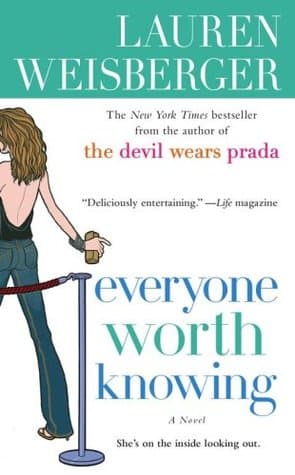
Synopsis
Covers the whole plot, including the ending.
- Difficulty
- Easy
- Pacing
- Moderate
- Mood
- Glamorous, Witty, Social Commentary, Engaging
- Read it if
- You enjoy stories about navigating the high-stakes world of New York PR, celebrity culture, and the challenges of maintaining privacy in the public eye.
- Skip it if
- You dislike books focused on socialites, gossip, and the superficial aspects of fame.
Everyone Worth Knowing Plot Summary
Covers the whole plot, including the ending.
The Unemployed Life and an Unexpected Offer
Bette Robinson, unhappy with her job at a Manhattan investment bank, quits on impulse, upsetting her traditional parents. She spends her days walking her chihuahua, Maggie, in Murray Hill, feeling lost and unsure about her life. One evening, with her friend Sarah, Bette meets Kelly, the influential owner of a high-profile PR firm, Kelly & Company. Kelly, intrigued by Bette's directness, offers her a job as an 'Events Coordinator.' This role mainly involves attending exclusive parties and networking. Bette, needing a change and excited by the glamour, accepts, despite her doubts about the job's true nature.
Immersion into the Glamorous PR World
Bette quickly enters the fast-paced world of New York's social scene. Her job requires her to attend endless exclusive parties, fashion shows, and product launches, often until late at night. She learns from her more experienced, cynical colleague, Penny, who teaches her the PR rules: who to see, who to avoid, and how to look good. Bette meets many celebrities, socialites, and powerful media figures. She initially feels like an outsider but gradually adjusts to the superficial yet exciting environment. She gets a generous expense account and access to the city's most desired venues, a stark contrast to her old, ordinary life.
The Rise of 'The Scuttlebutt'
As Bette settles into her job, a new anonymous gossip column, 'The Scuttlebutt,' appears in a prominent New York newspaper. Unlike other columns, 'The Scuttlebutt' is very mean and personal, often revealing embarrassing or damaging details about the city's socialites, celebrities, and PR professionals. Kelly & Company, being central to the social scene, quickly becomes a frequent target. The column causes a stir, creating both fear and interest among the elite. Bette and her colleagues nervously discuss the latest entries, wondering who the author is and whose reputation will be next. The column casts a shadow over the otherwise glamorous world.
Bette's Budding Romance and Public Scrutiny
Amidst her demanding work, Bette starts a relationship with Philip, a charming and seemingly grounded photographer she meets at an event. Their romance gives Bette a sense of normalcy and real connection among the superficiality of her work life. However, as her profile at Kelly & Company grows, so does her visibility. 'The Scuttlebutt' begins to mention Bette by name, at first with minor insults, but soon with more personal and critical comments about her looks, relationships, and perceived social climbing. Bette is both embarrassed and confused by the sudden, unwanted public attention, which starts to strain her relationship with Philip and her own self-image.
Escalating Attacks and Personal Betrayal
The 'Scuttlebutt' attacks on Bette become more aggressive and personal, revealing details only someone close to her could know. Her weight, past problems, and even private conversations are twisted and exposed. Bette becomes paranoid, suspecting everyone around her—colleagues, acquaintances, and even friends. The constant public humiliation affects her confidence and makes her question her place in this new world. She feels exposed and vulnerable, and the lines between her work and personal life blur. The joy she once found in her job is replaced by anxiety and a desperate need to find out who the columnist is.
A Clue and Mounting Suspicion
As 'The Scuttlebutt' continues, Bette, Penny, and other colleagues at Kelly & Company start to put clues together. They notice a pattern in the column's targets and the specific inside information it reveals, leading them to suspect the author is someone familiar with the firm's operations and clients. Their suspicions turn to a former employee, a disgruntled junior publicist named Amy, who was fired from Kelly & Company months earlier under bad terms. Amy had access to sensitive information and a clear reason for revenge, making her the main suspect. The office atmosphere becomes tense with speculation and unease.
Philip's Withdrawal and Bette's Isolation
The ongoing and cruel 'Scuttlebutt' articles about Bette severely strain her relationship with Philip. He finds it hard to deal with the constant public exposure and negative attention surrounding Bette. What began as a supportive relationship slowly worsens as Philip becomes more distant and less understanding of Bette's situation. He struggles with her newfound fame, even if it's negative, and the superficiality of her PR world. Bette feels increasingly isolated, not only from her past life but also from the person she thought she could trust. The column drives a wedge between them, leaving Bette feeling hurt and alone.
The Confrontation and Revelation
Driven by desperation and growing certainty, Bette decides to confront Amy directly. She finds Amy and, cornering her, presents the evidence she and her colleagues gathered. Initially defensive, Amy eventually breaks down and confesses to being the author of 'The Scuttlebutt.' She admits her motivation was bitterness, jealousy, and a desire for revenge against Kelly and the superficial world she felt had rejected her. The revelation brings Bette both relief and deep disappointment, confirming her worst fears about the column's malicious intent.
Repercussions and Public Apology
After Amy's confession, Kelly & Company acts quickly. Amy is publicly exposed as the author of 'The Scuttlebutt,' leading to her professional ruin and public condemnation. The newspaper that published the column apologizes for the damage caused by the anonymous writer. For Bette, this public vindication helps her heal. The end of the attacks and the exposure of her tormentor brings closure and allows her to start reclaiming her privacy and reputation. The incident is a strong reminder of the power of words and the destructive nature of unchecked gossip.
Reassessing Priorities and a New Path
The entire 'Scuttlebutt' experience forces Bette to rethink her priorities and her place in the glamorous PR world. While she initially found the excitement appealing, the public scrutiny and betrayal leave her feeling empty and disillusioned. She realizes that the superficiality and backstabbing in the social scene are not good for her well-being. Bette decides to step back from the demanding and public parts of her job at Kelly & Company, looking for a role with more substance and less exposure. She explores options that fit her values, seeking a life with more genuine connections and less pretense, ultimately finding a new direction that puts her mental health and happiness over social status.
Everyone Worth Knowing Characters
Bette Robinson
Protagonist
A pragmatic young woman who stumbles into the glitzy world of New York PR.
Bette starts as a disillusioned banking employee, feeling unfulfilled and a bit lost. She's initially an outsider to the high-society world, possessing a refreshing bluntness and a down-to-earth sensibility that contrasts with the superficiality around her. She is intelligent and observant, but also somewhat naive to the cutthroat nature of the PR industry. Her desire for excitement and a new direction makes her susceptible to the allure of Kelly's offer, but she ultimately values authenticity and genuine connection over glamour.
Relationships: Kelly (Boss and mentor figure, initially inspiring but ultimately a representation of the industry's flaws.); Philip (Boyfriend, a source of stability initially, but their relationship is strained and ultimately broken by public scrutiny.); Penny (Colleague and friend, offers cynical guidance and camaraderie.); Amy (Former colleague and antagonist, the author of 'The Scuttlebutt'.)
Kelly
Supporting
The powerful and glamorous owner of a leading PR firm.
Kelly is the epitome of the New York PR elite – stylish, shrewd, charismatic, and intensely driven. She built her empire on her ability to navigate and manipulate the social scene, knowing everyone worth knowing and understanding the power of perception. She sees potential in Bette's fresh perspective but is ultimately focused on maintaining her firm's reputation and power. While she offers Bette opportunities, she also embodies the demanding and often ruthless nature of the industry, prioritizing appearances and influence above all else.
Relationships: Bette (Employer/employee; mentor to Bette in the PR world.); Amy (Former employee, now a rival and enemy due to 'The Scuttlebutt'.)
Philip
Supporting
A photographer who becomes Bette's boyfriend.
Philip is initially a charming and seemingly grounded presence in Bette's life, offering a welcome contrast to the superficiality of her work. He is an artist, a photographer, and initially supportive of Bette's new career. However, he struggles to cope with the relentless public scrutiny that comes with Bette's rising profile and 'The Scuttlebutt's' attacks. His inability to handle the pressure and his eventual withdrawal reveal a limit to his understanding and commitment, ultimately leading to the breakdown of their relationship. He represents the challenge of maintaining a 'normal' life amidst extreme public exposure.
Relationships: Bette (Romantic partner, a source of comfort that ultimately falters under pressure.)
Penny
Supporting
Bette's cynical but experienced colleague at Kelly & Company.
Penny is Bette's primary guide through the labyrinthine world of New York PR. She is sharp, witty, and deeply cynical, having seen it all in the industry. Penny provides Bette with practical advice, insider knowledge, and a dose of reality about the superficiality and backstabbing inherent in their profession. Despite her jaded outlook, she forms a genuine friendship with Bette and offers camaraderie and support, particularly when 'The Scuttlebutt' attacks begin. She represents the seasoned veteran who has learned to navigate the system, albeit with a healthy dose of skepticism.
Relationships: Bette (Colleague and friend, offering guidance and support.)
Amy
Antagonist
A disgruntled former employee of Kelly & Company and the anonymous author of 'The Scuttlebutt'.
Amy is driven by bitterness, jealousy, and a thirst for revenge after being fired from Kelly & Company. She felt overlooked and undervalued in the glamorous world she desperately wanted to be a part of. As the anonymous author of 'The Scuttlebutt,' she wields the column as a weapon, exposing secrets and tearing down reputations, particularly those associated with Kelly and her firm. Her actions are fueled by a deep-seated resentment and a desire to assert power from the shadows. She represents the destructive consequences of envy and the dark side of ambition.
Relationships: Bette (Antagonistic, as the primary target of her gossip column.); Kelly (Former employer, the object of her revenge and bitterness.)
Sarah
Supporting
Bette's long-time, more conventional friend.
Sarah represents Bette's past life and a more grounded, conventional perspective. She is a loyal friend who initially encourages Bette's pursuit of a new career but struggles to fully understand or relate to the extreme glamour and drama of Bette's PR world. She offers Bette a connection to normalcy and often serves as a sounding board, but her advice is sometimes limited by her lack of experience in such a high-stakes environment. She highlights the growing distance between Bette's old life and her new one.
Relationships: Bette (Close friend from Bette's pre-PR life.)
Maggie
Mentioned
Bette's four-pound chihuahua.
Maggie is Bette's beloved pet and a small, comforting presence in her life. She symbolizes Bette's connection to her more grounded, less glamorous past and provides a source of unconditional affection. Walking Maggie is often an activity Bette uses to clear her head or escape the pressures of her work. Though a minor character, Maggie represents Bette's need for simplicity and genuine connection amidst the chaos.
Relationships: Bette (Pet and companion.)
Everyone Worth Knowing Themes
The Allure and Illusion of Glamour
The novel explores how New York's elite social scene, initially dazzling, can hide a darker, more superficial reality. Bette is drawn to the lavish parties, designer clothes, and celebrity encounters, believing they will bring excitement and fulfillment. However, she quickly learns that beneath the glittering surface lies a world of backstabbing, shallow relationships, and constant judgment, as 'The Scuttlebutt' relentlessly exposes the illusion of perfection for everyone it targets.
“It was all so shiny, so fabulous, so utterly captivating. And yet, she couldn't shake the feeling that it was all just a very elaborate, very expensive stage set.”
Identity and Authenticity vs. Public Perception
A main theme is Bette's struggle to keep her identity in an environment where public image is everything. Her job requires her to 'be seen' and meet social expectations, blurring the lines between her personal and professional life. 'The Scuttlebutt' column directly attacks her identity, forcing her to face how others see her versus who she really is. This struggle highlights the pressure to perform a certain persona and the emotional cost of having one's true self picked apart and ridiculed publicly, ultimately leading Bette to question what truly matters to her.
“The problem with living a life where everyone knows your business is that eventually, you start to believe their version of you.”
The Destructive Power of Gossip and Media
The novel shows the malicious impact of gossip, particularly through the anonymous 'The Scuttlebutt' column. This theme illustrates how unchecked media, even as 'entertainment,' can destroy reputations, relationships, and personal well-being. The column's ability to reveal private details and twist stories causes widespread paranoia and fear among the city's elite, directly affecting Bette's career and personal life, and leading to the end of her relationship with Philip. It is a warning about journalistic ethics and the responsibilities of those who influence with information.
“It wasn't just words on a page; it was a weapon, tearing down everything in its path.”
Revenge and Disillusionment
The reason behind 'The Scuttlebutt' – Amy's bitterness and desire for revenge against the industry she felt wronged her – highlights the theme of disillusionment. Amy represents those who enter the glamorous world with high hopes only to be cast aside, leading to resentment. Bette herself experiences a similar, though less destructive, disillusionment as she realizes the emptiness beneath the sparkle. Both characters, in different ways, are shaped by their experiences with the superficial and cutthroat nature of the PR world, leading one to seek revenge and the other to seek a more authentic path.
“She wanted to be part of that world, and when it rejected her, she decided to burn it down.”
Plot Devices & Literary Techniques
The Scuttlebutt Column
An anonymous, vicious gossip column that serves as the primary antagonistic force.
'The Scuttlebutt' is the central plot device, driving much of the conflict and character development. It functions as an omnipresent threat, creating paranoia and fear among the characters, particularly Bette. Its anonymous nature builds suspense and mystery, as characters constantly speculate about the author's identity. The column's content directly impacts Bette's reputation, relationships, and mental state, forcing her to confront the dark side of public life. It also serves as a critical commentary on the power and destructiveness of media and gossip in the social sphere.
The Fish-Out-of-Water Trope
Bette, an ordinary woman, is thrust into an extraordinary, unfamiliar world.
This device is immediately established by Bette's background as a 'normal' banking employee from Murray Hill contrasting with the high-octane, exclusive world of Manhattan PR. Her initial naiveté and genuine reactions highlight the absurdity and superficiality of the social scene. This contrast allows for both comedic moments and sharp social commentary, as Bette observes and critiques the world she's entered. Her journey from outsider to insider (and eventually, a disillusioned insider) provides a relatable entry point for the reader and underscores the themes of identity and authenticity.
Rising Stakes/Personalization of Conflict
The conflict gradually shifts from general industry gossip to direct attacks on the protagonist.
Initially, 'The Scuttlebutt' targets various socialites and clients of Kelly & Company, creating a general sense of unease. However, the plot device of rising stakes is used when the column begins to specifically and increasingly viciously target Bette herself. This personalization of the conflict significantly raises the emotional tension for Bette and the reader, transforming a general industry problem into a deeply personal crisis. It forces Bette to actively seek out the antagonist and directly confront the source of her torment, escalating the narrative towards its climax and resolution.
Everyone Worth Knowing Quotes
“The thing about New York is that you can be surrounded by millions of people and still feel like the only one in the world.”
“I was learning that sometimes, the best way to move forward was to let go of what was holding you back, even if it was something you thought you wanted.”
“It’s amazing how quickly you can get used to a certain level of chaos when it’s your everyday normal.”
“Everyone worth knowing has a story worth telling, and usually, it's not the one they tell you at first.”
“Sometimes, the biggest adventures aren't the ones you plan, but the ones that just happen.”
“There’s a fine line between being independent and being alone, and I was starting to realize I’d been teetering on it for a while.”
“The city had a way of chewing you up and spitting you out, but it also had a way of putting you back together, stronger than before.”
“You can’t expect everyone to understand your journey, especially when they haven’t walked a single step in your shoes.”
“Love wasn't about finding someone perfect, but about finding someone whose imperfections you could perfectly love.”
“The best kind of magic is the kind you make for yourself, with a little bit of grit and a whole lot of heart.”
“It’s incredible how much you can learn about yourself when you’re completely out of your element.”
“Sometimes, the quietest moments are the ones that speak the loudest to your soul.”
“The past is a place of reference, not a place of residence.”
“True friendship isn't about being inseparable, but about being separated and knowing nothing will change.”
Quiz
10 questions on the plot and the characters. Each answer comes with a short explanation.
Question 1
What is the name of the protagonist who quits her banking job?
- Kelly
- Bette Robinson
- Lauren Weisberger
- Paige
Show answer
B. Bette Robinson The protagonist's name is explicitly stated as Bette Robinson, who quits her banking job.
Question 2
What kind of pet does Bette own?
- A cat
- A four-pound dog
- A parrot
- A goldfish
Show answer
B. A four-pound dog The text mentions Bette 'walking her four-pound dog around the unglamorous Murray Hill neighborhood'.
Question 3
What is the primary requirement for Bette's new job at Kelly's PR firm?
- Writing press releases
- Managing social media accounts
- To see and be seen
- Organizing office events
Show answer
C. To see and be seen The description states that for Bette's new job, 'the primary requirement is to see and be seen inside the VIP rooms'.
Question 4
Before her new PR job, in which Manhattan neighborhood does Bette walk her dog?
- Greenwich Village
- Upper East Side
- Murray Hill
- SoHo
Show answer
C. Murray Hill Bette walks her dog 'around the unglamorous Murray Hill neighborhood'.
Question 5
What type of firm does Kelly run?
- An investment bank
- A law firm
- A public relations (PR) firm
- A fashion design house
Show answer
C. A public relations (PR) firm Kelly is described as the 'head of Manhattan's hottest PR firm'.
Question 6
What causes Bette to realize the blurring line between her personal and professional life?
- She gets a promotion at work.
- She starts dating a client.
- She begins appearing in a vicious new gossip column.
- Her parents visit her in New York.
Show answer
C. She begins appearing in a vicious new gossip column. The text states, 'But when Bette begins appearing in a vicious new gossip column, she realizes that the line between her personal life and her professional life is...invisible.'
Question 7
What is Bette's initial feeling about her unglamorous Murray Hill neighborhood after quitting her job?
- She finds it charming and relaxing.
- She enjoys the quiet solitude it offers.
- The novelty wears thin, and she finds it unglamorous.
- She sees it as a temporary retreat before a big move.
Show answer
C. The novelty wears thin, and she finds it unglamorous. The text mentions 'the novelty of walking her four-pound dog around the unglamorous Murray Hill neighborhood wears as thin'. This indicates her growing dissatisfaction.
Question 8
What specific type of establishment does Bette's new job require her to frequent?
- High-end restaurants
- Art galleries
- Exclusive nightclubs
- Broadway shows
Show answer
C. Exclusive nightclubs Her job requires her to 'see and be seen inside the VIP rooms of the city's most exclusive nightclubs'.
Question 9
The phrase 'like the impulsive girl she's never been' primarily suggests what about Bette's character at the beginning of the story?
- She is usually very spontaneous and carefree.
- She is typically cautious and reserved, making her decision to quit a significant departure.
- She often makes rash decisions without considering the consequences.
- She has always wanted to be more impulsive but never had the chance.
Show answer
B. She is typically cautious and reserved, making her decision to quit a significant departure. The phrase 'like the impulsive girl she's never been' implies that quitting her job was an uncharacteristic, bold move for her, suggesting she's usually less impulsive.
Question 10
What is the underlying theme suggested by the 'What are you going to do with your life?' phone calls from Bette's parents?
- Her parents are overly supportive of her career choices.
- Her parents are worried about her lack of direction and financial stability.
- Her parents are simply checking in on her well-being.
- Her parents are encouraging her to explore new career paths.
Show answer
B. Her parents are worried about her lack of direction and financial stability. The calls are described as 'wearing as thin' as the novelty of her neighborhood, indicating a nagging pressure and concern from her parents about her future after quitting her job.
Everyone Worth Knowing FAQ
What prompts Bette Robinson to leave her initial job?
Bette quits her 'horrendous Manhattan banking job' due to its unsuitability and her general dissatisfaction. This impulsive decision is uncharacteristic for her, highlighting a desire for change and a break from her mundane routine.
How does Bette initially spend her time after quitting her job?
Initially, Bette spends her time walking her 'four-pound dog' around the 'unglamorous Murray Hill neighborhood'. This period is marked by boredom and increasing pressure from her parents about her future, before she meets Kelly.
Who is Kelly and how does she impact Bette's life?
Kelly is the head of 'Manhattan's hottest PR firm' and offers Bette a brand-new job. This role immerses Bette into the city's exclusive nightlife, requiring her to 'see and be seen' in VIP rooms, fundamentally changing her social and professional landscape.
What is the primary requirement of Bette's new job at the PR firm?
The primary requirement for Bette's new job is to 'see and be seen' within the VIP rooms of New York's most exclusive nightclubs. This involves a constant presence at high-profile events, blurring the lines between work and personal life.
What significant challenge does Bette face as she becomes more integrated into the PR world?
Bette faces a significant challenge when she begins appearing in a 'vicious new gossip column'. This development makes her realize that the distinction between her personal and professional life has become 'invisible', leading to public scrutiny and potential reputational damage.
Are there any subtle hints about Kelly's true intentions or the PR firm's ethical boundaries early on?
The description of the firm's requirement to 'see and be seen' subtly hints at a focus on superficiality and image over substance. The later appearance of Bette in a 'vicious new gossip column' suggests that the firm's operations might inherently involve or even encourage exposure, regardless of its impact on individuals.
What does the 'four-pound dog' symbolize in Bette's early life?
The 'four-pound dog' likely symbolizes Bette's previous, more domestic, and less glamorous existence in Murray Hill. Its small size might also represent her own perceived insignificance or lack of direction before entering the high-stakes world of New York PR.
Is there any foreshadowing of the 'vicious new gossip column' before Bette's personal life is exposed?
The constant need to 'see and be seen' in VIP rooms inherently creates an environment ripe for gossip and public scrutiny. This professional requirement subtly foreshadows the eventual invasion of privacy, as Bette's life becomes a public spectacle for the very world she's paid to inhabit.
How does Bette's initial impulsivity in quitting her banking job reflect her character development?
Bette's impulsive decision to quit her banking job, despite being 'the impulsive girl she's never been,' reveals a hidden desire for self-determination and a break from conformity. This initial act of defiance sets the stage for her willingness to embrace the unconventional PR world, even with its inherent risks.
What psychological impact does the 'invisible' line between Bette's personal and professional life have on her?
The 'invisible' line between Bette's personal and professional life likely causes significant psychological distress, including a loss of privacy, identity confusion, and anxiety. Her self-worth may become tied to public perception and media portrayals, eroding her sense of authentic self.
How does Bette's move from Murray Hill to the 'chic, party-hopping elite' affect her self-perception?
Bette's transition likely leads to a profound shift in her self-perception, moving from feeling unglamorous and directionless to being perceived as part of an exclusive, desirable group. This external validation might initially boost her confidence but could also lead to an identity crisis as she tries to reconcile her past self with her new public persona.
What internal conflict might Bette experience regarding her new job's primary requirement?
Bette might experience internal conflict over the superficiality and performative nature of her job's primary requirement: to 'see and be seen.' While it offers excitement and status, she may struggle with the lack of genuine connection and the constant pressure to maintain an image, potentially leading to feelings of emptiness or inauthenticity.
Does the book suggest that the 'vicious new gossip column' is a direct consequence of Bette's actions, or an inherent risk of the industry?
The book suggests it's an inherent risk of the industry. While Bette's presence at exclusive events makes her visible, the nature of the PR world she enters inherently involves public exposure. The 'vicious' nature of the column implies a broader cultural phenomenon rather than a targeted attack solely due to Bette's specific missteps.
Is Bette a passive participant in her new life, or does she actively seek out the glamorous world?
Bette is initially a passive participant, meeting Kelly by chance after a period of boredom. However, once offered the job, she actively embraces it. Her initial impulsivity in quitting her old job suggests a latent desire for change, which she then pursues by accepting a role that plunges her into the glamorous world.
How does the author use the contrast between Murray Hill and the VIP rooms to convey themes?
The author uses this contrast to highlight themes of aspiration, social mobility, and the superficiality of different social strata. Murray Hill represents Bette's mundane past and grounded reality, while the VIP rooms symbolize the allure, excitement, and ultimately, the potential emptiness and danger of the elite world.
What is the ultimate message about the New York 'chic, party-hopping elite' that the book might be conveying?
The book likely conveys a message that while the New York 'chic, party-hopping elite' offers glamour and excitement, it comes at a significant cost, particularly the erosion of personal privacy and authenticity. It suggests that this world is often superficial and can be destructive to those who become too deeply enmeshed in it.
Could Kelly be seen as a mentor or an exploiter of Bette?
Kelly could be interpreted as both. She provides Bette with an exciting opportunity and access to a world Bette wouldn't otherwise experience, acting as a mentor in navigating this new environment. However, by placing Bette in a role where her personal life becomes public fodder, Kelly also exploits Bette's youth and eagerness for the firm's benefit, without necessarily protecting her from the consequences.
About the author

Lauren Weisberger is an American author known for her fiction, particularly in the realm of contemporary women's literature. She gained widespread recognition with her debut novel, The Devil Wears Prada, which explores the fashion industry, followed by works such as Chasing Harry Winston, Everyone Worth Knowing, and Last Night at Chateau Marmont.
Similar books
- The Devil Wears Prada
Lauren Weisberger
3.8 (786k) average on GoodreadsRomanceFeatures an 'outsider' protagonist entering a demanding, glamorous New York industry with a powerful, intimidating female boss.
- Conversations with Friends
Sally Rooney
3.8 (127k) average on GoodreadsLiterary FictionSally Rooney's Conversations with Friends provides a stark contrast in its approach to modern relationships and self-discovery. Rooney's work is characterized by its intense psychological realism, subtle character interactions, and deep exploration of contemporary anxieties and moral ambiguities. "Everyone Worth Knowing" operates on a much more superficial level, focusing on external glamour and plot-driven drama rather than the introspective and often uncomfortable truths about human connection that Rooney masterfully unpacks.
- The Hunger Games
Suzanne Collins
4.3 (6.4M) average on GoodreadsFantasyIn a future where children fight to the death on live television, Katniss Everdeen volunteers for the arena, turning a death sentence into a fight for survival and a spark of rebellion.
- The Great Gatsby
F. Scott Fitzgerald
3.9 (3.8M) average on GoodreadsHistorical FictionIn the opulent Roaring Twenties, a mysterious millionaire's lavish parties hide his desperate, tragic pursuit of a lost love, exposing the emptiness within the American Dream.
- The Fault in Our Stars
John Green
4.2 (3.6M) average on GoodreadsYoung AdultA girl with a terminal illness finds her story rewritten when a charming boy with a similar past enters her life at a cancer support group, leading to a star-crossed romance.
- Pride and Prejudice
Jane Austen
4.3 (3M) average on GoodreadsHistorical FictionIn a society focused on status and money, Elizabeth Bennet navigates love and pride, challenging Mr. Darcy and social expectations to find true affection.





Enjoyed the summary?
A summary gives you the shape of the book. The book itself has the detail, the examples and the voice.
Find Everyone Worth Knowing on AmazonAs an Amazon Associate, BookBrief earns from qualifying purchases. How we're funded