
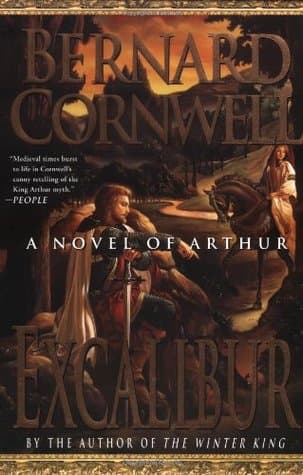
Synopsis
Covers the whole plot, including the ending.
- Difficulty
- Medium
- Pacing
- Moderate
- Mood
- Gritty, Epic, Melancholy, Heroic
- Read it if
- You love gritty, realistic retellings of historical legends, epic battles, and complex characters facing impossible odds.
- Skip it if
- You prefer traditional, high fantasy Arthurian tales with clear-cut heroes and magic as a primary force.
Excalibur Plot Summary
Covers the whole plot, including the ending.
The Siege of Mynydd Baddon
The story begins with Arthur's Britons preparing for a final fight against the Saxons at Mynydd Baddon. Derfel, the narrator, is a veteran warrior thinking about the long war. Arthur plans a decisive battle to stop the Saxon advance. Meanwhile, Merlin, wanting to restore old gods and lost treasures, goes to Ireland with Nimue, seeking the Cauldron of Clyddno, a powerful artifact. Their journey is dangerous, and Merlin's growing disinterest in worldly matters worries Arthur's followers, who need his advice and magic.
The Battle of Mynydd Baddon
The Battle of Mynydd Baddon begins, a brutal fight. Arthur, though hurt, leads his men, inspiring them. Derfel fights bravely. The battle is hard-fought with many losses, but Arthur's tactics and the Britons' resolve win the day. The Saxons are defeated, retreating and asking for peace. This victory is the peak of Arthur's military career, bringing a time of peace and cementing his legend as a warlord.
Merlin's Return and the Cauldron's Power
Merlin returns from Ireland with the Cauldron of Clyddno. He plans to use its power to bring back the old gods and Britain's ancient ways, believing this is the only way to save the land. He tries a ritual with the Cauldron, but the results are unexpected. The Cauldron's magic is strong but unpredictable, and its use seems to deeply affect Merlin, further separating him from Arthur and the Christian group. Nimue, his apprentice, gains more power and influence, often speaking for him.
Guinevere's Betrayal and Lancelot's Ambition
Despite the peace, problems grow in Arthur's court. Guinevere, Arthur's wife, continues her affair with Lancelot, a once-loyal warrior whose ambition has grown. Derfel, loyal to Arthur, watches this betrayal with sadness. Lancelot, charming but selfish, manipulates Guinevere and other nobles, slowly weakening Arthur's power. This personal betrayal reflects the larger divisions in Britain, as Christian and pagan groups clash, and the peace from Mynydd Baddon starts to break under internal conflict and personal ambition.
The Usurpation of Gorfyddyd
As Arthur deals with internal issues, Gorfyddyd, a clever and ruthless king, takes over Powys, a key ally. Gorfyddyd, backed by some less loyal British lords, openly challenges Arthur and threatens the fragile peace. This act forces Arthur to fight again, taking his attention and resources from the Saxon threat and growing internal rifts. Derfel finds himself back on the battlefield, fighting fellow Britons, a sad reality showing the land's fractured state.
Derfel's Quest for Ceinwyn
During these conflicts, Derfel remembers Ceinwyn, his wife, who was taken years ago. He believes she is alive and goes on a quest to find and rescue her, often risking his life. His journey takes him through dangerous lands and brings him into contact with various groups, both friends and enemies. This personal story runs alongside the larger political and military struggles, showing Derfel's loyalty and lasting love, even amidst despair and betrayal.
The Treachery of Lancelot and Mordred
Lancelot, encouraged by his affair with Guinevere and his growing influence, openly sides with Mordred, Arthur's son and heir, who is manipulated by Christian priests. Together, they plan to undermine Arthur's rule, creating distance between him and his remaining loyal followers. Their betrayal leads to a direct challenge to Arthur, starting a civil war. Derfel, loyal, fights against former comrades, seeing the destruction of all Arthur built. This internal conflict proves more damaging than any outside threat.
The Battle of Camlann
The civil war ends in the Battle of Camlann. Arthur, tired and heartbroken by betrayals, leads his loyal warriors into this final, desperate fight against Lancelot and Mordred's forces. The battle is brutal and chaotic, with huge losses on both sides. Derfel fights hard, seeing Arthur's dream destroyed. Arthur confronts Mordred, leading to a tragic, fatal meeting. The battle leaves Arthur mortally wounded, and his vision of a united Britain is shattered, marking the end of an era.
Arthur's Last Journey and the Fate of Excalibur
After Camlann, a wounded Arthur is taken by his last loyal companions, including Derfel, towards the mysterious Summer Lands. This journey is filled with myth and sadness as Arthur dies. Before he leaves, Arthur tells Derfel to return his sword, Excalibur, to the Lady of the Lake. Derfel, doing his duty, throws the sword into the water, a symbolic act marking the end of Arthur's rule and the old ways. The legend of Arthur begins as his physical presence fades.
The Aftermath and Derfel's New Role
After Arthur's death and the resulting chaos, Britain breaks apart further. Derfel, tired of the endless wars and betrayals, eventually finds peace as a monk. He becomes Brother Derfel and carefully writes the true story of Arthur, trying to separate fact from the growing myths. His writings aim to be an accurate account of Arthur's life, his struggles, and his failure to unite Britain, ensuring the warlord's legacy is remembered truthfully, not as a fable, but as a tragic historical figure.
Principal Figures
Derfel Cadarn
Protagonist/Narrator
Arthur's loyal warrior and the chronicler of his age.
Derfel begins as a Saxon slave boy, saved and raised by Merlin, who becomes one of Arthur's most trusted and formidable warriors. He is deeply loyal, honorable, and pragmatic, often observing the grand events with a clear, sometimes cynical, eye. His personal quest for his lost love, Ceinwyn, adds a poignant layer to his character. He is driven by a strong sense of duty and a desire for truth, which ultimately leads him to become a monk and record Arthur's story.
Relationships: Arthur (Unwavering loyalty and deep respect, like a son to a father.); Merlin (Raised by him, a complex relationship of respect, frustration, and occasional admiration.); Ceinwyn (Deep and enduring love, his driving personal motivation.); Nimue (Initially a friend, later a conflicted relationship due to her pagan extremism.)
Arthur
Protagonist
The brilliant warlord who dreams of a united Britain.
Arthur is a charismatic, intelligent, and driven warlord, dedicated to uniting the disparate British kingdoms against the Saxon invaders. He is a master strategist and a brave warrior, but also a man burdened by the weight of his ambitions and the betrayals of those closest to him. He is a pragmatic leader, often torn between his Christian faith and the ancient pagan ways, and his tragic flaw is his inability to control the personal ambitions and jealousies within his own court.
Relationships: Derfel Cadarn (Trusted warrior and confidant.); Guinevere (His wife; a love riddled with betrayal and heartbreak.); Lancelot (Initially a trusted general, later his greatest betrayer.); Merlin (Valued advisor and mentor, though their views diverge on the future of Britain.); Mordred (His illegitimate son and eventual nemesis.)
Merlin
Supporting/Antagonist (in a sense)
The enigmatic sorcerer obsessed with restoring the old gods.
Merlin is a powerful, ancient sorcerer, a druid, and a king-maker. He is deeply connected to the land and the old gods, believing that Britain's salvation lies in returning to pagan ways. He is both brilliant and eccentric, often detached from worldly concerns, driven by his grand, mystical vision. His methods are often extreme, and his increasing obsession with magic and ritual sometimes blinds him to the immediate threats facing Arthur and Britain. He acts as a mentor to Derfel and Nimue.
Relationships: Arthur (Advisor and mentor, though their goals increasingly diverge.); Nimue (His apprentice and later, a powerful sorceress in her own right, sharing his vision.); Derfel Cadarn (Raised him, a complex father-figure.)
Nimue
Supporting/Antagonist
Merlin's apprentice, a powerful and ruthless sorceress.
Nimue is Merlin's apprentice, a formidable sorceress, and a priestess of the old gods. She is fiercely loyal to Merlin and his vision, often acting as his more pragmatic and ruthless enforcer. Scarred by past trauma, she possesses a dark intensity and a willingness to use extreme measures to achieve her goals. She is driven by a deep conviction in the old ways and a hatred for Christianity, making her a dangerous adversary to those who oppose her and Merlin.
Relationships: Merlin (Apprentice and devoted follower, sharing his vision.); Derfel Cadarn (Childhood friend, but their paths diverge dramatically.); Arthur (Opposes his Christian leanings and his vision for Britain.)
Lancelot
Antagonist
The charismatic but treacherous warrior who betrays Arthur.
Lancelot is presented as a handsome, charismatic, and initially skilled warrior, admired by many. However, beneath the veneer of heroism lies a deeply ambitious, selfish, and ultimately treacherous man. He is driven by a desire for power and recognition, willing to manipulate others, including Guinevere, to achieve his aims. His betrayal of Arthur is a central catalyst for the kingdom's downfall, representing the destructive power of unchecked ego and disloyalty.
Relationships: Arthur (Initially a loyal general, later his primary betrayer and rival.); Guinevere (Her lover, using her to gain influence.); Mordred (An ally in their conspiracy against Arthur.)
Guinevere
Supporting/Antagonist
Arthur's beautiful but unfaithful queen.
Guinevere is Arthur's beautiful and intelligent wife, but she is also vain, ambitious, and ultimately unfaithful. She resents Arthur's pragmatic approach to marriage and longs for a more romantic, courtly love. Her affair with Lancelot is a major source of Arthur's personal heartbreak and a significant factor in the political instability of the kingdom. She represents the personal cost of betrayal and the fragility of even the strongest bonds in the face of desire and ambition.
Relationships: Arthur (His wife, but she betrays him with Lancelot.); Lancelot (Her lover, a passionate but destructive affair.)
Mordred
Antagonist
Arthur's illegitimate son and ultimate betrayer.
Mordred is Arthur's illegitimate son, a figure of prophecy and a symbol of Arthur's past mistakes. He is depicted as a weak and easily manipulated individual, particularly by the Christian priests who seek to control him and use him against Arthur. He lacks his father's strength and vision, but his claim to the throne makes him a dangerous pawn in the political machinations that ultimately destroy Arthur's kingdom. His existence is a constant reminder of Arthur's human fallibility.
Relationships: Arthur (His father, whom he ultimately betrays and fights.); Lancelot (An ally in the conspiracy against Arthur.)
Ceinwyn
Supporting
Derfel's lost love and wife.
Ceinwyn is Derfel's beloved wife, a kind and gentle woman who represents stability and personal happiness for him. Her abduction early in the series is a driving force for Derfel's personal quest throughout the books. She embodies the innocent victims of war and political upheaval, and her memory serves as a constant source of hope and pain for Derfel. Her eventual rescue and reunion with Derfel offers a glimmer of personal triumph amidst the widespread tragedy.
Relationships: Derfel Cadarn (His deeply loved wife.)
Themes & Insights
The Fragility of Dreams and Ideals
Arthur's dream of a united, peaceful Britain is built over years of war and diplomacy, only to be ruined by betrayals, personal ambitions, and religious conflict. The victory at Mynydd Baddon is a temporary break, as problems within his court, especially the affair between Lancelot and Guinevere, and Mordred's actions, lead to the civil war at Camlann. The novel shows that even good goals can fail because of human flaws.
“We were a land of dreams, and we woke to a nightmare. That is the truth of it.”
Loyalty vs. Betrayal
This theme is key to the story, shown through characters like Derfel's loyalty to Arthur, contrasted with the betrayals by Lancelot, Guinevere, and Mordred. Derfel's steady devotion highlights Lancelot's selfish ambition, which leads him to work against his lord. The personal betrayals in Arthur's inner circle are as damaging, if not more so, than outside threats from the Saxons, showing how broken trust can destroy a kingdom.
“A man's loyalty is his shield, but a king's trust is a fragile thing.”
The Clash of Old Gods and New Faiths
The conflict between paganism (Merlin and Nimue) and Christianity (priests and Mordred) is always present. Merlin's strong efforts to bring back old gods with the Cauldron of Clyddno clash with Christianity's growing power, which seeks to end ancient beliefs. This religious struggle causes many political divisions and moral problems, showing how deep beliefs can divide a society and contribute to its fall, even when facing a common enemy.
“The gods of the old ways are dying, and the new god is a jealous one.”
The Nature of History and Legend
Through Derfel's narration as a monk, the novel questions the difference between history and myth. Derfel states he wants to record the 'truth' of Arthur's life, removing the romantic legends that will form around him. He tells of the gritty realities of war and politics, highlighting the human flaws and complex reasons behind events, rather than idealized heroic stories. This approach lets the author examine the Arthurian legend itself.
“I write of the man, not the myth. The man was greater.”
The Cycle of Violence and War
Despite Arthur's efforts for peace, Britain remains stuck in constant violence. The Saxon defeat at Mynydd Baddon only leads to civil war and more bloodshed at Camlann. The story highlights the relentless nature of conflict, both outside and inside, and how hard it is to escape it. Even after Arthur's death, the land remains divided, suggesting that lasting peace is hard to find, and people often resort to conflict.
“There is no end to war, only pauses.”
Plot Devices & Literary Techniques
First-Person Retrospective Narration
The story is told years later by Derfel Cadarn, now a monk.
This device allows for a deeply personal and reflective account of Arthur's reign. Derfel, as Brother Derfel, recounts events from a future vantage point, offering insights into the consequences of actions and the ultimate fate of characters. This perspective also allows for the explicit deconstruction of Arthurian myth, as Derfel contrasts the 'truth' he lived with the legends he knows will later emerge. His voice is often world-weary and pragmatic, lending authenticity and a sense of historical realism to the fantastical elements.
The Cauldron of Clyddno
A powerful magical artifact sought by Merlin to restore the old gods.
The Cauldron serves as a MacGuffin and a symbol of the ancient pagan power Merlin seeks to revive. Its retrieval and attempted use by Merlin represent the extreme efforts to cling to the old ways in a changing world. It highlights the mystical elements of the story and the conflict between the magical and the mundane, and its unpredictable power underscores the dangers of meddling with forces beyond human control. It is a tangible representation of Merlin's grand, but ultimately doomed, ambition.
Excalibur
Arthur's legendary sword, a symbol of his authority and the hope for Britain.
Excalibur is more than just a weapon; it is a potent symbol of Arthur's legitimate rule, his prowess, and the fragile hope for a united Britain. Its presence inspires loyalty and fear. Its eventual return to the lake, as per Arthur's dying wish, marks the definitive end of his era and the fading of the old order. This act symbolizes the passing of the torch, not to another king, but to memory and legend, as the sword itself returns to the mystical realm from which it came.
Prophecy and Omens
Foreshadowing and mystical guidance, often interpreted by Merlin and Nimue.
Throughout the narrative, prophecies and omens, often interpreted by Merlin and Nimue, provide a sense of fate and predestination, while also adding to the mystical atmosphere. These are not always clear-cut and can be open to interpretation, reflecting the uncertainty of the future. The prophecy surrounding Mordred, for instance, casts a long shadow over Arthur's reign, creating dramatic irony as characters try, and often fail, to avert their destined paths. This device enhances the feeling of a world caught between ancient magic and an encroaching, more rational future.
Excalibur Quotes
“Britain was a land of ghosts, and it was time for me to join them.”
“The gods do not care for us, Derfel. They care only for their own amusement.”
“Love is a battlefield, and I was losing.”
“A man's word is his bond, and a king's word is his kingdom.”
“We fight for Britain, not for Arthur. We fight for what Britain could be.”
“The past is a foreign country; they do things differently there.”
“There are always choices, Derfel. Always. Even when it seems there are none.”
“Peace is not the absence of war, but the presence of justice.”
“Sometimes, the best thing a man can do is to know when he is beaten.”
“The sword is only as good as the hand that wields it.”
“He was a king without a kingdom, a god without worshippers.”
“Dreams are important, Derfel. They are what keep us alive when all else dies.”
“The world is a harsh place, and only the strong survive.”
“Every man has his breaking point, even a king.”
Quiz
10 questions on the plot and the characters. Each answer comes with a short explanation.
Question 1
What significant personal loss does Arthur suffer early in 'Excalibur' that deeply impacts him and his ambitions for Britain?
- The death of Merlin
- The betrayal of Lancelot
- The death of his infant son, Gwydre
- The destruction of his stronghold, Caer Cadarn
Show answer
C. The death of his infant son, Gwydre Arthur's infant son, Gwydre, dies early in the book, a tragedy that devastates him and puts a severe strain on his marriage with Guinevere.
Question 2
Which important relic, believed to hold great power, does Arthur seek to recover and eventually retrieve from Ynys Mon (Anglesey)?
- The Holy Grail
- The Spear of Lugh
- The Cauldron of Clyddno Eiddyn
- The Sword of Rhydderch
Show answer
C. The Cauldron of Clyddno Eiddyn Arthur believes the Cauldron of Clyddno Eiddyn is vital for uniting Britain and defeating the Saxons, and its retrieval from Ynys Mon is a major plot point.
Question 3
What is the ultimate fate of Guinevere in 'Excalibur'?
- She dies in battle defending Caer Cadarn.
- She becomes a powerful sorceress and joins Morgan.
- She ends up as a nun, living in a convent.
- She is executed for treason against Arthur.
Show answer
C. She ends up as a nun, living in a convent. After the downfall of Arthur's dreams and her own betrayals, Guinevere ultimately seeks refuge and ends her days in a convent, finding peace there.
Question 4
Who is the primary narrator throughout 'The Warlord Chronicles', including 'Excalibur'?
- Arthur
- Merlin
- Derfel Cadarn
- Morgan
Show answer
C. Derfel Cadarn The entire series, including 'Excalibur', is narrated by Derfel Cadarn, an old monk recounting his life story under Arthur.
Question 5
What is the significance of the Battle of Camlann in 'Excalibur'?
- It is Arthur's greatest victory against the Saxons.
- It is where Arthur finally defeats Mordred and establishes lasting peace.
- It is the climactic battle where Arthur's dream of a united Dumnonia is shattered, and he is mortally wounded.
- It is the battle where Merlin uses his full magical power to turn the tide.
Show answer
C. It is the climactic battle where Arthur's dream of a united Dumnonia is shattered, and he is mortally wounded. Camlann is the tragic, decisive battle where Arthur confronts Mordred and the forces of discord, leading to his own fatal wounding and the end of his vision.
Question 6
Which character, often an antagonist, is Arthur's half-sister and a powerful sorceress who frequently schemes against him?
- Nimue
- Igraine
- Morgan
- Morgause
Show answer
C. Morgan Morgan is Arthur's half-sister, a formidable sorceress, and a consistent antagonist throughout the series, driven by her own ambitions and resentments.
Question 7
What is the ultimate fate of Merlin in 'Excalibur'?
- He is killed by a Saxon warlord.
- He sails away to the Summer Country, never to return.
- He is imprisoned by Mordred and later executed.
- He loses his mind and wanders the land as a madman.
Show answer
B. He sails away to the Summer Country, never to return. Merlin, disillusioned and having failed to fully restore the old gods, ultimately chooses to leave the mortal world and sails to the Summer Country.
Question 8
How does Cornwell's portrayal of 'Excalibur' (the sword) differ significantly from many traditional Arthurian legends?
- It is a magical sword given by the Lady of the Lake, but it breaks easily.
- It is the same sword Arthur pulled from the stone, but it has no magical properties.
- It is not a literal sword, but a metaphor for Arthur's dream of a united Britain.
- It is a sword forged by Merlin, but it is stolen by Lancelot.
Show answer
C. It is not a literal sword, but a metaphor for Arthur's dream of a united Britain. In Cornwell's series, 'Excalibur' is not a physical sword but rather the symbolic representation of Arthur's grand, but ultimately failed, dream of a unified, peaceful Britain.
Question 9
What is the primary internal conflict Arthur faces throughout 'Excalibur'?
- His struggle between loyalty to the old gods and the new Christian faith.
- His desire for personal power versus his duty to Dumnonia.
- His personal happiness and love for Guinevere against his duty to his dream for Britain and the sacrifices it demands.
- His fear of magic versus his reliance on Merlin's counsel.
Show answer
C. His personal happiness and love for Guinevere against his duty to his dream for Britain and the sacrifices it demands. Arthur constantly grapples with the demands of his grand vision for Britain, which often forces him to make painful personal sacrifices, especially concerning his marriage and family.
Question 10
By the end of 'Excalibur', what becomes of Mordred, Arthur's son and primary antagonist?
- He escapes to Gaul and forms a new kingdom.
- He is killed by Derfel Cadarn during the Battle of Camlann.
- He is captured and forced to serve Arthur.
- He converts to Christianity and becomes a monk.
Show answer
B. He is killed by Derfel Cadarn during the Battle of Camlann. Mordred is killed by Derfel Cadarn at the Battle of Camlann, bringing an end to his treachery and the civil war he instigated.
Excalibur FAQ
What is the primary conflict Arthur faces in 'Excalibur'?
Arthur's main struggle in 'Excalibur' is a dual conflict: the ongoing war against the invading Saxons, particularly their push into Dumnonia, and the internal strife caused by his ruined marriage to Guinevere and the fracturing of his alliances. He grapples with maintaining unity among the British warlords while simultaneously fighting a seemingly endless external threat.
How does Merlin's quest for the Thirteen Treasures of Britain impact the plot?
Merlin's desperate quest for the Thirteen Treasures of Britain, particularly the cauldron of Ffraw, is central to his plan to restore the old gods and drive out Christianity, which he believes is weakening Britain. His pursuit leads to significant magical events, dangerous rituals, and ultimately the catastrophic battle at Camlann, as his focus on the treasures blinds him to other threats.
What role does Derfel Cadarn play in this final volume?
Derfel Cadarn continues his role as Arthur's most loyal warrior and the narrator of the entire Warlord Chronicles. In 'Excalibur', he is instrumental in Arthur's military campaigns, participates in key battles, and provides a firsthand account of the political machinations and personal tragedies that unfold, culminating in his witness to Arthur's final fate.
What is the significance of the relationship between Arthur and Guinevere in this book?
The relationship between Arthur and Guinevere is a central emotional anchor and source of great turmoil. Despite their initial separation and her affair with Lancelot, 'Excalibur' explores their attempts at reconciliation and the enduring, albeit broken, love between them. Their personal tragedy mirrors the fracturing of Arthur's kingdom.
How does the Battle of Camlann differ from traditional Arthurian legends in Cornwell's portrayal?
Cornwell's Battle of Camlann is portrayed not as a grand, heroic final stand, but as a chaotic, bloody, and ultimately futile engagement born from desperation and betrayal. It's a clash primarily driven by Merlin's misguided magical rituals and the internal divisions among the British, rather than a decisive Saxon victory, leading to Arthur's demise not by a single legendary foe but by a combination of wounds and despair.
What is the true nature and fate of Nimue in 'Excalibur'?
Nimue, once Merlin's apprentice and lover, becomes a powerful and vengeful sorceress in her own right. Driven by a desire to restore the old gods and punish those she perceives as betrayers, she orchestrates many of the tragic events, including manipulating Merlin and ultimately playing a significant role in the downfall of Arthur's dream. Her fate is tied to the destruction wrought by the cauldron of Ffraw.
How do the Christian and Pagan belief systems clash and influence the characters' decisions?
The clash between Christianity and the old pagan ways is a fundamental theme, influencing nearly every character. Arthur attempts to bridge them, but characters like Nimue and Merlin are fiercely pagan, while others like Bishop Sansum push for Christian dominance. This ideological struggle exacerbates political tensions and often leads to brutal decisions, as each side believes their path is the only salvation for Britain.
What is the underlying political structure of Britain that Arthur is trying to unite?
Arthur attempts to unite a fractured Britain composed of numerous independent kingdoms and warlords, such as Dumnonia, Powys, and Siluria, each with their own rulers and agendas. His authority is not that of a king, but of a 'warlord' or 'dux bellorum,' a leader by consensus and military prowess, constantly threatened by internal jealousies and external Saxon pressure.
What is the significance of Arthur's sword, Excalibur, in this interpretation?
In Cornwell's series, Excalibur is not a magical sword from the Lady of the Lake, but rather Arthur's personal sword, forged by Lunete, and a symbol of his martial prowess and leadership. Its significance lies in what it represents: Arthur's commitment to protecting Britain and his unwavering, though often challenged, will to fight. It's a tool of war, not a magical artifact.
How does Arthur's pragmatism and idealism conflict throughout the book?
Arthur is a deeply pragmatic leader, often making difficult, ruthless decisions for the greater good of Britain, such as allowing Guinevere to stay despite her infidelity to maintain alliances. However, he is also an idealist, dreaming of a united, peaceful Britain. This internal conflict often leads to personal sacrifice and emotional toll, as his ideals are constantly tested by the harsh realities of war and politics.
Analyze Guinevere's motivations for her actions in this final volume.
Guinevere's motivations are complex and often contradictory. She deeply loves Arthur but is also ambitious and desires the power and status of a true queen. Her past infidelity with Lancelot stems from a need for affection and recognition, while her later actions are driven by a desperate attempt to secure her position and perhaps, a genuine desire to reconcile with Arthur, albeit on her own terms.
How does Derfel's loyalty to Arthur evolve or solidify in 'Excalibur'?
Derfel's loyalty to Arthur remains unwavering, but in 'Excalibur' it solidifies into a deeper, more mature understanding of Arthur's burdens and sacrifices. He witnesses Arthur's personal failures and public triumphs, and his loyalty becomes less about blind devotion and more about a profound respect for Arthur's vision and the immense weight of his responsibilities, even as everything crumbles around them.
What psychological impact do the constant betrayals have on Arthur?
The constant betrayals, particularly from those he trusts like Lancelot and even Guinevere, have a profound and debilitating psychological impact on Arthur. They lead to deep cynicism, exhaustion, and a sense of futility, chipping away at his optimism and his belief in the possibility of a united Britain. He becomes increasingly isolated, relying solely on his inner circle like Derfel.
Is Arthur ultimately a tragic hero in Cornwell's portrayal? Justify your answer.
Yes, Arthur is unequivocally a tragic hero in Cornwell's series. He possesses noble intentions, extraordinary leadership, and fights against overwhelming odds, but his downfall is brought about not just by external forces but by internal flaws and the betrayals of those closest to him. His dream of a united Britain collapses, and he dies not in glory, but in despair, leaving his vision unfulfilled.
How does Cornwell's ending for Arthur challenge traditional Arthurian mythology?
Cornwell's ending radically challenges traditional mythology by eschewing the mystical 'Avalon' and the promise of Arthur's return. Instead, Arthur dies a mortal death, a victim of battle wounds and a broken spirit, with his body hidden to prevent desecration. This grounded, realistic portrayal strips away the magic, emphasizing the human cost of war and the finality of loss.
What is the ultimate message or theme Cornwell conveys through the tragic events of 'Excalibur'?
Cornwell conveys a powerful message about the fragility of peace, the corrosive nature of ambition and betrayal, and the enduring human cost of war and ideological conflict. The tragic events underscore that even the greatest leaders cannot overcome fundamental human flaws and the relentless march of history, suggesting that ideals, however noble, are often crushed by harsh reality.
Could Arthur's downfall have been prevented? What key decisions contributed to it?
Arthur's downfall arguably could not have been entirely prevented due to the overwhelming Saxon threat and the deeply entrenched political divisions. However, key decisions that accelerated it include his initial leniency towards Lancelot, his inability to fully reconcile Guinevere's ambition with his own, and his trust in Merlin's increasingly reckless magical endeavors, which ultimately led to internal strife.
How does the narrative perspective of Derfel influence our understanding of Arthur's legacy?
Derfel's narrative perspective, as a loyal but pragmatic warrior and later a monk, deeply influences our understanding of Arthur's legacy. He presents Arthur not as a mythic king, but as a flawed, human leader whose greatness lay in his relentless effort and vision, rather than divine right. Derfel's lament for Arthur's lost dream emphasizes the tragedy and the eventual triumph of Christianity over the old ways, portraying Arthur as the last great pagan warlord.
About the author
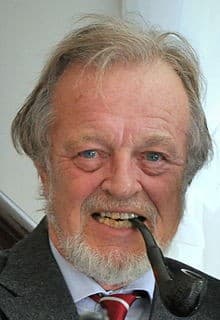
Bernard Cornwell is a prolific British author celebrated for his masterful historical fiction. He is best known for his Sharpe series, chronicling the Napoleonic Wars, and his Warlord Chronicles, which reimagines Arthurian legend. Cornwell's work is lauded for its meticulous research, gritty realism, and compelling narratives.
Similar books
- A Game of Thrones
George R.R. Martin
4.5 (2M) average on GoodreadsFantasyPolitical intrigue, brutal realism, and morally ambiguous characters.
- The Mists of Avalon
Marion Zimmer Bradley
4.1 (192k) average on GoodreadsFantasyCompared to Bradley's "The Mists of Avalon," Cornwell's "Excalibur" offers a stark contrast in its approach to the Arthurian myth. Bradley prioritizes the female perspective and reinterprets the magic and paganism as central, powerful forces, focusing on the spiritual and emotional lives of characters like Igraine and Morgaine. Cornwell, conversely, strips away much of the overt magic, grounding his story in historical realism and the male-dominated world of warfare and political maneuvering. While Bradley's work is rich in feminist themes and magical realism, Cornwell's excels in its gritty historical authenticity and military detail, appealing to different facets of the Arthurian audience.
- Harry Potter and the Sorcerer's Stone
J.K. Rowling
4.5 (7M) average on GoodreadsFantasyRescued from a miserable life under the stairs, an orphaned boy discovers he's a wizard destined for a magical school, where he uncovers a dangerous secret tied to the dark wizard who murdered his parents.
- The Hunger Games
Suzanne Collins
4.3 (6.4M) average on GoodreadsFantasyIn a future where children fight to the death on live television, Katniss Everdeen volunteers for the arena, turning a death sentence into a fight for survival and a spark of rebellion.
- 1984
George Orwell
4.2 (3.1M) average on GoodreadsPoliticsIn a future where surveillance and thought control are absolute, a man's search for truth clashes with the Party, showing that hope can be a form of rebellion.
- Divergent
Veronica Roth
4.2 (2.9M) average on GoodreadsFantasyIn a society divided by virtues, a sixteen-year-old's difference from the norm starts a rebellion that threatens her world.






Enjoyed the summary?
A summary gives you the shape of the book. The book itself has the detail, the examples and the voice.
Find Excalibur on AmazonAs an Amazon Associate, BookBrief earns from qualifying purchases. How we're funded