
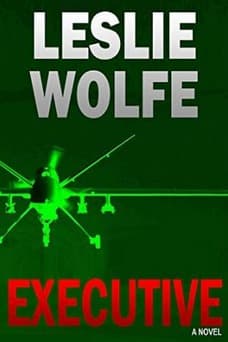
Synopsis
Covers the whole plot, including the ending.
- Difficulty
- Medium
- Pacing
- Fast
- Mood
- Suspenseful, Intense, Gripping, Action-packed
- Read it if
- You enjoy fast-paced political technothrillers with a strong female lead and themes of corporate corruption and technological danger.
- Skip it if
- You prefer character-driven dramas over plot-heavy thrillers or are sensitive to themes of military conflict and technological malfunction.
Executive Plot Summary
Covers the whole plot, including the ending.
The Afghan Debacle
The novel opens with a scene in Afghanistan where a U.S. Army unit, led by Captain Mark Hoffmann, is in a firefight. A drone, operated by a private military contractor, mistakenly targets the American soldiers, causing many casualties, including Captain Hoffmann's younger brother, Sergeant Michael Hoffmann. The incident is immediately classified as 'friendly fire' due to a communications error, but the truth of drone malfunction and corporate negligence is hidden. General Davies, a high-ranking officer, helps orchestrate the cover-up to protect the defense contractors and his own career.
Alex Hoffmann's Grief and Suspicion
Alex Hoffmann, a driven executive at a major tech firm, is devastated by the news of her brother Michael's death. While initially accepting the official explanation, inconsistencies and the military's quick closure on the incident spark her suspicion. She notices the unusual silence from the military regarding specific details and the lack of a proper investigation, making her believe that something more sinister than a simple accident occurred. Her grief transforms into a quiet determination to uncover the truth behind her brother's death, no matter the personal cost.
The Florida Highway Disaster
Months after Michael's death, an unrelated incident occurs in Florida. A state-of-the-art autonomous drone, designed for civilian surveillance and operated by a private security firm, malfunctions during a demonstration. It swerves out of control, causing a large pile-up on a busy highway, resulting in multiple deaths and severe injuries. The incident gains widespread media attention and draws comparisons to the Afghan friendly fire, raising public concern about drone safety and regulation. This event strengthens Alex's suspicions about a larger issue.
Connecting the Dots: The Apex Corporation
Driven by her personal quest, Alex starts an unofficial investigation. Using her network and technical expertise, she discovers that both the drone involved in the Afghan incident and the one in the Florida highway disaster were made by the same company: Apex Corporation. Apex is a powerful, secretive defense contractor with strong ties to the government and military. This discovery is a turning point, giving Alex a clear target for her investigation and intensifying her resolve to expose the truth, despite the dangers of challenging such an influential entity.
Infiltrating Apex
Recognizing that direct confrontation is impossible, Alex plans to infiltrate Apex from within. She uses her impressive resume and networking to secure a high-level executive position within Apex Corporation, specifically in a division related to drone technology development. Her goal is to gain access to classified information, internal communications, and technical specifications that could reveal the true cause of the drone malfunctions and the extent of the cover-up. This move places her directly in the lion's den, surrounded by those who might be involved in the deception.
Internal Resistance and Threats
Once inside Apex, Alex immediately finds a culture of secrecy and intimidation. Her attempts to access certain project files or question specific protocols are met with resistance from senior management, especially from CEO Robert Thorne and COO Julian Vance, who protect Apex's image and profits. She receives subtle warnings and veiled threats, making it clear that her inquiries are unwelcome and potentially dangerous. Despite the pressure, Alex remains determined, understanding that the resistance itself confirms her suspicions about hidden truths within the corporation.
Uncovering the Malfunction
Through careful work, late nights, and bypassing internal security, Alex eventually uncovers the cause of the drone malfunctions. She finds evidence of a critical software flaw in the autonomous navigation AI, which was deliberately overlooked and suppressed during development to rush the product to market and secure profitable government contracts. Furthermore, she unearths documents proving that Apex executives, including Thorne and Vance, knew about the flaw and actively participated in covering it up, manipulating test results and silencing engineers to protect their financial interests.
The Whistleblower and the Data
During her investigation, Alex forms an alliance with a disillusioned Apex engineer, David Chen, who had tried to raise concerns about the software flaw but was ignored and threatened. Chen, burdened by guilt, gives Alex crucial access to secure servers and helps her download encrypted data, including internal memos, detailed technical reports, and communications that explicitly detail the cover-up. This collaboration provides Alex with the clear evidence she needs to expose Apex's negligence and criminal behavior, risking both their careers and lives.
The Confrontation and Exposure
Armed with incriminating evidence, Alex confronts Robert Thorne and Julian Vance, presenting proof of their involvement in the deaths caused by the faulty drones. They try to intimidate her, offering bribes and threatening her professional and personal life. However, Alex is firm. She has already prepared to leak the information to a trusted journalist, ensuring that even if something happens to her, the truth will come out. The power dynamic shifts as Alex holds the leverage, forcing them to confront the imminent collapse of their empire.
The Fallout and Justice
Alex successfully leaks the evidence, leading to a large public scandal. Apex Corporation's stock falls, government contracts are suspended, and a federal investigation begins. Robert Thorne and Julian Vance are arrested and charged with fraud, negligence, and obstruction of justice. General Davies also faces a court-martial for his role in the Afghan cover-up. While the pain of losing Michael remains, Alex finds some peace knowing that she has exposed the truth and held those responsible accountable, ensuring that her brother's death and the other casualties were not in vain. The book concludes with Alex reflecting on the high cost of corporate greed and the importance of integrity.
Principal Figures
Alex Hoffmann
Protagonist
A brilliant and determined tech executive seeking justice for her brother's death.
Alex Hoffmann is a highly intelligent, tenacious, and morally driven woman. She possesses exceptional analytical skills, a keen understanding of technology, and an unwavering commitment to truth and justice. Initially portrayed as a successful professional, her brother Michael's death transforms her into a relentless investigator. Her grief fuels her determination, but she maintains a cool, strategic mind, enabling her to navigate the dangerous corporate and political landscape. She is courageous, willing to risk her career and safety to expose wrongdoing.
Relationships: Michael Hoffmann (Younger brother, whose death drives her quest for justice.); Captain Mark Hoffmann (Brother, a soldier who was present during the Afghan incident.); Robert Thorne (Antagonistic CEO of Apex, whom she exposes.); Julian Vance (Antagonistic COO of Apex, complicit in the cover-up.); David Chen (Apex engineer who becomes her crucial ally and whistleblower.)
Michael Hoffmann
Catalyst/Victim
Alex's younger brother, a soldier killed in a 'friendly fire' incident.
Michael Hoffmann is Alex's younger brother, a U.S. Army Sergeant who tragically dies in a drone-related friendly fire incident in Afghanistan. Though he appears only briefly in the opening scene, his death is the central catalyst for Alex's entire journey. He represents the innocent victims of corporate negligence and military cover-ups. His memory serves as Alex's constant motivation, embodying the personal cost of the larger systemic corruption she seeks to expose. His character highlights the devastating human impact of the technological and political machinations at play.
Relationships: Alex Hoffmann (Older sister, deeply mourned and avenged.); Captain Mark Hoffmann (Brother, serving in the same unit.)
Robert Thorne
Antagonist
The ruthless and avaricious CEO of Apex Corporation.
Robert Thorne is the cunning and powerful CEO of Apex Corporation. He embodies corporate greed and toxic leadership, prioritizing profits and market dominance above all else, including human lives. Thorne is a master manipulator, skilled at navigating political circles and maintaining a facade of respectability. He is ruthless in his pursuit of wealth and power, willing to suppress evidence, silence dissent, and orchestrate cover-ups to protect his company and personal fortune. His arrogance and belief in his untouchability make him a formidable adversary for Alex.
Relationships: Alex Hoffmann (Primary antagonist and target of her investigation.); Julian Vance (His complicit COO and confidante.); General Davies (Military contact, instrumental in the initial cover-up.)
Julian Vance
Antagonist
The pragmatic and equally culpable COO of Apex Corporation.
Julian Vance serves as the Chief Operating Officer of Apex Corporation and Robert Thorne's right-hand man. He is pragmatic, detail-oriented, and equally complicit in the corporate cover-up. While Thorne might be the visionary, Vance is the one who executes the more unsavory aspects of their plans, ensuring that the faulty technology is pushed through and dissenting voices are silenced. He is less charismatic than Thorne but equally ruthless, driven by loyalty to Apex's bottom line and his own career advancement. He represents the bureaucratic enforcement of unethical decisions.
Relationships: Alex Hoffmann (Antagonist, who he tries to obstruct.); Robert Thorne (His boss and co-conspirator.)
General Davies
Supporting/Antagonist
A high-ranking military official involved in the initial cover-up.
General Davies is a powerful figure within the U.S. military, with significant influence and connections to defense contractors like Apex. He plays a crucial role in orchestrating the initial cover-up of the Afghan friendly fire incident, prioritizing military reputation and political expediency over transparency and accountability. His actions demonstrate the blurred lines between military leadership and corporate interests, and the pressure to maintain a certain narrative. He represents the institutional complicity that Alex must overcome.
Relationships: Alex Hoffmann (Indirect antagonist, whose actions he initially thwarted.); Robert Thorne (Corporate contact whose interests he protected.)
David Chen
Supporting
A guilt-ridden Apex engineer who becomes a crucial ally to Alex.
David Chen is a talented but disillusioned engineer at Apex Corporation. He was one of the first to identify the critical software flaw in the drone AI but was ignored and intimidated by senior management. Burdened by his conscience and the knowledge of the deaths caused by the faulty technology, Chen secretly holds onto crucial data. He is initially fearful but is eventually swayed by Alex's determination and moral conviction, choosing to risk his career to help her expose the truth. He represents the ethical individuals trapped within corrupt systems.
Relationships: Alex Hoffmann (Ally and co-conspirator in exposing Apex.); Robert Thorne (His boss, whom he eventually helps expose.)
Captain Mark Hoffmann
Mentioned/Supporting
Alex's brother, an Army captain present during the Afghan incident.
Captain Mark Hoffmann is Alex's other brother, who was leading the unit involved in the friendly fire incident in Afghanistan. He survives the attack and carries the trauma and guilt of the event, particularly the loss of his younger brother, Michael. While not a central figure in Alex's investigation, his perspective provides an emotional connection to the military aspect of the tragedy and reinforces the human cost of the corporate negligence. His inability to get answers from the military further highlights the extent of the cover-up.
Relationships: Alex Hoffmann (Sister, who eventually brings justice for their shared loss.); Michael Hoffmann (Younger brother, whose death he witnessed.)
Themes & Insights
Corporate Greed and Ethical Malpractice
The main theme is the destructive power of corporate greed when not balanced by ethics. Apex Corporation, under Robert Thorne and Julian Vance, knowingly sells faulty drone technology, covering up critical flaws to secure contracts and maximize profits. This theme shows in the deliberate suppression of engineers' warnings, the manipulation of test data, and the orchestration of military cover-ups. The deaths in Afghanistan and Florida are direct results of this prioritization of profit over human life, showing the devastating impact of unethical business practices.
“'Profit margins, Mr. Vance, are the only metric that truly matters. Human error is an acceptable variable when the returns are this substantial.”
The Perils of Unregulated Technology
The novel explores the dangerous implications of advanced technology, specifically autonomous drones, when developed and deployed without enough oversight and regulation. The incidents in Afghanistan and Florida show how AI, meant for protection or surveillance, can become instruments of death due to hidden flaws and corporate shortcuts. The story questions the unchecked power given to private defense contractors and the potential for technological advancements to outpace ethical and safety protocols, leading to tragic and unforeseen consequences. It is a cautionary tale about the rapid evolution of AI and autonomous systems.
“The promise of automation often blinds us to the critical need for human accountability, especially when the machines we build hold the power of life and death.”
Justice and Accountability
Alex Hoffmann's pursuit of the truth shows the theme of justice and accountability. Despite facing strong opposition from a powerful corporation and parts of the military, Alex refuses to let the deaths of her brother and others go unpunished. Her journey highlights the courage needed to challenge corruption and the importance of holding those in power responsible for their actions. The eventual exposure of Apex and the legal consequences for Thorne, Vance, and General Davies emphasize that, even against great odds, justice can be served.
“They thought they could bury the truth with classified reports and corporate silence. But some truths, Alex knew, refused to stay buried.”
Toxic Leadership and Cover-ups
The theme of poor leadership is clear in the actions of Robert Thorne, Julian Vance, and General Davies. Thorne and Vance show leaders who create a culture of fear, silencing employees who raise legitimate concerns and putting their own self-interest and the company's image before ethical conduct. General Davies, representing institutional leadership, participates in the cover-up to protect the military's reputation and its relationship with contractors. This theme shows how individuals in power can abuse their authority to suppress truth, manipulate stories, and avoid responsibility, leading to systemic corruption and tragic outcomes for those beneath them.
“In the halls of power, the truth was often the first casualty, sacrificed at the altar of reputation and political expediency.”
Plot Devices & Literary Techniques
The Unreliable Narrative / Cover-up
The official story presented to the public is a deliberate fabrication.
The novel employs the device of an unreliable narrative through the official 'friendly fire' explanation for Michael Hoffmann's death. This cover-up serves as the primary mystery that Alex must unravel. The discrepancy between the publicly accepted story and the underlying truth creates immediate tension and drives Alex's investigation. It highlights the power of institutions to control information and manipulate public perception, making Alex's quest not just about discovery, but about challenging a carefully constructed falsehood.
The Catalyst of Personal Loss
A personal tragedy ignites the protagonist's mission.
The death of Alex Hoffmann's younger brother, Michael, acts as the central catalyst for the entire plot. This personal loss transforms Alex from a successful executive into a determined investigator, providing a deep emotional core for her relentless pursuit of justice. Without this profound personal connection, Alex would likely not have risked everything to challenge a powerful corporation, making her grief and desire for retribution the driving force behind the narrative and her character's transformation.
Corporate Espionage / Infiltration
The protagonist infiltrates the antagonist's organization to gather intelligence.
Alex's decision to secure an executive position within Apex Corporation is a classic corporate espionage plot device. This allows her to gain internal access to the very organization she suspects, providing a framework for her investigation and creating constant suspense as she navigates hostile territory. Her infiltration creates opportunities for her to gather crucial evidence, interact directly with the antagonists, and face internal threats, escalating the stakes and making her investigation a high-wire act of stealth and intellect.
The Whistleblower
An insider provides crucial information to expose wrongdoing.
The character of David Chen, the disillusioned Apex engineer, functions as a classic whistleblower. His internal knowledge of the drone's flaws and the subsequent cover-up, combined with his guilt, makes him an invaluable source of information for Alex. This device provides Alex with the irrefutable evidence she needs, moving her investigation from suspicion to concrete proof. It emphasizes the moral conflict within corrupt organizations and the courage required for individuals to speak truth to power, even at great personal risk.
Executive Quotes
“Power is not given, it is taken. And once taken, it must be held onto with every fiber of your being.”
“The truth is a dangerous weapon, especially in the hands of someone who knows how to wield it.”
“In this city, trust is a luxury few can afford and even fewer can truly possess.”
“Every secret has a shelf life, and when it expires, the fallout can be catastrophic.”
“The greatest lies are often built on a foundation of inconvenient truths.”
“Justice is not always about what is right, but about what can be proven.”
“The silence of the powerful can be more deafening than any scream.”
“Sometimes, the most dangerous enemy is the one you never saw coming, because they were always right beside you.”
“Fear is a powerful motivator, but it can also be a crippling weakness.”
“The past is never truly buried; it merely waits for the right moment to claw its way back to the surface.”
“In the game of high stakes, there are no rules, only consequences.”
“A good leader knows when to lead, and a great leader knows when to follow the truth.”
“The weight of a secret can crush you, long before anyone else ever discovers it.”
Quiz
10 questions on the plot and the characters. Each answer comes with a short explanation.
Question 1
What is the primary event that sets the protagonist, Alex Hoffmann, on her mission to investigate?
- A cyberattack on a major defense contractor's network.
- A friendly fire incident in Afghanistan involving a drone.
- The mysterious disappearance of a high-ranking government official.
- A terrorist attack on a civilian target in the United States.
Show answer
B. A friendly fire incident in Afghanistan involving a drone. The synopsis explicitly states, 'A friendly fire incident in Afghanistan takes a serious toll,' which is the catalyst for Alex's investigation into the technology responsible.
Question 2
What kind of corporation does Alex Hoffmann come to scrutinize in her search for the truth?
- A pharmaceutical company developing new medications.
- An apparently successful corporation linked to the drone technology.
- A financial institution involved in global markets.
- An energy company exploring new power sources.
Show answer
B. An apparently successful corporation linked to the drone technology. The synopsis mentions, 'An apparently successful corporation comes under scrutiny,' directly connecting to Alex's investigation into the technology causing harm.
Question 3
Which of the following describes Alex Hoffmann's role as she embarks on her mission?
- A retired military intelligence officer.
- An independent journalist.
- An up-and-coming executive.
- A government whistleblower.
Show answer
C. An up-and-coming executive. The synopsis describes her as 'an up-and-coming executive on a mission to find the truth,' indicating her professional standing.
Question 4
Besides the friendly fire incident, what other specific event highlights the danger of the technology Alex is investigating?
- A power grid failure across the East Coast.
- A drone, out of control, bringing death and havoc on a Florida highway.
- A satellite crashing into a populated area.
- A major airport's air traffic control system going offline.
Show answer
B. A drone, out of control, bringing death and havoc on a Florida highway. The synopsis explicitly states, 'A drone, out of control, brings death and wreaks havoc on a Florida highway,' as another consequence of the flawed technology.
Question 5
What controversial territory does 'Executive' explore regarding leadership?
- The benefits of democratic leadership.
- The challenges of remote leadership.
- The impact of toxic leadership and its long-term consequences.
- The ethics of servant leadership.
Show answer
C. The impact of toxic leadership and its long-term consequences. The synopsis highlights, 'Exploring the controversial territory of toxic leadership and its long term consequences,' as a key theme.
Question 6
What type of terminology is used to convey the plausible scenarios in 'Executive'?
- Philosophical and ethical terminology.
- Legal and jurisprudential terminology.
- Technical and business terminology.
- Historical and anthropological terminology.
Show answer
C. Technical and business terminology. The synopsis states, 'sizzles with plausible scenarios, conveyed in technical and business terminology at an unrelenting pace.'
Question 7
What is Alex Hoffmann's ultimate goal in her 'incursion behind corporate closed doors'?
- To expose corporate espionage within the company.
- To secure a promotion to a higher executive position.
- To find the truth about the lives lost to the very technology mandated to protect them.
- To uncover a scheme of financial fraud and embezzlement.
Show answer
C. To find the truth about the lives lost to the very technology mandated to protect them. The synopsis clearly states her mission is 'to find the truth about the lives lost to the very technology that was mandated to protect them.'
Question 8
The book 'Executive' is described as delivering an insightful analysis spiced with what elements?
- Ancient history and mythology.
- Cutting-edge technology and science.
- Literary criticism and postmodern theory.
- Culinary arts and gastronomic discoveries.
Show answer
B. Cutting-edge technology and science. The synopsis mentions, 'Executive delivers an insightful analysis spiced with cutting-edge technology and science,' indicating the specific elements used.
Question 9
What genre is 'Executive' ultimately categorized as, according to the synopsis?
- A historical drama.
- A romantic comedy.
- A political technothriller.
- A fantasy epic.
Show answer
C. A political technothriller. The synopsis concludes by calling it 'an exciting, masterful political technothriller,' explicitly stating its genre.
Question 10
What is the implied consequence of the events described in the book, particularly regarding drone technology?
- International travel has become safer and more efficient.
- Our skies aren't safe anymore.
- Drone technology has been completely banned globally.
- Private corporations have taken over all aerial surveillance.
Show answer
B. Our skies aren't safe anymore. The synopsis directly states, 'Our skies aren't safe anymore,' as a thought-provoking consequence of the events and technology discussed.
Executive FAQ
What is the central mystery that Alex Hoffmann investigates in 'Executive'?
Alex Hoffmann investigates the mysterious circumstances surrounding a friendly fire incident in Afghanistan and a subsequent drone malfunction on a Florida highway, both of which appear to be linked to malfunctioning technology developed by the corporation she works for. She seeks to uncover the truth behind these tragedies and the lives lost.
Who is Alex Hoffmann and what is her role at the beginning of the novel?
Alex Hoffmann is an up-and-coming executive within a powerful corporation that develops advanced technology. She is initially focused on her career but becomes driven by a personal mission to expose the truth about the fatal incidents caused by her company's products.
How do the friendly fire incident in Afghanistan and the Florida highway drone crash connect?
Both incidents are attributed to failures in the drone technology developed by the same corporation. Alex Hoffmann suspects these are not isolated accidents but rather symptoms of a deeper problem, possibly involving intentional negligence or sabotage within the company's leadership.
What themes does 'Executive' explore regarding corporate responsibility and technology?
'Executive' delves into the ethical implications of advanced technology, corporate accountability, and the dangers of toxic leadership. It questions how far corporations will go to protect their image and profits, even at the cost of human lives, and the impact of technology when it fails or is misused.
What kind of 'toxic leadership' is depicted in the novel, and who embodies it?
The novel depicts a form of toxic leadership characterized by a disregard for human life, a focus on profit over safety, and a culture of secrecy and intimidation. While specific names are withheld for spoiler reasons, the corporate executives responsible for the faulty technology and cover-ups embody this toxic environment.
Are there any subtle clues early in the narrative that foreshadow the deeper corruption within the corporation?
Yes, early in the narrative, subtle hints like unusual resistance to internal audits, overly aggressive legal responses to incident inquiries, and a climate of fear among lower-level employees suggest that the corporation's problems extend beyond simple technical glitches, pointing towards systemic corruption.
Does the novel suggest a connection between the drone's 'out of control' behavior and a human element, or is it purely a technical malfunction?
The novel strongly suggests a significant human element behind the drone's 'out of control' behavior, moving beyond mere technical malfunction. Alex Hoffmann uncovers evidence pointing to manipulation or intentional design flaws, rather than just random glitches, indicating a deeper, more sinister plot involving corporate malfeasance.
What is the significance of the 'incursion behind corporate closed doors' mentioned in the synopsis?
The 'incursion behind corporate closed doors' refers to Alex Hoffmann's clandestine investigation within her own company, where she uses her executive access to bypass official channels and uncover classified information. This involves navigating corporate politics, accessing restricted data, and confronting powerful figures who wish to keep the truth hidden.
How does the author use 'technical and business terminology' to enhance the thriller aspect, rather than detract from it?
The author uses technical and business terminology to ground the story in a realistic corporate and technological setting, making the plausible scenarios more believable and immediate. This specialized language creates an authentic atmosphere for the technothriller, intensifying the stakes and the complexity of Alex's investigation.
How does Alex Hoffmann's psychological state evolve as she uncovers more truths about her company?
Alex Hoffmann's psychological state shifts from ambitious executive to determined truth-seeker, grappling with betrayal and moral outrage. She experiences increasing paranoia and isolation as she realizes the extent of the corruption, forcing her to confront her own values and redefine her loyalties.
What psychological impact does working in a 'toxic leadership' environment have on characters like Alex Hoffmann?
Working in a toxic leadership environment initially forces characters like Alex Hoffmann to adapt to its demands, but ultimately leads to disillusionment, stress, and a crisis of conscience. It erodes trust, fosters a sense of helplessness, and can push individuals to take extreme measures to seek justice or escape its influence.
How does the novel explore the psychological toll of whistleblowing in a high-stakes corporate environment?
The novel deeply explores the psychological toll of whistleblowing, showcasing Alex Hoffmann's increasing fear, isolation, and the immense pressure she faces. She constantly weighs the personal risks against her moral obligation, experiencing significant emotional and mental strain as she battles a powerful, secretive organization.
Is there a moment when Alex Hoffmann experiences a significant moral dilemma, and how does she resolve it?
Yes, Alex Hoffmann faces a significant moral dilemma when she must choose between protecting her career and personal safety, or exposing the devastating truth about her company, which could cost her everything. She resolves it by prioritizing justice for the victims, demonstrating immense courage and integrity.
Could the drone incidents be interpreted as an allegory for the dangers of unchecked corporate power and technological advancement?
Absolutely. The drone incidents serve as a powerful allegory for the potential dangers of unchecked corporate power and rapid technological advancement without sufficient ethical oversight. They highlight how a relentless pursuit of profit or innovation can lead to catastrophic consequences when accountability is ignored.
What is the author's stance on the balance between national security and civilian safety, as depicted through the drone technology?
The author seems to critique a system where national security interests, particularly through advanced military technology, can inadvertently or intentionally compromise civilian safety due to corporate negligence or a lack of stringent oversight. The novel suggests a critical need for a better balance and greater accountability.
How does 'Executive' challenge the reader's perception of heroism in a modern, corporate setting?
'Executive' challenges traditional notions of heroism by portraying Alex Hoffmann not as a physical combatant, but as an intellectual and ethical warrior fighting within corporate structures. Her heroism lies in her unwavering pursuit of truth and justice against powerful, unseen enemies, highlighting the bravery required for moral integrity in a corporate world.
Does the ending offer a clear resolution, or does it leave room for debate about the long-term consequences of the events?
While the ending provides some resolution regarding the immediate mystery, it likely leaves room for debate about the long-term consequences. The systemic issues of corporate corruption and the ethical dilemmas of technology are complex, suggesting that while one battle may be won, the war for accountability continues.
In what ways does 'Executive' differentiate itself from other political technothrillers that fans of Jack Ryan or Jason Bourne might enjoy?
'Executive' differentiates itself by focusing on corporate espionage and ethical dilemmas within a high-tech company, rather than traditional government or spy agency conflicts. It offers a more internal, psychological battle against corporate malfeasance, with Alex Hoffmann's intelligence and moral compass being her primary weapons, appealing to readers who appreciate a nuanced, modern thriller.
Similar books
- Digital Fortress
Dan Brown
3.7 (561k) average on GoodreadsThrillerInvolves cutting-edge technology, government secrets, and a high-stakes mystery.
- The Firm
John Grisham
4.1 (43k) average on GoodreadsThrillerWhile both Executive and Grisham's The Firm feature protagonists uncovering vast conspiracies within powerful organizations, their approaches differ. The Firm excels in its meticulous legal detail and the gradual, claustrophobic realization of the protagonist's entrapment within a seemingly legitimate structure, as noted by critics like Walter Mosley (1991) in reviews. Wolfe's Executive, conversely, is less about legal intricacies and more about the direct action and investigative journalism style of uncovering a corporate-military complex. Grisham builds tension through the slow tightening of the net around his character, while Wolfe uses a more outward-looking, proactive investigation. Executive trades the detailed, internal legal struggle of The Firm for a broader, more immediate political and corporate exposé, making it feel more expansive but perhaps less intensely personal in its central conflict.
- 1984
George Orwell
4.2 (3.1M) average on GoodreadsPoliticsIn a future where surveillance and thought control are absolute, a man's search for truth clashes with the Party, showing that hope can be a form of rebellion.
- Animal Farm
George Orwell
4.0 (2.7M) average on GoodreadsPoliticsA farm animals' rebellion against humans turns into a pig-led dictatorship, showing how power corrupts and revolutionary ideals are betrayed.
- Freakonomics: A Rogue Economist Explores the Hidden Side of Everything
Steven D. Levitt
4.0 (709k) average on GoodreadsBusinessThis book uses economic principles to reveal the surprising incentives behind everything from drug dealing and real estate to cheating teachers and the decline of crime.
- I Am Malala: The Story of the Girl Who Stood Up for Education and Was Shot by the Taliban
Malala Yousafzai
4.1 (419k) average on GoodreadsPoliticsA teenage girl from a Taliban-controlled valley refuses to give up her books, becoming a global voice for education even after an assassination attempt.





Enjoyed the summary?
A summary gives you the shape of the book. The book itself has the detail, the examples and the voice.
Find Executive on AmazonAs an Amazon Associate, BookBrief earns from qualifying purchases. How we're funded