

Core Idea
- Difficulty
- Medium
- Read it if
- You are interested in understanding the human cost of extremism, the empowering role of education, and the extraordinary courage of a young activist who defied oppression. This book is for anyone seeking inspiration from a real-life story of resilience and global advocacy for human rights.
- Skip it if
- You prefer a purely academic analysis of geopolitical conflicts or are not moved by personal narratives of struggle and triumph. Readers looking for an objective, detached historical account rather than a deeply personal memoir might find it less engaging.
Key Takeaways from I Am Malala
The Power of a Father's Vision
Malala's father, Ziauddin Yousafzai, defied cultural norms to champion his daughter's education.
Malala's story is tied to her father's commitment to education and gender equality. This was a challenging view in a Pashtun society that often valued sons over daughters. Ziauddin Yousafzai, a poet and school owner, encouraged Malala to go to school, speak out, and learn. His own experiences with a stutter and a belief in the power of knowledge made him defy traditional expectations. He named her after a Pashtun heroine, showing his high hopes for her from birth. This family support, based on his progressive views, shaped Malala's activism. It shows how individual parental choices can have wide effects on society.
“My father always said, 'Malala will be free as a bird.' He never clipped my wings.”
In the book: Ziauddin's decision to open schools for both boys and girls, his public speeches advocating for education, and his active encouragement of Malala to write a blog for the BBC under a pseudonym, 'Gul Makai'.
Try this: Parents can foster an environment of intellectual curiosity and gender equality at home, even in the face of societal pressures, by actively championing their children's voices and educational pursuits. Educators can recognize and support parents who are challenging norms for the betterment of their children's future.
Related ideas: gender-equality, parental-support, educational-advocacy
The Pen as a Sword
Malala's early activism began with writing, demonstrating the potent force of words against oppression.
Before global recognition, Malala's fight for education began with writing. At age eleven, she started blogging for the BBC Urdu under a fake name, writing about life under the Taliban in Swat Valley. This act of writing, simple but brave, expressed the fear, hope, and strength of a generation. Her diary entries showed the daily unfairness — girls' schools banned, public whippings, and constant threats of violence. Through these words, the world started to see the harsh reality of the Taliban's rule. Her personal experiences became a strong criticism of their ideas and a call for human rights.
“We realized the power of the media. We spoke to journalists from Pakistan and around the world, and shared our story.”
In the book: Her anonymous blog for BBC Urdu, titled 'I Am Gul Makai,' which detailed the closure of schools and the impact of the Taliban on daily life from January to March 2009.
Try this: Individuals can leverage digital platforms and writing to document injustices, raise awareness, and advocate for change, even when direct confrontation is too dangerous. Recognizing the power of personal narratives to humanize complex political issues.
Related ideas: freedom-of-speech, journalism, digital-activism
The Erosion of Freedoms
The Taliban's rise in Swat Valley illustrates how extremist ideologies dismantle civil liberties systematically.
Malala's memoir gives a firsthand account of how extremist groups slowly take away civil liberties. The Taliban's takeover of Swat Valley was not sudden but a gradual imposition of their strict ideas. They started with seemingly 'minor' rules — banning music, television, then moved to more basic rights, ending with the ban on girls' education. This slow removal of freedoms shows a dangerous pattern common to many extremist groups: they make their control normal by targeting cultural expressions, then move to essential human rights, using fear and violence to stop disagreement. Malala's story is a clear warning about resisting the first attacks on freedom.
“First they came for the music, then they came for the television, then they came for the girls' schools.”
In the book: The book details the Taliban's public pronouncements via radio, their destruction of TVs and DVDs, the banning of music, and ultimately the closure of girls' schools and the public floggings of those who defied them.
Try this: Societies must remain vigilant against the gradual erosion of rights, recognizing that seemingly small restrictions can pave the way for more severe forms of oppression. Supporting free expression and education are critical bulwarks against extremism.
Related ideas: extremism, human-rights, authoritarianism, civil-liberties
Education as Resistance
For Malala, attending school was not just a right, but an act of defiance against oppression.
When the Taliban explicitly banned girls' education, Malala and her friends continued to attend school secretly. This was a quiet but strong form of resistance. For them, every day in the classroom was an act of courage, a direct challenge to an idea that wanted to keep women at home and deny them knowledge. This defiance shows how important education is, not just for personal growth, but as a basic tool for empowerment, critical thinking, and social change. By valuing their education over the threat of violence, Malala and her classmates showed that seeking knowledge itself can be a revolutionary act against oppressive governments.
“Education is not a privilege, but a right. It is a powerful weapon to change the world.”
In the book: Malala's description of her and her friends hiding their school books, attending classes in secret, and her father's determination to keep his school open despite Taliban threats.
Try this: Support initiatives that provide education in conflict zones and for marginalized communities, understanding that access to learning is a crucial component of peacebuilding and human development. Advocate for policies that protect and promote the right to education globally.
Related ideas: right-to-education, empowerment, social-justice
The Global Ripple Effect of Local Struggles
A personal fight for education in a remote valley resonated across the world, inspiring global action.
Malala's story goes beyond its local beginnings in Swat Valley. It became a strong symbol for the global fight for human rights and education. The attempt on her life, meant to silence her, instead made her voice much louder. Her survival and advocacy brought international attention to the struggles of millions of girls denied education and the larger issue of global terrorism. This shows how individual acts of courage, with media attention and continued advocacy, can start global movements and change international discussions. Her journey from a small village to the United Nations podium illustrates how local struggles connect with global justice.
“One child, one teacher, one book, one pen can change the world.”
In the book: The international outcry following her shooting, the subsequent 'I Am Malala' campaign, her address to the United Nations, and her co-founding of the Malala Fund.
Try this: Recognize that supporting local activists and human rights defenders can have far-reaching global impacts. Engage with international advocacy campaigns that champion universal rights, understanding that no struggle is truly isolated.
Related ideas: global-activism, humanitarianism, international-relations
Courage in the Face of Terror
Malala's defiance, even after being shot, epitomizes extraordinary bravery.
The attempt on Malala's life was a brutal act meant to silence her and create fear. Yet, instead of breaking her spirit, it strengthened her resolve. Her refusal to give up her cause after life-threatening injuries and constant threats shows immense courage. This bravery is not just the absence of fear, but the decision to act despite it, driven by a strong belief in justice and the right to education. Her story challenges the idea that violence can stop truth, showing that sometimes, persecution only strengthens belief and empowers the oppressed.
“The terrorists thought they would change my aims and stop my ambitions, but nothing changed in my life except this: weakness, fear and hopelessness died. Strength, power and courage were born.”
In the book: Her unwavering commitment to education advocacy immediately upon recovery, her continued public speaking, and her establishment of the Malala Fund despite ongoing threats from the Taliban.
Try this: Draw inspiration from Malala's resilience when facing personal or societal challenges. Support and protect individuals who speak truth to power, especially those who risk their lives for fundamental rights.
Related ideas: resilience, activism, perseverance
The Complexities of Identity
Malala navigates her Pashtun, Muslim, and global identity amidst cultural and political conflict.
Malala's memoir explores her identity: a proud Pashtun, a devout Muslim, and a global advocate. She challenges Western ideas that often mix Pashtun culture or Islam with extremism. Instead, she highlights the traditions of hospitality, honor, and faith that define her heritage. She separates the cultural norms she values from the extremist ideas of the Taliban, which she sees as a distortion of her religion and culture. Her journey makes her balance her deep roots in Swat Valley with her new role as an international symbol. This shows the complex process of forming a global identity while staying true to one's origins.
“I am Malala. This is my world. And I want to say to all the girls in the world: I am with you.”
In the book: Her detailed descriptions of Pashtun customs, her explanations of Islamic teachings, and her consistent efforts to clarify that the Taliban's actions do not represent the majority of Muslims or Pashtuns.
Try this: Seek to understand the nuances of different cultures and religions, avoiding generalizations and stereotypes. Support voices from within communities that challenge extremist narratives and promote inclusive interpretations of their traditions.
Related ideas: cultural-identity, islamophobia, stereotypes, multiculturalism
The Power of a Single Voice
Malala's story proves that one individual's conviction can ignite a worldwide movement.
Malala's journey from a young girl speaking out in her valley to a Nobel Peace Prize winner shows the great power of one determined voice. She was not a military leader or a politician, but a child with a strong belief in education. Her courage to state her simple truth — that every child deserves to go to school — resonated globally because it touched a universal human right. This story inspires individuals to see their own ability to create change. It shows that moral clarity and persistence, even from unexpected sources, can challenge long-standing injustices and inspire widespread action.
“I spoke for the right of girls to go to school. It was my right. It was my duty.”
In the book: Her initial blog entries, her interviews with local and international media, her speeches at the UN, and her Nobel Peace Prize acceptance speech.
Try this: Encourage and empower young people to find and use their voices on issues they care about. Never underestimate the potential impact of speaking out against injustice, even if you feel like a small voice in a big world.
Related ideas: individual-agency, advocacy, moral-courage
The Unseen Sacrifices of Activism
Beyond the headlines, activism demands profound personal and familial sacrifices.
While Malala's story is a triumph, it also shows the deep and often hidden sacrifices activism demands. The Yousafzai family lost their home, community, and familiar life in Swat Valley. They faced exile, constant threats, and the heavy psychological burden of living with the threat of violence. Malala's recovery was difficult, and her family had to adapt to a new life in a foreign country, adjusting to unfamiliar customs and constant vigilance. This highlights that standing up for what is right often comes with a high personal cost, affecting not just the activist but their entire support system. It shows the deep commitment needed to seek justice.
“We were exiled from our country. We lost our home, our friends, our whole life.”
In the book: The family's forced relocation to Birmingham, UK, Malala's extensive medical treatments, and her parents' struggles to adapt to a new country and cope with the trauma.
Try this: When celebrating activists, also acknowledge and support the personal sacrifices they and their families make. Provide practical and emotional support to those displaced or endangered by their advocacy.
Related ideas: exile, trauma, refugee-crisis, activist-support
Hope as an Act of Will
Despite enduring immense hardship, Malala maintains an unwavering belief in a better future.
Throughout her difficult experiences, Malala consistently chooses hope over despair. From the initial fear of the Taliban to the trauma of being shot and the challenges of displacement, her story is filled with lasting optimism. This is not naive hope, but a deliberate act of will — a conscious decision to believe in the possibility of change and to keep fighting for it. Her steady belief that education can change lives and counter extremism is a strong reminder that even in the darkest times, keeping a vision for a better future is essential for continued activism and personal strength. Her hope is a guide, inspiring others not to give up on the fight for justice.
“Even if I am the only one, I will speak for the right of every child to go to school.”
In the book: Her continued global advocacy for girls' education, her persistent calls for peace, and her dedication to the Malala Fund's mission, even after winning the Nobel Peace Prize.
Try this: Cultivate a mindset of hopeful action, recognizing that sustained effort towards positive change often requires an optimistic outlook. Support initiatives that foster education and dialogue as pathways to peace and understanding.
Related ideas: optimism, resilience, social-change, peace-building
I Am Malala Quotes
“We realize the importance of our voices only when we are silenced.”
“One child, one teacher, one book, one pen can change the world.”
“When the whole world is silent, even one voice becomes powerful.”
“I don't want to be remembered as the girl who was shot. I want to be remembered as the girl who stood up.”
“Education is education. We should learn everything and then choose which path to follow.”
“The Taliban could take our pens and books, but they couldn't stop our minds from thinking.”
“I told myself, Malala, you have already faced death. This is your second life. Don't be afraid.”
“In some parts of the world, students are going to school every day. It's their normal life. But in other parts of the world, we are starving for education.”
“My father always said, 'Malala will be free as a bird.'”
“Let us pick up our books and our pens. They are our most powerful weapons.”
“I am not a lone voice, I am many. I am Malala.”
“The terrorists thought they would change my aims and stop my ambitions, but nothing changed in my life except this: weakness, fear and hopelessness died. Strength, power and courage was born.”
“We were scared, but our fear was not as strong as our courage.”
“Some people only ask others to do something. I believe that, why should I wait for someone else? Why don't I take a step and move forward?”
Quiz
10 questions on the main ideas. Each answer comes with a short explanation.
Question 1
What was the name of Malala's father's school in Swat Valley?
- Swat Valley Academy
- Khushal Public School
- Malala Girls' School
- Peace Valley School
Show answer
B. Khushal Public School Malala's father, Ziauddin Yousafzai, founded and ran Khushal Public School in Mingora, Swat Valley. He named it after the Pashto poet Khushal Khan Khattak, reflecting his commitment to education and Pashtun culture.
Question 2
What was the pseudonym Malala used when she began blogging for the BBC about life under the Taliban?
- Swat Girl
- Gul Makai
- Pashtun Princess
- Anonymous Student
Show answer
B. Gul Makai Malala wrote a diary for the BBC Urdu service under the pseudonym 'Gul Makai,' which means 'cornflower' in Urdu. This was to protect her identity while documenting the Taliban's restrictions on education and daily life in Swat.
Question 3
What was the primary reason the Taliban targeted Malala for assassination in 2012?
- She criticized the Pakistani government
- She advocated for girls' education and spoke out against the Taliban
- She converted to Christianity
- She was a member of a rival political group
Show answer
B. She advocated for girls' education and spoke out against the Taliban The Taliban targeted Malala because of her vocal advocacy for girls' education and her public criticism of their regime in Swat Valley. Her activism, including her BBC blog and media appearances, made her a symbol of resistance.
Question 4
Which international figure first brought global attention to Malala's story after she was shot?
- Ban Ki-moon
- Gordon Brown
- Barack Obama
- Angelina Jolie
Show answer
B. Gordon Brown Gordon Brown, the former British Prime Minister and UN Special Envoy for Global Education, launched a petition in Malala's name called 'I am Malala' and advocated for her cause, helping to internationalize her story.
Question 5
What was the name of the Taliban leader who ordered the attack on Malala?
- Mullah Omar
- Fazlullah
- Maulana Fazlullah
- Osama bin Laden
Show answer
C. Maulana Fazlullah Maulana Fazlullah, also known as 'Radio Mullah,' was the Taliban leader in Swat Valley who ordered the attack on Malala. He used radio broadcasts to spread extremist ideology and enforce bans on girls' education.
Question 6
How did Malala's father, Ziauddin, influence her activism?
- He discouraged her from speaking out to keep her safe
- He taught her to be silent and obedient in public
- He encouraged her education and public speaking from a young age
- He forced her to focus solely on household chores
Show answer
C. He encouraged her education and public speaking from a young age Ziauddin Yousafzai, a school owner and education activist himself, actively encouraged Malala to pursue her education, speak publicly, and write about her experiences. He defied societal norms that often limit girls' roles.
Question 7
What significant event occurred on Malala's 16th birthday, as described in the book?
- She returned to Pakistan for the first time since the shooting
- She addressed the United Nations Youth Assembly in New York
- She received the Nobel Peace Prize
- She graduated from high school in Birmingham
Show answer
B. She addressed the United Nations Youth Assembly in New York On July 12, 2013, her 16th birthday, Malala delivered a powerful speech at the United Nations Youth Assembly in New York, calling for worldwide access to education. This event marked her emergence as a global advocate.
Question 8
What does Malala emphasize as the core solution to combating extremism like the Taliban?
- Military intervention and strict laws
- Economic sanctions and isolation
- Education, especially for girls
- Religious reform and new interpretations
Show answer
C. Education, especially for girls Throughout the book, Malala argues that education is the most powerful weapon against extremism. She believes that educating children, particularly girls, fosters critical thinking, reduces poverty, and promotes peace.
Question 9
How does Malala's story connect to the broader history of Pakistan, as discussed in the book?
- It focuses solely on her personal life without historical context
- It traces Pakistan's creation and political instability, showing how it enabled the Taliban's rise
- It claims Pakistan has always been a peaceful democracy
- It ignores political history to emphasize individual action
Show answer
B. It traces Pakistan's creation and political instability, showing how it enabled the Taliban's rise Malala weaves in Pakistan's history, including its violent partition in 1947, military dictatorships, and U.S. involvement in Afghanistan, to explain the socio-political conditions that allowed the Taliban to gain power in Swat.
Question 10
What practical step does Malala suggest for individuals who want to support girls' education globally?
- Donate only to large international organizations
- Advocate for policy changes and support local education initiatives
- Focus solely on personal career success to set an example
- Avoid political involvement to stay neutral
Show answer
B. Advocate for policy changes and support local education initiatives Malala encourages readers to take action by advocating for governmental policy changes, supporting NGOs and local schools, and using their voices to raise awareness, as she did through her Malala Fund.
I Am Malala FAQ
What is 'I Am Malala' about?
'I Am Malala' is the memoir of Malala Yousafzai, detailing her life in Pakistan's Swat Valley under Taliban rule, her advocacy for girls' education, the assassination attempt against her in 2012, and her recovery and global activism. It highlights her family's support and her journey to becoming the youngest Nobel Peace Prize laureate.
Does 'I Am Malala' discuss the Taliban's impact on education?
Yes, the book extensively covers the Taliban's control in Swat Valley, including their bans on girls' education, destruction of schools, and the climate of fear they created. Malala's activism directly challenges these oppressive policies.
How different is 'I Am Malala' from other activist memoirs?
Unlike many activist memoirs, 'I Am Malala' uniquely combines a personal coming-of-age story with a firsthand account of surviving terrorism, emphasizing youth advocacy and global education rights. It stands out for its focus on a specific cultural and political context in Pakistan.
What is the significance of Malala's father in the book?
Malala's father, Ziauddin Yousafzai, is portrayed as a key influence who ran a school and encouraged her education and activism. His support defies societal norms in Pakistan, showcasing the role of family in empowering girls.
Does 'I Am Malala' work as an inspiration for young readers?
Yes, the book serves as a powerful inspiration, illustrating courage, resilience, and the impact one young person can have on global issues like education and peace. It encourages readers to stand up for their beliefs.
What is the Swat Valley's role in the story?
The Swat Valley in Pakistan is the setting where Malala grew up and where the Taliban imposed strict rules. It represents both her cultural roots and the epicenter of her early activism against educational oppression.
How different is Malala's story from typical biographies?
Malala's story differs as it is a firsthand memoir written by a teenager about ongoing global issues, blending personal narrative with political commentary. It focuses on contemporary events rather than historical retrospectives.
What practical lessons can be learned from 'I Am Malala'?
Readers can learn about the importance of education, the power of peaceful protest, and resilience in adversity. The book offers insights into advocating for human rights and overcoming cultural barriers.
Does the book cover Malala's recovery and Nobel Prize?
Yes, it details her miraculous recovery after being shot, her move to the United Kingdom, and her continued activism, culminating in her receiving the Nobel Peace Prize in 2014 as a symbol of global peace efforts.
What is the theme of gender equality in 'I Am Malala'?
Gender equality is a central theme, highlighting Malala's fight for girls' education in a male-dominated society. It critiques cultural practices that limit women's rights and promotes empowerment through knowledge.
About the author
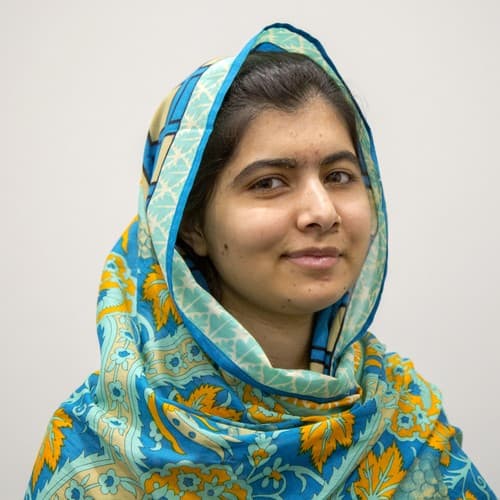
Malala Yousafzai is a Pakistani activist for female education and the youngest Nobel Prize laureate. She is known for her memoir, "I Am Malala," which recounts her experiences standing up for education in the face of Taliban oppression, as well as "I Am Malala: The Story of the Girl Who Stood Up for Education and Was Shot by the Taliban," which further explores her advocacy and resilience.
Similar books
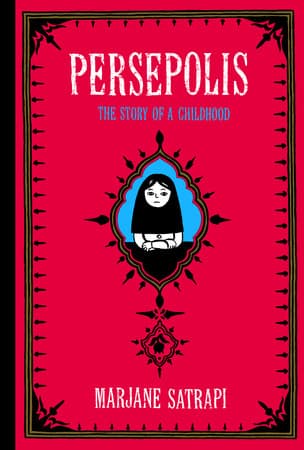
- Persepolis: The Story of a Childhood
Marjane Satrapi
4.3 (158k) average on GoodreadsBiographyA graphic memoir depicting a young girl's experience growing up during the Iranian Revolution, highlighting political upheaval and the struggle for freedom.
- The Diary of a Young Girl
Anne Frank
4.2 (2.7M) average on GoodreadsBiographyA poignant memoir of a young girl's life in hiding during the Holocaust, emphasizing the power of hope and the human spirit amidst conflict.
- The Kite Runner
Khaled Hosseini
4.3 (2.4M) average on GoodreadsHistorical FictionBoth I Am Malala and The Kite Runner illuminate the devastating impact of conflict and extremism on the lives of individuals in Afghanistan and Pakistan, respectively. Hosseini's novel, while fictional, provides a rich, multi-generational narrative exploring themes of guilt, redemption, and the socio-political turmoil of Afghanistan, including the rise of the Taliban. Malala's memoir, being a true account, offers a direct, first-person testimony of courage and activism. While The Kite Runner focuses on the long-term psychological and societal consequences of war and betrayal, I Am Malala is a more immediate call to action, centered on the power of a single voice to advocate for specific rights, particularly education.
- 1984
George Orwell
4.2 (3.1M) average on GoodreadsPoliticsIn a future where surveillance and thought control are absolute, a man's search for truth clashes with the Party, showing that hope can be a form of rebellion.
- Animal Farm
George Orwell
4.0 (2.7M) average on GoodreadsPoliticsA farm animals' rebellion against humans turns into a pig-led dictatorship, showing how power corrupts and revolutionary ideals are betrayed.
- Freakonomics: A Rogue Economist Explores the Hidden Side of Everything
Steven D. Levitt
4.0 (709k) average on GoodreadsBusinessThis book uses economic principles to reveal the surprising incentives behind everything from drug dealing and real estate to cheating teachers and the decline of crime.





Enjoyed the summary?
A summary gives you the shape of the book. The book itself has the detail, the examples and the voice.
Find I Am Malala on AmazonAs an Amazon Associate, BookBrief earns from qualifying purchases. How we're funded