
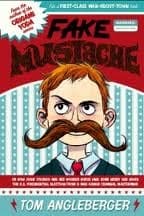
Synopsis
Covers the whole plot, including the ending.
- Difficulty
- Easy
- Pacing
- Fast
- Mood
- Humorous, Witty, Adventurous, Lighthearted
- Read it if
- You enjoy quirky, humorous children's mysteries with a touch of the absurd and a fast-paced plot.
- Skip it if
- You prefer serious, realistic narratives or complex character studies.
Fake Mustache Plot Summary
Covers the whole plot, including the ending.
The Purchase of the Heidelberg Handlebar #7
Lenny Flem Jr., an ordinary boy, is at the mall with his best friend, Casper, who is smart and observant. Casper uses money from his granny to buy a very realistic fake mustache: the Heidelberg Handlebar #7. This mustache is convincing, changing Casper's look and, more importantly, how old and important he seems. Lenny is amused, but he feels uneasy as he sees the immediate, strong effect the mustache has on how adults see Casper. This purchase changes their usual childhood fun into something serious.
The First Heist and the Accumulation of Wealth
With the Heidelberg Handlebar #7, Casper starts robbing banks. The fake mustache, his cleverness, and his ability to act like an adult allow him to pose as a businessman. He enters banks, convinces tellers to give him large amounts of money, and leaves without being caught. Lenny, at first just confused, soon realizes how big Casper's criminal plan is. Casper quickly gets rich, storing his money in a secret underground place beneath his house. This sudden wealth gives Casper great power and resources, which he plans to use for world domination.
The Hypnotic Power of the Mustache
Lenny discovers that the Heidelberg Handlebar #7 has a hidden, more sinister power: it hypnotizes adults. When Casper wears the mustache and speaks, adults believe whatever he says and obey his commands, often against their better judgment. This explains how Casper easily convinced bank tellers and others to do what he wanted. Lenny, as a child, is not affected by this hypnosis, making him the only one who sees Casper for who he is—a child in a fake mustache. This immunity gives Lenny a big responsibility.
Casper's Political Ascent
With his stolen money and the mustache's hypnotic power, Casper decides to run for President of the United States. He starts a very effective, though unusual, political campaign. His simple, direct messages, boosted by the mustache's influence, appeal to the public. He quickly becomes popular, even without experience or clear policies. Lenny watches in horror as his best friend, disguised as a charismatic adult, manipulates the whole nation. The election becomes a race against time for Lenny to expose Casper before he takes the most powerful office.
Lenny's Attempts to Expose Casper
As Casper's presidential campaign grows, Lenny tries to expose him. He tells adults the truth, but they are all under the mustache's spell and think he is a child with a wild imagination. Lenny tries to grab the mustache, but Casper is always one step ahead. He even tries to make his own fake mustache to fight Casper's, but it fails comically. Each of Lenny's attempts ends in frustration, showing the great power of the Heidelberg Handlebar #7 and the huge challenge he faces.
The Role of Granny and the 'Adult Rules'
Casper's granny, an eccentric and somewhat unaware character, helps his plans without knowing it. She gives him the money for the mustache and often makes comments about 'adult rules' and behavior. While she never fully understands how bad Casper is, her presence often grounds the story and offers a moral contrast, even if by accident. Her love for Casper is clear, but her inability to see past the mustache's disguise shows how widespread its power is. Lenny sometimes asks her for help, hoping she might see the truth, but she remains under its influence.
The Presidential Debate Showdown
The peak of Casper's political rise is the final presidential debate, shown on TV. This is Lenny's last chance to stop Casper. Lenny, with a desperate plan, gets into the debate hall. He knows he needs to get close enough to Casper to remove the mustache, or at least disrupt its hypnotic effect. The tension is high as Casper, looking like a confident, charismatic candidate, gives his final speech. Lenny gets past security and the hypnotized crowd, determined to act before the election is decided.
The Unmasking and the Aftermath
In a dramatic moment during the debate, Lenny lunges at Casper and pulls off the Heidelberg Handlebar #7. The effect is instant and strong: the entire audience, and likely the nation watching, wakes from their trance. They suddenly see Casper as he truly is—a young boy in a suit. The situation's absurdity is overwhelming. Casper is immediately disqualified, and his political hopes fall apart. The stolen money is recovered, and the world slowly returns to normal, with adults remembering the strange, unexplainable time under Casper's influence.
Casper's Retreat and Lenny's Reflection
After being unmasked, Casper is humiliated and leaves public life. He faces the results of his actions, in a way that fits a child, not a criminal mastermind. Lenny, having saved the world, thinks about his friendship with Casper. Despite Casper's bad deeds, they still have a bond. Lenny understands that Casper's genius, though misused, is still part of him. The experience has matured Lenny, making him more aware of the world's complexities and the power of perception. Their friendship, though changed, continues.
The Fate of the Heidelberg Handlebar #7
The Heidelberg Handlebar #7, the cause of all the chaos, is taken away, and its unique properties are recognized. It is decided that such a powerful and dangerous item cannot be allowed to fall into the wrong hands again. The mustache's specific fate is handled with a touch of the absurd, making sure its potential for trouble is neutralized without being overly dramatic. The story ends with the understanding that while the mustache was powerful, Casper's ambition and Lenny's courage drove the narrative, not the mustache acting on its own.
Fake Mustache Characters
Lenny Flem Jr.
Protagonist
The ordinary kid who saves the world.
Lenny is an unassuming and somewhat naive young boy, initially content with his friendship with Casper. He possesses a strong sense of right and wrong and is the only character immune to the hypnotic power of the Heidelberg Handlebar #7, making him the sole hope against Casper's schemes. He is observant and persistent, even when faced with overwhelming odds and the disbelief of adults. His journey is one of reluctant heroism, forced into action by his best friend's villainy.
Relationships: Casper (best friend, then adversary); Granny (acquaintance, often exasperated by her obliviousness)
Casper
Antagonist
Lenny's evil-genius best friend with a plan for world domination.
Casper is a child prodigy with an exceptionally high intellect and a flair for theatricality and disguise. He is driven by an insatiable desire for power and control, viewing the world as something to be manipulated. Despite his villainous aspirations, he retains some childlike qualities, making his schemes both terrifying and absurd. His genius is undeniable, but it is coupled with a lack of moral compass, leading him to use his abilities for selfish gain.
Relationships: Lenny Flem Jr. (best friend, then target of his schemes); Granny (doting grandmother, unwitting enabler)
Granny
Supporting
Casper's eccentric and oblivious grandmother.
Granny is a sweet, somewhat flighty elderly woman who dotes on Casper. She is the unwitting catalyst for the entire plot, providing Casper with the money to buy the Heidelberg Handlebar #7. She is completely susceptible to the mustache's hypnotic powers, consistently mistaking Casper for an adult and dismissing Lenny's warnings. Her character provides comic relief and highlights the pervasive nature of the mustache's influence, as even those closest to Casper are fooled.
Relationships: Casper (grandson, whom she loves unconditionally); Lenny Flem Jr. (grandson's friend, whom she often finds amusingly imaginative)
The Heidelberg Handlebar #7
Mentioned
The incredibly realistic and hypnotically powerful fake mustache.
While not a character in the traditional sense, the Heidelberg Handlebar #7 is arguably the most important 'character' in the story. It is an exceptionally convincing fake mustache that not only transforms Casper's appearance but also possesses a potent hypnotic ability, making adults believe and obey the wearer. It is the central plot device, enabling Casper's rise to power and driving the entire narrative. Its realistic appearance and its mind-controlling properties are what make Casper's schemes plausible within the story's world.
Relationships: Casper (wearer and manipulator); Lenny Flem Jr. (primary obstacle to its power)
Various Adults (Bank Tellers, Politicians, Public)
Supporting
The easily manipulated general public under the mustache's spell.
These characters represent the adult world, which is entirely susceptible to the hypnotic power of the Heidelberg Handlebar #7. They are portrayed as generally well-meaning but easily swayed and unable to see past the disguise. Their gullibility underscores the mustache's immense power and the absurdity of the situation. They serve to highlight Lenny's unique immunity and the isolation he feels in his understanding of the truth. Their collective actions, under Casper's influence, push the plot forward.
Relationships: Casper (perceived as an authoritative adult figure); Lenny Flem Jr. (dismissed as a child with an overactive imagination)
Fake Mustache Themes
The Power of Perception and Appearance
The novel explores how easily people are fooled by appearances, especially when those appearances match what society expects. The Heidelberg Handlebar #7 is the main symbol of this; it completely changes how adults see Casper, making him seem like an authority figure instead of a child. This theme appears whenever Casper talks to adults, from robbing banks to running for president. They see a mustache and an adult, ignoring the child underneath. Lenny, as a child, is not fooled, so he is the only one who sees the truth.
“The mustache was like a magic spell, making everyone see what wasn't there.”
The Nature of Friendship and Loyalty
At its core, the story looks at the bond between best friends, even when one becomes a villain. Lenny struggles with the moral problem of stopping his best friend, Casper, from trying to take over the world. Despite Casper's actions, Lenny's loyalty and concern for him are clear. The story asks if friendship can last through such extreme events and shows the pain of having to betray a friend for the greater good. Lenny's actions are driven by a desire to save the world and a hope to bring his friend back from his wrong path.
“How do you stop your best friend from taking over the world when he’s the smartest kid you know?”
Childhood vs. Adulthood
The novel humorously contrasts the worlds of children and adults. Children, like Lenny, are shown to have a clearer, more honest view of reality, free from the social rules and expectations that blind adults. Adults, on the other hand, are easily manipulated and too reliant on surface cues (like a fake mustache) to decide who is in charge and trustworthy. This theme explains why Lenny is the only one who can save the day, as he is the only one who truly sees Casper as a child. It comments on the often-absurd rules and perceptions that control the adult world.
“Adults are so easy to fool, if you just look like an adult.”
The Allure and Corruption of Power
Casper's journey from buying a fake mustache to trying to take over the world shows how unchecked power corrupts. At first, the mustache is a novelty, but as Casper realizes its power to manipulate, his ambition grows fast. He uses his new 'adult' authority to get rich, gain political influence, and ultimately seek total control. This theme warns about the dangers of power without a moral compass, showing how even a child can be consumed by the desire for dominance once they have the means.
“With great power comes great responsibility, and Casper had all the power, but none of the responsibility.”
Plot Devices & Literary Techniques
MacGuffin with a Twist
The Heidelberg Handlebar #7 is the central object of desire and conflict.
The Heidelberg Handlebar #7 functions as a MacGuffin, driving the plot forward and being the primary object of Casper's ambition and Lenny's efforts to thwart him. However, it's a MacGuffin with a twist: it's not just a desired object, but an active agent in the story due to its hypnotic powers. Its existence creates the central conflict, allowing Casper to achieve his goals and forcing Lenny into action. The mustache's unique abilities make it more than just a simple plot device; it's almost a character in itself, dictating much of the action.
Dramatic Irony
The audience and Lenny know the truth, while other characters are oblivious.
Dramatic irony is a pervasive element throughout the story. The audience, along with Lenny, is privy to the truth about Casper and the fake mustache, while all the adult characters remain completely unaware and under its hypnotic spell. This creates a constant tension and often provides comedic moments, as Lenny's desperate attempts to warn adults are dismissed. This device effectively highlights the theme of perception versus reality and emphasizes Lenny's isolation as the sole truth-teller.
The Unreliable Narrator (of Adult Perception)
Adult characters' perceptions are warped by the mustache.
While Lenny is a reliable narrator in the traditional sense, the story uses the concept of an 'unreliable narrator' to describe the collective perception of the adult characters. Due to the hypnotic power of the Heidelberg Handlebar #7, all adults perceive Casper as a charismatic, trustworthy adult, despite overwhelming evidence to the contrary. Their perception is fundamentally flawed and manipulated, making their understanding of events unreliable and creating the central conflict Lenny must overcome.
Fake Mustache Quotes
“Before you could say, 'What in the name of all that is holy is that fake mustache doing on that baby's face?' the baby was gone.”
“You can never trust a baby with a mustache. Never.”
“The mustache was a disguise, of course. A very, very bad disguise, but a disguise nonetheless.”
“It was the kind of silence that meant someone was about to do something very, very stupid.”
“Being a hero isn't always about punching bad guys. Sometimes it's about knowing when to run away.”
“The world was full of mysteries, but this one had a fake mustache and a very strong smell of baby powder.”
“Sometimes the most obvious answer is the right one, even if it's completely ridiculous.”
“It’s hard to be scared when you’re also trying not to laugh.”
“The best plans are always the ones that involve snacks.”
“You never know what you're capable of until you're being chased by a mustachioed baby.”
“The truth, like a good fake mustache, often takes a bit of effort to apply.”
“Even the most ordinary day can turn extraordinary with the right amount of weirdness.”
“Some secrets are meant to stay hidden, especially if they involve a talking squirrel.”
“Logic is overrated when you're dealing with a world that makes no sense.”
Quiz
10 questions on the plot and the characters. Each answer comes with a short explanation.
Question 1
What is the name of the specific fake mustache Casper buys that allows him to commit crimes?
- The Bavarian Bushy #5
- The Heidelberg Handlebar #7
- The Prussian Point #3
- The Austrian Anchor #9
Show answer
B. The Heidelberg Handlebar #7 Casper uses money from his granny to purchase the Heidelberg Handlebar #7, which is described as spectacularly convincing and the key to his initial disguises.
Question 2
Who is the protagonist who tries to stop Casper from achieving world domination?
- Casper's Granny
- Lenny Flem Jr.
- The Chief of Police
- Mr. Schnoz
Show answer
B. Lenny Flem Jr. Lenny Flem Jr. is Casper's best friend and the only one who seems to see through Casper's disguises, making him the protagonist.
Question 3
What is Casper's initial goal after acquiring the fake mustache and robbing banks?
- To buy a mansion
- To open a mustache shop
- To run for president
- To travel the world
Show answer
C. To run for president After amassing a vast fortune from robbing banks, Casper uses his wealth and hypnotic abilities to launch a campaign for president, aiming for world domination.
Question 4
What unusual ability does Casper possess, beyond his mastery of disguise?
- Telekinesis
- Super strength
- Hypnosis
- Invisibility
Show answer
C. Hypnosis The book description explicitly states that Casper is a 'master of disguise and hypnosis,' which he uses to manipulate people.
Question 5
How does Lenny Flem Jr. primarily try to expose Casper's true identity?
- By telling Casper's granny
- By physically removing the mustache in public
- By presenting evidence to the police
- By trying to convince others that the 'adult' is actually Casper
Show answer
D. By trying to convince others that the 'adult' is actually Casper Lenny's struggle is that he is the only one who can see through Casper's disguise, meaning he constantly tries to make others realize the 'adult' figure is actually his best friend.
Question 6
What is the central theme explored by Lenny being the only one to see through Casper's disguise?
- The power of friendship
- The gullibility of adults
- The importance of good grooming
- The dangers of wealth
Show answer
B. The gullibility of adults A key element of the story is how easily adults are fooled by Casper's disguise and hypnosis, highlighting their gullibility compared to Lenny's perception.
Question 7
What is the primary motive behind Casper's actions, from robbing banks to running for president?
- To gain fame and recognition
- To prove his intelligence to Lenny
- To achieve world domination
- To make his granny proud
Show answer
C. To achieve world domination The book's description clearly states Casper's ultimate goal: 'world domination.' All his actions serve this overarching ambition.
Question 8
How does the author Tom Angleberger primarily contribute to the 'comic muscle' aspect of the story?
- Through dark, satirical humor
- Through slapstick and absurd situations involving the fake mustache and disguises
- Through witty, intellectual banter between characters
- Through ironic commentary on political systems
Show answer
B. Through slapstick and absurd situations involving the fake mustache and disguises Given the premise of a child achieving world domination with a fake mustache and hypnosis, the humor is derived from the absurdity and the slapstick nature of the disguises and the situations they create, fitting Angleberger's style.
Question 9
What specific challenge does Lenny face in convincing adults about Casper, beyond the hypnosis?
- He lacks credible evidence to present to authorities.
- Adults generally dismiss children's claims as imagination or mischief.
- Casper always makes Lenny forget what he saw.
- Lenny himself is under a mild form of Casper's hypnosis.
Show answer
B. Adults generally dismiss children's claims as imagination or mischief. A common trope in children's mystery stories, and certainly applicable here, is that adults often don't take children's serious claims seriously, attributing them to childish imagination, which is compounded by Casper's hypnosis.
Question 10
What does the 'fake mustache' symbolize in the broader context of the story?
- The superficiality of appearances and how easily people can be deceived.
- The importance of growing up and taking on adult responsibilities.
- The power of imagination in a child's world.
- The allure of wealth and power.
Show answer
A. The superficiality of appearances and how easily people can be deceived. The fake mustache, despite being a simple prop, completely transforms Casper in the eyes of adults, allowing him to commit serious crimes and pursue power. This highlights how easily people can be fooled by superficial appearances, especially when combined with other manipulative tactics like hypnosis.
Fake Mustache FAQ
What is the central premise of 'Fake Mustache'?
The book follows Lenny Flem Jr. as he discovers his best friend, Casper, has purchased a highly convincing fake mustache, the Heidelberg Handlebar #7. Casper uses this disguise, along with his inherent genius and hypnotic abilities, to rob banks, accumulate immense wealth, and eventually run for president, all while Lenny struggles to expose him.
Who are the main characters in 'Fake Mustache' and what is their relationship?
The main characters are Lenny Flem Jr., an ordinary kid who serves as the narrator and reluctant hero, and Casper, his best friend and the story's antagonist. Their relationship is complex, characterized by Lenny's loyalty mixed with his growing alarm over Casper's increasingly nefarious plans for world domination.
How does Casper manage to achieve his goals, such as robbing banks and running for president?
Casper achieves his goals primarily through the power of the Heidelberg Handlebar #7 fake mustache, which is so realistic it makes him utterly unrecognizable. This, combined with his natural genius, hypnotic abilities, and a surprising knack for manipulating public opinion and financial systems, allows him to commit crimes and gain political power with ease.
What role does the Heidelberg Handlebar #7 fake mustache play in the story?
The Heidelberg Handlebar #7 is the central magical item and plot device of the story. It's not just a disguise; it's so incredibly convincing that it fundamentally alters how Casper is perceived, effectively making him a different person in the eyes of everyone except Lenny. It's the catalyst for all of Casper's schemes.
What are some of the humorous elements or running gags in the book?
The humor often comes from the sheer absurdity of the situation, particularly how easily adults are fooled by the mustache, and Lenny's increasingly frantic and often clumsy attempts to stop Casper. The detailed descriptions of Casper's intricate plans and his unwavering confidence, contrasted with Lenny's exasperation, also provide much of the comedic relief.
Are there any subtle clues early in the book that hint at Casper's true intentions or abilities?
While Casper's genius is apparent from the start, his turn to villainy is largely spurred by the mustache. However, his meticulous planning and strategic thinking, even in childhood games, could be seen as subtle foreshadowing of his later ambition and capacity for manipulation, even if his moral compass hadn't yet gone astray.
How does the author use the concept of 'seeing through' a disguise beyond the literal mustache?
The book explores 'seeing through' a disguise on a deeper level, questioning whether people truly see others or just their outward appearances and preconceived notions. Lenny's struggle highlights how easily society can be swayed by charisma and superficial indicators of trustworthiness, even when core character traits remain unchanged.
Is there any significance to the specific name 'Heidelberg Handlebar #7' for the mustache?
The specific name 'Heidelberg Handlebar #7' adds a layer of specificity and almost mythical quality to the mustache, making it sound like a rare, artisanal, and incredibly effective item. The 'Heidelberg' might evoke German craftsmanship and precision, while '#7' suggests it's part of a series, implying other powerful disguises exist or were attempted.
Are there any characters besides Lenny who seem to have a momentary flicker of doubt about Casper's disguise?
While most adults are completely fooled, there are moments where other children or perhaps certain minor characters express mild confusion or a sense of things being 'off' about the new, mustached Casper. However, these doubts are quickly dismissed or rationalized, reinforcing the mustache's power and the adults' gullibility.
How does Lenny's psychological state evolve as Casper's plans escalate?
Lenny's psychological state shifts from initial disbelief and amusement to growing alarm, frustration, and a profound sense of isolation. He experiences immense pressure as he alone carries the burden of knowing the truth, leading to feelings of exasperation, desperation, and ultimately, a reluctant determination to stop his best friend.
What does Casper's rapid descent into villainy, enabled by the mustache, suggest about human nature?
Casper's rapid descent suggests that given the right tools and opportunity, even an ordinary person (or child) can be tempted by power and ambition, especially when anonymity and perceived invincibility are granted. It implies that the potential for both good and evil lies within, often requiring only a catalyst to manifest.
How does the book explore themes of friendship and betrayal through Lenny and Casper's relationship?
The book deeply explores friendship and betrayal as Lenny grapples with the fact that his best friend is becoming a world-domineering villain. Lenny's internal conflict between loyalty to Casper and his moral obligation to stop him highlights the painful complexities of friendship when one friend deviates drastically from shared values.
What psychological effect does the mustache have on Casper himself?
The mustache seems to liberate Casper from the constraints of his identity as 'just a kid,' allowing his ambition and genius to flourish unchecked. It provides him with a sense of invincibility and anonymity that likely emboldens him, perhaps even altering his self-perception and diminishing his inhibitions regarding ethical conduct.
Is 'Fake Mustache' simply a humorous children's story, or does it carry deeper philosophical implications?
While undeniably humorous, 'Fake Mustache' carries deeper implications about identity, perception, and the nature of power. It subtly critiques adult gullibility, the superficiality of appearances, and questions what truly constitutes a person's identity—is it their face, their name, or their actions and character?
Could the mustache be interpreted as a metaphor for something else in society?
The mustache could be interpreted as a metaphor for various societal elements that obscure truth or manipulate perception, such as propaganda, charismatic leaders, or even the power of a well-crafted public image. It represents how easily people can be swayed by superficial presentations rather than underlying realities.
What is the ultimate message or moral of the story, if any?
The ultimate message seems to be about the importance of looking beyond appearances and trusting one's own judgment, even when everyone else is fooled. It also subtly champions the courage of an ordinary individual to stand up against overwhelming, absurd power, even when it means confronting a friend.
How does the ending resolve the conflict between Lenny and Casper, and what does it suggest about their future?
The ending typically involves Lenny finding a clever, albeit often comical, way to expose Casper or neutralize the mustache's power. It usually implies a restoration of order and a return to a more normal friendship, though the experience leaves both characters changed, with a lingering awareness of Casper's potential for mischief.
Does the book suggest that Casper is inherently evil, or is he merely misguided by the power of the mustache?
The book leans more towards Casper being misguided and enabled by the mustache's power rather than being inherently evil. His initial motivations are often childlike, albeit ambitious, and the mustache amplifies his less desirable traits, suggesting that without it, he might revert to being a mischievous but not malicious friend.
How does the narrative style, told from Lenny's perspective, contribute to the book's themes and humor?
Lenny's first-person narrative provides a relatable, often exasperated, and slightly bewildered viewpoint, enhancing both the humor and the thematic depth. His ordinary perspective makes the extraordinary events even funnier and underscores the absurdity of the adults' blindness, while also highlighting his personal struggle and moral dilemma.
About the author

Tom Angleberger is an American author known for his children's and young adult fiction. He is best recognized for his works including "The Strange Case of Origami Yoda," "Darth Paper Strikes Back," and "Fake Mustache," which blend humor and creativity to engage young readers. Angleberger's writing often features inventive storytelling and relatable characters.
Similar books
- The Mysterious Benedict Society
Trenton Lee Stewart
4.2 (123k) average on GoodreadsFantasyFeatures clever child protagonists solving mysteries and thwarting an evil genius, with a similar blend of adventure and wit.
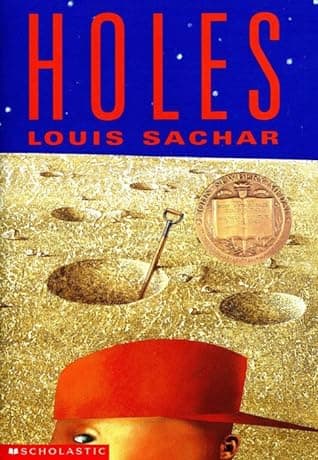
- Holes
Louis Sachar
4.0 (970k) average on GoodreadsChildren'sWhile both books feature elements of mystery and young protagonists uncovering truths, 'Holes' delves into significantly darker and more complex social themes, including systemic injustice, generational curses, and the harsh realities of poverty, with a more intricate, multi-layered plot structure. 'Fake Mustache' maintains a lighter, more overtly comedic tone and a less grim portrayal of its antagonists and settings, making its thematic explorations more direct and less emotionally demanding for its target audience.
- Harry Potter and the Sorcerer's Stone
J.K. Rowling
4.5 (7M) average on GoodreadsFantasyRescued from a miserable life under the stairs, an orphaned boy discovers he's a wizard destined for a magical school, where he uncovers a dangerous secret tied to the dark wizard who murdered his parents.
- The Hunger Games
Suzanne Collins
4.3 (6.4M) average on GoodreadsFantasyIn a future where children fight to the death on live television, Katniss Everdeen volunteers for the arena, turning a death sentence into a fight for survival and a spark of rebellion.
- 1984
George Orwell
4.2 (3.1M) average on GoodreadsPoliticsIn a future where surveillance and thought control are absolute, a man's search for truth clashes with the Party, showing that hope can be a form of rebellion.
- Divergent
Veronica Roth
4.2 (2.9M) average on GoodreadsFantasyIn a society divided by virtues, a sixteen-year-old's difference from the norm starts a rebellion that threatens her world.





Enjoyed the summary?
A summary gives you the shape of the book. The book itself has the detail, the examples and the voice.
Find Fake Mustache on AmazonAs an Amazon Associate, BookBrief earns from qualifying purchases. How we're funded