

Synopsis
Covers the whole plot, including the ending.
- Difficulty
- Easy
- Pacing
- Moderate
- Mood
- Whimsical, Clever, Heartwarming, Mysterious
- Read it if
- You love clever puzzles, quirky characters, and a heartwarming story about found family and friendship.
- Skip it if
- You prefer fast-paced action over intellectual challenges and intricate plots.
The Mysterious Benedict Society Plot Summary
Covers the whole plot, including the ending.
The Peculiar Advertisement and Rigorous Tests
Reynie Muldoon, a bright and observant orphan, sees a strange newspaper advertisement seeking 'gifted children for special opportunities.' He attends the first test, which involves academic and logic puzzles in a large hall with many other children. He quickly notices the unusual nature of the assessments, which value ingenuity and character as much as intelligence. Reynie successfully completes multiple stages of the testing, including an individual interview about his thought processes and moral compass. As fewer candidates remain, Reynie meets other children who stand out: Sticky Washington, a walking encyclopedia; Kate Wetherall, a resourceful girl with a bucket of tools; and Constance Contraire, a grumpy and defiant toddler.
Meeting Mr. Benedict and the Secret Mission Briefing
After the final, most unusual test – which involves escaping a locked room and a moral dilemma – Reynie, Sticky, Kate, and Constance are the only four children remaining. They meet the eccentric and narcoleptic Mr. Benedict, who reveals the true purpose of their recruitment. Mr. Benedict explains that a sinister individual, 'The Sender,' is transmitting subliminal messages through television and radio, causing widespread despair and manipulating people's thoughts. He believes The Sender is operating from an isolated institution called the Learning Institute for the Very Enlightened (LIVE) and needs the children to infiltrate it as students to uncover The Sender's identity and stop the transmissions. The children, now the Mysterious Benedict Society, accept the mission.
Infiltration of the Learning Institute for the Very Enlightened (LIVE)
The four children receive new identities and prepare for their mission. They are warned about the institute's unusual structure, especially its lack of explicit rules, which Mr. Benedict explains is a subtle form of control. Upon arrival at LIVE, they are greeted by Mr. Curtain, the headmaster, who looks just like Mr. Benedict. The institute is strange, with students divided into 'Messengers' and 'Recess Monitors' and a general atmosphere of subdued obedience despite apparent freedom. Reynie, Sticky, Kate, and Constance begin observing, trying to understand how The Sender's messages are transmitted and who is responsible, while navigating life in an environment with no clear boundaries or adult supervision.
The Whispering Gallery and the Brain Sweeper
The Society members quickly realize that the institute's 'Whispering Gallery' – a large, echoey chamber – plays a role in the transmissions. They learn that messages are broadcast directly into the students' minds, influencing their thoughts and emotions. Sticky, with his photographic memory, begins to understand the technical details. They also uncover a device called the 'Brain Sweeper,' which Mr. Curtain uses to erase painful memories or troublesome thoughts from students' minds, making them more compliant. This discovery shows how dangerous their mission is, as they fear being caught or having their identities erased. They realize Mr. Curtain is more dangerous than they first thought.
Mr. Curtain's True Identity and the Plan to Amplify
Through clues and observations, especially Mr. Curtain's resemblance to Mr. Benedict and his narcoleptic tendencies, Reynie figures out that Mr. Curtain is Mr. Benedict's long-lost identical twin brother, Ledroptha Curtain. They learn that the brothers were separated at birth and have vastly different philosophies. Mr. Curtain believes that individual thought causes chaos and that humanity would be better off under his unified control. The children also discover Mr. Curtain's ultimate plan: to use the Brain Sweeper and the Whispering Gallery's technology to amplify his subliminal messages worldwide, taking control of everyone's minds. The mission becomes more urgent as they realize they must stop him before he executes this global takeover.
The Society's Growing Friendship and Challenges
As the mission continues, the children face many challenges from Mr. Curtain's henchmen, particularly Jackson and S.Q., and from the institute's mind-altering environment. Their individual strengths become important: Reynie's leadership and empathy, Sticky's vast knowledge, Kate's inventiveness and physical skill, and even Constance's stubbornness and unexpected intuition. They learn to rely on each other, forming strong friendships and trust. They use coded messages and secret meetings to communicate with each other and with Mr. Benedict's team outside. Despite their growing fear and the constant threat of discovery, their determination to protect the world and each other strengthens.
Escalating Danger and Failed Attempts
The children make several attempts to disrupt Mr. Curtain's plans, often using Kate's clever gadgets or Sticky's knowledge of the institute's systems. However, Mr. Curtain and his enforcers are watchful. Their efforts are sometimes stopped, leading to tense chases and close calls. Jackson, Mr. Curtain's chief enforcer, becomes more suspicious of the four. Reynie and his friends realize that direct confrontation is too risky and that they need a more subtle approach to dismantle Mr. Curtain's operation. The constant pressure and the fear of the Brain Sweeper test their resolve and ingenuity as they navigate the dangerous halls of LIVE.
The Grand Plan and Mr. Curtain's Capture
The Society devises a plan: to expose Mr. Curtain's true intentions to his own henchmen, especially S.Q., who they believe is also a victim of the subliminal messages. They also plan to disable the Whispering Gallery and the Brain Sweeper. In a climactic sequence, they manage to trap Mr. Curtain and his closest associates. Reynie confronts Mr. Curtain, appealing to his humanity and the possibility of redemption, while Kate and Sticky work to disable the machinery. Constance, surprisingly, uses her unique ability to project thoughts, which helps confuse Mr. Curtain's men. Mr. Benedict and his team, alerted by the children, arrive just as Mr. Curtain is about to be subdued.
The Rescue and Mr. Curtain's Escape
Mr. Benedict, Number Two, and Rhonda arrive at LIVE, confirming the children's success in disrupting the operation. However, in the chaos, Mr. Curtain escapes in a hot air balloon, vowing to return and continue his work. While disappointed that Mr. Curtain was not fully caught, the children are relieved to be safe and to have prevented the global broadcast. They have stopped the immediate threat and exposed Mr. Curtain's scheme. The institute is dismantled, and the affected students are freed from the subliminal messaging. The children are seen as heroes, and their bond is stronger than ever after their shared experience.
A New Family and the Promise of Future Adventures
After their successful mission, Reynie, Sticky, Kate, and Constance are welcomed into Mr. Benedict's unconventional family. Mr. Benedict, along with Number Two and Rhonda, provides them with a loving and supportive home. The children, all orphans or estranged from their families, finally find a place where they belong and are valued for their unique talents. They continue their education and adventures, knowing that Mr. Curtain is still at large and that their help may be needed again. The book ends with the four children having found not just a purpose, but a true family, ready for future challenges, their friendships strengthened by their experiences.
Principal Figures
Reynie Muldoon
Protagonist
An empathetic and insightful orphan, the natural leader of the Society.
Reynie is an intelligent and highly observant orphan with a keen sense of empathy and intuition. He excels at problem-solving, not just through logic but by understanding people's motivations and feelings. He often acts as the moral compass and de facto leader of the Mysterious Benedict Society, mediating conflicts and encouraging his friends. His greatest strength is his ability to see the bigger picture and understand the nuances of human behavior, which proves crucial in navigating the psychological traps set by Mr. Curtain. He is driven by a desire to do good and to find a place where he belongs.
Relationships: Mr. Benedict (mentor and adoptive father figure); Sticky Washington (close friend and intellectual collaborator); Kate Wetherall (close friend and adventurous partner); Constance Contraire (challenging but beloved friend)
George 'Sticky' Washington
Supporting
A walking encyclopedia with an eidetic memory, prone to anxiety.
Sticky is a brilliant, highly intelligent boy with an eidetic memory, capable of recalling vast amounts of information instantly. He is often shy, nervous, and prone to fidgeting, especially when under pressure. His encyclopedic knowledge makes him indispensable to the Society, particularly in understanding technical details and historical facts. He struggles with self-doubt and the fear of disappointing others, stemming from his parents' high expectations. Despite his anxieties, he consistently rises to the occasion, using his intellect to uncover crucial information and solve complex puzzles, often overcoming his shyness for the sake of the mission.
Relationships: Reynie Muldoon (close friend and confidant); Mr. Benedict (mentor and supportive figure); Kate Wetherall (friend and admiring colleague); Constance Contraire (friend, often exasperated by her)
Kate Wetherall
Supporting
An incredibly resourceful and adventurous girl, always prepared with her red bucket.
Kate is a fiercely independent, resourceful, and adventurous girl with a knack for invention and improvisation. She carries a red bucket containing various tools and gadgets, which she uses to solve practical problems and escape difficult situations. She is physically agile, brave, and often takes the lead in daring maneuvers. Her past as an orphan has made her self-reliant and wary of trusting others, but she eventually opens up to the Society members. Kate's practical skills and courage are essential to the team's success, providing the physical means to execute their plans and overcome obstacles.
Relationships: Reynie Muldoon (close friend and collaborator); Sticky Washington (close friend and intellectual partner); Mr. Benedict (mentor and supportive figure); Constance Contraire (friend, often protective of her)
Constance Contraire
Supporting
A stubbornly defiant and seemingly rude toddler with unexpected psychic abilities.
Constance is the youngest member of the Society, a small, perpetually grumpy, and often rude toddler. Despite her difficult demeanor and tendency to speak in rhymes or nonsensical phrases, she possesses a surprising and powerful psychic ability, primarily telepathy and projection of thoughts. Her stubbornness and defiance, initially seen as a hindrance, prove to be a unique form of resistance against Mr. Curtain's mind control. She is fiercely independent and resistant to authority, but beneath her gruff exterior, she yearns for affection and belonging, which she eventually finds with the Society. Her unique abilities play a crucial, albeit unpredictable, role in their mission.
Relationships: Reynie Muldoon (patient and understanding friend); Sticky Washington (friend, often annoyed by her); Kate Wetherall (friend, often protective of her); Mr. Benedict (adoptive father figure, who understands her unique nature)
Mr. Nicholas Benedict
Protagonist/Mentor
The brilliant, narcoleptic, and benevolent founder of the Society.
Mr. Benedict is an incredibly intelligent, kind-hearted, and eccentric man who suffers from narcolepsy, often falling asleep at inconvenient moments. He is the mastermind behind the tests and the founder of the Mysterious Benedict Society. Driven by a deep concern for humanity and a desire to combat the sinister influence of his twin brother, Ledroptha Curtain, he recruits the gifted children for their unique qualities. He is a loving and supportive mentor, providing guidance and a safe home for the orphans he gathers. His wisdom, compassion, and unwavering belief in the children's abilities are the foundation of the Society.
Relationships: Reynie Muldoon (mentor and adoptive father); Sticky Washington (mentor and adoptive father); Kate Wetherall (mentor and adoptive father); Constance Contraire (mentor and adoptive father); Number Two (loyal assistant and friend); Rhonda Kazembe (loyal assistant and friend); Ledroptha Curtain (identical twin brother and arch-nemesis)
Ledroptha Curtain (The Sender)
Antagonist
Mr. Benedict's evil twin brother and the manipulative headmaster of LIVE.
Ledroptha Curtain is Mr. Benedict's identical twin brother and the primary antagonist of the story. He is the brilliant but megalomaniacal headmaster of the Learning Institute for the Very Enlightened (LIVE) and the mastermind behind 'The Sender' broadcasts. Unlike his brother, Mr. Curtain believes that individual thought leads to chaos and that he must control humanity for its own good. He uses sophisticated technology, including subliminal messaging and the 'Brain Sweeper,' to manipulate and control people's minds. He is cunning, ruthless, and lacks the empathy of his brother, driven by a twisted vision of a perfectly ordered world under his command. He also suffers from narcolepsy, a trait he shares with Mr. Benedict.
Relationships: Mr. Nicholas Benedict (identical twin brother and arch-nemesis); Jackson (loyal but dim-witted henchman); S.Q. (loyal but easily swayed henchman)
Number Two
Supporting
Mr. Benedict's practical and no-nonsense assistant, always eating.
Number Two is Mr. Benedict's highly capable and pragmatic assistant. She is known for her constant snacking and her no-nonsense approach to problem-solving. She provides a grounded and practical counterpoint to Mr. Benedict's eccentricities, ensuring that the logistics of the mission and the children's well-being are always managed. Her loyalty and efficiency are invaluable to Mr. Benedict, and she acts as a secondary parental figure to the children, offering firm but caring guidance. She is often the one to make sure plans are feasible and that everyone is fed.
Relationships: Mr. Benedict (loyal assistant and friend); Rhonda Kazembe (colleague and friend); The Mysterious Benedict Society (supportive guardian)
Rhonda Kazembe
Supporting
Mr. Benedict's kind and observant assistant, often disguised.
Rhonda is another of Mr. Benedict's loyal assistants. She is kind, observant, and often goes undercover to assist the children from afar. She is adept at disguises and provides crucial information and support to the Society members during their mission at LIVE. Her gentle demeanor belies her competence and courage. She acts as an additional maternal figure, offering comfort and reassurance to the children, especially during stressful times. Her role is often behind the scenes, yet vital to the success of the operation.
Relationships: Mr. Benedict (loyal assistant and friend); Number Two (colleague and friend); The Mysterious Benedict Society (supportive guardian)
Jackson
Supporting
Mr. Curtain's menacing and dim-witted chief enforcer.
Jackson is one of Mr. Curtain's primary enforcers at LIVE. He is large, intimidating, and generally dull-witted, often relying on brute force and intimidation rather than intelligence. He is fiercely loyal to Mr. Curtain, though this loyalty appears to be influenced by the subliminal messages. He is suspicious of the Society members and frequently tries to catch them breaking rules or acting suspiciously. His menacing presence adds a physical threat to the children's mission, making their undercover work more perilous.
Relationships: Ledroptha Curtain (loyal henchman); S.Q. (colleague and fellow henchman)
S.Q.
Supporting
Mr. Curtain's slightly more empathetic henchman, also affected by the messages.
S.Q. is another of Mr. Curtain's enforcers, often paired with Jackson. He is less menacing and more impressionable than Jackson, and the children suspect he is also a victim of Mr. Curtain's subliminal messages. He shows glimmers of empathy and confusion, suggesting he is not inherently evil but rather manipulated. The Society members, particularly Reynie, attempt to appeal to his better nature, hoping to break him free from Mr. Curtain's influence. His internal conflict makes him a more complex character than Jackson and crucial to the Society's plan to expose Mr. Curtain.
Relationships: Ledroptha Curtain (henchman, possibly manipulated); Jackson (colleague and fellow henchman)
Themes & Insights
Identity and Self-Discovery
Identity is a main theme, as the orphaned children deal with who they are, where they come from, and where they belong. Reynie, Sticky, and Kate each have personal insecurities or past traumas related to their identities. Their mission at LIVE makes them adopt false identities while also discovering their true strengths and unique qualities. Mr. Benedict offers them a new family, allowing them to form a positive sense of self, separate from their pasts or societal expectations. The contrast between Mr. Benedict and Mr. Curtain, identical twins with very different identities, further explores how choices and values shape a person.
“You see, for a person to be truly good, he must know that he is capable of evil. And for a person to be truly evil, he must believe that he is good.”
The Power of Friendship and Family
At its heart, the book celebrates found family and the strength from real friendship. The four characters, all lonely orphans, first come together out of necessity but quickly form deep, supportive bonds. They learn to trust, rely on, and care for one another, using their different strengths to overcome challenges. Mr. Benedict, Number Two, and Rhonda create a loving, unconventional family unit that gives the children the belonging and emotional security they lacked. This theme contrasts with Mr. Curtain's isolated, controlling environment, showing the enriching power of connection versus the destructive nature of manipulation.
“The only way to get through this, children, is together. You must trust each other absolutely.”
The Nature of Intelligence and Wisdom
The book explores different kinds of intelligence beyond just academic ability. Sticky has vast knowledge, Reynie has exceptional logic, Kate shows practical ingenuity, and Constance has intuitive and psychic gifts. Mr. Benedict's tests assess character, empathy, and problem-solving skills, not just memorization. The story suggests that true wisdom involves intelligence, kindness, courage, and the ability to understand and connect with others. Mr. Curtain, despite his brilliance, lacks wisdom because he lacks empathy and seeks control rather than understanding.
“Knowledge, after all, is not the same as wisdom. And wisdom is not the same as goodness.”
Individuality vs. Conformity/Control
A major theme is the struggle between individual thought and expression versus forced conformity and control. Mr. Curtain's entire philosophy and the design of LIVE aim to eliminate individual thought and create a compliant, uniform society through subliminal messages and the Brain Sweeper. In contrast, Mr. Benedict supports individuality, encouraging the children to embrace their unique talents and perspectives. The children's mission is to stop Mr. Curtain's plan and to preserve the right to independent thought and feeling for everyone. Their diverse personalities and stubborn refusal to be controlled are their greatest weapons against Mr. Curtain's oppressive system.
“He wants to make everyone think like him, to make them content with whatever he gives them. He wants to wipe out all differences, all doubts, all discontent.”
Plot Devices & Literary Techniques
The Mysterious Newspaper Advertisement
The initial hook that draws the protagonists into the adventure.
The cryptic newspaper ad seeking 'gifted children for special opportunities' acts as the inciting incident. Its vague yet intriguing nature immediately establishes the mysterious tone of the book and serves as the catalyst for Reynie and the others to begin their journey. It's a classic call to adventure, signaling that extraordinary events await those who are observant and brave enough to answer. This device effectively filters for children with specific qualities, setting up the unique team dynamic.
The 'Brain Sweeper'
A terrifying machine used for memory erasure and mind control.
The Brain Sweeper is a literal plot device that embodies Mr. Curtain's villainy and the central conflict of mind control. It's a machine capable of erasing painful memories or 'troublesome' thoughts, making individuals more compliant. Its existence raises the stakes for the children, as being caught means not just punishment, but the loss of their very identities and memories. It serves as a tangible representation of the threat to individuality and free will, driving the children's urgency to stop Mr. Curtain.
The Red Bucket
Kate Wetherall's portable toolkit, symbolizing resourcefulness and preparedness.
Kate's iconic red bucket, filled with an assortment of seemingly random tools and gadgets, functions as a symbol of her ingenuity, resourcefulness, and self-reliance. It's a practical plot device that frequently provides the means to overcome physical obstacles, from lock-picking to creating makeshift communication devices. The bucket not only highlights Kate's character but also reinforces the theme that preparedness and unconventional thinking are valuable assets in problem-solving, often when traditional methods fail.
Narcolepsy (Shared by Mr. Benedict and Mr. Curtain)
A genetic condition linking the twin brothers and used for comedic and plot purposes.
The shared condition of narcolepsy between Mr. Benedict and Mr. Curtain is a significant plot device. It serves as a crucial clue for Reynie to deduce their familial connection, as it's an unusual and distinct trait. Beyond its revelatory role, it also adds moments of comedic relief, particularly with Mr. Benedict's sudden naps, and creates tension when Mr. Curtain's similar affliction could potentially be exploited by the children. It subtly underscores the idea of shared origins but divergent paths, central to the brothers' conflict.
The Mysterious Benedict Society Quotes
“Are you a gifted child looking for special opportunities?”
“The only way to solve a mystery is to look for clues, and the only way to find clues is to ask questions.”
“Sometimes the best way to get to the truth is to make a few detours.”
“You are not like other children, and that is a good thing.”
“Knowledge is a difficult thing. It’s not something you can just pick up and put down.”
“The right answer is not always the obvious answer.”
“What you do with your knowledge is far more important than how much you have.”
“Sometimes the worst thing you can do is nothing.”
“Happiness is not something you postpone for the future; it is something you design for the present.”
“Being lonely is not the same as being alone.”
“There are times when you must put your trust in others, even if you don't fully understand them.”
“The only way to truly overcome fear is to face it, even if you're shaking in your boots.”
“A good leader doesn't tell people what to do, but inspires them to do their best.”
“It's never too late to make things right.”
Quiz
10 questions on the plot and the characters. Each answer comes with a short explanation.
Question 1
What is the name of the peculiar institution where the four children are sent undercover?
- The Institute for Cognitive Advancement
- The Learning Institute for the Very Enlightened
- The Academy of Exceptional Minds
- The School of Extraordinary Talents
Show answer
B. The Learning Institute for the Very Enlightened The children's secret mission requires them to go undercover at the Learning Institute for the Very Enlightened, often abbreviated as L.I.V.E.
Question 2
Which of the following is NOT one of the four children chosen for the mission?
- Sticky
- Kate
- Milligan
- Reynie
Show answer
C. Milligan The four chosen children are Reynie Muldoon, George 'Sticky' Washington, Kate Wetherall, and Constance Contraire. Milligan is a significant adult character, not one of the children on the mission.
Question 3
What is the unique ability that 'Sticky' Washington possesses?
- Exceptional athletic prowess
- Photographic memory
- Ability to lie convincingly
- Master of disguise
Show answer
B. Photographic memory Sticky is known for his photographic memory, which allows him to recall anything he has ever read or seen, a crucial skill for the team.
Question 4
What is the primary method Mr. Curtain uses to transmit his subliminal messages to the world?
- Newspaper advertisements
- Radio broadcasts
- Television signals
- The Whisperer
Show answer
D. The Whisperer Mr. Curtain uses a device called 'The Whisperer' to broadcast his subliminal messages, which he believes will 'cure' the world of unhappiness by making everyone accept his ideas.
Question 5
What is the main theme explored through the children's mission and their interactions?
- The corrupting influence of power
- The importance of individuality and critical thinking
- The dangers of technological advancement
- The pursuit of eternal youth
Show answer
B. The importance of individuality and critical thinking The book strongly emphasizes the value of individual thought, questioning authority, and resisting conformity, especially in contrast to Mr. Curtain's goal of uniform happiness.
Question 6
How does Kate Wetherall typically carry her essential tools and gadgets?
- In a specially designed backpack
- Hidden in her shoes
- In a red bucket
- Sewn into the lining of her coat
Show answer
C. In a red bucket Kate is known for always carrying a red bucket, which she uses to store an impressive array of tools and gadgets, demonstrating her resourcefulness.
Question 7
What is the relationship between Mr. Benedict and Mr. Curtain?
- They are former business partners.
- They are estranged brothers.
- They were classmates in college.
- Mr. Curtain was Mr. Benedict's former protégé.
Show answer
B. They are estranged brothers. It is revealed that Mr. Benedict and Mr. Curtain are twin brothers, separated at a young age, with very different philosophies on how to help the world.
Question 8
Why does Mr. Benedict recruit children for this particular mission instead of adults?
- Children are less likely to be recognized by Mr. Curtain.
- Children are more susceptible to Mr. Curtain's mind-altering technology.
- Children's minds are less affected by subliminal messages and can think more independently.
- Adults are too busy with their own lives to undertake such a dangerous mission.
Show answer
C. Children's minds are less affected by subliminal messages and can think more independently. Mr. Benedict believes that children, particularly highly intelligent and resourceful ones, are less susceptible to the subliminal messages of The Whisperer and are thus uniquely qualified to infiltrate the Institute and stop Mr. Curtain.
Question 9
What peculiar physical characteristic does Mr. Benedict possess that makes him unique?
- He has unusually long, white hair.
- He has two hearts.
- He suffers from narcolepsy, causing him to fall asleep randomly.
- He has an exceptionally deep, booming voice.
Show answer
C. He suffers from narcolepsy, causing him to fall asleep randomly. Mr. Benedict suffers from narcolepsy, a condition that causes him to fall asleep suddenly, often at inconvenient times. This detail adds to his endearing eccentricity.
Question 10
How does Constance Contraire, despite her often contrary nature, contribute uniquely to the team's success?
- Her incredible physical strength helps them overcome obstacles.
- Her ability to annoy and distract enemies proves useful.
- She has a hidden talent for writing poetry that holds secret clues.
- She is highly sensitive to and immune from Mr. Curtain's subliminal messages.
Show answer
D. She is highly sensitive to and immune from Mr. Curtain's subliminal messages. Constance, while often stubborn and difficult, is uniquely immune to the effects of Mr. Curtain's Whisperer, and later it's revealed she can even pick up on the subliminal messages directly, providing crucial insights.
The Mysterious Benedict Society FAQ
What is 'The Mysterious Benedict Society' about?
'The Mysterious Benedict Society' follows four gifted children – Reynie Muldoon, Sticky Washington, Kate Wetherall, and Constance Contraire – who are recruited by the eccentric Mr. Benedict. Their mission is to infiltrate the Learning Institute for the Very Enlightened (L.I.V.E.) on Nomansland, uncover the source of a sinister broadcast called 'The Whisperer,' and stop its creator, the nefarious Ledroptha Curtain, from brainwashing the world.
Why should I read 'The Mysterious Benedict Society'?
You should read this book for its clever puzzles, heartwarming themes of friendship and family, and quirky characters. It's a delightful mystery that encourages critical thinking and showcases the power of unique talents working together, making it enjoyable for both children and adults.
What is the background/setting of 'The Mysterious Benedict Society'?
The story begins in a seemingly normal town before the children are whisked away to Mr. Benedict's home and then to the isolated island of Nomansland, home of the L.I.V.E. Institute. The setting is contemporary but with a whimsical, slightly anachronistic feel, blending modern technology with classic mystery elements and a focus on intellectual challenges.
What are the most memorable quotes?
Some memorable quotes include 'A secret is not a secret unless it is kept,' which underscores the children's mission, and 'The only rule is that there are no rules,' a seemingly liberating but ultimately deceptive motto of the L.I.V.E. Institute. Mr. Benedict's advice, 'You are a gifted child, and that means you have a responsibility,' also stands out, highlighting the moral compass of the story.
What writing style does the author use?
Trenton Lee Stewart employs a witty, engaging, and slightly formal writing style, rich with vocabulary that both challenges and delights young readers. He uses descriptive language to build the quirky world and intricate plots, often incorporating wordplay and logical puzzles into the narrative itself, reflecting the intelligent nature of the characters.
What minor details add significant meaning?
Kate Wetherall's bucket, initially dismissed as a mere accessory, reveals her incredible resourcefulness and contains an array of useful tools that prove crucial in many tight spots. Similarly, Constance Contraire's seemingly annoying contrariness later proves to be a unique form of resistance against the Whisperer's influence, highlighting the value of non-conformity.
What are some subtle foreshadowing moments?
The initial tests at Mr. Benedict's home, particularly the 'whispering' that causes confusion, subtly foreshadow the true nature of the Whisperer device. Also, the repeated mentions of Mr. Benedict's narcolepsy and Mr. Curtain's similar physical traits hint at their familial connection long before it's explicitly revealed.
What unexpected character connections exist?
The most significant unexpected connection is the revelation that Mr. Benedict and Ledroptha Curtain are identical twin brothers, separated at birth. This twist explains their similar genius but vastly different moral paths, and adds a profound personal stake to the children's mission.
What are unspoken character motivations?
Reynie Muldoon, despite his logical mind, secretly yearns for a family and a sense of belonging, which is a powerful, unspoken driver for his loyalty to the group and Mr. Benedict. Sticky Washington, while appearing to seek knowledge, is deeply motivated by a desire to prove his worth and overcome his past as a runaway.
What psychological complexities do characters exhibit?
Sticky grapples with severe anxiety and a fear of failure, often second-guessing himself despite his vast knowledge. Constance, initially perceived as merely contrary and selfish, secretly struggles with loneliness and a deep-seated need for affection, which manifests in her difficult behavior.
What are the major emotional turning points?
A major emotional turning point is when the children realize they are truly alone and must rely entirely on each other within the L.I.V.E. Institute. Another is when they confront Mr. Curtain directly, facing the full extent of his manipulation and the danger they are in, solidifying their resolve and friendship.
How do relationship dynamics evolve?
Initially, the four children are strangers, each brilliant but socially awkward. Through shared challenges and mutual support, their relationships evolve into a strong, unwavering friendship, forming a surrogate family unit. Reynie learns to trust, Sticky gains confidence, Kate finds belonging, and even Constance begins to open up and care for others.
Which parts remain ambiguous or open-ended?
While the immediate threat of the Whisperer is neutralized, the long-term societal impact of its brief broadcast, and how quickly the world recovers from its effects, is left somewhat open-ended. The future of the L.I.V.E. Institute and its students under new management also allows for further speculation.
What are controversial scenes or decisions?
One potentially controversial aspect is Mr. Benedict's decision to send children, albeit highly gifted ones, into such a dangerous and manipulative environment. While he believes it's the only way, some might question the ethics of placing them in harm's way against a powerful, adult antagonist.
'The Mysterious Benedict Society' ending explained: how it ends & what it means
The book ends with the children successfully dismantling the Whisperer and exposing Mr. Curtain's plan. Mr. Curtain escapes, but his reign of psychological terror is ended. The children return to Mr. Benedict's home, now truly a family, having found love, belonging, and a purpose. It signifies the triumph of individual thought, friendship, and empathy over manipulation and isolation, and the beginning of a new, stable life for the four protagonists.
About the author

Trenton Lee Stewart is an American author known for his work in children's literature. He is best recognized for "The Mysterious Benedict Society" and its prequel, "The Extraordinary Education of Nicholas Benedict," both of which feature clever young protagonists solving intricate puzzles and challenges. His writing often combines adventure with themes of friendship and intelligence.
Similar books
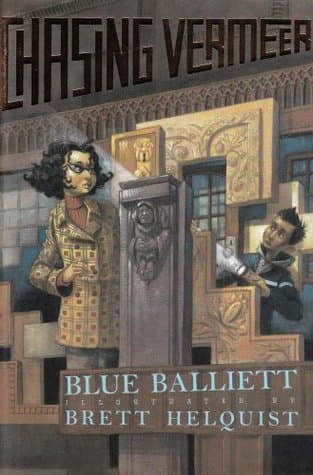
- Chasing Vermeer
Blue Balliett
3.7 (28k) average on GoodreadsChildren'sChildren solve a complex mystery involving art and secret codes.
- Harry Potter and the Sorcerer's Stone
J.K. Rowling
4.5 (7M) average on GoodreadsFantasyOrphans discover a secret world and form strong friendships while battling a dark force.
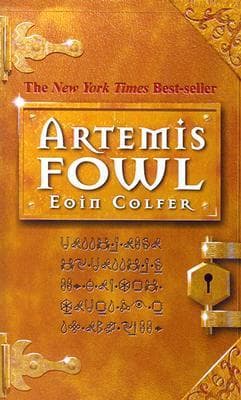
- Artemis Fowl
Eoin Colfer
3.9 (496k) average on GoodreadsFantasyBoth feature highly intelligent child protagonists. Stewart's characters operate within a more grounded, human-centric world, focusing on ethical action and ingenuity, whereas Colfer's series often involves morally ambiguous characters, advanced technology, and magical elements.
- The Hunger Games
Suzanne Collins
4.3 (6.4M) average on GoodreadsFantasyIn a future where children fight to the death on live television, Katniss Everdeen volunteers for the arena, turning a death sentence into a fight for survival and a spark of rebellion.
- 1984
George Orwell
4.2 (3.1M) average on GoodreadsPoliticsIn a future where surveillance and thought control are absolute, a man's search for truth clashes with the Party, showing that hope can be a form of rebellion.
- Divergent
Veronica Roth
4.2 (2.9M) average on GoodreadsFantasyIn a society divided by virtues, a sixteen-year-old's difference from the norm starts a rebellion that threatens her world.




Enjoyed the summary?
A summary gives you the shape of the book. The book itself has the detail, the examples and the voice.
Find The Mysterious Benedict Society on AmazonAs an Amazon Associate, BookBrief earns from qualifying purchases. How we're funded