

Synopsis
Covers the whole plot, including the ending.
- Difficulty
- Easy
- Pacing
- Fast
- Mood
- Witty, Adventurous, Humorous, Triumphant
- Read it if
- You enjoy stories about clever underdogs outsmarting greedy villains, with a touch of whimsy and adventure.
- Skip it if
- You prefer realistic animal stories or dislike themes of stealing, even from antagonists.
Fantastic Mr. Fox Plot Summary
Covers the whole plot, including the ending.
Mr. Fox's Raids and the Farmers' Fury
Mr. Fox lives with his wife and four fox kits in a hole under a tree. Every night, he steals food from the three neighboring farms belonging to Boggis, Bunce, and Bean. Boggis, a chicken farmer, loses his plumpest hens. Bunce, a duck and goose farmer, has his birds taken. Bean, who farms turkeys and apples, finds his produce gone. The farmers, who are mean and want to kill Mr. Fox, get more frustrated by his cleverness and constant losses. Their anger grows with each successful raid, leading them to plan to catch the fox.
The First Ambush: Shotgun Blast and Tail Loss
Angry at Mr. Fox's continuous thefts, the three farmers decide to watch Mr. Fox's hole. They hide near the entrance, armed with shotguns, waiting for him to come out. As Mr. Fox leaves his hole one evening, he senses danger but is too late. Boggis, Bunce, and Bean shoot. Mr. Fox dives back into his hole, but a shotgun blast cuts off his bushy tail. He gets back to his family safely, but losing his tail is a blow to him. His family worries, and the farmers celebrate what they think is a partial win.
The Digging Begins: Trapping the Foxes Underground
After the failed ambush, the farmers realize Mr. Fox is too clever to be caught above ground. They decide to dig him out. First, they use shovels, digging hard at the base of the tree where the fox family lives. Mr. Fox hears the digging, realizes the danger, and tells his family to dig deeper, making new tunnels to escape the farmers' chase. The farmers, finding their shovels too slow against the foxes' continuous tunneling, increase their efforts. They bring in three large excavating machines, one for each farmer, and begin to tear apart the hillside, determined to find and capture the fox family.
The Underground Escape and Growing Hunger
As the farmers' excavators relentlessly chew through the earth, Mr. Fox, Mrs. Fox, and their four kits dig quickly to stay ahead. They create a network of tunnels, constantly moving downwards and sideways, deeper into the earth. The digging is tiring, and the family soon gets very hungry and thirsty. Days pass, and the farmers continue their destructive work above ground, flattening the entire hill. The fox family, now truly trapped underground with no way out and no food, faces starvation. Mr. Fox knows he must come up with a plan to save his family.
Mr. Fox's Daring Plan Takes Shape
With his family weak from hunger, Mr. Fox has an idea. Instead of trying to escape to the surface, he decides they will dig *towards* the farmers' farms. He explains his plan: they will tunnel directly into the underground storerooms of Boggis, Bunce, and Bean, where all their food is kept. His family is at first unsure and worried about the danger, but their extreme hunger and trust in Mr. Fox's cleverness overcome their fears. Mr. Fox, despite his own weakness, is energized by his plan and begins to lead the digging with new resolve, guiding his family towards safety.
The First Raid: Boggis's Chicken House
Mr. Fox, guided by his sharp sense of smell and knowledge of the area, leads his family through the dark tunnels. They tunnel directly into the cellar of Boggis's chicken house. Inside, they find many plump chickens, ducks, geese, and turkeys. Mr. Fox quickly gets several of the largest birds. He tells his family to carry as much as they can back to their tunnel. The family, happy and hungry, eats the fresh meat. This first success makes them feel better and shows that Mr. Fox's plan works, giving them a needed break from starvation.
Meeting Badger and Expanding the Operation
During one of his solo trips for food, Mr. Fox meets his old friend Badger, who is also trapped and starving due to the farmers' digging. Badger is upset and weak, thinking all the forest animals are doomed. Mr. Fox, having just gotten more food from Bunce's storeroom, invites Badger to join him and his family for a feast. Badger is happy and thankful. He brings news that many other animals, including rabbits, weasels, and moles, are also trapped and starving. Mr. Fox, a generous leader, decides to invite them all to join their new underground community.
The Grand Underground Feast
Following Mr. Fox's invitation, Badger gathers all the other starving animals from the flattened hill. Rabbits, weasels, moles, and their families arrive at Mr. Fox's new, spacious underground home. Mr. Fox and his family have prepared a feast, using the food from Boggis, Bunce, and Bean. There are roasted chickens, ducks, geese, hams, bacon, and even gallons of Bean's cider. The animals, who had been close to starvation, celebrate with great joy and thanks. This shows Mr. Fox's cleverness and generosity that so many animals are saved from the farmers' cruelty.
The Farmers' Futile Wait and Mr. Fox's Victory
Above ground, Boggis, Bunce, and Bean stay put, waiting for Mr. Fox to emerge. They set up tents, cook their small meals, and watch the flattened hill, sure that Mr. Fox will eventually starve and surrender. They get colder, wetter, and more miserable as days become weeks. Meanwhile, below ground, Mr. Fox and the animal community live comfortably in their expanded home, enjoying a continuous supply of food and drink from the farmers' own stores. Mr. Fox often sends his children to spy on the farmers, enjoying their misery.
A Permanent Underground Village
After several weeks of living well underground, Mr. Fox announces his final plan. He says they will never return to the surface, where the farmers are a constant threat. Instead, they will build a permanent, self-sufficient underground village, with separate living spaces for each family and direct tunnel access to all three of the farmers' larders and cellars. The animals cheer, realizing they are now completely safe and will never go hungry again. The farmers are left to guard an empty hole, never realizing their enemy has outsmarted them and established a thriving community right under their noses.
Fantastic Mr. Fox Characters
Mr. Fox
Protagonist
The clever, resourceful, and daring leader of the fox family and eventually the entire underground animal community.
Mr. Fox is the titular character, known for his cunning, bravery, and sharp wit. He is a devoted family man, always prioritizing the safety and well-being of his wife and four kits. His 'fantastic' quality stems from his ability to outsmart the three farmers repeatedly, even when faced with seemingly insurmountable odds. He is proud of his bushy tail and feels the loss deeply, but it doesn't diminish his spirit. He is also generous, sharing his spoils with other starving animals, demonstrating a strong sense of community. His leadership and ingenuity are the driving forces of the plot.
Relationships: Mrs. Fox (Loving and supportive husband); Fox Kits (Protective and providing father); Badger (Loyal friend and ally); Boggis, Bunce, Bean (Arch-nemesis and victim)
Mrs. Fox
Supporting
Mr. Fox's supportive and occasionally worried wife.
Mrs. Fox is a loving and practical mother and wife. She often expresses concern for Mr. Fox's safety during his raids and after his tail is shot off, but she ultimately trusts his judgment and supports his plans. She is resilient and helps care for their kits during their harrowing escape underground. While not as outwardly cunning as Mr. Fox, her steady presence and encouragement are vital to the family's survival and morale. She is initially hesitant about Mr. Fox's 'fantastic plan' but quickly embraces it when she sees its success.
Relationships: Mr. Fox (Loving and supportive wife); Fox Kits (Caring mother)
Boggis
Antagonist
A fat, greedy chicken farmer, one of the three mean farmers obsessed with catching Mr. Fox.
Boggis is depicted as enormously fat, consuming three boiled chickens for breakfast, lunch, and supper. He is a chicken farmer who suffers significant losses to Mr. Fox's raids. He is one of the primary antagonists, characterized by his meanness, short temper, and single-minded determination to kill Mr. Fox. He is not particularly intelligent, relying on brute force and stubbornness. His farm is the first target of Mr. Fox's underground raids, providing the initial feast for the starving fox family.
Relationships: Mr. Fox (Sworn enemy); Bunce (Grudging ally against Mr. Fox); Bean (Grudging ally against Mr. Fox)
Bunce
Antagonist
A squat, pot-bellied duck and goose farmer, one of the three mean farmers.
Bunce is described as a 'squat pot-bellied dwarf' who eats mostly doughnuts filled with goose-liver paste. He is a duck and goose farmer whose birds are frequently stolen by Mr. Fox. Like Boggis, he is mean-spirited and obsessed with revenge against Mr. Fox. He is slightly more active in the digging efforts, bringing in his excavating machine. His farm is the second target of Mr. Fox's underground raids, supplying the animals with more food and resources. He is depicted as equally unpleasant and foolish as his counterparts.
Relationships: Mr. Fox (Sworn enemy); Boggis (Grudging ally against Mr. Fox); Bean (Grudging ally against Mr. Fox)
Bean
Antagonist
A skinny, clever turkey and apple farmer, the most intelligent of the three farmers.
Bean is the thinnest and arguably the most intelligent of the three farmers, though his intelligence is often overshadowed by his meanness. He is a turkey and apple farmer, also producing a potent cider. He is described as 'a cleverer man' with 'a nasty mind' and never washes. He is the one who suggests the most destructive methods, such as using the excavators. His farm provides the animals with delicious cider and more turkeys. Despite his relative cleverness, he is still ultimately outwitted by Mr. Fox, becoming just as miserable as Boggis and Bunce.
Relationships: Mr. Fox (Sworn enemy); Boggis (Grudging ally against Mr. Fox); Bunce (Grudging ally against Mr. Fox)
Badger
Supporting
Mr. Fox's loyal friend and fellow animal suffering from the farmers' actions.
Badger is a kind and loyal friend to Mr. Fox. He is initially portrayed as despondent and starving, believing all the forest animals are doomed due to the farmers' destruction. He represents the wider animal community suffering from the farmers' cruelty. When Mr. Fox finds him, Badger is weak and without hope. He quickly becomes an enthusiastic supporter of Mr. Fox's 'fantastic plan' and helps gather the other starving animals, becoming a key member of the new underground community. He admires Mr. Fox's ingenuity and leadership.
Relationships: Mr. Fox (Loyal friend and follower); Other Animals (Leader in gathering the community)
Fox Kits
Supporting
Mr. and Mrs. Fox's four young children, who provide motivation for Mr. Fox's daring plans.
The four fox kits are young, innocent, and initially quite naive about the dangers of the world above ground. They are deeply reliant on their parents for protection and food. Their growing hunger and thirst motivate Mr. Fox to devise his most daring plans. They are eager to help their father during the digging and are overjoyed by the feasts. They learn to trust their father's extraordinary cleverness and adapt to their new underground life. Their presence emphasizes the stakes of the story.
Relationships: Mr. Fox (Children of Mr. Fox); Mrs. Fox (Children of Mrs. Fox)
Other Animals (Rabbits, Weasels, Moles)
Mentioned
The wider animal community also displaced and starving due to the farmers' actions.
These animals represent the broader ecosystem affected by the farmers' destructive behavior. They are introduced as starving and desperate, having lost their homes and food sources. Their inclusion highlights the farmers' widespread cruelty and provides Mr. Fox with an opportunity to demonstrate his generosity and leadership beyond his immediate family. They readily accept Mr. Fox's offer of refuge and food, forming the foundation of the new, thriving underground village. They symbolize the collective victims who find salvation through Mr. Fox's ingenuity.
Relationships: Mr. Fox (Beneficiaries of Mr. Fox's generosity); Badger (Fellow sufferers and allies)
Fantastic Mr. Fox Themes
Ingenuity vs. Brute Force
This theme is central to the story. Mr. Fox consistently wins against the farmers not through strength, but through his intelligence, cunning, and creative thinking. The farmers, Boggis, Bunce, and Bean, use destructive force – shovels, excavators, and shotguns – to get what they want. However, their lack of imagination and their inability to think beyond normal methods lead to their defeat. Mr. Fox's plan to tunnel directly into their larders shows how wit and clever planning can overcome great physical power and resources.
“'What a lot of rot!' said Mr. Fox. 'Why can't they see that we can simply dig deeper than they can?”
Good vs. Evil
The story shows a clear difference between the 'good' animals and the 'evil' farmers. Mr. Fox, though a thief, is a loving family man and a generous leader, stealing only to survive. The farmers, on the other hand, are described with repulsive physical traits and even worse personalities – mean, greedy, and wanting to kill. Their actions, such as destroying the entire hill, are purely malicious. Mr. Fox and the animals winning against the farmers shows that good, even when unconventional, can overcome evil.
“'Boggis and Bunce and Bean. One fat, one short, one lean. These horrible crooks, so different in looks, were nonetheless equally mean.”
Community and Survival
Initially, the story focuses on Mr. Fox's family, but as the plot progresses, the theme includes a larger animal community. When Mr. Fox meets Badger and learns about the other starving animals, he shares his new food. This act of generosity and community building turns a desperate escape into a thriving, self-sufficient underground village. The animals' shared effort and support ensure their survival against the farmers, showing the strength found in unity and shared resources.
“'We are going to live down here for ever!' cried Mr. Fox. 'The whole community! We'll have a village down here!”
The Price of Greed and Obsession
The farmers' downfall is their greed and obsessive desire for revenge. Their wealth is large, yet they will not tolerate Mr. Fox's small thefts, which drives them to extreme, self-defeating actions. Their obsession with catching Mr. Fox leads them to destroy their own land, spend much money on machines, and neglect their farms while guarding an empty hole. Their focus on destruction blinds them to Mr. Fox's counter-strategy, leaving them miserable and defeated, a direct result of their unchecked greed and vengeful focus.
“'We'll starve them out!' shouted Bean. 'We'll wait till they come out! They'll have to come out in the end!”
Plot Devices & Literary Techniques
Anthropomorphism
Giving human characteristics and behaviors to animal characters.
Roald Dahl uses anthropomorphism extensively in 'Fantastic Mr. Fox' to make the animal characters relatable and the narrative engaging. Mr. Fox wears clothes, thinks strategically, plans elaborate schemes, and speaks perfect English. The foxes live in a 'house' and have a 'family' dynamic. This device allows readers to empathize with the animals' struggles and root for their success against the human antagonists, who, in turn, are stripped of much of their humanity through their exaggerated villainy. It creates a clear moral landscape where animals embody virtues like cleverness and community, while humans represent greed and cruelty.
Exaggeration/Hyperbole
Using extreme overstatement for emphasis or effect.
Dahl frequently employs exaggeration to create vivid imagery and emphasize character traits. The farmers are not just mean; they are 'horrible crooks' with grotesque physical descriptions (Boggis is 'enormously fat,' Bunce a 'squat pot-bellied dwarf,' Bean 'skinny as a pencil'). Mr. Fox's plans are not just clever; they are 'fantastic.' The destruction caused by the excavators is depicted as tearing 'the whole hill to pieces.' This hyperbole amplifies the stakes, the humor, and the distinct personalities, making the conflict more dramatic and the characters more memorable for a young audience.
Foreshadowing (Mr. Fox's Plans)
Hints or clues about future events, particularly Mr. Fox's ingenious solutions.
While not always explicit, Dahl uses subtle foreshadowing regarding Mr. Fox's innate cleverness and his ability to always have a plan. For example, even after losing his tail, Mr. Fox's determination is clear. The narrative constantly highlights his 'fantastic' mind, suggesting he will always find a way. The initial description of the farmers' farms and their contents also foreshadows the eventual targets of Mr. Fox's underground raids. This builds anticipation and reinforces Mr. Fox's heroic status, assuring the reader that he will ultimately prevail against the farmers' relentless, but ultimately unimaginative, attacks.
Symbolism (Mr. Fox's Tail)
The bushy tail symbolizing Mr. Fox's pride, identity, and cunning.
Mr. Fox's magnificent bushy tail serves as a powerful symbol. It represents his pride, his identity as a 'fantastic' fox, and his cunning. When it is shot off by the farmers, it is not just a physical injury but a blow to his spirit and a symbol of the farmers' temporary victory. The loss of his tail galvanizes his resolve, making his subsequent, even more audacious, plans a way to reclaim his dignity and prove his superior intellect. The tail, therefore, becomes a tangible representation of the ongoing conflict and Mr. Fox's unyielding spirit.
Fantastic Mr. Fox Quotes
“I understand what you're saying, and your comments are valuable, but I'm gonna ignore your advice.”
“We are all different, but there is something kind of fantastic about that, isn't there?”
“A little bit of nonsense now and then is relished by the wisest men.”
“If I am not for myself, who will be for me? And if I am only for myself, what am I?”
“We'll never let them grind us down!”
“I think I have this thing where everybody has to think I'm the greatest. And if they aren't completely knocked out and dazzled and slightly intimidated by me, I don't feel good about myself.”
“I'm a wild animal.”
“We'll live like bandits!”
“The farmers are out there, waiting for us. But we are down here, waiting for them.”
“You are not just a fox. You are Fantastic Mr. Fox.”
“We'll have a feast! A fantastic feast!”
“They are not just farmers. They are the three meanest, nastiest, ugliest farmers in the whole valley.”
“I'm not afraid of them. I'm afraid of what they might do to you.”
“We dig and we dig, and we dig and we dig.”
Quiz
10 questions on the plot and the characters. Each answer comes with a short explanation.
Question 1
What are the names of the three farmers who try to catch Mr. Fox?
- Boggis, Bunce, and Bean
- Boggis, Bunce, and Brown
- Bean, Boggis, and Badger
- Bunce, Bean, and Badger
Show answer
A. Boggis, Bunce, and Bean The three farmers are Boggis (fat chicken farmer), Bunce (squat duck-and-goose farmer), and Bean (skinny turkey-and-apple farmer). They are introduced early in the book as the antagonists.
Question 2
What is Mr. Fox's initial plan to escape the farmers' siege?
- He digs a tunnel straight to the farmers' houses
- He waits for the farmers to give up and leave
- He digs deeper underground with his family
- He disguises himself as a farmer to sneak out
Show answer
C. He digs deeper underground with his family After the farmers surround his hole, Mr. Fox leads his family in digging deeper underground to escape, which is the first step in his survival strategy.
Question 3
What does Mr. Fox steal from Boggis's farm?
- Apples and cider
- Chickens
- Ducks and geese
- Turkeys
Show answer
B. Chickens Boggis is a chicken farmer, so Mr. Fox steals chickens from his farm. This is part of his plan to gather food for the underground feast.
Question 4
Why do the farmers use mechanical shovels in their attempt to catch Mr. Fox?
- To dig up the entire hill quickly
- To build a fence around the hill
- To plant traps in the ground
- To scare the foxes with noise
Show answer
A. To dig up the entire hill quickly After waiting with guns fails, the farmers bring in mechanical shovels to dig up the hill where Mr. Fox and his family are hiding, showing their determination to catch him.
Question 5
How does Mr. Fox's plan ultimately save not only his family but also other animals?
- He leads a rebellion against the farmers
- He digs tunnels to the farmers' storehouses and invites other animals to a feast
- He teaches the other animals to farm their own food
- He negotiates a peace treaty with the farmers
Show answer
B. He digs tunnels to the farmers' storehouses and invites other animals to a feast Mr. Fox digs tunnels to Boggis's, Bunce's, and Bean's storehouses, stealing food and then inviting other starving animals (like Badger and his family, and others) to a grand underground feast, ensuring their survival.
Question 6
What is Bean's primary characteristic that sets him apart from the other farmers?
- He is the smartest and most cunning
- He is the richest farmer
- He is the kindest to animals
- He owns the most land
Show answer
A. He is the smartest and most cunning Bean is described as skinny and clever, often coming up with plans (like using mechanical shovels) to catch Mr. Fox, making him the most cunning of the three farmers.
Question 7
What role does Badger play in the story?
- He is Mr. Fox's rival who helps the farmers
- He is a friend who joins Mr. Fox in digging and is invited to the feast
- He is a farmer who secretly sympathizes with the foxes
- He is a neutral observer who narrates the story
Show answer
B. He is a friend who joins Mr. Fox in digging and is invited to the feast Badger is another animal living underground who Mr. Fox encounters while digging. He helps with the tunneling and is later invited to the feast with his family, symbolizing community and cooperation.
Question 8
What is the significance of the farmers' decision to camp outside Mr. Fox's hole?
- It shows their patience and determination to starve out the foxes
- It is a temporary strategy before they call for help
- It allows them to protect their farms from other animals
- It is a festive gathering for the farmers
Show answer
A. It shows their patience and determination to starve out the foxes The farmers camp with guns to wait for Mr. Fox to emerge, hoping to starve him out. This highlights their relentless pursuit and sets up the conflict that drives Mr. Fox's clever escape plan.
Question 9
How does Mr. Fox's character embody the theme of cleverness over brute force?
- He uses physical strength to fight the farmers directly
- He relies on luck and chance to survive
- He outsmarts the farmers through strategic digging and stealing
- He seeks help from human allies to negotiate
Show answer
C. He outsmarts the farmers through strategic digging and stealing Mr. Fox avoids direct confrontation with the farmers' brute force (guns and shovels) by using his intelligence to dig tunnels, steal food, and create a safe underground community, demonstrating that cleverness can triumph over strength.
Question 10
What detail about the farmers' personalities is reflected in the types of food they produce?
- Their food matches their physical appearances and temperaments
- Their food is all identical to show uniformity
- Their food is poisonous to scare away animals
- Their food is grown organically to appeal to consumers
Show answer
A. Their food matches their physical appearances and temperaments Boggis (fat) raises chickens, Bunce (squat) raises ducks and geese, and Bean (skinny) raises turkeys and apples. This connection emphasizes their distinct traits and adds humor to the story, as noted in the book's descriptions.
Fantastic Mr. Fox FAQ
What is 'Fantastic Mr. Fox' about?
The story follows Mr. Fox, a clever and charismatic fox who steals food from three wealthy but cruel farmers—Boggis, Bunce, and Bean. After the farmers attempt to dig him out of his home, Mr. Fox leads his family and other burrowing animals on a daring underground mission to raid the farmers' stores, showcasing his ingenuity and resilience.
Why should I read 'Fantastic Mr. Fox'?
It's a classic children's tale that blends humor, adventure, and clever problem-solving, with Roald Dahl's signature wit and charm. The story celebrates intelligence and teamwork over brute force, making it an engaging and morally uplifting read for all ages.
What is the background/setting of 'Fantastic Mr. Fox'?
The story is set in the English countryside, specifically in and around the farms of Boggis (a chicken farmer), Bunce (a duck and goose farmer), and Bean (a turkey and apple farmer). Much of the action takes place underground as Mr. Fox and his allies tunnel to evade the farmers.
What are the most memorable quotes?
Key quotes include Mr. Fox's defiant declaration, 'I understand what you're saying, and your comments are valuable, but I'm gonna ignore them,' and the narrator's description of the farmers: 'Boggis and Bunce and Bean / One fat, one short, one lean. / These horrible crooks / So different in looks / Were nonetheless equally mean.'
What writing style does the author use?
Roald Dahl employs a playful, rhythmic prose with vivid descriptions and humorous exaggeration, characteristic of his children's books. The narrative is fast-paced, with short chapters and dialogue that highlights the characters' personalities, making it accessible and entertaining for young readers.
What minor details add significant meaning?
The specific foods each farmer specializes in—Boggis's chickens, Bunce's ducks and geese, and Bean's cider—symbolize their greed and excess. Mr. Fox's tail being shot off by Bean serves as a permanent reminder of the farmers' cruelty and fuels his determination to outsmart them.
What are some subtle foreshadowing moments?
Early mentions of Mr. Fox's cleverness and pride in his stealing abilities foreshadow his ability to devise an elaborate plan. The farmers' initial overconfidence and lack of cooperation hint at their eventual defeat, as Mr. Fox exploits their weaknesses.
What unexpected character connections exist?
The alliance between Mr. Fox and other burrowing animals like Badger, Mole, and Rabbit emerges unexpectedly, as they initially fear the farmers but unite under Mr. Fox's leadership. This highlights a community bond that contrasts with the farmers' solitary greed.
What are unspoken character motivations?
Mr. Fox is driven not just by survival but by a desire to protect his family's dignity and prove his 'fantastic' reputation. The farmers are motivated by wounded pride and a need to assert dominance, rather than mere economic loss, making their pursuit personal.
What psychological complexities do characters exhibit?
Mr. Fox balances cunning with compassion, as seen when he risks his life to feed his family and allies. The farmers display a mix of stubbornness and incompetence, with Bean's silent, calculating nature contrasting with Boggis and Bunce's bluster, showing how pride blinds them.
What are the major emotional turning points?
Key moments include Mr. Fox losing his tail, which humbles him and strengthens his resolve; the scene where his family faces starvation, heightening the stakes; and the triumphant feast underground, which shifts from desperation to celebration and solidarity.
How do relationship dynamics evolve?
Mr. Fox's relationship with his wife and children grows from one of provider to collaborative leader, as they actively participate in the plan. The animals' initial skepticism turns into loyal camaraderie, while the farmers' alliance deteriorates into bickering and ineffectiveness.
Which parts remain ambiguous or open-ended?
The story doesn't specify the long-term fate of the farmers or whether Mr. Fox's underground community remains hidden indefinitely. It leaves open whether the farmers will give up or continue their futile pursuit, emphasizing the triumph of wit over force.
What are controversial scenes or decisions?
Some readers debate Mr. Fox's stealing as morally ambiguous, though it's portrayed as a survival tactic against cruel oppressors. The farmers' violent methods, like using digging machines and guns, raise questions about proportionality in a children's story.
'Fantastic Mr. Fox' ending explained: how it ends & what it means
The story ends with Mr. Fox and his animal allies celebrating a grand feast from the farmers' stores, having outsmarted Boggis, Bunce, and Bean. It symbolizes the victory of intelligence and community over greed and brute force, with a hopeful message about resilience and cleverness prevailing.
About the author
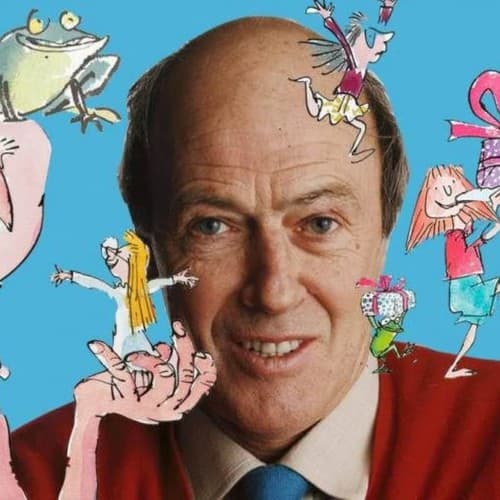
Roald Dahl was a British popular author of children's literature and short stories, a poet, and wartime fighter ace. His books have sold more than 300 million copies worldwide. Dahl has been called "one of the greatest storytellers for children of the 20th century".
Similar books
- The Tale of Peter Rabbit
Beatrix Potter
4.2 (207k) average on GoodreadsFantasyFeatures a mischievous animal protagonist outsmarting humans on a farm.
- Danny the Champion of the World
Roald Dahl
4.1 (57k) average on GoodreadsFantasyAnother Roald Dahl story featuring a clever boy and his father outsmarting a mean antagonist.
- Harry Potter and the Sorcerer's Stone
J.K. Rowling
4.5 (7M) average on GoodreadsFantasyRescued from a miserable life under the stairs, an orphaned boy discovers he's a wizard destined for a magical school, where he uncovers a dangerous secret tied to the dark wizard who murdered his parents.
- The Hunger Games
Suzanne Collins
4.3 (6.4M) average on GoodreadsFantasyIn a future where children fight to the death on live television, Katniss Everdeen volunteers for the arena, turning a death sentence into a fight for survival and a spark of rebellion.
- 1984
George Orwell
4.2 (3.1M) average on GoodreadsPoliticsIn a future where surveillance and thought control are absolute, a man's search for truth clashes with the Party, showing that hope can be a form of rebellion.
- Divergent
Veronica Roth
4.2 (2.9M) average on GoodreadsFantasyIn a society divided by virtues, a sixteen-year-old's difference from the norm starts a rebellion that threatens her world.






Enjoyed the summary?
A summary gives you the shape of the book. The book itself has the detail, the examples and the voice.
Find Fantastic Mr. Fox on AmazonAs an Amazon Associate, BookBrief earns from qualifying purchases. How we're funded