
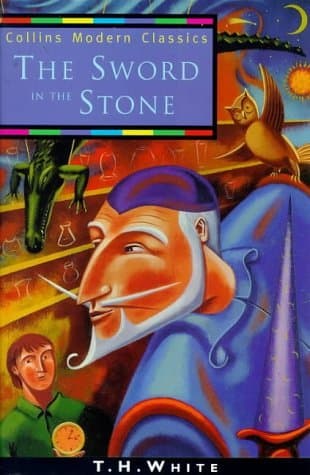
Synopsis
Covers the whole plot, including the ending.
- Difficulty
- Medium
- Pacing
- Moderate
- Mood
- Whimsical, Educational, Philosophical, Nostalgic, Adventurous
- Read it if
- You enjoy classic fantasy tales of a young hero's education, whimsical magic, and allegorical lessons about life and leadership. Perfect for those who appreciate witty prose and philosophical undertones within an adventurous narrative.
- Skip it if
- You prefer fast-paced, action-driven fantasy, or are looking for a more traditional, serious take on the Arthurian legend. The episodic nature and emphasis on Merlyn's lessons might feel slow to some.
The Sword in the Stone Plot Summary
Covers the whole plot, including the ending.
The Boy Called Wart and the Unexpected Wizard
Arthur, called Wart, is an orphan living with Sir Ector at the Castle of the Forest Sauvage. He is a squire to his older foster brother, Kay. One day, while hunting, Wart loses an arrow. Searching for it, he finds a cottage. Inside, he meets Merlyn, an old wizard who lives backward in time, with an owl named Archimedes. Merlyn knows Wart will arrive and knows his destiny, announcing he will be Wart's tutor. Sir Ector is unsure at first, but Merlyn shows his magic, convincing Ector to let him stay and teach Wart and Kay.
Lessons as a Fish and a Hawk
Merlyn starts Wart's education by turning him into animals, teaching him about different lives and rules. First, Wart becomes a fish in the moat. He learns about the brutal power of the pike, Mr. P, and the dangers of tyranny. Later, Merlyn turns Wart into a merlin (a type of falcon) and sends him to the Mews. There, Wart goes through a tough initiation into the hawk society, learning about courage, discipline, and self-control from the peregrine falcon, Cully. These changes prepare Wart for future responsibilities.
The Ant Colony and the Goose
Wart's education continues when Merlyn turns him into an ant. He experiences the strict, shared, and military society of ants, where individual thought is suppressed. This shows the dangers of totalitarianism and losing personal freedom. After this, Wart becomes a wild goose. He flies with a flock, experiencing the freedom of migration and their natural society, which relies on cooperation and shared responsibility rather than forced obedience. He learns about how geese do not fight and the beauty of living with nature.
Adventures with Robin Wood and King Pellinore
Wart and Kay go into the Forest Sauvage and meet Robin Wood (Robin Hood) and Maid Marian. They help Robin save some of his men and children held by the giant dog-boy, Galapas, and the evil Morgan le Fay. During this, Wart learns about justice and the complexities of good and evil. Meanwhile, King Pellinore, a funny knight, keeps hunting the Questing Beast. His dedication, even if his quest is absurd, gives Wart a look at chivalry and perseverance.
The Badger's Lesson and the End of Childhood
Merlyn's last animal transformation for Wart is into a badger. The badger teaches Wart about life's origins and the special gift of human intellect. The badger tells a story about how creatures chose their forms and defenses, with humans choosing to build and invent. This lesson highlights the responsibility that comes with human intelligence and its potential for both creation and destruction. Soon after, Sir Ector announces that Kay will be knighted, and Wart will be his squire, marking the end of their carefree childhood and the start of serious duties.
The Tournament and the Missing Sword
Sir Ector, Kay, and Wart travel to London for a New Year's Day jousting tournament. Kay, now a knight, wants to compete but forgets his sword at their lodgings. He sends Wart back to get it. When Wart arrives, the inn is locked and empty. Worried about helping his foster brother, Wart looks for another weapon. He sees a sword in an anvil in a churchyard, with words saying whoever pulls it out will be the King of England.
The Sword in the Stone and a King Revealed
Thinking the sword is for Kay, and not understanding the words, Wart tries to pull it from the stone. After several tries, he calls on the animal friends he made—the fish, the hawk, the ant, the goose, and the badger—who appear as spirits to encourage him. With their quiet support, Wart pulls the sword out easily. He brings it to Kay, who knows its importance and falsely claims to have pulled it. But Sir Ector sees through Kay's lie and asks Wart to do it again, which he does.
The Coronation and Merlyn's Farewell
When Wart pulls the sword again, the lords and knights, at first doubtful of a boy becoming king, accept him. Despite his humble nature, Wart is crowned King Arthur. Merlyn appears, revealing Wart's true parentage as King Uther Pendragon's son, and that he had always known his destiny. He explains his purpose was to teach Arthur for his future role. With his task done, Merlyn prepares to leave Arthur, as his backward timeline means he must return to the past, leaving Arthur to face his future as king.
The Sword in the Stone Characters
Arthur (Wart)
Protagonist
A naive and humble orphan who becomes the future King of England.
Wart, as he is affectionately called, is an innocent and kind-hearted boy living in Sir Ector's castle. He is often overshadowed by his foster brother, Kay, but possesses an innate curiosity, a strong sense of justice, and a deep capacity for empathy. His transformations into various animals under Merlyn's tutelage profoundly shape his understanding of leadership, power, and the natural world, preparing him for his destiny. He is reluctant to embrace his royal heritage, preferring a simple life, but accepts the responsibility with humility.
Relationships: Merlyn (mentor and father figure); Kay (foster brother and master); Sir Ector (foster father); Archimedes (companion and teacher)
Merlyn
Supporting
An eccentric, time-traveling wizard and Arthur's tutor.
Merlyn is a powerful and wise wizard who lives backwards in time, meaning he remembers the future. He takes Wart under his wing, using magic to transform him into various animals to impart crucial lessons about leadership, society, and the nature of power. He is witty, often absent-minded, and deeply committed to guiding Arthur towards his destiny as a just king. His knowledge of history (from his future perspective) allows him to offer unique insights and prepare Arthur for the challenges ahead. He is a benevolent but firm teacher, always with Arthur's best interests at heart.
Relationships: Arthur (Wart) (student and protégé); Archimedes (familiar and companion); Sir Ector (host and friend)
Kay
Supporting
Arthur's proud and often arrogant foster brother.
Kay is Sir Ector's biological son and Wart's foster brother and master. He is often boastful, self-important, and somewhat cruel to Wart, though he does show flashes of affection. He is driven by a desire for glory and status, aspiring to be a great knight. Despite his flaws, he is not entirely malicious, and his character serves as a foil to Wart's humility. His initial false claim to have pulled the sword highlights his ambition, but he eventually acknowledges Wart's true destiny.
Relationships: Arthur (Wart) (foster brother and squire); Sir Ector (father); Merlyn (teacher (reluctant student))
Sir Ector
Supporting
Arthur's kind but somewhat gruff foster father and owner of the castle.
Sir Ector is the master of the Castle of the Forest Sauvage and the foster father of both Kay and Wart. He is a good-natured but rather conventional man, more concerned with hunting and the practicalities of running his estate than with deep philosophical matters. He is initially skeptical of Merlyn but eventually accepts him. He loves both his sons, though he favors Kay slightly due to him being his biological child. His humility and loyalty are evident when he bows to the newly crowned King Arthur.
Relationships: Arthur (Wart) (foster son); Kay (son); Merlyn (guest and friend)
Archimedes
Supporting
Merlyn's talking owl, who assists in Wart's education.
Archimedes is Merlyn's highly intelligent and articulate pet owl. He often acts as a secondary tutor to Wart, particularly during the animal transformations. He is wise, observant, and occasionally sarcastic, providing commentary and additional instruction. Archimedes helps Wart understand the nuances of the animal world and the lessons Merlyn intends to impart, serving as a trusted companion and a symbol of wisdom.
Relationships: Merlyn (master and companion); Arthur (Wart) (student and friend)
King Pellinore
Supporting
A bumbling, chivalrous knight perpetually hunting the Questing Beast.
King Pellinore is a good-hearted but perpetually unfortunate knight who is bound by an oath to hunt the mysterious Questing Beast. He is often portrayed comically, getting into mishaps and constantly complaining about his difficult quest. Despite his bumbling nature, he embodies a certain old-fashioned, earnest chivalry and persistence. He becomes a recurring, endearing character who highlights the sometimes absurd but ultimately noble ideals of knighthood.
Relationships: The Questing Beast (object of his lifelong quest); Sir Ector (friend and fellow knight)
Robin Wood (Robin Hood)
Supporting
A legendary outlaw who champions justice for the common folk.
Robin Wood, T.H. White's version of Robin Hood, is a skilled archer and leader of a band of outlaws in the Forest Sauvage. He fights against injustice and tyranny, particularly against the evil Morgan le Fay and the Dog Boy. He is depicted as a heroic figure who teaches Wart and Kay about courage, strategy, and the complexities of justice outside of formal law. His appearance adds a layer of adventure and ethical exploration to Wart's education.
Relationships: Maid Marian (wife and companion); Arthur (Wart) (temporary ally and student)
Maid Marian
Supporting
Robin Wood's wife and a skilled huntress.
Maid Marian is Robin Wood's capable and brave wife. She is an expert tracker and hunter, active in Robin's adventures. She possesses a practical wisdom and resilience, complementing Robin's idealism. Her presence reinforces the theme of capable women in a world often dominated by men, and she aids Wart and Kay in their quest to rescue the captives.
Relationships: Robin Wood (husband and partner); Arthur (Wart) (temporary ally)
Mr. P (The Pike)
Mentioned
A tyrannical pike in the castle moat, teaching Wart about absolute power.
Mr. P is a monstrous, ancient pike in the castle moat who rules over the other fish with brutal, unquestioned authority. When Wart is transformed into a fish, he experiences Mr. P's reign of terror firsthand. Mr. P symbolizes unchecked tyranny and the dangers of absolute power, offering Wart a stark lesson in governance and the abuse of authority.
Relationships: Arthur (Wart) (brief encounter and teacher of life lessons)
The Sword in the Stone Themes
Education and the Pursuit of Knowledge
The book's main theme is Wart's education by Merlyn. Through animal transformations, Wart learns about different types of rule, the nature of power, social structures, and the need for empathy and wisdom. These are not just academic lessons but experiences, preparing him for the complex duties of kingship. Merlyn's philosophy stresses learning as the best pursuit, shaping Arthur to be a fair and wise ruler.
“The best thing for being sad,' replied Merlyn, beginning to puff and blow, 'is to learn something. That is the only thing that never fails. You may grow old and trembling in your anatomies, you may lie awake at night listening to the disorder of your veins, you may miss your only love, you may see the world around you devastated by wicked madmen, or know your honour trampled in the sewers of baser minds. There is only one thing for it then — to learn. Learn why the world wags and what wags it. That is the only thing which the mind can never exhaust, never alienate, never be tortured by, never fear or distrust, and never dream of regretting. Learning is the only thing for you. Look what a lot of things there are to learn.'”
The Nature of Power and Governance
Through Wart's animal transformations, T.H. White explores different forms of power and rule, from the brutal rule of Mr. P the pike to the rigid ways of the ants, and the cooperative ways of the geese. Each experience offers a different view on leadership, power misuse, and the best way to govern. These lessons are important for Arthur as he tries to create a fair and peaceful kingdom, contrasting with the 'might is right' idea common in his time.
“He did not know that he was to be the greatest king that ever was. He did not know that he was to be the founder of the Round Table and the bringer of peace to Britain. He did not know that he was to be called Arthur.”
Justice and Chivalry
The book looks at justice and chivalry in complex ways. Robin Wood shows a kind of natural justice, fighting tyranny outside the law. King Pellinore, though funny, shows the persistent search for chivalric ideals. Wart's own sense of fairness and his lessons on power balance prepare him to create a new kind of chivalry—one based on justice, mercy, and reason, not just force.
“The Queen of the Ants was a sort of head mistress, and she had about a hundred thousand pupils who all thought the same thing. They had to.”
Identity and Destiny
Arthur's journey of self-discovery and his destiny is a main theme. At first an ordinary orphan, Wart slowly understands his potential and his role as king. Merlyn's presence and his unique view of time are central, as he guides Arthur toward a future he already knows. Pulling the sword from the stone shows his true identity, changing him from an unknown boy to the legendary King Arthur.
“The Wart was one of those people who do not have to be taught to be good. He was good, and he was gentle, and he was kind, and he was interested in everything.”
Plot Devices & Literary Techniques
Animal Transformations
Merlyn's magical ability to turn Wart into various animals.
This is the primary pedagogical device used by Merlyn to educate Wart. By transforming him into a fish, hawk, ant, and goose, Wart gains firsthand experience of different social structures, power dynamics, and philosophies of life. These immersive lessons are crucial for shaping his understanding of governance, empathy, and the responsibilities of leadership, providing a unique and memorable way for the future king to learn about the world.
Merlyn's Backward Time Travel
The wizard's unique ability to live life in reverse.
Merlyn's ability to live backwards in time means he remembers the future, rather than the past. This provides him with foreknowledge of Arthur's destiny and allows him to meticulously prepare the young boy for his role as king. It also creates a sense of pathos, as Merlyn knows he must eventually leave Arthur. This device adds a layer of fatalism and predestination to the narrative, while also providing a unique perspective on history and the unfolding of events.
The Sword in the Stone
A legendary artifact that signifies rightful kingship.
The sword embedded in the anvil is the ultimate symbol of Arthur's destiny and divine right to rule. It acts as a magical test, revealing the true king not through strength or lineage alone, but through a predetermined, almost mystical, act. Its presence at the tournament serves as the climactic plot point that transitions Wart from a humble squire to the prophesied monarch, solidifying his identity and setting the stage for his future reign.
The Forest Sauvage
A mystical and dangerous setting that serves as a backdrop for adventure and learning.
The Forest Sauvage is more than just a geographical location; it's a symbolic space where magic, danger, and adventure intertwine. It's where Wart first encounters Merlyn, where he meets Robin Wood and Maid Marian, and where many of his animal transformations take place. The forest represents the wild, untamed aspects of the world, full of both peril and profound natural wisdom, acting as a crucible for Wart's character development and a source of wonder.
The Sword in the Stone Quotes
“The best thing for being sad is to learn something.”
“Everything not forbidden is compulsory.”
“There is only one thing for it then—to learn.”
“The bravest people are the ones who don’t mind looking like cowards.”
“It is not the oath that makes us believe the man, but the man the oath.”
“The world is full of obvious things which nobody by any chance ever observes.”
“Education is experience, and the essence of experience is self-reliance.”
“The only cure for sadness is to learn something.”
“We can only be said to be alive in those moments when our hearts are conscious of our treasures.”
“The thing which is important is the thing which is not seen.”
“It is not power that corrupts but fear. Fear of losing power corrupts those who wield it and fear of the scourge of power corrupts those who are subject to it.”
“The destiny of man is in his own soul.”
“To learn is to change.”
“The world is a comedy to those that think, a tragedy to those that feel.”
Quiz
10 questions on the plot and the characters. Each answer comes with a short explanation.
Question 1
What is the real name of the boy who becomes known as King Arthur in this story?
- Arthur Pendragon
- Wart
- Merlin
- Robin Wood
Show answer
B. Wart In T.H. White's version, the young Arthur is called 'Wart' throughout most of the story before he pulls the sword from the stone. The name 'Arthur Pendragon' is his royal title that comes later.
Question 2
What magical ability does Merlyn possess regarding time?
- He can stop time completely
- He lives backward through time
- He can see multiple possible futures
- He can travel to any point in history
Show answer
B. He lives backward through time Merlyn explains that he lives his life backward in time, which is why he can remember the future but has trouble remembering the past. This unique perspective informs his teaching methods.
Question 3
Which animal does Wart NOT transform into under Merlyn's guidance?
- A fish
- A hawk
- A badger
- A dragon
Show answer
D. A dragon Wart transforms into a fish, an ant, a hawk, a badger, a goose, and an owl, but never into a dragon. Each transformation teaches him important lessons about different aspects of life and leadership.
Question 4
What important lesson does Wart learn from his experience as a hawk?
- The importance of patience in hunting
- The value of freedom and perspective
- How to build a proper nest
- The techniques of aerial combat
Show answer
B. The value of freedom and perspective As a hawk, Wart experiences the freedom of flight and gains a new perspective on the world below. This teaches him about seeing things from different viewpoints, which will be crucial for his future role as king.
Question 5
What does King Pellinore spend most of his time pursuing?
- The Questing Beast
- The Holy Grail
- Excalibur
- Dragon's treasure
Show answer
A. The Questing Beast King Pellinore is comically dedicated to hunting the Questing Beast, a mythical creature that always seems to elude him. His pursuit represents the futility of certain traditional knightly quests.
Question 6
What is the primary method Merlyn uses to educate Wart?
- Traditional classroom lessons
- Experiential learning through transformation
- Socratic dialogue and questioning
- Memorization of historical facts
Show answer
B. Experiential learning through transformation Merlyn's educational philosophy centers on experiential learning. By transforming Wart into various animals, he allows the boy to learn through direct experience rather than through books or lectures alone.
Question 7
What significant realization does Wart have during his transformation into a badger?
- That strength is more important than intelligence
- That all creatures have their own dignity and purpose
- That magic should be used sparingly
- That he prefers animal form to human form
Show answer
B. That all creatures have their own dignity and purpose While living as a badger, Wart comes to appreciate the simple dignity and purpose in the badger's life. This teaches him respect for all creatures and their place in the natural order.
Question 8
What is the significance of the sword in the stone in the context of English succession?
- It proves the wielder's magical abilities
- It identifies the rightful king of England
- It contains ancient spells for protection
- It was placed there by Robin Wood
Show answer
B. It identifies the rightful king of England The sword in the stone has an inscription stating that whoever pulls it from the stone is the rightful king of England. This magical test resolves the succession crisis following King Uther Pendragon's death.
Question 9
How does Merlyn's backward aging affect his relationship with Wart?
- It makes him increasingly forgetful of Wart
- It allows him to anticipate Wart's needs before they arise
- It causes him to become younger as Wart grows older
- It prevents him from forming emotional attachments
Show answer
B. It allows him to anticipate Wart's needs before they arise Because Merlyn lives backward through time, he remembers the future. This allows him to prepare Wart for challenges he knows are coming and to provide exactly the education the future king will need.
Question 10
What fundamental political philosophy does Wart develop through his various transformations?
- That might makes right
- That leadership requires understanding different perspectives
- That monarchy is an outdated form of government
- That magic should guide political decisions
Show answer
B. That leadership requires understanding different perspectives Through experiencing life as various creatures, Wart learns that good leadership requires empathy and understanding of different perspectives. This becomes the foundation for his future rule as King Arthur, where he seeks to create a just society that considers all people.
The Sword in the Stone FAQ
What is 'The Sword in the Stone' about?
The book follows Wart, a young orphan boy who becomes the ward of Sir Ector and lives in the castle of the Forest Sauvage. Under the tutelage of the eccentric wizard Merlyn, who lives backward in time, Wart undergoes a series of magical transformations into animals to learn fundamental life lessons that will prepare him for his unexpected destiny as King Arthur.
Why should I read 'The Sword in the Stone'?
This classic combines whimsical fantasy with profound wisdom about education, leadership, and growing up. White's witty prose, memorable characters like Merlyn and King Pellinore, and the imaginative animal transformations create a timeless coming-of-age story that appeals to both children and adults with its humor and depth.
What is the background/setting of 'The Sword in the Stone'?
Set in medieval England during the Dark Ages, primarily in the Forest Sauvage and Sir Ector's castle. The historical setting is blended with anachronistic elements—Merlyn references future events like World War II—creating a unique timeless quality that emphasizes the universal nature of Wart's education.
What are the most memorable quotes?
Key quotes include Merlyn's advice 'Learn. That is the only thing that never fails,' and his explanation 'The best thing for being sad is to learn something.' These encapsulate the book's central theme that education and curiosity are the foundations of wisdom and effective leadership.
What writing style does the author use?
T.H. White employs a conversational, witty, and often anachronistic style, blending medieval setting with modern references and humor. His prose is richly descriptive during the animal transformation scenes, while maintaining a playful tone that engages readers of all ages with philosophical insights.
What minor details add significant meaning?
Merlyn's owl Archimedes, who serves as his familiar, symbolizes wisdom and observation. Small moments like Wart accidentally pulling the sword from the stone during a Christmas tournament—initially just to fetch a sword for his foster brother Kay—highlight how destiny often arises from humble, unplanned actions.
What are some subtle foreshadowing moments?
Merlyn frequently mentions he lives backward in time and knows the future, hinting at Wart's royal destiny. The badger's lecture on human tyranny over animals foreshadows Arthur's future struggles with justice and power. Wart's transformation into a hawk learning about 'peerage' subtly prefigures his future role among nobles.
What unexpected character connections exist?
Robin Wood (White's version of Robin Hood) appears with his band of outlaws, connecting Arthurian legend to English folklore. King Pellinore, who comically hunts the Questing Beast, becomes a loyal friend to Wart, showing how seemingly minor characters contribute to the future king's understanding of chivalry and loyalty.
What are unspoken character motivations?
Merlyn's dedication to educating Wart stems from his foreknowledge of Arthur's future greatness and the peace he will bring. Sir Ector, though blustering, genuinely cares for Wart as a son, which is revealed when he proudly kneels to him after the sword-pulling. Wart's desire for adventure masks a deeper longing for identity and purpose.
What psychological complexities do characters exhibit?
Wart grapples with insecurity and feelings of inadequacy compared to his foster brother Kay, yet shows innate curiosity and empathy. Merlyn displays eccentricity and impatience, but his unconventional teaching methods reveal a deep understanding of how experience shapes character. Kay's arrogance hides his own fears of not living up to knightly expectations.
What are the major emotional turning points?
Wart's transformation into a fish where he nearly gets eaten by a pike teaches him fear and survival. His experience as a hawk learning military discipline from the fierce falconry birds builds his courage. The climax at the London tournament, where he pulls the sword and realizes his destiny, marks his transition from boy to king.
How do relationship dynamics evolve?
Wart and Merlyn's relationship grows from pupil-teacher to one of mutual respect, with Merlyn becoming a father figure. Wart and Kay's sibling rivalry is tempered by Kay's eventual acceptance of Wart's superiority. Wart's interactions with animals during transformations teach him empathy that will define his future rule.
Which parts remain ambiguous or open-ended?
The exact nature of Merlyn's magic and his backward existence is never fully explained, leaving it mysterious. The book ends with Wart's coronation, but his future challenges as king are only hinted at, inviting readers to continue with White's 'The Once and Future King' series for the complete Arthurian saga.
What are controversial scenes or decisions?
Some readers debate whether Merlyn's sometimes harsh teaching methods—like putting Wart in dangerous situations as animals—are justified by the lessons learned. The portrayal of medieval life includes violence (like the pike attack) and class distinctions that might be unsettling, though presented through Wart's innocent perspective.
'The Sword in the Stone' ending explained: how it ends & what it means
The story culminates with Wart pulling the sword from the stone during a tournament, revealing him as the rightful king of England. This symbolizes that true leadership comes not from birthright but from earned wisdom through learning and experience. The ending emphasizes that Wart's education under Merlyn has prepared him to transform from an ordinary boy into King Arthur.
About the author
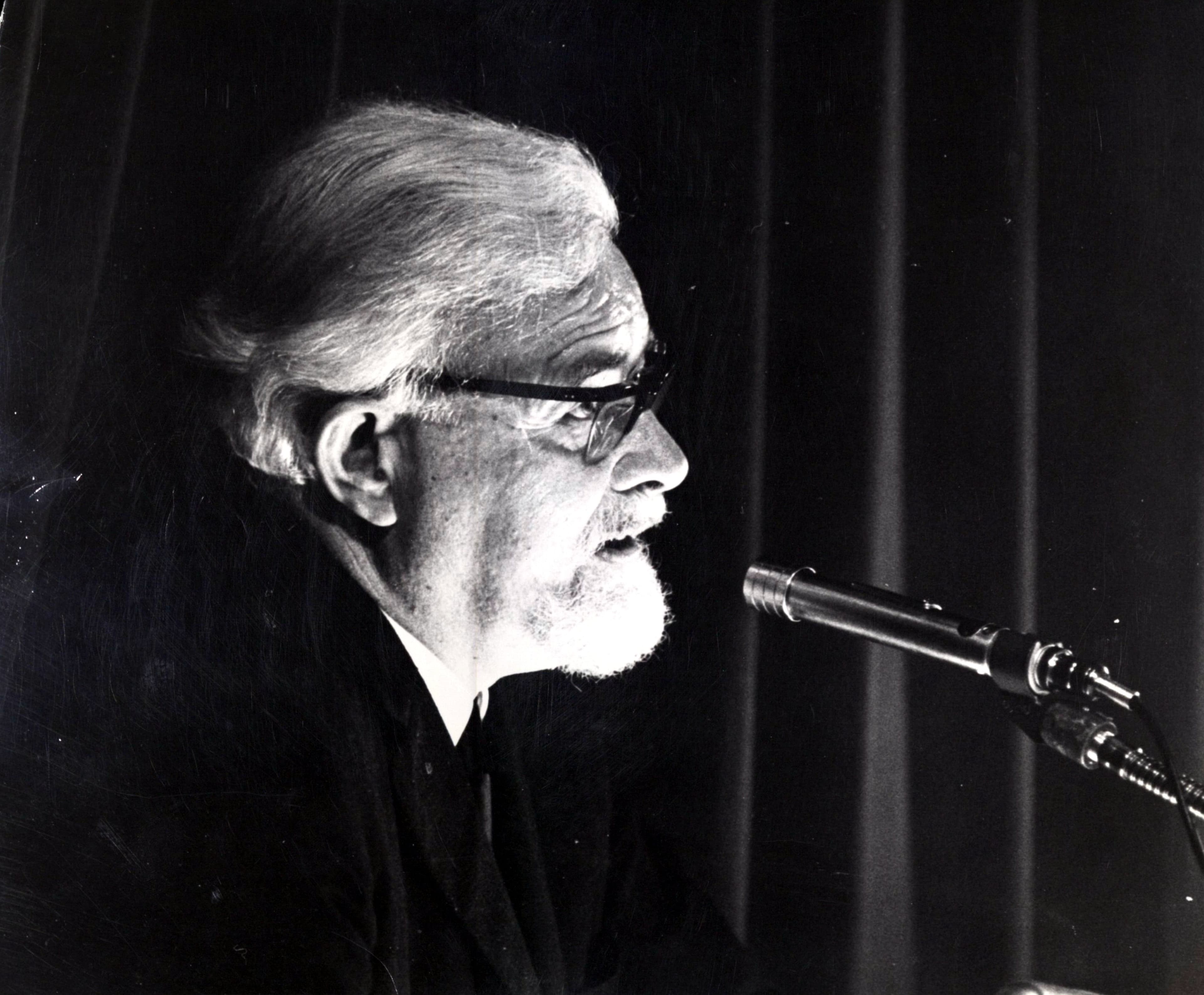
T.H. White was an English author best known for his works of fiction that explore themes of mythology and fantasy. His notable books include "The Sword in the Stone," which tells the story of the young King Arthur, and "The Book of Merlyn," which serves as a conclusion to the Arthurian saga. White's writing often combines humor and philosophical reflection.
Similar books
- A Wizard of Earthsea
Ursula K. Le Guin
4.0 (241k) average on GoodreadsFantasyExplores a young wizard's education and journey of self-discovery, with a focus on wisdom and responsibility.
- The Hobbit, or There and Back Again
J.R.R. Tolkien
4.3 (2.9M) average on GoodreadsFantasyA classic fantasy adventure with a journey of growth, whimsical elements, and a memorable mentor figure.
- Jonathan Strange & Mr Norrell
Susanna Clarke
3.8 (198k) average on GoodreadsFantasyFeatures a detailed exploration of magic in England and the dynamic between two powerful, eccentric magicians.
- Harry Potter and the Sorcerer's Stone
J.K. Rowling
4.5 (7M) average on GoodreadsFantasyRescued from a miserable life under the stairs, an orphaned boy discovers he's a wizard destined for a magical school, where he uncovers a dangerous secret tied to the dark wizard who murdered his parents.
- The Hunger Games
Suzanne Collins
4.3 (6.4M) average on GoodreadsFantasyIn a future where children fight to the death on live television, Katniss Everdeen volunteers for the arena, turning a death sentence into a fight for survival and a spark of rebellion.
- 1984
George Orwell
4.2 (3.1M) average on GoodreadsPoliticsIn a future where surveillance and thought control are absolute, a man's search for truth clashes with the Party, showing that hope can be a form of rebellion.






Enjoyed the summary?
A summary gives you the shape of the book. The book itself has the detail, the examples and the voice.
Find The Sword in the Stone on AmazonAs an Amazon Associate, BookBrief earns from qualifying purchases. How we're funded