

Synopsis
Covers the whole plot, including the ending.
- Difficulty
- Medium
- Read it if
- You want to understand the psychological and social impact of totalitarianism on ordinary people, appreciate the power of theatrical realism in political commentary, or explore the themes of fear, complicity, and resistance during the Nazi era.
- Skip it if
- You are looking for a linear narrative history, prefer traditional prose over dramatic scenes, or find politically charged and emotionally heavy content challenging.
Fear and Misery of the Third Reich Quotes
“The great thing is that you can still feel happy, even if you are a German.”
“They say the Führer is very ill. He has a growth in his stomach. But they won't say it in the papers.”
“It's all very well, all this talk about the 'new Germany'. But what's new about it?”
“You can't trust anyone anymore. Not even your own brother. Especially not your own brother.”
“We're not allowed to read the foreign newspapers. They say they're full of lies. But I think they're full of truth.”
“The air is thick with fear. You can taste it. It's in the bread, in the water, in the very air we breathe.”
“They say that even the walls have ears now. So you have to be careful what you say, even to yourself.”
“My son, he used to be so full of life. Now he just sits there, staring into space. They've broken him.”
“It's a good thing to be loyal. But what if the cause you're loyal to is wrong?”
“We used to sing songs of hope. Now we just sing songs of resignation.”
“They say that in a time of war, truth is the first casualty. But what if the war is against your own people?”
“The biggest lie is the one you tell yourself.”
“Silence is not always consent. Sometimes it is pure terror.”
“When injustice becomes law, resistance becomes duty.”
Quiz
10 questions on the plot and the characters. Each answer comes with a short explanation.
Question 1
What is the primary artistic form of 'Fear and Misery of the Third Reich'?
- A novel
- A sequence of realistic sketches
- A collection of poems
- A historical essay
Show answer
B. A sequence of realistic sketches The book is described as a 'sequence of twenty-four realistic sketches,' which is its defining artistic structure.
Question 2
How many sketches comprise 'Fear and Misery of the Third Reich'?
- Twelve
- Eighteen
- Twenty-four
- Thirty
Show answer
C. Twenty-four The description explicitly states it is a 'sequence of twenty-four realistic sketches.'
Question 3
What is the alternative title for 'Fear and Misery of the Third Reich'?
- The Rise of the Master Race
- The Private Life of the Master Race
- Life Under the Swastika
- Sketches of Nazi Germany
Show answer
B. The Private Life of the Master Race The book is also known as 'The Private Life of the Master Race,' highlighting its focus on the personal impact of the regime.
Question 4
What was Brecht's status when he wrote 'Fear and Misery of the Third Reich'?
- He was living in Germany and secretly documenting events.
- He was in exile in Denmark.
- He was visiting Germany from Russia.
- He was a prominent official within the Nazi regime.
Show answer
B. He was in exile in Denmark. The text states that Brecht wrote the work 'when Brecht was in exile in Denmark,' indicating his displacement from Germany.
Question 5
What primary emotions or states of mind does the book aim to illustrate as permeating 'ordinary' life under the Nazis?
- Patriotism and solidarity
- Joy and prosperity
- Suspicion and anxiety
- Indifference and apathy
Show answer
C. Suspicion and anxiety The description explicitly states the sketches show how 'ordinary' life was 'subtly permeated by suspicion and anxiety.'
Question 6
When was 'Fear and Misery of the Third Reich' first staged?
- 1933
- 1938
- 1945
- 1956
Show answer
B. 1938 The text states the work was 'first staged in 1938,' providing a specific historical context for its initial reception.
Question 7
What event partially inspired Brecht to write this work, according to the description?
- His direct experiences living under Nazi rule in Germany.
- His research trip to Moscow for anti-Nazi efforts.
- Interviews with German refugees in Denmark.
- His reading of German newspaper reports from abroad.
Show answer
B. His research trip to Moscow for anti-Nazi efforts. The description notes the work 'was inspired in part by his recent trip to Moscow where he had been researching tasks for the anti-Nazi effort.'
Question 8
Which of the following best describes the 'realism' of the sketches in Brecht's work?
- They are highly allegorical and symbolic, avoiding direct representation.
- They depict fantastical scenarios to highlight the absurdity of the regime.
- They portray everyday situations and conversations to show the subtle impact of the regime.
- They are historical recreations of specific documented events and speeches.
Show answer
C. They portray everyday situations and conversations to show the subtle impact of the regime. The description emphasizes 'realistic sketches showing how 'ordinary' life under the Nazis was subtly permeated,' implying a focus on believable, everyday scenarios.
Question 9
Considering Brecht's known political leanings and the context of the book's creation, what was likely a primary goal of this work?
- To provide a neutral, objective historical account of the Third Reich.
- To entertain audiences with dramatic tales of heroism during the Nazi era.
- To expose the psychological impact of totalitarianism and mobilize anti-Nazi sentiment.
- To explore the economic factors leading to the rise of Nazism.
Show answer
C. To expose the psychological impact of totalitarianism and mobilize anti-Nazi sentiment. Written by Brecht, a prominent political dramatist, in exile for anti-Nazi efforts, the work's focus on 'suspicion and anxiety' in 'ordinary' life strongly suggests an aim to reveal the oppressive nature of the regime and foster opposition.
Question 10
What does the phrase 'subtly permeated' suggest about the nature of Nazi influence as depicted in the sketches?
- The Nazi regime primarily exerted its power through overt, grand displays and public speeches.
- The impact of the regime was often insidious and pervasive, affecting personal interactions and private thoughts.
- Only those actively involved in politics experienced the regime's influence.
- The sketches focus on large-scale political events rather than individual experiences.
Show answer
B. The impact of the regime was often insidious and pervasive, affecting personal interactions and private thoughts. The term 'subtly permeated' implies that the regime's influence was not always overt or dramatic but seeped into the fabric of daily life, affecting personal relationships and internal states like 'suspicion and anxiety.'
Fear and Misery of the Third Reich FAQ
What is 'Fear and Misery of the Third Reich' about?
'Fear and Misery of the Third Reich' is a sequence of twenty-four realistic sketches by Bertolt Brecht that illustrate how ordinary life in Nazi Germany was insidiously pervaded by suspicion and anxiety. It portrays the subtle psychological and social impacts of the totalitarian regime on everyday citizens.
Does 'Fear and Misery of the Third Reich' accurately depict life under the Nazis?
Yes, the book aims for realistic depiction, drawing on contemporary accounts and Brecht's research into the anti-Nazi effort. It presents a series of vignettes designed to show the pervasive fear and misery experienced by ordinary Germans, rather than focusing on grand political events.
What is the significance of the title 'The Private Life of the Master Race'?
'The Private Life of the Master Race' is an alternative title for the work, highlighting its focus on the intimate, personal experiences of those living under the Nazi regime. It ironically contrasts the regime's propaganda of a powerful 'master race' with the reality of individual fear and suffering.
When was 'Fear and Misery of the Third Reich' written and first staged?
Bertolt Brecht wrote 'Fear and Misery of the Third Reich' while in exile in Denmark. It was first staged in 1938, serving as a powerful anti-Nazi statement as tensions escalated across Europe.
How does Brecht's 'Fear and Misery of the Third Reich' differ from other anti-Nazi literature?
Unlike some anti-Nazi literature that might focus on resistance movements or high-level political figures, Brecht's work distinguishes itself by concentrating on the subtle, everyday psychological impact of Nazism on ordinary citizens. It uses a series of short, realistic sketches to show the insidious spread of fear and suspicion in domestic and public life.
What themes are explored in 'Fear and Misery of the Third Reich'?
The book explores themes such as pervasive fear, the erosion of trust, psychological oppression, the corruption of human relationships, and the subtle ways totalitarianism infiltrates daily life. It highlights the human cost of a regime built on suspicion and control.
Is 'Fear and Misery of the Third Reich' a play or a collection of stories?
It is structured as a sequence of twenty-four dramatic sketches, which can be performed as a play. While each sketch can stand alone, together they form a cohesive theatrical work designed to be staged, reflecting Brecht's background as a playwright.
How does Brecht's experience in exile influence the book?
Brecht's exile in Denmark provided him with both distance and urgency to observe and critique the Nazi regime from afar. His research, including a trip to Moscow for anti-Nazi efforts, directly informed the content, allowing him to craft a powerful and informed indictment of the Third Reich.
About the author

Bertolt Brecht was a highly influential German playwright, poet, and theatre director. He is best known for his epic theatre style, which aimed to provoke critical thought rather than emotional identification. His notable works include "The Threepenny Opera," "Mother Courage and Her Children," and "The Good Woman of Setzuan."
Similar books
- The Rise and Fall of the Third Reich: A History of Nazi Germany
William L. Shirer
4.2 (101k) average on GoodreadsPoliticsProvides a comprehensive historical account of the Nazi era, complementing Brecht's focus on the human experience within it.
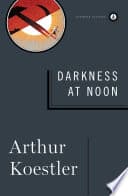
- Darkness at Noon
Arthur Koestler
4.0 (26k) average on GoodreadsPoliticsA fictional exploration of the psychological pressures and moral compromises under a totalitarian regime, similar to the individual struggles depicted by Brecht.
- The Crucible
Arthur Miller
3.6 (323k) average on GoodreadsHistorical FictionMiller's 'The Crucible' (1953) is a powerful allegory for McCarthyism, exploring themes of mass hysteria, false accusations, and the destruction of trust within a community, much like 'Fear and Misery' explores the erosion of trust under Nazism. However, 'The Crucible' employs a more traditional dramatic structure with a central protagonist (John Proctor) and a clear narrative arc, allowing for deeper emotional investment in individual character fates. Brecht's play, by contrast, deliberately avoids such a central focus to emphasize the collective and systemic nature of oppression, using a series of vignettes to show the widespread impact rather than the concentrated tragedy of a few.
- 1984
George Orwell
4.2 (3.1M) average on GoodreadsPoliticsIn a future where surveillance and thought control are absolute, a man's search for truth clashes with the Party, showing that hope can be a form of rebellion.
- Animal Farm
George Orwell
4.0 (2.7M) average on GoodreadsPoliticsA farm animals' rebellion against humans turns into a pig-led dictatorship, showing how power corrupts and revolutionary ideals are betrayed.
- Freakonomics: A Rogue Economist Explores the Hidden Side of Everything
Steven D. Levitt
4.0 (709k) average on GoodreadsBusinessThis book uses economic principles to reveal the surprising incentives behind everything from drug dealing and real estate to cheating teachers and the decline of crime.




Enjoyed the summary?
A summary gives you the shape of the book. The book itself has the detail, the examples and the voice.
Find Fear and Misery of the Third Reich on AmazonAs an Amazon Associate, BookBrief earns from qualifying purchases. How we're funded