
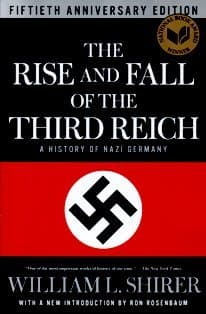
Core Idea
- Difficulty
- Hard
Key Takeaways from The Rise and Fall of the Third Reich
The Fragility of Democracy
How a seemingly stable republic succumbed to totalitarianism through democratic means.
Shirer carefully shows how the Weimar Republic, despite its democratic system, was easily overtaken by Hitler. The Nazis gained power legally at first, using proportional representation, forming coalitions, and using the President's emergency powers. This shows that democracies are not safe from authoritarian takeovers if people and institutions do not protect their principles. For example, the Reichstag fire was used to suspend civil liberties. This move, though presented as temporary, led to permanent authoritarian rule. This slow, often legal, destruction of democracy is a stark reminder of how easily freedoms can be lost.
“Hitler's rise to power was not a sudden coup, but a gradual erosion of democratic institutions, often with the complicity or inaction of those who should have defended them.”
In the book: The account of Hitler becoming Chancellor in January 1933, the subsequent Reichstag Fire Decree, and the Enabling Act of March 1933, which effectively granted Hitler dictatorial powers while still operating within a semblance of legality.
Try this: Vigilance against the erosion of civil liberties, critical evaluation of political rhetoric, and active participation in democratic processes are essential to prevent similar historical patterns. Never assume democratic institutions are self-sustaining.
The Cult of Personality and Propaganda
Hitler's mastery of mass psychology and the pervasive role of Nazi propaganda in shaping public opinion.
Shirer describes Hitler's captivating speaking ability and the effective propaganda machine run by Joseph Goebbels. From large rallies to controlled media, everything aimed to glorify Hitler, demonize 'enemies,' and create a sense of nationalistic excitement. This shows how powerful propaganda can be when paired with a charismatic leader. The book explains how truth was systematically twisted or hidden, replaced by a story that praised the Aryan race and justified aggression. This manipulation of public opinion was not just convincing; it was central to the regime's ability to prepare a nation for war and atrocities. This highlights the dangers of unchecked government control over information.
“He understood instinctively that the masses were more susceptible to a big lie than to a small one, and that repetition was key to making it believable.”
In the book: Shirer's personal observations of Hitler's speeches, the detailed accounts of Nuremberg Rallies, and the systematic control of newspapers, radio, and film under Goebbels' Ministry of Public Enlightenment and Propaganda.
Try this: Develop strong media literacy skills, critically evaluate all sources of information, and recognize the psychological tactics used in political messaging. Be wary of leaders who demand unquestioning loyalty or who demonize dissent.
The Banality of Evil and Complicity
How ordinary people, through ambition, fear, or indifference, enabled extraordinary atrocities.
Shirer's most disturbing observation is the widespread involvement of ordinary Germans. While a core group of fanatical Nazis led the regime, many others, from civil servants to military officers to everyday people, played a role. This was often not due to evil intent, but from a mix of career ambition, fear of punishment, social pressure, or simply wanting to avoid trouble. The book details how professionals like doctors, lawyers, and academics helped the regime, making its policies seem legitimate. This idea of the 'banality of evil,' though famously discussed by Arendt, is clearly shown by Shirer's evidence. It reveals how a collective lack of moral courage allowed terrible events to happen. It challenges the simple idea that only 'monsters' commit monstrous acts.
“The vast majority of Germans, even those who disagreed with some Nazi policies, found ways to rationalize their compliance, or simply looked the other way.”
In the book: The extensive documentation of the bureaucracy that facilitated the Holocaust, the memoirs and testimonies of officials who claimed they were 'just following orders,' and the general lack of widespread organized resistance within Germany.
Try this: Cultivate moral courage and a willingness to speak out against injustice, even when it is difficult or unpopular. Recognize the insidious ways in which systems can normalize cruelty and demand individual accountability.
The Failure of Appeasement
The disastrous consequences of international diplomacy's attempts to placate an expansionist regime.
Shirer's detailed account of the diplomatic mistakes before World War II is a key part of the book. He carefully records the British and French policies of appeasement, especially at Munich, where Czechoslovakia was sacrificed to try and prevent conflict. Shirer argues that these concessions, instead of preventing war, made Hitler bolder, strengthening his belief that Western powers were weak and unwilling to fight. This policy allowed Germany to rearm and expand its territory without much opposition, making the eventual war much worse. The book warns against negotiating with aggressive, ideologically driven regimes that see compromise as weakness, not a basis for peace.
“Each concession, rather than satisfying Hitler, merely whetted his appetite for more. The Western democracies, by appeasing him, only guaranteed a larger, more destructive war.”
In the book: The detailed narrative of the Rhineland reoccupation (1936), the Anschluss with Austria (1938), and especially the Munich Agreement (1938) regarding the Sudetenland, all presented with extensive diplomatic records.
Try this: In international relations, recognize when negotiation is futile against an ideologically committed aggressor. Strength and clear boundaries may be necessary to deter expansionism, rather than continuous concessions.
Hitler's Unwavering Ideology
The centrality of racial supremacy and territorial expansion (Lebensraum) to Hitler's entire worldview and actions.
Shirer consistently points out that Hitler's actions were not random but driven by a strong, fanatical ideology. He traces the origins of Hitler's antisemitism and his concept of 'Lebensraum' (living space) back to 'Mein Kampf' and earlier writings, showing these were core beliefs, not wartime choices. This challenges arguments that Hitler was just a power-hungry dictator; Shirer shows he was an ideologue whose worldview shaped his policies, from persecuting Jews to invading the Soviet Union. Understanding this ideological foundation is crucial to grasping the full extent of the Nazi regime's brutality and its unwavering commitment to racial genocide and conquest, even when facing defeat.
“From his earliest writings in Mein Kampf, Hitler's goals were clear: racial purity, the extermination of the Jews, and the conquest of vast territories in the East. He never deviated from this vision.”
In the book: Extensive references to 'Mein Kampf' and Hitler's early speeches, alongside the consistent implementation of antisemitic laws and aggressive territorial expansion throughout the regime's existence.
Try this: Take seriously the stated ideologies of political leaders and movements, especially when they articulate extreme views. Do not dismiss hateful rhetoric as mere talk; it often signals future action.
The Myth of German Uniqueness
Challenging the notion that Nazism was an anomaly disconnected from deeper currents in German history.
Shirer, an American observer who lived in Germany for years, offers a perspective that suggests Nazism was not a complete anomaly. While acknowledging the extreme nature of Hitler's regime, he notes historical precedents and cultural tendencies within Germany that, in his view, made Nazism's rise more understandable. This includes a tradition of authoritarianism, a strong military culture, and a history of antisemitism that existed before Hitler. While historians have debated this argument, Shirer's detailed historical context suggests that Nazism, though horrific, was not entirely separate from certain aspects of German historical development. This view, though debated, encourages a deeper look at how historical and cultural factors can contribute to political extremism.
“While Hitler's regime was unique in its barbarity, it drew upon and amplified certain long-standing strains of nationalism, militarism, and antisemitism present in German society.”
In the book: Shirer's frequent references to Prussian militarism, the influence of figures like Bismarck and Wagner, and the historical presence of antisemitic sentiments in Germany, all woven into the narrative of the Nazi rise.
Try this: Examine historical narratives critically, looking for both continuities and discontinuities. Understand that complex historical events often have deep roots, and avoid simplistic explanations of societal shifts.
The Role of Military Leadership
The complex and often contradictory role of the German military in supporting and enabling the Nazi regime.
Shirer focuses on the German military's relationship with Hitler. He shows a complex situation: while some generals initially disliked Hitler or had moral concerns, their professional oath, ambition, and the appeal of rearmament and national glory eventually led them to obey him. The book documents instances of resistance, such as the 1944 plot, but also highlights the widespread and effective execution of Hitler's war plans, including atrocities on the Eastern Front. This shows that even professional institutions, without strong moral leadership and independent oversight, can become tools of tyranny, prioritizing loyalty to a leader over broader ethical considerations or national interest.
“The German High Command, despite its initial reservations and occasional internal dissent, ultimately served Hitler's aggressive designs with chilling efficiency.”
In the book: Detailed accounts of generals like Blomberg, Fritsch, and Halder, their initial skepticism, their eventual compliance, and the military's role in invasions and the Holocaust (e.g., the Commissar Order).
Try this: Recognize the importance of ethical leadership within all institutions, especially the military. Promote a culture where dissent and moral judgment are valued, not suppressed, even in the face of authority.
The Scale of Documentation
The unparalleled historical record left behind by the Third Reich, enabling Shirer's monumental work.
This point, while less about the regime's actions, is important for understanding the book itself. Shirer's work is significant because he had access to many captured Nazi documents: diaries, secret conference transcripts, military orders, and personal letters. This amount of evidence, often directly from the perpetrators, allowed Shirer to create an almost 'hour-by-hour record' of the Third Reich. This access gave his history unique depth and authority, moving beyond speculation to present a chillingly detailed account based on the regime's own words and records. It highlights the value of primary sources in historical research and the unique chance provided by the Allied capture of these archives.
“No other regime, before or since, has left behind such an immense, meticulous, and damning paper trail of its own rise and fall.”
In the book: Shirer's introduction and throughout the book, where he constantly refers to specific captured documents, such as the Goebbels Diaries, Halder's War Diary, and various Reich Chancellery records.
Try this: Appreciate the importance of historical documentation and archives in understanding complex events. Recognize that a robust historical record is essential for accountability and preventing historical revisionism.
Hitler's Strategic Miscalculations
Despite early successes, Hitler's hubris and ideological rigidity ultimately led to catastrophic strategic blunders.
While acknowledging Hitler's early strategic skill in campaigns like the invasion of France, Shirer details how Hitler's increasing arrogance and ideological obsessions led to fatal mistakes. Key among these were invading the Soviet Union before defeating Britain, declaring war on the United States, and constantly interfering in military operations, often overriding his generals. His refusal to allow retreats, his belief in 'willpower' over logistics, and his underestimation of his enemies eventually pushed Germany's resources past their limit. This shows that even successful leaders can be ruined by unchecked power, pride, and an inability to adapt to changing situations.
“His initial military genius was eventually overshadowed by an unshakeable belief in his own infallibility, leading to irrational decisions that sealed Germany's fate.”
In the book: The detailed accounts of Operation Barbarossa, the strategic errors in the Battle of Britain, the decision to declare war on the US, and Hitler's direct command interventions on the Eastern Front, often against military advice.
Try this: Leaders must cultivate humility, seek diverse counsel, and be willing to adapt strategies based on evidence, not just ideology or personal conviction. Unchecked power and hubris are dangerous in any leadership role.
The Holocaust as Central Policy
The systematic extermination of Jews was not a byproduct of war, but a core, deliberate policy of the Nazi state.
Shirer's account makes it clear that the Holocaust was a deliberate policy of the Third Reich, not just a sad result of war. He details the increasing persecution, from the Nuremberg Laws to the Kristallnacht pogrom, and finally to the 'Final Solution' with its gas chambers and extermination camps. Shirer stresses that the state's machinery—the SS, the bureaucracy, the railways—was all used for this genocidal purpose. Even as Germany faced defeat and needed resources for the war, the extermination program continued, showing the regime's fanatical commitment to its racial ideology. This is the ultimate horror Shirer exposes, showing the depths of human cruelty when driven by state-approved hatred.
“The 'Final Solution' was not a secret, peripheral operation; it was a centrally planned and systematically executed policy that consumed vast resources and energy of the Third Reich, even as the war turned against Germany.”
In the book: Extensive documentation of the Nuremberg Laws, the planning of the Wannsee Conference, the operations of the concentration and extermination camps, and the logistical efforts to transport Jews from across Europe.
Try this: Never forget the lessons of the Holocaust. Actively combat antisemitism, racism, and all forms of hatred. Understand that genocide is a deliberate act of state policy, requiring vigilant opposition.
Quiz
10 questions on the main ideas. Each answer comes with a short explanation.
Question 1
What is the primary subject of William L. Shirer's book, 'The Rise and Fall of the Third Reich'?
- The history of World War I
- The rise and fall of Nazi Germany
- The political career of Winston Churchill
- The economic impact of the Great Depression
Show answer
B. The rise and fall of Nazi Germany The book's title and description clearly state it is a history of Nazi Germany.
Question 2
According to the text, how long did the Third Reich ultimately last?
- A thousand years
- Exactly 12 years
- Over fifty years
- Less than a decade
Show answer
B. Exactly 12 years The text explicitly states, 'It lasted only 12.'
Question 3
What unique advantage did historians have when documenting the Third Reich after World War II?
- The Nazis meticulously preserved all documents for future generations.
- Allied forces captured extensive Nazi documentation before it could be destroyed.
- Concentration camp survivors provided detailed written accounts.
- International archivists were embedded within the Nazi regime.
Show answer
B. Allied forces captured extensive Nazi documentation before it could be destroyed. The text highlights that the Allied demand for unconditional surrender led to the preservation of 'an almost hour-by-hour record' before the Nazis could destroy their files.
Question 4
What types of evidence are mentioned as being part of the historical record of the Third Reich?
- Only official government decrees and speeches
- Diaries, letters, transcripts of conferences, and army orders
- Primarily propaganda films and radio broadcasts
- Only accounts from Allied military leaders
Show answer
B. Diaries, letters, transcripts of conferences, and army orders The text lists various forms of evidence, including 'the testimony of Nazi leaders and of concentration camp inmates, the diaries of officials, transcripts of secret conferences, army orders, private letters—all the vast paperwork.'
Question 5
How long did William L. Shirer spend researching and sifting through the documentation for his book?
- Less than a year
- Three years
- Five and a half years
- Ten years
Show answer
C. Five and a half years The text states, 'William L. Shirer... spent five and a half years sifting through this massive documentation.'
Question 6
What is William L. Shirer's background in relation to the events of Nazi Germany?
- He was a high-ranking Nazi official.
- He was a foreign correspondent who reported on the Nazis starting in 1925.
- He was a concentration camp inmate.
- He was an Allied military strategist.
Show answer
B. He was a foreign correspondent who reported on the Nazis starting in 1925. The text mentions, 'The famed foreign correspondent and historian William L. Shirer, who had watched and reported on the Nazis since 1925.'
Question 7
How is Shirer's book described in terms of its significance and acclaim?
- A minor historical footnote
- A controversial and disputed account
- A monumental study acclaimed as the definitive record
- A fictionalized historical drama
Show answer
C. A monumental study acclaimed as the definitive record The text describes it as 'a monumental study that has been widely acclaimed as the definitive record' and 'a classic work.'
Question 8
Which of the following is NOT mentioned in the text as a topic covered in Shirer's book?
- How the United States became involved in the war
- Hitler's relationship with Benito Mussolini
- The early successes and eventual defeat of Germany in the war
- The post-war reconstruction of Japan
Show answer
D. The post-war reconstruction of Japan The text specifically mentions coverage of US involvement, Hitler's use of Mussolini and Japan, and the course of the war. Post-war reconstruction of Japan is not mentioned.
Question 9
What does the text imply about the volume of documentation left behind by the Third Reich compared to other empires?
- It was significantly less than most other powerful empires.
- It was about average for a powerful empire.
- It was an unusually large and comprehensive amount.
- The documentation was mostly lost or destroyed.
Show answer
C. It was an unusually large and comprehensive amount. The text states, 'No other powerful empire ever bequeathed such mountains of evidence about its birth and destruction as the Third Reich.' This emphasizes the vast quantity of records.
Question 10
The text uses the phrase 'nightmare empire' to describe the Third Reich. What does this suggest about the nature of Hitler's regime?
- It was a period of peace and prosperity.
- It was characterized by immense suffering and brutality.
- It was a highly efficient and well-organized state.
- It was primarily a cultural and artistic movement.
Show answer
B. It was characterized by immense suffering and brutality. The term 'nightmare' strongly implies a period of terror, horror, and suffering, aligning with the catastrophic events and brutality associated with the Nazi regime.
The Rise and Fall of the Third Reich FAQ
What is The Rise and Fall of the Third Reich about?
This book by William L. Shirer is a comprehensive history of Nazi Germany, detailing its rise to power, its devastating 12-year reign, and its eventual downfall. It draws heavily on extensive documentation captured after World War II, including testimonies, diaries, and official records.
Who wrote The Rise and Fall of the Third Reich?
The book was written by William L. Shirer, a renowned foreign correspondent and historian who reported on Nazi Germany from 1925 onwards.
Why is this book considered a definitive history of Nazi Germany?
Shirer had firsthand experience covering the events and meticulously sifted through a vast amount of captured Nazi documentation. This, combined with his historical analysis, has led to its widespread acclaim as the definitive record of the Third Reich.
What kind of evidence does the book use?
The book utilizes an unprecedented amount of evidence, including the testimony of Nazi leaders and concentration camp inmates, diaries of officials, transcripts of secret conferences, army orders, and private letters, all gathered after the war.
How long did the Third Reich last?
Despite Hitler's boast that it would last a thousand years, the Third Reich existed for only 12 years, from 1933 to 1945.
Does the book cover Hitler's rise to power?
Yes, the book details the 'birth' of the Third Reich, covering the events and circumstances that led to Hitler's ascent and the establishment of Nazi Germany.
What is the book's coverage of World War II?
The book provides a detailed account of World War II from Germany's perspective, including its early successes and eventual defeat, making it essential reading for understanding the conflict.
Does the book explain how the US got involved in the war?
Yes, the book includes astonishing accounts of how the United States became involved in the conflict.
How does the book portray Hitler's alliances?
The book examines Hitler's key alliances, including his relationships with Mussolini and Japan, and how these were utilized in his drive for world conquest.
Is this book suitable for someone new to the history of Nazi Germany?
Given its comprehensive nature and accessible yet detailed historical account, it is an excellent starting point for understanding this critical period in history.
About the author
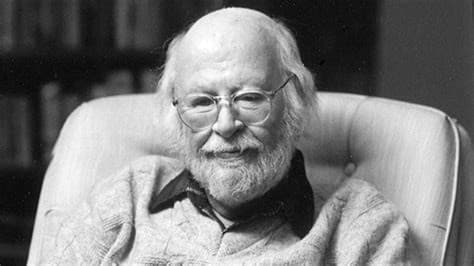
William L. Shirer was an American journalist and historian known for his detailed accounts of World War II and Nazi Germany. His most notable work, "The Rise and Fall of the Third Reich: A History of Nazi Germany," provides a comprehensive analysis of the Nazi regime and its impact on Europe. Shirer's writings are primarily focused on non-fiction, reflecting his expertise in historical narrative.
Similar books
- 1984
George Orwell
4.2 (3.1M) average on GoodreadsPoliticsIn a future where surveillance and thought control are absolute, a man's search for truth clashes with the Party, showing that hope can be a form of rebellion.
- Animal Farm
George Orwell
4.0 (2.7M) average on GoodreadsPoliticsA farm animals' rebellion against humans turns into a pig-led dictatorship, showing how power corrupts and revolutionary ideals are betrayed.
- Freakonomics: A Rogue Economist Explores the Hidden Side of Everything
Steven D. Levitt
4.0 (709k) average on GoodreadsBusinessThis book uses economic principles to reveal the surprising incentives behind everything from drug dealing and real estate to cheating teachers and the decline of crime.
- I Am Malala: The Story of the Girl Who Stood Up for Education and Was Shot by the Taliban
Malala Yousafzai
4.1 (419k) average on GoodreadsPoliticsA teenage girl from a Taliban-controlled valley refuses to give up her books, becoming a global voice for education even after an assassination attempt.
- Atlas Shrugged
Ayn Rand
3.7 (354k) average on GoodreadsPoliticsIn a dystopian America where innovators vanish, a brilliant heiress races to uncover the truth behind the disappearing industrialists and the enigmatic John Galt, who vows to stop the world's progress.
- The Art of War
Sun Tzu
4.0 (330k) average on GoodreadsBusinessLearn ancient strategies for outsmarting rivals, whether on the battlefield or in the boardroom.






Enjoyed the summary?
A summary gives you the shape of the book. The book itself has the detail, the examples and the voice.
Find The Rise and Fall of the Third Reich on AmazonAs an Amazon Associate, BookBrief earns from qualifying purchases. How we're funded