
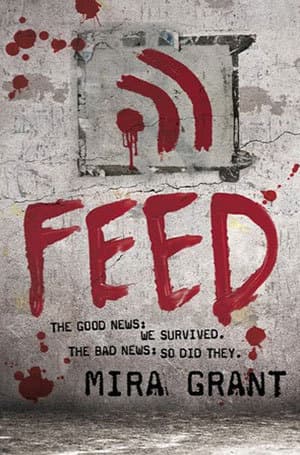
Synopsis
Covers the whole plot, including the ending.
- Difficulty
- Medium
- Pacing
- Fast
- Mood
- Suspenseful, Gritty, Dark, Intriguing
- Read it if
- You enjoy post-apocalyptic settings with a strong focus on journalism, political intrigue, and sibling relationships, featuring a fast-paced plot and zombie horror.
- Skip it if
- You prefer less grim or violent stories, or are looking for a straightforward zombie survival tale without deep political conspiracy.
Feed Plot Summary
Covers the whole plot, including the ending.
The Rising and the New Normal
Twenty years after the 'Rising,' when a cancer and cold cure mutated into a zombie virus, humanity lives in fortified settlements. Bloggers Georgia and Shaun Mason, with their friend Buffy, run 'After the End Times,' a popular news blog about zombies and politics. They are 'sensory' bloggers, reporting from the field and risking infection daily. The world has strict rules about infection, including mandatory blood tests and immediate termination for anyone testing positive. Their blog has many followers, and they constantly look for new stories to stay relevant in a competitive media environment.
A Presidential Campaign and a Major Assignment
After getting a major sponsorship, Georgia, Shaun, and Buffy are hired to cover Senator Peter Ryman's presidential campaign. Ryman is a charismatic and seemingly honest politician. This is a big chance for 'After the End Times,' raising their status to embedded journalists on a national stage. Their first job is to document Ryman's public appearances and policy speeches, which often discuss the zombie threat. The team is excited but also aware of the immense pressure and scrutiny that comes with such a high-profile role, especially given the dangers of reporting in a world still full of the infected.
The First Attack and Suspicion
During a campaign stop, a zombie attack occurs, killing a staffer. This puts the team on high alert. The official explanation points to a security breach, but Georgia and Shaun, experienced with zombies, find parts of the attack suspicious. They begin to investigate, noticing inconsistencies. During this event, they meet Rick, a former military operative and Ryman's head of security, who views the bloggers with distrust, increasing their unease.
Escalating Threats and a New Ally
As the campaign continues, more targeted attacks happen, not just from zombies but also from humans. These incidents are too precise to be random, suggesting an effort to disrupt the campaign or eliminate specific people. Georgia, with her sharp mind, starts to see a pattern. She tells Shaun and Buffy her suspicion that someone is trying to sabotage Ryman's presidency and silence investigators. They realize they are no longer just reporting the news but are part of it, drawing the attention of dangerous forces.
The Revelation of Dr. Abel
Driven by her instincts, Georgia researches old government files and scientific papers about the Kaelen virus. She finds references to Dr. Abel, a researcher whose work was dismissed after the Rising. Dr. Abel's theories suggested the virus was more complex and controllable, contradicting the official story of an unstoppable plague. Georgia realizes that if Dr. Abel's work is true, it could change the understanding of the Rising and expose a cover-up, making her investigation dangerous.
Shaun's Infection and Georgia's Sacrifice
During a brutal attack, Shaun is gravely injured and infected by a zombie. In *Feed*, infection means death, with immediate termination protocols. But Georgia, bound to her brother, makes a desperate decision. She self-amputates Shaun's infected arm, a risky procedure with a slim chance of stopping the virus. This act breaks protocols and carries personal and professional consequences, but for Georgia, saving Shaun is most important.
The Aftermath and the Truth
Shaun survives the amputation and slowly recovers, though traumatized. Georgia's defiance draws the attention of those in power who want to suppress the truth. They are targeted by the conspirators and authorities enforcing infection protocols. During this period of vulnerability, Georgia, with Buffy's help, uncovers the full conspiracy: the Kaelen virus was not an accident but an engineered pathogen, designed to be contained and exploited.
The Conspiracy Revealed
Georgia and Shaun uncover the truth: a powerful, secret organization developed the Kaelen virus to control global populations. They find evidence that the virus was a bio-weapon designed to be easily triggered and contained, allowing for the manipulation of fear and power. The 'cure' that caused the Rising was a deliberate act, and twenty years of fear and control were part of a larger plan. Senator Ryman, they realize, is either a pawn or complicit in this scheme, and their investigation has put them in the crosshairs of this entity.
The Confrontation and Georgia's Fate
Armed with evidence, Georgia confronts the conspirators, intending to broadcast her findings. She faces pressure and threats, but her resolve to expose the truth remains. In a showdown, Georgia sacrifices herself to ensure the information gets out. She is infected, knowing her death will trigger an automatic broadcast of her findings, using her demise as proof and a catalyst for revealing the conspiracy. Her final act shows her commitment to journalistic integrity and her love for humanity.
Shaun's Vow and the Aftermath
After Georgia's death and the public revelation of the conspiracy, the world falls into chaos. Shaun, now a Kaelen (an infected person who reanimates as a 'conscious' zombie, retaining some self), deals with his new existence and losing his sister. Despite his transformation, he keeps his memories and a determination to honor Georgia's sacrifice. He vows to continue her work, ensuring the truth is known and fighting forces that seek to control and deceive humanity. His journey as a Kaelen begins, a symbol of resistance in a changed world.
Principal Figures
Georgia Mason
Protagonist
The driven, analytical, and ultimately self-sacrificing lead blogger.
Georgia is the primary narrator and the brains behind 'After the End Times.' She is fiercely intelligent, logical, and deeply committed to journalistic integrity. Driven by a relentless pursuit of truth, she often prioritizes facts over emotions, which sometimes puts her at odds with her more impulsive brother, Shaun. She is an expert in zombie lore and survival, pragmatic and highly observant. Her moral compass is unshakeable, and she believes in the power of information to change the world. She also carries a deep, unspoken love for her brother.
Relationships: Shaun Mason (Younger brother, co-blogger, deep familial bond); Buffy (Close friend, tech expert, integral team member); Rick (Professional acquaintance, initially antagonistic but develops mutual respect)
Shaun Mason
Protagonist/Supporting
Georgia's impulsive, action-oriented brother and co-blogger.
Shaun is the 'action man' of 'After the End Times,' known for his daring stunts and willingness to put himself in harm's way for a story. He is impulsive, charismatic, and deeply loyal to Georgia. While Georgia is the mind, Shaun is the muscle and the heart, often acting on instinct. He struggles with the trauma of the Rising and his own personal losses, which he often masks with bravado. His bond with Georgia is the cornerstone of his existence, and he trusts her judgment implicitly, even when he doesn't fully understand it.
Relationships: Georgia Mason (Older sister, co-blogger, profound sibling connection); Buffy (Close friend, fellow team member)
Buffy (Georgette Meissonier)
Supporting
The brilliant, introverted tech expert and hacker for 'After the End Times'.
Buffy is the quiet, genius hacker and tech support for the Mason siblings. She is socially awkward but fiercely loyal and incredibly skilled with computers and data analysis. She prefers to work from the safety of their fortified home base, but her contributions are invaluable to the blog's success and their investigations. She provides the technical backbone for their operations, from managing their online presence to digging for crucial information. Her loyalty to Georgia and Shaun is unwavering, and she acts as their anchor in the digital world.
Relationships: Georgia Mason (Close friend, colleague, intellectual partner); Shaun Mason (Close friend, colleague)
Senator Peter Ryman
Antagonist/Supporting
The presidential candidate whose campaign the bloggers are covering, central to the conspiracy.
Senator Peter Ryman is a charismatic and seemingly ethical presidential candidate whose campaign becomes the focus of Georgia and Shaun's investigation. He projects an image of integrity and a strong stance against the infected, making him a popular figure in the post-Rising world. However, as the story unfolds, he is revealed to be either a key player in the conspiracy or a manipulated pawn within it. His public persona contrasts sharply with the dark truths the bloggers uncover about the origins and control of the Kaelen virus.
Relationships: Georgia Mason (Journalist covering his campaign, eventually his adversary); Rick (His head of security)
Rick
Supporting
Senator Ryman's hardened head of security with a military background.
Rick is Senator Ryman's head of security, a former military operative who is highly competent and fiercely protective. He initially views the Mason siblings with suspicion and professional disdain, finding their methods unconventional and risky. However, as they face increasing threats and uncover more of the conspiracy, he develops a grudging respect for their abilities and dedication. He is a pragmatic character, focused on his duty, but capable of recognizing truth and integrity when he sees it, even if it comes from unexpected sources.
Relationships: Senator Peter Ryman (Employer, client); Georgia Mason (Initially antagonistic, develops mutual respect)
Dr. Abel
Mentioned
The scientist whose suppressed research holds the key to the virus's true nature.
Dr. Abel is a theoretical virologist whose work predates the Rising. Her unconventional theories about the Kaelen virus, suggesting it was more complex and potentially controllable than officially acknowledged, were suppressed and dismissed by the scientific and governmental establishment. Georgia uncovers her research, which becomes a crucial piece of the puzzle in understanding the true origins and nature of the virus, revealing that the official narrative was a deliberate deception. Dr. Abel represents the silenced truth that the conspiracy sought to bury.
Themes & Insights
The Power of Information and Journalism
The novel shows the importance of independent journalism in uncovering truth when official stories are manipulated. Georgia and Shaun's blog, 'After the End Times,' is a source of truth in a post-apocalyptic society with censorship and fear. Their pursuit of facts, even at risk, demonstrates how information can challenge institutions and expose corruption. Georgia's final sacrifice to ensure the truth is broadcast highlights her belief in an informed public, as seen in her act of triggering a broadcast upon her death.
“We were newsies. We reported the facts. We put the world on notice. We didn’t make the news, we just told people about it. And if that killed us, well, that was the price of doing business.”
Loss, Grief, and Trauma
The world of 'Feed' is full of loss and trauma from the Rising and the constant threat of infection. Characters like Georgia and Shaun carry the weight of a changed world, having lost family and friends. Shaun struggles with the psychological scars of survival and constant closeness to death. The amputation scene, where Georgia saves Shaun, shows this trauma and the extreme measures taken to prevent more loss. The idea of 'going Kaelen' – transforming into a conscious zombie – also explores the grief of losing humanity while remaining aware.
“Grief is a ghost. It's a shadow that follows you wherever you go, and sometimes, in the right light, it looks exactly like the person you've lost.”
The Nature of Humanity and Identity
'Feed' explores what it means to be human when lines between life and death, self and monster, blur. The 'Kaelen' – a reanimated infected person who keeps some consciousness – challenges ideas of identity and personhood. Shaun's transformation into a Kaelen at the end forces a re-evaluation of what a 'person' is and if the infected are mindless monsters. This theme also extends to human characters, exploring how fear and survival can strengthen or erode humanity, seen in some characters' moral compromises versus Georgia's integrity.
“We were still human, somehow. Even when we weren’t. Even when we were dead, and walking, and hungry. We were still us.”
Government Control and Conspiracy
A central theme of the novel is the danger of government control and unchecked power. The 'Rising' is revealed as a deliberate act by a secret organization to manipulate global populations through fear. Strict infection protocols, suppressed research, and constant surveillance all maintain this control. The conspiracy shows how institutions can use a crisis to gain power, control information, and dictate citizens' lives, making the fight for truth a fight for freedom.
“Fear is a tool. And like all tools, it can be used for good or for ill. In the right hands, it can save lives. In the wrong hands, it can enslave them.”
Plot Devices & Literary Techniques
The Kaelen Virus (and the Infected)
The central catalyst and ever-present threat, driving the narrative and shaping the world.
The Kaelen virus is the mutated pathogen responsible for the 'Rising' and the creation of the infected (zombies). It acts as the primary external conflict, constantly threatening the characters' lives and forcing humanity into fortified existence. Crucially, the virus is also a plot device for the central conspiracy: it's revealed to be engineered and controllable, not a random accident, thus transforming the zombie apocalypse from a natural disaster into a weapon of control. The existence of 'Kaelen' (conscious infected) further complicates the narrative, blurring lines of identity and morality.
First-Person Blog Narrative
Georgia Mason's blog entries and internal monologue provide the primary lens for the story.
The novel is primarily told through Georgia Mason's first-person perspective, often framed as her blog entries or internal monologue as a journalist. This device allows for a deep dive into her analytical mind, her observations, and her journalistic ethics. It also lends an immediacy and authenticity to the narrative, making the reader feel like an embedded reporter alongside her. The blog format is also crucial for the climax, as Georgia's final act is to use her own death to trigger a global broadcast of her findings, making her blog the ultimate vehicle for truth.
The Mason Sibling Bond
The emotional core of the story, driving character motivations and sacrifices.
The deep, almost telepathic bond between Georgia and Shaun Mason serves as a powerful emotional engine for the narrative. Their contrasting personalities complement each other, making them an effective team. More importantly, their fierce loyalty and love for one another drive key plot points, most notably Georgia's decision to amputate Shaun's arm to save him from infection. This bond provides the emotional stakes for their perilous journey and ultimately fuels Georgia's sacrifice and Shaun's subsequent commitment to her legacy.
Suppressed Research (Dr. Abel's Work)
A hidden truth that unravels the official narrative of the zombie apocalypse.
Dr. Abel's suppressed research on the Kaelen virus is a classic 'hidden truth' plot device. It represents the alternative, inconvenient explanation for the Rising that the powerful conspiracy sought to bury. When Georgia uncovers this research, it provides the intellectual framework for understanding the true, engineered nature of the virus, transforming the narrative from a simple survival story into a complex conspiracy thriller. It acts as a crucial piece of the puzzle that allows Georgia to connect seemingly disparate events and expose the larger plot.
Feed Quotes
“We're not going to be the generation that just sits around and lets the world fall apart. We're going to fix it.”
“Everyone always says that life is short, but what they don't tell you is that it's also long.”
“There are no monsters in the dark. The monsters are in the light.”
“The truth is a terrible weapon. It should be used with caution.”
“We tell stories because we have to. We tell stories because we're human.”
“We are the first generation of true post-Rising journalists. We don't just report the news. We are the news.”
“It's not about what you believe. It's about what you can prove.”
“There's a difference between being afraid and being a coward.”
“You can never go home again, but you can always find a new one.”
“We are not just survivors. We are the future.”
“Sometimes the best way to fight a monster is to become one yourself.”
“Love is a dangerous thing. It can make you do stupid things.”
“The world didn't end with a bang. It ended with a cough and a scream.”
“We didn't just survive. We thrived. We found a way to live.”
Quiz
10 questions on the plot and the characters. Each answer comes with a short explanation.
Question 1
What is the primary method of communication and information dissemination used by Georgia and Shaun Mason?
- Television broadcasts
- Newspaper articles
- Blogging
- Radio programs
Show answer
C. Blogging Georgia and Shaun Mason are explicitly described as bloggers who run a news site, making blogging their primary method of communication.
Question 2
What event is referred to as 'the Rising' in the book's timeline?
- The development of a cure for cancer
- The initial outbreak and spread of the zombie infection
- The establishment of the blogosphere as a news source
- The election of the new presidential candidate
Show answer
B. The initial outbreak and spread of the zombie infection The synopsis states, 'Now, twenty years after the Rising, bloggers Georgia and Shaun Mason are on the trail...' implying the Rising was the beginning of the zombie apocalypse.
Question 3
What is the core directive or command that drives the infected?
- Survive
- Reproduce
- Feed
- Conquer
Show answer
C. Feed The synopsis explicitly states the virus blocks take over bodies and minds with 'one, unstoppable command: FEED.'
Question 4
What is the primary motivation for Georgia and Shaun Mason's investigation?
- To find a cure for the infection
- To expose a dark conspiracy behind the infected
- To locate their missing family members
- To gain fame and recognition in the blogging community
Show answer
B. To expose a dark conspiracy behind the infected The synopsis states they are 'on the trail of the biggest story of their lives—the dark conspiracy behind the infected.'
Question 5
How long has it been since 'the Rising' when the main story begins?
- 5 years
- 10 years
- 20 years
- 50 years
Show answer
C. 20 years The synopsis clearly states, 'Now, twenty years after the Rising, bloggers Georgia and Shaun Mason are on the trail...'
Question 6
What seemingly positive medical advancements preceded the creation of the zombie virus?
- Development of warp drive and interstellar travel
- Cures for cancer and the common cold
- Eradication of all known genetic diseases
- Successful human cloning and organ regeneration
Show answer
B. Cures for cancer and the common cold The opening lines state, 'We had cured cancer. We had beaten the common cold. But in doing so we created something new...'
Question 7
What is the primary risk Georgia and Shaun face in their pursuit of the truth?
- Financial ruin and loss of their blog
- Social ostracism from the blogging community
- Death, as implied by 'The truth will get out, even if it kills them.'
- Imprisonment for libel and slander
Show answer
C. Death, as implied by 'The truth will get out, even if it kills them.' The final sentence of the synopsis explicitly states, 'The truth will get out, even if it kills them,' highlighting the extreme danger.
Question 8
What year did the events leading to the creation of the zombie virus occur, as per the book's context?
- 2000
- 2014
- 2024
- 1999
Show answer
B. 2014 The synopsis clearly states, 'The year was 2014. We had cured cancer. We had beaten the common cold. But in doing so we created something new...'
Question 9
The book explores themes of journalism and truth in a post-apocalyptic world. What aspect of this theme is highlighted by the Mason siblings' profession?
- The decline of traditional media in favor of government-controlled news.
- The importance of independent investigation and reporting, even at great personal risk.
- The trivialization of news in a world focused solely on survival.
- The ease with which information can be spread without consequence in a digital age.
Show answer
B. The importance of independent investigation and reporting, even at great personal risk. Their role as bloggers 'on the trail of the biggest story of their lives' and the phrase 'The truth will get out, even if it kills them' strongly emphasize independent journalism and its inherent dangers.
Question 10
Based on the synopsis, what is the fundamental irony presented by the origin of the zombie infection?
- The infection originated from a military experiment rather than a scientific one.
- The cure for a simple cold led to a global pandemic, while cancer was easily defeated.
- Humanity's greatest medical triumphs (curing cancer and the common cold) inadvertently led to its greatest downfall.
- The zombies are intelligent and organized, rather than mindless, contradicting expectations.
Show answer
C. Humanity's greatest medical triumphs (curing cancer and the common cold) inadvertently led to its greatest downfall. The text states, 'We had cured cancer. We had beaten the common cold. But in doing so we created something new, something terrible...' This directly links humanity's medical success to its catastrophic failure.
Feed FAQ
What is the central premise of 'Feed' by Mira Grant?
The novel is set twenty years after a zombie apocalypse, known as the Rising, caused by a cure for cancer and the common cold. It follows stepsiblings Georgia and Shaun Mason, news bloggers who report on the post-Rising world, as they uncover a political conspiracy during a presidential campaign. Their journalistic pursuit eventually leads them into grave danger.
Who are Georgia and Shaun Mason, and what is their relationship?
Georgia Mason is the lead reporter and an 'accelerated' blogger, specializing in analysis and investigation, while her adoptive brother Shaun Mason is a 'fringe' blogger, focusing on combat and getting into dangerous situations for their stories. They are stepsiblings, having been adopted by the same parents, and share an incredibly close, almost symbiotic, bond built on trust and shared trauma.
What role do their fellow crew members, Buffy and Rick, play?
Buffy, whose real name is Cara, is their tech expert and 'sensory' blogger, handling equipment, communications, and often the emotional support for the team. Rick is their security expert and 'retrospect' blogger, responsible for their safety, driving, and often the more grounded, cynical perspective within the group. Both are integral to the Mason team's success and survival.
What is the 'Kellis-Amberlee' virus, and how did it originate?
The Kellis-Amberlee virus is the pathogen responsible for the zombie apocalypse, created accidentally by combining modified versions of the cure for cancer (Kellis-Amberlee 'C' virus) and the common cold (Kellis-Amberlee 'A' virus). When these two benign viruses came into contact within a human host, they hybridized into a new, virulent strain that reanimates the dead and causes infection upon exposure to bodily fluids.
What is the 'testing' process that all humans must undergo in this world?
Every individual in the post-Rising world must undergo regular blood testing for the Kellis-Amberlee virus. This is a crucial safety measure because humans are carriers; the virus lies dormant in their bloodstream, becoming active and infectious only upon death or severe trauma. Positive test results mean immediate quarantine and often euthanasia to prevent an outbreak.
What is the significance of the character Senator Ryman?
Senator Peter Ryman is the presidential candidate whom Georgia and Shaun's team is covering. He represents a more moderate, cautious approach to post-Rising society, contrasting with the more radical views of his political opponents. His campaign becomes the focal point of the conspiracy that the Mason team uncovers, leading directly to their tragic discoveries.
What hidden detail about Georgia's past foreshadows her ultimate fate?
Georgia's childhood trauma involving her biological father's infection and her own subsequent infection and miraculous recovery as a child subtly foreshadows her eventual death and reanimation. Her unique experience of surviving an initial infection and her deep understanding of the virus's mechanics make her both an expert and, tragically, uniquely vulnerable.
How does the 'blogging' culture depicted in the book reflect real-world journalism?
The various blogger types (accelerated, fringe, sensory, retrospect, newstype) mirror different roles and specializations within real-world journalism, from investigative reporters to photojournalists and tech support. The book highlights the struggles for truth, the dangers of reporting, and the public's hunger for information, all amplified by the post-apocalyptic setting.
What is the true nature of the conspiracy uncovered by the Mason team?
The conspiracy involves a deliberate plot by elements within the CDC and government to manipulate public opinion and maintain control through the threat of engineered outbreaks. They are not only aware of the virus's potential for weaponization but actively use it to silence opposition and ensure political power, specifically targeting Senator Ryman's campaign.
Why does Georgia choose to 'go Kellis-Amberlee' at the end?
Georgia chooses to go Kellis-Amberlee, meaning she allows herself to become a zombie after being fatally infected, to expose the conspiracy. By activating her internal recording equipment and transmitting her final moments as a reanimated corpse, she provides irrefutable proof of the engineered outbreak and the government's culpability, ensuring the truth gets out despite her death.
Analyze Georgia Mason's psychological motivation for her dedication to truth.
Georgia's relentless pursuit of truth stems from a deep-seated trauma related to her biological father's death and the societal lies surrounding the Rising. She believes that accurate information is the only bulwark against chaos and manipulation, dedicating her life to ensuring that people understand the world around them, even if the truth is terrifying. This drive is almost an obsession, fueled by a desire for control in an uncontrollable world.
How does Shaun Mason's 'fringe' personality type contribute to the team's dynamic and his own coping mechanisms?
Shaun's 'fringe' persona, characterized by his reckless bravery and willingness to confront danger head-on, serves multiple psychological functions. It allows him to process trauma through action, provides a necessary counterpoint to Georgia's analytical intensity, and acts as a protector for his sister. His combat focus is both a skill and a coping mechanism for the constant threat of the infected.
Discuss the psychological impact of living in a world where death guarantees reanimation.
The constant threat of reanimation profoundly impacts the characters' psychology, instilling a pervasive fear of death and a strict protocol around it. It leads to a detachment from traditional notions of a peaceful end, replacing it with the horror of becoming a 'george.' This reality forces characters to confront their mortality not just as an end, but as a potential continuation in a monstrous form, impacting their relationships and self-preservation instincts.
How does the novel explore the concept of media manipulation and public trust?
The novel critically examines how easily information can be controlled and twisted, even in a post-apocalyptic world where survival depends on truth. The government's ability to orchestrate zombie outbreaks and frame them as accidents highlights the fragility of public trust and the power of those who control the narrative. The bloggers, despite their dedication, constantly battle against official disinformation.
Is the ending of 'Feed' ultimately hopeful or despairing?
The ending is a complex mix. Georgia's death and reanimation are undeniably tragic and despairing, representing a personal failure for the Mason team. However, her sacrifice ensures the truth of the conspiracy is revealed, offering a glimmer of hope that the public will be informed and potentially demand change. It's a testament to the enduring power of truth, even in the face of overwhelming odds, suggesting that while individual battles may be lost, the war for truth continues.
What is the significance of the title 'Feed' beyond the obvious zombie context?
Beyond the literal 'feeding' of zombies, the title 'Feed' also refers to the constant hunger for information and news, the 'feed' of blog posts that the characters produce and consume. It subtly points to how humans 'feed' on stories, and how those stories can be manipulated or used to 'feed' a political agenda. It also implies how the conspiracy 'feeds' on fear and public ignorance.
How does the novel challenge traditional zombie apocalypse tropes?
'Feed' subverts traditional zombie tropes by focusing not on the initial outbreak or immediate survival, but on a well-established, post-apocalyptic society. It shifts the primary threat from mindless zombies to the dangers of political corruption and media manipulation within human society. The zombies are a constant background threat, but the true monsters are often human.
Could Georgia's sacrifice have been avoided, or was it an inevitable outcome of her character and the plot?
Given Georgia's unwavering dedication to truth and the extreme measures the conspirators were willing to take, her sacrifice felt almost inevitable. Her character arc consistently pushed her towards uncovering the most dangerous truths, and in a world where the powerful control the narrative, such a truth often demands the ultimate price. While theoretically avoidable, her narrative trajectory made it a powerful, if tragic, conclusion.
About the author
Mira Grant is a pseudonym for author Seanan McGuire, known for her work in speculative fiction. She is best known for her novel "Feed," which explores themes of politics and the zombie apocalypse. Grant's writing often blends elements of horror and science fiction, earning her recognition in the genre.
Similar books
- World War Z: An Oral History of the Zombie War
Max Brooks
4.0 (440k) average on GoodreadsFantasyBoth explore a zombie apocalypse through a journalistic lens, though 'Feed' focuses on bloggers.
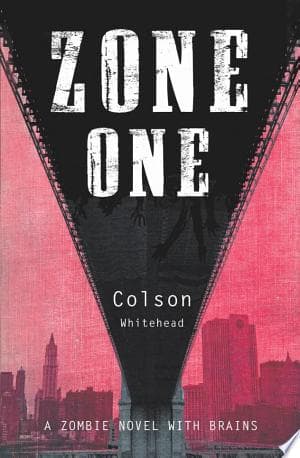
- Zone One
Colson Whitehead
3.2 (28k) average on GoodreadsFictionOffers a more literary take on a post-zombie world, focusing on the psychological aftermath and societal rebuilding.
- The Girl With All the Gifts
M.R. Carey
3.9 (190k) average on GoodreadsThrillerCarey's The Girl with All the Gifts reimagines the zombie trope by focusing on a new generation of 'hungries' and exploring themes of evolution, identity, and the potential for coexistence. While Feed also presents a 'New Normal' and the challenges of living with the infected, it largely maintains a traditional human-versus-zombie dynamic, albeit with sophisticated political layers. Carey's novel leans more into philosophical questions about humanity and difference, whereas Grant's emphasizes the journalistic pursuit of truth and the dangers of political corruption in a world irrevocably altered by the undead. Both offer intellectual depth, but their core inquiries diverge significantly.
- Harry Potter and the Sorcerer's Stone
J.K. Rowling
4.5 (7M) average on GoodreadsFantasyRescued from a miserable life under the stairs, an orphaned boy discovers he's a wizard destined for a magical school, where he uncovers a dangerous secret tied to the dark wizard who murdered his parents.
- The Hunger Games
Suzanne Collins
4.3 (6.4M) average on GoodreadsFantasyIn a future where children fight to the death on live television, Katniss Everdeen volunteers for the arena, turning a death sentence into a fight for survival and a spark of rebellion.
- 1984
George Orwell
4.2 (3.1M) average on GoodreadsPoliticsIn a future where surveillance and thought control are absolute, a man's search for truth clashes with the Party, showing that hope can be a form of rebellion.





Enjoyed the summary?
A summary gives you the shape of the book. The book itself has the detail, the examples and the voice.
Find Feed on AmazonAs an Amazon Associate, BookBrief earns from qualifying purchases. How we're funded