

Synopsis
Covers the whole plot, including the ending.
- Difficulty
- Medium
- Pacing
- Moderate
- Mood
- Bleak, Meditative, Melancholy, Surreal
- Read it if
- You enjoy literary horror, thoughtful post-apocalyptic narratives, and a deep dive into the psychological toll of survival, rather than just action.
- Skip it if
- You're looking for fast-paced zombie action, clear-cut heroes, or a hopeful resolution.
Zone One Plot Summary
Covers the whole plot, including the ending.
Arrival in Zone One and the Routine of Sweeping
Mark Spitz, a 'sweeper' for the Provisional Government, arrives in Zone One, the quarantined lower Manhattan district south of Canal Street declared safe from the 'plague.' His unit, made up of himself, Gary, and Michelle, removes 'stragglers' – eliminating the remaining 'skels' (slow, traditional zombies) and 'stragglers' (catatonic, repetitive zombies) from buildings. The story immediately shows the post-apocalyptic routine: careful clearing of buildings, the constant threat of infection, and a strong sense of a lost past. Spitz's mind often goes to 'flashbacks,' memories of his pre-plague life and the initial chaos of the outbreak, as he moves through the quiet, ruined city.
The Nature of Stragglers and the Pervasive Past
As the unit clears apartments, Spitz finds various stragglers, each frozen in a simple pre-plague activity: a man watching television, a woman putting on makeup, a child playing with toys. These meetings are unsettling for Spitz, because stragglers are not aggressive. They are living reminders of the past, making him face the ordinary and sudden end of the world. He thinks about the Provisional Government's rules, the rebuilding propaganda, and the psychological impact on survivors, all of whom have 'Post-Apocalyptic Stress Disorder' (PASD). The 'removal' becomes a ritual separating the present from a past full of ghosts.
Flashbacks to the Plague's Onset and Spitz's Survival
During his work, Spitz has intense flashbacks about his personal experience during the 'Last Night' and the 'Plague Years.' He remembers the quick spread of the infection, society's collapse, and his desperate escape from the city. These memories include his time in a refugee camp, being separated from his family, and the harsh realities of surviving in a world overrun by the infected. He recalls the 'Quarantine Zone' and the early, disorganized attempts to fight back. These mental trips show the trauma he carries and the big difference between the Provisional Government's hopeful talk and the grim reality of the world.
The Unit's Dynamics and the Weight of Command
The relationships between Spitz, Gary, and Michelle are shown. Gary is practical and focused. Michelle often acts cynical and detached, making dark jokes. Spitz, as the leader, struggles with the responsibility, often feeling inadequate and taking in the grim nature of their work. They discuss the Provisional Government's 'Reconstruction' effort, the ambitious 'Operation Forward' to reclaim the mainland, and the constant mental burden of their job. Their shared survival and daily routine of killing the undead create a reluctant friendship, with moments of dark humor and deep silence.
Signs of Trouble and the Fading Illusion of Safety
As the three days pass, small signs of trouble appear. They find more skels than expected in 'cleared' areas, and radio communication with Fort Wonton, their base, becomes less reliable. Spitz also notices growing unease among other sweeper units. The carefully kept illusion of safety and control in Zone One, built by the Provisional Government, starts to break. These oddities are first dismissed as minor problems but add to growing tension and a clear sense of coming disaster, sharply contrasting with the government's hopeful statements.
The Radio Silence and Growing Panic
On the third day, communication with Fort Wonton stops completely. The sweepers are left without orders, isolated in the dangerous, still-infected city. Panic spreads through the units as the command structure falls apart. Spitz and his unit, with others, try to understand the silence, guessing about a possible breach or a larger collapse. The sudden lack of contact shows their weakness and the Provisional Government's fragile authority, revealing how quickly order can turn into chaos again.
The Breach and the Return of the Horde
The worst fears come true when it becomes clear that the wall separating Zone One from the mainland has been breached. A large group of skels, far more numerous and aggressive than the 'stragglers' they had been clearing, pours into lower Manhattan. The Provisional Government's 'reclamation' project is a failure. The formerly 'safe' zone is now overrun, and the sweepers, trained for isolated encounters, cannot handle a full invasion. The built-up appearance of progress shatters, and the fight for survival becomes immediate and desperate.
Desperate Retreat and Last Stands
In the chaos, the remaining sweeper units try to retreat and regroup. They fight brutally against the many skels. Many sweepers are overwhelmed and infected, their screams echoing through the ruined streets. Spitz, Gary, and Michelle get separated from other units, fighting their way through the increasing horror. The careful clearing they did days earlier is now a useless memory as the sheer number of undead overwhelms any resistance. The once-familiar streets become a maze of death and despair.
Separation and Michelle's Last Stand
During the desperate fight, Spitz, Gary, and Michelle become separated. Michelle, clever but outmatched, makes a final stand. Her fate is grim but not clearly stated, leaving her end to the reader's imagination, though her death is implied. Spitz and Gary are left to navigate the increasing chaos, their unit broken, and their chances of survival quickly lessening. Michelle's loss shows the harsh reality of their situation and the high cost of the failed reclamation.
Spitz's Final Moments and Acceptance
Spitz and Gary continue to fight, but the situation is hopeless. Gary is eventually overwhelmed and falls. Spitz, alone, is cornered, facing an unstoppable wave of skels. In his final moments, his mind is not filled with terror, but with a strange calm and a last, clear flashback to an ordinary pre-plague memory – perhaps a final act of psychological self-preservation. He accepts his fate, becoming another casualty in the failed attempt to reclaim the world. The novel ends with Spitz's coming death, the 'reconstruction' completely undone, and the bleak reality of the zombie apocalypse reasserted.
Zone One Characters
Mark Spitz
Protagonist
A civilian sweeper haunted by his past and the grim reality of the apocalypse.
Mark Spitz (a moniker adopted after the plague, his real name lost to the chaos) is the protagonist and narrator. He is a 'sweeper,' tasked with clearing residual zombies from Zone One. Spitz is deeply introspective, constantly grappling with 'Post-Apocalyptic Stress Disorder' (PASD), which manifests as vivid, often mundane, flashbacks to his pre-plague life and the initial collapse of society. He is a survivor, but one burdened by the weight of memory and the absurdity of his new existence. His internal monologues reveal a man caught between the desire for normalcy and the acceptance of a irrevocably changed world. He often feels inadequate as a leader.
Relationships: Gary (Fellow sweeper, pragmatic and focused); Michelle (Fellow sweeper, cynical and detached); Provisional Government (Employer, a distant and ultimately failing authority)
Gary
Supporting
A pragmatic and focused member of Spitz's sweeper unit.
Gary is one of Spitz's fellow sweepers, forming the three-person unit. He is characterized by his pragmatic approach to their grim work and his relative lack of internal struggle compared to Spitz. Gary is more focused on the immediate task at hand, less prone to the debilitating flashbacks that plague Spitz. He represents a common type of survivor: one who has adapted to the new normal by compartmentalizing trauma and focusing on survival mechanics. While not as verbose as Spitz, his actions and occasional comments provide a grounded counterpoint to Spitz's more philosophical musings.
Relationships: Mark Spitz (Fellow sweeper, unit member); Michelle (Fellow sweeper, unit member)
Michelle
Supporting
A cynical and detached sweeper, providing dark humor.
Michelle completes Spitz's sweeper unit. She is often portrayed as cynical and uses dark humor to cope with the horrors of their daily existence. Her detachment can sometimes come across as cold, but it's a coping mechanism against the pervasive dread. Michelle is capable and resourceful, holding her own in combat. She represents another facet of post-apocalyptic survival: maintaining a sense of self through wit and a refusal to be sentimental, even as the world crumbles around them. Her eventual fate is a poignant reflection of the fragility of life in Zone One.
Relationships: Mark Spitz (Fellow sweeper, unit member); Gary (Fellow sweeper, unit member)
The Provisional Government
Antagonist/Mentioned
The distant, bureaucratic authority attempting to rebuild civilization.
The Provisional Government is the overarching, largely unseen authority attempting to 'reconstruct' society and reclaim territory. Based in Buffalo, they established Fort Wonton in Chinatown as the command center for Zone One. They are responsible for 'Operation Forward' and the illusion of progress and safety. While not a sentient antagonist, their bureaucratic inefficiencies, misleading propaganda, and ultimate failure to secure Zone One directly lead to the tragic climax. They represent the hubris of humanity attempting to reassert control over an uncontrollable world.
Relationships: Mark Spitz (Employer, distant authority figure); Sweepers (Subordinates, frontline workers)
Johnny Gem
Supporting
A legendary sweeper and symbol of survivor resilience.
Johnny Gem is a legendary figure among the sweepers, known for his exceptional skill and survival instincts. He's often mentioned in hushed tones, a kind of celebrity or myth within the Provisional Government's ranks. He represents the ideal of the hardened survivor, a benchmark against which other sweepers measure themselves. His presence, even when not directly on page, serves to highlight the extreme conditions and the unique skills required to navigate the post-apocalyptic landscape. His reputation provides a stark contrast to Spitz's more internal and often self-doubting nature.
Relationships: Sweepers (Fellow sweepers, respected figure)
The General
Mentioned
The leader of the Provisional Government and architect of Operation Forward.
The General is the unseen leader of the Provisional Government, based in Buffalo. He is the mastermind behind 'Operation Forward' and the reclamation of Zone One. He represents the ambition and perhaps the overconfidence of the surviving military and political structures. His voice is heard through radio broadcasts and official pronouncements, always projecting an image of control and progress, even as the reality on the ground deteriorates. He embodies the distant, bureaucratic power that, despite its best intentions, fails to comprehend the true nature of the threat.
Relationships: Provisional Government (Leader); Sweepers (Commander-in-chief)
Skels
Antagonist
The traditional, slow-moving zombies that pose a constant physical threat.
Skels are the traditional, slow-moving, flesh-eating zombies. They are the primary physical threat in Zone One, requiring 'removal' by the sweepers. They represent the direct, visceral danger of the apocalypse, the mindless force that brought down civilization. While less psychologically complex than stragglers, their sheer numbers and relentless pursuit are ultimately what overwhelms Zone One. They are the embodiment of the plague itself, a constant, undeniable force of death and decay.
Relationships: Humanity (Predator-prey)
Stragglers
Antagonist/Plot Device
Catatonic zombies frozen in mundane, pre-plague activities.
Stragglers are a unique type of infected, distinct from skels. They are not aggressive but are instead stuck in a loop of a single, mundane pre-plague activity, like watching TV or brushing teeth. They are living monuments to the world that was, forcing survivors like Spitz to confront the banality and suddenness of the collapse. They are physically harmless but psychologically devastating, acting as a constant reminder of what was lost and the fragility of human existence. Their 'removal' is a morbid act of severing the present from the ghost-laden past.
Relationships: Humanity (Ghostly remnants of the past); Mark Spitz (Psychological trigger for flashbacks)
Zone One Themes
The Persistence of Memory and Trauma
The novel explores how survivors are haunted by their past. Mark Spitz's 'flashbacks' are central, always pulling him back to his pre-plague life and the terrible events of the 'Last Night.' These memories are not just nostalgic; they are a form of 'Post-Apocalyptic Stress Disorder' (PASD), a psychological burden that stops true adaptation to the new world. The 'stragglers' themselves show this theme, frozen in their pre-plague routines, acting as living reminders of a lost era. They force the sweepers to face the past directly with every 'removal.'
“He thought of the stragglers as the walking dead of the memory plague, each a monument to a forgotten habit.”
The Illusion of Order and Reconstruction
Colson Whitehead questions the human desire to bring order to chaos, even when it cannot last. The Provisional Government's 'Operation Forward' and the careful cleaning of Zone One are big attempts to rebuild civilization and show control. However, this order is weak and ultimately fake. The careful 'sweeping' of buildings, the propaganda, and the bureaucratic structures all fail when the wall is breached and the horde invades. The novel suggests that while humanity wants to return to normal, some disasters are too big to simply be 'reconstructed.'
“The Provisional Government was built on the premise that order could be restored, one room, one block, one zone at a time. It was a beautiful lie.”
Consumerism and the Relics of a Lost World
The ruined landscape of Zone One is full of consumer culture waste: discarded products, brand names, and possessions that defined pre-plague life. The 'stragglers' often do consumer activities (watching TV, shopping), showing how ordinary yet widespread capitalism was before the fall. Spitz often thinks about these remnants, seeing the silliness and ultimate meaninglessness of these objects after the apocalypse. The novel uses these leftovers to comment on the values of the destroyed society and the superficiality of its obsessions.
“Every apartment was a mausoleum of consumer desire, a shrine to the things that had once mattered.”
The Nature of Humanity in Crisis
The novel explores different human reactions to an existential crisis. From the Provisional Government's bureaucratic optimism to Gary's practical survivalism, Michelle's cynical humor, and Spitz's internal trauma, a range of human behavior is presented. It looks at the psychological cost of constant threat, the creation of new social structures (like the sweeper units), and the lasting questions of identity and purpose when civilization collapses. The portrayal of both 'skels' and 'stragglers' also reflects on different parts of humanity's potential for mindless destruction or sad, repetitive stillness.
“What was left of us was a collection of habits, a memory of a memory.”
The Absurdity of Existence
A strong sense of absurdity fills the story. The sweepers do a seemingly endless job of clearing buildings, knowing that the threat is always there and possibly overwhelming. Spitz's flashbacks often show how trivial pre-plague worries were compared to the current horror. The very existence of 'stragglers' – catatonic zombies stuck in ordinary loops – is absurd and tragicomic. This theme highlights the existential questions survivors face: what is the point of rebuilding when the world can fall apart so easily, and what meaning can be found in a life defined by death and decay?
“It was a comedy of errors, except the errors were fatal and the punchline was always the same.”
Plot Devices & Literary Techniques
Flashbacks
Non-linear narrative technique revealing Spitz's past and the plague's onset.
Flashbacks are a crucial narrative device in 'Zone One.' They are not mere recollections but vivid, often intrusive mental events experienced by Mark Spitz, a manifestation of his 'Post-Apocalyptic Stress Disorder' (PASD). These non-linear insertions provide crucial backstory, showing the initial collapse of society, Spitz's personal journey of survival, and the details of his pre-plague life. They serve to deepen his character, explain his psychological state, and contrast the mundane past with the horrific present, highlighting the profound trauma he endures.
The Stragglers
A unique type of zombie serving as a psychological and thematic symbol.
The 'stragglers' are a distinct type of infected that serve as more than just antagonists; they are powerful plot devices. Unlike the aggressive 'skels,' stragglers are catatonic, stuck in repetitive, mundane pre-plague actions. They force Spitz and the other sweepers to confront the banality of the lost world and the suddenness of its end. They act as living memorials to consumerism and the everyday, mundane existence that was abruptly shattered, providing a poignant and unsettling psychological dimension to the horror, rather than just a physical threat.
The 'Reclamation' of Zone One
A framing device and ironic symbol of false hope and human hubris.
The entire premise of 'Zone One' – the Provisional Government's 'reclamation' of lower Manhattan – functions as a central plot device. It establishes the initial sense of fragile hope and order, providing the context for the sweepers' mission. However, it is ultimately revealed to be an ironic device, as the 'reclamation' is shown to be temporary and ultimately doomed. This device underscores themes of the illusion of control, the futility of human efforts against overwhelming forces, and the cyclical nature of disaster, setting up the tragic downfall of the entire project.
The Moniker 'Mark Spitz'
A symbolic new identity reflecting the loss of self in the apocalypse.
Mark Spitz is not the protagonist's real name; it's a moniker he adopted, like many others, in the post-apocalyptic world. This device symbolizes the loss of individual identity and the severing of ties to the past. The original self, along with its name, is deemed irrelevant or too painful to remember. The new name, often chosen arbitrarily or for its pop culture resonance (like the Olympic swimmer), highlights the absurdity and almost performative nature of survival, where personal history is erased and new, often superficial, identities are forged out of necessity.
Zone One Quotes
“The worst part of the disaster was the reconstruction. The worst part of the reconstruction was the memory.”
“The new normal was a constant state of triage. Every day, a calculation. Every night, a reprieve.”
“Before, he had been a civilian. Now, he was a product of the disaster, a utility.”
“The past was a sickness, and the only cure was to keep moving forward, even if forward meant a circle.”
“They were the custodians of what was left, and what was left was mostly silence.”
“The future was a series of provisional arrangements. A constant state of 'for now.'”
“Every building was a mausoleum, every street a graveyard. New York City, a monument to itself.”
“The stragglers were ghosts of a prior existence, stuck in a loop of their last, most fervent desire.”
“They were the last believers in the idea of a future, even if that future was merely a slightly less terrible present.”
“The new American exceptionalism: the ability to rebuild from scratch, again and again, until there was nothing left to rebuild.”
“He remembered the before-times as if through a scrim, distorted and impossible to fully grasp.”
“The apocalypse was not a single event, but a protracted series of adjustments.”
“They were not heroes. They were just the ones who hadn't died yet.”
“Every day was a negotiation with oblivion.”
Quiz
10 questions on the plot and the characters. Each answer comes with a short explanation.
Question 1
What is the primary mission of Mark Spitz and his sweeper unit in Zone One?
- Establishing new government infrastructure.
- Clearing lower Manhattan of remaining feral zombies (stragglers).
- Mapping unexplored territories outside Zone One.
- Rescuing uninfected survivors from dangerous areas.
Show answer
B. Clearing lower Manhattan of remaining feral zombies (stragglers). Mark Spitz is part of a civilian sweeper unit whose specific task is 'straggler removal,' which means clearing lower Manhattan of the remaining feral zombies after the initial reclamation.
Question 2
What is the name of the military base from which Zone One was reclaimed?
- Fort Greene
- Fort Wonton
- Fort Manhattan
- Fort Liberty
Show answer
B. Fort Wonton The armed forces were stationed in Chinatown's Fort Wonton and successfully reclaimed the island south of Canal Street, which became Zone One.
Question 3
How many days does the novel 'Zone One' primarily unfold over?
- One week
- Three surreal days
- A full month
- Several years
Show answer
B. Three surreal days The synopsis explicitly states that 'Zone One unfolds over three surreal days,' detailing Spitz's experiences during this short but intense period.
Question 4
What psychological condition does Mark Spitz suffer from, related to the post-apocalyptic world?
- Obsessive-Compulsive Disorder (OCD)
- Generalized Anxiety Disorder (GAD)
- Post-Apocalyptic Stress Disorder (PASD)
- Acute Stress Disorder (ASD)
Show answer
C. Post-Apocalyptic Stress Disorder (PASD) The novel highlights 'the rigors of Post-Apocalyptic Stress Disorder (PASD)' as one of the challenges Mark Spitz faces, a condition specific to the world he inhabits.
Question 5
What distinguishes the 'living dead' from the 'uninfected' in the world of 'Zone One'?
- The living dead are able to communicate, while the uninfected cannot.
- The living dead are the infected, while the uninfected are those who survived the pandemic.
- The living dead are a new species, while the uninfected are traditional humans.
- The living dead are immune to the plague, while the uninfected are susceptible.
Show answer
B. The living dead are the infected, while the uninfected are those who survived the pandemic. The book states that the pandemic 'sorted humanity into two types: the uninfected and the infected, the living and the living dead,' clearly defining the 'living dead' as the infected population.
Question 6
What is the size of Mark Spitz's civilian sweeper unit?
- Two people
- Three people
- Four people
- Five people
Show answer
B. Three people Mark Spitz is described as 'a member of one of the three-person civilian sweeper units,' indicating the specific size of his team.
Question 7
What does the phrase 'modern civilization in all its wretched, shambling glory' imply about the book's thematic focus?
- It celebrates the resilience and beauty of humanity post-apocalypse.
- It critiques the inherent flaws and decay of contemporary society, even after collapse.
- It suggests a nostalgic longing for the past before the pandemic.
- It focuses solely on the horror aspects without deeper social commentary.
Show answer
B. It critiques the inherent flaws and decay of contemporary society, even after collapse. The phrase 'wretched, shambling glory' is an oxymoron that suggests a critical perspective on modern civilization, even in its ruined state. It points to the book's literary depth in exploring the lingering issues and decay of society, rather than just the horror.
Question 8
Beyond the zombie threat, what 'impossible task' does Mark Spitz grapple with?
- Developing a cure for the plague.
- Rebuilding global communication networks.
- Coming to terms with a fallen world.
- Leading the resistance against a new human enemy.
Show answer
C. Coming to terms with a fallen world. The synopsis states that Spitz is occupied with 'the impossible task of coming to terms with a fallen world,' indicating his internal struggle with the psychological and existential impact of the apocalypse.
Question 9
The novel is described as 'at once a chilling horror story and a literary novel.' What does this combination suggest about its approach to the zombie genre?
- It prioritizes gore and jump scares above all else.
- It uses the zombie apocalypse as a backdrop for deeper exploration of human nature and societal decay.
- It is a straightforward action-adventure story with minimal character development.
- It avoids traditional horror tropes in favor of pure literary experimentation.
Show answer
B. It uses the zombie apocalypse as a backdrop for deeper exploration of human nature and societal decay. Describing it as both a 'chilling horror story' and a 'literary novel by a contemporary master' implies that while it contains horror elements, it also uses the genre to delve into more profound themes, character psychology, and social commentary, elevating it beyond typical genre fare.
Question 10
What geographical area constitutes 'Zone One'?
- The entire island of Manhattan.
- The reclaimed island south of Canal Street in lower Manhattan.
- A military-controlled zone outside of New York City.
- A designated safe zone in the Midwestern United States.
Show answer
B. The reclaimed island south of Canal Street in lower Manhattan. The text clearly states that 'armed forces stationed in Chinatown’s Fort Wonton have successfully reclaimed the island south of Canal Street—aka Zone One,' defining its precise geographical boundaries.
Zone One FAQ
What is Zone One about?
Zone One is set in a post-apocalyptic New York City where a plague has created two types of humans: the uninfected and the living dead, or 'stragglers.' The story follows Mark Spitz, a member of a civilian sweeper unit, as he participates in the arduous and often mundane task of clearing lower Manhattan of the remaining feral zombies over three surreal days. It's a blend of horror, social commentary, and a deep look into the psychological toll of survival.
Why should I read Zone One?
You should read Zone One for its unique take on the zombie apocalypse genre, offering a profound literary exploration of grief, memory, and the struggle to rebuild civilization. Colson Whitehead uses the familiar premise to delve into deeper themes of consumerism and the human condition, all while delivering a darkly humorous and chilling narrative through the eyes of its introspective protagonist, Mark Spitz.
What is the background/setting of Zone One?
The novel is set in a post-apocalyptic New York City, specifically 'Zone One' (lower Manhattan), which the Provisional Government has successfully reclaimed from the infected. The city is a desolate landscape of abandoned skyscrapers and consumer detritus, a stark reminder of the world that was. Fort Wonton in Chinatown serves as a central base for the armed forces and civilian sweepers like Mark Spitz.
What writing style does the author use?
Colson Whitehead employs a distinctive literary style characterized by long, intricate sentences, darkly ironic humor, and a highly descriptive, almost poetic prose. He frequently uses flashbacks to delve into Mark Spitz's past and the pre-apocalyptic world, creating a narrative that is both introspective and observant, blending horror with profound social commentary.
What minor details add significant meaning?
The constant references to consumer brands and pre-apocalypse pop culture, even in the midst of ruin, highlight humanity's materialistic past and the absurdity of clinging to such relics. Mark Spitz's recurring flashbacks, triggered by mundane objects or specific smells, are not just memories but profound anchors to his lost identity and a commentary on how trauma warps perception.
What are some subtle foreshadowing moments?
The increasing dysfunction and paranoia within the Provisional Government's radio communications, combined with the growing unease and unexplained incidents among the sweeper units, subtly hint at the larger breakdown that eventually engulfs Zone One. The casual mention of 'sleepers' – a more advanced, seemingly dormant type of infected – also foreshadows a greater threat than the feral stragglers.
What unexpected character connections exist?
While not 'unexpected' in a traditional sense, the profound, almost familial bond that develops between Mark Spitz and his sweeper unit members, Gary and Kaitlyn, in the face of constant danger, reveals how shared trauma can forge deep, unspoken connections. Their reliance on each other for both survival and sanity forms the emotional core of the narrative.
What are unspoken character motivations?
Mark Spitz's motivation to continue sweeping, beyond mere survival, seems to be a desperate search for meaning or a sense of purpose in a world devoid of it. He also carries an unspoken guilt, hinted at through his fragmented memories, which drives his melancholic introspection and his seemingly passive acceptance of his grim tasks.
What psychological complexities do characters exhibit?
Characters like Mark Spitz exhibit severe Post-Apocalyptic Stress Disorder (PASD), manifesting as constant anxiety, vivid flashbacks, and a detached, almost dreamlike perception of reality. The constant exposure to death and the loss of the pre-apocalypse world have left them psychologically fractured, struggling to reconcile their past selves with their brutal present.
What are the major emotional turning points?
A major emotional turning point is the increasing realization of the Provisional Government's instability and the escalating threat within Zone One, which shatters any lingering hope for a stable future. For Spitz, the loss of his unit members, particularly the tragic demise of Gary and Kaitlyn, represents profound emotional devastation, forcing him to confront his isolation directly.
How do relationship dynamics evolve?
The relationship dynamics within Spitz's sweeper unit evolve from professional comradeship to a deep, unspoken bond of shared trauma and mutual reliance. The forced intimacy of their dangerous work means they become each other's only true family, their dynamics shifting from functional efficiency to a profound, if often unarticulated, emotional support system.
Which parts remain ambiguous or open-ended?
The ultimate fate of the Provisional Government and the wider world beyond Zone One remains largely ambiguous. The novel focuses intensely on Spitz's micro-experience, leaving the larger geopolitical implications of the new plague and the 'sleepers' unresolved. The true nature and origin of the 'sleepers' themselves are also left open to interpretation, adding to the pervasive sense of dread.
What are controversial scenes or decisions?
One controversial aspect could be the Provisional Government's decision to establish Zone One as a meticulously managed 'reclamation' project, forcing civilians into dangerous sweeper roles, which some might view as exploitative. Another is the almost dispassionate way the sweepers eliminate the stragglers, which, while necessary, raises questions about the desensitization to violence in this new world.
Zone One ending explained: how it ends & what it means
The novel ends with Zone One being overrun by a massive horde of 'sleepers' (a more dangerous, dormant type of infected) and the Provisional Government's evacuation plan failing. Mark Spitz, separated from his unit and facing inevitable death, finds a strange peace in the face of the apocalypse, accepting the end with a sense of fatalistic clarity. The ending signifies the ultimate failure of humanity's attempt to reclaim and normalize the fallen world, suggesting that some catastrophes are simply insurmountable and that memory and individual experience are the only true survivors.
About the author

Arch Colson Chipp Whitehead is an American novelist. He is the author of eight novels, including his 1999 debut work The Intuitionist; The Underground Railroad (2016), for which he won the 2016 National Book Award for Fiction and the 2017 Pulitzer Prize for Fiction; and The Nickel Boys, for which he won the Pulitzer Prize for Fiction again in 2020. He has also published two books of non-fiction. In 2002, he received a MacArthur Genius Grant.
Similar books
- The Road
Cormac McCarthy
4.0 (716k) average on GoodreadsScience FictionShares a similar bleak, post-apocalyptic atmosphere and focus on human endurance amidst desolation.
- Station Eleven
Emily St. John Mandel
4.0 (322k) average on GoodreadsLiterary FictionExplores the aftermath of a pandemic and the human condition, with a literary bent.
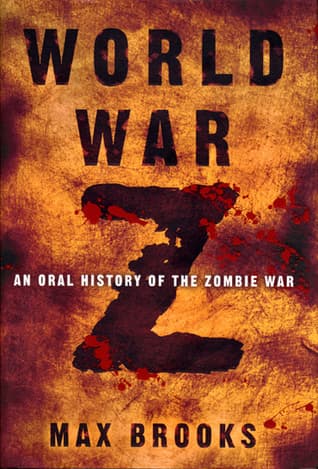
- World War Z: An Oral History of the Zombie War
Max Brooks
4.0 (440k) average on GoodreadsFantasyFeatures a detailed, realistic portrayal of a zombie apocalypse's impact, though 'Zone One' is more internal and literary.
- Nineteen Eighty-Four
George Orwell
4.2 (5.5M) average on GoodreadsFictionWinston Smith dreams of truth and rebellion in a world where Big Brother watches all, but he confronts the terrifying power of a regime that controls not just actions, but thoughts.
- The Frozen River
Ariel Lawhon
4.4 (600k) average on GoodreadsFictionIn 1789 Maine, a heroic midwife's diary helps her expose a murder and get justice in a town that wants to silence her.
- A Man Called Ove
Fredrik Backman
4.4 (569k) average on GoodreadsFictionA stubborn widower, who lives by strict rules, finds his quiet world changed by a lively new family next door, making him face his past and find happiness in human connection.





Enjoyed the summary?
A summary gives you the shape of the book. The book itself has the detail, the examples and the voice.
Find Zone One on AmazonAs an Amazon Associate, BookBrief earns from qualifying purchases. How we're funded