
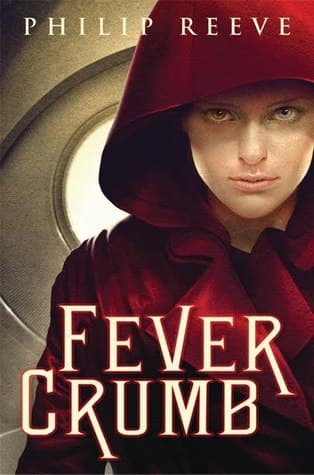
Synopsis
Covers the whole plot, including the ending.
- Difficulty
- Medium
- Pacing
- Fast
- Mood
- Atmospheric, Mysterious, Dark, Adventurous
- Read it if
- You enjoy steampunk-infused dystopian futures, mysteries about identity, and stories with strong, unconventional female protagonists.
- Skip it if
- You prefer clear-cut good vs. evil narratives or dislike complex world-building with a dark, atmospheric tone.
Fever Crumb Plot Summary
Covers the whole plot, including the ending.
The Engineer's Apprentice
Fever Crumb, a young girl with a shaved head and a logical mind, lives as an apprentice to Dr. Crumb, a respected Engineer within London's secluded enclave. She is unusual, the only female among the Engineers, a society that values reason above all else and considers women emotional. Her days are structured by study, repair, and the rules of the order. She feels a deep, unspoken connection to Dr. Crumb, who found her as a baby and raised her. However, her unusual nature and the memories that occasionally flash through her mind hint at a past she doesn't understand, creating a subtle unease beneath her logical exterior.
A New Assignment and Unsettling Memories
Fever's predictable life changes when Dr. Crumb assigns her to assist Kit Solent, an archaeologist working on a secret project outside the Engineers' enclave. This is her first major trip into the busy, chaotic city beyond their walls. As she begins her work with Kit, Fever starts experiencing vivid and unsettling memories and sensations that are not her own — flashes of a strange language, the scent of burning oil, and a deep sense of loss. These 'ghost-memories' are confusing and frightening, making her question her identity and sanity, especially as Kit seems very interested in them.
The City's Prejudice and the Scriven
Venturing into London, Fever immediately faces the city's harsh realities and deep-seated prejudices. She is singled out by suspicious citizens who accuse her of being 'Scriven' — a race of genetically engineered beings who once ruled London but were overthrown and mostly killed by humans. The Scriven were known for their unusual appearance, advanced technology, and a distinctive 'cracked' facial marking. The accusation is terrifying, as any remaining Scriven are hunted down mercilessly. These encounters, combined with her strange memories, make Fever fear she might indeed be connected to the hated Scriven, despite Dr. Crumb's assurances that she is an orphan.
Kit Solent's True Agenda
Kit Solent, initially appearing as a kind archaeologist, slowly reveals his true, more manipulative goals. He is not just interested in Fever's engineering skills but is obsessed with her 'ghost-memories.' He believes Fever is a 'Crumb' — a Scriven term for a human child genetically altered to carry Scriven memories and knowledge. Kit is convinced these memories contain the location or activation codes for a powerful Scriven weapon, a 'medusa,' which he intends to use for his own gain, or perhaps to protect London from a perceived threat from the North. He subtly pressures Fever, trying to get the memories from her, making her feel like a tool rather than a person.
The Scriven's Legacy and the Medusa
As Fever's memories grow stronger, she begins to understand the tragic history of the Scriven. She experiences the lives of Scriven individuals, witnessing their advanced civilization, their unique way of 'seeing,' and their ultimate downfall. The memories reveal the Medusa, not as a conventional weapon, but as a devastating piece of Scriven technology designed for self-defense, capable of disabling an entire city's infrastructure and population. She understands that the Scriven, in their arrogance and fear, created a device that ultimately contributed to their own destruction, turning the city they protected into a wasteland. These visions are emotionally difficult, blurring the lines between her identity and the past.
Escape from Kit Solent
Fever's growing understanding of Kit's manipulative nature and the terrifying implications of the Medusa force her to escape. She realizes he sees her as a means to an end, a living key to a dangerous power. In her desperate attempt for freedom, she meets Arlo, a street-smart boy from the city's lower class. Arlo, initially cautious, becomes an unexpected ally, helping Fever navigate the dangerous streets and avoid Kit's relentless pursuit. Their escape is filled with danger, forcing Fever to rely on her instincts and newly emerging memories, challenging her purely logical upbringing.
The Journey North and the Gypsy-Engines
Fever and Arlo flee London, heading north, a direction guided by fragments of her Scriven memories. Their journey takes them through the desolate lands outside the city, where they meet the nomadic Gypsy-Engines. These people live in elaborate, mobile settlements, combining mechanical skill with a free-spirited, communal lifestyle, a sharp contrast to the rigid Engineers and the prejudiced city-dwellers. Fever is fascinated by their resourcefulness and their ability to survive in the harsh environment. She learns about their respect for technology and their practical approach to life, offering her a different view on human existence and the role of engineering.
The Scriven's Last Stand
As Fever continues her journey, her Scriven memories become complete. She relives the final, chaotic days of the Scriven, witnessing their last efforts to preserve their knowledge and heritage before the human uprising. She understands that the 'Crumbs' were not just memory carriers, but a final, tragic attempt to plant their advanced understanding into the human population, hoping for a future where their wisdom might be rediscovered. These memories are heartbreaking, showing the Scriven's deep love for their city and their culture, and their ultimate failure to prevent their own destruction. Fever feels the weight of this legacy, realizing she is a vessel for a lost civilization.
The Confrontation and the Medusa's Activation
Kit Solent, relentlessly pursuing Fever, finally catches up to her, still determined to activate the Medusa. He believes it is a necessary evil to protect London from outside threats, or perhaps to establish his own control. Fever, now fully aware of the Medusa's true destructive power and the Scriven's intentions, faces a terrible choice. She understands that activating it would not bring peace or protection, but only chaos and suffering, mirroring the Scriven's own tragic mistake. The confrontation is tense, with Kit trying to manipulate her, and Fever fighting to prevent him from unleashing the devastating weapon.
Dr. Crumb's Confession
In a crucial moment, Dr. Crumb arrives, revealing the long-held secret of Fever's true origins and his deep involvement. He confesses that he was part of a group of humans who, seeing the Scriven's downfall, rescued infant 'Crumbs,' including Fever, to protect them and their valuable knowledge. He explains that Fever is indeed a Scriven-human hybrid, genetically engineered to carry the Scriven's collective memory. His actions were driven by a desire to preserve knowledge and prevent the complete loss of the Scriven's legacy, even if it meant living a lie. This revelation shatters Fever's understanding of her past and her relationship with the only father she's ever known.
The Medusa's Deactivation and a New Purpose
With Dr. Crumb's help and her complete understanding of the Scriven technology, Fever deactivates the Medusa. She rejects Kit Solent's destructive vision, choosing instead a path of hope and integration. The Medusa, once a symbol of the Scriven's self-destructive fear, is made harmless. This act shows Fever's acceptance of her dual heritage and her commitment to using her unique abilities for good, not destruction. She decides to use the Scriven knowledge she carries to build a better future, rather than repeating past mistakes. Her journey ends with a sense of purpose and a desire to bridge the gap between humans and the lost Scriven civilization.
Embracing Identity and a Future
Having prevented the Medusa's activation and understood her origins, Fever fully accepts her identity as a Scriven-human hybrid. She decides to use the vast knowledge she carries, not to bring back the Scriven, but to guide humanity towards a more enlightened future. She chooses to stay with Dr. Crumb and Arlo, forming an unconventional family unit. Her journey has changed her from a purely logical Engineer into a compassionate leader, capable of bridging the divides between different cultures and species. The ending suggests a hopeful future where past wisdom can inform a new era of understanding and progress.
Principal Figures
Fever Crumb
Protagonist
A young Engineer apprentice with a mysterious past, carrying the memories of a lost civilization.
Fever Crumb is an intelligent, logical, and initially emotionally detached young girl raised by the Engineers. She is an anomaly in their male-dominated society, distinguished by her shaved head and analytical mind. Despite her disciplined upbringing, she is plagued by 'ghost-memories' that are not her own, creating an internal conflict and a sense of otherness. Her journey forces her to confront her true identity as a Scriven-human hybrid, challenging her preconceived notions of logic and emotion.
Relationships: Dr. Crumb (Adoptive father and mentor, later revealed to be her protector and a key figure in her Scriven origins.); Kit Solent (Manipulative archaeologist who seeks to exploit Fever's memories for his own agenda.); Arlo (Street-smart boy who becomes her loyal companion and friend, offering her a connection to the 'real world'.)
Dr. Crumb
Supporting
Fever's adoptive father and a respected Engineer, harboring a profound secret about her origins.
Dr. Crumb is a kind, wise, and initially enigmatic Engineer who adopted Fever as a baby. He is a prominent figure within the Engineers' enclave, known for his intellect and calm demeanor. Beneath his composed exterior, he harbors a deep secret about Fever's true identity and his role in protecting her. His love for Fever is evident, but his actions are also driven by a profound sense of responsibility to preserve the Scriven's legacy and prevent its misuse.
Relationships: Fever Crumb (Adoptive father and mentor, later revealed as her protector due to her Scriven heritage.); Engineers (Fellow members of his order, though he holds secrets from them.)
Kit Solent
Antagonist
An ambitious and manipulative archaeologist obsessed with uncovering Scriven technology.
Kit Solent is a charismatic but morally ambiguous archaeologist who initially appears as Fever's new mentor. He is driven by a desire to uncover and control the powerful Scriven technology, particularly the Medusa. His ambition often leads him to manipulate others, including Fever, whom he sees as a means to an end. He believes his actions are justified for London's protection, but his methods are ruthless, and his true motives are self-serving, demonstrating a dangerous blend of intellect and opportunism.
Relationships: Fever Crumb (Manipulator and pursuer, seeking to exploit her memories.); Engineers (Utilizes their expertise but operates outside their moral framework.)
Arlo
Supporting
A resourceful street urchin who becomes Fever's loyal companion and guide.
Arlo is a quick-witted, independent boy from the city's streets. He is resourceful, adaptable, and possesses a strong sense of loyalty, despite his initial wariness. He provides Fever with a crucial connection to the 'real world' outside the Engineers' enclave, teaching her about survival and the intricacies of human emotion and societal structures. His presence offers a stark contrast to Fever's logical upbringing, helping her develop empathy and understand the complexities of life beyond pure reason.
Relationships: Fever Crumb (Friend and loyal companion, helping her navigate the dangers of the city and beyond.)
The Scriven
Mentioned/Ancestral
A vanished, technologically advanced race whose legacy and memories drive the plot.
The Scriven were a highly intelligent, genetically engineered race who once ruled London with advanced technology, including their unique 'seeing' abilities and the devastating Medusa weapon. They are described as having distinctive 'cracked' facial markings. Though largely exterminated in a human uprising, their history, technology, and collective memories, carried by 'Crumbs' like Fever, are central to the story. They represent a lost civilization whose hubris and fear ultimately led to their downfall, serving as a cautionary tale.
Relationships: Fever Crumb (Her biological ancestors, whose memories and legacy she carries.); Humans (city-dwellers) (Former rulers, then victims of a human uprising, now feared and reviled.)
The Engineers
Supporting/Societal Influence
A secluded, rational order devoted to logic and technology, who raised Fever.
The Engineers are a male-dominated, highly rational order living in a secluded enclave within London. They prioritize logic, reason, and mechanical ingenuity above all else, disdaining emotion and the chaotic 'outside world.' They raised Fever, imbuing her with their values. While they represent a structured, intellectual society, their insularity and rigid adherence to reason also highlight their limitations in understanding human nature and complex historical truths. They serve as a foundational influence on Fever's early life.
Relationships: Fever Crumb (Her upbringing and initial identity are shaped by their principles.); Dr. Crumb (A respected member of their order, though he holds secrets from them.)
The Gypsy-Engines
Supporting/Societal Influence
Nomadic people living in mobile settlements, combining engineering with a communal, free-spirited lifestyle.
The Gypsy-Engines are a nomadic people who live in self-sufficient, mobile settlements outside London. They possess a unique culture that blends practical engineering skills with a communal, free-spirited way of life. They are resourceful and adaptable, thriving in the desolate landscapes. Their existence offers Fever a different perspective on how technology and society can interact, contrasting sharply with both the rigid Engineers and the prejudiced city-dwellers. They represent an alternative, more integrated way of living with technology and nature.
Relationships: Fever Crumb (Temporary hosts and cultural educators during her journey north.)
Themes & Insights
Identity and Belonging
Fever's journey is about discovering who she is and where she belongs. Raised as an Engineer, she struggles with her 'ghost-memories' and the accusations of being Scriven. Her internal conflict shows the tension between her learned identity and her inherent, biological one. The novel explores how one's past, heritage, and the choices made by others shape who they become. Fever ultimately creates a new identity that integrates her dual heritage, finding belonging not in a predefined group, but in her unique position as a bridge between worlds. This is clear when she rejects Kit Solent's path and chooses to use her knowledge for a hopeful future, embracing both her human upbringing and Scriven legacy.
“She was a Crumb, a fragment, a memory-carrier, a living ghost of a dead race. But she was also Fever, the Engineer, the girl who fixed things.”
The Dangers of Unchecked Technology and Power
The novel examines the consequences of advanced technology when used without wisdom or compassion. The Scriven's creation of the Medusa, a powerful self-defense weapon that ultimately contributed to their own destruction, is a warning. Kit Solent's desire to reactivate the Medusa, driven by ambition and a misguided sense of protection, further highlights this theme. The Engineers' strict adherence to logic, while producing advanced machines, also leads to their emotional detachment and inability to understand broader human complexities. The story suggests that true progress is not just technological advancement, but the ethical and compassionate use of knowledge.
“The Medusa was not a weapon of war, but a weapon of fear. It devoured the city, and then it devoured its makers.”
Prejudice and Otherness
Prejudice is present throughout the story. Fever, as a female Engineer, is an 'other' within her own order. When she goes into London, she is immediately singled out and hated as 'Scriven,' a term of ultimate hatred and fear for the city-dwellers. The historical conflict between humans and Scriven, fueled by fear and misunderstanding, led to the near-extermination of an entire race. The novel explores how fear of the unknown can lead to deep-seated prejudice and violence, and how easy it is to demonize those who are different. Fever's journey challenges these prejudices, as she comes to understand the Scriven's tragic history and the humanity within their 'otherness.'
“They hated what they didn't understand, and they understood very little.”
Memory and History
Memory, both personal and collective, drives the plot. Fever's 'ghost-memories,' which are not her own but the inherited recollections of the Scriven, form the core mystery of the plot. These memories are not just flashbacks but a living history, allowing Fever to experience the past firsthand. The novel explores how history is remembered, distorted, and passed down, and how it shapes the present. The Scriven's attempt to preserve their history through 'Crumbs' like Fever highlights the importance of learning from the past to avoid repeating mistakes. Fever's ability to access and interpret these memories is central to understanding the Medusa and making informed choices for the future.
“The past was not dead. It was merely sleeping, waiting for someone to wake it up.”
Plot Devices & Literary Techniques
Ghost-Memories
Fever's inherited memories of the Scriven, driving the plot and her character development.
The 'ghost-memories' are vivid, involuntary recollections Fever experiences, which are not her own but belong to the Scriven. This device serves as the primary mystery and plot driver, gradually revealing the history of the Scriven, the Medusa, and Fever's true identity. They force Fever to question her reality and provide her with crucial information about the past, allowing her to understand the dangers of the Medusa and make informed decisions. They also act as a powerful form of exposition, immersing the reader directly into the Scriven's world and tragic fate.
The Medusa
A powerful, self-destructive Scriven weapon that serves as the central MacGuffin.
The Medusa is a devastating piece of Scriven technology, initially presented as a weapon of great power. It functions as the novel's central MacGuffin, with various characters, particularly Kit Solent, seeking to control or activate it. Its true nature is revealed through Fever's memories: it's a self-destructive defense mechanism that contributed to the Scriven's downfall. The Medusa symbolizes the dangers of unchecked technological advancement and fear-driven creation, representing the ultimate choice between destruction and a hopeful future.
The 'Crumb' Designation
A genetic designation for individuals carrying Scriven memories, explaining Fever's unique abilities.
The term 'Crumb' refers to human children genetically engineered by the Scriven to carry their memories and knowledge. This designation is key to understanding Fever's unique abilities and her mysterious past. It explains why she experiences the ghost-memories and why Kit Solent is so interested in her. The 'Crumb' concept highlights the Scriven's desperate attempt to preserve their legacy and serves as a crucial piece of world-building, connecting Fever directly to the lost civilization and giving her a profound purpose.
The Engineer's Enclave
A secluded, logical society that provides Fever's initial worldview and contrasts with the outside world.
The Engineer's Enclave is a closed, highly rational, and male-dominated society where Fever is raised. It functions as a restrictive setting that shapes Fever's initial logical worldview but also limits her emotional development and understanding of the wider world. It serves as a stark contrast to the chaotic, prejudiced city and the nomadic Gypsy-Engines, highlighting different societal structures and their impact on individuals. The Enclave represents a world of pure reason, which the narrative ultimately shows to be incomplete without emotion and empathy.
Fever Crumb Quotes
“The city was a great beast, sprawled across the land, its back a tangle of spires and rooftops, its belly a maze of winding streets.”
“Memory is a strange thing. It can play tricks on you. Make you believe things that never happened, or forget things that did.”
“Knowledge is power, but it is also a burden. Once you know something, you can't unknow it.”
“Even the most carefully constructed world can be shattered by a single truth.”
“There are some questions that are better left unanswered, for the answers might break you.”
“What is a human without a past? Just a collection of moments, drifting in the present.”
“The future is not a path laid out before us, but a landscape we build with our choices.”
“Sometimes the greatest strength is not to fight, but to endure.”
“The world is full of wonders, if only you know where to look.”
“Logic is a fine tool, but it cannot always explain the heart.”
“Every secret has its price, and some prices are too high to pay.”
“The past is never truly dead. It echoes in the present, shaping everything we are.”
“To truly see, you must look beyond what you expect to find.”
Quiz
10 questions on the plot and the characters. Each answer comes with a short explanation.
Question 1
Who raised Fever Crumb and taught her to be an apprentice?
- Kit Solent
- The Scriveners
- Dr. Crumb
- The city-dwellers
Show answer
C. Dr. Crumb Fever Crumb was adopted and raised by Dr. Crumb, a member of the order of Engineers, where she served as his apprentice.
Question 2
What is Fever Crumb's unique position within the order of Engineers?
- She is the youngest member.
- She is the only female.
- She is the most experienced.
- She is the leader of the order.
Show answer
B. She is the only female. In a time and place where women are not seen as reasonable creatures, Fever is an anomaly, the only female to serve in the order of Engineers.
Question 3
Who does Fever Crumb leave Dr. Crumb to assist on a top-secret project?
- An unknown Scriven
- An Engineer from another city
- Archeologist Kit Solent
- A leader of the city-dwellers
Show answer
C. Archeologist Kit Solent Fever must say goodbye to Dr. Crumb to assist archeologist Kit Solent on a top-secret project.
Question 4
What unusual phenomenon plagues Fever Crumb as she begins her work with Kit Solent?
- Visions of the future
- Memories that are not her own
- Recurring nightmares of Dr. Crumb
- A mysterious illness
Show answer
B. Memories that are not her own As her work begins, Fever is plagued by memories that are not her own, and Kit seems to have a particular interest in finding out what they are.
Question 5
Who are the Scriveners, according to the city's history?
- The original founders of the city
- Human rulers who were overthrown
- Non-human rulers who were hunted down and killed
- A secret society of Engineers
Show answer
C. Non-human rulers who were hunted down and killed The Scriveners, not human, ruled the city some years ago but were hunted down and killed in a victorious uprising by the people.
Question 6
Why do the city-dwellers single out Fever Crumb?
- Because of her unique engineering skills.
- Because they declare her part Scriven.
- Because she is Dr. Crumb's apprentice.
- Because she is a woman working as an Engineer.
Show answer
B. Because they declare her part Scriven. Fever has also been singled out by city-dwellers who declare her part Scriven, which is a dangerous accusation given the history of the Scriveners.
Question 7
What is the general perception of women in Fever Crumb's society?
- They are highly respected for their intelligence.
- They are seen as reasonable creatures.
- They are considered irrational and not fit for intellectual work.
- They hold positions of power in government.
Show answer
C. They are considered irrational and not fit for intellectual work. The book states, 'In a time and place where women are not seen as reasonable creatures,' highlighting the societal prejudice against women.
Question 8
What is Kit Solent's specific interest regarding Fever's unexplained memories?
- He wants to suppress them.
- He wants to use them for his archaeological project.
- He seems to have a particular interest in finding out what they are.
- He believes they are a symptom of an illness.
Show answer
C. He seems to have a particular interest in finding out what they are. As her work begins, Fever is plagued by memories that are not her own and Kit seems to have a particular interest in finding out what they are, suggesting a deeper connection or purpose.
Question 9
What is the potential significance of Fever Crumb's identity according to the book's description?
- She is destined to become the new leader of the Engineers.
- Her mystery is the key to the secret that lies at the heart of London.
- She will lead the city-dwellers in another uprising.
- She will discover a new form of engineering.
Show answer
B. Her mystery is the key to the secret that lies at the heart of London. The description poses the question, 'Is the mystery of Fever, adopted daughter of Dr. Crumb, the key to the secret that lies at the heart of London?' indicating her identity's central importance.
Question 10
What is the primary danger Fever faces if she is indeed 'part Scriven'?
- She will be forced to leave the city.
- She will lose her apprenticeship with Dr. Crumb.
- She will be hunted down and eliminated.
- She will be exiled to the outer settlements.
Show answer
C. She will be hunted down and eliminated. The Scriveners were hunted down and killed, and the description explicitly states, 'If there are any remaining Scriven, they are to be eliminated.' This indicates a direct threat to Fever's life if her Scriven heritage is confirmed.
Fever Crumb FAQ
What is Fever Crumb's initial role and how does she fit into the Engineers' order?
Fever Crumb is Dr. Crumb's apprentice, serving as the sole female within the all-male order of Engineers. She possesses exceptional mechanical aptitude and a logical mind, which makes her an anomaly in a society that generally dismisses women's intellectual capabilities.
Why is Fever forced to leave Dr. Crumb and what is her first major assignment?
Fever is compelled to leave Dr. Crumb to assist the archeologist Kit Solent on a secretive project. This assignment quickly thrusts her into the complex politics and hidden history of London, far beyond the sheltered life she knew with the Engineers.
What kind of unsettling experiences does Fever begin to have, and what is Kit Solent's interest in them?
Fever starts experiencing vivid, unsettling memories that are not her own, which are often accompanied by a sense of foreboding. Kit Solent is intensely interested in these fragmented recollections, believing they hold crucial clues to the city's past and the project he's working on.
Who are the Scriveners, and why is Fever being associated with them by the city-dwellers?
The Scriveners were a non-human race that once ruled London but were overthrown and largely eradicated in an uprising. City-dwellers perceive Fever as having certain 'Scriven' traits, leading to suspicion and fear, as any remaining Scriven are considered a threat.
What is the central mystery surrounding Fever's identity and her past?
The core mystery revolves around whether Fever is a Scriven, whose memories she is experiencing, and how her true origins connect to the deep secrets buried within London's history. She has only ever been told she is an orphan, making her identity a blank slate for discovery.
What is the significance of the 'Eye-Gear' and how does it relate to Fever's abilities?
The 'Eye-Gear' is a piece of ancient Scriven technology that enhances perception and allows access to stored memories and information. Fever's innate connection to it, and her ability to instinctively use and repair it, strongly hints at her Scriven heritage.
How does Dr. Crumb's knowledge of Fever's past differ from what he tells her, and why does he keep it secret?
Dr. Crumb knows significantly more about Fever's true lineage as a Scriven than he initially reveals, including her connection to Wavey. He keeps it secret to protect her from persecution and to allow her to develop her own identity and abilities outside the shadow of her heritage.
What is the true nature of the 'top-secret project' Kit Solent is working on, and how does Fever's involvement prove crucial?
Kit Solent's project involves uncovering and reactivating ancient Scriven technology, specifically the 'Moving City' mechanism. Fever's unique Scriven physiology and her ability to interface with the technology are indispensable for understanding and operating it, making her the key to its success.
What is the connection between Fever's memories and the character of Wavey?
The fragmented memories Fever experiences are not merely generic Scriven memories, but specifically those of Wavey, a significant Scriven figure and her biological mother. This direct link explains the intensity and personal nature of Fever's visions.
How does Fever's upbringing by the Engineers influence her emotional development and social interactions?
Fever's logical, emotion-suppressing upbringing by the Engineers leaves her socially awkward and often bewildered by human emotions. She struggles with empathy and understanding non-logical behaviors, which creates friction in her interactions with others.
Analyze the psychological impact of Fever's 'borrowed' memories on her sense of self.
The constant influx of 'borrowed' memories profoundly destabilizes Fever's sense of self, blurring the lines between her own experiences and those of another. This creates an identity crisis, as she grapples with who she is versus who these memories suggest she might be.
How does Fever's 'otherness' (being female in the Engineers, being Scriven in London) affect her psychological resilience?
Fever's consistent 'otherness' forces her to develop significant psychological resilience. She learns to rely on her own intellect and judgment, becoming self-reliant and adaptable, even when ostracized or misunderstood by society.
Discuss the internal conflict Fever faces between her logical training and her emerging emotional and instinctive Scriven nature.
Fever experiences a deep internal conflict between the rigid logic and emotional suppression instilled by the Engineers and the emerging instincts, emotions, and memories of her Scriven heritage. This struggle defines her journey of self-discovery, forcing her to integrate disparate aspects of her identity.
To what extent is Fever a 'chosen one' figure, or is her role simply a matter of circumstance and biology?
Fever's role is a complex mix. While her biology as a Scriven, particularly her specific lineage, makes her uniquely capable of interfacing with ancient technology, her 'chosen' status is more about her individual choices and the circumstances that force her into action rather than a predetermined destiny.
How does the book explore themes of prejudice and xenophobia through the treatment of the Scriveners and Fever?
The book vividly portrays prejudice and xenophobia through the historical persecution of the Scriveners and the immediate suspicion Fever faces. It highlights how fear of the 'other' can lead to violence and the suppression of truth, as Londoners refuse to acknowledge the Scriveners' past contributions.
Is Dr. Crumb's decision to hide Fever's origins justifiable, or does it ultimately do her more harm than good?
Dr. Crumb's decision is debatable. While intended to protect Fever from immediate danger and allow her a 'normal' upbringing, it ultimately leaves her unprepared for the truth and causes significant emotional distress when her past is revealed. It's a complex ethical dilemma.
What does the concept of 'memory' represent in the novel, beyond just personal recollection?
Memory in the novel transcends individual recollection, representing historical truth, cultural inheritance, and even the physical imprints left on technology and places. It underscores how the past shapes the present and the importance of understanding history, even when it's painful.
How does the ending set up future conflicts and character development for Fever?
The ending positions Fever as a crucial bridge between two worlds, having accepted her Scriven heritage while retaining her Engineer-trained mind. It suggests future conflicts involving the revival of the Moving Cities, her role in a new society, and her continued journey of self-discovery and leadership.
About the author
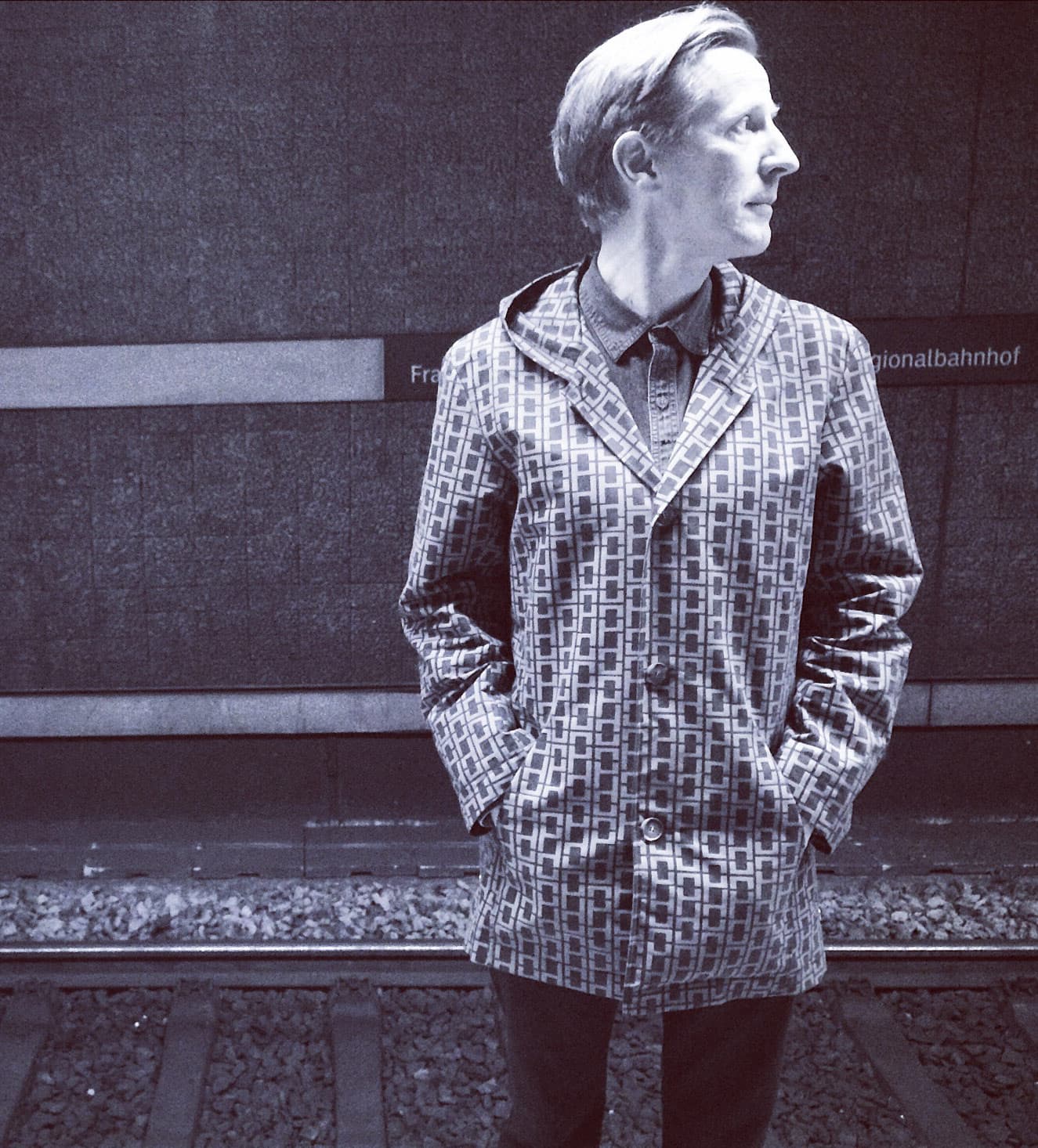
Philip Reeve is a British author known for his works of fiction, particularly in the fantasy and science fiction genres. His notable books include "Infernal Devices," "Fever Crumb," and "Larklight," which showcase his imaginative storytelling and inventive world-building. Reeve's writing often appeals to both young adult and adult audiences.
Similar books
- Leviathan
Scott Westerfeld
4.0 (15k) average on GoodreadsLiterary FictionFeatures a steampunk-esque alternate history, young protagonists, and a blend of adventure and science fiction.
- The Golden Compass
Philip Pullman
4.0 (1.3M) average on GoodreadsFantasyOffers a complex, imaginative world, a strong young female lead, and themes of identity and destiny.
- Harry Potter and the Sorcerer's Stone
J.K. Rowling
4.5 (7M) average on GoodreadsFantasyRescued from a miserable life under the stairs, an orphaned boy discovers he's a wizard destined for a magical school, where he uncovers a dangerous secret tied to the dark wizard who murdered his parents.
- The Hunger Games
Suzanne Collins
4.3 (6.4M) average on GoodreadsFantasyIn a future where children fight to the death on live television, Katniss Everdeen volunteers for the arena, turning a death sentence into a fight for survival and a spark of rebellion.
- 1984
George Orwell
4.2 (3.1M) average on GoodreadsPoliticsIn a future where surveillance and thought control are absolute, a man's search for truth clashes with the Party, showing that hope can be a form of rebellion.
- Divergent
Veronica Roth
4.2 (2.9M) average on GoodreadsFantasyIn a society divided by virtues, a sixteen-year-old's difference from the norm starts a rebellion that threatens her world.





Enjoyed the summary?
A summary gives you the shape of the book. The book itself has the detail, the examples and the voice.
Find Fever Crumb on AmazonAs an Amazon Associate, BookBrief earns from qualifying purchases. How we're funded