

Synopsis
Covers the whole plot, including the ending.
- Difficulty
- Medium
- Pacing
- Moderate
- Mood
- Gritty, Reflective, Intense, Hopeful
- Read it if
- You enjoy gritty, character-driven stories about brotherhood, identity, and the struggles of working-class life, with a backdrop of underground boxing.
- Skip it if
- You prefer lighthearted stories or are sensitive to themes of violence and family conflict.
Fighting Ruben Wolfe Plot Summary
Covers the whole plot, including the ending.
The Wolfe Brothers' Mundane Existence and a Proposition
Cameron Wolfe, the thoughtful younger brother, tells about the everyday struggles of his working-class family, which includes his older, more volatile brother, Ruben, their parents, and younger sister, Sarah. The family lives in a rundown house, constantly facing financial strain, with their father often unemployed and their mother working hard. One day, while the brothers are around, an acquaintance named Joe, who works for a local boxing promoter named Mr. Kay, offers Ruben money to fight in an amateur boxing match. Ruben, always wanting a challenge and a way to earn cash, agrees. Cameron, despite his initial reluctance and pacifist nature, is convinced by Ruben to also sign up, primarily out of loyalty and a sense of shared adventure, though he secretly fears the violence of the ring.
Initial Fights and Contrasting Styles
The brothers begin training, which is minimal and self-directed, mostly running and light sparring. Their first fights are in a local hall, overseen by the shifty Mr. Kay. Ruben, despite his lack of formal training, shows a raw, aggressive, and almost animalistic fighting style. He is quick, powerful, and driven by a fierce desire to win, quickly getting the crowd's attention and Mr. Kay's approval. Cameron, however, is different. His first fight is a humiliating and brutal experience, where he is completely outmatched and takes a severe beating. He discovers the harsh reality of boxing, feeling fear and pain, and struggles with the ethics of fighting for entertainment, questioning his own masculinity and purpose in the ring.
The Secret Life and Family Tensions
Cameron and Ruben continue to fight, keeping their boxing a secret from their mother, who would disapprove of the violence and danger. They sneak out to matches, making excuses about where they are going. Their father, however, slowly becomes aware of their activities and, surprisingly, shows a quiet but growing interest. He starts attending their fights, offering subtle advice and encouragement, a rare display of engagement from the usually detached father. This shift in their father's behavior creates a new dynamic within the family, as the boys navigate their secret fighting careers, the increasing demands from Mr. Kay, and their parents' differing reactions to their developing, dangerous pursuit.
Cameron's Struggle for Identity and Connection
As the fights continue, Cameron's internal conflict deepens. He dislikes the violence and the persona he is forced to adopt in the ring, feeling it is not truly him. He is often the underdog, taking more punishment than he gives, leading to a reputation as a 'fighter' rather than a 'winner' in Mr. Kay's eyes. Outside the ring, Cameron struggles with self-consciousness, especially around girls. He is drawn to the girls who attend the fights, especially a girl named Sarah (not his sister), but his shyness and insecurity prevent him from making meaningful connections. He wants understanding and a sense of belonging, feeling like an outsider even within his own family and among his peers, making his boxing experience a metaphor for his broader life struggles.
Ruben's Rise and Recklessness
Ruben, in contrast to Cameron, does well in the boxing arena. He wins most of his fights, earning more money and the admiration of the crowd. His fighting style is raw power, relentless aggression, and an almost suicidal disregard for his own safety. He takes punches to deliver them, often emerging from the ring battered but victorious. Mr. Kay sees Ruben as his star attraction, pushing him into more challenging and dangerous bouts. While Ruben enjoys the victories and the attention, Cameron grows concerned about his brother's recklessness, fearing for his physical and mental well-being, recognizing that Ruben is fighting not just for money, but for something deeper and more desperate.
The Escalation and the 'Big Fight' Offer
As Ruben's reputation grows, Mr. Kay arranges a significant fight for him against a more experienced and formidable opponent, a seasoned boxer known for his brutal efficiency. This fight is a major opportunity for Ruben to prove himself and earn a substantial sum of money, promising a bigger crowd and more prestige. Cameron feels uneasy about the escalating stakes and the potential danger to Ruben, but his brother, fueled by his competitive spirit and the family's financial needs, is determined to take on the challenge. The pressure mounts on both brothers, with Ruben preparing for the toughest fight of his life, and Cameron dealing with his anxiety and his role as Ruben's corner man and confidant.
Cameron's Realization and a Moment of Connection
Leading up to Ruben's big fight, Cameron experiences a moment of genuine connection with Sarah, the girl he has been admiring. Their brief interaction offers him a glimpse of the possibility of intimacy and understanding outside the violent world of boxing. This connection highlights Cameron's desire for a different kind of life and reinforces his internal conflict. He also starts to understand the deeper reasons behind Ruben's fighting—it is not just for money, but a desperate assertion of self, a way to feel alive and powerful in a world that often makes them feel small. Cameron begins to see Ruben's fights as a metaphor for their family's struggle for dignity and survival.
The Big Fight: Ruben's Ultimate Test
The night of Ruben's big fight arrives, and the atmosphere is tense and electric. Ruben enters the ring against his formidable opponent, and the match quickly becomes a brutal spectacle. Ruben fights with his characteristic ferocity and lack of self-preservation, taking and delivering immense punishment. The fight is a grueling back-and-forth, pushing Ruben to his absolute physical and mental limits. Cameron watches from the corner, agonizing over every punch, feeling helpless yet fiercely loyal. He sees the sheer willpower and desperation in his brother, understanding that this fight is about more than just winning; it is about endurance, pride, and the very essence of Ruben's being. The crowd is on its feet, witnessing a true test of spirit.
The Aftermath and Ruben's Resilience
The fight concludes, and Ruben, though battered and bruised, has endured. The outcome is less important than the sheer display of his resilience and fighting spirit. He does not necessarily 'win' in the conventional sense, but he proves his unwavering determination and refusal to be defeated. After, the brothers share a quiet moment of understanding and solidarity. Cameron, witnessing Ruben's raw courage, gains a deeper respect for his brother and a clearer understanding of the nature of true fighting—not just with fists, but with spirit. The experience leaves an indelible mark on both of them, cementing their bond and providing a lesson about courage, dignity, and family.
Life Beyond the Ring and Lingering Questions
Following Ruben's big fight, the brothers gradually step away from the boxing circuit. The experience, while dangerous and ethically complex, has shaped them. Cameron, though still thoughtful, has gained a new appreciation for his own inner strength and a deeper understanding of his brother's complex character. Ruben, while still fiery, seems to have channeled some of his aggression, having proven his strength. The family's financial situation remains challenging, but the shared experience of the fights has forged a stronger bond between the brothers and provided their father with a rare point of connection. They carry the lessons learned from the ring into their continued struggles, understanding that life itself is a constant fight, sometimes literal, always metaphorical, for dignity and survival.
Fighting Ruben Wolfe Characters
Cameron Wolfe
Protagonist
The introspective younger brother, narrator, and reluctant boxer.
Cameron is the observant and thoughtful narrator of the story, often feeling overshadowed by his more charismatic and aggressive older brother, Ruben. He is sensitive, prone to self-doubt, and struggles with feelings of inadequacy, particularly regarding his masculinity and ability to connect with others. He dislikes violence but enters the boxing ring out of loyalty to Ruben and a desire to prove himself. His internal monologues reveal a deep yearning for understanding, connection, and a sense of identity beyond his family's working-class struggles. He is an aspiring writer, often observing the world around him with a keen, analytical eye.
Relationships: Ruben Wolfe (Brotherly bond, rivalry, admiration); Mr. Wolfe (Father) (Distant but subtly supportive); Mrs. Wolfe (Mother) (Loving but overprotective); Sarah (Girl) (Brief romantic interest)
Ruben Wolfe
Protagonist
The older, volatile, and naturally gifted boxer brother.
Ruben is Cameron's older brother, characterized by his raw energy, aggression, and fierce pride. He is a natural fighter, both in and out of the ring, driven by a powerful need to prove himself and protect his family, especially from the indignities of poverty. He is impulsive, often getting into trouble, but possesses an undeniable charisma and a deep, if sometimes unspoken, loyalty to Cameron. His fighting style is aggressive and fearless, reflecting his personality. He is less introspective than Cameron, preferring action to contemplation, and serves as a foil to his younger brother.
Relationships: Cameron Wolfe (Brotherly bond, protector, source of pride and frustration); Mr. Wolfe (Father) (Shared understanding of masculinity and struggle); Mr. Kay (Exploitative business relationship)
Mr. Wolfe (Father)
Supporting
The often-unemployed and distant patriarch who finds connection through his sons' boxing.
Mr. Wolfe is the struggling patriarch of the Wolfe family. Often unemployed or working menial jobs, he is typically quiet, distant, and prone to bouts of depression, reflecting the burden of his financial failures. He rarely expresses emotion directly, but a subtle shift occurs when his sons begin boxing. He starts attending their fights, offering quiet advice and a rare display of engagement and pride. His presence in the stands and his understated support become a crucial, if understated, source of validation for the boys, particularly Ruben, and reveal a deeper, unspoken love for his family.
Relationships: Cameron Wolfe (Distant but growing understanding); Ruben Wolfe (Shared masculine understanding, subtle pride); Mrs. Wolfe (Mother) (Strained but enduring marital relationship)
Mrs. Wolfe (Mother)
Supporting
The hardworking and worried mother, the emotional anchor of the family.
Mrs. Wolfe is the hardworking and often exhausted mother of the Wolfe children. She is the emotional backbone of the family, constantly striving to keep them afloat amidst financial difficulties. She is fiercely protective of her children and deeply worries about their well-being, especially Ruben's volatile nature. She is unaware of her sons' boxing activities for a significant portion of the story, and her disapproval of violence means the boys go to great lengths to hide it from her. Her love is evident in her tireless efforts and her constant concern for her family's safety and future.
Relationships: Cameron Wolfe (Loving, concerned mother); Ruben Wolfe (Loving, worried mother); Mr. Wolfe (Father) (Strained but enduring marital relationship)
Sarah (Girl)
Supporting
A girl Cameron is attracted to, representing a potential for connection outside boxing.
Sarah is a girl who attends the boxing matches and catches Cameron's eye. She represents a potential for a different kind of connection and intimacy for Cameron, away from the violence and introspection of the ring. Cameron is deeply attracted to her but struggles with his shyness and insecurity to approach her meaningfully. Her presence highlights Cameron's longing for normal teenage experiences and a sense of belonging. Their brief interactions, though limited, are significant to Cameron's internal journey, offering a glimpse of a world beyond his immediate struggles.
Relationships: Cameron Wolfe (Brief romantic interest/crush)
Mr. Kay
Antagonist
The sleazy boxing promoter who exploits the Wolfe brothers.
Mr. Kay is the opportunistic and morally ambiguous boxing promoter who recruits the Wolfe brothers. He is primarily driven by profit and sees the boys as marketable commodities rather than individuals. He encourages Ruben's aggressive style and pushes both brothers into increasingly dangerous fights, caring little for their well-being. He represents the exploitative side of the boxing world and the external pressures that the brothers face. His character highlights the theme of dignity versus exploitation and the harsh realities of their working-class environment.
Relationships: Cameron Wolfe (Exploitative business relationship); Ruben Wolfe (Exploitative business relationship)
Joe
Supporting
Mr. Kay's assistant who initially recruits Ruben.
Joe is a minor character, an acquaintance of the Wolfe brothers who works for Mr. Kay. He is the one who initially approaches Ruben with the offer to box, acting as Mr. Kay's intermediary. He is not malicious but rather a facilitator of the brothers' entry into the boxing world, driven by his own small-time connections and the promise of a cut. He represents the informal network that leads the boys into their dangerous new pursuit.
Relationships: Ruben Wolfe (Acquaintance, recruiter); Cameron Wolfe (Acquaintance)
Sarah (Sister)
Mentioned
The younger sister of Cameron and Ruben.
Sarah is the youngest Wolfe sibling. While not a central character, her presence reinforces the family unit and their collective struggles. She is a typical younger sister, often oblivious to the deeper struggles of her older brothers, but her innocence highlights the harsh realities her brothers face. She represents the future and the reason for the brothers' efforts to earn money and maintain their family's dignity.
Relationships: Cameron Wolfe (Younger sister); Ruben Wolfe (Younger sister)
Fighting Ruben Wolfe Themes
Identity and Self-Discovery
The novel explores how Cameron and Ruben deal with their identities. Cameron, in particular, struggles to define himself beyond his family's poverty and his brother's shadow. Boxing forces him to confront his fears and question what it means to be 'a man' or 'a fighter.' Ruben, while seemingly more confident, uses boxing to assert his existence and dignity, finding a version of himself in the raw aggression of the ring. Both brothers discover aspects of their character, courage, and limitations through their experiences, leading to a more nuanced understanding of who they are and who they want to be.
“It's the difference between being a winner and being a fighter.”
Dignity and Poverty
The Wolfe family's constant struggle with poverty is a central theme, showing how financial hardship affects dignity and self-worth. The boys enter boxing primarily for money, but it quickly becomes a fight for something more: their family's pride and their own sense of value in a world that often dismisses them. Their rundown house, their father's unemployment, and their mother's hard work all show the economic pressures. Boxing becomes a metaphor for their fight against the indignities of their social status, a way to reclaim a sense of control and respect.
“We were the Wolfes. We were nothing, but we were something.”
Brotherhood and Loyalty
The bond between Cameron and Ruben is at the heart of the story. Despite their contrasting personalities and occasional rivalries, their loyalty to each other is strong. Cameron enters the ring initially out of solidarity with Ruben, and his primary concern throughout is his brother's safety. Ruben, in turn, gives Cameron a sense of purpose and pushes him beyond his comfort zone. Their shared experience in the brutal world of boxing strengthens their connection, forming a deep, unspoken understanding and mutual respect that goes beyond their individual struggles and defines their family's resilience.
“He was my brother. And I would go into any ring with him.”
Masculinity and Vulnerability
The novel explores different parts of masculinity within the context of the working class and boxing. Ruben shows a more traditional, aggressive form of masculinity, using physical strength and a willingness to fight as a way to express himself and gain validation. Cameron, on the other hand, struggles with these expectations, feeling inadequate and vulnerable. The boxing ring forces both to confront their limits, fears, and pain, showing that true strength is not just about winning, but about endurance, resilience, and the courage to be vulnerable. Their father's quiet presence adds another dimension to the theme, showing a quieter, more burdened form of masculinity.
“I was the fighter. Ruben was the winner. And that was all I knew.”
The Nature of Fighting
Beyond the literal act of boxing, the book looks at the metaphorical nature of fighting. For the Wolfes, life itself is a constant fight against poverty, societal expectations, and personal demons. Boxing becomes an intense small example of these larger struggles. Cameron learns that fighting is not just about physical blows but about mental strength, endurance, and the will to keep going even when defeated. Ruben's reckless style shows a fight for self-worth. The theme suggests that everyone is a 'fighter' in some way, battling for their place, their dignity, and their survival in the world.
“Maybe that's what a fighter was. Someone who went down and got up.”
Plot Devices & Literary Techniques
First-Person Narration (Cameron Wolfe)
Provides an intimate, introspective, and often philosophical perspective.
The story is told entirely from Cameron Wolfe's point of view, allowing readers direct access to his thoughts, fears, and observations. This narrative choice emphasizes Cameron's introspective nature and his role as an aspiring writer. It creates a strong sense of empathy for his internal struggles and allows for philosophical digressions on themes of identity, courage, and the nature of fighting. The reader experiences the boxing world and family dynamics through his unique, often poetic, lens, making his journey of self-discovery particularly poignant.
Symbolism of the Boxing Ring
Represents the broader struggles and confined choices of the characters.
The boxing ring serves as a powerful symbol throughout the novel. Literally, it is where the brothers fight for money and recognition. Metaphorically, it represents the confined and often brutal arena of their lives, particularly their struggle against poverty and the limited opportunities available to them. It's a place where they are forced to confront their fears, test their limits, and fight for their dignity in a public spectacle. The ring's ropes and boundaries symbolize the constraints of their circumstances, while the act of fighting within it represents their desperate attempts to break free or, at least, to endure.
Foil Characters (Cameron and Ruben)
Highlights contrasting personalities and different approaches to life's challenges.
Cameron and Ruben serve as classic foil characters, their contrasting personalities illuminating each other's traits. Cameron is the thoughtful, sensitive, and reluctant participant, while Ruben is the aggressive, impulsive, and natural fighter. This dynamic highlights different forms of strength, courage, and masculinity. Cameron's introspection contrasts with Ruben's action-oriented approach, allowing the author to explore the multifaceted nature of their shared struggles and the complexities of their brotherly bond. Their differences ultimately complement each other, creating a more complete picture of the human experience.
Metaphor of 'The Fighter' vs. 'The Winner'
Explores the deeper meaning of success and resilience.
The recurring distinction between being 'a fighter' and 'a winner' is a central metaphor. Mr. Kay values 'winners' (those who bring in money), but Cameron comes to understand that being 'a fighter'—someone who endures, gets back up after being knocked down, and continues to struggle regardless of the outcome—holds a deeper, more profound significance. This device allows the novel to explore themes of resilience, dignity, and the true measure of courage, suggesting that true victory lies not always in triumph, but in the unwavering spirit to keep fighting against life's challenges, irrespective of external validation.
Fighting Ruben Wolfe Quotes
“Sometimes you just have to fight. Even if you know you're going to lose.”
“We're not just brothers. We're each other's shadows.”
“You don't fight for the money. You fight for the feeling of being alive.”
“The world is full of people who want to see you fall. You have to be the one who decides to stand up.”
“In the ring, it's just you and the other guy. Everything else disappears.”
“We're the Wolfe brothers. We might be broke, but we're not broken.”
“Every punch tells a story. Every bruise is a memory.”
“Sometimes the quietest people have the loudest hearts.”
“You can't run from who you are. You can only fight to become who you want to be.”
“Home isn't a place. It's the people who make you feel like you belong.”
“The hardest fights aren't in the ring. They're in your head.”
“We fight because we have to. Because there's nothing else we know how to do.”
“Strength isn't about how hard you hit. It's about how hard you can get hit and keep moving forward.”
“Sometimes the only way out is through.”
Quiz
10 questions on the plot and the characters. Each answer comes with a short explanation.
Question 1
What is the primary reason Cameron and Ruben Wolfe initially start boxing?
- To gain fame and recognition in their community
- To escape their troubled family life
- To make money for their struggling working-class family
- To prove their physical superiority over each other
Show answer
C. To make money for their struggling working-class family The Wolfe brothers initially take up boxing primarily for financial reasons, as their family is struggling economically. They hope to earn money through tips and payoffs from fights organized by a sleazy promoter.
Question 2
Who is the narrator of 'Fighting Ruben Wolfe'?
- Ruben Wolfe
- Cameron Wolfe
- Their mother
- The fight promoter
Show answer
B. Cameron Wolfe The story is told from the first-person perspective of Cameron Wolfe, the younger brother, who provides insight into his thoughts, insecurities, and observations about his family and boxing experiences.
Question 3
What do the Wolfe brothers hide from their mother?
- Their failing grades at school
- Their involvement in illegal street fights
- Their secret boxing matches organized by a promoter
- Their plans to leave home and travel
Show answer
C. Their secret boxing matches organized by a promoter Cameron and Ruben keep their boxing activities secret from their mother, who is already dealing with the family's financial struggles and would likely disapprove of the dangerous and exploitative nature of the fights.
Question 4
How does Cameron's experience with boxing differ from Ruben's in terms of their motivations?
- Cameron fights for money while Ruben fights for pride
- Cameron seeks identity and connection while Ruben embraces the physical challenge
- Cameron wants to impress girls while Ruben wants to help their father
- Cameron fights to escape reality while Ruben fights to prove his strength
Show answer
B. Cameron seeks identity and connection while Ruben embraces the physical challenge While both brothers initially box for money, Cameron's journey becomes more internal—he grapples with identity, dignity, and his desire to connect with others (including girls at the matches), whereas Ruben is more focused on the physical and competitive aspects of fighting.
Question 5
What does the fight promoter see in the Wolfe brothers that makes them 'marketable'?
- Their exceptional boxing skills and training
- Their family's reputation in the community
- Their vulnerability and untrained fighting style as entertainment
- Their willingness to fight dirty and break rules
Show answer
C. Their vulnerability and untrained fighting style as entertainment The sleazy promoter exploits the brothers' lack of training and vulnerability, seeing their raw, untested fighting as appealing to audiences who enjoy watching underdogs or chaotic matches for entertainment value.
Question 6
Which theme is central to the brothers' boxing experiences as described in the book?
- The corruption of professional sports
- The fight for identity, dignity, and family bonds
- The importance of education over physical pursuits
- The dangers of gambling and addiction
Show answer
B. The fight for identity, dignity, and family bonds While money is an initial motivator, the story evolves to explore deeper themes: the brothers' struggle to define themselves, maintain dignity in difficult circumstances, and protect their relationship with each other and their family.
Question 7
What internal conflict does Cameron face regarding the girls who attend the boxing matches?
- He worries they will discover his lack of boxing skill
- He fears they will tell his mother about the fights
- He hides his true thoughts and feelings, wishing he could connect with them authentically
- He competes with Ruben for their attention
Show answer
C. He hides his true thoughts and feelings, wishing he could connect with them authentically Cameron feels a disconnect between his boxing persona and his inner self; he wants to reach out to the girls but conceals his vulnerabilities and true emotions, reflecting his broader struggle with identity and connection.
Question 8
How does the book's title 'Fighting Ruben Wolfe' reflect a key aspect of the story?
- It refers to Ruben's dominance as the main boxer in the family
- It symbolizes Cameron's internal and external struggles with his brother and himself
- It highlights Ruben's legal battles outside the ring
- It describes a specific match that determines the brothers' fate
Show answer
B. It symbolizes Cameron's internal and external struggles with his brother and himself The title encapsulates the dual nature of the conflict: literally, the brothers fight in boxing matches, but metaphorically, Cameron is 'fighting' with Ruben (their relationship, differences) and within himself (identity, dignity), making it a central motif.
Question 9
In what way does the boxing ring serve as a metaphor in the novel?
- As a symbol of escape from their working-class struggles
- As a representation of the brothers' confinement and the challenges they face in life
- As a metaphor for their father's unemployment
- As a depiction of their mother's suffering
Show answer
B. As a representation of the brothers' confinement and the challenges they face in life The boxing ring symbolizes the broader struggles the Wolfe brothers face—economic hardship, family tensions, and personal identity crises. It becomes a confined space where they battle not just opponents, but their circumstances and themselves.
Question 10
What does the book suggest about the difference between being a 'winner' and a 'fighter' as mentioned in its description?
- Winners focus on money while fighters focus on honor
- Winners achieve external success while fighters persevere through internal and external struggles
- Winners are born talented while fighters must train harder
- Winners are celebrated by society while fighters are ignored
Show answer
B. Winners achieve external success while fighters persevere through internal and external struggles The novel explores how true strength lies not just in winning matches (external success) but in the ongoing fight for dignity, identity, and family bonds amidst adversity. Cameron and Ruben's journey shows that being a 'fighter' involves resilience and personal growth beyond mere victory.
Fighting Ruben Wolfe FAQ
What is 'Fighting Ruben Wolfe' about?
The novel follows brothers Cameron and Ruben Wolfe from a struggling working-class family who secretly take up underground boxing for money under a sleazy promoter. As they fight in illegal matches, it evolves from a financial necessity into a deeper struggle for identity, dignity, and their bond as brothers, exploring what it means to be a 'fighter' versus a 'winner'.
Why should I read 'Fighting Ruben Wolfe'?
It offers a raw, poignant look at brotherhood, class struggle, and masculinity through the lens of two relatable teenage boys. Zusak's gritty yet lyrical prose captures the emotional weight of poverty and the search for self-worth, making it a compelling coming-of-age story that resonates beyond its boxing backdrop.
What is the background/setting of 'Fighting Ruben Wolfe'?
Set in a working-class neighborhood in Australia, the Wolfe family faces financial instability, with their father unemployed and their mother overworked. The underground boxing matches take place in gritty, makeshift venues, contrasting with the boys' home life and school environment.
What are the most memorable quotes from the book?
Key quotes include: 'The difference between being a winner and being a fighter is that one is about the end, and the other is about the fight itself,' and Cameron's reflection, 'I fight because I have to. Ruben fights because he wants to.' These capture the novel's central themes of identity and resilience.
What writing style does Markus Zusak use in this book?
Zusak employs a first-person narrative from Cameron's perspective, using sparse, gritty prose with poetic undertones. The style is introspective and raw, blending vivid descriptions of boxing matches with Cameron's internal monologues about family, poverty, and self-doubt.
What minor details add significant meaning to the story?
Small details like the Wolfe family's worn-out furniture and their mother's exhausted sighs highlight their poverty, while Cameron's observations of Ruben's confident posture versus his own hesitations subtly underscore their differing approaches to fighting and life.
What are some subtle foreshadowing moments in the book?
Early scenes where Ruben effortlessly wins street fights hint at his natural talent but also his recklessness, foreshadowing the physical and emotional toll of boxing. Cameron's initial reluctance and overthinking subtly predict his later internal struggles and growth.
What unexpected character connections exist?
The sleazy promoter, Perry, initially seems like a mere exploiter, but his manipulation reveals a mirror to the boys' desperation, connecting him to their father's unemployment as another adult failing to provide. The girls at the matches, whom Cameron admires from afar, symbolize his longing for connection beyond the ring.
What are the unspoken character motivations?
Cameron fights not just for money but to prove he's not weak or invisible, driven by a deep-seated insecurity. Ruben's motivation is more about asserting dominance and escaping their poverty-stricken reality, masking his own fears with bravado.
What psychological complexities do the Wolfe brothers exhibit?
Cameron grapples with anxiety and self-doubt, often overanalyzing his actions, while Ruben displays a facade of confidence that hides vulnerability. Their dynamic shows how poverty and familial pressure shape their identities, with Cameron internalizing stress and Ruben externalizing it through aggression.
What are the major emotional turning points in the story?
Key moments include when Cameron realizes he's fighting for more than money after a brutal match, Ruben's injury that forces him to confront his mortality, and the climax where the brothers' bond is tested, leading to a deeper understanding of what it means to 'fight' for each other.
How do the relationship dynamics between Cameron and Ruben evolve?
Initially, Ruben is the dominant, protective older brother, with Cameron as the follower. Through boxing, Cameron gains confidence and challenges Ruben's authority, leading to tension but ultimately a more equal partnership based on mutual respect and shared struggle.
Which parts of the book remain ambiguous or open-ended?
The novel leaves the brothers' future after boxing ambiguous—whether they fully escape poverty or find lasting peace. Cameron's romantic aspirations with the girls at matches are unresolved, emphasizing that some fights, like those for love and stability, continue beyond the ring.
What are controversial scenes or decisions in the book?
The boys' decision to hide their boxing from their mother sparks debate over family loyalty versus deception. Ruben's reckless fighting style and willingness to take severe risks for money raise questions about the ethics of exploitation in underground sports.
'Fighting Ruben Wolfe' ending explained: how it ends and what it means
The book ends with the brothers stepping away from boxing, having learned that true fighting is about resilience and brotherhood, not just winning. Cameron's realization that 'we fight because we have to' signifies their growth in embracing their identities beyond the ring, with an implied but uncertain hope for a better future.
About the author

Markus Zusak is an Australian writer. He is best known for The Book Thief and The Messenger, two novels which became international bestsellers. He won the Margaret A. Edwards Award in 2014.
Similar books
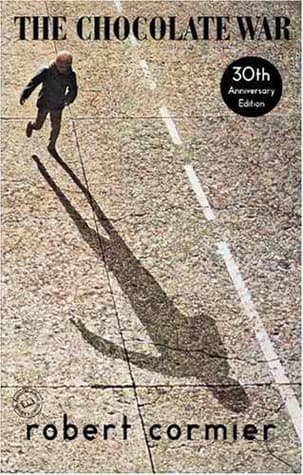
- The Chocolate War
Robert Cormier
3.5 (40k) average on GoodreadsYoung AdultBoth tackle themes of rebellion and identity. However, Zusak's work is less overtly political and institutional, focusing more on familial dynamics and the personal, internal struggles of its characters, while Cormier's is set within a more structured, oppressive environment.
- Harry Potter and the Sorcerer's Stone
J.K. Rowling
4.5 (7M) average on GoodreadsFantasyRescued from a miserable life under the stairs, an orphaned boy discovers he's a wizard destined for a magical school, where he uncovers a dangerous secret tied to the dark wizard who murdered his parents.
- The Hunger Games
Suzanne Collins
4.3 (6.4M) average on GoodreadsFantasyIn a future where children fight to the death on live television, Katniss Everdeen volunteers for the arena, turning a death sentence into a fight for survival and a spark of rebellion.
- To Kill a Mockingbird
Harper Lee
4.3 (4.5M) average on GoodreadsHistorical FictionIn the 1930s Jim Crow South, Harper Lee writes about racial injustice, moral growth, and the quiet courage of a lawyer father, Atticus Finch, as seen through his young daughter's eyes.
- The Fault in Our Stars
John Green
4.2 (3.6M) average on GoodreadsYoung AdultA girl with a terminal illness finds her story rewritten when a charming boy with a similar past enters her life at a cancer support group, leading to a star-crossed romance.
- Divergent
Veronica Roth
4.2 (2.9M) average on GoodreadsFantasyIn a society divided by virtues, a sixteen-year-old's difference from the norm starts a rebellion that threatens her world.





Enjoyed the summary?
A summary gives you the shape of the book. The book itself has the detail, the examples and the voice.
Find Fighting Ruben Wolfe on AmazonAs an Amazon Associate, BookBrief earns from qualifying purchases. How we're funded