

Synopsis
Covers the whole plot, including the ending.
- Difficulty
- Hard
- Pacing
- Moderate
- Mood
- Atmospheric, Dark, Mysterious, Oppressive, Surreal
- Read it if
- You enjoy noir-infused fantasy with a heavy dose of the weird, intricate world-building, and a strong sense of oppressive atmosphere.
- Skip it if
- You prefer straightforward plots, clear-cut heroes, or books with a lighthearted tone.
Finch Plot Summary
Covers the whole plot, including the ending.
A New Assignment in Occupied Ambergris
The novel opens in Ambergris, a city now under the martial law of the gray caps, mysterious fungal beings who have overthrown human rule. Detective John Finch, a human working under their command, lives a solitary existence with his cat and a lizard. He is summoned by the gray caps to investigate a perplexing double murder. The victims are a human woman, Janice Shriek, and a gray cap, both found dead in a locked apartment with no apparent signs of forced entry. This case is unusual and sensitive, as gray cap deaths are rare and highly significant. Finch's partner is the increasingly unstable Wyte, whose mental state is deteriorating, likely due to the gray cap-administered drugs. The gray caps, through their human intermediary Borne, make it clear that failure to solve the case will have severe consequences for Finch.
First Investigations and Disturbing Clues
Finch and Wyte visit the crime scene. The apartment is meticulously clean, almost sterile, despite the gruesome deaths. They find peculiar details: a small, intricate mushroom sculpture, a strange, metallic smell, and the unusual positioning of the bodies. The gray cap victim is identified as 'D.' Finch notes the absence of struggle and the almost ritualistic nature of the killings. During their investigation, Finch observes the gray caps' pervasive control, from constant surveillance to forced labor camps where humans are building two enormous, enigmatic towers. The atmosphere is one of constant fear and suspicion, with whispers of resistance movements barely audible beneath the gray caps' iron fist. Wyte's erratic behavior grows more pronounced, hindering their progress.
Encountering the Resistance
As Finch investigates, he begins to receive subtle signals and cryptic messages, hinting at the presence of the human resistance. He encounters members like the former Hoegbotton accountant, Mr. Fitzwilliam, and the enigmatic figure of the 'Rebel-Spy,' who seems to be playing both sides. These interactions force Finch to confront his own position: a human working for the occupiers, yet harboring a deep-seated resentment for their rule. The resistance operatives provide him with fragmented pieces of information, suggesting that the murders might be connected to larger gray cap plots or internal conflicts, rather than simple human-on-gray cap violence. Finch realizes he is being drawn into a dangerous game where his investigation is intertwined with the city's political unrest.
The Role of the Towers and the Gray Cap Agenda
Finch's investigation leads him to question the purpose of the two massive towers being constructed by human slave labor. He learns that these structures are not just monuments but serve a critical, yet unknown, function for the gray caps. The resistance believes the towers are central to the gray caps' complete domination of Ambergris, possibly even a means of transforming the city or its inhabitants. Finch begins to suspect that the double murder might be a message, a warning, or even an internal power struggle within the gray cap hierarchy, perhaps related to the towers' construction or their ultimate goal. The gray caps' motivations remain shrouded in mystery, but their methodical, almost biological, approach to control becomes clearer.
Wyte's Deterioration and the Search for Answers
Wyte's mental and physical health continues to decline rapidly. He experiences vivid hallucinations, paranoia, and memory loss, symptoms consistent with prolonged exposure to the gray caps' addictive and mind-altering drugs. Finch tries to protect his partner, but Wyte's instability becomes a liability. Finch investigates the nature of these drugs, realizing they are not merely narcotics but tools of control, subtly altering perception and loyalty. He discovers that the gray caps are not a single entity; there are factions and different types of gray caps, some more ancient and powerful than others. This complexity suggests that the murder could be a symptom of internal discord within their own ranks, rather than an external threat.
Secrets of House Hoegbotton
Finch's investigation takes him into the decaying remnants of House Hoegbotton, the once-powerful human family that ruled Ambergris. He learns about their extensive archives, their obsession with the city's history, and their past interactions with the gray caps, which were not always hostile. He discovers that Janice Shriek, the human victim, had connections to the Hoegbotton legacy and was researching forbidden knowledge. This connection suggests that the murders might be rooted in long-standing secrets and power struggles predating the gray cap occupation, or that Janice stumbled upon something the gray caps wished to keep hidden. The history of Ambergris is revealed to be far more intertwined with the gray caps than commonly believed, blurring the lines between conqueror and conquered.
The Truth About the Gray Cap Victim
Through diligent investigation and information gleaned from the resistance and his own observations, Finch eventually identifies the gray cap victim, 'D,' not as a typical gray cap but as a unique, almost experimental entity. 'D' was a 'translator' or a 'bridge' between human and gray cap understanding, possessing a unique connection to both worlds. This revelation deepens the mystery, suggesting that the murder was not just a simple killing but an act with implications for the delicate balance of power and communication in Ambergris. The nature of 'D' implies that its death could disrupt ongoing gray cap projects or even prevent a potential future where humans and gray caps might coexist or, at least, understand each other better. The stakes of the investigation escalate dramatically.
Confrontation and Betrayal
Finch finally pieces together enough clues to confront Borne, the human intermediary, and other key figures. He discovers that the murder was orchestrated by certain factions within the gray caps, possibly to consolidate power or to suppress information related to the true purpose of the towers. Janice Shriek was killed because she knew too much, and 'D' was eliminated because it represented a threat to the established gray cap order or a different path for their interaction with humans. Finch realizes that he has been a pawn in a much larger, more intricate game of political maneuvering and biological imperative. The confrontation is tense, revealing the depths of gray cap manipulation and the extent of human complicity.
The Purpose of the Towers Revealed
The climax reveals the horrific truth behind the two towers: they are not just structures but massive biological conduits designed to facilitate a complete transformation of Ambergris and its human inhabitants. The gray caps are not merely occupying the city; they are assimilating it, intending to integrate humans into their fungal consciousness or to use them as a biological resource for their own propagation and expansion. The towers are part of a vast, slow, and inevitable process of biological colonization. Finch understands that the murders were a desperate attempt by some gray cap factions, or even 'D' itself, to either prevent this process or control its outcome. The scale of the gray caps' ambition is terrifyingly clear.
Finch's Choice and the City's Fate
Finch, now fully aware of the gray caps' ultimate plan and the deep corruption within both human and gray cap societies, is forced to make a choice. He can continue to serve his masters, knowing the truth, or he can act on the information he has gathered, potentially aiding the resistance or attempting to disrupt the gray caps' plans. His choice is not one of victory, but of how he will face the inevitable. He understands that Ambergris is already lost, slowly being consumed and transformed. In the end, Finch chooses a path of quiet defiance and acceptance, recognizing the futility of outright rebellion against such an overwhelming, almost natural, force. He becomes a silent observer, forever changed by the horrors he has uncovered, as the fungal city continues its inexorable transformation.
Finch Characters
John Finch
Protagonist
A human detective working under gray cap martial law.
Finch is a meticulous, observant, and fundamentally pragmatic detective. He is a solitary figure, living with his cat and lizard, and tries to maintain a sense of normalcy in the occupied city. Despite working for the oppressive gray caps, he harbors a quiet resentment and a deep-seated curiosity about the truth. He is driven by a professional dedication to solving the case, even as it forces him to confront the moral ambiguities of his position and the horrifying reality of Ambergris. He represents the human struggle for agency and understanding in an alien-dominated world.
Relationships: Wyte (Detective partner, deeply concerned for his deteriorating mental state.); Borne (Gray cap intermediary, a source of frustration and orders.); Rebel-Spy (Informant and ambiguous ally from the resistance.)
Wyte
Supporting
Finch's unstable detective partner, deteriorating under gray cap influence.
Wyte is Finch's partner, a once-competent detective now suffering severe mental and physical decline due to the gray caps' influence, likely from their addictive drugs. He is prone to hallucinations, paranoia, and erratic behavior, making him both a burden and a tragic figure. Wyte's deterioration serves as a stark warning of the gray caps' insidious control and the fate that could befall any human. He represents the psychological toll of occupation and the loss of individual autonomy. His fragmented memories and insights sometimes offer cryptic clues, but he is primarily a symbol of the city's decay.
Relationships: John Finch (Detective partner, Finch tries to protect him despite his instability.)
Borne
Supporting
A human intermediary serving the gray caps.
Borne acts as the primary human liaison and enforcer for the gray caps, delivering their orders to Finch and other human operatives. He is cold, efficient, and seemingly loyal to his fungal masters, embodying the human complicity in the occupation. Borne is a figure of authority and menace, often reminding Finch of the severe consequences of failure. His character highlights the blurred lines of allegiance and the compromises humans make to survive under oppressive rule. He is less a person and more a functionary, a chilling example of how power corrupts and alienates.
Relationships: John Finch (Superior, delivering orders and threats.)
Janice Shriek
Mentioned
The human victim of the double murder, connected to Ambergris's past.
Janice Shriek is one of the two murder victims, a human woman found dead alongside a gray cap. Her past is enigmatic, with connections to the former ruling House Hoegbotton and a history of researching forbidden knowledge about Ambergris and the gray caps. Her death is a catalyst for Finch's investigation and suggests that the murders are deeply rooted in the city's hidden history and the secrets surrounding the gray caps. She represents the danger of seeking truth in a controlled environment and the enduring power of historical secrets.
Relationships: House Hoegbotton (Connected to their archives and history.)
'D'
Mentioned
The gray cap victim, a unique 'translator' or 'bridge' entity.
'D' is the mysterious gray cap victim, found dead alongside Janice Shriek. It is later revealed to be a unique, almost experimental gray cap, possibly designed to act as a 'translator' or 'bridge' between human and gray cap understanding. Its death signifies a disruption in gray cap plans or an internal conflict, suggesting that not all gray caps are monolithic in their goals. 'D' represents a potential path for communication or a different form of coexistence that has been violently cut short, making its murder particularly significant.
Relationships: Janice Shriek (Murdered alongside her, suggesting a shared secret or purpose.)
The Rebel-Spy
Supporting
An enigmatic member of the human resistance, providing cryptic clues.
The Rebel-Spy is a shadowy figure who provides Finch with fragmented information and subtle clues, seemingly playing both sides of the conflict. This character represents the desperate, often morally ambiguous, tactics of the human resistance in Ambergris. The Rebel-Spy's motives are not always clear, adding to the pervasive atmosphere of mistrust and deception in the occupied city. They are a conduit for information that challenges the gray caps' narrative, but also a reminder of the dangers of aligning with any faction in such a complex struggle.
Relationships: John Finch (Informant, providing cryptic guidance.)
The Gray Caps
Antagonist
Mysterious, sentient fungal beings who have conquered Ambergris.
The gray caps are the enigmatic, alien antagonists of the story. They are a species of sentient, mobile fungi that have overthrown human rule in Ambergris and established a brutal martial law. Their motivations are largely inscrutable to humans, driven by a biological imperative to expand and assimilate. They control the human population through addictive drugs, forced labor, and acts of terror. They are not a monolithic entity, with hints of internal factions and different types of gray caps, but their collective goal appears to be the complete transformation of the city. They represent an overwhelming, almost cosmic, force of nature that humans are ill-equipped to resist.
Relationships: Humans of Ambergris (Conquerors and oppressors, using humans as labor and resources.)
Finch Themes
Occupation and Resistance
The central theme explores the dynamics of an alien occupation and the various forms of human resistance and complicity. Ambergris is under the martial law of the gray caps, who control the populace through fear, drugs, and forced labor. Finch, a human detective working for the occupiers, embodies the moral ambiguities of survival under such a regime. The scattered human resistance, represented by figures like the Rebel-Spy, operates in the shadows, attempting to subvert gray cap authority. The novel explores the psychological toll of occupation on individuals like Wyte, highlighting the erosion of identity and autonomy. It also examines the nature of power, showing how an overwhelming, almost biological, force can render traditional forms of resistance futile, as seen in the ultimate fate of Ambergris.
“The city was not just occupied; it was being digested, slowly, inevitably, by a patient, fungal will.”
Truth and Deception
The narrative is steeped in layers of truth and deception, mirroring the mystery genre and the nature of an occupied state. Finch's investigation of the double murder forces him to navigate a world where nothing is as it seems. The gray caps themselves are enigmatic, their motives and internal politics shrouded in mystery. The human resistance also operates through misdirection and hidden agendas. Finch constantly questions what is real – from Wyte's drug-induced hallucinations to the official gray cap narratives. The ultimate revelation about the towers and the gray caps' true purpose shatters any preconceived notions, revealing a truth far more terrifying than simple political control. This theme highlights the difficulty of finding objective truth when reality itself is being subtly manipulated and transformed.
“In Ambergris, the truth was less a solid thing and more a fungus, growing in the cracks of what you thought you knew.”
Identity and Transformation
The novel explores the fluidity of identity, both individual and collective, in the face of radical transformation. Finch's identity as a human detective is constantly challenged by his service to the gray caps and his forced proximity to their alien nature. Wyte's mental deterioration shows a more literal transformation, as the gray cap drugs erode his very self. On a larger scale, Ambergris itself is undergoing a biological transformation, slowly being assimilated into the gray caps' fungal ecosystem. The idea of what it means to be 'human' or 'Ambergrisian' is questioned, as the city and its inhabitants are subsumed into an alien consciousness. This theme highlights the fragility of established identities when confronted with an overwhelming, almost biological, force of change.
“The city was becoming something else, and in doing so, it was taking its inhabitants with it, whether they wished it or not.”
The Alien and the Unknowable
A core theme is humanity's encounter with the truly alien and the limitations of human understanding. The gray caps are not merely invaders; they are fundamentally different, operating on biological imperatives and a consciousness that defies human categorization. Their motives, their internal structures, and their ultimate goals remain largely inscrutable to Finch, even as he investigates their actions. The novel emphasizes the horror of confronting an entity whose logic and existence are entirely outside human experience, making traditional conflict and negotiation impossible. This theme creates a sense of dread and helplessness, as humanity grapples with a force that is not evil in a human sense, but simply alien and overwhelming, as seen in the revelation of the towers' purpose.
“They were not monsters, not exactly. They were simply... other. And that was far more terrifying.”
Plot Devices & Literary Techniques
The Double Murder
A seemingly straightforward crime that unravels a city's secrets.
The double murder of a human and a gray cap serves as the central inciting incident and a classic mystery plot device. It propels Finch's investigation, forcing him to delve into the hidden politics and biological imperatives of the gray caps. The unusual nature of the victims and the crime scene immediately signal that this is no ordinary case, drawing both Finch and the reader into the deeper mysteries of Ambergris. It acts as a microcosm of the larger conflict, revealing the complex interdependencies and tensions between humans and gray caps, and ultimately exposing the true nature of the occupation.
The Towers
Enigmatic structures whose purpose drives much of the gray cap agenda.
The two massive, mysterious towers under construction by human slave labor are a significant plot device. Their unknown purpose creates suspense and acts as a focal point for both gray cap activity and resistance speculation. They symbolize the gray caps' long-term, inscrutable plans for Ambergris, and their gradual revelation builds towards the novel's horrifying climax. The towers are not just physical structures but represent the ultimate biological transformation the gray caps intend to inflict upon the city, making them a tangible manifestation of the alien threat.
The Gray Cap Drugs
Mind-altering substances used for control and manipulation.
The addictive and mind-altering drugs administered by the gray caps are a crucial plot device. They serve as a means of control, subtly eroding human will and loyalty, as vividly demonstrated by Wyte's deterioration. These drugs blur the lines of perception and reality, contributing to the novel's atmosphere of uncertainty and psychological horror. They are not just recreational substances but tools of a biological war, subtly transforming the human mind and body to fit the gray caps' agenda, highlighting the insidious nature of their occupation beyond mere physical force.
The Hoegbotton Archives
A repository of forbidden history and knowledge about Ambergris and the gray caps.
The remnants of House Hoegbotton's vast archives serve as a plot device for revealing crucial historical context and hidden truths. Finch's investigation leads him to these archives, which contain records of past interactions between humans and gray caps, and forbidden knowledge about the city's true nature. They provide a deeper understanding of Janice Shriek's motivations and the long-standing secrets that predate the current occupation. The archives underscore the idea that the present conflict is rooted in a complex, often obscured, history, and that knowledge itself can be a dangerous weapon.
Finch Quotes
“The city wasn’t just a place; it was a state of mind, a constant negotiation with the unknown.”
“Every object, every building, had a story, and most of them were bloody.”
“Sometimes, the only way to solve a mystery was to become part of it.”
“The fungi were everywhere, a silent, creeping intelligence that had taken root in the city's bones.”
“He was a detective in a city that didn't want its secrets found.”
“Memory was a tricky thing in Ambergris; it warped, it mutated, it became something else entirely.”
“The wind carried the smell of rain and something else, something ancient and unnameable.”
“There were shadows within shadows, and Finch was just learning how deep they went.”
“He moved through the city like a ghost, seeing everything but belonging nowhere.”
“The past wasn't dead; it was just waiting for the right moment to surface.”
“Every secret kept was a potential weapon, waiting to be wielded.”
“The ink was a kind of blood, staining everything it touched with its own dark story.”
“He knew the city wouldn't give up its answers easily, if at all.”
“To be human in Ambergris was to be constantly aware of what wasn't human.”
Quiz
10 questions on the plot and the characters. Each answer comes with a short explanation.
Question 1
What species are the mysterious underground inhabitants who have reconquered Ambergris?
- The Hoegbottons
- The gray caps
- The Eelmen
- The Shroomfolk
Show answer
B. The gray caps The gray caps are the mysterious underground inhabitants who have taken control of Ambergris and put it under martial law.
Question 2
What is the protagonist's name and profession?
- Wyte, a detective
- John Finch, an investigator
- Ambergris, a rebel leader
- Hoegbotton, a former politician
Show answer
B. John Finch, an investigator The protagonist is John Finch, and he works as an investigator, tasked with solving a double murder for his gray cap masters.
Question 3
What specific structures are the gray caps forcing humans to build?
- A new city wall
- Two strange towers
- Underground tunnels
- A series of internment camps
Show answer
B. Two strange towers The gray caps are using human labor to construct two strange towers, which are a recurring detail in the story's backdrop.
Question 4
What methods do the gray caps employ to control the human inhabitants of Ambergris?
- Strict curfews and public executions
- Addictive drugs, internment in camps, and random acts of terror
- Economic sanctions and propaganda
- Forced conscription into their army
Show answer
B. Addictive drugs, internment in camps, and random acts of terror The gray caps maintain control through a combination of strange addictive drugs, internment in camps, and random acts of terror.
Question 5
What is the primary objective Finch is given by his gray cap masters?
- To infiltrate the rebel resistance
- To find the source of the addictive drugs
- To solve an impossible double murder
- To oversee the construction of the towers
Show answer
C. To solve an impossible double murder Finch's core task is to solve an 'impossible double murder' for his gray cap masters, which drives much of the immediate plot.
Question 6
What is the state of House Hoegbotton after the gray cap takeover?
- They are leading the rebel resistance.
- They have been disbanded by the gray caps.
- They are collaborating with the gray caps.
- They have retreated to an underground city.
Show answer
B. They have been disbanded by the gray caps. The gray caps have specifically disbanded House Hoegbotton, indicating a complete overthrow of the previous political structure.
Question 7
Who is Wyte in relation to Finch?
- Finch's gray cap handler
- Finch's partner, who is disintegrating
- A leader of the rebel resistance
- The victim of the double murder
Show answer
B. Finch's partner, who is disintegrating Wyte is Finch's partner, and the description notes that Wyte is 'disintegrating,' adding to the city's surreal and dangerous atmosphere.
Question 8
What does the phrase 'Nothing is as it seems' primarily suggest about the novel's themes?
- The importance of clear communication.
- A focus on political transparency.
- Themes of deception, unreliable perception, and hidden realities.
- The simplicity of good versus evil.
Show answer
C. Themes of deception, unreliable perception, and hidden realities. The phrase 'Nothing is as it seems' explicitly points to themes of deception, the unreliability of perception, and the presence of hidden realities within the narrative.
Question 9
Beyond solving the murder, what other significant goal does Finch attempt to achieve?
- To escape Ambergris and flee the gray caps.
- To overthrow the gray cap regime single-handedly.
- To make contact with the rebel resistance.
- To understand the true nature of the gray caps' biology.
Show answer
C. To make contact with the rebel resistance. While solving the murder, Finch is also trying to make contact with the scattered rebel resistance, indicating a dual objective and a deeper involvement in the city's conflict.
Question 10
What is the ultimate consequence hinted for Finch and Ambergris by the end of the synopsis?
- Finch will successfully restore the Hoegbotton regime.
- Finch will be imprisoned, and Ambergris will be destroyed.
- Finch will face mysteries that will change him and Ambergris forever.
- Finch will become a gray cap, and Ambergris will thrive under their rule.
Show answer
C. Finch will face mysteries that will change him and Ambergris forever. The synopsis concludes by stating that Finch is 'about to come face to face with a series of mysteries that will change him and Ambergris forever,' suggesting a profound and lasting impact from his journey.
Finch FAQ
What is the primary conflict driving the plot of 'Finch'?
The primary conflict in 'Finch' is the oppressive occupation of Ambergris by the mysterious gray caps, who have imposed martial law, disbanded human power structures like House Hoegbotton, and control the populace through drugs and terror. Protagonist John Finch is caught between his role as a detective for the occupiers and his growing desire to connect with the fragmented human resistance.
Who are the 'gray caps' and what is their motivation for occupying Ambergris?
The gray caps are mysterious, mushroom-like humanoid creatures from beneath the city who have reconquered Ambergris. Their motivations are initially opaque, but they are observed to be constructing two strange towers using human labor and employing various methods of control, suggesting a long-term plan for the city and its inhabitants, possibly tied to their own survival or a larger, unknown purpose.
What is John Finch's role in the occupied city, and what makes his situation unique?
John Finch is a detective, forced to work for the gray cap regime, investigating a seemingly impossible double murder. His unique situation stems from his reluctant collaboration with the occupiers, his isolated personal life with only a cat and a lizard for company, and the internal conflict between his duty and his potential alignment with the human rebels.
Describe the general atmosphere and state of Ambergris under gray cap rule.
Ambergris under gray cap rule is a city under martial law, characterized by pervasive fear, scarcity, and a sense of decay. Human inhabitants are subject to random acts of terror, internment camps, and mind-altering drugs, creating a landscape of paranoia, suspicion, and a deeply fractured society where trust is a dangerous commodity.
Who is Wyte and what is his relationship with Finch?
Wyte is Finch's partner in the gray cap police force, described as 'disintegrating' due to the pressures of the occupation and possibly the gray caps' influence. Their relationship is one of reluctant partnership, strained by the oppressive environment and Wyte's increasingly erratic behavior, which complicates Finch's investigation and his personal safety.
What is the significance of the two strange towers being built by the gray caps?
The two strange towers are central to the gray caps' unknown agenda and serve as a constant, looming mystery. Their construction using human labor suggests a grand, long-term project, potentially a means of solidifying their control, altering the city's environment, or serving a ritualistic purpose tied to their unique biology and connection to Ambergris's deeper history.
Are there any clues about the true nature or origin of the gray caps beyond their physical description?
Beyond their physical description as mushroom-like humanoids, clues hint at a complex biology and deep-rooted connection to Ambergris's ecosystem, possibly even its foundational elements. Their ability to manipulate humans with drugs and their organized, yet alien, societal structure suggest a long-standing, sophisticated culture that has merely been dormant or hidden until their re-emergence.
How do the 'addictive drugs' used by the gray caps affect the human population, specifically Finch or his associates?
The addictive drugs used by the gray caps are a primary tool of control, subtly altering human perceptions, memories, and wills, making resistance difficult and compliance easier. While Finch himself might not be directly affected, he observes their impact on the general populace and potentially on his partner Wyte, contributing to the pervasive sense of unreality and paranoia.
What is the psychological impact of Finch's isolated life with only a cat and a lizard in an occupied city?
Finch's isolated life with only a cat and a lizard underscores his detachment and vulnerability in the occupied city. This solitude may serve as a coping mechanism against the pervasive terror and deception, but it also highlights his profound loneliness and the difficulty of forming genuine connections or alliances in a world where trust is a luxury.
How does the 'impossible double murder' challenge Finch's detective skills and his sense of reality?
The 'impossible double murder' challenges Finch's detective skills by presenting a crime that defies conventional logic and investigative methods, forcing him to confront the supernatural or unknown elements of the gray cap occupation. This case, likely infused with the gray caps' strange influence, pushes him to question the very nature of reality in Ambergris, blurring lines between fact and hallucination.
In what ways do the gray caps' 'random acts of terror' psychologically manipulate the human population?
The gray caps' 'random acts of terror' serve to psychologically manipulate the human population by fostering pervasive fear, unpredictability, and a sense of helplessness. This strategy breaks down social cohesion, erodes trust, and prevents organized resistance by ensuring that no one feels safe, creating a state of constant anxiety and submission.
How does Finch's internal conflict between loyalty to his job and potential rebellion manifest?
Finch's internal conflict manifests as a constant moral struggle, where his survival depends on performing his duties for the gray caps, yet his conscience is drawn towards the human resistance. This tension is evident in his cautious inquiries, his observations of the city's suffering, and his increasing awareness of the profound injustices, pushing him towards a critical decision point.
What does the disbanding of 'House Hoegbotton' signify for the human power structure in Ambergris?
The disbanding of 'House Hoegbotton' signifies the complete dismantling of the established human power structure and any semblance of self-governance in Ambergris. It represents the gray caps' total assertion of control, erasing traditional authority and leaving the human populace leaderless and vulnerable, ripe for manipulation and subjugation.
Is Finch a hero, an anti-hero, or merely a survivor in the context of the story?
Finch can be interpreted as an anti-hero or a survivor initially, given his reluctant collaboration with the occupiers and his isolated nature. However, his growing awareness and internal struggle, coupled with his eventual attempts to connect with the rebels, suggest a potential trajectory towards a more heroic, albeit flawed, role in resisting the gray cap regime.
How does the 'fantasy state' aspect of Ambergris interact with its current 'martial law' reality?
The 'fantasy state' past of Ambergris starkly contrasts with its current 'martial law' reality, creating a sense of fallen grandeur and a poignant loss of freedom and identity. This juxtaposition highlights the tragedy of the occupation, suggesting that the city's unique history and culture are being systematically erased or twisted by the gray caps, making their subjugation even more profound.
What is the potential significance of the gray caps' 'reconquest' rather than a simple invasion?
The term 'reconquest' implies that the gray caps had a prior claim or historical connection to Ambergris, suggesting a deeper, more ancient conflict between them and humanity. This framing elevates the gray caps from mere invaders to a force reclaiming what they believe is theirs, adding layers of historical complexity and moral ambiguity to the occupation.
Does the novel suggest any hope for the human resistance, or is it a story of inevitable defeat?
While the human resistance is initially scattered and seemingly overwhelmed, Finch's efforts to make contact suggest a glimmer of hope. The narrative explores the resilience of the human spirit even under extreme oppression, implying that while victory is far from assured, the possibility of resistance, even if small, remains a driving force for change and defiance.
How might the 'mysteries that will change him and Ambergris forever' ultimately reshape Finch's identity?
The 'mysteries that will change him and Ambergris forever' will likely force Finch to confront uncomfortable truths about the city, the gray caps, and himself. This exposure will strip away his initial detachment, compelling him to choose a side and engage more deeply with the fate of Ambergris, ultimately forging a new, more active and perhaps burdened, identity.
About the author

Jeff VanderMeer is an American author known for his contributions to speculative fiction. His notable works include "Annihilation," which is part of the Southern Reach Trilogy, as well as "Authority," "Borne," "Finch," and "Veniss Underground." VanderMeer's writing often explores themes of nature, transformation, and the uncanny.
Similar books
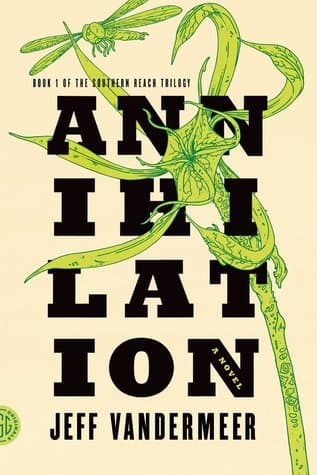
- Annihilation
Jeff VanderMeer
4.0 (5k) average on GoodreadsFantasyExhibits VanderMeer's signature style of biological horror, ecological mystery, and unsettling, ambiguous narratives.
- Harry Potter and the Sorcerer's Stone
J.K. Rowling
4.5 (7M) average on GoodreadsFantasyRescued from a miserable life under the stairs, an orphaned boy discovers he's a wizard destined for a magical school, where he uncovers a dangerous secret tied to the dark wizard who murdered his parents.
- The Hunger Games
Suzanne Collins
4.3 (6.4M) average on GoodreadsFantasyIn a future where children fight to the death on live television, Katniss Everdeen volunteers for the arena, turning a death sentence into a fight for survival and a spark of rebellion.
- 1984
George Orwell
4.2 (3.1M) average on GoodreadsPoliticsIn a future where surveillance and thought control are absolute, a man's search for truth clashes with the Party, showing that hope can be a form of rebellion.
- Divergent
Veronica Roth
4.2 (2.9M) average on GoodreadsFantasyIn a society divided by virtues, a sixteen-year-old's difference from the norm starts a rebellion that threatens her world.
- The Hobbit, or There and Back Again
J.R.R. Tolkien
4.3 (2.9M) average on GoodreadsFantasyA comfort-loving hobbit named Bilbo Baggins is whisked away by a mischievous wizard and a band of dwarves on an unexpected journey to reclaim stolen treasure from a fearsome dragon, discovering courage and a magical ring along the way.





Enjoyed the summary?
A summary gives you the shape of the book. The book itself has the detail, the examples and the voice.
Find Finch on AmazonAs an Amazon Associate, BookBrief earns from qualifying purchases. How we're funded