

Synopsis
Covers the whole plot, including the ending.
- Difficulty
- Hard
- Pacing
- Variable
- Mood
- Dreamlike, Challenging, Lyrical, Humorous, Arcane
- Read it if
- You are a seasoned literary scholar, a linguist, or an adventurous reader seeking the ultimate challenge in experimental fiction and modernist literature. You enjoy deciphering complex puzzles and appreciate the artistic potential of language pushed to its absolute limits.
- Skip it if
- You prefer clear, linear narratives, accessible prose, or character-driven stories. This book is not for those seeking an easy read or a conventional plot.
Finnegans Wake Plot Summary
Covers the whole plot, including the ending.
The Fall of H.C.E. and the River's Flow
The book opens mid-sentence, 'riverrun, past Eve and Adam's, from swerve of shore to bend of bay, brings us by a commodius vicus of recirculation back to Howth Castle and Environs.' This immediately establishes the cyclical, dream-like nature of the narrative. The main character, Humphrey Chimpden Earwicker (H.C.E.), a publican in Chapelizod, is introduced through fragmented allusions to a past scandal involving two temptresses and three soldiers in Phoenix Park. This event, never fully explained, affects H.C.E. and his family, becoming a recurring theme of guilt, fall, and public humiliation. The language is dense with portmanteau words, puns, and multilingual allusions, reflecting the subconscious mind's associative logic rather than linear plot progression. The River Liffey, personified as Anna Livia Plurabelle, also begins her journey, symbolizing the flow of time and memory.
The Ballad of Finnegan and the Wake
The famous ballad of Tim Finnegan, an Irish hod-carrier who falls from a ladder and dies, only to be resurrected by whiskey spilled at his wake, is a foundational myth for the entire narrative. This story prefigures H.C.E.'s own 'fall' and the subsequent 'wake' — both the mourning and the awakening — that permeates the book. Finnegan's fall is not just physical but symbolic, representing the fall of humanity, the cyclical nature of history, and the constant rise and fall of civilizations and individuals. The wake itself transforms into a chaotic, drunken celebration, where the lines between life and death, past and present, blur, mirroring the dream-state of the entire work. The narrative constantly cycles back to themes of construction and destruction, collapse and rebirth, all rooted in this initial, archetypal 'fall'.
The Earwicker Family and Their Roles
The Earwicker family is central, though their individual identities often merge and split. Humphrey Chimpden Earwicker (H.C.E.) is the patriarch, a universal father figure burdened by a vague, original sin. His wife, Anna Livia Plurabelle (A.L.P.), embodies the feminine principle, the flowing river, and the resilience of life and language. Their twin sons, Shem the Penman and Shaun the Postman, represent opposing types: Shem is the introverted artist, the writer, the outcast, while Shaun is the extroverted, conventional, and often hypocritical public figure. Their sister, Issy (Isolde), is a changeable figure of youthful innocence and developing sexuality, often appearing in multiple forms. These characters are less individuals and more symbolic functions within the large, collective unconscious dream, always shifting roles and identities, reflecting the complex dynamics of the human mind.
The Scandal in Phoenix Park
The alleged incident in Phoenix Park involving H.C.E., two girls, and three soldiers is a central, yet always elusive, event. It is never definitively described but is re-enacted, re-interpreted, and distorted through countless perspectives, rumors, and court trials within the dream. This ambiguity is important: the 'crime' could be anything from public indecency to a sexual assault, or even a simple misunderstanding. The multiple tellings show the subjective nature of truth, the power of gossip, and how society creates stories around scandal. The incident is a catalyst for H.C.E.'s social downfall and his subsequent attempts at self-justification. It symbolizes humanity's constant struggle with guilt, judgment, and redemption. The park itself becomes a symbolic space where nature and human wrongdoing meet.
Shem the Penman and His Artistic Struggle
Shem the Penman is a thinly disguised caricature of James Joyce himself, portrayed as an irreverent, ostracized artist who lives poorly and creates difficult, often offensive, works. He is the opposite of his twin, Shaun. Shem is associated with ink, writing, and creating through language, often at the expense of social acceptance. His chapters explore artistic creation, plagiarism, and the struggle to make a unique voice against societal pressures. He is accused of various wrongdoings, mostly from his unconventional lifestyle and his challenging literary output. Shem's character explores the isolation and dedication needed for radical artistic expression, and how such expression often meets with misunderstanding and hostility from the mainstream.
Shaun the Postman and His Conventionality
Shaun the Postman is Shem's opposite, representing the conventional, well-adjusted, and often hypocritical face of society. He is the 'deliverer' of messages, but these messages are often distorted or self-serving. Shaun is praised and admired, often at Shem's expense, and embodies the 'official' narrative. His journey through the book includes various encounters and pronouncements, where he speaks on morality, art, and history, always from a position of comfortable orthodoxy. He is associated with food, public speaking, and the physical world, contrasting with Shem's intellectual and linguistic focus. Shaun's character critiques societal conformity, superficiality, and the often-unquestioning acceptance of established authority, even when that authority is based on shaky ground.
The Question and Answer Sessions
Throughout the book, especially in later sections, the narrative uses a question-and-answer format, like a catechism or a legal interrogation. These sections are highly structured, yet the answers are often evasive, pun-laden, and open to many interpretations, mirroring the book's overall resistance to a single meaning. They explore large philosophical questions about time, space, history, religion, and human nature, often referencing Vico's cyclical theory of history. These Q&A sessions both clarify and obscure, making the reader actively engage with the text's ambiguities. They show how hard it is to get definitive answers and the endless interpretive possibilities in language and human experience, often framing the 'plot' as a series of unresolved questions.
Anna Livia Plurabelle's Monologue
The 'Anna Livia Plurabelle' chapter is a sustained monologue (or dialogue between washerwomen on the banks of the Liffey) that tells the life of A.L.P., who is a woman, a river, and the spirit of Dublin. Her monologue is a lyrical, flowing stream of words, full of names of rivers, plants, and Irish folklore. She speaks of her youth, her marriage to H.C.E., his fall, and her lasting love and resilience. This section shows the feminine principle, the power of nature, and the continuous flow of life and history. It is a moment of relative clarity and beauty among the book's usual density, offering a look into the emotional core of the Earwicker family's story and the eternal renewal symbolized by the river.
The Wake's Dream Logic and Cyclical History
The book's plot is non-linear, operating according to the associative, fragmented, and symbolic logic of a dream. Events repeat, characters merge and split, and time itself is cyclical, heavily influenced by Giambattista Vico's theory of historical cycles (theocratic, heroic, human, and ricorso). This means the 'story' is not a progression but a constant re-enactment of archetypal human dramas: fall and redemption, love and betrayal, creation and destruction. The language itself contributes to this dream-state, with its multilingual puns and portmanteaus creating a dense, multi-layered reality where multiple meanings coexist. The 'wake' is not just for Finnegan, but for all of humanity, a continuous process of dying and rebirth within the universal dream.
H.C.E.'s Confession and A.L.P.'s Final Soliloquy
Towards the end, H.C.E. attempts a fragmented, often contradictory, 'confession' or self-justification for his ambiguous past actions, revealing his deep anxieties and desires. This section has a mix of self-pity, grandiosity, and deep loneliness. The book concludes with A.L.P.'s famous, poignant soliloquy. As the River Liffey, she flows towards the sea, thinking about her life, her love for H.C.E., her children, and the cyclical nature of existence. Her thoughts are full of longing, resignation, and an acceptance of the inevitable return to the source. The final words, 'A way a lone a last a loved a long the,' trail off, incomplete, leading back to the opening 'riverrun,' completing the book's grand, eternal cycle of language, life, and dream.
Finnegans Wake Characters
Humphrey Chimpden Earwicker (H.C.E.)
Protagonist/Archetype
The dream's central figure, a universal father burdened by a pervasive, ambiguous guilt.
H.C.E. is the sleeping patriarch around whom the entire dream-narrative revolves. He is a Dublin publican, but his identity is fluid, encompassing historical figures, mythological heroes, and everyman archetypes. He is perpetually haunted by a vague, undefined transgression in Phoenix Park, which serves as a symbolic 'original sin' for all humanity. His attempts to confess or justify himself are constantly thwarted by the dream's shifting logic and the collective judgment of society. He embodies the masculine principle, the fallen hero, and the figure around whom history and gossip coalesce. His name often transforms through portmanteaus, indicating his universal and shifting nature.
Relationships: Anna Livia Plurabelle (wife, eternal feminine counterpart); Shem the Penman (son, artistic rebel); Shaun the Postman (son, conventional public figure); Issy (daughter, object of desire/innocence)
Anna Livia Plurabelle (A.L.P.)
Protagonist/Archetype
H.C.E.'s wife, the personification of the River Liffey, embodying the eternal feminine, nature, and language's flow.
A.L.P. is the enduring, life-giving force of the novel. She is H.C.E.'s wife, but also the River Liffey, flowing through Dublin and symbolizing the continuous current of time, history, and language. She represents resilience, love, and the nurturing aspect of the feminine. Her character is associated with gossip, washing, and the collective memory of the city. Her long monologue is a lyrical testament to her enduring love for H.C.E. despite his flaws, and her acceptance of the cyclical nature of life and death. She is the source from which all things flow and to which they return, providing a sense of comfort and continuity amidst the dream's chaos.
Relationships: Humphrey Chimpden Earwicker (husband, eternal masculine counterpart); Shem the Penman (son); Shaun the Postman (son); Issy (daughter)
Shem the Penman
Supporting/Archetype
The artistic, introverted twin, representing Joyce himself and the marginalized creator.
Shem is one of H.C.E. and A.L.P.'s twin sons, largely considered a self-caricature of James Joyce. He represents the artist, the writer, the outcast, and the one who challenges societal norms through his difficult and unconventional art. He is often reviled and mocked by the other characters, particularly his brother Shaun, for his reclusive nature, his perceived pretentiousness, and his linguistic experiments. Shem embodies the struggle of the artist to create meaning and new forms of expression, often at the cost of social acceptance. He is associated with ink, writing, and the act of linguistic creation, delving into the subconscious and the 'dirty' aspects of life.
Relationships: Humphrey Chimpden Earwicker (father); Anna Livia Plurabelle (mother); Shaun the Postman (twin brother, rival); Issy (sister, sometimes object of incestuous desire)
Shaun the Postman
Supporting/Archetype
The conventional, extroverted twin, representing the public, traditional, and often hypocritical face of society.
Shaun is the other twin son, the antithesis of Shem. He represents the popular, conventional, and socially acceptable figure. He is often portrayed as a postman, a messenger, or a public orator, delivering messages that are often distorted or self-serving. Shaun is lauded and celebrated by society, often at Shem's expense. He embodies the 'official' narrative, conventional morality, and the forces of censorship and conformity. His character satirizes the superficiality of public opinion and the ease with which conventionality can mask hypocrisy. He is associated with physical comfort, food, and public speaking, contrasting with Shem's intellectual and reclusive nature.
Relationships: Humphrey Chimpden Earwicker (father); Anna Livia Plurabelle (mother); Shem the Penman (twin brother, rival); Issy (sister, sometimes object of conventional affection)
Issy
Supporting/Archetype
The daughter, a protean figure embodying youthful innocence, burgeoning sexuality, and multiple female archetypes.
Issy, or Isolde, is H.C.E. and A.L.P.'s daughter. Her character is highly fluid and often appears in multiple guises, sometimes as a schoolgirl, sometimes as a temptress, sometimes as one of the two girls in Phoenix Park. She embodies the innocence and awakening sexuality of youth, as well as the idealized feminine. She is the object of both her brothers' and her father's ambiguous desires, representing the complex family dynamics and the universal allure of the feminine. Her presence adds a layer of youthful energy and often-disturbing eroticism to the dream narrative, frequently appearing in mirror images or split personalities.
Relationships: Humphrey Chimpden Earwicker (father, ambiguous desire); Anna Livia Plurabelle (mother); Shem the Penman (brother, ambiguous desire); Shaun the Postman (brother, ambiguous desire)
Tim Finnegan
Mentioned/Archetype
The mythical hod-carrier whose fall and wake prefigure H.C.E.'s story and the book's cyclical themes.
Tim Finnegan is a character from an old Irish ballad whose fall from a ladder and subsequent resurrection by whiskey at his wake serves as a foundational myth for the entire book. While not a direct participant in the Earwicker family's dream, his story is constantly referenced and re-enacted. He represents the universal 'fall' of man, the cyclical nature of life, death, and rebirth, and the transformation of sorrow into celebration (the 'wake' as both mourning and party). His story establishes the book's central theme of constant renewal and the interplay between life and death.
The Four Old Men (Mamalujo)
Supporting/Archetype
Four evangelist-like figures who serve as witnesses, commentators, and gossips, representing different perspectives on H.C.E.'s story.
These four figures — Matthew, Mark, Luke, and John (often appearing as Mamalujo) — are recurring commentators and witnesses within the dream. They represent different historical, religious, and social perspectives, often offering conflicting accounts of H.C.E.'s alleged transgressions. They embody the collective memory and judgment of society, constantly reinterpreting and distorting events. Their presence reinforces the idea that truth is subjective and constructed through multiple viewpoints and the filtering lens of history and gossip. They are often depicted as decrepit, gossipy figures, further emphasizing the unreliable nature of their testimony.
Relationships: Humphrey Chimpden Earwicker (subject of their commentary and judgment)
The Cad with a Pipe (Butt and Taff)
Supporting/Archetype
Figures who represent accusation and defense, often in a burlesque, theatrical manner.
These figures, often appearing as a pair named Butt and Taff, are recurring characters who engage in dramatic re-enactments or interrogations of H.C.E.'s alleged crime. They represent the accuser and the defender, the prosecutor and the defense attorney, or simply different sides of a contentious argument. Their interactions are theatrical and often farcical, highlighting the absurdity of legal proceedings and public trials within the dream-world. They contribute to the constant re-evaluation of H.C.E.'s guilt or innocence, ensuring that no definitive judgment is ever reached, thus perpetuating the cycle of accusation and justification.
Relationships: Humphrey Chimpden Earwicker (figure they are accusing/defending)
Finnegans Wake Themes
The Cyclical Nature of History and Life
Joyce's most pervasive theme, heavily influenced by Giambattista Vico's historical cycles (theocratic, heroic, human, and ricorso). The narrative constantly repeats that history is not linear but a continuous process of birth, death, and rebirth. This is seen in H.C.E.'s recurring 'fall' (like Finnegan), the flowing of the River Liffey (A.L.P.) to the sea and its eventual return as rain, and the endless re-enactment of archetypal human dramas. The book itself begins and ends mid-sentence, forming an ouroboros, symbolizing the eternal return and the absence of true beginnings or endings. This cyclicality applies to individuals, families, nations, and language itself.
“riverrun, past Eve and Adam's, from swerve of shore to bend of bay, brings us by a commodius vicus of recirculation back to Howth Castle and Environs.”
The Nature of Language and Communication
Finnegans Wake is an exhaustive exploration of language. Joyce uses puns, portmanteau words, multilingual allusions, and neologisms to show the fluidity, ambiguity, and multi-layered nature of communication. The book suggests that language is not a clear medium but a dense, living entity capable of infinite meanings and misinterpretations. The difficulty of understanding the text mirrors the difficulty of true communication in a world where meaning always shifts. The rivalry between Shem (the artist who distorts language) and Shaun (the conventional messenger) further shows different approaches to linguistic expression. The text invites readers to help create meaning.
“What means the murmur that now arises as if from a river of wind, a river of water, a river of tears?”
Dream and the Subconscious
The entire novel is structured as a dream, specifically H.C.E.'s dream. This allows for the suspension of conventional logic, time, and identity. Characters merge, events recur in distorted forms, and the narrative shifts associatively, mirroring the workings of the subconscious mind. The dream-state allows Joyce to explore universal archetypes (father, mother, sons, daughter) and collective memories, drawing on myth, history, and folklore. It suggests that our deepest truths and anxieties reside in the unconscious, where boundaries are blurred and meaning is fluid. The dream provides a canvas for exploring repressed desires, guilt, and the primal forces of the human mind.
“A good clap, a sound plan, a fair deal, a safe back, a sure foot, a straight eye, a clean hand, a cool head, a hot heart, a free tongue, a loose purse, a long shot, a short shrift, a quick wit, a slow turn, a deep thought, a light sleep, a dream.”
Guilt, Fall, and Redemption
H.C.E.'s ambiguous 'fall' in Phoenix Park is a central theme, symbolizing humanity's original sin and widespread guilt. This fall is always re-enacted and re-interpreted, never fully resolved. The characters constantly deal with accusation, judgment, and attempts at self-justification. The theme explores how society creates stories around scandal and how individuals cope with shame and the desire for redemption. However, true redemption is elusive in the cyclical dream-world; instead, there is a continuous process of falling and rising, guilt and absolution, suggesting these are inherent aspects of the human condition rather than definitive states.
“The fall (bababadalgharaghtakamminarronnkonnbronntonnerronntuonnthunntrovarrhounawnskawntoohoohoordenenthurnuk!) of a once wallstrait oldparr is retaled early in bed and later on at night.”
Sexuality and Desire
Beneath the dream's surface, complex and often disturbing sexual currents run through the narrative. There are allusions to incestuous desires (between H.C.E. and Issy, and the twins), voyeurism, and the primal forces of attraction and repulsion. The 'crime' in Phoenix Park is implicitly sexual, though never explicitly defined, reflecting the repression and ambiguity around sexuality in society. The feminine principle, embodied by A.L.P. and Issy, is often presented as both alluring and potentially dangerous. Joyce explores the subconscious drives and taboos around sex, often through highly coded and pun-laden language, revealing the raw, instinctual aspects of human nature within the dream.
“You mean to say you were not there, my dear, when the two girls, the two temptresses, were sitting on the stone?”
Plot Devices & Literary Techniques
Portmanteau Words and Puns
The primary linguistic tool, merging multiple words and meanings into single neologisms.
Joyce employs thousands of portmanteau words and puns, often combining English with other languages (German, French, Latin, Irish, etc.). This device creates a multi-layered text where several meanings coexist simultaneously, reflecting the associative logic of dreams and the fluidity of language. For example, 'collideorscape' combines 'kaleidoscope' and 'collide,' suggesting both visual complexity and conflict. This forces the reader to actively engage in deciphering meaning, embodying the theme that language is not a transparent medium but a dense, living entity. It allows for multiple historical, cultural, and psychological resonances within a single word or phrase.
Cyclical Narrative Structure
The entire book forms a continuous loop, starting and ending mid-sentence, symbolizing eternal return.
The novel famously begins mid-sentence ('riverrun...') and ends with a fragment that directly leads back to the beginning ('...a way a lone a last a loved a long the riverrun...'). This ouroboros-like structure is the overarching plot device, reflecting Vico's cyclical theory of history and the eternal return. It suggests that the 'story' is not a linear progression but a continuous, endless dream, perpetually replaying archetypal events of fall, judgment, and renewal. This device undermines traditional notions of plot, beginning, and end, inviting the reader to enter a timeless, ongoing narrative cycle rather than a finite story.
Dream Logic and Symbolism
The narrative operates entirely within a dream-state, allowing for fluid identities, non-linear time, and symbolic representation.
The entire book is presented as a collective dream, primarily that of H.C.E. This allows Joyce to abandon conventional narrative rules. Characters' identities are fluid (H.C.E. is also Adam, Finn MacCool, Parnell, etc.), time is non-linear and cyclical, and events are symbolic rather than literal. The settings are often symbolic (Phoenix Park, the River Liffey), and objects hold multiple meanings. This device enables the exploration of the subconscious, archetypal patterns, and universal human experiences without the constraints of realism. It transforms the novel into a vast, symbolic landscape of the human psyche.
Multilingualism and Allusion
Incorporation of numerous languages and vast allusions to mythology, history, and literature.
Joyce weaves together fragments from dozens of languages (Latin, Greek, French, German, Irish, Sanskrit, etc.) and alludes to an encyclopedic range of myths, historical events, literary works, and philosophical concepts. This creates a dense, intertextual web that enriches the meaning of every passage and reinforces the universal, collective nature of the dream. The multilingualism reflects the diverse influences on human culture and language, while the allusions connect the Earwicker family's story to the grand narratives of human history and myth. This device demands active participation from the reader, who is invited to trace these myriad connections.
The Four Old Men (Mamalujo) as Chorus/Witnesses
Archetypal figures who provide multiple, often conflicting, perspectives and commentary on the central events.
The Four Old Men, often associated with the four evangelists, serve as a kind of ancient chorus or unreliable witnesses within the dream. They represent different historical, religious, and social viewpoints, constantly re-interpreting and gossiping about H.C.E.'s alleged crime and the family's dynamics. Their fragmented narratives and conflicting testimonies highlight the subjective nature of truth and the way history and personal events are filtered through various lenses. They embody the collective memory and judgment of society, demonstrating how stories are perpetually revised and distorted over time, preventing any singular, definitive account from emerging.
Quiz
10 questions on the plot and the characters. Each answer comes with a short explanation.
Question 1
Which iconic phrase opens 'Finnegans Wake', setting the tone for its cyclical narrative?
- 'In the beginning was the Word'
- 'riverrun, past Eve and Adam's, from swerve of shore to bend of bay'
- 'It was a dark and stormy night'
- 'Call me Ishmael'
Show answer
B. 'riverrun, past Eve and Adam's, from swerve of shore to bend of bay' The opening phrase 'riverrun, past Eve and Adam's, from swerve of shore to bend of bay' is one of the most famous in literature and immediately establishes the book's themes of cyclical time, geography, and the fall of humanity, as highlighted in the provided description.
Question 2
According to the description, 'Finnegans Wake' is considered Joyce's masterpiece of which part of the day, in contrast to 'Ulysses'?
- The morning
- The afternoon
- The night
- Twilight
Show answer
C. The night The text explicitly states: 'Joyce's final work, Finnegan's Wake is his masterpiece of the night as Ulysses is of the day,' emphasizing its exploration of dreams and the subconscious.
Question 3
Which literary movement is 'Finnegans Wake' a daring work of, as described in the text?
- Romanticism
- Postmodernism
- Realism
- Modernism
Show answer
D. Modernism The description clearly labels 'Finnegans Wake' as 'a daring work of experimental, Modernist genius,' placing it firmly within the Modernist literary movement.
Question 4
What does 'Finnegans Wake' specifically confront that Joyce saw at the heart of Irish history?
- The legacy of the potato famine
- Different kinds of betrayal - cultural, political and sexual
- The struggle for religious freedom
- The impact of industrialization on Dublin
Show answer
B. Different kinds of betrayal - cultural, political and sexual The text states that Joyce 'confronts the different kinds of betrayal - cultural, political and sexual - that he saw at the heart of Irish history,' indicating a complex critique of Ireland's past.
Question 5
What aspect of traditional storytelling does Joyce undermine in 'Finnegans Wake'?
- The use of dialogue
- The inclusion of characters
- Traditional storytelling and all official forms of English
- The concept of a definitive ending
Show answer
C. Traditional storytelling and all official forms of English The description explicitly mentions that 'Joyce undermines traditional storytelling and all official forms of English,' highlighting his experimental approach to narrative and language.
Question 6
Despite his self-exile, which city remained at the heart of James Joyce's greatest works, including 'Finnegans Wake'?
- Paris
- London
- Trieste
- Dublin
Show answer
D. Dublin Even though Joyce exiled himself to Paris, the text clarifies that 'Dublin was at heart of his greatest works, Ulysses and Finnegans Wake,' showing his deep connection to his birthplace.
Question 7
Which author's work, 'The Waves', is suggested as a recommendation for readers who enjoyed 'Finnegans Wake'?
- T.S. Eliot
- Marcel Proust
- Virginia Woolf
- Samuel Beckett
Show answer
C. Virginia Woolf The description directly states: 'If you enjoyed Finnegans Wake, you might like Virginia Woolf's The Waves, also available in Penguin Classics,' linking these two Modernist authors.
Question 8
What personal hardships plagued James Joyce during his life, as mentioned in the text?
- Chronic financial debt and political persecution
- Near blindness and the grief of his daughter's mental illness
- A strained relationship with his family and writer's block
- Frequent legal battles over his controversial works and isolation
Show answer
B. Near blindness and the grief of his daughter's mental illness The text details Joyce's personal struggles: 'He lived in poverty until the last ten years of his life and was plagued by near blindness and the grief of his daughter's mental illness,' providing insight into the author's difficult life.
Question 9
Seamus Deane describes 'Finnegans Wake' as 'a transcription into a miniaturized form of the whole western literary tradition.' What does this suggest about the book's scope?
- It is a short story collection reflecting various genres.
- It is a concise historical account of literature.
- It condenses and reinterprets vast elements of Western literary history.
- It is a satire of classical literary works.
Show answer
C. It condenses and reinterprets vast elements of Western literary history. Deane's quote suggests that 'Finnegans Wake' is not merely a novel but a work that encapsulates, reworks, and comments upon the entirety of Western literary tradition in a highly condensed and complex manner, demonstrating its immense ambition and intellectual depth.
Question 10
How does 'Finnegans Wake' primarily conjure up the 'dark underground worlds of sexuality and dream'?
- Through explicit character dialogue and detailed plot lines.
- By employing supreme linguistic virtuosity and experimental prose.
- By incorporating psychoanalytic case studies within the narrative.
- Through a series of allegorical fables and myths.
Show answer
B. By employing supreme linguistic virtuosity and experimental prose. The text highlights that 'Supreme linguistic virtuosity conjures up the dark underground worlds of sexuality and dream,' indicating that Joyce's innovative and complex use of language is the primary means by which these themes are explored.
Finnegans Wake FAQ
What is Finnegans Wake about?
Finnegans Wake is a revolutionary work by James Joyce that primarily explores the subconscious world of dreams and the cyclical nature of history. It centers around the Earwicker family – H.C.E. (Humphrey Chimpden Earwicker), Anna Livia Plurabelle, and their children Shem, Shaun, and Issy – whose nocturnal experiences and fragmented narratives intertwine with myths, legends, and linguistic play to represent the entirety of human experience.
Why should I read Finnegans Wake?
You should read Finnegans Wake for its unparalleled linguistic virtuosity and its profound exploration of the human psyche and history through a dream logic. It challenges conventional storytelling and offers a unique, immersive experience into the 'dark underground worlds of sexuality and dream,' making it a rewarding, albeit demanding, read for those interested in experimental literature.
What is the background/setting of Finnegans Wake?
The book is primarily set in the dreamscape of Dublin, specifically encompassing Howth Castle and Environs, but its scope is universal, drawing from global history, mythology, and linguistic traditions. It unfolds over a single night, blurring the lines between conscious reality and the subconscious, reflecting a 'masterpiece of the night as Ulysses is of the day.'
What are the most memorable quotes?
The opening line, 'riverrun, past Eve and Adam's, from swerve of shore to bend of bay, brings us by a commodius vicus of recirculation back to Howth Castle and Environs,' is iconic for its cyclical nature and introduction to the book's themes. Another memorable phrase, 'A way a lone a last a loved a long the riverrun, past Eve and Adam's, from swerve of shore to bend of bay, brings us by a commodius vicus of recirculation back to Howth Castle and Environs,' famously closes the book and cycles back to its beginning, emphasizing its endless narrative loop.
What writing style does the author use?
Joyce employs a highly experimental and challenging writing style characterized by portmanteau words, multilingual puns, stream-of-consciousness narration, and a complete disregard for traditional grammar and syntax. This 'supreme linguistic virtuosity' creates a dense, dream-like text that requires active interpretation and engagement from the reader, often described as a 'transcription into a miniaturized form of the whole western literary tradition.'
What minor details add significant meaning?
The pervasive use of numbers, particularly '1132,' which appears in various forms, subtly signifies the date of the Battle of Clontarf and the cyclical nature of historical events and personal transgressions. The constant re-appearance of the 'mamafesta' or letter written by Anna Livia Plurabelle, though its contents are never fully revealed, serves as a central, ever-interpretable document of the family's story and human history.
What are some subtle foreshadowing moments?
The recurring motif of the 'fall' and subsequent 'resurrection' of Finnegan, the hod-carrier, subtly foreshadows the cyclical nature of H.C.E.'s public disgrace and eventual, though dream-like, return. The constant shifts in narrative voice and perspective, often blending into one another, hint at the inherent instability of identity and history within the dream world.
What unexpected character connections exist?
The characters of Shem the Penman and Shaun the Postman are not merely brothers but represent opposing aspects of Joyce's own personality and artistic inclinations – the introverted, artistic creator versus the extroverted, conventional messenger. Their rivalry and interdependency reveal a deeper connection between the creative and communicative forces within human experience.
What are unspoken character motivations?
H.C.E.'s unspoken motivation is often a deep-seated guilt and desire for absolution for an unspecified transgression in Phoenix Park, which drives many of the dream narratives and public accusations. Anna Livia Plurabelle's motivation is a tireless, nurturing effort to rehabilitate her husband's reputation and hold her family together, despite his perceived failings, symbolizing the eternal feminine principle.
What psychological complexities do characters exhibit?
The characters exhibit profound psychological complexities, largely through their dream selves. H.C.E. struggles with public shame, sexual guilt, and the weight of history, manifesting as various archetypal figures. Issy, the daughter, embodies a fragmented, often seductive innocence, representing the anima and the complex desires of youth, often split into multiple personalities.
What are the major emotional turning points?
Rather than distinct plot-driven emotional turning points, the book features recurring emotional cycles: the initial fall from grace (H.C.E.'s perceived transgression), the period of public trial and judgment, and the eventual, if temporary, reconciliation and renewal. These cycles evoke feelings of guilt, longing, forgiveness, and the enduring power of familial bonds within the dream-state.
How do relationship dynamics evolve?
Relationship dynamics in Finnegans Wake are fluid and constantly shifting, mirroring the instability of dreams. H.C.E. and Anna Livia Plurabelle's marriage oscillates between accusation and devotion, representing the eternal male and female principles. The sibling rivalry between Shem and Shaun evolves into a symbolic representation of artistic and societal conflict, reflecting the universal tensions between creation and conformity.
Which parts remain ambiguous or open-ended?
Nearly the entire book remains ambiguous and open-ended by design. The precise nature of H.C.E.'s original sin, the 'betrayal' that underpins the narrative, is never explicitly stated, allowing for multiple interpretations ranging from sexual transgression to political treachery. The very identity of the characters and the linearity of events are constantly in flux, reflecting the elusive nature of dreams and history.
What are controversial scenes or decisions?
The entire novel's experimental structure and linguistic density were controversial upon publication, challenging traditional notions of readability and storytelling. Specific scenes involving the 'Prankquean' or the detailed, often explicit, dream sequences of sexuality and bodily functions were considered daring and pushed the boundaries of literary decorum, sparking debate about obscenity and artistic freedom.
Finnegans Wake ending explained: how it ends & what it means
Finnegans Wake doesn't truly 'end' in a conventional sense; it concludes with Anna Livia Plurabelle's final, fragmented monologue as she flows into the sea, longing for H.C.E., and the very last sentence 'A way a lone a last a loved a long the riverrun...' flows directly back into the book's opening words. This cyclical ending signifies the eternal return, the continuous flow of life, history, and language, suggesting that the dream (and the book) is ever-renewing and never truly finished.
About the author
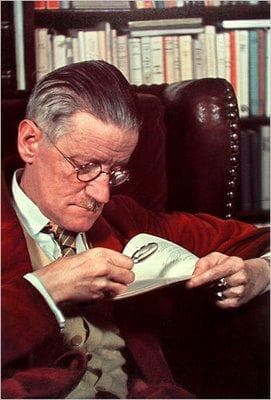
James Augustine Aloysius Joyce was an Irish novelist, poet, and literary critic. He contributed to the modernist avant-garde movement and is regarded as one of the most influential and important writers of the 20th century. Joyce's novel Ulysses (1922) is a landmark in which the episodes of Homer's Odyssey are paralleled in a variety of literary styles, particularly stream of consciousness. Other well-known works are the short-story collection Dubliners (1914), and the novels A Portrait of the Artist as a Young Man (1916) and Finnegans Wake (1939). His other writings include three books of poetry, a play, letters, and occasional journalism.
Similar books
- Ulysses
James Joyce
3.7 (111k) average on GoodreadsLiterary FictionShares Joyce's experimental style and focus on Dublin, though 'Finnegans Wake' is significantly more challenging.
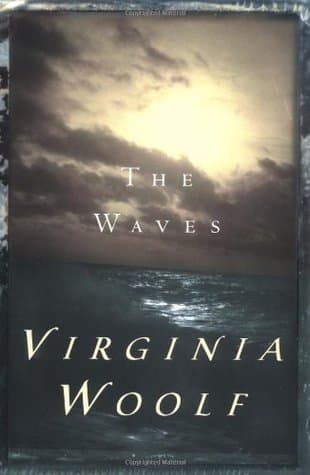
- The Waves
Virginia Woolf
4.2 (28k) average on GoodreadsLiterary FictionExplores stream-of-consciousness and experimental narrative, though with more conventional prose.
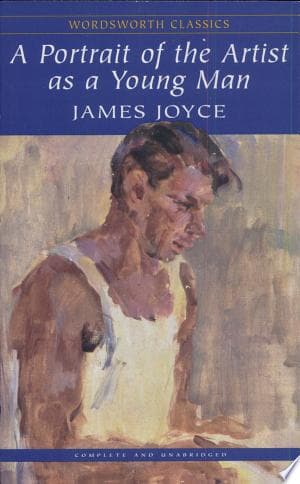
- A Portrait of the Artist as a Young Man
James Joyce
3.6 (128k) average on GoodreadsLiterary FictionProvides context for Joyce's earlier stylistic development and thematic concerns.
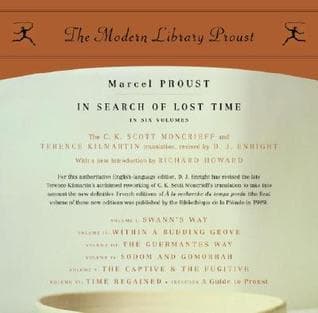
- In Search of Lost Time
Marcel Proust
4.3 (10k) average on GoodreadsLiterary FictionWhile both works explore memory, time, and subjective experience, Proust maintains a largely conventional narrative structure and prose style, focusing on introspection and social commentary. Finnegans Wake radically deconstructs language and narrative, operating primarily within a dream logic, making it far less accessible and more linguistically experimental than Proust.
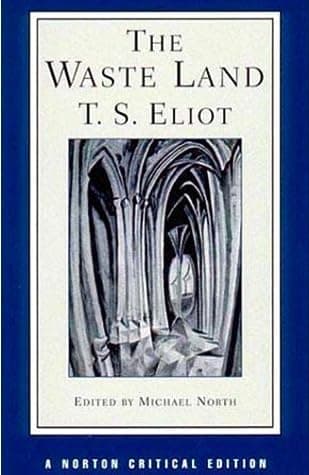
- The Waste Land
T.S. Eliot
4.1 (43k) average on GoodreadsFictionBoth are highly allusive and fragmented modernist texts attempting to capture a cultural zeitgeist. However, The Waste Land retains a clearer thematic focus and a more discernible (though still challenging) poetic structure, making its allusions and fragments more readily connectable to a central argument. Finnegans Wake delves much deeper into linguistic fragmentation and polyglossia, often sacrificing conventional meaning for sonic and associative effects, resulting in an even greater degree of interpretive ambiguity.
- The Old Man and the Sea
Ernest Hemingway
3.8 (831k) average on GoodreadsLiterary FictionA Cuban fisherman's long struggle with a giant marlin becomes a story of endurance and dignity, now retold for young adults with illustrations, phonetic guides, and writing prompts in Traditional Chinese.


Enjoyed the summary?
A summary gives you the shape of the book. The book itself has the detail, the examples and the voice.
Find Finnegans Wake on AmazonAs an Amazon Associate, BookBrief earns from qualifying purchases. How we're funded