
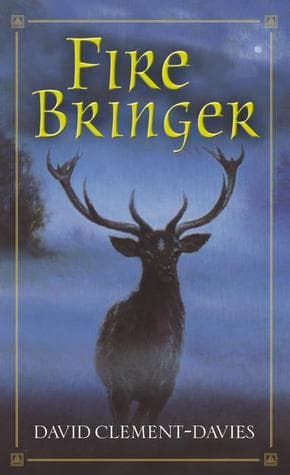
Synopsis
Covers the whole plot, including the ending.
- Difficulty
- Medium
- Pacing
- Variable
- Mood
- Epic, Mythological, Dark, Hopeful, Adventurous
- Read it if
- You enjoy epic animal fantasies with strong mythological elements and a coming-of-age story.
- Skip it if
- You dislike anthropomorphic animal stories or high fantasy with darker themes.
Fire Bringer Plot Summary
Covers the whole plot, including the ending.
The Night of Prophecy and Murder
The story begins with Rannoch's birth. He is a fawn with an oak leaf mark on his forehead, fulfilling an ancient prophecy among the Herla deer. His birth happens during a power struggle in the herd. Sgorr, a ruthless and ambitious stag, arranges the murder of Rannoch's father, the kind Herd Leader. Sgorr takes control, creating a rule based on fear. Rannoch's mother, knowing the danger her marked fawn faces, gives him to a wise and protective doe named Peppa. She asks Peppa to take him far from Sgorr's oppressive rule to ensure his survival and the prophecy's potential fulfillment.
Exile and Early Life in the Wilds
Peppa, with a few other loyal deer, flees with young Rannoch into the wilderness beyond the Herla's territory, seeking safety near the Great Mountain. Rannoch grows up away from his birth herd. He learns to survive from Peppa and a small group of outcasts, including the elderly, one-antlered stag, Drail, and the quick-witted doe, Thistle. He is taught to find food, avoid predators, and understand nature's balance. Peppa also tells him about his true heritage and the prophecy, though its full meaning is still distant for the young fawn. He struggles with his identity, feeling different from other deer.
The Quest for the Fire Bringer
As Rannoch grows, a strong desire to understand his purpose and the prophecy drives him. Guided by dreams and the elders' wisdom, he decides to seek the legendary 'Fire Bringer,' a mythical force believed to hold the key to the deer's salvation. He leaves the safety of his adopted family for this dangerous journey. He faces many challenges, including treacherous land, cunning predators, and the constant threat of Sgorr's patrols, who are still hunting for the marked fawn. His journey tests his courage, resilience, and faith.
Encounters and New Allies
During his quest, Rannoch meets various creatures who become his unexpected allies and mentors. He meets the mysterious and ancient badger, Willow, who knows much about the land and old stories. Willow gives Rannoch important information and advice, helping him understand the signs and his quest's true nature. He also meets a group of independent stags and does who have rejected Sgorr's rule. They offer him temporary refuge and teach him different ideas about leadership and community. These encounters broaden Rannoch's understanding of the world.
The Truth of the Fire Bringer
After many difficulties and following ancient clues, Rannoch reaches a sacred, hidden place deep within the Great Mountain. There, through a spiritual experience, he realizes that the Fire Bringer is not a physical object or creature, but the inner flame of courage, hope, and compassion within himself and all living beings. It is the ability to inspire others, to stand against oppression, and to believe in a better future. This revelation changes Rannoch, strengthening his resolve and empowering him to accept his destiny as the prophesied leader, the true 'Fire Bringer' for his people.
Return to the Herla
Empowered by his spiritual awakening and new wisdom, Rannoch, now a strong and confident stag, decides to return to the Herla's territory. He knows he must confront Sgorr and free his people. He quietly begins to gather support among the oppressed deer, many of whom remember the prophecy and are tired of Sgorr's brutal rule. He uses his charisma and the oak leaf symbol to inspire hope, slowly building a resistance movement. His return is dangerous, as Sgorr's spies are everywhere, and disloyalty means severe punishment.
The Rising Resistance
Rannoch's presence energizes the downtrodden deer of the Herla. He works hard to unite different groups, including those Sgorr had marginalized, and even some who had reluctantly served him. He also forms alliances with other forest creatures, like stoats and foxes, who have their own complaints against Sgorr's disruptive rule. His leadership is compassionate and strategic, a sharp contrast to Sgorr's brute force. The resistance grows, driven by a shared desire for freedom and justice, and the hope Rannoch represents as the prophesied Fire Bringer.
The Final Confrontation
The tension builds to a dramatic and brutal confrontation between Rannoch's forces and Sgorr's loyalists. The battle is fierce, with both sides fighting for their beliefs. Rannoch, though he dislikes violence, understands that Sgorr's reign must end. The story peaks with a personal duel between Rannoch and Sgorr, a symbolic struggle between good and evil, tyranny and freedom. Rannoch, fighting with both physical strength and the moral authority of the Fire Bringer, defeats Sgorr, ending his rule of terror and avenging his father.
The Aftermath and New Beginning
After Sgorr's defeat, Rannoch takes his rightful place as the Herla's leader. He works to heal divisions in the herd, encouraging cooperation and mutual respect. He establishes new traditions and laws based on the ancient ways of the deer, focusing on community, balance with nature, and peaceful coexistence. The Herla, once broken and fearful, begins to thrive under his kind leadership. Rannoch, having fulfilled the prophecy, guides his people towards a future of hope and prosperity, ensuring that the 'fire' of courage and compassion continues to burn brightly within them.
A Legacy of Hope
Rannoch's leadership brings a golden age for the Herla, marked by peace, abundance, and a renewed connection to their ancient traditions and spiritual beliefs. He makes sure that the lessons from Sgorr's tyranny are remembered, serving as a reminder of the need for vigilance and compassion. His story, the journey of the marked fawn who became the Fire Bringer, is passed down through generations. It becomes a foundational legend that inspires hope and reminds all deer of their inner power to overcome adversity and live in harmony.
Principal Figures
Rannoch
Protagonist
The prophesied fawn with the oak leaf mark, destined to liberate his people.
Rannoch is a young buck born with a distinctive oak leaf mark, signifying him as the 'Fire Bringer' of prophecy. Initially timid and uncertain of his destiny, he grows into a courageous, compassionate, and wise leader. He grapples with the weight of expectation but ultimately embraces his role, driven by a deep sense of justice and a desire to free his people from tyranny. He values peace and understanding over brute force, embodying the true spirit of leadership.
Relationships: Peppa (Adoptive mother and mentor); Sgorr (Arch-nemesis, his father's murderer); Thistle (Close friend and companion); Drail (Elderly mentor and protector)
Sgorr
Antagonist
The ruthless and power-hungry stag who usurps leadership of the Herla.
Sgorr is a formidable stag consumed by ambition and a lust for power. He is cunning, brutal, and utterly devoid of empathy, ruling the Herla through fear and violence. He despises the ancient traditions and the prophecy, seeing them as weaknesses. His leadership leads to the decline of the herd and the suffering of its members. He is driven by a desire to dominate and crush any opposition, particularly the prophesied Fire Bringer.
Relationships: Rannoch (Mortal enemy, the prophesied threat to his rule); Herd Leader (Rannoch's father) (Victim of his coup)
Peppa
Supporting
Rannoch's adoptive mother and unwavering protector.
Peppa is a wise, kind, and fiercely protective doe who takes Rannoch under her care after his birth. She is deeply devoted to him, risking her life to raise him in exile and instill in him the values of courage and compassion. She serves as his primary maternal figure and mentor, guiding him through his early years and preparing him for his destiny. Her unwavering faith in the prophecy and in Rannoch's potential is a constant source of strength for him.
Relationships: Rannoch (Adoptive mother and protector); Thistle (Fellow exile and companion)
Thistle
Supporting
A spirited and loyal doe, Rannoch's close friend and companion.
Thistle is a spirited, quick-witted, and loyal doe who grows up alongside Rannoch in exile. She becomes his closest friend and confidante, offering both practical help and emotional support. She is brave and resourceful, often using her intelligence to help Rannoch navigate dangerous situations. Her presence provides Rannoch with much-needed companionship and a sense of normalcy amidst his extraordinary destiny. She believes in him implicitly.
Relationships: Rannoch (Close friend and companion); Peppa (Fellow exile and companion)
Drail
Supporting
An elderly, one-antlered stag and a wise mentor to Rannoch.
Drail is an old, one-antlered stag who joins Peppa and Rannoch in exile. He is a repository of ancient lore and wisdom, offering Rannoch guidance and perspective on the traditions and history of the deer. Despite his age and injury, he is resilient and courageous, often providing a voice of reason and experience. He serves as a grandfatherly figure, helping Rannoch understand the deeper spiritual aspects of his heritage and the prophecy.
Relationships: Rannoch (Mentor and paternal figure); Peppa (Fellow exile and companion)
Willow
Supporting
A mysterious and ancient badger who provides cryptic guidance to Rannoch.
Willow is an ancient and enigmatic badger who lives deep within the forest. Possessing vast knowledge of the land, its history, and the mystical elements of nature, Willow serves as a crucial guide for Rannoch on his quest for the Fire Bringer. Her advice is often cryptic but always profound, forcing Rannoch to look inward and understand the true meaning of his journey. She represents the deep, ancient wisdom of the natural world.
Relationships: Rannoch (Spiritual guide and mentor)
Herd Leader (Rannoch's father)
Mentioned
The benevolent former leader of the Herla, murdered by Sgorr.
Rannoch's father was the rightful and benevolent leader of the Herla, known for his wisdom and just rule. He was a symbol of the old ways and the harmony that once existed within the herd. His murder by Sgorr is the catalyst for the tyranny that follows and sets the stage for Rannoch's eventual return and quest for vengeance and justice. Though he appears only briefly, his legacy and the memory of his leadership inspire Rannoch.
Relationships: Rannoch (Biological father); Sgorr (Murderer)
Bald Stag
Supporting
A loyal follower of Sgorr, representing the brutality of the tyrannical regime.
The Bald Stag is one of Sgorr's chief enforcers and most brutal followers. He is fiercely loyal to Sgorr, embodying the oppressive and violent nature of the tyrannical regime. He is a constant threat to Rannoch and his allies, participating in hunts and acts of cruelty against the other deer. He represents the danger and fear that Rannoch must overcome to liberate the Herla.
Relationships: Sgorr (Loyal lieutenant)
Themes & Insights
Destiny vs. Free Will
The main theme is Rannoch's struggle to balance his prophesied destiny with his own desires and choices. He is marked from birth, but his journey is not set in stone. He actively chooses to accept his role as the Fire Bringer. The prophecy gives a framework, but Rannoch's courage, compassion, and decisions ultimately shape its fulfillment. This is clear when he leaves exile to seek the Fire Bringer, and later, when he decides to return and confront Sgorr, rather than live a quiet life.
“The mark on your brow is a sign, Rannoch, but it is your heart that will light the way.”
The Nature of True Leadership
The book compares two types of leadership: Sgorr's tyranny based on fear and violence, and Rannoch's kind leadership based on compassion, wisdom, and unity. Sgorr's rule causes suffering and division, while Rannoch inspires hope and builds community. Rannoch learns that true leadership is not about having power, but about serving one's people, listening to their needs, and inspiring them to believe in themselves and a better future. This is shown in how Rannoch gathers allies through trust, while Sgorr maintains control through intimidation.
“A leader does not demand loyalty, Rannoch. They earn it by serving the light within others.”
Hope and Resilience in Adversity
Despite Sgorr's cruel oppression, the Herla deer and Rannoch himself hold onto hope. The Fire Bringer prophecy acts as a guide, helping them endure great hardship. Rannoch's journey shows resilience as he overcomes physical dangers, emotional isolation, and moments of doubt. The story emphasizes that even in the darkest times, belief in a better future and the courage to fight for it can sustain individuals and communities. This is evident in the quiet acts of defiance and the strong faith of characters like Peppa and Thistle.
“Even the longest winter must yield to spring, if the will to live remains.”
The Importance of Community and Connection to Nature
The novel highlights the important role of community, both within the deer herd and among different species. Rannoch's survival and success depend on his adoptive family, his allies, and the ancient wisdom of nature. Sgorr's rule disrupts the natural order and isolates the deer, leading to their decline. Rannoch's return restores balance, showing that harmony with nature and strong community bonds are essential for prosperity. The sacred sites and the wisdom of creatures like Willow emphasize this connection.
“We are all strands in the great web of life. Break one, and the whole suffers.”
Plot Devices & Literary Techniques
The Prophecy of the Fire Bringer
An ancient prediction foretelling the birth of a marked fawn who will lead the deer to freedom.
The prophecy is the driving force of the narrative, establishing Rannoch's destiny and providing hope to the oppressed deer. It creates dramatic irony, as the audience knows Rannoch's significance before he does, and builds suspense as he slowly discovers and embraces his role. The oak leaf mark serves as a constant visual reminder of this prophecy, both a blessing and a burden for Rannoch. It fuels Sgorr's fear and hatred, directly leading to Rannoch's exile and setting the entire plot in motion.
The Oak Leaf Mark
A distinctive marking on Rannoch's forehead, symbolizing his prophesied role.
The oak leaf mark is a powerful symbol throughout the story. It identifies Rannoch as the Fire Bringer, making him both a target for Sgorr and a beacon of hope for his people. It sets him apart from other deer, contributing to his initial feelings of isolation and difference. As he matures, the mark becomes a source of strength and identity, a visible manifestation of his destiny. It serves as a narrative device to consistently remind characters and readers of the central prophecy.
The Great Mountain
A sacred and mysterious geographical landmark, a place of refuge and spiritual discovery.
The Great Mountain functions as both a physical refuge for Rannoch during his exile and a metaphorical destination for his spiritual quest. It represents the wild, untamed aspects of nature and holds ancient secrets. It is a place of solitude and introspection where Rannoch can discover his true self and the meaning of the Fire Bringer. The journey to and from the mountain marks significant phases of Rannoch's character development and understanding of his destiny.
Animal Allies and Mentors
Various non-deer characters who provide guidance, protection, and wisdom to Rannoch.
The inclusion of animal allies like Willow the badger, and even other species in the resistance, serves to broaden Rannoch's perspective beyond his own kind. These characters often possess unique knowledge, skills, or spiritual insights that aid Rannoch in his quest. They highlight the interconnectedness of nature and the idea that wisdom can come from unexpected sources. They also provide crucial exposition and help Rannoch navigate the dangers of the wilderness and understand the deeper spiritual aspects of his journey.
Fire Bringer Quotes
“The stars are the eyes of the past, looking down on the present. They are the eyes of the future, looking back on what was. And we, the deer, are the children of the stars.”
“Fear is a cold shadow that steals the light from your heart. But courage is a fire that burns brighter in the darkness.”
“Sometimes, the hardest thing to do is to forgive yourself. But it is also the most important.”
“A true leader does not seek power for themselves, but for the good of their herd.”
“The past is a river that flows into the present, shaping what we are. But the future is an ocean, vast and unknown, waiting for us to chart our course.”
“Hope is a small flame, easily extinguished, but it can also be a beacon in the darkest night.”
“To truly know someone, you must walk in their hoofprints, even if for a moment.”
“The strongest bonds are not forged in peace, but in the crucible of shared suffering.”
“The greatest battles are often fought not with hooves and antlers, but within the heart.”
“Even the smallest creature can change the course of a river, or the fate of a world.”
“Silence can speak louder than any roar, if you only listen with your heart.”
“True strength is not in never falling, but in rising every time you fall.”
“The world is full of shadows, but it is also full of light. It is up to us to choose which we follow.”
Quiz
10 questions on the plot and the characters. Each answer comes with a short explanation.
Question 1
What distinguishing mark does Rannoch bear that signifies him as the prophesied fawn?
- A star-shaped white blaze on his chest
- The mark of an oak leaf on his forehead
- A birthmark resembling a burning flame on his flank
- Unusually large, golden antlers at a young age
Show answer
B. The mark of an oak leaf on his forehead The prophecy states that the fawn will be born with the mark of an oak leaf on his forehead.
Question 2
Who is the primary antagonist among the deer, representing the hunger for power that corrupts the herd?
- Thistle
- Sgorr
- Tussock
- Willow
Show answer
B. Sgorr Sgorr is the tyrannical leader whose hunger for power leads to the corruption of the herd and the death of Rannoch's father.
Question 3
What event marks the beginning of Rannoch's treacherous journey and his need to escape?
- A severe winter storm that decimates the herd's food supply
- His father's murder and the subsequent threat to his own life by the ruling stags
- A prophecy from the hinds that he must leave to find a sacred artifact
- The destruction of his childhood home by a forest fire
Show answer
B. His father's murder and the subsequent threat to his own life by the ruling stags Rannoch is born on the night his father is murdered, and he knows he must escape to survive the dangers posed by the power-hungry stags.
Question 4
What is the ultimate goal of Rannoch's journey, as described in the prophecy?
- To find a new, more bountiful grazing ground for his herd
- To lead all the deer to freedom and restore goodwill
- To defeat a pack of wolves that preys on the deer
- To unite all the forest animals against human encroachment
Show answer
B. To lead all the deer to freedom and restore goodwill The prophecy states that Rannoch's courage will lead all the deer to freedom, fulfilling his destiny.
Question 5
Which geographical feature is consistently mentioned as a significant landmark in Rannoch's quest and the setting of his ultimate destiny?
- The Whispering Falls
- The Sunken Forest
- The Great Mountain
- The Endless Plains
Show answer
C. The Great Mountain Rannoch's journey involves a search for truth and goodwill in the shadow of the Great Mountain, and he must eventually return to face his destiny there.
Question 6
What is the primary theme explored through Rannoch's personal struggle and eventual triumph?
- The cyclical nature of seasons and migration
- The struggle between light and darkness, and the power of courage in the face of adversity
- The importance of herd hierarchy and submission to authority
- The dangers of relying on ancient prophecies
Show answer
B. The struggle between light and darkness, and the power of courage in the face of adversity The book is described as being 'filled with passion and a darkness that gradually, through Rannoch's courage in the face of adversity, lifts to reveal an overwhelming feeling of light,' directly addressing this theme.
Question 7
What is the initial state of Rannoch's herd, reflecting the impact of Sgorr's leadership?
- Prosperous and harmonious, but complacent
- Divided and corrupted by hunger for power, lacking truth and goodness
- Constantly under threat from external predators, forcing unity
- A nomadic group searching for a permanent home
Show answer
B. Divided and corrupted by hunger for power, lacking truth and goodness The description states that Rannoch was born into a herd 'where hunger for power has gradually whittled away at all that is true and good.'
Question 8
Beyond physical escape, what does Rannoch's journey into the unknown represent thematically?
- A quest for personal glory and recognition
- A search for spiritual enlightenment and connection to ancient spirits
- A formidable search for truth and goodwill, and a path to fulfilling his destiny
- An attempt to forget his past and start a new life elsewhere
Show answer
C. A formidable search for truth and goodwill, and a path to fulfilling his destiny The synopsis explicitly states that 'ahead of him lies a shocking and formidable search for truth and goodwill in the shadow of the Great Mountain.'
Question 9
How does the book's narrative style engage the reader with its characters?
- By focusing solely on external actions and dialogue, maintaining an objective distance
- By providing extensive scientific details about deer behavior and ecology
- By taking the reader 'deep into the hearts and minds of its characters'
- Through frequent shifts in point of view, making it hard to connect with any single character
Show answer
C. By taking the reader 'deep into the hearts and minds of its characters' The description highlights that 'Fire Bringer is a tremendous, spirited story that takes the reader deep into the hearts and minds of its characters.'
Question 10
What is the significance of Rannoch's birth coinciding with his father's murder?
- It implies a curse on Rannoch, making him an outcast from the start.
- It immediately establishes the dangerous, corrupted state of the herd and foreshadows Rannoch's destined conflict.
- It suggests that Rannoch is the direct reincarnation of his father, destined to repeat his life.
- It is a coincidental detail with no deeper symbolic meaning to the plot.
Show answer
B. It immediately establishes the dangerous, corrupted state of the herd and foreshadows Rannoch's destined conflict. Rannoch's birth on the night of his father's murder immediately sets up the central conflict and the corrupt environment he must escape and ultimately confront, fulfilling the prophecy.
Fire Bringer FAQ
What is the central prophecy that drives the narrative in 'Fire Bringer'?
The central prophecy foretells the birth of a fawn with an oak leaf mark on his forehead. This fawn, imbued with courage, is destined to lead all deer to freedom, restoring truth and goodwill to their herd, which has been corrupted by power struggles.
Who is Rannoch and what is his significance to the prophecy?
Rannoch is the protagonist, a young buck born on the night his father was murdered, and bears the distinctive oak leaf mark. He is the prophesied 'Fire Bringer,' destined to challenge the corrupt leadership and guide his people to a better future, fulfilling the ancient prophecy.
What kind of world do the deer inhabit, and what challenges do they face?
The deer inhabit a world where their own kind, particularly the stags, have become violent and power-hungry, leading to internal strife and a loss of traditional values. They also face external threats from predators and the harsh realities of nature, all under the looming shadow of the Great Mountain.
Who are some of the key antagonists Rannoch encounters on his journey?
Rannoch faces numerous antagonists, primarily the power-hungry stags within his own herd who seek to kill him to prevent the prophecy's fulfillment. He is specifically pursued by the tyrannical Sgorr and his followers, who represent the corruption Rannoch must overcome.
What is the 'Great Mountain' and what does it symbolize in the story?
The Great Mountain is a significant geographical feature and a powerful symbol in the story. It represents both a place of refuge and a source of ancient wisdom, often associated with the spiritual journey Rannoch undertakes and the ultimate truth he seeks.
Are there any subtle clues about Rannoch's lineage or the true nature of his father's death early in the book?
Yes, while not explicitly stated, the immediate danger Rannoch faces from the dominant stags after his birth, coupled with the prophecy, hints at a powerful, perhaps revolutionary, lineage for his father. The circumstances surrounding his father's murder suggest it was politically motivated to prevent the prophecy's realization.
What is the significance of the 'oak leaf mark' beyond just identifying Rannoch?
The oak leaf mark is not merely an identifier; it symbolizes a deep connection to nature, endurance, and ancient wisdom. The oak tree itself is often associated with strength and longevity, implying Rannoch's inherent resilience and his role as a bringer of lasting change and truth.
Are there any characters who initially seem antagonistic but later prove to be allies or have a deeper, more complex role?
Yes, some characters initially appear to be part of the oppressive system or are wary of Rannoch, but through his journey and their own observations, they come to understand his true purpose. Their initial skepticism or even hostility transforms into support, highlighting the theme of discerning true leadership.
How does Rannoch's early trauma and isolation shape his personality and leadership style?
Rannoch's early trauma, including his father's murder and his forced escape, instills in him a deep sense of caution and empathy. His isolation during his journey forces self-reliance and introspection, leading him to develop a leadership style that prioritizes community, understanding, and peaceful resolution over brute force.
What psychological impact do the constant threats and betrayals have on Rannoch's trust in others?
The constant threats and betrayals significantly challenge Rannoch's ability to trust, making him initially wary of new encounters and even those who offer help. However, his inherent goodness and the necessity of forming alliances gradually help him to distinguish genuine allies from deceivers, fostering a nuanced understanding of trust.
How does the author explore the psychology of power and corruption through the antagonist stags?
The author delves into the psychology of power by portraying the antagonist stags, like Sgorr, as driven by fear, insecurity, and a desperate need for control. Their corruption stems from a belief that dominance is the only way to survive, leading to paranoia, cruelty, and the suppression of any perceived threat, including Rannoch.
In what ways does Rannoch's journey reflect classic hero's journey archetypes, and how does it diverge?
Rannoch's journey largely follows the hero's journey, including the call to adventure, refusal, meeting mentors, trials, and the ultimate return. It diverges by placing a strong emphasis on spiritual awakening and the internal struggle against despair, rather than solely physical prowess, as the primary means of achieving heroism.
What philosophical message does 'Fire Bringer' convey about leadership and community?
'Fire Bringer' conveys that true leadership is not about dominance or power, but about courage, empathy, and self-sacrifice for the well-being of the community. It emphasizes that a strong community is built on trust, shared values, and the collective pursuit of peace and truth, rather than individual gain.
How does the 'darkness' mentioned in the synopsis gradually lift to reveal 'light' throughout Rannoch's story?
The 'darkness' represents the corruption, despair, and violence plaguing the deer herd and within Rannoch himself. As Rannoch faces adversity with courage and embraces his destiny, he brings hope and truth, which gradually dispels this darkness, illuminating the path to freedom and peace for his people.
Could the 'Fire Bringer' prophecy be interpreted as a metaphor for societal change or revolution?
Absolutely. The 'Fire Bringer' prophecy can be seen as a powerful metaphor for societal change, where Rannoch represents a catalyst for revolution against an oppressive regime. His struggle highlights the courage required to challenge established corruption and inspire a community towards a more just and equitable future.
What role do the older, wiser deer play in guiding Rannoch, and are their motivations always pure?
Older, wiser deer often serve as mentors or provide crucial information, guiding Rannoch on his path. While many are genuinely supportive of the prophecy, some may initially be hesitant or have their own past grievances influencing their advice, adding layers of complexity to Rannoch's decision-making.
How does the concept of 'destiny' interact with Rannoch's free will throughout the narrative?
The concept of destiny in 'Fire Bringer' suggests Rannoch is fated for a great purpose, yet his journey is filled with choices that test his resolve and shape his character. His free will is crucial in deciding how he embraces and fulfills his destiny, rather than simply being a puppet of fate.
What is the significance of the changing seasons or natural cycles in mirroring Rannoch's personal journey?
The changing seasons often mirror Rannoch's personal journey, with harsh winters reflecting periods of struggle and despair, while the vibrancy of spring symbolizes renewal, hope, and growth. This connection to natural cycles emphasizes the cyclical nature of life, death, and rebirth within the narrative.
About the author
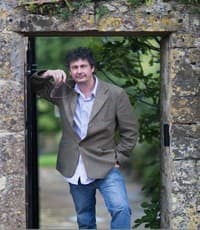
David Clement-Davies is a British author celebrated for his evocative fantasy novels for young adults. His most recognized works, "The Sight" and "Fire Bringer," are lauded for their compelling narratives centered on animal protagonists and their epic journeys. Clement-Davies draws readers into richly imagined worlds with vivid descriptions and a profound understanding of the natural world.
Similar books
- Watership Down
Richard Adams
4.1 (434k) average on GoodreadsFantasyFeatures an epic journey and struggle for survival among anthropomorphic animals.
- The Sight
David Clement-Davies
4.3 (22k) average on GoodreadsFantasyAnother animal fantasy by the same author, focusing on wolves and ancient prophecies.
- Harry Potter and the Sorcerer's Stone
J.K. Rowling
4.5 (7M) average on GoodreadsFantasyRescued from a miserable life under the stairs, an orphaned boy discovers he's a wizard destined for a magical school, where he uncovers a dangerous secret tied to the dark wizard who murdered his parents.
- The Hunger Games
Suzanne Collins
4.3 (6.4M) average on GoodreadsFantasyIn a future where children fight to the death on live television, Katniss Everdeen volunteers for the arena, turning a death sentence into a fight for survival and a spark of rebellion.
- 1984
George Orwell
4.2 (3.1M) average on GoodreadsPoliticsIn a future where surveillance and thought control are absolute, a man's search for truth clashes with the Party, showing that hope can be a form of rebellion.
- Divergent
Veronica Roth
4.2 (2.9M) average on GoodreadsFantasyIn a society divided by virtues, a sixteen-year-old's difference from the norm starts a rebellion that threatens her world.




Enjoyed the summary?
A summary gives you the shape of the book. The book itself has the detail, the examples and the voice.
Find Fire Bringer on AmazonAs an Amazon Associate, BookBrief earns from qualifying purchases. How we're funded