

Synopsis
Covers the whole plot, including the ending.
- Difficulty
- Easy
- Pacing
- Fast
- Mood
- Whimsical, Humorous, Creative, Lighthearted
- Read it if
- You enjoy lighthearted, imaginative children's stories with a touch of the absurd and a focus on problem-solving through unique circumstances.
- Skip it if
- You prefer realistic fiction or complex plots for young readers.
Flat Stanley His Original Adventure Plot Summary
Covers the whole plot, including the ending.
The Night the Bulletin Board Fell
One morning, Stanley Lambchop wakes up in an unusual predicament. A large bulletin board, which had been hanging on the wall above his bed, fell during the night and flattened him completely. His parents, Mr. and Mrs. Lambchop, are shocked, but Stanley seems to take it rather well. He is now only half an inch thick. His brother, Arthur, is initially surprised but soon begins to see the possible advantages of Stanley's new, two-dimensional form. The family carefully peels the heavy bulletin board off of Stanley, who is unharmed but irrevocably flat. They quickly realize that this new condition presents both challenges and unique opportunities for the young boy.
Adjusting to a Flat Life
Stanley quickly adjusts to his flat state, finding many practical uses for his new form. He can easily slide under closed doors without needing to open them, much to his own amusement and his family's convenience. His mother, Mrs. Lambchop, discovers that Stanley can be rolled up like a rug, making him easy to store and transport. This new ability is useful when she needs to retrieve her expensive diamond ring, which has accidentally fallen through a narrow grating in the street. Stanley is able to slip through the grating and retrieve the ring, becoming a hero in his mother's eyes and showing the unexpected advantages of his unique condition.
A Trip to California by Mail
Stanley's flatness allows him to experience travel in an entirely new and cost-effective way. When his family wishes to visit their friends, the O'Jays, in California, they realize that expensive plane tickets for everyone would be a financial strain. However, Stanley's father, Mr. Lambchop, comes up with a clever solution: Stanley can be folded neatly and sent through the mail in a large brown envelope. This saves the family a considerable amount of money. Stanley enjoys the journey, even having an egg-salad sandwich packed alongside him for the trip, and arrives safely in California, ready to enjoy his visit with the O'Jays.
The Museum Heist and Stanley's Clever Plan
Stanley's unique physical state is helpful when the Famous Museum of Art faces a crisis. A gang of art thieves has been stealing valuable paintings, and the police are at a loss. Inspector Bill, a friend of Mr. Lambchop, suggests that Stanley could help. Stanley devises a clever plan: he will pose as a painting, hanging on the wall among the other artworks. When the thieves come to steal him, he will be able to identify them. The plan is put into action, and Stanley patiently waits, disguised as a painting of a boy with a basket of fruit, for the thieves to make their move.
Catching the Crooks
As expected, the art thieves arrive at the museum, mistaking Stanley for a genuine painting. They carefully remove him from the wall, intending to add him to their stolen collection. Stanley, maintaining his flat, painted pose, observes them closely. Once they have taken him back to their hideout, he is able to hear their conversations and learn their names. At the right moment, Stanley reveals himself to the police, who have been alerted by Inspector Bill. With Stanley's information, the police are able to arrest the entire gang of thieves and recover all the stolen paintings. Stanley is a hero for his courage and cleverness.
Arthur's Frustration and the Balloon Plan
Despite Stanley's adventures and new fame, his brother Arthur begins to feel a growing sense of frustration and jealousy. Arthur tries repeatedly to flatten himself, hoping to share in the excitement and unique experiences, but his efforts are unsuccessful and often painful. He eventually realizes that being flat isn't as appealing as it seems and that he misses having his brother in his original, round form. Determined to help Stanley, Arthur starts experimenting with various methods to restore his brother's three-dimensional shape, leading him to a creative, if somewhat unusual, solution involving a bicycle pump.
The Pumping Experiment
Arthur, after much thought, decides that the best way to make Stanley round again is to re-inflate him. He gets a bicycle pump and, with Stanley's cooperation, begins to pump air into his brother. The process is slow and initially seems ineffective. Stanley begins to puff up slightly, but not in the way they expect. He swells unevenly, looking more like a lumpy balloon than a boy. The family watches anxiously, unsure if Arthur's method will work or if it will simply make Stanley even stranger than before. The experiment shows Arthur's determination and Stanley's trust in his brother.
Stanley Becomes Himself Again
After several attempts and a lot of careful pumping, Arthur finally succeeds in restoring Stanley to his original, three-dimensional shape. With one final pump, Stanley pops back into his normal, round self, much to the delight and relief of the entire Lambchop family. Everyone rejoices at Stanley's transformation, especially Stanley himself, who, despite enjoying his flat adventures, is happy to be a 'normal' boy again. Arthur, no longer jealous, feels a sense of accomplishment and pride for helping his brother. The family celebrates Stanley's return to his former self, ending his extraordinary flat adventures.
Principal Figures
Stanley Lambchop
Protagonist
A perfectly normal boy who becomes flat after a bulletin board falls on him.
Stanley is a good-natured and adaptable young boy who, despite his extraordinary predicament of being flattened, maintains a remarkably positive attitude. He embraces his new, two-dimensional existence, finding creative and helpful ways to use his unique shape. He is kind, observant, and surprisingly brave, especially when he helps the police catch art thieves. Stanley is not prone to complaining and takes his unusual circumstances in stride, making the most of every situation. He is a loving son and brother, even when Arthur is envious.
Relationships: Mr. Lambchop (father); Mrs. Lambchop (mother); Arthur Lambchop (younger brother)
Arthur Lambchop
Supporting
Stanley's younger brother, initially envious but ultimately instrumental in restoring Stanley's shape.
Arthur is Stanley's younger brother, who initially feels overshadowed and a bit jealous of Stanley's flat adventures and the attention he receives. He attempts to flatten himself, showcasing a childish desire to experience what his brother does. However, his jealousy eventually transforms into a genuine desire to help Stanley, highlighting his underlying affection and concern for his brother. Arthur is persistent and inventive, ultimately devising the plan to re-inflate Stanley, proving himself to be a caring and determined sibling.
Relationships: Stanley Lambchop (older brother); Mr. Lambchop (father); Mrs. Lambchop (mother)
Mr. Lambchop
Supporting
Stanley and Arthur's understanding and resourceful father.
Mr. Lambchop is a caring and practical father who, despite the initial shock of Stanley's flatness, quickly adapts and finds logical solutions to the challenges it presents. He is the one who suggests mailing Stanley to California, demonstrating his ingenuity and willingness to embrace the unconventional. He is supportive of his sons and actively participates in their lives, offering both comfort and practical advice. His calm demeanor helps the family cope with Stanley's unusual condition.
Relationships: Stanley Lambchop (son); Arthur Lambchop (son); Mrs. Lambchop (wife)
Mrs. Lambchop
Supporting
Stanley and Arthur's loving and adaptable mother.
Mrs. Lambchop is a warm and affectionate mother who shows immediate concern for Stanley's well-being after he becomes flat. She quickly adjusts to his new state, finding ways to care for him, such as rolling him up and storing him. She is proud of Stanley's helpfulness, especially when he retrieves her ring. Mrs. Lambchop is emotionally supportive and shows deep love for both her children, expressing relief and joy when Stanley is finally restored to his original shape.
Relationships: Stanley Lambchop (son); Arthur Lambchop (son); Mr. Lambchop (husband)
Inspector Bill
Supporting
A police inspector and family friend who enlists Stanley's help.
Inspector Bill is a friendly and astute police officer who is a friend of the Lambchop family. When faced with the seemingly unsolvable case of the art thieves, he demonstrates an open mind by considering and ultimately accepting Mr. Lambchop's suggestion to use Stanley's unique abilities. He trusts Stanley and his family, which leads to the successful capture of the criminals. His role highlights the trust and community spirit within the story.
Relationships: Mr. Lambchop (friend); Stanley Lambchop (ally/informant)
The O'Jays
Mentioned
Family friends living in California whom Stanley visits.
The O'Jays are friends of the Lambchop family who live in California. They serve as the destination for Stanley's unique trip via mail. Their presence in the story emphasizes the theme of connection and the joy of visiting loved ones, even when unconventional travel methods are required. While not appearing directly, their invitation provides a motivation for one of Stanley's most memorable flat adventures.
Relationships: The Lambchops (friends)
The Art Thieves
Antagonist
A gang of criminals who steal paintings from the Famous Museum of Art.
The art thieves are the primary antagonists in one of Stanley's most exciting adventures. They are depicted as cunning and persistent, successfully evading the police until Stanley intervenes. Their actions create the central conflict that allows Stanley to prove his bravery and ingenuity. They are ultimately outsmarted by Stanley's clever plan, leading to their capture and the recovery of the stolen art. They represent a challenge that can only be overcome by an unconventional hero.
Themes & Insights
Adaptability and Problem-Solving
The central theme is about Stanley's and his family's ability to adapt to an extraordinary situation. Stanley embraces his flatness, finding clever ways to navigate daily life, from sliding under doors to retrieving a lost ring. His family, particularly his father, also shows remarkable adaptability by finding practical solutions like mailing Stanley to California. This theme shows how challenges can be overcome with creativity and a positive outlook, turning a seemingly negative event into a source of unique advantages and adventures.
“It was a good thing that Stanley was flat. It meant that he could slide under doors, even when they were closed.”
Embracing Uniqueness
Stanley's story celebrates the idea that being different can be a strength. His flatness, initially a bizarre accident, becomes the source of his adventures and heroism. He is able to travel cheaply, help his mother, and even catch art thieves because of his unique physical state. This theme encourages readers to appreciate individuality, showing that one's differences can lead to extraordinary experiences and contributions that 'normal' individuals might not be able to achieve.
“He was a hero. And all because he was flat.”
Family Love and Support
Despite the initial shock, the Lambchop family shows strong love and support for Stanley throughout his flat ordeal. His parents are concerned but quickly adjust and find practical ways to help him. Arthur, though initially jealous, ultimately puts his brother's well-being first and works diligently to restore him. This theme shows the importance of family bonds, demonstrating how a loving and supportive family can navigate even the most unusual circumstances together, offering comfort, assistance, and ultimately, a path back to normalcy.
“His mother and father were very proud of him.”
Jealousy and Acceptance
Arthur's character arc explores the theme of jealousy and its eventual resolution through acceptance and love. Initially, Arthur feels left out and tries to flatten himself, driven by envy of Stanley's adventures and attention. However, he eventually realizes the downsides of flatness and shifts his focus to helping his brother. This transformation shows the natural human emotion of jealousy but also how it can become understanding, empathy, and a desire to help, strengthening sibling bonds.
“He tried to flatten himself, but it did not work. He only hurt himself.”
Plot Devices & Literary Techniques
Magical Realism
The introduction of a fantastical element (Stanley's flatness) into an otherwise ordinary world.
The core of the story relies on magical realism, where Stanley's sudden and unexplained flatness is presented as a matter-of-fact event within a realistic setting. The characters react with concern but quickly adapt to this impossible situation without questioning its scientific validity. This device allows for whimsical adventures and imaginative problem-solving, grounding the fantasy in the everyday lives of the Lambchop family and making Stanley's extraordinary experiences relatable and charming.
Anthropomorphism/Personification (of flatness)
Treating Stanley's flat state as a characteristic with its own 'personality' and advantages.
While Stanley is a human, his flatness itself is almost personified as a distinct quality that enables unique actions and interactions. The narrative focuses on the 'advantages' of being flat, as if flatness itself is a tool or a skill. This device allows for creative exploration of what it means to be two-dimensional in a three-dimensional world, giving his physical state a dynamic role in the plot rather than just being a static condition. It's not just Stanley who is flat; 'flatness' is an active agent in his adventures.
The Bulletin Board
The inciting incident and symbol of the dramatic change in Stanley's life.
The bulletin board serves as the catalyst for the entire plot, literally and figuratively flattening Stanley and transforming his life. It's a simple, everyday object that causes an extraordinary event, highlighting the sudden and arbitrary nature of change. As a plot device, it sets the stage for all the subsequent adventures and challenges, symbolizing the unexpected turn of events that can dramatically alter one's existence and open up new possibilities.
The Bicycle Pump
The tool used to reverse Stanley's flatness, symbolizing a return to normalcy and Arthur's agency.
The bicycle pump is the crucial object that ultimately restores Stanley to his original shape. It functions as the device through which Arthur, driven by love and a desire to help, actively reverses the magical event that started the story. It symbolizes Arthur's agency and determination, as well as the family's collective effort to bring Stanley back to his 'normal' self. Its mundane nature contrasts humorously with its fantastical effect, reinforcing the story's lighthearted tone.
Flat Stanley His Original Adventure Quotes
“Stanley Lambchop was an ordinary boy. At least he was until the bulletin board fell on him.”
“Being flat was fun! Stanley could slide under doors, mail himself in an envelope, and even fly like a kite.”
“Arthur, you are a jealous brother. Stanley is a hero.”
“I think I'll mail myself to California.”
“It's not easy being flat, but it's certainly interesting.”
“Stanley was a very useful kite.”
“Oh, dear. I hope he doesn't get lost in the mail.”
“Being flat is not so bad after all.”
“We must make the best of things, whatever they are.”
“Stanley could go places no one else could go.”
“What an adventure we've had!”
“I'm glad I'm me, even if I am flat.”
“The world is full of interesting things when you're flat.”
“Sometimes the most ordinary things can lead to extraordinary adventures.”
Quiz
10 questions on the plot and the characters. Each answer comes with a short explanation.
Question 1
What causes Stanley to become flat in the story?
- He is accidentally squashed by a heavy bookcase
- A bulletin board falls on him while he is sleeping
- He is flattened by a rolling pin during a cooking accident
- A magical spell makes him two-dimensional
Show answer
B. A bulletin board falls on him while he is sleeping Stanley becomes flat when a bulletin board falls on him while he is sleeping, as described in the opening of the book. His parents later peel it off him.
Question 2
How does Stanley help his mother when she drops her ring?
- He uses his flat body to slide under a door and retrieve it
- He folds into a paper airplane to fly down and grab it
- He slides through a narrow metal grating to get it back
- He stretches his arm through a keyhole to reach it
Show answer
C. He slides through a narrow metal grating to get it back Stanley's mother drops her ring through a narrow metal grating, and he uses his flatness to slide through and retrieve it, showcasing one of the advantages of his condition.
Question 3
How does Stanley travel to California inexpensively?
- He is mailed in a brown paper envelope
- He flies as a human kite
- He rides on top of a train
- He is rolled up and carried in a suitcase
Show answer
A. He is mailed in a brown paper envelope To save on expensive plane fare, Stanley is folded into a brown paper envelope and mailed to California, with room left for an egg-salad sandwich.
Question 4
What is the name of the museum where Stanley helps catch thieves?
- The Grand Art Gallery
- The Famous Museum of Art
- The National Portrait Museum
- The Metropolitan Museum
Show answer
B. The Famous Museum of Art Stanley's 'true moment of glory' occurs at the Famous Museum of Art, where he helps stop a gang of thieves from stealing paintings.
Question 5
What does Stanley's brother do to help him become 'well rounded' again?
- He uses a bicycle pump to inflate Stanley
- He feeds Stanley special vitamins to restore his shape
- He rolls Stanley up tightly to reshape him
- He takes Stanley to a doctor for surgery
Show answer
A. He uses a bicycle pump to inflate Stanley At the end of the story, Stanley's brother uses a bicycle pump to inflate him, helping Stanley return to a normal, three-dimensional shape.
Question 6
Which of these is NOT an advantage Stanley enjoys due to being flat?
- Sliding under closed doors
- Being mailed in an envelope to save travel costs
- Flying like a kite without any assistance
- Retrieving items from tight spaces
Show answer
C. Flying like a kite without any assistance While Stanley slides under doors, is mailed, and retrieves items, he does not fly like a kite on his own in this story; that is a common misconception or later adaptation.
Question 7
What theme is most emphasized through Stanley's adventures?
- The importance of academic success
- Overcoming challenges with creativity and resilience
- The dangers of being different from others
- The value of wealth and material possessions
Show answer
B. Overcoming challenges with creativity and resilience The book highlights how Stanley adapts to his flatness with creativity and resilience, turning a potential disadvantage into opportunities for fun and heroism.
Question 8
In what year was 'Flat Stanley' first published?
- 1954
- 1964
- 1974
- 1984
Show answer
B. 1964 'Flat Stanley' was first published in 1964, as mentioned in the book description, making it a classic children's story.
Question 9
How does Stanley's attitude toward being flat primarily affect the story's tone?
- It creates a suspenseful and dark atmosphere
- It adds a humorous and lighthearted element
- It makes the story deeply philosophical and serious
- It results in a tragic and somber narrative
Show answer
B. It adds a humorous and lighthearted element Stanley's matter-of-fact acceptance and creative use of his flatness, combined with the witty illustrations, give the story a humorous and lighthearted tone.
Question 10
What role does Stanley play in stopping the art thieves at the museum?
- He disguises himself as a painting to trick the thieves
- He uses his flatness to slide under security lasers
- He calls the police on a hidden telephone
- He traps the thieves in a rolled-up carpet
Show answer
A. He disguises himself as a painting to trick the thieves Stanley helps catch the thieves by disguising himself as a painting on the wall, allowing him to observe and ultimately foil their plans.
Flat Stanley His Original Adventure FAQ
What is 'Flat Stanley His Original Adventure' about?
The book follows Stanley Lambchop, a normal boy who wakes up one morning flattened by a bulletin board that fell on him overnight. He adapts to his new flat shape, enjoying advantages like sliding under doors and mailing himself in an envelope to visit California, before ultimately helping catch art thieves at the Famous Museum of Art and being restored to his original round shape by his brother Arthur.
Why should I read 'Flat Stanley His Original Adventure'?
This classic children's book celebrates creativity, resilience, and humor as Stanley turns a bizarre predicament into an adventure. Its matter-of-fact tone and whimsical illustrations make it accessible and entertaining for young readers, while subtly encouraging problem-solving and positive attitudes toward differences.
What is the background/setting of 'Flat Stanley His Original Adventure'?
The story is set in a contemporary (1960s) suburban American home and community, with key locations including the Lambchop family house, a park, an airport, California, and the Famous Museum of Art. The mundane setting contrasts humorously with Stanley's extraordinary flatness.
What are the most memorable quotes from the book?
Notable quotes include Stanley's pragmatic observation, 'Being flat is really quite pleasant,' and his mother's relieved exclamation after he retrieves her ring, 'Oh, Stanley, you're a wonder!' The book's closing line, 'Stanley was himself again,' underscores the theme of acceptance.
What writing style does Jeff Brown use in 'Flat Stanley His Original Adventure'?
Jeff Brown employs a straightforward, matter-of-fact narrative voice that treats Stanley's flatness as an ordinary inconvenience rather than a tragedy. This deadpan style, combined with Tomi Ungerer's playful illustrations, creates a humorous contrast that engages children while normalizing difference.
What minor details add significant meaning to the story?
Small details like Stanley's ability to slide under doors highlight his new perspective on everyday obstacles, while his mother dropping her ring through a grating shows how his flatness makes him uniquely helpful. The inclusion of an egg-salad sandwich in the envelope mailed to California adds a touch of mundane practicality to the fantastical situation.
What are some subtle foreshadowing moments in the book?
Early scenes where Stanley enjoys being flat—like helping his mother or having fun sliding under doors—foreshadow his later heroic use of these abilities at the museum. His brother Arthur's initial jealousy of Stanley's adventures subtly hints at Arthur's eventual role in restoring him, showing character growth.
What unexpected character connections exist in the story?
Stanley's connection to the art thieves is unexpected—he becomes an unintentional detective by using his flatness to hide on a wall and overhear their plans. This ties his personal oddity to a larger community problem, turning a family quirk into a public service.
What are the unspoken character motivations in 'Flat Stanley His Original Adventure'?
Stanley's motivation is largely unspoken but evident: he seeks to make the best of his situation without complaint, driven by innate curiosity and adaptability. Arthur's motivation shifts from jealousy to compassion, leading him to find a solution to inflate Stanley, reflecting a desire for normalcy and sibling bond.
What psychological complexities do characters exhibit?
Stanley displays resilience and pragmatism, accepting his flatness without self-pity, while his parents show a blend of concern and support, treating his condition as a manageable oddity. Arthur's evolution from envy to helpfulness illustrates childhood complexity, where emotions drive problem-solving.
What are the major emotional turning points in the book?
Key emotional moments include Stanley's initial shock and acceptance of being flat, his triumphant retrieval of his mother's ring, the thrill of mailing himself to California, the pride in catching thieves, and the heartfelt resolution when Arthur restores him—each marking shifts from challenge to achievement.
How do relationship dynamics evolve between Stanley and Arthur?
Initially, Arthur is jealous of Stanley's flat adventures, but their dynamic deepens as Arthur becomes instrumental in solving Stanley's problem. By the end, Arthur's use of a bicycle pump to inflate Stanley symbolizes sibling cooperation and care, strengthening their bond through shared experience.
Which parts of the book remain ambiguous or open-ended?
The exact science behind Stanley's flatness and restoration is left ambiguous—it's treated as a whimsical event without explanation. Additionally, the long-term effects on Stanley's identity after being 'well rounded again' are not explored, leaving room for imagination about his future perspective.
What are controversial scenes or decisions in the story?
Some readers might debate the safety of mailing a child in an envelope, though it's presented humorously. Others may question if Stanley should have remained flat, as his restoration implies normalcy is ideal, potentially conflicting with messages about embracing differences.
How does 'Flat Stanley His Original Adventure' end, and what does it mean?
The book ends with Arthur using a bicycle pump to inflate Stanley back to his original round shape, and Stanley happily exclaiming, 'I'm myself again!' This conclusion emphasizes themes of family support and resilience, suggesting that while differences can be empowering, returning to 'normal' is also a valid, joyful outcome when chosen.
About the author

Jeff Brown is an author best known for his children's book "Flat Stanley: His Original Adventure," which features the character Stanley Lambchop, who becomes flat after an accident. His works primarily focus on fiction for young readers, engaging them with imaginative stories and relatable themes.
Similar books
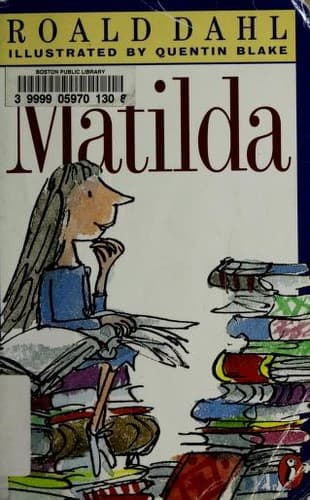
- Matilda
Roald Dahl
4.3 (648k) average on GoodreadsFantasyWhile both feature children with extraordinary abilities, Matilda's powers are magical and serve a broader narrative about justice and rebellion. Stanley's flattening is a physical alteration leading to practical, whimsical applications within the real world, focusing on imaginative play rather than societal critique.
- Harry Potter and the Sorcerer's Stone
J.K. Rowling
4.5 (7M) average on GoodreadsFantasyRescued from a miserable life under the stairs, an orphaned boy discovers he's a wizard destined for a magical school, where he uncovers a dangerous secret tied to the dark wizard who murdered his parents.
- The Hunger Games
Suzanne Collins
4.3 (6.4M) average on GoodreadsFantasyIn a future where children fight to the death on live television, Katniss Everdeen volunteers for the arena, turning a death sentence into a fight for survival and a spark of rebellion.
- 1984
George Orwell
4.2 (3.1M) average on GoodreadsPoliticsIn a future where surveillance and thought control are absolute, a man's search for truth clashes with the Party, showing that hope can be a form of rebellion.
- Divergent
Veronica Roth
4.2 (2.9M) average on GoodreadsFantasyIn a society divided by virtues, a sixteen-year-old's difference from the norm starts a rebellion that threatens her world.
- The Hobbit, or There and Back Again
J.R.R. Tolkien
4.3 (2.9M) average on GoodreadsFantasyA comfort-loving hobbit named Bilbo Baggins is whisked away by a mischievous wizard and a band of dwarves on an unexpected journey to reclaim stolen treasure from a fearsome dragon, discovering courage and a magical ring along the way.





Enjoyed the summary?
A summary gives you the shape of the book. The book itself has the detail, the examples and the voice.
Find Flat Stanley His Original Adventure on AmazonAs an Amazon Associate, BookBrief earns from qualifying purchases. How we're funded