

Synopsis
Covers the whole plot, including the ending.
- Difficulty
- Medium
- Pacing
- Fast
- Mood
- Reflective, Tragic, Hopeful, Historical
- Read it if
- You enjoy thought-provoking young adult fiction that explores themes of identity, race, and history through a unique time-travel narrative.
- Skip it if
- You prefer straightforward, linear narratives without magical realism or frequent shifts in perspective and time.
Flight Plot Summary
Covers the whole plot, including the ending.
The Bank Hostage Crisis
Zits, a fifteen-year-old Spokane Indian orphan, is at a bank, manipulated by his friend, Justice, into a planned act of violence. Armed with a pistol and a rifle, Zits enters the bank to take hostages and cause chaos. His life has been a series of abusive foster homes, and he feels a deep sense of displacement and anger. As he confronts the bank customers and employees, a security guard responds, and Zits is shot in the head, believing his life is ending. Instead of dying, he experiences a strange sensation, a feeling of 'flight' or transportation, setting the stage for his journey.
In the Body of an FBI Agent
Zits awakens to find himself in the body of a white man named Ted, an FBI agent in 1975 Red River, Idaho. He is disoriented and confused by his new identity and surroundings. Ted is part of a large law enforcement group surrounding a building occupied by Native American activists. Zits, as Ted, is ordered to shoot into the building, a command he resists due to his own background. He sees the brutal violence and racial tension of the era, feeling an internal conflict as he grapples with the actions of this body and the historical context of the conflict between the government and Indigenous people. This experience makes him confront the complexities of justice and prejudice from a new perspective.
A Young Indian at Little Bighorn
Zits's consciousness shifts again, and he finds himself in the body of an unnamed young Indian boy on the battlefield of Little Bighorn in 1876. He is a participant in the famous battle against General Custer's forces, experiencing the adrenaline, fear, and violence of the conflict. He sees the deaths of both Native American warriors and U.S. soldiers, understanding the battle not as a historical event but as a visceral, life-or-death struggle for survival and land. This incarnation exposes him to the bravery and desperation of his ancestors, and the tragic consequences of colonial expansion, deepening his understanding of his own heritage and the historical trauma endured by Indigenous peoples.
The Indian Tracker and the Cavalry
Zits next inhabits the body of an Indian tracker named Gus, who works for the U.S. Cavalry in the late 19th century. Gus is tasked with tracking other Native Americans, a role that forces Zits to confront the complex and often tragic choices made by Indigenous people during a time of immense pressure and conflict. He experiences the harsh realities of survival, loyalty, and betrayal, seeing the destruction of Native American ways of life. This incarnation highlights the internal divisions and difficult compromises made by individuals caught between two warring cultures, further complicating Zits's understanding of identity and historical responsibility.
A Pilot in Modern Times
Zits's journey continues, and he finds himself in the body of a modern-day airline pilot, soaring above the clouds. This experience offers a stark contrast to his previous incarnations, providing a sense of distance and detachment from the earthly conflicts he has witnessed. From the cockpit, he observes the world below, a collection of cities and landscapes, and reflects on the vastness of human existence and the seeming insignificance of individual struggles from such a height. This perspective allows him to process the violence and prejudice he has encountered, offering a moment of quiet contemplation before his next transformation.
The Alcoholic Father
In a personal and painful shift, Zits inhabits the body of his own father, an alcoholic and abusive man, during a moment in his parents' relationship. He experiences firsthand his father's struggles with addiction and the destructive choices that led to his own abandonment. He sees his father's verbal abuse towards his mother and the despair that fills their lives. This experience is particularly harrowing, as it forces Zits to confront the source of much of his own pain and anger, offering a glimpse into the complexities and justifications behind his father's actions, even as he recoils from them.
His Mother's Perspective
Briefly, Zits experiences a moment through the eyes of his mother, seeing her love for him and her deep despair over his father's alcoholism and their difficult life. This perspective is fleeting but impactful, offering him a glimpse into her emotional world and the sacrifices she made. It allows him to understand the depth of her suffering and the love she held for him, providing a piece of the puzzle of his own identity and past. This experience is a turning point in his emotional journey, creating empathy and a deeper connection to his family history.
The Bank and the Aftermath
Zits returns to his own body, back in the bank, moments after he was shot. The world is a blur of pain and confusion. He sees the chaos he caused, the fear in people's eyes, and the armed police surrounding him. He also sees Justice, his supposed friend, abandoning him and running away, revealing Justice's cowardice and manipulative nature. This return is jarring, as Zits is now burdened with the memories and insights gained from his time travels. He is no longer the same angry, unthinking boy, but a person grappling with the weight of history, identity, and the consequences of violence.
Hospital and Reflection
Zits is taken to the hospital, where he recovers from his gunshot wound. During his recovery, he has time to reflect on his journey. The memories of each life he inhabited are vivid and real, shaping his understanding of history, identity, and the interconnectedness of human experience. He grapples with the complexities of good and evil, prejudice and empathy, and the cyclical nature of violence. His internal monologue shows a shift in perspective, moving from anger to a more nuanced understanding of the human condition and his own place within it.
Meeting Officer Dave
While in the hospital and later in juvenile detention, Zits meets Officer Dave, the Native American police officer who responded to the bank incident. Officer Dave becomes a mentor figure, showing Zits compassion and understanding rather than judgment. He listens to Zits's story, even the parts about time travel, and offers guidance. This relationship is crucial for Zits, as it provides him with a positive adult role model and a sense of belonging he has never experienced. Officer Dave helps Zits navigate the legal system and encourages him to find a constructive path forward, emphasizing making amends and seeking a better future.
A New Beginning
After his release from juvenile detention, Zits is placed in a new, stable foster home with a kind couple. He continues to correspond with Officer Dave, who remains a supportive figure. Zits begins to process his past traumas and the lessons learned from his time travels. He starts to embrace his Spokane heritage, finding a sense of pride and belonging. The novel concludes with Zits looking towards the future with a new sense of hope and purpose. He is no longer the angry, lost boy, but a young man changed by his experiences, ready to forge his own identity and connect with the world in a more meaningful way.
Flight Characters
Zits (Michael)
Protagonist
A fifteen-year-old Spokane Indian orphan who travels through time after a violent incident.
Zits is a deeply troubled and angry teenager, a product of a broken foster care system and a history of neglect and abuse. He feels rootless and disconnected from his heritage, struggling with his identity as a 'not legal' Indian. His anger manifests in impulsive, violent behavior, driven by a desperate need for belonging and recognition. Despite his outward aggression, he possesses an underlying sensitivity and a yearning for understanding. His journey through time forces him to confront the complexities of history, identity, and human nature, ultimately leading him to empathy and self-acceptance.
Relationships: Justice (Manipulative 'friend' who encourages Zits's violence.); Officer Dave (Mentor and supportive figure who helps Zits heal.); His Father (Abusive, alcoholic, and absent parent, whose life Zits experiences.); His Mother (Loving but despairing parent, whose perspective Zits briefly inhabits.)
Officer Dave
Supporting
A Native American police officer who shows Zits compassion and guidance.
Officer Dave is a Spokane Indian police officer who encounters Zits after the bank incident. Unlike other authority figures, he approaches Zits with empathy and understanding, seeing beyond the boy's violent actions to the pain beneath. He acts as a mentor, offering Zits support, advice, and a stable presence. Dave represents a positive role model and a connection to Zits's heritage, helping him navigate the aftermath of his actions and begin his path to healing. He embodies the possibility of breaking cycles of violence and finding constructive ways to engage with the world.
Relationships: Zits (Mentor and friend.)
Justice
Antagonist
Zits's manipulative and violent 'friend' who instigates the bank robbery.
Justice is Zits's supposed friend who encourages his violent tendencies and manipulates him into participating in the bank hostage situation. He is a negative influence, embodying a destructive path that Zits almost fully embraces. Justice's actions are driven by his own anger and desire for chaos, but he lacks the depth or self-awareness that Zits eventually develops. He represents the kind of toxic relationships and destructive choices Zits must learn to reject in order to find his own way. His cowardice during the bank incident highlights his superficiality.
Relationships: Zits (Manipulative 'friend' who betrays him.)
Zits's Father
Supporting/Mentioned
An alcoholic and abusive man whose life Zits inhabits, revealing the roots of his own pain.
Zits's biological father is an alcoholic and often abusive man who ultimately abandons Zits and his mother. He is a source of much of Zits's trauma and anger. Through Zits's journey, the reader, and Zits himself, gain insight into the father's own struggles with addiction, poverty, and the pressures of being a Native American man in a society that offers few opportunities. While his actions are destructive, Zits's experience in his body allows for a complex, albeit painful, understanding of the cycles of trauma that can perpetuate through generations.
Relationships: Zits (Biological father, source of abandonment and trauma.); Zits's Mother (Partner, subject of his abuse and neglect.)
Zits's Mother
Supporting/Mentioned
A loving but despairing woman who struggles with her partner's alcoholism and difficult life.
Zits's biological mother is depicted as a loving but ultimately overwhelmed woman, deeply affected by her partner's alcoholism and their challenging circumstances. She represents the maternal love Zits lacked in his foster care experience. Her brief appearance through Zits's time travel provides a glimpse into her emotional world, her resilience, and her heartbreak. Her character highlights the intergenerational impact of poverty, addiction, and systemic issues on Native American families, and her love serves as a poignant contrast to the harshness of Zits's early life.
Relationships: Zits (Biological mother, source of love and loss.); Zits's Father (Partner, whose alcoholism caused her great pain.)
Ted (FBI Agent)
Supporting/Vessel
A white FBI agent in 1975 Idaho, whose body Zits inhabits during a standoff with Native American activists.
Ted is a white FBI agent in the 1970s, representing the authority and perspective of the dominant culture during a period of intense conflict with Native American activists. When Zits inhabits Ted's body, he experiences the world through the eyes of someone on the 'other side' of the racial divide. This allows Zits to witness firsthand the justifications and biases that fuel systemic oppression, as well as the personal toll it takes on individuals, regardless of their role. Ted is a vessel for Zits's learning, exposing him to the complexities of history and the moral ambiguities of conflict.
Relationships: Zits (His body is inhabited by Zits.)
Gus (Indian Tracker)
Supporting/Vessel
An Indian tracker working for the U.S. Cavalry in the 19th century, whose body Zits inhabits.
Gus is an Indian tracker who works for the U.S. Cavalry in the late 19th century. His character represents the complex choices and survival strategies adopted by some Native Americans during the period of westward expansion and conflict. By inhabiting Gus's body, Zits experiences the moral dilemmas of being caught between two worlds, serving one while belonging to the other. Gus's story highlights the internal conflicts and difficult compromises faced by individuals who had to navigate the harsh realities of assimilation and resistance, further enriching Zits's understanding of his own heritage's fraught history.
Relationships: Zits (His body is inhabited by Zits.)
Flight Themes
Identity and Belonging
Zits's central struggle is his search for identity and a sense of belonging. As an orphaned 'not legal' Indian, he feels adrift. His time travels force him to inhabit various identities, a white FBI agent, an Indian warrior, a tracker, his own father. Each experience challenges his preconceived notions of self and his place in the world. By seeing the lives of his ancestors and even his parents, he begins to understand the complex nature of his heritage and the historical context of his own pain, ultimately leading him to embrace his Spokane identity and find a sense of belonging not tied to a single place or person, but to a deeper understanding of himself.
“I was a Spokane Indian, but I was not a legal Indian. My father was not on the tribal rolls. So I was nobody. I was an orphan. I was a foster kid. I was a criminal. I was a monster.”
The Cycle of Violence and Trauma
The novel explores the pervasive and cyclical nature of violence and trauma, particularly within Native American history. Zits's own violent outburst at the bank is a direct result of the abuse and neglect he's experienced. His journey takes him through historical acts of violence: the Wounded Knee-like standoff, the Battle of Little Bighorn, and the systemic oppression faced by Indigenous peoples. He also experiences the personal trauma of his father's alcoholism and abuse. By seeing these events from multiple perspectives, Zits begins to understand how trauma is passed down through generations and how violence begets violence, leading him to question its effectiveness and seek alternative paths.
“I don't understand humans. They are so full of hate and anger. They want to hurt each other so badly. They want to kill each other.”
Empathy and Understanding
A core theme is the development of empathy through radical perspective-taking. Zits is literally forced to 'walk in another's shoes,' inhabiting the bodies of individuals from different races, genders, and historical periods. This immersive experience allows him to understand the motivations, fears, and struggles of people he would otherwise demonize or dismiss, from the white FBI agent to his own abusive father. This journey shatters his narrow worldview, replacing anger with a nuanced understanding of human complexity and the shared humanity that underlies conflict. His ability to empathize is the catalyst for his personal transformation.
“Who's to judge?”
History and Memory
The novel uses Zits's time travel to explore American history, particularly the often-overlooked or misrepresented history of Native Americans. Zits directly experiences moments like the Battle of Little Bighorn and the civil rights era, gaining a visceral understanding of the past that academic learning could not provide. This theme emphasizes that history is not just a collection of facts but a living, breathing narrative that shapes present identities and conflicts. By reliving these historical events, Zits confronts the collective memory and trauma of his people, learning how the past informs his present and future.
“History is a story, but it's also a weapon.”
Plot Devices & Literary Techniques
Time Travel/Body Swapping
Zits's consciousness inhabits different bodies across various historical periods.
This is the primary fantastical element of the novel. Zits is shot during a bank robbery and instead of dying, his consciousness is transported into the bodies of various individuals from different historical eras and backgrounds. This device allows the author to explore themes of identity, empathy, and history from multiple perspectives. It's not a magical journey with clear rules, but rather a disorienting, often painful, process that forces Zits to confront the complexities of human experience and the cyclical nature of violence and prejudice. It serves as a transformative 'vision quest' for the protagonist.
First-Person Narrative
The story is told entirely from Zits's perspective, even when he's inhabiting other bodies.
The entire novel is narrated through Zits's internal monologue, providing direct access to his thoughts, feelings, and confusion. Even when he's in another body, the reader still hears Zits's voice, highlighting the disorienting nature of his experiences and emphasizing his struggle to reconcile his own identity with the identities he temporarily assumes. This narrative choice intensifies the reader's empathy for Zits and underscores his journey of self-discovery, allowing for a deeply personal exploration of complex historical and emotional themes.
The Vision Quest
Zits's time travel serves as a modern, involuntary version of a traditional Native American spiritual journey.
While not explicitly called a vision quest within the narrative, Zits's journey through time and different bodies functions as a contemporary, albeit involuntary and violent, interpretation of this traditional Native American spiritual practice. He is forced to confront his inner demons, gain wisdom from the past, and ultimately find his true self and purpose. The disorienting and often painful nature of his 'visions' or experiences are central to his transformation, leading him to a deeper understanding of himself, his heritage, and the world around him, much like a traditional vision quest would.
Symbolism of Flight
The title and recurring imagery of 'flight' represent escape, transcendence, and a search for freedom.
The title 'Flight' carries multiple symbolic meanings. Initially, it represents Zits's desire to escape his painful reality and the violence he perpetrates. Literally, his consciousness 'flies' through time and space. As he inhabits the body of an airline pilot, flight takes on a more literal meaning of soaring above. Ultimately, 'flight' symbolizes Zits's journey towards transcendence – escaping his past anger, finding freedom from the cycle of violence, and achieving a higher understanding of himself and humanity. It represents both physical and spiritual liberation.
Flight Quotes
“I'm a time traveler, and I've come back to save the world.”
“I was an Indian boy, orphaned, abused, and ignored, and I was going to be a hero.”
“Every time I looked in the mirror, I saw a stranger, but this time, the stranger was me.”
“Sometimes you have to go back to the beginning to understand the end.”
“Violence is a circle, and it keeps going around and around unless someone stops it.”
“I wanted to be loved. I wanted to be safe. I wanted to be real.”
“Maybe the past isn't something you escape from, but something you learn from.”
“It’s hard to save the world when you can’t even save yourself.”
“A bullet doesn’t care if you’re good or bad. It just cares about where it’s going.”
“The past is alive. It lives in us.”
“I was a ghost, a spirit, a memory, and I was going to change everything.”
“Love is a dangerous thing, but it’s the only thing that makes us human.”
“Sometimes you have to break things to fix them.”
“I didn’t want to be a hero anymore. I just wanted to be a boy.”
Quiz
10 questions on the plot and the characters. Each answer comes with a short explanation.
Question 1
What is the name of the protagonist in Sherman Alexie's 'Flight'?
- Jimmy
- Zits
- Frank
- Alex
Show answer
B. Zits The protagonist's name is Zits, a troubled foster teenager who is not a 'legal' Indian.
Question 2
What significant event is Zits about to commit at the beginning of the novel before his time travel begins?
- Rob a bank
- Run away from his foster home
- A massive act of violence
- Join a gang
Show answer
C. A massive act of violence The journey for Zits begins as he's about to commit a massive act of violence, which is interrupted by his sudden time travel.
Question 3
Which of the following bodies does Zits NOT inhabit during his time travels?
- An FBI agent during the civil rights era
- A cowboy in the Wild West
- An Indian child during the Battle of Little Bighorn
- An airline pilot today
Show answer
B. A cowboy in the Wild West Zits inhabits an FBI agent, an Indian child at Little Bighorn, an Indian tracker, and an airline pilot. He does not inhabit a cowboy.
Question 4
What is the primary theme explored through Zits's time-traveling experiences?
- The importance of family loyalty
- The pursuit of wealth and success
- An understanding of why human beings hate and the futility of violence
- The challenges of modern technology
Show answer
C. An understanding of why human beings hate and the futility of violence The book seeks 'nothing less than an understanding of why human beings hate,' and Zits learns that 'violence is not the answer' through his experiences.
Question 5
What is Zits's recurring question or refrain during his furious travels through time?
- "Where am I?"
- "Who's to judge?" and "I don't understand humans."
- "What is my purpose?"
- "Will I ever go home?"
Show answer
B. "Who's to judge?" and "I don't understand humans." During his travels, Zits's refrain grows: 'Who's to judge?' and 'I don't understand humans.'
Question 6
Zits is described as not being a 'legal' Indian for what specific reason?
- He was adopted by a non-Indian family.
- He was never claimed by his father.
- He left the reservation at a young age.
- He does not know his tribal affiliation.
Show answer
B. He was never claimed by his father. The description states Zits is 'a boy who is not a 'legal' Indian because he was never claimed by his father.'
Question 7
What specific location in Idaho is mentioned as a place where Zits sees 'Hell' during his time as an FBI agent?
- Boise, Idaho
- Red River, Idaho
- Moscow, Idaho
- Coeur d'Alene, Idaho
Show answer
B. Red River, Idaho He finds himself in the body of an FBI agent during the civil rights era, where he sees why 'Hell is Red River, Idaho, in the 1970s.'
Question 8
How is Zits 'mightily transformed' by the end of his journey?
- He gains supernatural powers.
- He becomes a famous historian.
- He gains a profound understanding of human nature and violence.
- He finds his biological father.
Show answer
C. He gains a profound understanding of human nature and violence. When Zits finally returns to his own life, he is 'mightily transformed by all he has seen,' implying a profound change in his understanding and perspective, particularly regarding human hatred and violence.
Question 9
Which historical event does Zits experience while inhabiting the body of an Indian child?
- The Trail of Tears
- The Wounded Knee Massacre
- The Battle of Little Bighorn
- The Sand Creek Massacre
Show answer
C. The Battle of Little Bighorn He travels back to inhabit the body of an Indian child during the battle at Little Bighorn.
Question 10
What is the author's primary goal with 'Flight,' according to the provided text?
- To write a thrilling adventure story.
- To entertain readers with historical fiction.
- To seek nothing less than an understanding of why human beings hate.
- To create a compelling romance novel.
Show answer
C. To seek nothing less than an understanding of why human beings hate. Time Out states that 'Alexie... seeks nothing less than an understanding of why human beings hate' in 'Flight.'
Flight FAQ
What is the central premise of 'Flight' and who is its protagonist?
'Flight' centers on Zits, a troubled, orphaned Spokane Indian teenager in foster care, who is about to commit a school shooting. At the moment of his intended violence, he is shot and begins a series of involuntary time travels, inhabiting different bodies throughout American history.
How does Zits's status as a 'legal' Indian impact his self-perception at the beginning of the novel?
Zits feels alienated and incomplete because he was never claimed by his father, making him not a 'legal' Indian. This contributes significantly to his anger, identity crisis, and a deep sense of not belonging, fueling his destructive impulses.
What is the initial catalyst for Zits's time-traveling journey?
Zits's journey begins when he attempts to commit a massive act of violence at a bank. He is shot by a security guard, and instead of dying, he finds himself transported back in time, waking up in a different body.
Which historical periods and characters does Zits inhabit during his travels?
Zits inhabits an FBI agent during the civil rights era in 1970s Red River, Idaho; an Indian child during the Battle of Little Bighorn; an Indian tracker in the nineteenth century; and an airline pilot in the present day. Each experience offers a unique perspective on violence and humanity.
What is the significance of the recurring phrase 'Hell is Red River, Idaho, in the 1970s'?
This phrase highlights the intense racial tension and violence Zits experiences while inhabiting the body of an FBI agent, Hank, during the civil rights era. It underscores the pervasive hatred and systemic injustices present in that specific time and place.
How does Zits's experience as an FBI agent named Hank connect to his own identity struggles?
As Hank, Zits is forced to confront the complexities of racial identity and the blurred lines between justice and violence, particularly when he encounters a younger version of his own father. This experience directly challenges his preconceived notions and deepens his understanding of his heritage and his father's past.
What specific detail links Zits's future self to one of his past incarnations?
While in the body of an Indian tracker in the 19th century, Zits encounters a white soldier, Bart, who he recognizes as the same man who shot him in the bank in his own time. This connection reveals a cyclical nature of violence and an intricate web of interconnected destinies.
Are there any subtle indications that Zits's time travels are more than just a random sequence of events?
Yes, Zits repeatedly encounters individuals who appear in different guises across various timelines, such as the white soldier Bart and a woman he eventually recognizes as his mother. These recurring figures suggest a deliberate, perhaps spiritual, design to his journey, guiding him toward self-discovery.
How does Zits's initial desire for violence transform throughout his journey?
Initially driven by rage and a desire for retribution, Zits gradually learns that violence is not the answer. Through witnessing and experiencing various forms of hatred and conflict, he develops empathy and understanding, ultimately rejecting his destructive path.
What psychological impact do inhabiting different bodies have on Zits's sense of self?
Inhabiting diverse bodies, from an FBI agent to a child at war, profoundly disorients Zits's sense of self, forcing him to shed his individual identity and experience the world through others' perspectives. This process challenges his ego and expands his capacity for empathy.
How do Zits's recurring questions, 'Who's to judge?' and 'I don't understand humans,' reflect his psychological state?
These questions reveal Zits's profound confusion and moral struggle as he witnesses humanity's capacity for both immense cruelty and unexpected kindness. They signify his internal wrestling with complex ethical dilemmas and his desperate attempt to make sense of human behavior.
What role does empathy play in Zits's transformation?
Empathy is central to Zits's transformation. By literally walking in others' shoes, he gains a deep understanding of their motivations, suffering, and humanity, which gradually erodes his own anger and enables him to forgive both others and himself.
How does the novel challenge the concept of 'justice' through Zits's experiences?
The novel challenges traditional notions of justice by showing how it can be subjective and often intertwined with violence and prejudice. Zits witnesses how 'justice' is applied differently depending on power dynamics and racial lines, prompting him to question its true meaning.
What is the ultimate message Alexie conveys about understanding human hatred?
Alexie suggests that understanding human hatred requires confronting its historical roots, its cyclical nature, and the individual pain that fuels it. The novel implies that empathy and a willingness to see different perspectives are crucial steps toward breaking cycles of violence.
How does the ending of 'Flight' suggest Zits's 'blessed' transformation?
Upon returning to his own body, Zits is not only alive but profoundly changed, having abandoned his violent intentions. His transformation is 'blessed' because he has gained a deeper understanding of himself and humanity, choosing a path of peace and forgiveness instead of destruction.
Can Zits's journey be interpreted as a modern-day vision quest?
Yes, Zits's journey aligns with the concept of a vision quest, where an individual undergoes a transformative spiritual experience to gain insight and purpose. His time travels serve as a profound, albeit involuntary, quest for identity and understanding, guided by unseen forces.
What is the significance of the airline pilot incarnation in Zits's journey?
The airline pilot represents a modern, detached perspective, literally above the conflicts on the ground. This experience allows Zits to view humanity's struggles from a distance, reinforcing his growing understanding of the universality of human experience while highlighting the relative smallness of individual conflicts.
How does the novel explore the idea of interconnectedness between past and present?
The novel profoundly explores interconnectedness by showing how past events and injustices directly influence the present, and how individual actions echo through time. Zits's journey reveals that history is not merely a collection of isolated events but a living, breathing force shaping current realities.
About the author
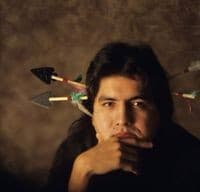
Sherman Alexie is a Native American author known for his contributions to contemporary literature. His notable works include "The Absolutely True Diary of a Part-Time Indian," which explores the life of a young Indian boy navigating between two worlds, and "Reservation Blues," a novel that intertwines music and Native American culture. Alexie's writing often addresses themes of identity, race, and the complexities of modern life on reservations.
Similar books
- The Absolutely True Diary of a Part-Time Indian
Sherman Alexie
4.1 (224k) average on GoodreadsYoung AdultShares similar themes of Native American identity, coming-of-age, and Alexie's distinctive voice and blend of humor and tragedy.
- Kindred
Octavia E. Butler
4.1 (5k) average on GoodreadsFantasyFeatures a protagonist who involuntarily time-travels to different historical periods, experiencing racial injustices firsthand.
- The House of the Spirits
Isabel Allende
4.2 (190k) average on GoodreadsFantasyExplores historical and political turmoil through a multi-generational saga, with elements of magical realism.
- Ceremony
Leslie Marmon Silko
3.8 (18k) average on GoodreadsLiterary FictionLeslie Marmon Silko's "Ceremony" also explores themes of trauma, identity, and the search for healing within Native American culture, particularly focusing on a WWII veteran's return to the reservation. Both novels use non-linear storytelling and incorporate elements of traditional Native American oral traditions. However, "Ceremony" is deeply rooted in Laguna Pueblo mythology and ritual as a path to healing, offering a more spiritual and holistic approach to overcoming trauma. "Flight," while acknowledging historical context, is more overtly speculative and uses its body-swapping premise to confront the physical manifestations of historical violence across different bodies and timelines, rather than relying on a singular spiritual ceremony for resolution. Silko's work often emphasizes the power of storytelling and communal healing, whereas Alexie's "Flight" largely focuses on Zits' individual, albeit externally influenced, journey of self-discovery and reconciliation.
- Harry Potter and the Sorcerer's Stone
J.K. Rowling
4.5 (7M) average on GoodreadsFantasyRescued from a miserable life under the stairs, an orphaned boy discovers he's a wizard destined for a magical school, where he uncovers a dangerous secret tied to the dark wizard who murdered his parents.
- The Hunger Games
Suzanne Collins
4.3 (6.4M) average on GoodreadsFantasyIn a future where children fight to the death on live television, Katniss Everdeen volunteers for the arena, turning a death sentence into a fight for survival and a spark of rebellion.






Enjoyed the summary?
A summary gives you the shape of the book. The book itself has the detail, the examples and the voice.
Find Flight on AmazonAs an Amazon Associate, BookBrief earns from qualifying purchases. How we're funded