
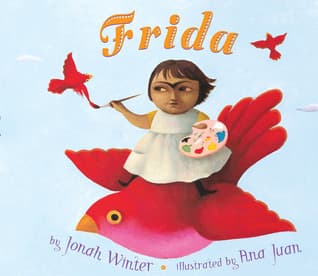
Core Idea
- Difficulty
- Easy
- Read it if
- You are looking for an accessible, inspiring introduction to Frida Kahlo's life and art for young readers, or if you appreciate biographies that connect personal suffering to creative output.
- Skip it if
- You are seeking an in-depth, academic analysis of Frida Kahlo's work or a comprehensive biography for adult readers.
Key Takeaways from Frida
Art as Solace in Suffering
Frida Kahlo transformed immense physical and emotional pain into her most profound artistic expressions.
Frida Kahlo's life included many physical and emotional challenges. From childhood polio that left her with a weak leg to a bad bus accident that broke her spine and pelvis, she dealt with constant pain and many surgeries. Instead of giving up, Kahlo put her suffering into her art. Her paintings became a visual record of her pain, operations, miscarriages, and deep emotional hurts. This process was not just about feeling better; it changed things, letting her show her inner world and create a unique visual language for common human experiences of pain and strength. Her work shows how art can be a strong way to cope and express oneself, even in the hardest times.
“When polio kept her bedridden for nine months, drawing saved her from boredom. When a bus accident left her in unimaginable agony, her paintings expressed her pain and depression - and eventually, her joys and her loves.”
In the book: The book highlights her experiences with polio and the bus accident, stating that drawing and painting were her salvation and a means to express her pain and depression.
Try this: When facing personal adversity, consider engaging in a creative outlet – be it writing, painting, music, or crafting – to process emotions and transform difficult experiences into a form of expression. This can provide a sense of agency and meaning.
Related ideas: art-therapy, resilience, self-expression
Childhood Influences on Creativity
Early guidance and personal challenges shaped Frida's artistic foundation.
Frida Kahlo started her art journey not in a formal school, but with lessons from her father. In a house full of sisters and a tired mother, her photographer father saw and encouraged her early talent. He taught her the basics of painting and color, which helped her later with more complex works. This early, close teaching, along with being alone due to polio, which made her draw to entertain herself, shows how early experiences and supportive people in childhood can greatly affect a person's creative growth. It suggests that a child's environment, even with difficulties, can be a good place for art to grow if curiosity and discovery are encouraged.
“When her mother was worn out from caring for her five sisters, her father gave her lessons in brushwork and color.”
In the book: The book explicitly states her father taught her 'lessons in brushwork and color' when her mother was busy, and that drawing 'saved her from boredom' during polio.
Try this: For parents or mentors, actively engage with and encourage a child's natural inclinations and curiosity, even if it seems informal. Provide tools and guidance, allowing them to explore and develop skills that might become lifelong passions.
Related ideas: early-education, mentorship, creative-development
Embracing Individuality Through Art
Kahlo's unique style and subject matter defied conventions, establishing her distinct artistic voice.
Frida Kahlo's art is easy to spot because it shows her life, identity, and Mexican background in a very personal, often dreamlike yet real way. Unlike many artists who showed outside things or big stories, Kahlo looked inward. She focused on self-portraits that showed her physical and emotional states, her body, and her cultural roots. This firm dedication to her own story, despite the art trends of her time, let her make her own unique art path. Her work strongly supports the idea that real art often comes from truly and openly exploring one's own experience and view, rather than following common rules.
“Over and over again, Frida Kahlo turned the challenges of her life into art.”
In the book: The book emphasizes her transformation of 'challenges of her life into art,' implying a highly personal and autobiographical approach to her work.
Try this: Instead of trying to emulate others or fit into existing molds, focus on what makes your own perspective, experiences, or background unique. Use these elements as the foundation for your creative or professional expression to cultivate an authentic voice.
Related ideas: authenticity, personal-narrative, artistic-identity
The Power of Visual Storytelling
Kahlo's paintings transcended words, communicating complex emotions and experiences directly.
Frida Kahlo was excellent at telling stories visually. Her paintings are full of symbols and stories, letting viewers see her inner world without needing many words. She showed her physical injuries honestly, her emotional upset through dreamlike pairings, and her cultural pride with bright images. This ability to share deep and often hard subjects purely through pictures is a sign of her skill. It reminds us that art can often show feelings and depths that words alone cannot, making a direct and strong connection with the audience. Her work highlights the lasting human ability to find meaning and connection through shared visual stories.
“her paintings expressed her pain and depression - and eventually, her joys and her loves.”
In the book: The text states her paintings 'expressed' her emotions, implying a direct visual communication of complex feelings.
Try this: When communicating complex ideas or emotions, consider incorporating visual elements – images, diagrams, or even metaphors – to enhance understanding and create a more impactful message. A picture can indeed be worth a thousand words.
Related ideas: visual-communication, symbolism-in-art, narrative-art
Resilience in the Face of Adversity
Frida's life exemplified an unyielding spirit, turning every setback into a creative opportunity.
Frida Kahlo's life showed great strength. From polio at age six to the terrible bus accident in her late teens that left her with constant pain and many surgeries, she faced huge physical and emotional hardship. Yet, each problem seemed to fuel her art drive. Her time in bed became chances for deep thought and painting. Her physical pain directly shaped her most famous works, turning personal sadness into universal art. This ongoing process of turning pain into work, and challenge into creative output, shows a strong human ability to adjust, last, and even do well during great difficulty. It's a strong point for seeing problems not as endings, but as reasons for new ways to express and grow.
“Over and over again, Frida Kahlo turned the challenges of her life into art.”
In the book: The recurring phrase 'Over and over again, Frida Kahlo turned the challenges of her life into art' directly speaks to her resilience and transformative process.
Try this: When confronted with significant challenges, consciously seek ways to reframe the situation. Can this obstacle be a catalyst for learning a new skill, developing a new perspective, or creating something meaningful? Focus on adaptation and creative problem-solving.
Related ideas: grit, post-traumatic-growth, coping-mechanisms
Art as a Reflection of Identity
Her work was a profound exploration and affirmation of her multifaceted identity.
Frida Kahlo's art is closely tied to who she was. Her self-portraits, which make up much of her work, are not just pictures of her face but deep looks into her mind. They show her Mexican background through traditional clothes and symbolic animals, her bisexuality, her physical pain, and her complex emotional life, especially her difficult relationship with Diego Rivera. Through her art, she built and took apart her own image, showing her individuality and questioning social rules. This shows how art can be a strong way to learn about and define oneself, letting people visually show who they are, what they believe, and how they experience the world, thus making their sense of self stronger.
“her paintings expressed her pain and depression - and eventually, her joys and her loves.”
In the book: The book mentions her paintings expressing 'her joys and her loves,' which are integral parts of her personal identity and relationships.
Try this: Engage in creative activities that allow you to explore different facets of your identity. This could be journaling, photography, or even dressing in ways that express your true self. Use these outlets to deepen your understanding and acceptance of who you are.
Related ideas: identity-formation, cultural-identity, self-portraiture
The Interplay of Life and Art
Frida Kahlo's biography and artistic output were profoundly, almost indistinguishably, intertwined.
For Frida Kahlo, her life and her art were one. Every major event, every physical illness, every emotional upset appeared in her paintings. Her art was a direct, clear response to her life, making it deeply about herself. This close link between her life experiences and her art is what gives her work its raw power and lasting appeal. It suggests that the most interesting art often comes from an artist's real connection with their own life story, where a personal story becomes a common idea. Understanding her art means understanding her life, and vice-versa, showing that deep art often comes from personal truth.
“Now Jonah Winter and Ana Juan have drawn on both the art and the life to create a playful, insightful tribute to one of the twentieth century's most influential artists.”
In the book: The book explicitly states it 'drawn on both the art and the life,' indicating their inseparable nature.
Try this: Reflect on how your personal experiences, values, and struggles influence your work or creative projects. Allow your authentic self to inform your output, recognizing that your unique perspective is a valuable asset.
Related ideas: autobiographical-art, art-history, biographical-criticism
Art as a Legacy of Influence
Frida Kahlo's impact continues to resonate, inspiring artists and audiences globally.
Despite having fewer works than some artists of her time, Frida Kahlo is known as one of the most important artists of the twentieth century. Her unique mix of dreamlike art, folk art, and very personal stories has inspired many artists, feminists, and cultural movements. Her honest way of showing her pain, identity, and Mexican background broke new ground and still encourages people to express their own truths. The book's mention of her influence shows how art, born from personal struggle and a unique vision, can go beyond its first setting and become a strong, lasting force for cultural and social change, shaping future generations of artists and thinkers.
“one of the twentieth century's most influential artists.”
In the book: The book concludes by calling her 'one of the twentieth century's most influential artists,' directly stating her lasting impact.
Try this: Consider the long-term impact of your creative or professional contributions. How can your work contribute to a larger conversation or inspire others? Aim for authenticity and substance that can create a lasting legacy.
Related ideas: artistic-influence, cultural-impact, feminist-art
Frida Quotes
“She painted her own pain, her own struggles, her own heart, and in doing so, she painted for all of us.”
“Frida learned to walk again, but her body was never the same. And neither was her art.”
“Her paintings were like windows into her soul, sometimes bright and colorful, sometimes dark and full of sorrow.”
“She painted herself over and over, not because she was vain, but because she was often alone, and she knew herself best.”
“Frida's artwork was a diary without words, a way to tell her story when words weren't enough.”
“Even when her body was broken, her spirit soared through her brushstrokes.”
“Her paintings were a blend of reality and dream, a world only Frida could see and share.”
“Frida wore her heart on her canvas, unafraid to show the world her deepest feelings.”
“She turned her pain into power, her sorrow into beauty.”
“Frida didn't just paint what she saw; she painted what she felt.”
“Her art was a bridge between her inner world and the outer world, inviting others to cross.”
“She was a rebel with a paintbrush, painting her own rules, her own truth.”
“Frida's colors were as vibrant as her spirit, even when her life was tinged with gray.”
“Her paintings whisper stories of love, loss, and the unbreakable human spirit.”
Quiz
10 questions on the main ideas. Each answer comes with a short explanation.
Question 1
According to the book, what specific activity did Frida's father teach her when her mother was overwhelmed with her sisters?
- Sculpting and pottery
- Music and singing
- Brushwork and color
- Writing and poetry
Show answer
C. Brushwork and color The book states that her father gave her lessons in brushwork and color when her mother was worn out from caring for her five sisters, introducing her to art early on.
Question 2
What was Frida's primary coping mechanism and source of entertainment during her nine-month bedridden period due to polio?
- Reading books
- Playing board games
- Drawing
- Listening to music
Show answer
C. Drawing The book highlights that 'drawing saved her from boredom' when polio kept her bedridden for nine months, emphasizing art as a solace.
Question 3
How did Frida Kahlo's paintings specifically evolve to reflect her experiences after the severe bus accident?
- They became abstract expressions of joy and freedom.
- They focused solely on portraits of her family members.
- They expressed her pain and depression, and eventually her joys and loves.
- They depicted historical events and political commentary.
Show answer
C. They expressed her pain and depression, and eventually her joys and loves. The book explicitly states that after the bus accident, 'her paintings expressed her pain and depression - and eventually, her joys and her loves,' showing how her art became a direct reflection of her emotional state.
Question 4
What is the central theme that Jonah Winter and Ana Juan emphasize about Frida Kahlo's life and art in the book?
- Her political activism and revolutionary spirit.
- Her unique fashion sense and personal style.
- Her ability to transform life's challenges into art.
- Her relationships with other famous artists of her time.
Show answer
C. Her ability to transform life's challenges into art. The core message of the book, stated directly, is that 'Over and over again, Frida Kahlo turned the challenges of her life into art,' making this the central theme.
Question 5
Beyond the biographical details, what aspect of Frida Kahlo's legacy does the book specifically aim to pay tribute to, as suggested by the authors?
- Her role as a fashion icon.
- Her contributions to Mexican folk art traditions.
- Her influence as one of the twentieth century's most influential artists.
- Her efforts in promoting women's rights through her activism.
Show answer
C. Her influence as one of the twentieth century's most influential artists. The book's description explicitly states it is 'a playful, insightful tribute to one of the twentieth century's most influential artists,' highlighting her lasting artistic impact.
Question 6
The book emphasizes how drawing 'saved her from boredom' during her polio recovery. What broader concept does this illustrate about the role of art in Frida's life?
- Art as a means of social critique.
- Art as a form of escapism and psychological coping.
- Art as a skill for professional advancement.
- Art as a way to connect with political movements.
Show answer
B. Art as a form of escapism and psychological coping. The phrase 'saved her from boredom' in a period of isolation points to art serving as a crucial psychological coping mechanism and a way to escape the confinement of her physical reality.
Question 7
Given the book's focus on turning challenges into art, what might be a practical application of this concept for a young reader facing a personal difficulty?
- Ignoring the difficulty and focusing on unrelated hobbies.
- Expressing their feelings about the difficulty through a creative outlet like drawing or writing.
- Seeking professional help without any personal reflection.
- Keeping their struggles entirely to themselves.
Show answer
B. Expressing their feelings about the difficulty through a creative outlet like drawing or writing. The book's overarching message is about using art to process and express life's challenges. For a young reader, this translates to using creative outlets to cope with personal difficulties.
Question 8
The book describes Frida's father teaching her 'brushwork and color.' How does this early influence, combined with her later experiences, illustrate a key aspect of artistic development?
- It shows that formal training is irrelevant if one has natural talent.
- It demonstrates that foundational skills are often combined with personal life experiences to forge a unique artistic voice.
- It suggests that only childhood experiences shape an artist's style.
- It proves that adversity alone is sufficient for artistic greatness without any prior guidance.
Show answer
B. It demonstrates that foundational skills are often combined with personal life experiences to forge a unique artistic voice. Frida received early foundational instruction ('brushwork and color') which then merged with her profound personal trials (polio, accident) to create her distinctive and powerful artistic expression, illustrating the interplay of skill and experience.
Question 9
The description highlights that the book draws on 'both the art and the life' of Frida Kahlo. What does this suggest about the authors' approach to portraying her biography for a children's audience?
- They prioritize factual historical accuracy over artistic interpretation.
- They use her artwork as a direct narrative device to explain her life events and emotions.
- They separate her art from her life to simplify complex themes for children.
- They focus exclusively on her childhood to avoid sensitive adult themes.
Show answer
B. They use her artwork as a direct narrative device to explain her life events and emotions. By drawing on 'both the art and the life,' the authors indicate an integrated approach where Frida's paintings are not just illustrations but are used to convey her experiences, emotions, and the narrative of her life, making her art an integral part of her story.
Question 10
Considering the severe physical and emotional pain Frida endured (polio, bus accident) and how she channeled it into her art, what might be a complex message the book implicitly conveys about the nature of creativity?
- Creativity is primarily a product of innate talent, independent of life circumstances.
- True creativity often arises from deeply personal experiences, including suffering, and serves as a powerful form of self-expression and transformation.
- The most influential art is always cheerful and optimistic, regardless of the artist's life.
- Art is mainly a decorative pursuit, unrelated to an artist's inner world.
Show answer
B. True creativity often arises from deeply personal experiences, including suffering, and serves as a powerful form of self-expression and transformation. The book consistently shows Frida using her art to express 'pain and depression - and eventually, her joys and her loves' after major traumas. This powerfully illustrates that creativity can be a profound response to and transformation of personal suffering, not just a product of happiness or innate skill.
Frida FAQ
What is 'Frida' by Jonah Winter about?
'Frida' by Jonah Winter is a children's biography of the iconic artist Frida Kahlo. It explores how Kahlo transformed the numerous challenges and hardships in her life, such as polio and a severe bus accident, into powerful and expressive works of art.
Does this book cover Frida Kahlo's entire life?
While it highlights significant events and periods, 'Frida' focuses on key moments where Kahlo's personal struggles intersected with her artistic development, emphasizing her resilience and creative spirit. It's designed to introduce younger readers to her story.
What age group is 'Frida' by Jonah Winter suitable for?
This book is primarily aimed at children, making it suitable for elementary school-aged readers. Its engaging narrative and vibrant illustrations by Ana Juan make complex themes accessible and inspiring for young audiences.
How does 'Frida' portray Kahlo's creative process?
The book illustrates how Kahlo's creativity was deeply intertwined with her personal experiences, showing how she used drawing and painting as a means to cope with pain, express emotions, and find joy amidst adversity, turning her life's challenges into art.
What role did Frida Kahlo's father play in her artistic development?
Her father played a significant role by teaching her brushwork and color, especially when her mother was overwhelmed with caring for her many sisters. This early guidance fostered her artistic talents from a young age.
How is 'Frida' different from other biographies of Frida Kahlo?
'Frida' by Jonah Winter stands out due to its target audience and artistic approach. Unlike adult biographies, it simplifies complex aspects of her life for children, using a playful and insightful narrative complemented by Ana Juan's distinctive illustrations, which draw on Kahlo's own artistic style.
Does 'Frida' include examples of Kahlo's actual artwork?
While it features original illustrations by Ana Juan that are inspired by Kahlo's style and life, the book itself does not directly reproduce Kahlo's original paintings. Instead, it uses art to pay tribute to her life and work.
What message does 'Frida' convey to young readers?
The book conveys a powerful message of resilience and the transformative power of art. It teaches young readers that even in the face of immense challenges and pain, creativity can be a source of strength, expression, and ultimately, joy and love.
Is 'Frida' by Jonah Winter a good book for teaching children about art history?
Yes, 'Frida' serves as an excellent introduction to art history for children, specifically focusing on a pivotal 20th-century artist. It contextualizes art within a personal narrative, making the history of art more relatable and inspiring for young learners.
Similar books
- The Diary of a Young Girl
Anne Frank
4.2 (2.7M) average on GoodreadsBiographyDuring the Nazi occupation, a teenage girl's diary, written from a secret annex, shares observations on humanity, hope, and the wait for freedom.
- Eat, Pray, Love
Elizabeth Gilbert
3.6 (1.5M) average on GoodreadsLifestyleA heartbroken writer leaves her conventional life for a year-long global search for pleasure in Italy, spiritual devotion in India, and unexpected love and balance in Bali.
- Night
Elie Wiesel
4.3 (970k) average on GoodreadsBiographyIn the darkness of Auschwitz and Buchenwald, a teenage Elie Wiesel faces the extermination of his family, the loss of his faith, and the lasting scars of humanity's deepest cruelty.
- Steve Jobs
Walter Isaacson
4.1 (957k) average on GoodreadsBusinessSteve Jobs was a visionary who fused creativity and technology to revolutionize six industries and shape our digital world.
- The Glass Castle
Jeannette Walls
4.3 (903k) average on GoodreadsBiographyJeannette Walls's memoir describes her unusual childhood with brilliant, free-spirited parents whose poverty-stricken life shaped her independence and love despite family problems.
- Bossypants
Tina Fey
4.0 (848k) average on GoodreadsBiographyFrom a 'vicious nerd' with stress dreams to the comedic force behind Liz Lemon and 'Weekend Update,' Tina Fey chronicles her journey to proving that 'you're no one until someone calls you bossy.'






Enjoyed the summary?
A summary gives you the shape of the book. The book itself has the detail, the examples and the voice.
Find Frida on AmazonAs an Amazon Associate, BookBrief earns from qualifying purchases. How we're funded