
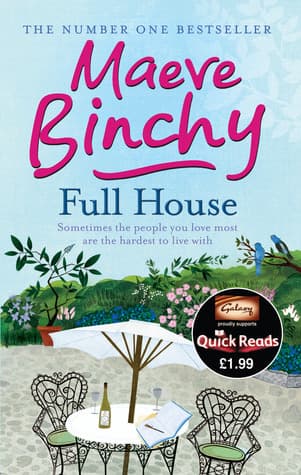
Synopsis
Covers the whole plot, including the ending.
- Difficulty
- Easy
- Pacing
- Moderate
- Mood
- Heartwarming, Reflective, Gentle
- Read it if
- You enjoy heartwarming stories about family dynamics, adult children living at home, and the challenges of letting go.
- Skip it if
- You prefer high-stakes drama or fast-paced thrillers.
Full House Plot Summary
Covers the whole plot, including the ending.
Rosie's Full Nest
Rosie, recently separated from her husband Kevin, moves back into her childhood home in Dublin with her parents, Helen and Charlie. She brings her two young children, Emma and Paul, making the house even fuller. Her older sister, Helen, a high school teacher, also lives at home because she can't afford her own place. Their brother, Anthony, an aspiring musician and songwriter, rounds out the adult children living with their parents. While Rosie first feels like a failure, her parents welcome her and the children. This creates a busy, though crowded, household. Everyone enjoys living together, with the children often with their grandparents and aunts/uncles.
The Daily Grind and Dreams
Life at the Walsh house settles into a routine. Rosie, despite her initial sadness, enjoys being a full-time mother to Emma and Paul, helped by her parents. Helen, focused on her teaching career, often feels the money stress of Dublin living, which makes staying at home necessary. Anthony spends his days writing music, sure that he will soon get his big break. He contributes little money but adds a creative, sometimes messy, energy to the house. Charlie, the father, works steadily, while Dee, the mother, manages the house, caring for her adult children and grandchildren, often with love mixed with quiet frustration at the 'full house' situation.
Dee's Growing Discontent
As months pass, Dee Walsh, the mother, starts to feel the strain of her 'full house.' She loves her children and grandchildren, but the constant demands, lack of privacy, and endless cooking, cleaning, and mediating sibling arguments begin to tire her. She watches her adult children, still living for free and mostly without real responsibilities in the house, and a quiet resentment starts. Dee and Charlie rarely have time or space alone. She dreams of a quieter life, maybe even a vacation, something that seems impossible with their current living arrangement.
Charlie's Health Scare
The comfortable, though crowded, balance of the Walsh house breaks when Charlie Walsh has a sudden, severe heart attack. This medical emergency shocks and scares the whole family. Charlie is rushed to the hospital, and his recovery is slow and unsure. The event is a sharp wake-up call for everyone, especially Dee, who realizes how fragile life is and how much she and Charlie have given up for their children without truly living their own lives. The crisis makes the adult children face their own roles and responsibilities, or lack thereof, in the family.
Dee's Ultimatum
With Charlie slowly getting better at home, Dee reaches her limit. The stress of his illness, combined with years of making space for her adult children, leads to a firm decision. She gathers Rosie, Helen, and Anthony and, with new determination, tells them it's time for them to find their own places. She explains that she and Charlie need their space and peace, especially now, and that it's important for her children's own growth. The news is met with different levels of shock, disbelief, and even some anger from the siblings, who had gotten used to their comfortable, free life.
Rosie's Search for Independence
Rosie, who was the last to return home, feels a mix of worry and a strange sense of freedom. She loves her parents but sees the truth in Dee's words. With help from her friend, a property agent, she starts looking for an affordable flat. She also begins to seriously think about her financial future, looking into part-time work or going back to college for new skills. The idea of supporting herself and her children, while scary, also sparks a determination to build a new life for her family, separate from her parents.
Helen's Financial Realities
Helen, the most financially stable of the three, still faces the harsh reality of Dublin's expensive rental market. Her teacher's salary, while steady, does not easily allow for a comfortable apartment for one person. At first frustrated by her mother's demand, she starts actively searching for shared housing. She connects with coworkers and friends, realizing that living with others is a common solution for young professionals in the city. This makes her step outside her comfort zone and consider a more communal living arrangement, something she hadn't needed to do while living with her parents.
Anthony's Creative Solution
Anthony, always the dreamer, is at first the most against his mother's demand, seeing it as a barrier to his creative work. However, the pressure to find his own place sparks a new kind of creativity. He hears about a band looking for a songwriter and a place to practice. He suggests a shared house where they can all live and work together, pooling their money. This unusual solution not only gives him a place to live but also a ready-made band and a dedicated space for his music, moving him closer to his professional dreams in an unexpected way.
The Empty Nest
Over the next weeks and months, the Walsh house slowly empties. Rosie finds a small, affordable flat and starts a part-time job, feeling a new sense of purpose. Helen successfully gets a room in a shared house with other young professionals, enjoying the companionship and new independence. Anthony, with his new bandmates, rents a large house that serves as both a practice space and a home. The departures are bittersweet, with both parents and children feeling a mix of sadness and excitement. Dee and Charlie finally have their house to themselves, enjoying the peace and quiet they had wanted.
A New Chapter for Dee and Charlie
With their children successfully moved out, Dee and Charlie enjoy their new freedom. They go on vacations, have quiet evenings together, and rediscover their shared hobbies. Charlie's health continues to get better, and the less stress in the household certainly helps his recovery. Dee, no longer burdened by the constant demands of a full house, feels a lightness and joy she hadn't felt in years. They visit their children and grandchildren often, but these visits are now a choice, not a constant duty. Their relationship grows in the quiet intimacy of their now-empty nest, showing that sometimes, letting go helps everyone grow.
Principal Figures
Dee Walsh
Protagonist
The matriarch who orchestrates her adult children's exodus from the family home.
Dee is the loving but increasingly overwhelmed mother of Rosie, Helen, and Anthony, and wife to Charlie. She is a dedicated homemaker who has spent years catering to her family's needs, often at the expense of her own. Initially patient and accommodating, Dee eventually reaches her breaking point, longing for privacy and a quieter life with her husband. She is practical, observant, and possesses an underlying strength that emerges when she decides it's time for a change.
Relationships: Charlie Walsh (Husband, her partner in longing for an empty nest.); Rosie Walsh (Daughter, whom she loves but sees as needing to stand on her own feet.); Helen Walsh (Daughter, whom she wants to see achieve full independence.); Anthony Walsh (Son, whom she wants to see take his artistic pursuits seriously and responsibly.)
Charlie Walsh
Supporting
Dee's husband, whose health scare becomes the catalyst for change.
Charlie is Dee's kind and steady husband, and the father of the three adult children. He works hard and is generally content, but quietly shares Dee's unspoken desire for a quieter home. His serious heart attack serves as a pivotal moment in the story, forcing the family to re-evaluate their living situation. He is supportive of Dee's decisions and benefits greatly from the eventual peace and quiet in their home.
Relationships: Dee Walsh (Wife, with whom he shares a deep affection and a desire for more personal space.); Rosie Walsh (Daughter.); Helen Walsh (Daughter.); Anthony Walsh (Son.)
Rosie Walsh
Supporting
The recently separated daughter who moves back home with her children.
Rosie is one of Dee and Charlie's adult children, who returns home with her two young children after her marriage to Kevin fails. She is initially dependent and somewhat lost, finding comfort in the familiar family environment. She is a loving mother but needs to rediscover her own strength and independence. The push from her mother, while initially unsettling, ultimately empowers her to build a new life for herself and her kids.
Relationships: Dee Walsh (Mother, whom she relies on but eventually understands and respects.); Charlie Walsh (Father.); Helen Walsh (Sister.); Anthony Walsh (Brother.); Kevin (Estranged husband.)
Helen Walsh
Supporting
The responsible teacher who stays home due to financial constraints.
Helen is the eldest daughter, a dedicated secondary school teacher. She is responsible and hardworking but finds herself unable to afford her own place in expensive Dublin. She is comfortable with the family arrangement but secretly yearns for more independence and privacy. Dee's ultimatum forces her to confront the financial realities and find a creative solution for her living situation, leading to a new sense of freedom.
Relationships: Dee Walsh (Mother.); Charlie Walsh (Father.); Rosie Walsh (Sister.); Anthony Walsh (Brother.)
Anthony Walsh
Supporting
The aspiring musician who lives at home while waiting for his big break.
Anthony is the youngest of the Walsh siblings, a charming and somewhat irresponsible aspiring songwriter and musician. He is passionate about his music but contributes little to the household and often relies on his parents' generosity. Dee's decision initially frustrates him, but it ultimately pushes him to combine his artistic dreams with a more practical approach to living, leading him to form a band and find a communal living/rehearsal space.
Relationships: Dee Walsh (Mother.); Charlie Walsh (Father.); Rosie Walsh (Sister.); Helen Walsh (Sister.)
Emma
Mentioned
Rosie's young daughter.
Emma is Rosie's young daughter, who moves back into her grandparents' home with her mother and brother. She adds to the lively, crowded atmosphere of the Walsh household, enjoying the constant presence of her extended family. Her presence, along with her brother's, is a significant factor in Dee's feeling of being overwhelmed.
Relationships: Rosie Walsh (Mother.); Paul (Brother.); Dee Walsh (Grandmother.); Charlie Walsh (Grandfather.)
Paul
Mentioned
Rosie's young son.
Paul is Rosie's young son, who, like his sister Emma, moves back into his grandparents' home. He contributes to the bustling environment, enjoying the constant attention and care from his extended family. His needs, along with Emma's, are part of the daily routine that eventually wears Dee down.
Relationships: Rosie Walsh (Mother.); Emma (Sister.); Dee Walsh (Grandmother.); Charlie Walsh (Grandfather.)
Kevin
Mentioned
Rosie's estranged husband.
Kevin is Rosie's husband, from whom she has recently separated. His absence from the main narrative is notable, as his separation from Rosie is the initial trigger for her and her children moving back into the Walsh family home. He represents the catalyst for Rosie's temporary dependence on her parents.
Relationships: Rosie Walsh (Estranged wife.)
Themes & Insights
The Empty Nest Syndrome (Reversed)
The novel looks at a different take on the 'empty nest' idea, where parents are overwhelmed by adult children who won't leave, instead of struggling when children move out. Dee's desire for privacy and quiet, against the constant activity of her 'full house,' shows the common parental wish for personal space and the move from active parenting to living independently. Charlie's heart attack is the main turning point, forcing the family to see that this change is needed for the parents' well-being. The peace Dee and Charlie eventually find highlights how important this life stage is.
“She loved them all, of course she did, but sometimes she longed for a silence that wasn't broken by someone else's music or a child's cry or a discussion about who left the jam out.”
Intergenerational Dependence vs. Independence
The story closely examines the complex relationships between adult children and their aging parents, especially the line between support and too much reliance. Rosie, Helen, and Anthony, though adults, depend heavily on their parents for housing and often for emotional and practical help. Dee's demand makes them face their own lack of independence and take responsibility for their lives. This theme connects with current issues of young adults struggling to leave home, emphasizing that parents must encourage self-sufficiency for their children's growth and their own peace of mind.
“It's time you all learned to stand on your own two feet. Your father and I need our own space, our own lives back.”
The Price of Sacrifice
Dee and Charlie have, for years, given up their personal space, time, and desires for their children. While done out of love, this constant self-sacrifice has affected Dee's well-being and, importantly, Charlie's health. His heart attack clearly shows the physical and emotional cost of their generosity. The story suggests that while parental love is endless, unchecked sacrifice can lead to resentment and harm, showing the importance of setting limits and putting one's own needs first, even in a loving family.
“She looked at Charlie, frail in the bed, and knew that her own quiet suffering had been nothing compared to the toll this life was taking on him.”
Finding Your Own Path
Each of the Walsh siblings is, in their own way, stuck or looking for direction while living under their parents' roof. Rosie is recovering from a failed marriage, Helen is comfortable but uninspired, and Anthony is a dreamer without a clear plan. Dee's eviction notice, though harsh, acts as a strong push for each of them to actively find and define their own independent paths. Rosie finds a job and a new home, Helen embraces shared living, and Anthony creatively mixes his music with a communal living solution. This theme celebrates the growth that comes from being pushed outside one's comfort zone.
“It wasn't just about finding a flat; it was about finding herself again, a Rosie independent of Kevin, independent of her parents.”
Plot Devices & Literary Techniques
The Catalyst Event
Charlie's heart attack serves as the turning point for the entire family.
Charlie's sudden heart attack is the primary catalyst that shatters the comfortable but unsustainable status quo in the Walsh household. Before this event, Dee's discontent was simmering but unexpressed. The fear and vulnerability brought on by Charlie's illness empower Dee to finally voice her needs and demand change. Without this dramatic medical emergency, the adult children might have continued living at home indefinitely, and Dee and Charlie might never have found the courage or justification to reclaim their space. It's a classic device to force character development and plot progression.
The Ultimatum
Dee's direct command for her children to move out.
Following Charlie's heart attack, Dee issues a clear and non-negotiable ultimatum to her adult children: they must find their own places. This device creates immediate conflict and forces each sibling to confront their dependence and take action. It's a stark and effective means of transitioning the plot from a state of passive acceptance to active problem-solving. The ultimatum is delivered with firm resolve, leaving no room for argument, and directly drives the subsequent individual journeys of Rosie, Helen, and Anthony.
The 'Empty Nest' as a Goal
The desired state of the parents, contrary to the typical 'empty nest syndrome'.
Unlike the traditional 'empty nest syndrome' where parents feel sadness or loss when children leave, in 'Full House,' the empty nest becomes the explicit goal and symbol of freedom and renewed life for Dee and Charlie. This reversal of expectation highlights the unique challenges of multi-generational living in modern times. The very 'fullness' of the house becomes a burden, and its gradual 'emptying' is presented as a positive, liberating transformation for the parents, allowing them to rediscover their relationship and personal peace.
Full House Quotes
“It was impossible not to feel sorry for someone who had lost everything, even if they had brought it on themselves.”
“Sometimes the best thing you could do for someone was to let them make their own mistakes.”
“Love wasn't about grand gestures; it was about the small, everyday kindnesses.”
“People always found a way to surprise you, for better or worse.”
“A house was just bricks and mortar until it was filled with people and their stories.”
“There was a fine line between helping someone and smothering them.”
“The past was a strange country; they did things differently there.”
“It was amazing how much you could learn about someone just by watching them.”
“Everyone had their own version of happiness, and it rarely looked like anyone else's.”
“Sometimes you had to break things to make them better.”
“Family was a complicated thing, a mix of love, obligation, and sheer exasperation.”
“The greatest adventures often started with the smallest decisions.”
“You couldn't always choose your circumstances, but you could always choose your attitude.”
“Silence could be more revealing than any words spoken.”
Quiz
10 questions on the plot and the characters. Each answer comes with a short explanation.
Question 1
What is Rosie's primary motivation for wanting her grown children to leave home?
- She wants to sell the house and move to a smaller one.
- She feels it's time for them to become independent adults.
- She needs their rooms for her own hobbies and projects.
- She is tired of cooking and cleaning for so many people.
Show answer
B. She feels it's time for them to become independent adults. The synopsis states that Rosie loves her children but wonders if it's time they left home, implying a desire for their independence.
Question 2
Why has Rosie returned to live with her parents?
- She never left home in the first place.
- She moved out when she got married, but her marriage didn't work out.
- Her parents needed her to care for them.
- She lost her job and couldn't afford her own place.
Show answer
B. She moved out when she got married, but her marriage didn't work out. The book description explicitly states, 'Rosie moved out when she got married, but it didn't work out, so now she is back with her parents.'
Question 3
What is Anthony's profession or aspiration?
- He is a teacher like Helen.
- He works in an office but dislikes his job.
- He writes songs and is waiting for them to be recognized and paid for.
- He is a full-time student.
Show answer
C. He writes songs and is waiting for them to be recognized and paid for. The synopsis mentions, 'Anthony writes songs and is just waiting for the day when someone will pay him for them.'
Question 4
What is Helen's reason for still living at home?
- She is caring for her elderly parents.
- She is a teacher and doesn't earn enough for her own place.
- She enjoys the social life of a full house.
- She is saving up for a large down payment on a house.
Show answer
B. She is a teacher and doesn't earn enough for her own place. The text states, 'Helen is a teacher and doesn't earn enough for a place of her own,' directly explaining her situation.
Question 5
What event triggers Dee's decision that things have to change for the family?
- Rosie announces she is moving out.
- Anthony finally sells one of his songs.
- A crisis occurs within the family.
- The parents decide to sell the house.
Show answer
C. A crisis occurs within the family. The synopsis states, 'Then there is a crisis, and Dee decides things have to change for the whole family.'
Question 6
What is the general attitude of the adult children living at home before Dee's intervention?
- They are actively looking for their own places but struggling.
- They are happy and comfortable living at home, as it doesn't cost them anything.
- They feel guilty about staying and are constantly apologizing.
- They are frequently arguing with their parents about their living situation.
Show answer
B. They are happy and comfortable living at home, as it doesn't cost them anything. The text notes, 'Until then, all three are happy at home. It doesn't cost them anything, and surely their parents like having a full house?' This indicates their contentment.
Question 7
Who is Dee in relation to the main household?
- Dee is one of Rosie's children, alongside Helen and Anthony.
- Dee is the mother, Rosie's parent.
- Dee is a character who decides things have to change for the 'whole family,' implying a role as a parent or someone with authority.
- Dee is a new romantic interest for one of the children.
Show answer
C. Dee is a character who decides things have to change for the 'whole family,' implying a role as a parent or someone with authority. The phrasing 'Dee decides things have to change for the whole family' suggests Dee is one of the parents or an influential older family member, not one of the children living at home.
Question 8
What is the central conflict implied by the title 'Full House' and the synopsis?
- A conflict between the parents about their retirement plans.
- The struggle between the desire for family togetherness and the need for individual independence and space.
- A financial struggle caused by too many people living under one roof.
- A rivalry between the siblings for their parents' attention.
Show answer
B. The struggle between the desire for family togetherness and the need for individual independence and space. The 'full house' represents the grown children still at home, while Rosie's desire for them to leave and Dee's intervention suggest a conflict around the adult children's independence versus the comfortable, yet perhaps stagnant, family living arrangement.
Question 9
How do the adult children, Helen and Anthony, contribute to the 'full house' dynamic, beyond just being present?
- They are actively trying to save money to buy the house from their parents.
- Helen's low earnings and Anthony's unpaid artistic pursuits highlight their dependence on the family home.
- They constantly bring friends over, making the house even more crowded.
- They are always redecorating their rooms, causing disruption.
Show answer
B. Helen's low earnings and Anthony's unpaid artistic pursuits highlight their dependence on the family home. Helen's financial situation and Anthony's 'waiting for payment' for his songs are specific details that explain why they are still living at home and contribute to the 'full house' dynamic of adult children who aren't fully independent.
Question 10
What is the implied consequence of Dee's decision to change things for the family?
- The family will immediately sell the house.
- The children will willingly and happily move out on their own.
- The changes will likely be met with resistance, as the children are 'happy at home' and may not 'like it or not'.
- Rosie will finally get the house to herself.
Show answer
C. The changes will likely be met with resistance, as the children are 'happy at home' and may not 'like it or not'. The final sentence, 'Dee decides things have to change for the whole family... whether they like it or not,' strongly implies that the changes will not be universally welcomed, especially by the children who were 'happy at home.'
Full House FAQ
What is the central conflict Rosie faces at the beginning of 'Full House'?
Rosie is a loving mother who finds herself in a dilemma: her three adult children, Dee, Helen, and Anthony, are still living at home, seemingly content with their arrangements. While she cherishes having them close, she also yearns for her own space and for them to establish independent lives, creating an internal struggle between her maternal instincts and her desire for change.
Who are Rosie's three children, and what are their initial circumstances?
Rosie's children are Dee, Helen, and Anthony. Dee is back home after her marriage failed, Helen is a teacher struggling to afford her own place, and Anthony is an aspiring songwriter waiting for his big break. All three are comfortable living rent-free and enjoying the 'full house' dynamic.
What 'crisis' prompts Dee to take drastic action for the family?
The crisis is the unexpected death of Rosie's husband, Martin. His passing leaves Rosie vulnerable and the family facing financial strain, as Martin had been the primary earner and the children's continued presence without contributing significantly becomes unsustainable. This pivotal event forces Dee to re-evaluate their living situation.
How does Dee plan to 'change things' for the family, and what is her immediate proposal?
Dee decides that the family home, now too large and expensive for Rosie alone, needs to be sold. Her immediate proposal is for each of them to contribute to finding new, separate accommodations, pushing her siblings and mother towards independence and a new chapter, whether they are ready or not.
What is the initial reaction of Helen and Anthony to Dee's plan?
Helen and Anthony are initially resistant and upset by Dee's plan. They are comfortable in their current situation, seeing no immediate need for change, and view Dee's intervention as disruptive and unnecessary. They express shock and frustration at the idea of being forced out of their childhood home.
What subtle hints are there about Rosie's true feelings regarding her children's presence before the crisis?
Before the crisis, Rosie often expresses her love for her children, but there are underlying suggestions of her quiet longing for more personal space and independence. She occasionally reflects on her own past marriage and moving out, hinting at a desire for her children to experience similar milestones, even if she doesn't voice it directly.
Are there any characters besides the immediate family who play a significant role in influencing the children's eventual decisions?
Yes, various peripheral characters subtly influence the children. For example, potential romantic interests or new friends they encounter after being forced to seek new accommodations often provide motivation or opportunities that make their independence more appealing or feasible, rather than just a necessity.
What is the significance of Anthony's songwriting career in the broader narrative?
Anthony's songwriting career initially symbolizes his reluctance to grow up and take responsibility, as he uses it as an excuse to avoid work. However, as the plot progresses, his forced independence might lead him to pursue his passion more seriously, or even find a way to monetize it, turning his dream into a viable career rather than a hobby.
How does Dee's failed marriage influence her perspective on family and independence?
Dee's failed marriage makes her acutely aware of the importance of self-sufficiency and not relying on others for happiness or stability. Her own experience of having to return home after her marriage dissolved likely fuels her determination to ensure her siblings and mother establish their own independent lives, preventing them from facing similar vulnerabilities.
What psychological barriers do Helen and Anthony face in embracing independence?
Helen's psychological barrier is likely tied to financial insecurity and a perceived lack of options, leading to a comfort in her current dependent state. Anthony's barrier stems from a fear of failure and a reluctance to leave his comfort zone, preferring to live in a dream world rather than face the realities of adult responsibility and financial contribution.
How does Rosie's grief over Martin's death impact her ability to cope with the changes Dee proposes?
Rosie's grief initially makes her more vulnerable and less able to assert her own desires, making her somewhat passive in the face of Dee's plans. However, the process of moving and making new decisions can also become a part of her healing journey, forcing her to look forward and rebuild her life, channeling her sorrow into new beginnings.
In what ways do the children's personalities clash during the transition period, and how do they resolve these conflicts?
The children's personalities clash through arguments over financial contributions, differing opinions on their mother's well-being, and individual resistance to leaving their comfort zones. These conflicts are typically resolved through difficult conversations, forced compromises, and the realization that their mother's happiness and their own futures depend on their cooperation and individual growth.
Is Dee's drastic action truly for the benefit of the whole family, or is there an element of self-interest in her decision?
While Dee's actions are presented as being for the family's benefit, there's an argument that her own experience of returning home post-divorce and her desire for a more structured, independent life influence her. Her self-interest in seeing her family thrive and avoid stagnation aligns with the ultimate positive outcome for everyone, making it a complex blend of altruism and personal conviction.
Does the book ultimately argue that adult children should always leave home, or does it offer a more nuanced perspective?
The book leans towards the idea that adult children should strive for independence, but it offers a nuanced perspective. It acknowledges the comfort and love of a 'full house' but highlights the potential for stagnation and the importance of individual growth. The narrative suggests that while family bonds are crucial, personal autonomy is equally vital for a fulfilling adult life.
How does the author use the physical space of the 'full house' to symbolize the family's emotional state?
The 'full house' initially symbolizes comfort and security, but as the story progresses, it becomes a symbol of stagnation and an inability to move forward. Its eventual sale represents the family's emotional shedding of old habits and their collective journey towards new beginnings and individual growth, reflecting their internal shifts externally.
What is the ultimate message about family and support that 'Full House' conveys?
The ultimate message is that true family support involves empowering loved ones to become independent and self-sufficient, even if it means disrupting comfortable routines. It emphasizes that while a 'full house' can be loving, a family's strength is truly tested and redefined when members are encouraged to spread their wings and build their own lives, maintaining connection through new means.
Do any of the children find love or new relationships as a direct result of being forced out of the family home?
Yes, the forced independence often leads to opportunities for new social interactions and relationships. Moving to new areas or taking on new responsibilities can introduce them to potential partners, fulfilling the romantic element often found in Maeve Binchy's novels and providing an additional incentive for their newfound autonomy.
How does Rosie's character develop from a doting mother to a more independent woman by the end of the book?
Rosie initially finds her identity primarily through her role as a mother and homemaker. By the end, forced by her husband's death and Dee's interventions, she learns to make decisions for herself, discover new interests, and perhaps even pursue her own dreams, evolving into a more self-reliant and assertive individual who finds happiness beyond just her children.
About the author
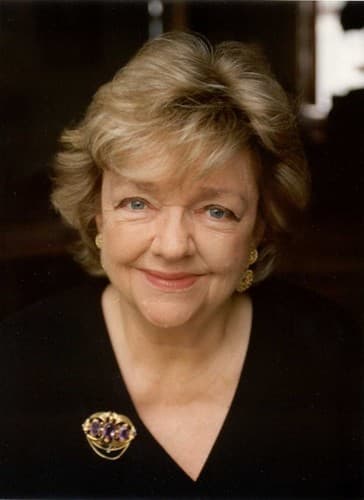
Maeve Binchy was an Irish author known for her engaging fiction that often explores themes of friendship and community. Some of her notable works include "Tara Road," "Circle of Friends," "A Week in Winter," "Evening Class," "Nights of Rain and Stars," and "Light a Penny Candle." Her storytelling style has resonated with readers worldwide, making her a significant figure in contemporary literature.
Similar books
- The Shell Seekers
Rosamunde Pilcher
4.2 (95k) average on GoodreadsHistorical FictionExplores family relationships and the passage of time with a gentle, character-driven narrative.
- Evening Class
Maeve Binchy
4.0 (40k) average on GoodreadsRomanceAnother Binchy novel focusing on everyday people and their personal journeys.
- Olive Kitteridge
Elizabeth Strout
3.8 (172k) average on GoodreadsLiterary FictionWhile focusing on a different demographic and setting, Strout's work delves into the complexities of marriage, community, and personal dissatisfaction with a gritty realism that 'Full House' largely avoids. Strout's characters face more ambiguous moral dilemmas and less easily resolved personal conflicts, providing a more challenging and nuanced reading experience.
- The Hunger Games
Suzanne Collins
4.3 (6.4M) average on GoodreadsFantasyIn a future where children fight to the death on live television, Katniss Everdeen volunteers for the arena, turning a death sentence into a fight for survival and a spark of rebellion.
- The Great Gatsby
F. Scott Fitzgerald
3.9 (3.8M) average on GoodreadsHistorical FictionIn the opulent Roaring Twenties, a mysterious millionaire's lavish parties hide his desperate, tragic pursuit of a lost love, exposing the emptiness within the American Dream.
- The Fault in Our Stars
John Green
4.2 (3.6M) average on GoodreadsYoung AdultA girl with a terminal illness finds her story rewritten when a charming boy with a similar past enters her life at a cancer support group, leading to a star-crossed romance.






Enjoyed the summary?
A summary gives you the shape of the book. The book itself has the detail, the examples and the voice.
Find Full House on AmazonAs an Amazon Associate, BookBrief earns from qualifying purchases. How we're funded