

Synopsis
Covers the whole plot, including the ending.
- Difficulty
- Easy
- Pacing
- Moderate
- Mood
- Humorous, Witty, Lighthearted, Charming
- Read it if
- You enjoy lighthearted, intricately plotted comedies of manners with eccentric characters and witty dialogue.
- Skip it if
- You prefer serious, plot-driven narratives, or dislike farcical humor and numerous subplots.
Full Moon Plot Summary
Covers the whole plot, including the ending.
The Empress's New Portrait and a Familiar Face
Lord Emsworth, who loves his prize sow, The Empress, decides she needs a portrait. He wants the renowned deceased animal painter, Landseer, to do it. Meanwhile, Lady Dora Garland, a strong-willed aunt, arrives at Blandings with her daughter, Prudence Garland. Prudence is secretly in love with Bill Lister, the godson of Galahad Threepwood (Gally), Lord Emsworth's brother. Bill, a struggling artist, has been told by Gally to pretend to be Landseer's nephew, Bill Landseer, to get into Blandings and spend time with Prudence. He hopes to revive their romance and convince Prudence's mother of his worth. Gally plans this, knowing the trouble it will likely cause but believing in Bill and Prudence's love.
The Arrival of the American Millionaire and a Jealous Suitor
The social situation at Blandings Castle gets more complicated with the arrival of Tipton Plimsoll, a wealthy American businessman pursuing Prudence Garland. Plimsoll, though well-meaning, is clumsy and often misunderstands things. His presence immediately creates a love triangle, adding pressure to Bill Lister's already uncertain position. At the same time, Freddie Threepwood, Lord Emsworth's younger son, also arrives. Freddie, known for his silly schemes, is supposedly there to sell a new dog food product, 'Donaldson's Dog Joy,' but also wants a loan from Plimsoll. Freddie's presence adds another layer of comedic confusion and often makes the existing romantic problems and impersonations worse.
Gally's Machinations and the Portrait Begins
Galahad Threepwood, a master of mischief and strategic action, continues to manipulate events to help Bill Lister court Prudence. He makes sure Bill has many chances to talk to Prudence, often by distracting or misdirecting other characters. Bill, pretending to be 'Bill Landseer,' starts the difficult job of painting The Empress. This task turns into a spectacle, as The Empress is a moody subject, and Bill's artistic skills are tested. Lord Emsworth, meanwhile, watches closely, offering unwanted advice and constantly worrying about his beloved pig, adding to Bill's stress.
The Case of the Missing Manuscript
A significant side plot develops when Gally Threepwood's much-anticipated and possibly scandalous memoirs go missing. This manuscript contains stories and observations about various important people in society, and its disappearance causes much worry, especially for those who fear their past mistakes might be revealed. Gally himself is deeply concerned, not just about the content but about losing his literary work. Suspicion falls on various characters, including Freddie Threepwood, known for being opportunistic, and even Beach, the butler, though he is quickly cleared. The search for the manuscript becomes frantic, adding another layer of mystery and comedic tension to the castle's busy atmosphere.
Romantic Complications and Misunderstandings
Prudence Garland is in a difficult spot, torn between her real feelings for Bill Lister and Tipton Plimsoll's persistent, if somewhat awkward, attention. Her mother, Lady Dora, strongly prefers Plimsoll because of his wealth and social standing, making it hard for Prudence to openly show her feelings for Bill, especially given his disguised identity. Bill, in turn, is always trying to make progress with Prudence while also maintaining his imposture as 'Bill Landseer' and trying to paint The Empress. This leads to several misunderstandings and near-discoveries of his true identity, further complicating the romantic dynamic and adding to the castle's typical comedic chaos.
The Dog Food Scheme and Financial Woes
Freddie Threepwood's main reason for being at Blandings is to promote his new dog food, 'Donaldson's Dog Joy,' and, more urgently, to get a loan from Tipton Plimsoll. His sales pitches are often clumsy and ill-timed, much to the annoyance of other characters. Freddie sees Plimsoll as his financial savior and constantly tries to impress him, often through misguided attempts to show his business sense. These efforts frequently fail, leading to comedic situations and further entangling the already complicated relationships and schemes at Blandings. His attempts to get money add a farcical business element to the romantic and identity-based plotlines.
The Gardener's Grudge and the Missing Pig
McAllister, the head gardener at Blandings, is a strong and often unhappy character who frequently argues with Lord Emsworth. Their ongoing feud, mainly over gardening practices and the care of the castle grounds, provides a regular source of comedic tension. During one tense moment, The Empress, Lord Emsworth's beloved pig, goes missing from her sty. This disappearance causes immense panic and sends Lord Emsworth into a frenzy, fearing for his prized possession. The entire household searches for her, leading to more chaotic scenes and briefly overshadowing the romantic and identity-based plots.
The Imposture Threatened and Exposed
Bill Lister's imposture as 'Bill Landseer' is constantly on the verge of being exposed. Several characters, including the clever Lady Dora and the observant Beach, the butler, suspect his true identity. There are many close calls where Bill almost reveals himself or where parts of his past threaten to surface. Eventually, through accidental slips and deliberate revelations, his true identity as Bill Lister, a struggling artist and Gally's godson, is revealed to the main characters. This exposure creates a significant crisis, especially for Prudence and Lady Dora, as it threatens to ruin the romantic future Bill had been trying to build.
Resolutions and Reconciliations
As the various deceptions come to light, the characters face the truth. The missing manuscript is eventually found, often in an unexpected place, easing Gally's worries. Bill Lister, despite his imposture being exposed, finally wins over Prudence Garland. Lady Dora, initially angry, is eventually convinced by the genuine affection between Bill and Prudence, and perhaps by Gally's arguments or simply from being tired of resisting. Tipton Plimsoll, though disappointed, accepts the outcome gracefully, often finding a new romantic interest or returning his attention to business. The misunderstandings are resolved, and the romantic couples find each other amidst the typical Blandings chaos.
The Full Moon's Aftermath
With the full moon's influence fading, the various schemes and romantic entanglements at Blandings Castle settle. Bill Lister and Prudence Garland can now pursue their relationship openly, with their families' blessing. Lord Emsworth is happy with The Empress's portrait, and his pig's well-being is secure. Freddie Threepwood, likely having failed in his dog food plan, moves on to his next scheme, always undeterred. Gally Threepwood, having successfully arranged the romantic pairing, returns to his usual state of benevolent mischief, ready for the next adventure. Order is restored, though never for long at Blandings, and the characters look forward to a period of relative calm.
Principal Figures
Bill Lister
Protagonist
A struggling artist and Gally's godson, in love with Prudence Garland.
Bill Lister is a young, earnest, and somewhat naive artist. He is deeply in love with Prudence Garland but lacks the social standing and wealth that her mother, Lady Dora, deems appropriate. Driven by his love, he agrees to Galahad Threepwood's elaborate plan to impersonate 'Bill Landseer,' a fictional nephew of the famous painter, to gain access to Blandings and win Prudence's heart. He is generally good-natured but finds himself constantly on edge due to his imposture, leading to various comedic predicaments. He possesses a genuine artistic talent, which he applies to the challenging task of painting The Empress.
Relationships: Prudence Garland (Romantic interest, future husband); Galahad Threepwood (Godfather and mentor in mischief); Lady Dora Garland (Prudence's mother, initially disapproving aunt)
Prudence Garland
Protagonist
Lady Dora's daughter, secretly in love with Bill Lister.
Prudence Garland is a young woman caught between her heart's desires and her mother's societal expectations. She is genuinely in love with Bill Lister but faces immense pressure from her formidable mother, Lady Dora, to consider the wealthy Tipton Plimsoll as a suitor. Prudence is intelligent and possesses a quiet strength, often trying to navigate the complex social dynamics of Blandings while remaining true to her feelings. She is somewhat frustrated by Bill's initial need for disguise but understands the circumstances, offering him support and encouragement.
Relationships: Bill Lister (Romantic interest, future wife); Lady Dora Garland (Mother); Tipton Plimsoll (Unwanted suitor)
Galahad 'Gally' Threepwood
Supporting
Lord Emsworth's roguish younger brother and master orchestrator of schemes.
Galahad Threepwood, or Gally, is the quintessential Wodehouse character – a charming, mischievous, and eternally youthful man in his fifties. He possesses an encyclopedic knowledge of society's scandals and a talent for orchestrating elaborate plans, primarily to help young lovers overcome obstacles. He is fiercely loyal to his friends and godson, Bill Lister, and delights in causing mild chaos, particularly for his stuffy relatives. Gally is the driving force behind the imposture plot, always one step ahead and often providing witty commentary on the unfolding events. His missing memoirs serve as a significant subplot.
Relationships: Bill Lister (Godfather and conspirator); Lord Emsworth (Older brother, often exasperated by Gally); Lady Dora Garland (Niece, often at odds with Gally's schemes)
Lord Emsworth (Clarence Threepwood, 9th Earl of Emsworth)
Supporting
The absent-minded master of Blandings Castle, obsessed with his prize pig.
Lord Emsworth is the gentle, perpetually flustered, and utterly charming owner of Blandings Castle. His primary passion in life is his prize Berkshire sow, The Empress of Blandings, whose well-being and happiness he prioritizes above almost everything else. He is largely oblivious to the romantic intrigues and impostures happening under his roof, focused instead on agricultural matters, his pig's portrait, or minor disputes with his gardener, McAllister. He is easily swayed and often exasperated by his formidable sisters and the antics of his brother, Gally, and son, Freddie.
Relationships: The Empress of Blandings (His beloved prize pig); Galahad Threepwood (Younger brother, a source of both amusement and exasperation); Freddie Threepwood (Son, often a source of worry); McAllister (Head gardener, constant source of minor conflict)
Lady Dora Garland
Supporting
Prudence's formidable mother, determined to secure a wealthy match for her daughter.
Lady Dora Garland is one of Lord Emsworth's formidable sisters, a woman of strong opinions and an unshakeable belief in the importance of social standing and wealth. She is fiercely protective of her daughter, Prudence, and determined to see her marry well, which, in her eyes, means marrying Tipton Plimsoll. She is highly suspicious of Bill Lister and his 'Landseer' identity, often trying to expose him. Lady Dora embodies the societal pressures and class distinctions that the young lovers must overcome, serving as a significant obstacle to their happiness.
Relationships: Prudence Garland (Daughter, whom she wishes to marry well); Lord Emsworth (Brother, whom she often chastises); Galahad Threepwood (Brother, whom she views with suspicion and disapproval)
Tipton Plimsoll
Supporting
A wealthy American millionaire vying for Prudence's hand.
Tipton Plimsoll is a good-natured, if somewhat clumsy and socially awkward, American millionaire. He is genuinely fond of Prudence Garland and actively pursues her, though his attempts at courtship are often met with Prudence's polite resistance. He is a man of considerable wealth, which makes him highly desirable in the eyes of Lady Dora. Plimsoll is also a target for Freddie Threepwood's various business schemes, particularly for loans. Despite being a rival for Prudence's affections, he is not malicious and ultimately accepts his fate with good grace, often finding a new focus for his affections or business ventures.
Relationships: Prudence Garland (Romantic interest, rejected suitor); Freddie Threepwood (Potential investor/loan provider)
Freddie Threepwood
Supporting
Lord Emsworth's son, known for his ill-fated business ventures.
Freddie Threepwood is Lord Emsworth's younger son, a perpetually optimistic but largely unsuccessful entrepreneur. He is always on the lookout for the next big scheme, in this case, promoting his dog food, 'Donaldson's Dog Joy,' and securing a loan from Tipton Plimsoll. Freddie is well-meaning but often oblivious to the true nature of events around him, frequently adding to the comedic confusion. He is a classic Wodehouse 'chump' character, constantly bumbling but rarely malicious, serving as a foil and a source of farcical distraction.
Relationships: Lord Emsworth (Father, often a source of exasperation); Tipton Plimsoll (Potential business partner/investor)
Beach
Supporting
The dignified and observant butler of Blandings Castle.
Beach is the imperturbable and highly professional butler of Blandings Castle. He is a man of immense dignity and discretion, seemingly unfazed by the endless eccentricities of the Threepwood family and their guests. Beach observes the various schemes, impostures, and romantic entanglements with a quiet, knowing air, often understanding more than he lets on. He is a source of stability amidst the chaos, always ensuring the smooth running of the household. While rarely directly involved in the plots, his presence and subtle reactions often provide comedic relief and a grounding force.
Relationships: Lord Emsworth (Employer, whom he serves loyally); Galahad Threepwood (A source of quiet amusement and occasional complicity)
The Empress of Blandings
Mentioned
Lord Emsworth's prize-winning Berkshire sow.
The Empress of Blandings is not a human character but plays a central role as Lord Emsworth's beloved prize pig. She is the two-time winner of the Fat Pigs Class at the Shropshire Agricultural Show and the absolute apple of Lord Emsworth's eye. Her well-being, comfort, and eventually, her portrait, are paramount concerns, driving much of Lord Emsworth's actions and anxieties. Her temperament and occasional disappearances contribute to the comedic elements of the plot, particularly for Bill Lister, who must attempt to capture her likeness.
Relationships: Lord Emsworth (Her devoted owner and admirer)
Themes & Insights
The Triumph of Love Over Social Convention
This theme is central to 'Full Moon,' as Bill Lister and Prudence Garland's romance faces strong opposition because Bill lacks wealth and social standing. Lady Dora Garland, in particular, favors the wealthy Tipton Plimsoll over Bill, stressing the importance of a 'good match.' However, through Gally's plans and the real affection between Bill and Prudence, their love ultimately overcomes these societal expectations. The story humorously criticizes the superficiality of judging people by their financial status, as seen when Bill's true character shines through despite his imposture, eventually winning over even the formidable Lady Dora.
“What does wealth matter when two hearts are truly in tune?”
The Absurdity of Imposture and Deception
The novel uses imposture for comedy, with Bill Lister pretending to be 'Bill Landseer' to get into Blandings and be with Prudence. This deception, planned by Gally, leads to many misunderstandings, near-exposures, and farcical situations. The humor comes from the characters trying to maintain their false identities and the increasingly elaborate lies they tell. It shows how easily people can be fooled by appearances and how fragile social structures can be when faced with a determined imposter, all while helping two lovers unite. The full moon itself seems to approve of this departure from reality.
“There are times, my dear boy, when a little judicious deception is not merely excusable but absolutely essential for the furtherance of true love.”
The Enduring Charm of Blandings Castle
Blandings Castle acts as a character itself, a chaotic yet ideal setting where eccentricities thrive and order is always on the edge of collapse. The castle is a place for Lord Emsworth's pig obsession and Gally's schemes, where the rules of the outside world seem to bend. The full moon highlights its magical, almost dreamlike quality, allowing for the suspension of disbelief needed for impostures and romantic entanglements to flourish. It represents a timeless, slightly mad world where human flaws are celebrated, and real affection, no matter how unconventionally pursued, finds its way.
“Blandings was, as always, a haven where the sensible gave way to the sublime, and the sublime, more often than not, was a pig.”
The Power of Obsession
Obsession drives several characters, most notably Lord Emsworth's deep devotion to his prize pig, The Empress. His whole world revolves around her health, her diet, and her artistic representation. This singular focus often blinds him to the human drama around him, providing much comedic relief. Similarly, Gally's obsession with creating happy romantic endings and Freddie's constant pursuit of his dog food venture show how single-minded passions, whether noble or silly, can shape the story and drive character actions. These obsessions, while sometimes causing minor chaos, ultimately contribute to the story's lighthearted tone.
“A man's pig, Beach, is his castle. No, no, it's his lifeblood!”
Plot Devices & Literary Techniques
Mistaken Identity / Imposture
Bill Lister poses as 'Bill Landseer' to enter Blandings.
The central plot device is Bill Lister's imposture as 'Bill Landseer,' the fictional nephew of the renowned animal painter, Landseer. This deception allows Bill to gain access to Blandings Castle and spend time with Prudence Garland, who would otherwise be off-limits due to his lack of wealth. The entire romantic plot hinges on Bill maintaining this false identity, leading to numerous close calls, comedic misunderstandings, and the constant threat of exposure. It serves to heighten the tension, create humorous situations, and ultimately test the strength of Bill and Prudence's love against societal expectations.
The Missing Object (Gally's Memoirs)
The disappearance of Gally's scandalous memoirs creates a subplot of intrigue.
The disappearance of Galahad Threepwood's highly anticipated and potentially scandalous memoirs serves as a significant secondary plot device. These memoirs are rumored to contain embarrassing anecdotes about various prominent figures, making their loss a source of panic for many. The search for the manuscript creates a diversion from the main romantic plot, introducing elements of mystery and suspicion. It also provides opportunities for characters like Freddie to be mistakenly implicated and for Gally to express genuine concern, adding another layer of comedic chaos to the already bustling household.
Love Triangle
Prudence is pursued by both Bill Lister and Tipton Plimsoll.
A classic romantic plot device, the love triangle between Prudence Garland, Bill Lister, and Tipton Plimsoll drives much of the romantic tension. Tipton Plimsoll, with his wealth and Lady Dora's approval, represents the socially 'correct' choice for Prudence. Bill, disguised and without fortune, represents her heart's true desire. This device creates obstacles for the protagonists, forces Prudence to confront her feelings, and highlights the conflict between love and societal expectations. The resolution of the triangle is key to the story's happy ending, with genuine affection triumphing over materialistic considerations.
The Full Moon's Influence
The full moon subtly influences the characters' eccentricities and the unfolding events.
The full moon acts as an atmospheric and symbolic plot device, subtly influencing the heightened eccentricities and unusual occurrences at Blandings. While not a magical force in a literal sense, its presence is noted throughout the narrative, suggesting an environment where the usual rules are relaxed, and unusual events are more likely to occur. It provides a fantastical backdrop that justifies the various impostures, heightened emotions, and general chaos that define the story, lending a whimsical quality to the narrative and allowing for the suspension of disbelief required for the comedic plot to unfold.
Full Moon Quotes
“There are moments in life when one is so exhilarated by the sheer joy of existence that one feels like bursting into song, and this was one of them.”
“It is a curious fact that, however much a man may be in love with a girl, he will always be more in love with her if he discovers that another man is also in love with her.”
“The only way to get rid of a temptation is to yield to it. Resist it, and your soul grows sick with longing for the things it has forbidden to itself.”
“He was one of those large, impressive men who seem to have been specially constructed by some thoughtful Providence to look well in evening clothes.”
“There is no surer foundation for a beautiful friendship than a mutual taste in literature.”
“A man who has just proposed to a girl and been accepted is always in a state of beatific idiocy.”
“Life, as we know it, is a preposterous affair, full of sound and fury, signifying nothing, but occasionally illuminated by moments of pure, unadulterated joy.”
“The human heart, when it has once been touched by love, is a very tender and susceptible organ.”
“There are some women who are destined by nature to be adored, and others who are destined to be merely admired.”
“He had the air of a man who has just been asked to explain the Einstein theory of relativity to a small child.”
“It is always a good plan to have a clear idea of what one wants before embarking on any enterprise, however trivial.”
“The moon, a perfect circle of silver, hung high in the sky, casting a soft, ethereal glow over the sleeping world.”
“There are few things more disconcerting than to discover that one's carefully constructed world is about to be shattered by an unexpected turn of events.”
“He was one of those agreeable young men who seem to have been sent into the world for the express purpose of making things pleasant for everybody.”
Quiz
10 questions on the plot and the characters. Each answer comes with a short explanation.
Question 1
Which specific animal is Lord Emsworth keen to have a portrait painted of?
- His prize Jersey cow
- The Empress, his prize pig
- His favorite Labrador retriever
- A particularly fine Shire horse
Show answer
B. The Empress, his prize pig Lord Emsworth's primary obsession is his prize-winning pig, The Empress, and he desires a portrait of her.
Question 2
Who does Galahad Threepwood introduce to Blandings as the renowned painter Landseer?
- Freddie Threepwood
- Beach the Butler
- Bill Lister
- McAllister the gardener
Show answer
C. Bill Lister Galahad Threepwood orchestrates the imposture by introducing his godson, Bill Lister, as the famous painter Landseer.
Question 3
What is the primary motivation for Bill Lister's imposture at Blandings Castle?
- To steal The Empress
- To win a bet with Galahad Threepwood
- To be near and win the affection of Prudence
- To secure a commission for his own artwork
Show answer
C. To be near and win the affection of Prudence Bill Lister's main goal in adopting the Landseer disguise is to be close to Prudence, with whom he is deeply in love.
Question 4
What is the specific event that The Empress has won 'twice in succession'?
- The Best in Show at the National Livestock Fair
- The Fat Pigs Class at the Shropshire Agricultural Show
- The Grand Champion at the Blandings Estate Fair
- The Heaviest Pig competition at the local fete
Show answer
B. The Fat Pigs Class at the Shropshire Agricultural Show The Empress's notable achievement is winning the Fat Pigs Class at the Shropshire Agricultural Show twice consecutively.
Question 5
Which character is described as Galahad Threepwood's godson?
- Freddie Threepwood
- Lord Emsworth
- Bill Lister
- Beach the Butler
Show answer
C. Bill Lister The description explicitly states that Bill Lister is Gally's godson, which facilitates his involvement in the scheme.
Question 6
What recurring phenomenon at Blandings Castle is mentioned as causing 'strange things to happen'?
- The annual village fair
- The arrival of unexpected guests
- When the moon is full
- Lord Emsworth's birthdays
Show answer
C. When the moon is full The premise of the story is that 'when the moon is full at Blandings, strange things happen,' setting the stage for the chaotic events.
Question 7
Besides Bill Lister and Galahad Threepwood, which other Threepwood family member is mentioned as being part of the Blandings mix?
- Lady Constance
- Freddie Threepwood
- Clarence Threepwood
- Dora Threepwood
Show answer
B. Freddie Threepwood The text explicitly lists 'Freddie Threepwood' among the characters stirred into the Blandings setting.
Question 8
Why is the choice of Landseer as the artist for The Empress's portrait problematic, according to the description?
- He is known for painting only landscapes, not animals.
- He demands an exorbitant fee for his work.
- He has been dead for decades.
- He is currently working on another major commission.
Show answer
C. He has been dead for decades. The humor and plot device stem from the fact that Landseer, despite being Lord Emsworth's choice, has been deceased for many years.
Question 9
What role does Beach the Butler typically play in the chaotic events at Blandings, as implied by his inclusion in the character list?
- He is usually the instigator of the schemes.
- He is often a stoic observer, a voice of reason, or quietly involved in the shenanigans.
- He consistently tries to expose the imposters.
- He is the main antagonist to Galahad Threepwood.
Show answer
B. He is often a stoic observer, a voice of reason, or quietly involved in the shenanigans. In Wodehouse's Blandings stories, Beach the Butler is a quintessential character, often a dignified, long-suffering presence who either stoically endures or is subtly drawn into the eccentricities of the household, rather than being an instigator or antagonist.
Question 10
The phrase 'the moon is full indeed' at the end of the description primarily serves to emphasize what about the situation at Blandings?
- The beautiful celestial display visible from the castle.
- The growing number of characters and the escalating complexity/madness of the events.
- The literal time of day when most of the action takes place.
- The melancholic atmosphere pervading the estate.
Show answer
B. The growing number of characters and the escalating complexity/madness of the events. The phrase 'the moon is full indeed' ties back to the opening statement about strange things happening during a full moon, suggesting that with all the characters and schemes, the situation is thoroughly ripe for chaos and absurdity, fulfilling the 'full moon' prophecy.
Full Moon FAQ
What is the central premise that sets the plot in motion at Blandings Castle?
The central premise revolves around Lord Emsworth's eccentric decision to commission a portrait of his prize-winning sow, The Empress of Blandings, and his insistence on hiring the long-deceased artist Landseer for the task. This peculiar demand creates an opportunity for various characters to infiltrate Blandings under false pretenses.
Who is Bill Lister and what is his primary motivation for coming to Blandings?
Bill Lister is Galahad Threepwood's godson, an artist, and the young man desperately in love with Prudence Garland. His primary motivation for entering Blandings is to be near Prudence and convince her to marry him, which he attempts by impersonating the famous painter Landseer, a scheme orchestrated by Galahad.
Who is Prudence Garland and what is her initial relationship status when Bill arrives?
Prudence Garland is the object of Bill Lister's affection. When Bill arrives at Blandings, Prudence is engaged to the wealthy and respectable Lord Tidmouth, a match favored by her formidable Aunt Dora, which adds significant obstacles to Bill's romantic pursuit.
How does Galahad Threepwood facilitate Bill Lister's entry into Blandings Castle?
Galahad Threepwood orchestrates Bill's entry by fabricating the story that Bill is the renowned painter Landseer, miraculously returned to paint The Empress. Gally leverages Lord Emsworth's absent-mindedness and artistic ignorance to convince him that Bill is the genuine article.
What role does Freddie Threepwood play in the unfolding chaos at Blandings?
Freddie Threepwood, Lord Emsworth's younger son, is often a source of well-intentioned but disastrous schemes. In this story, he becomes entangled in the various romantic and financial shenanigans, often inadvertently complicating matters for Bill and Prudence, while pursuing his own interests, which usually involve betting or promoting something.
What is the significance of 'The Empress of Blandings' beyond being a pig?
The Empress represents Lord Emsworth's greatest passion and a symbol of his eccentricity, serving as the ultimate MacGuffin that draws all the characters to Blandings. Her portrait commission provides the perfect pretext for Bill's imposture and becomes a focal point for much of the castle's activity and misunderstandings.
How does the 'full moon' element manifest in the plot, beyond just being a title?
The 'full moon' acts as a subtle, almost supernatural, catalyst for the increased absurdity and heightened emotional states of the characters. It is implied to exacerbate Lord Emsworth's absent-mindedness, intensify romantic urges, and generally loosen inhibitions, leading to more impulsive decisions and comical errors among the inhabitants.
Are there any recurring Wodehouse character archetypes or plot devices present in 'Full Moon'?
Yes, 'Full Moon' features several Wodehouse archetypes: the absent-minded peer (Lord Emsworth), the meddling but ultimately benevolent uncle (Galahad), the formidable aunt (Lady Dora), the resourceful butler (Beach), and the young lovers separated by social status and disapproving relatives. The plot device of imposture and mistaken identity is also a classic Wodehouse staple.
How does Lord Emsworth's obsession with The Empress reflect a deeper psychological need?
Lord Emsworth's intense devotion to The Empress serves as a psychological refuge from the demands and expectations of his aristocratic family, particularly his domineering sister, Lady Constance. His pig provides an uncomplicated, undemanding object of affection, allowing him to escape into a world of simple, pastoral joys.
Analyze Galahad Threepwood's motivations for continually aiding young lovers and orchestrating elaborate deceptions.
Galahad's motivations stem from a desire to relive his own youth and to champion true love against the forces of social convention and wealth. He likely finds amusement and a sense of purpose in outwitting the stuffy aristocracy, subtly rebelling against the very class he belongs to, and ensuring that young hearts find their way together.
What psychological impact do the 'fearsome aunts and uncles' have on the younger characters like Prudence and Bill?
The 'fearsome aunts and uncles' create significant psychological pressure on the younger characters, particularly Prudence, who feels obligated to adhere to their wishes regarding her marriage and future. This pressure forces the young lovers into secrecy and elaborate schemes, highlighting the generational conflict between duty and desire.
How does the novel satirize the British aristocracy through characters like Lord Emsworth and Lady Dora?
The novel satirizes the aristocracy by portraying Lord Emsworth as utterly detached from reality and obsessed with a pig, highlighting their perceived impracticality. Lady Dora, conversely, embodies the snobbery and rigid adherence to social status, valuing wealth and lineage over genuine affection, exposing the superficiality of their concerns.
Is 'Full Moon' primarily a romance, a comedy of manners, or something else entirely?
'Full Moon' is primarily a comedy of manners, using the framework of a romance to explore and satirize the social conventions and eccentricities of the British upper class. While the central love story drives the plot, the humor derived from mistaken identities, elaborate schemes, and character quirks is the dominant element.
What is the overarching message or theme Wodehouse conveys about love and marriage in this book?
Wodehouse consistently conveys that true love, often found between individuals of modest means or unconventional backgrounds, will ultimately triumph over societal expectations, wealth, and parental disapproval. The book champions genuine affection and personal happiness over arranged marriages and social climbing.
How does the role of Beach the Butler contribute to the atmosphere and plot resolution?
Beach the Butler, with his impeccable decorum and silent observation, acts as a steadying, almost omniscient presence amidst the chaos. While generally keeping to his duties, his subtle actions and unwavering reliability often provide a quiet counterpoint to the madness, and he occasionally offers insights or performs small, crucial tasks that aid in the plot's resolution.
Discuss the significance of Landseer as the chosen artist for The Empress's portrait.
The choice of Landseer is significant because he was a renowned painter of animals, particularly dogs and stags, making him a fitting, albeit deceased, choice for a prize pig. Lord Emsworth's insistence on a dead artist highlights his detachment from reality and provides a perfect, almost unbelievable, excuse for Bill Lister's imposture.
What is the typical Wodehouse ending for a story like 'Full Moon'?
A typical Wodehouse ending, as seen in 'Full Moon,' involves the successful union of the young lovers, the thwarting of the 'villainous' relatives or rivals, and a return to a state of relative, if still eccentric, order. All loose ends are neatly tied, and the characters generally remain blissfully unaware of the intricate deceptions that led to their happy conclusions.
About the author

Sir Pelham Grenville Wodehouse, was an English writer and one of the most widely read humorists of the 20th century. His creations include the feather-brained Bertie Wooster and his sagacious valet, Jeeves; the immaculate and loquacious Psmith; Lord Emsworth and the Blandings Castle set; the Oldest Member, with stories about golf; and Mr Mulliner, with tall tales on subjects ranging from bibulous bishops to megalomaniac movie moguls.
Similar books
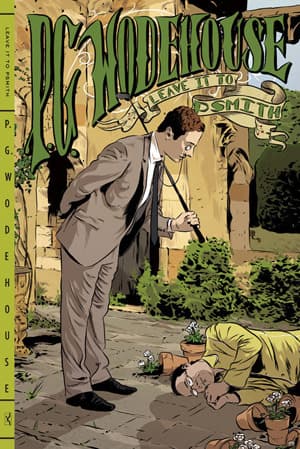
- Leave It to Psmith
P.G. Wodehouse
4.3 (8k) average on GoodreadsRomanceFeatures similar intricate plots, mistaken identities, and charming characters in a country house setting.
- The Importance of Being Earnest
Oscar Wilde
4.2 (302k) average on GoodreadsHistoryBoth Wodehouse's Full Moon and Wilde's The Importance of Being Earnest are brilliant examples of comedic farce, employing mistaken identities, social satire, and witty dialogue to drive their plots. However, Wilde's play is far more acerbic and pointed in its social criticism, skewering Victorian morality and class hypocrisy with sharp epigrams and paradoxes. Wodehouse, while satirizing the foibles of the upper class, does so with a lighter, more affectionate touch; his world is one of benign absurdity rather than cutting social commentary. Wilde's humor is often intellectual and cynical, whereas Wodehouse's is more overtly slapstick and character-based, focusing on the sheer joy of elaborate comedic chaos. The stakes in Wilde's play feel higher, with reputation and marriage truly hanging in the balance, while Wodehouse's world is ultimately more forgiving and less threatening.
- Harry Potter and the Sorcerer's Stone
J.K. Rowling
4.5 (7M) average on GoodreadsFantasyRescued from a miserable life under the stairs, an orphaned boy discovers he's a wizard destined for a magical school, where he uncovers a dangerous secret tied to the dark wizard who murdered his parents.
- The Hunger Games
Suzanne Collins
4.3 (6.4M) average on GoodreadsFantasyIn a future where children fight to the death on live television, Katniss Everdeen volunteers for the arena, turning a death sentence into a fight for survival and a spark of rebellion.
- 1984
George Orwell
4.2 (3.1M) average on GoodreadsPoliticsIn a future where surveillance and thought control are absolute, a man's search for truth clashes with the Party, showing that hope can be a form of rebellion.
- Divergent
Veronica Roth
4.2 (2.9M) average on GoodreadsFantasyIn a society divided by virtues, a sixteen-year-old's difference from the norm starts a rebellion that threatens her world.




Enjoyed the summary?
A summary gives you the shape of the book. The book itself has the detail, the examples and the voice.
Find Full Moon on AmazonAs an Amazon Associate, BookBrief earns from qualifying purchases. How we're funded