

Estimated read time: 11 min read
One Sentence Summary
"Ghostwritten" by David Mitchell is a globe-spanning novel of interconnected stories exploring chance, fate, and the invisible threads linking disparate lives across continents and time.
Table of Contents
Introduction
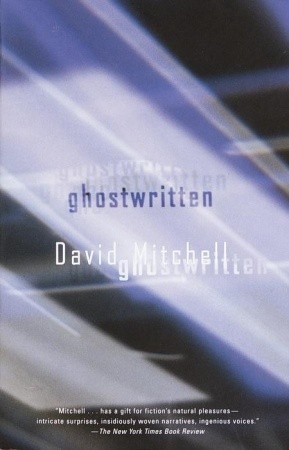
Welcome to the dazzling, puzzle-box world of "Ghostwritten" by David Mitchell—a novel that doesn't just tell stories, but interweaves them, ricocheting across continents, cultures, and even consciousness itself. Published in 1999, this debut novel instantly set Mitchell apart as a master of literary innovation, fusing magic realism, thriller, and philosophy. It’s a book that will intrigue, challenge, and haunt you long after you turn the last page—perfect for college students and lecturers seeking a text that’s as intellectually stimulating as it is emotionally resonant.
"Ghostwritten" is more than a novel; it’s an odyssey through the hidden connections of human lives, where chance encounters and unseen forces shape destinies. Imagine a literary relay race, where each chapter hands off the baton to the next, crossing boundaries of time, geography, and genre. If you’re a fan of books that make you question the very fabric of fate, identity, and reality (think Haruki Murakami meets Paul Auster), buckle up—you’re in for an unforgettable ride.
Historical Context
Set against the backdrop of the late 20th century, "Ghostwritten" captures the rapidly globalizing world of the 1990s—a period marked by economic booms and busts, the rise of the internet, and seismic geopolitical shifts. The story glides from post-bubble Tokyo to the ghostly remnants of Soviet Russia, from the frenetic heart of Hong Kong to the mystical mountains of Mongolia.
Mitchell draws on significant real-world events, such as the 1995 Tokyo subway sarin attack by the Aum Shinrikyo cult, which inspires the book’s opening. The novel also channels the spirit of Y2K anxieties, the aftershocks of the Cold War, and the philosophical legacies of both East and West.
This is a world on the cusp of the new millennium, where borders are blurred, identities are fluid, and fate is a network of invisible threads.
Brief Synopsis
Plot Overview
At its core, "Ghostwritten" is a symphony of interconnected stories. Each chapter unfolds in a different location with a new protagonist—ranging from a cult member on the run in Tokyo, to a jazz-loving record shop clerk in Okinawa, to a disembodied spirit hopping from body to body. These narratives appear distinct, yet are subtly linked through chance meetings, fleeting references, and recurring motifs.
The book explores the ripple effects of individual choices, the randomness of encounters, and the cosmic web that binds us all. It’s a narrative Rubik’s cube, where every turn reveals new alignments and patterns.
Setting
Mitchell takes readers on a globe-trotting journey, with each chapter immersing us in a unique cultural and atmospheric backdrop:
- Tokyo, Japan: Urban, claustrophobic, and haunted by the aftermath of cult violence.
- Okinawa, Japan: Laid-back, musical, and haunted by personal regret.
- Hong Kong: Bustling, volatile, and teetering on the edge of the 1997 handover.
- Mongolia: Mystical, vast, and spiritually charged.
- St. Petersburg, Russia: Bleak, cynical, and shadowed by post-Soviet malaise.
- London, England: Fast-paced, corporate, and tinged with existential dread.
- Ireland: Rural, introspective, and touched by the supernatural.
- New York City: High-stakes, anxious, and brimming with the threat of apocalypse.
The global scope of the novel not only underscores the theme of interconnectedness but also immerses the reader in a rich tapestry of cultures and worldviews.
Main Characters
Here’s a structured overview of the key characters across the novel’s chapters:
| Name | Role | Key Traits | Importance to Plot |
|---|---|---|---|
| Quasar | Cult agent | Fanatical, isolated, guilt-ridden | Initiates the chain of events in Tokyo |
| Satoru | Record shop clerk | Dreamer, romantic, lost | Connects music and fate in Okinawa |
| Neal Brose | Banker | Repressed, anxious, secretive | Embodies moral ambiguity in Hong Kong |
| Toguchi | Museum worker | Unassuming, loyal, nostalgic | Represents ordinary life’s unseen edges |
| Mongolia Spirit | Disembodied consciousness | Curious, searching, empathetic | Literalizes the theme of interconnectedness |
| Margarita Latunsky | Art historian | Cynical, disillusioned | Explores post-Soviet identity in Russia |
| Marco | Ghostwriter | Observant, invisible, adaptable | Reflects on authorship and anonymity |
| Mo Muntervary | Quantum physicist | Brilliant, restless, conflicted | Ties the scientific and cosmic threads |
| Bat Segundo | Radio host | Paranoid, philosophical, anxious | Echoes the book's existential anxieties |
Each character’s story is self-contained, yet their lives brush against one another in ways both subtle and profound. Mitchell crafts a web where even minor actions reverberate across continents.
Plot Summary
To keep things clear, we’ll break down the plot according to the book’s main sections—one for each principal narrator.
Tokyo: The Cult Agent (Quasar)
The novel opens with Quasar, a member of a doomsday cult inspired by Aum Shinrikyo, hiding in Tokyo after facilitating a deadly subway gas attack. Paranoia and zealotry haunt his every step as he awaits instructions from his enigmatic leader, His Serendipity. Quasar’s story is a meditation on guilt, fanaticism, and the search for meaning in chaos.
Okinawa: The Record Shop Clerk (Satoru)
Next, we meet Satoru, a young man drifting through life in a record shop on the sleepy island of Okinawa. He falls in love with a mysterious woman, and their connection is shaped by music, fate, and a sense of impending loss. Satoru’s narrative is warm and wistful, balancing the novel’s darker currents with melody and heartache.
Hong Kong: The Banker (Neal Brose)
Neal Brose, a British expat banker, navigates the high-stakes, morally murky world of pre-handover Hong Kong. Haunted by secrets from his past and present, Neal’s story explores themes of guilt, greed, and the blurry line between complicity and innocence.
Mongolia: The Spirit
Perhaps the most fantastical chapter, this section is told from the perspective of a “noncorpum”—a disembodied spirit able to move between human hosts. The spirit’s journey through Mongolia is a quest for identity and belonging, raising profound questions about consciousness and the soul.
St. Petersburg: The Art Historian (Margarita Latunsky)
In a gray, post-Communist Russia, Margarita Latunsky, an art historian, finds herself ensnared in a web of deception, betrayal, and existential ennui. Her search for love and authenticity mirrors the broader search for meaning in an uncertain world.
London: The Ghostwriter (Marco)
Marco, a professional ghostwriter, crafts other people’s stories while remaining invisible himself. His chapter is a witty riff on authorship, identity, and the power of narrative to both reveal and conceal.
Ireland: The Quantum Physicist (Mo Muntervary)
Mo Muntervary is on the run, fleeing from a shadowy organization after a breakthrough in quantum computing threatens to upend the world. Her story ties together the book’s scientific and philosophical threads, exploring the ethical limits of knowledge.
New York: The Radio Host (Bat Segundo)
The final chapter brings us to Bat Segundo, a radio talk-show host plagued by premonitions of apocalypse. As his paranoia mounts, the various threads of the preceding stories begin to converge, hinting at a larger, cosmic order—or disorder.
Through these varied narratives, Mitchell weaves a tapestry of chance, causality, and the ghostly echoes that bind lives across continents.
Themes and Motifs
"Ghostwritten" is rich with themes that will resonate with students, lecturers, and anyone fascinated by the hidden forces shaping our lives.
Interconnectedness
The most prominent theme is the interconnectedness of all things. Each character’s story, however disparate, is linked—sometimes by a phone call, a chance meeting, or an echo of memory. Mitchell suggests that our lives are not isolated, but woven into a global and even cosmic web.
Fate vs. Free Will
Are we the authors of our own stories, or are we “ghostwritten” by forces beyond our control? This question pervades the novel, as characters grapple with choices, coincidences, and the unpredictable consequences of their actions.
Identity and Anonymity
From the literal ghostwriter to the bodiless spirit, the novel plays with the boundaries of selfhood. What makes us who we are? Can our sense of self survive in a world of shifting identities and blurred boundaries?
Guilt and Redemption
Many characters are haunted by guilt—personal, collective, or existential. The search for redemption is a common thread, whether through love, art, or self-discovery.
The Supernatural and the Mundane
Mitchell blends the everyday with the extraordinary: cultists and physicists, spirits and bankers, all occupy the same narrative space. This fusion challenges readers to question the boundaries between reality and the supernatural.
Table: Key Themes and Motifs
| Theme | Example in Book | Broader Context |
|---|---|---|
| Interconnectedness | Overlapping characters/events | Globalization, butterfly effect |
| Fate vs. Free Will | Random encounters, cult actions | Philosophy, existentialism |
| Identity/Anonymity | Noncorpum, ghostwriter | Psychology, postmodernism |
| Guilt/Redemption | Quasar, Neal Brose | Ethics, morality, personal growth |
| Supernatural/Mundane | Mongolia spirit, Bat Segundo | Magic realism, cultural mythologies |
Literary Techniques and Style
Mitchell’s writing style is a feast for lovers of literary craft:
Narrative Structure
The novel’s “novella mosaic” structure is both ambitious and effective. Each chapter feels stylistically distinct, reflecting its protagonist’s worldview while contributing to a larger, unified narrative.
Symbolism
Music, radio waves, and quantum theory are recurring motifs. They symbolize the ways in which unseen forces (sound, information, chance) shape our lives.
Realism and Magic Realism
Mitchell blends gritty realism with elements of the fantastic. The Mongolia chapter, for instance, leaps into magic realism, while other sections are rooted in social and psychological realism.
Voice and Perspective
Each chapter adopts a distinct voice, from the chilling detachment of the cultist to the warmth of the jazz aficionado. This polyphony of perspectives keeps the narrative fresh and engaging.
Intertextuality
Mitchell peppers the novel with literary, historical, and pop culture references, inviting readers to find hidden connections and meanings.
Author's Background
David Mitchell: The Literary Chameleon
David Mitchell, born in England in 1969, is known for his genre-bending, structurally inventive novels. Before "Ghostwritten," he lived and taught in Japan—a country that deeply informs his work.
Mitchell’s subsequent novels, such as "Cloud Atlas" and "number9dream," further develop his fascination with interconnected lives and shifting identities. He’s been shortlisted for the Booker Prize multiple times and is celebrated for his experimental, yet accessible, style.
Mitchell’s work is often compared to literary giants like Italo Calvino and Haruki Murakami, but his unique blend of global scope and intimate character study makes him a singular voice in contemporary fiction.
Author’s Impact
Mitchell’s influence is felt in both literary and popular circles. His novels have inspired film adaptations, academic studies, and a devoted fanbase. For students and lecturers, "Ghostwritten" offers a rich text for exploring narrative form, cultural hybridity, and the philosophy of connection.
Key Takeaways
- The novel is a masterclass in interconnected storytelling, blending disparate lives into a single, resonant narrative.
- Mitchell challenges conventional notions of fate, identity, and causality, raising deep philosophical questions.
- The book’s global scope provides a window into diverse cultures and historical moments.
- Each chapter offers a unique narrative voice and stylistic approach, making the novel both varied and cohesive.
- The blending of realism and the supernatural invites readers to question the nature of reality itself.
Reader’s Takeaway
For college students, lecturers, and general readers, "Ghostwritten" is both a literary adventure and an intellectual challenge. It’s a book that makes you think—about the people you pass on the street, the choices you make, and the unseen forces shaping your life.
Emotionally, the novel is both haunting and uplifting. You’ll find yourself rooting for flawed, fascinating characters, and marveling at the ways their stories overlap. Intellectually, the novel encourages you to draw connections, spot patterns, and consider your own place in the world’s vast tapestry.
Conclusion
"Ghostwritten" is a literary tour de force—a novel that traverses continents, genres, and the boundaries of self. David Mitchell’s debut is dazzling in its ambition and deeply human in its heart.
Whether you’re a student seeking a challenging, rewarding text or a lecturer looking for a novel that sparks discussion, "Ghostwritten" delivers. Its themes of interconnectedness, fate, and identity are as relevant today as when the novel first appeared.
So, if you’re ready to question reality, embrace ambiguity, and marvel at the magic of a truly global novel, pick up "Ghostwritten." You won’t just read it—you’ll be haunted by it.
Ghostwritten FAQ
What is 'Ghostwritten' about?
'Ghostwritten' is a novel by David Mitchell that weaves together nine interconnected narratives set in various locations around the world. The stories span from Tokyo to New York to London, exploring themes such as fate, coincidence, and the interconnectedness of human lives.
How is 'Ghostwritten' structured?
The novel is structured as a series of nine loosely connected stories, each with its own protagonist, setting, and style. While each chapter can stand alone, characters and events subtly link the stories, creating a tapestry that reveals deeper connections.
Who are the main characters in 'Ghostwritten'?
'Ghostwritten' features a broad cast, including a cult member in Okinawa, a jazz lover in Tokyo, a ghost in Mongolia, a British lawyer in Hong Kong, a woman running a tea shack in China, an art thief in Petersburg, a musician in London, a physicist in Ireland, and an artificial intelligence in New York.
What are the main themes of 'Ghostwritten'?
Major themes include fate versus free will, the nature of identity, chance and coincidence, globalization, and the ways in which even the smallest actions can have far-reaching effects.
Is 'Ghostwritten' connected to David Mitchell’s other books?
Yes, 'Ghostwritten' shares characters, motifs, and themes with some of David Mitchell's later novels, particularly 'Cloud Atlas' and 'number9dream'. Some characters and locations reappear in his broader literary universe.
What genre does 'Ghostwritten' belong to?
'Ghostwritten' is often classified as literary fiction, but it also incorporates elements of mystery, science fiction, historical fiction, and magical realism.
Do the stories in 'Ghostwritten' need to be read in order?
While each story can be appreciated on its own, reading them in order allows the reader to experience the gradual unfolding of connections between characters and events, enhancing the overall impact of the novel.
Is 'Ghostwritten' a difficult book to read?
'Ghostwritten' can be challenging due to its nonlinear structure, shifting perspectives, and the subtlety of its interconnections. However, many readers find it rewarding and engaging once they acclimate to the style.
When was 'Ghostwritten' published?
'Ghostwritten' was first published in 1999 and marks David Mitchell’s debut as a novelist.
What is the significance of the title 'Ghostwritten'?
The title reflects the novel’s exploration of unseen forces—be they fate, chance, or the influence of others—on our lives, as well as the literal presence of a ghostly narrator in one of the stories.



