

Synopsis
Covers the whole plot, including the ending.
- Difficulty
- Hard
- Pacing
- Slow
- Mood
- Philosophical, Contemplative, Dark, Grandiose
- Read it if
- You enjoy deep philosophical science fiction, political intrigue, and exploring the long-term consequences of power and destiny.
- Skip it if
- You prefer fast-paced action, clear-cut heroes and villains, or struggle with dense philosophical discussions.
God Emperor of Dune Plot Summary
Covers the whole plot, including the ending.
The Golden Path and Ixian Conspiracy
3,500 years after merging with a sandworm, Leto II Atreides rules the known universe as the immortal God Emperor of Dune, having transformed Arrakis into a green paradise, though his worm-like body is immense and grotesque. He enforces a brutal peace, the 'Golden Path,' to save humanity from extinction. His Fish Speakers, an all-female army, maintain order. An Ixian Ambassador, Hwi Noree, arrives, ostensibly to negotiate, but Leto suspects a deeper Ixian plot. A new Duncan Idaho ghola, the latest in a long line, is delivered to Leto's citadel, Tuono, on Arrakis. This ghola, like his predecessors, is a gift from the Bene Gesserit and the Ixians, meant to serve as Leto's companion and guard, but also a potential tool against him.
Siona's Rebellion and Leto's Manipulation
Siona Atreides, a direct descendant of Leto's sister Ghanima, leads a small, covert rebellion against the God Emperor. She despises his tyranny and his monstrous form. Leto, with his prescient vision, knows Siona's movements and even orchestrates many of the events that bring her into contact with him. He allows her to escape capture multiple times, subtly guiding her actions and those of her fellow rebels. Siona is a part of Leto's Golden Path, as she has a unique genetic trait that makes her invisible to prescience, a trait Leto intends to propagate throughout humanity to prevent future tyrants from ever enslaving the species with their visions.
The Bene Gesserit, Guild, and Tleilaxu Schemes
The Bene Gesserit, the Spacing Guild, and the Tleilaxu, though outwardly subservient, are secretly plotting Leto's downfall. The Bene Gesserit fear his control over humanity's genetic future and seek to regain their influence. The Guild chafes under his absolute monopoly on space travel, which he controls through his spice hoard. The Tleilaxu, masters of genetic manipulation and ghola production, provide the Duncan Idahos and monitor Leto, hoping to learn his secrets and eventually replace him. Leto is aware of their plans, viewing them as necessary pressures to refine his Golden Path, allowing them just enough leeway to believe they have agency while ultimately serving his grand design.
Hwi Noree's Arrival and Leto's Humanity
Hwi Noree, an Ixian Ambassador, arrives at Leto's citadel. She is a fascinating and beautiful woman, meticulously crafted by the Ixians to be perfectly empathetic and appealing to Leto, a living weapon designed to seduce and ultimately betray him. However, Leto, despite his monstrous form and millennia of isolation, is genuinely drawn to Hwi. Their conversations reveal a surprising depth of emotion in Leto, a yearning for genuine connection that he believed long lost. Hwi, in turn, is genuinely captivated by Leto's intellect and the sadness she perceives beneath his tyrannical exterior, developing real affection for him despite her original mission.
Duncan Idaho's Conflict and Siona's Capture
The Duncan Idaho ghola struggles with his programmed loyalty to Leto versus his innate desire for freedom and justice. He is appalled by Leto's tyranny and his monstrous form, yet also drawn to the God Emperor's intellect and the strange, almost paternal affection Leto shows him. Leto intentionally tests Duncan, pushing him to question his purpose. Siona Atreides is eventually captured by the Fish Speakers and brought to Tuono, where Leto begins her direct tutelage. He forces her to confront the reality of his Golden Path, showing her visions of humanity's past and potential future extinction, trying to make her understand the necessity of his harsh rule and her role in it.
The Trial of the Worm and Siona's Revelation
Leto subjects Siona to the 'Trial of the Worm,' an ordeal where she is forced to run across the open desert, pursued by a sandworm. This experience, orchestrated by Leto, is designed to awaken her deep genetic memory and her unique trait: the ability to become invisible to prescience. Siona survives the trial, emerging with an understanding of her genetic heritage and the terrifying implications of prescience. She realizes the horror of a future where all humans could be seen and controlled by a single prescient being, and begins to grasp the necessity of Leto's Golden Path to break this cycle, even if she still despises his methods.
Leto's Marriage Proposal and the Conspiracy's Climax
Leto, surprising everyone including himself, proposes marriage to Hwi Noree. This act of genuine affection further complicates the Ixian plot, as Hwi has truly fallen in love with Leto. Meanwhile, the various factions—the Bene Gesserit, the Guild, the Tleilaxu, and even Siona's rebels—converge on their final plan to assassinate the God Emperor. They believe that by removing him, they can restore the old order and humanity's freedom. Leto, fully aware of their intentions through his prescience, allows their plot to unfold, knowing it is the necessary catalyst for the next stage of the Golden Path.
The Bridge of Habbanya and Leto's Sacrifice
The assassination plot culminates at the Bridge of Habbanya, where a hidden energy weapon, provided by the Ixians and triggered by Siona and Duncan, is aimed at Leto. Leto, riding his Royal Cart, approaches the bridge with Hwi Noree by his side. The weapon fires, destroying the bridge and sending Leto plummeting into the river below. The water, anathema to his sandworm body, causes his skin to rupture, releasing thousands of sandtrout. He dies, but not before delivering his final message to Duncan and Siona, confirming the success of the Golden Path. Hwi Noree also perishes in the explosion, a tragic victim of the grand design.
The Scattering and the Future of Humanity
Upon Leto's death, the thousands of sandtrout released from his body immediately seek out water, beginning the process of terraforming Arrakis back into a desert planet, thus reviving the sandworms. This event, known as the 'Scattering,' forces humanity to spread across the galaxy, pushed by the fear of prescient control and the renewed scarcity of spice. Siona and Duncan Idaho, now free, are left to guide humanity into this new era. The Golden Path, Leto's sacrifice, ensures that humanity will diversify and spread so widely that no single prescient being can ever again control or destroy them, guaranteeing their long-term survival.
God Emperor of Dune Characters
Leto II Atreides
Protagonist/God Emperor
The immortal, monstrous God Emperor of Dune, guiding humanity along the Golden Path.
Leto II is the son of Paul Atreides and Chani, and the current God Emperor of the known universe. After merging with a sandworm larva 3,500 years prior, he has become a grotesque, immense worm-human hybrid, nearly immortal and possessing vast prescient abilities. He rules with an iron fist, enforcing a rigid peace and controlling all aspects of human society. His primary motivation is the 'Golden Path,' a vision to save humanity from eventual extinction by spreading them across the galaxy and making them immune to prescient control. Despite his tyrannical exterior, he harbors profound loneliness and a deep, tragic love for humanity. He orchestrates his own death to ensure the Golden Path's success.
Relationships: Duncan Idaho (ghola) (Loyal guard and philosophical sparring partner, whom Leto both manipulates and loves as a son.); Siona Atreides (Direct descendant whom Leto grooms and manipulates to fulfill her crucial role in the Golden Path.); Hwi Noree (Unexpected love interest and the last human connection Leto experiences before his death.); Paul Atreides (His father, whose prescient path Leto chose to diverge from and improve upon.)
Duncan Idaho (ghola)
Supporting/Protagonist
The latest ghola of the legendary Swordmaster, serving Leto while wrestling with his own identity and conscience.
This particular ghola is one in a long line of Duncan Idahos, resurrected by the Tleilaxu and gifted to Leto II. He serves as Leto's loyal guard and general of the Fish Speakers, but also as a philosophical foil and a constant reminder of humanity. Duncan struggles with his identity as a ghola, his programmed loyalty, and his innate sense of honor and justice, which often clashes with Leto's brutal methods. He is intelligent, honorable, and fiercely independent, despite his conditioning. Leto uses Duncan to test the limits of human loyalty and to be a witness to the Golden Path, ultimately entrusting him with Siona's future.
Relationships: Leto II Atreides (Loyal servant and general, but also a constant questioner and the object of Leto's complex affection and manipulation.); Siona Atreides (Initially her captor, he becomes her protector and eventual romantic partner, destined to propagate her unique genes.); Hwi Noree (A friend and fellow human who provides comfort and understanding in Leto's court.)
Siona Atreides
Protagonist
A rebellious descendant of the Atreides, unknowingly crucial to Leto's Golden Path.
Siona Atreides is a young, fierce, and defiant descendant of Ghanima and Farad'n, leading a rebellion against the God Emperor. She is determined to overthrow Leto's tyrannical rule and restore humanity's freedom. However, she unknowingly possesses a unique genetic trait that makes her invisible to prescient vision, a trait Leto has been cultivating for millennia. Leto captures and trains her, forcing her to confront the true implications of prescience and the necessity of his Golden Path. Despite her initial hatred, she eventually understands her role and accepts her destiny as the progenitor of a new, prescience-proof humanity.
Relationships: Leto II Atreides (Her tyrannical ancestor and manipulator, who also serves as her ultimate teacher and guide.); Duncan Idaho (ghola) (Her captor, then protector, and eventually her mate, with whom she will propagate the prescience-proof gene.); Moneo Atreides (Her father, a loyal servant of Leto, whom she both respects and resents for his compliance.)
Hwi Noree
Supporting
An Ixian ambassador designed to manipulate Leto, who unexpectedly falls in love with him.
Hwi Noree is an Ixian ambassador, meticulously designed and conditioned by the Ixians to be perfectly empathetic and appealing to Leto II, intended as a tool for his manipulation and eventual downfall. However, Hwi possesses genuine compassion and intellect. She unexpectedly develops a deep and sincere love for Leto, seeing past his monstrous exterior to the profound, tragic being within. Her love and understanding provide Leto with his last taste of genuine human connection before his death. She becomes an innocent victim of the assassination plot, dying alongside Leto, a testament to the complexities of his Golden Path.
Relationships: Leto II Atreides (Her intended target for manipulation, who becomes her profound and unexpected love interest.); Duncan Idaho (ghola) (A friend and confidante in Leto's court.)
Moneo Atreides
Supporting
Leto II's loyal majordomo and the father of Siona.
Moneo Atreides is a distant descendant of the Atreides line and Leto II's loyal majordomo and chief administrator for centuries. He is devoutly dedicated to the God Emperor and the Golden Path, though he often struggles with the moral implications of Leto's tyranny and the sacrifices required. He is intelligent, pragmatic, and deeply cares for his daughter, Siona, despite her rebellious nature. Moneo serves as Leto's primary human contact and a key figure in maintaining the Imperium's administration. He is ultimately killed during the assassination attempt on Leto, fulfilling his duty to the very end.
Relationships: Leto II Atreides (His God Emperor and master, whom he serves with unwavering loyalty and deep, complex understanding.); Siona Atreides (His rebellious daughter, whom he loves and tries to protect, while also understanding her crucial role in Leto's plans.)
Nayla
Supporting
A devoted Fish Speaker and Leto's personal guard, whose faith is absolute.
Nayla is a devout Fish Speaker, one of Leto's all-female army, and serves as one of his most trusted personal guards. Her loyalty to the God Emperor is absolute and unshakeable, bordering on religious fanaticism. She is strong, disciplined, and utterly ruthless in carrying out Leto's commands. Nayla is manipulated by Leto to be the instrument of his death, her unwavering faith making her the perfect, unwitting assassin. She follows Leto's final, seemingly contradictory, command to kill him, believing it to be the ultimate act of service to her God.
Relationships: Leto II Atreides (Her God and master, whom she serves with unquestioning faith and devotion.); Duncan Idaho (ghola) (Her superior officer, though her ultimate loyalty is to Leto alone.)
The Bene Gesserit
Mentioned/Antagonists
The ancient sisterhood, seeking to regain influence and control over humanity's genetic destiny.
The Bene Gesserit are an ancient, powerful sisterhood of mystics, strategists, and genetic manipulators. They are outwardly subservient to Leto II but covertly plot his downfall, fearing his absolute control over humanity's genetic future and seeking to restore their own influence. They provide the Duncan Idaho gholas and carefully monitor events, hoping to capitalize on any opportunity to regain their power and continue their own breeding program. They represent a significant, albeit ultimately unsuccessful, force opposing Leto's Golden Path.
Relationships: Leto II Atreides (Their nominal ruler, whom they secretly oppose and seek to overthrow.); Duncan Idaho (ghola) (A product of their manipulation, used as a tool against Leto.)
The Spacing Guild
Mentioned/Antagonists
The navigators of space, chafing under Leto's spice monopoly.
The Spacing Guild holds a monopoly on interstellar travel, their Navigators relying on the spice melange for their prescient abilities to fold space. Under Leto II's rule, he controls the entire supply of spice, effectively dictating their existence. They resent his absolute power and the stagnation of their own influence. They are part of the larger conspiracy to assassinate Leto, hoping to break his monopoly and restore their former freedom and power. Their desperate need for spice makes them a powerful, yet ultimately subservient, force in the Imperium.
Relationships: Leto II Atreides (Their absolute controller, whose spice monopoly they desperately seek to break.)
The Tleilaxu
Mentioned/Antagonists
Masters of genetic manipulation and ghola production, seeking to understand and exploit Leto's secrets.
The Tleilaxu are a secretive and technologically advanced species, masters of genetic engineering, ghola production, and face dancing. They provide the endless line of Duncan Idaho gholas to Leto II, meticulously studying him and his capabilities through these creations. They are part of the conspiracy to assassinate Leto, hoping to gain access to his secrets, particularly his unique biology and the source of his immortality, to further their own genetic and political ambitions. They represent a subtle but persistent threat, always observing and adapting.
Relationships: Leto II Atreides (Their customer for gholas, and the subject of their intense, covert study and desire for replication.); Duncan Idaho (ghola) (Their creation, used to serve and spy on Leto.)
God Emperor of Dune Themes
The Price of Immortality and Tyranny
Leto II's transformation into the God Emperor grants him near-immortality and absolute power, but at the cost of his humanity and personal happiness. His monstrous form and millennia of isolated rule show the loneliness and suffering that come with such a burden. His tyranny, while benevolent in its ultimate goal, crushes individual freedom and leads to stagnation, forcing humanity into a prolonged, uncomfortable peace. This theme explores the moral compromises required for what one believes is the greater good, and the corruption of absolute power, even when wielded by a prescient being.
“I am a bridge. I am the Golden Path. I am the future. And I am lonely. Oh, so lonely.”
The Golden Path and Humanity's Survival
The central theme of the Golden Path is Leto's desperate, millennia-long plan to save humanity from self-destruction or extinction by prescient control. He foresees a future where humanity becomes trapped and ultimately destroyed, and his drastic measures—terraforming Arrakis, enforcing a tyrannical peace, and breeding for prescience-proof genes—are all aimed at forcing humanity into a 'Scattering' across the galaxy. This ensures genetic diversity and a vast spread that makes them immune to any future tyrant's prescient vision, guaranteeing their long-term survival, even if it means sacrificing individual freedom in the present.
“My Golden Path is a thing of terrible beauty, a thing of ultimate terror. It is the only way.”
Identity and Self-Discovery
Several characters grapple with their identity. Duncan Idaho, as a ghola, constantly questions his purpose and his humanity, trying to reconcile his programmed loyalty with his innate sense of self. Siona Atreides discovers her genetic heritage and her role in humanity's future, forcing her to redefine herself from a simple rebel to a progenitor. Leto II himself, despite his monstrous form, retains vestiges of his human consciousness, yearning for connection and reflecting on the man he once was. This theme explores how individuals find their true selves amidst external pressures and predetermined destinies.
“I am Duncan Idaho. I am always Duncan Idaho. And I am never Duncan Idaho.”
The Nature of Love and Connection
Despite Leto's monstrous form and millennia of isolation, the book explores the human need for love and connection. His unexpected love for Hwi Noree, an Ixian designed to manipulate him, shows his remaining humanity and his deep loneliness. The complex, almost paternal relationship he shares with Duncan Idaho, and his manipulative yet loving guidance of Siona, demonstrate his desire for meaningful bonds, even as he sacrifices them for the Golden Path. This theme suggests that even in extreme circumstances, the capacity for love and empathy persists.
“I am a monster. But I am a monster who can love.”
Ecology and Planetary Transformation
The ecological transformation of Arrakis is a central backdrop. Under Leto's rule, the once-desert planet has been terraformed into a lush, green world, a stark contrast to its original state. This change, however, comes at the cost of the sandworms, which are nearly extinct, and the spice, which is entirely controlled by Leto. Leto's death then triggers the reversal of this process, releasing sandtrout that will once again turn Arrakis into a desert, reviving the great worms and the spice cycle. This theme explores the impact of human (and post-human) intervention on planetary ecosystems and the balance of nature.
“Arrakis has been a green jewel, a testament to my power. Now it must return to its proper form.”
Plot Devices & Literary Techniques
The Golden Path
Leto II's prescient vision and multi-millennial plan to save humanity from extinction.
The Golden Path is the overarching plot device and driving force of the narrative. It is Leto II's prescient vision of humanity's future, revealing two paths: one leading to inevitable extinction, and the other, the Golden Path, leading to long-term survival. This path necessitates Leto's tyrannical rule, his monstrous transformation, the terraforming of Arrakis, and the breeding of a prescience-proof human line. Every event in the book, from Siona's rebellion to Leto's own death, is orchestrated by Leto to fulfill the Golden Path, making it a form of predestination that characters struggle against or conform to.
The Duncan Idaho Ghola
A recurring clone, symbolizing humanity's enduring spirit and a tool for Leto's psychological warfare.
The repeated resurrection of Duncan Idaho as a ghola serves multiple purposes. He is a constant companion and guard for Leto, but also a psychological tool. Leto uses each ghola to test human loyalty, morality, and the limits of conditioning. Duncan represents the enduring human spirit, capable of both loyalty and rebellion, and his presence allows Leto to maintain a semblance of human interaction. The gholas also highlight the Tleilaxu's genetic mastery and their covert attempts to understand Leto, while also providing a consistent heroic archetype for readers.
Prescience and its Limitations
The ability to see the future, which both empowers and entraps Leto, and which Siona's genes defy.
Prescience is a fundamental element of the Dune universe. Leto II's vast prescient abilities allow him to see the Golden Path and orchestrate events over millennia. However, prescience also creates a trap, as knowing the future can make it inevitable, removing free will. The critical limitation introduced in this book is the 'prescience-proof' gene, embodied by Siona. This genetic trait, which makes individuals invisible to prescient vision, is the ultimate goal of the Golden Path, ensuring humanity's future freedom from any potential prescient tyrant. It is both a narrative challenge and solution within the story.
The Fish Speakers
Leto's all-female army, symbolizing his control and the inversion of traditional power structures.
The Fish Speakers are Leto II's elite, all-female army and police force, maintaining order throughout the Imperium. Their existence signifies Leto's complete control and his deliberate subversion of traditional gender roles and power structures. They are fiercely loyal, highly disciplined, and fanatically devoted to the God Emperor, acting as both enforcers of his peace and a symbol of his absolute authority. Their religious devotion is a key aspect, demonstrating how Leto has transformed society to serve his long-term goals, even if it means stripping away individual agency.
The Transformed Arrakis
The verdant planet, a symbol of Leto's power and a key component of his ecological manipulation.
Arrakis, once a desert planet, has been transformed by Leto II into a lush, green world, filled with rivers and forests. This ecological transformation is a powerful symbol of Leto's absolute power and his ability to reshape entire planets. It also serves as a crucial plot point: by eliminating the desert, Leto has driven the sandworms (and thus the spice) to near extinction, giving him complete control over the universe's most vital resource. His death reverses this process, returning Arrakis to its desert state and releasing the sandtrout to revive the worms and the spice cycle, directly enabling the Scattering.
God Emperor of Dune Quotes
“The purpose of a universe is to create a new universe.”
“The greatest danger to the universe is always its own complacency.”
“A leader must be an actor. The people must believe in the mask.”
“The future is a thing to be shaped, not predicted.”
“The most dangerous thing in the universe is a man who is sure he is right.”
“Survival is the ability to swim in chaos.”
“All governments suffer a recurring problem: power attracts pathological personalities.”
“The Golden Path is not a path of peace. It is a path of survival.”
“To be truly free, one must first be truly alone.”
“The only constant is change, and the only certainty is uncertainty.”
“History is a matter of convenient fictions.”
“Love is a dangerous thing. It can make you forget yourself.”
“The universe is a thing of patterns, and those who can see the patterns control the universe.”
“Tyranny is the exercise of power over others, but the greater tyranny is the exercise of power over self.”
Quiz
10 questions on the plot and the characters. Each answer comes with a short explanation.
Question 1
How long has Leto Atreides II ruled as the God Emperor of Dune at the beginning of the book?
- Five hundred years
- One thousand years
- Thirty-five hundred years
- Ten thousand years
Show answer
C. Thirty-five hundred years The book description explicitly states that Leto Atreides II has ruled as God Emperor for thirty-five hundred years after merging with a sandworm.
Question 2
What significant change has occurred on Arrakis under Leto II's rule?
- It has reverted entirely to a desert planet.
- It has become a lush, green world.
- It has been terraformed into an ocean planet.
- It has been abandoned by humanity.
Show answer
B. It has become a lush, green world. The synopsis states that 'the once-desert planet is green with life,' indicating a radical transformation from its original state as Dune.
Question 3
What is the primary motivation for Leto II's prolonged, despotic rule and his transformation?
- To accumulate immense personal wealth and power.
- To seek revenge on the noble houses that opposed his father.
- To preserve humanity's future through the Golden Path.
- To eradicate all forms of prescience from the universe.
Show answer
C. To preserve humanity's future through the Golden Path. The description clearly states that Leto 'sacrificed his own by merging with a sandworm... To preserve humanity's future,' and that his 'vision of a Golden Path for humanity requires her to fulfill a destiny.'
Question 4
Who leads the rebellion against Leto II's rule?
- A Bene Gesserit Reverend Mother
- A member of the Tleilaxu Masters
- Siona, a member of the Atreides family
- Duncan Idaho, a resurrected ghola
Show answer
C. Siona, a member of the Atreides family The text explicitly states: 'A rebellion, led by Siona, a member of the Atreides family, has risen to oppose the despot's rule.'
Question 5
What is the nature of Leto II's transformation?
- He merged with a spice worm, granting him limited prescience.
- He merged with a sandworm, granting him near immortality.
- He underwent genetic engineering to become fully human again.
- He became a disembodied consciousness, controlling the planet telepathically.
Show answer
B. He merged with a sandworm, granting him near immortality. The description states he 'sacrificed his own by merging with a sandworm, granting him near immortality.'
Question 6
How does Leto II's morality change as a result of his transformation?
- He becomes more compassionate and understanding.
- His morality becomes entirely human, driven by empathy.
- His morality becomes inhuman, reflecting his new form.
- He loses all sense of morality, becoming purely chaotic.
Show answer
C. His morality becomes inhuman, reflecting his new form. The book states: 'His transformation has made not only his appearance but his morality inhuman.'
Question 7
What is Siona's relationship to Leto II?
- She is a descendant of the Harkonnen family.
- She is a member of the Bene Gesserit who opposes him.
- She is a member of the Atreides family.
- She is an ancient Fremen leader who has resurfaced.
Show answer
C. She is a member of the Atreides family. The description identifies Siona as 'a member of the Atreides family,' highlighting her lineage and connection to Leto II.
Question 8
What is the 'Golden Path' that Leto II envisions for humanity?
- A path to universal peace through absolute control and suppression of conflict.
- A destiny for humanity that ensures its long-term survival, potentially through dispersion and evolution beyond prescient control.
- A method to restore Arrakis to its original desert state, bringing back the giant sandworms.
- A way to merge all of humanity into a single, collective consciousness.
Show answer
B. A destiny for humanity that ensures its long-term survival, potentially through dispersion and evolution beyond prescient control. The description states 'Leto's vision of a Golden Path for humanity requires her to fulfill a destiny she never wanted--or could possibly conceive....' This implies a grand, long-term plan for humanity's future, a central theme of the book which involves avoiding ultimate stagnation and destruction by forcing humanity to diversify and spread, making them unfindable by any single prescient vision.
Question 9
Why is Siona's destiny crucial to Leto II's Golden Path, even though she opposes him?
- She possesses unique knowledge of ancient Fremen secrets that he needs.
- She is the only one capable of physically destroying him, thus ending his reign.
- Her genetic makeup is essential for creating a new branch of humanity immune to prescience.
- She is destined to become the next God Emperor after his demise.
Show answer
C. Her genetic makeup is essential for creating a new branch of humanity immune to prescience. The text mentions 'Leto's vision of a Golden Path for humanity requires her to fulfill a destiny she never wanted--or could possibly conceive....' This hints at her unique genetic role in the Golden Path, specifically her immunity to prescience, which is a key element of the plan to ensure humanity's long-term survival by making them unseeable by future prescient beings.
Question 10
What is the primary characteristic of Leto II's rule, despite his ultimate goal?
- It is a benevolent and compassionate dictatorship.
- It is a despotic and inhuman rule.
- It is a democratic system with him as a figurehead.
- It is a period of rapid technological advancement and freedom.
Show answer
B. It is a despotic and inhuman rule. The description clearly states: 'Leto's rule is not a benevolent one.' and later refers to him as 'the despot' and that his 'morality inhuman.'
God Emperor of Dune FAQ
What is God Emperor of Dune about?
God Emperor of Dune is set 3,500 years after the events of Dune Messiah, following Leto Atreides II, who has transformed into a human-sandworm hybrid to guide humanity along his 'Golden Path.' He rules the now-lush planet Arrakis as an immortal tyrant, meticulously controlling human breeding and technology to prevent humanity's extinction, while a rebellion led by Siona Atreides seeks to overthrow him.
Why should I read God Emperor of Dune?
You should read God Emperor of Dune for its profound philosophical exploration of power, tyranny, evolution, and destiny, as Leto II's millennia-long reign provides a unique perspective on humanity's future. It delves deeply into the consequences of absolute control and the difficult choices required for long-term survival, offering a stark, thought-provoking narrative unlike other books in the series.
What is the background/setting of God Emperor of Dune?
The book is set on Arrakis, which, after millennia under Leto II's terraforming, is largely a lush, green planet with only a small, protected desert preserve. Humanity lives under the absolute rule of Leto II, who maintains his control through his Fish Speakers army and his prescient abilities. The universe has become stagnant under his peace, leading to a profound sense of ennui and a desire for change.
What are the most memorable quotes?
One memorable quote is, 'The function of a living organism is to live. All else is secondary.' Another is Leto II's observation that 'The best way to control a population is to give them a choice, but to make sure they always choose what you want.' These quotes encapsulate his philosophy of survival and control.
What writing style does the author use?
Frank Herbert employs a dense, philosophical, and introspective writing style, often featuring lengthy internal monologues from Leto II that delve into complex concepts of history, genetics, and prescience. The narrative is rich with symbolism and allegorical elements, requiring careful attention from the reader to fully grasp its many layers.
What minor details add significant meaning?
The subtle recurring motif of the 'scattering' and Leto's deliberate breeding programs, often through his Duncan Idaho gholas, highlight his long-term plan to ensure humanity's survival beyond his direct control. The preservation of a single, small desert on Arrakis also signifies the enduring power of the past and the source of his own transformation.
What are some subtle foreshadowing moments?
Leto's repeated references to the necessity of 'The Golden Path' and his cryptic remarks about Siona's unique genetic immunity subtly foreshadow her pivotal role in humanity's future, specifically her ability to be hidden from prescient sight. His seemingly harsh actions are often later revealed to be deliberate steps towards a greater, long-term goal.
What unexpected character connections exist?
The most significant unexpected connection is Siona Atreides's direct lineage to Leto II himself, making her rebellion against him a paradoxical fulfillment of his own plans. Furthermore, the constant presence of new Duncan Idaho gholas, each with their own unique experiences, creates a complex, evolving relationship with Leto, connecting different eras and personalities through one 'individual'.
What are unspoken character motivations?
While Leto II explicitly states his motivation for the Golden Path, his deeper, unspoken motivation includes a profound loneliness and a weariness from his immense burden. He also harbors a subtle desire for a worthy successor or an end to his own suffering, which he cannot openly admit without compromising his plan.
What psychological complexities do characters exhibit?
Leto II exhibits immense psychological complexity, balancing the burden of prescient foresight with the monstrous reality of his physical form and the tyranny required for his vision. He struggles with his own humanity, or lack thereof, while manipulating billions. Siona, too, grapples with the weight of her heritage and the conflict between her desire for freedom and her unwitting role in Leto's grand design.
What are the major emotional turning points?
A major emotional turning point is Siona's realization of her unique genetic immunity to prescience, which shifts her understanding of her role from mere rebel to a crucial element of Leto's Golden Path. Another is the final Duncan Idaho's acceptance of his role in Leto's ultimate sacrifice, moving from rebellious resentment to understanding and loyalty.
How do relationship dynamics evolve?
The relationship between Leto II and the various Duncan Idaho gholas is constantly evolving, from master-servant to something akin to father-son, or even philosophical sparring partners, as each Duncan brings different experiences and memories. Leto's relationship with Siona evolves from antagonist to mentor, as he subtly guides her towards her destiny, despite her open defiance.
Which parts remain ambiguous or open-ended?
The ultimate success and long-term consequences of the Golden Path remain somewhat ambiguous. While Leto sacrifices himself to initiate it, the precise nature of humanity's 'scattering' and its future evolution are left open to interpretation, suggesting an ongoing journey rather than a definitive end. The true extent of Leto's suffering and whether he achieved personal redemption are also left for the reader to ponder.
What are controversial scenes or decisions?
Leto II's decision to maintain a tyrannical rule for millennia, suppressing technological advancement and personal freedom, is highly controversial, as it forces humanity into a 'stagnation' to ensure its survival. His use of the Fish Speakers, an all-female army, to enforce his will and his manipulation of genetic lines are also contentious aspects of his reign.
God Emperor of Dune ending explained: how it ends & what it means
The book ends with Leto II's deliberate sacrifice. He allows himself to be killed by Siona and the final Duncan Idaho ghola at the Bridge of Habbanya, falling into the Idaho River. His body disintegrates, releasing his sandworm pearls back into the ecosystem, which will eventually give rise to new sandworms and restore the spice cycle. This act initiates the 'scattering' – humanity's forced dispersion across the universe, free from prescient control due to Siona's genetic immunity, ensuring its long-term survival by making it impossible for any single entity to control or eradicate. It means Leto's tyrannical reign was a necessary, albeit brutal, step to secure humanity's future.
About the author
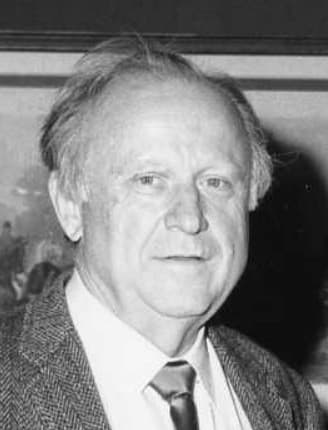
Franklin Patrick Herbert Jr. was an American science fiction author best known for the 1965 novel Dune and its five sequels. Though he became famous for his novels, he also wrote short stories and worked as a newspaper journalist, photographer, book reviewer, ecological consultant, and lecturer.
Similar books
- Dune Messiah
Frank Herbert
3.9 (134k) average on GoodreadsFantasyContinues the Dune saga with similar philosophical depth and political maneuvering, focusing on Paul's reign.
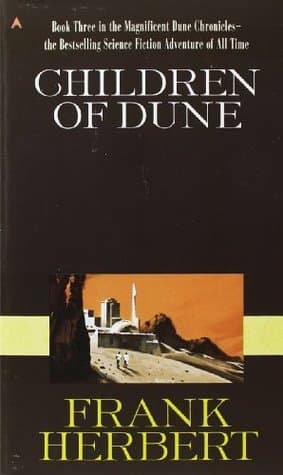
- Children of Dune
Frank Herbert
3.9 (106k) average on GoodreadsFantasyDirectly precedes God Emperor of Dune, detailing Leto II's initial transformation and the setup for his reign.
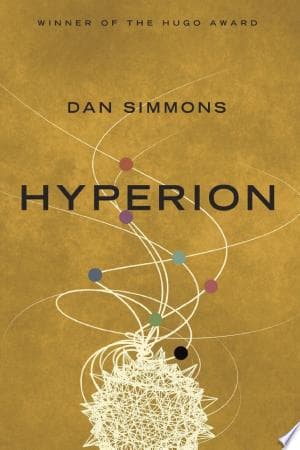
- Hyperion
Dan Simmons
4.2 (188k) average on GoodreadsFantasyFeatures a sprawling, multi-layered narrative with deep philosophical themes and a complex future history.
- The Dispossessed
Ursula K. Le Guin
4.2 (88k) average on GoodreadsPoliticsLe Guin's novel offers a deep look at societal structures, anarchism, and the nature of utopia/dystopia, grounding its exploration in relatable human experiences and political systems. Herbert's God Emperor ventures into a realm where humanity's essence is redefined by an almost alien intelligence, presenting a more abstract and challenging meditation on species survival and evolution, rather than societal models.
- Harry Potter and the Sorcerer's Stone
J.K. Rowling
4.5 (7M) average on GoodreadsFantasyRescued from a miserable life under the stairs, an orphaned boy discovers he's a wizard destined for a magical school, where he uncovers a dangerous secret tied to the dark wizard who murdered his parents.
- The Hunger Games
Suzanne Collins
4.3 (6.4M) average on GoodreadsFantasyIn a future where children fight to the death on live television, Katniss Everdeen volunteers for the arena, turning a death sentence into a fight for survival and a spark of rebellion.




Enjoyed the summary?
A summary gives you the shape of the book. The book itself has the detail, the examples and the voice.
Find God Emperor of Dune on AmazonAs an Amazon Associate, BookBrief earns from qualifying purchases. How we're funded