

Core Idea
- Difficulty
- Medium
- Read it if
- You are grappling with deep spiritual doubt, feel overwhelmed by past sins, or are interested in a firsthand account of intense 17th-century Puritan spiritual struggle and conversion. Also recommended for those studying religious autobiography or the psychology of faith.
- Skip it if
- You prefer modern, lighthearted spiritual narratives, are easily discomfited by intense introspection on sin and damnation, or have little interest in historical Puritan theology and its emotional impact.
Key Takeaways from Grace Abounding to the Chief of Sinners
The Weight of Unspeakable Sin
Bunyan's early life was marked by profound, almost debilitating, conviction of his own depravity.
Bunyan's autobiography clearly shows the psychological and spiritual pain that can come with a strong conviction of sin. His 'sins' – which by today's standards included little more than youthful swearing and breaking the Sabbath – became a huge burden. This deep guilt was not just remorse; it was a strong feeling of being separate from God and a constant fear of damnation. His story shows how a sensitive conscience, combined with a strict theological framework, can turn perceived wrongs into overwhelming spiritual problems. This early period of intense self-condemnation is important for understanding the depth of his later conversion and the genuineness of his faith, as it created a strong need for divine help.
“I was never out of the thoughts of God, and of the day of judgment, (which were to me dreadful thoughts, and made my spirit to tremble, especially when I was most lively and frolicsome).”
In the book: Bunyan recounts his early childhood experiences where even as a young boy, he was plagued by dreams of devils and hellfire, and a persistent, terrifying awareness of God's judgment, even amidst his 'frolicsome' behavior. He specifically mentions his 'delight in sin' but simultaneously his 'great terrors' concerning the afterlife.
Try this: Reflect on how modern society often dismisses or trivializes the concept of sin. Consider the psychological impact of unaddressed guilt and the potential for spiritual awakening that can arise from confronting one's moral failings with honesty, rather than denial or rationalization. This isn't about self-flagellation, but a recognition of a need for grace.
Related ideas: conviction-of-sin, spiritual-torment, existential-dread
The Tyranny of Legalism and Despair
Bunyan's initial attempts at righteousness were a futile struggle against an impossible standard, leading to profound despair.
Before he found grace, Bunyan was stuck in a cycle of trying to earn salvation, believing it depended on his ability to perfectly follow God's commands. This approach, found in many religious traditions, completely wore him down. Every perceived failure, every sinful thought or action, pushed him deeper into despair, convincing him he had committed the 'unpardonable sin.' His efforts to change his outward behavior, while good, did not ease his inner turmoil because they did not address his spiritual separation. This period highlights that human effort cannot bring spiritual peace and shows the psychological harm caused by a skewed understanding of divine justice without grace.
“I could not, I durst not, believe that God would be merciful to me, and forgive me my sins, for I had sinned against the Holy Ghost.”
In the book: Bunyan details his attempts to 'mend' his ways, giving up his swearing and Sabbath-breaking, but finding no true peace. He frequently wrestled with the terrifying thought that he had committed the 'sin against the Holy Ghost,' a fear fueled by misinterpretations of scripture and the pronouncements of others, which left him in an 'horrible and fearful state.'
Try this: Examine personal or societal tendencies towards legalism, where rules and performance are prioritized over relationship and transformation. Recognize that true spiritual freedom often comes not from perfect adherence to external standards, but from an internal shift in understanding one's relationship with the divine, moving from earning to receiving.
Related ideas: legalism, despair, unpardonable-sin, self-righteousness
The Power of a Single Scripture
A specific biblical passage, rightly understood, can shatter years of spiritual bondage and open the door to liberating truth.
Bunyan's story powerfully demonstrates how scripture can change a person when it touches the heart. After years of intellectual struggle and emotional pain, a single verse or passage often broke through his despair, offering hope. These were not just intellectual confirmations but moments of deep spiritual understanding, where the Bible's words stopped being a source of condemnation and became a source of comfort and assurance. This shows that spiritual understanding in Bunyan's journey was experienced, not just academic. It reminds us that sometimes, the most profound theological changes happen not through systematic study, but through a divine 'placing' of truth perfectly timed for a desperate soul.
“One day, as I was walking in the country, and musing on this thing, the Lord did cast in my way that scripture, 'My grace is sufficient for thee.'”
In the book: Bunyan frequently describes specific scriptures 'darting into his mind' or being 'cast in his way,' such as 'My grace is sufficient for thee' (2 Corinthians 12:9), 'He hath made him to be sin for us, who knew no sin; that we might be made the righteousness of God in him' (2 Corinthians 5:21), and 'Look unto me, and be ye saved, all the ends of the earth' (Isaiah 45:22). Each of these moments provided crucial breakthroughs in his struggle against doubt and despair.
Try this: Cultivate a practice of engaging with scripture or other sacred texts with an open heart, seeking not just information but transformation. Recognize that profound insights often come in unexpected moments, and be receptive to how even a single phrase can reframe long-held anxieties or beliefs. This emphasizes the importance of contemplative reading and reflection.
Related ideas: scripture-illumination, spiritual-breakthrough, divine-revelation, biblical-comfort
The Assurance of Christ's Righteousness
Bunyan found peace not in his own efforts, but in the imputed righteousness of Christ, a radical shift in his understanding of salvation.
The core of Bunyan's spiritual freedom came from understanding imputed righteousness. He stopped believing he had to be righteous and started receiving righteousness through Christ's perfect life and death. This was a major change, transforming his relationship with God from fearful performance to grateful acceptance. It meant his 'filthy rags' of self-effort were exchanged for Christ's spotless robes, making him acceptable to God not because of anything he had done, but because of what Christ had done for him. This theological insight was not just academic; it was the key to his spiritual freedom and ended the painful cycle of despair over his own sinfulness. It established a foundation of lasting peace that supported him through later persecutions.
“My soul was greatly affected with the glory and the grace that was then discovered to me, of God's making of Christ to be sin for us, who knew no sin; that we might be made the righteousness of God in him.”
In the book: Bunyan vividly describes the moment this truth dawned on him: 'Now did my chains fall off my legs indeed, and I was loosed from my afflictions and irons; my temptations also fled away.' He understood that his righteousness was 'not within me, but in Him that was on the right hand of God.' This realization brought him profound joy and relief, marking his true conversion.
Try this: Consider the profound difference between earning and receiving. In what areas of life, spiritual or otherwise, do you feel compelled to earn acceptance or worth? Explore the concept of grace as a gift, freely given, and how embracing this perspective can alleviate the burden of perfectionism and self-condemnation.
Related ideas: imputed-righteousness, justification-by-faith, atonement, grace-alone
The Relentless Battle Against Doubt
Even after conversion, Bunyan faced persistent, often violent, spiritual attacks, particularly concerning his election and the validity of his faith.
Bunyan's autobiography shatters any romanticized idea of an instant, problem-free conversion. His story shows that spiritual warfare is a continuous reality, even for the most devoted. He was tormented by horrific blasphemous thoughts, temptations to 'sell Christ,' and agonizing doubts about his own salvation and election. These were not small skirmishes but intense, prolonged battles that left him exhausted. His experience shows that faith is often a struggle, a battle with internal demons and external accusations, and that assurance is a gift to be continuously sought and held onto, rather than a permanent, unchanging possession. His honesty about these struggles offers great comfort to others facing similar spiritual torment.
“I was assaulted with a terrible temptation to sell Christ, to part with him, to give him up, to exchange him for the things of this life.”
In the book: Bunyan describes a specific, prolonged temptation where a voice would continually whisper, 'Sell Christ for this, sell Christ for that; sell him, sell him.' This temptation was so strong it felt like it was 'burning within his spirit,' almost forcing a verbal assent. He also wrestled with the fear that he was not among the elect, or that his faith was merely a delusion.
Try this: Acknowledge that doubt and spiritual struggle are normal parts of the faith journey, not indicators of failure. Develop resilience in the face of internal attacks by grounding oneself in foundational truths, seeking support from community, and recognizing that persistent temptation is often a sign of spiritual vitality rather than weakness.
Related ideas: spiritual-warfare, temptation, doubt, perseverance-of-saints
The Fellowship of the Afflicted
Finding community with others who understood his spiritual struggles was a vital catalyst for Bunyan's growth and assurance.
Bunyan's journey highlights the important role of community in spiritual growth. For years, he felt completely alone in his struggles, believing himself to be uniquely cursed. His meeting with a group of poor women in Bedford, discussing their own experiences of grace and temptation, was a turning point. Their shared testimonies deeply resonated with his own unspoken torments and hopes, providing validation and a sense of belonging. This fellowship offered not just emotional support, but also a practical, lived theology that contrasted sharply with the formal, often intimidating, religious institutions of his time. It showed that real faith often grows in intimate, vulnerable relationships where mutual understanding and encouragement can thrive, rather than in isolation.
“I found some, that were of like experience with myself, that I had been under a great deal of trouble concerning the state of my soul.”
In the book: Bunyan recounts sitting by a shop window in Bedford, overhearing 'three or four poor women' discussing 'the things of God.' He was struck by their 'sweet discourse of the grace of God' and their experiences of 'new birth' and 'temptation.' This encounter was a profound turning point, drawing him into their fellowship and providing a model for authentic faith.
Try this: Actively seek out and cultivate spiritual community, not just for shared beliefs, but for shared experience and mutual vulnerability. Recognize the power of testimony and empathetic listening in alleviating feelings of isolation and strengthening individual faith journeys. Prioritize authentic connection over superficial religious affiliation.
Related ideas: spiritual-community, fellowship, testimony, mutual-encouragement
The Call to Ministry Amidst Infirmity
Bunyan's call to preach emerged from his own deep experience of grace, despite his perceived unworthiness and lack of formal training.
Bunyan's journey from a 'poor tinker' to a powerful preacher shows that divine calling often goes beyond human qualifications. His ministry did not come from academic degrees or social status, but from his own spiritual struggles and the profound grace he received. He initially felt completely unqualified, a 'chief of sinners,' yet his deep experience of redemption became the source of his message. This challenges the idea that effective ministry is only for the formally educated or socially prominent. Instead, it suggests that authentic spiritual authority often comes from a lived experience of brokenness and restoration, allowing for deep empathy and powerful communication of truth to others who are similarly afflicted. His preaching was a natural outcome of his personal change, showing that grace received is grace to be shared.
“I was made to see, that the grace of God was sufficient for me, even for me, though I was the chief of sinners, and that it was given me, not for my own sake, but also to make me a minister of the same grace unto others.”
In the book: Bunyan describes his initial reluctance to preach, feeling 'unfit' and 'unworthy.' However, he felt a strong internal compulsion and a burden for the souls of others, which he understood as a divine mandate to share the 'grace that had been shown to him.' His early preaching was often met with significant response, indicating a spiritual anointing beyond his formal training.
Try this: Consider how personal experiences of overcoming adversity or receiving grace can equip one to serve and minister to others, regardless of traditional qualifications. Recognize that a 'call' can manifest not as an audible voice, but as a profound burden, a deep empathy, and a compelling desire to share one's truth with those who might benefit.
Related ideas: divine-calling, unlikely-minister, experiential-theology, grace-for-others
Persecution as a Proving Ground
Bunyan's imprisonment for preaching solidified his faith and gave him a deeper understanding of suffering for Christ.
Bunyan's twelve-year imprisonment for refusing to stop preaching was not a setback but a time of deep spiritual refinement. Far from breaking his spirit, the persecution strengthened his reliance on God and confirmed his faith. He found 'sweet comforts' in his suffering, showing that external hardship can surprisingly lead to deep inner peace and spiritual growth. His steadfastness in the face of legal pressure and separation from his family highlights the power of conviction when rooted in a genuine experience of grace. This period also shows the historical reality of religious intolerance and the courage needed to stand for one's beliefs, even at great personal cost. It was during this time that he wrote Pilgrim's Progress, turning his personal suffering into a universal story of the Christian journey.
“I found that God was with me, and did not forsake me, but gave me many sweet comforts in the prison, which made me to sing for joy.”
In the book: Bunyan details his arrest and imprisonment, specifically mentioning the agonizing decision of whether to conform to the law and stop preaching, or to obey his conscience and suffer the consequences. He recounts moments of profound peace and even joy in prison, finding solace in scripture and the presence of God, despite the physical discomfort and emotional pain of being separated from his wife and blind daughter.
Try this: Consider how adversity, rather than being solely negative, can serve as a catalyst for deeper faith, resilience, and clarity of purpose. Reflect on the courage required to uphold convictions in the face of pressure or persecution, and how such trials can refine one's character and strengthen one's resolve.
Related ideas: persecution, suffering-for-christ, spiritual-resilience, prison-ministry
The Enduring Legacy of Testimony
Bunyan's raw, honest autobiography serves as a timeless testament to the power of grace for even the 'chief of sinners.'
Grace Abounding is more than a historical document; it is a foundational work in spiritual autobiography, influencing countless believers over centuries. Bunyan's honesty about his struggles, doubts, and eventual triumph through grace resonates deeply because it mirrors the universal human experience of dealing with guilt, seeking meaning, and desiring redemption. His story is a powerful reminder that spiritual journeys are often messy, long, and full of internal conflict, yet ultimately, grace can abound. The book's lasting appeal lies in its authenticity and its clear description of a path from deep despair to deep peace, making it a source of hope and encouragement for all who feel themselves to be 'chief of sinners.'
“And I bless God that I have been enabled to tell you of my experience, and of the dealings of God with my soul.”
In the book: The very act of writing and publishing *Grace Abounding* is the evidence, as it allowed Bunyan to share his 'experience' and 'dealings of God' with the world. The book's continued publication and study centuries later attest to its lasting impact and relevance for individuals seeking spiritual understanding and comfort.
Try this: Recognize the power of sharing your own authentic story, whether personal or spiritual, as a means of connecting with others, offering encouragement, and illustrating universal truths. Consider how vulnerability in testimony can create profound empathy and understanding, fostering a sense of shared humanity and spiritual journey.
Related ideas: spiritual-autobiography, testimony, enduring-legacy, universal-truth
Grace Abounding to the Chief of Sinners Quotes
“I found it hard to close with Christ, because I wanted to feel a change in my heart first.”
“The Tempter came upon me with a most fearful temptation, to sell Christ for the vanities of this life.”
“I was more loathsome in my own eyes than a toad.”
“I was more afraid of the roaring of a lion than of the roaring of conscience.”
“My soul was like a broken vessel, into which all the waters of the sea were poured, and yet it was empty.”
“Then came in my mind that text, 'He hath made him to be sin for us, who knew no sin; that we might be made the righteousness of God in him.'”
“Now did my chains fall off my legs indeed; I was loosed from my afflictions and irons.”
“I saw that it was not my good frame of heart that made my righteousness better, nor yet my bad frame that made my righteousness worse.”
“And now I could look from myself to him, and from my sins to his righteousness.”
“I found that the Lord was with me, to carry me through and make me stand, to the confusion of all mine enemies.”
“I was made to see that the best way to hold up the head and heart, in a day of trouble, is to trust in the Lord.”
“Though I had been a great sinner, yet the Lord Jesus Christ was a greater Saviour.”
“I have been in a furnace of fire, and have been tried seven times hotter than silver.”
“I found by this, that it is not my good desires that are able to save me, no, nor my good works, but the blood of Jesus Christ only.”
Quiz
10 questions on the main ideas. Each answer comes with a short explanation.
Question 1
What was John Bunyan's primary occupation before his conversion and subsequent imprisonment?
- A farmer
- A soldier
- A tinker
- A weaver
Show answer
C. A tinker Bunyan frequently mentions his trade as a tinker, which involved mending pots and pans, a detail that grounds his early life experiences in the book.
Question 2
Which specific sin does Bunyan confess to struggling with most intensely in his youth, prior to his deeper spiritual convictions?
- Theft
- Lying and profanity
- Drunkenness
- Idolatry
Show answer
B. Lying and profanity Bunyan explicitly details his struggles with 'cursing, swearing, lying, and blaspheming God's holy name' as prominent sins of his youth.
Question 3
What was the primary reason for Bunyan's imprisonment, as described in 'Grace Abounding'?
- Treason against the Crown
- Refusing to attend the established church and preaching without a license
- Debt
- Public disorder
Show answer
B. Refusing to attend the established church and preaching without a license Bunyan was imprisoned for his nonconformity, specifically for preaching without a license and refusing to cease his ministry, which violated the Conventicle Act.
Question 4
Bunyan describes a pivotal moment where he overhears three poor women in Bedford discussing 'a new birth, the work of God in their hearts.' How did this encounter impact him?
- It immediately brought him peace and assurance of salvation.
- It made him feel more condemned and intensified his spiritual anxiety.
- It prompted him to confront them about their beliefs.
- It led him to dismiss their talk as fanatical.
Show answer
B. It made him feel more condemned and intensified his spiritual anxiety. This encounter initially deepened his sense of spiritual poverty and made him realize how far he was from their experience, driving him to further introspection and despair before finding comfort.
Question 5
What specific temptation did Bunyan wrestle with for an extended period, leading him to believe he had committed the unpardonable sin?
- The temptation to doubt the existence of God.
- The temptation to sell Christ for worldly gain.
- The temptation to commit suicide.
- The temptation to abandon his family.
Show answer
B. The temptation to sell Christ for worldly gain. Bunyan agonizingly describes the persistent thought 'Sell Christ, for this, or for that,' which he feared was the unforgivable sin against the Holy Spirit.
Question 6
Bunyan frequently references the writings and teachings of which Apostle as a source of great comfort and understanding during his spiritual struggles?
- Peter
- John
- James
- Paul
Show answer
D. Paul Bunyan repeatedly finds solace and understanding in Paul's epistles, particularly Romans and Hebrews, which address themes of sin, grace, and assurance.
Question 7
How did Bunyan's first wife, whom he describes as poor but pious, contribute to his early spiritual awakening?
- She debated theological points with him.
- She forced him to attend church regularly.
- She brought with her two books, 'The Plain Man's Pathway to Heaven' and 'The Practice of Piety,' which he read.
- She introduced him to a group of devout Christians.
Show answer
C. She brought with her two books, 'The Plain Man's Pathway to Heaven' and 'The Practice of Piety,' which he read. Bunyan specifically notes that his first wife brought him a small dowry of two books, which he read and which began to stir his conscience, despite his initial lack of true conversion.
Question 8
One of Bunyan's most significant spiritual breakthroughs came from understanding that his righteousness was found solely in Christ. Which specific biblical phrase or concept does he repeatedly cite as being instrumental in cementing this understanding?
- 'Love your neighbor as yourself.'
- 'For God so loved the world.'
- 'He hath made him to be sin for us, who knew no sin; that we might be made the righteousness of God in him.' (2 Corinthians 5:21)
- 'The wages of sin is death.'
Show answer
C. 'He hath made him to be sin for us, who knew no sin; that we might be made the righteousness of God in him.' (2 Corinthians 5:21) Bunyan profoundly emphasizes his relief and assurance when he grasped the concept of imputed righteousness, particularly through 2 Corinthians 5:21, realizing his righteousness was outside himself, in Christ alone.
Question 9
During his spiritual distress, Bunyan often felt that God had already passed judgment on him and that it was 'too late' for salvation. What was a common method he employed to try and discern God's will and his own spiritual state, which he later recognized as fraught with error?
- He sought out visions and dreams.
- He would open the Bible randomly and take the first verse he saw as a direct message from God.
- He fasted for extended periods, hoping for a divine sign.
- He asked his fellow church members to interpret his feelings.
Show answer
B. He would open the Bible randomly and take the first verse he saw as a direct message from God. Bunyan describes his practice of 'tossing and tumbling' the Bible, seeking a direct, immediate answer to his spiritual questions, a method he later understood as often leading to misinterpretations and further distress rather than true guidance.
Question 10
What is the central theological theme that 'Grace Abounding' ultimately seeks to illustrate through Bunyan's personal testimony?
- The importance of good works for salvation.
- The sovereignty of God's grace in saving even the worst of sinners.
- The necessity of strict adherence to church sacraments.
- The intellectual pursuit of theological truth as the path to peace.
Show answer
B. The sovereignty of God's grace in saving even the worst of sinners. The title itself, 'Grace Abounding to the Chief of Sinners,' encapsulates the core message: that God's unmerited favor is sufficient and extends even to those who feel most unworthy, a theme woven throughout his struggles and eventual peace.
Grace Abounding to the Chief of Sinners FAQ
What is 'Grace Abounding to the Chief of Sinners' about?
'Grace Abounding to the Chief of Sinners' is John Bunyan's spiritual autobiography, detailing his profound conviction of sin, intense struggles with doubt and unbelief, and his eventual discovery of comfort and meaning through the Holy Scriptures. It's a classic Christian testimony of personal conversion and spiritual journey.
Who was John Bunyan and why is this book significant?
John Bunyan was a 17th-century English Puritan preacher and writer, best known as the author of 'Pilgrim's Progress.' 'Grace Abounding' is significant as it offers deep insight into his personal spiritual development, providing the autobiographical context for his later allegorical works and standing as a powerful testimony of divine grace.
Does 'Grace Abounding' offer practical advice for dealing with spiritual doubt?
While not a self-help book, 'Grace Abounding' vividly portrays Bunyan's own intense battles with spiritual doubt, temptation, and despair. Readers can find solidarity and encouragement in his detailed accounts of overcoming these struggles through persistent prayer, scriptural meditation, and reliance on God's grace, offering an implicit model for resilience.
What is the 'conviction of sin' that Bunyan describes?
The 'conviction of sin' refers to a profound internal realization and deep sense of guilt and unworthiness before God, stemming from an awareness of one's transgressions against divine law. Bunyan describes this as an agonizing period where he felt the weight of his sins and the fear of eternal judgment.
How is 'Grace Abounding' different from 'The Confessions of St. Augustine'?
Both 'Grace Abounding' and 'The Confessions' are seminal spiritual autobiographies detailing conversion. While Augustine's work is broader, encompassing philosophical and theological reflections on his intellectual journey and life, Bunyan's narrative is more intensely focused on the emotional and spiritual torment of his personal sin, doubt, and the specific process of his conversion within a Puritan context.
Is 'Grace Abounding' suitable for non-religious readers?
While deeply rooted in Christian theology, 'Grace Abounding' can be appreciated by non-religious readers for its raw psychological honesty, historical insight into 17th-century religious experience, and its powerful narrative of human struggle, despair, and the search for meaning. It offers a window into a significant cultural and spiritual tradition.
What role do the Holy Scriptures play in Bunyan's journey?
The Holy Scriptures are central to Bunyan's spiritual journey, serving as his primary source of comfort, guidance, and conviction. He describes intensely wrestling with biblical passages, finding both condemnation and, ultimately, profound assurance and peace through a deeper understanding and application of God's promises.
Does Bunyan's experience of grace work for everyone?
Bunyan's experience of grace, as depicted in the book, is deeply personal and rooted in his Christian faith. While the specific details of his journey are unique, the underlying themes of human brokenness, the search for redemption, and the transformative power of divine grace are presented as universally accessible principles within the Christian theological framework.
How does 'Grace Abounding' relate to 'Pilgrim's Progress'?
'Grace Abounding' provides the autobiographical foundation and spiritual experiences that heavily influenced 'Pilgrim's Progress.' Many of the struggles, temptations, and spiritual insights Bunyan describes in his own life are allegorized and explored further through the characters and events in his more famous allegorical work.
About the author
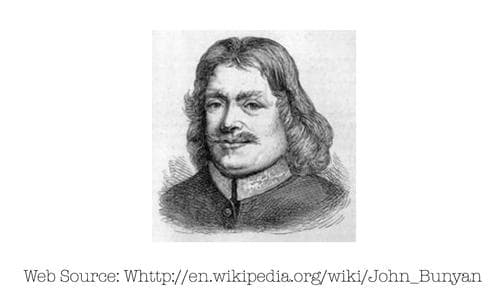
John Bunyan was an English writer and Puritan preacher best remembered as the author of the Christian allegory The Pilgrim's Progress, which also became an influential literary model. In addition to The Pilgrim's Progress, Bunyan wrote nearly sixty titles, many of them expanded sermons.
Similar books
- Confessions
Augustine of Hippo
4.1 (13k) average on GoodreadsThrillerClassic spiritual autobiography detailing a profound journey from sin and intellectual struggle to conversion and faith.
- The Pilgrim's Progress
John Bunyan
4.0 (109k) average on GoodreadsFantasyBunyan's more famous allegorical work, which draws heavily on the spiritual experiences detailed in 'Grace Abounding'.
- The Diary of a Young Girl
Anne Frank
4.2 (2.7M) average on GoodreadsBiographyDuring the Nazi occupation, a teenage girl's diary, written from a secret annex, shares observations on humanity, hope, and the wait for freedom.
- Eat, Pray, Love
Elizabeth Gilbert
3.6 (1.5M) average on GoodreadsLifestyleA heartbroken writer leaves her conventional life for a year-long global search for pleasure in Italy, spiritual devotion in India, and unexpected love and balance in Bali.
- Night
Elie Wiesel
4.3 (970k) average on GoodreadsBiographyIn the darkness of Auschwitz and Buchenwald, a teenage Elie Wiesel faces the extermination of his family, the loss of his faith, and the lasting scars of humanity's deepest cruelty.
- Steve Jobs
Walter Isaacson
4.1 (957k) average on GoodreadsBusinessSteve Jobs was a visionary who fused creativity and technology to revolutionize six industries and shape our digital world.





Enjoyed the summary?
A summary gives you the shape of the book. The book itself has the detail, the examples and the voice.
Find Grace Abounding to the Chief of Sinners on AmazonAs an Amazon Associate, BookBrief earns from qualifying purchases. How we're funded