
Synopsis
Covers the whole plot, including the ending.
- Difficulty
- Easy
- Pacing
- Moderate
- Mood
- Atmospheric, Romantic, Reflective, Creative
- Read it if
- You enjoy lyrical prose, stories about art and self-discovery, and romantic comedies set over a single night.
- Skip it if
- You prefer fast-paced plots with high stakes or dislike romance as a central theme.
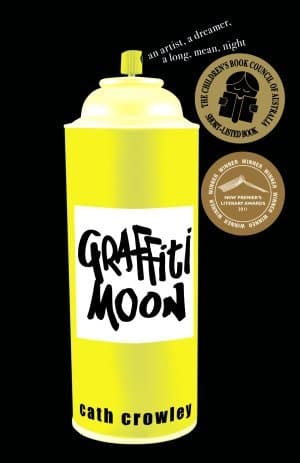
Graffiti Moon Plot Summary
Covers the whole plot, including the ending.
A Night of Art and Secrets Begins
The story begins on the last night before the HSC exams, with Lucy, a budding artist, obsessed with finding the anonymous graffiti artist known as 'Shadow.' She believes Shadow's art speaks to her soul and embodies the kind of authentic creativity she longs for. Lucy goes out with her best friend, Daisy, and their male friends, Ed and Dylan. Ed, who has a complicated history with Lucy (she broke his nose in the past, a detail that constantly resurfaces), has arranged for them to 'go hunting' for Shadow's new work. Lucy is unaware that Ed is Shadow himself, a secret he guardedly keeps. The night is filled with anticipation, art, and the unspoken tensions between the group, setting the stage for a night of revelations.
The First Encounter and a Broken Promise
As the group splits up, Lucy finds herself with Ed, searching for Shadow's art. They visit various locations, including a bridge where Shadow has left a new piece. Lucy is captivated by the art, expressing her admiration and deep connection to the anonymous artist, unwittingly praising Ed's work directly to him. Ed, meanwhile, is torn between wanting to reveal his true identity and fearing Lucy's reaction, especially given her past idealization of Shadow. They share intimate conversations about their aspirations and fears, with Ed subtly trying to gauge Lucy's feelings about Shadow as a person, rather than just an artist. The night has lighthearted banter and deeper, more vulnerable exchanges, drawing them closer.
Daisy and Dylan's Tumultuous Connection
While Lucy and Ed are on their quest, Daisy and Dylan navigate their own tumultuous relationship. Dylan has a clear crush on Daisy, but his attempts to show affection often backfire, like throwing eggs at her window. Daisy, though outwardly annoyed, secretly reciprocates his feelings, enjoying their playful arguments and the attention he gives her. Their dynamic is characterized by a push-and-pull, with both of them struggling to express their true emotions. Throughout the night, they engage in various escapades, including a memorable incident involving a public fountain, which further highlights their unique bond and the chaotic, yet endearing, nature of their affection for each other, leading to a moment of shared vulnerability.
Jazz and Leo: A Budding Connection
Jazz, another aspiring artist and friend of the group, spends the night with Leo, a musician she has a quiet interest in. Unlike the more boisterous interactions of the other pairs, Jazz and Leo's connection is more subtle and artistic. They visit an art gallery, sharing their interpretations of the pieces and discussing their own creative processes. Jazz, who often feels overshadowed by Lucy's more outgoing personality, finds a sense of understanding and connection with Leo, who appreciates her unique artistic perspective. Their conversations revolve around art, music, and the challenges of pursuing creative passions. This quieter subplot explores the development of a different kind of romantic and artistic bond, built on mutual respect and shared inspiration.
The Confession and Its Aftermath
As the night progresses and Lucy's admiration for Shadow deepens, Ed realizes he can no longer keep his secret. In a moment of vulnerability, he confesses to Lucy that he is Shadow. Lucy's reaction is a mixture of shock, betrayal, and disillusionment. She feels as though the idealized artist she admired has been replaced by the familiar, somewhat annoying, Ed. The revelation shatters her perception of Shadow and, by extension, her own artistic aspirations, as she had projected so much onto the anonymous persona. She is angry that he kept this from her, feeling foolish for her fervent praise and personal confessions directed at him, leading to a tense and emotional confrontation.
The Raw Truth of Art
Following Ed's confession, Lucy grapples with the reality that her artistic idol is not some mysterious, unreachable figure, but someone she knows intimately. This forces her to confront her own insecurities about her art and her tendency to romanticize the creative process, rather than engaging with its raw, messy truth. She realizes she's been hiding behind her admiration for Shadow, using it as an excuse not to fully commit to her own work. The revelation pushes her to re-evaluate what art truly means to her and what kind of artist she wants to be, moving beyond the idolization of others towards cultivating her unique voice and style.
Reconciliation and Understanding
After the initial shock and anger, Lucy and Ed slowly begin to talk through the revelation. Ed explains his reasons for keeping his identity secret, including his fear of rejection and the desire to be appreciated for his art rather than his personality. Lucy, in turn, expresses her feelings of betrayal and the pressure she felt to live up to her own artistic ideals. Through their honest conversation, they start to bridge the gap created by the secret. Lucy begins to see Ed not just as Shadow, but as a complex individual, and Ed understands the depth of Lucy's artistic passion and her need for authenticity. This difficult conversation marks a turning point in their relationship, moving towards genuine understanding.
Dawn Breaks, New Beginnings
As the night gives way to dawn, the entire group reunites, each having undergone their own personal journey. Daisy and Dylan's playful antagonism gives way to a clear, if still slightly awkward, mutual affection. Jazz and Leo's quiet connection has solidified into a promising artistic and personal bond. Lucy and Ed, having confronted the truth about Shadow, stand on the precipice of a new kind of relationship, one built on honesty and shared passion for art. The rising sun symbolizes new beginnings, not just for their individual artistic paths but also for their relationships, as they prepare to face the HSC exams and the uncertainties of adulthood, now with a clearer sense of self and connection.
A Shared Artistic Future
In a powerful final act, Lucy and Ed collaborate on a new graffiti piece. This joint creation symbolizes not only their reconciled relationship but also Lucy's acceptance of Ed as Shadow and her own embrace of her artistic voice. It's a moment of shared creativity where Lucy is no longer just an admirer but an active participant, contributing her own style and vision. The act of creating together signifies their willingness to move forward, both individually as artists and together as a couple, acknowledging the complexities and beauty of their shared journey. The piece itself becomes a symbol of their night of revelations and the promise of their future.
Principal Figures
Lucy
Protagonist
An aspiring artist obsessed with the anonymous graffiti artist 'Shadow.'
Lucy is a passionate and somewhat idealistic aspiring artist who is deeply moved by the anonymous graffiti of 'Shadow.' She romanticizes the idea of a mysterious, pure artist and projects her own artistic aspirations onto this unknown figure. Throughout the night, she grapples with her artistic insecurities, her fear of not being good enough, and her tendency to hide behind admiration rather than creating her own work. Her journey involves confronting the reality behind her idealizations and finding her authentic artistic voice.
Relationships: Ed (Complicated romantic interest, initially unaware he is 'Shadow'); Daisy (Best friend); Shadow (Artistic idol (who is secretly Ed))
Ed
Protagonist/Love Interest
The mysterious graffiti artist 'Shadow,' secretly in love with Lucy.
Ed is 'Shadow,' the elusive graffiti artist Lucy is obsessed with. He is a talented artist who uses graffiti as a form of expression and escape. He is secretly in love with Lucy but fears her reaction if she discovers his identity, especially given their past (Lucy broke his nose). Ed is thoughtful and observant, often trying to understand Lucy's true feelings and her perception of Shadow. His internal conflict revolves around revealing his true self and risking Lucy's potential disappointment or rejection.
Relationships: Lucy (Complicated romantic interest, whom he is secretly in love with); Dylan (Friend); Daisy (Friend)
Daisy
Supporting
Lucy's outspoken best friend with a tumultuous relationship with Dylan.
Daisy is Lucy's vibrant and spirited best friend. She is outspoken, confident, and has a playful, often argumentative, dynamic with Dylan. Despite her outward annoyance with Dylan's antics, she clearly reciprocates his feelings, enjoying their back-and-forth. Daisy provides a grounding presence for Lucy, often pushing her to confront her feelings and artistic fears. Her character highlights the complexities of young love and friendship.
Relationships: Lucy (Best friend); Dylan (Romantic interest, subject of her playful antagonism)
Dylan
Supporting
A quirky and endearing boy deeply smitten with Daisy.
Dylan is one of the male friends in the group, deeply and awkwardly smitten with Daisy. His attempts to show affection often manifest in unusual, sometimes irritating, ways (like throwing eggs). He is earnest and loyal, though sometimes lacks social graces. Dylan's character adds humor and warmth to the group dynamic, and his persistence in pursuing Daisy, despite her initial resistance, is a key part of their relationship arc.
Relationships: Daisy (Romantic interest, whom he openly pursues); Ed (Friend); Lucy (Friend)
Jazz
Supporting
A quiet and observant artist who connects with Leo.
Jazz is a quieter, more introspective artist in the group, often overshadowed by Lucy's more dominant personality. She finds her voice and connection through art, observing the world around her with a keen eye. Her relationship with Leo develops through shared artistic sensibilities and quiet conversations, showcasing a different kind of budding romance compared to the other pairs. Jazz represents the more subtle and contemplative side of artistic expression.
Relationships: Lucy (Friend); Leo (Budding romantic interest)
Leo
Supporting
A musician who shares a quiet artistic bond with Jazz.
Leo is a musician who develops a connection with Jazz. He is observant and thoughtful, appreciating Jazz's artistic perspective. Their interactions are characterized by shared discussions about art and music, creating a bond based on mutual respect and creative understanding. Leo provides a calm and supportive presence, allowing Jazz to feel seen and understood in her artistic endeavors.
Relationships: Jazz (Budding romantic interest)
Shadow
Mentioned/Symbolic
The anonymous graffiti artist admired by Lucy, secretly Ed.
Shadow is the anonymous graffiti artist whose work captivates Lucy. He represents her ideals of pure, unadulterated artistic expression, free from the constraints of identity or expectation. Lucy projects her dreams and desires onto Shadow, seeing his art as a reflection of her own soul. The revelation that Shadow is Ed forces Lucy to confront the difference between an idealized image and the complex reality of a person, and to redefine her understanding of art and authenticity.
Relationships: Lucy (Artistic inspiration and obsession); Ed (Secret identity)
The Old Man
Supporting
An elderly man encountered by Lucy and Ed, offering wisdom.
The old man is a minor character Lucy and Ed encounter during their night. He is a wise and observant figure who offers them a different perspective on life, art, and the passage of time. His brief but poignant interactions provide moments of reflection for Lucy and Ed, subtly influencing their understanding of their own journey and the importance of living authentically. He serves as a symbol of experience and the enduring nature of creativity.
Themes & Insights
Identity and Self-Discovery
The characters, particularly Lucy and Ed, are on the cusp of adulthood and are grappling with who they are and who they want to be. Lucy's quest for Shadow is ultimately a quest for her own artistic identity, and she learns that true art comes from within, not from idolizing others. Ed's secret identity as Shadow highlights his struggle with vulnerability and being accepted for his true self. The night's events force both to shed their masks and embrace their authentic selves, personally and artistically.
“Maybe that was it: to be a writer, you had to write. To be an artist, you had to make art. To be a person, you had to live.”
The Nature of Art and Creativity
The novel explores various facets of art: graffiti as a form of expression, painting, music, and the act of creation itself. It examines the difference between romanticizing art and actively engaging in its personal process. Lucy learns that art isn't just about flawless technique or anonymous genius, but about honesty, vulnerability, and finding one's unique voice. The collaboration between Lucy and Ed at the end symbolizes the fusion of their individual artistic expressions and a more mature understanding of creativity.
“Sometimes art was like that. You just had to let go and let it be.”
Love and Connection
The book examines different forms of love – romantic, platonic, and familial – and the complexities of forming genuine connections. Lucy and Ed's relationship is built on a foundation of shared artistic passion but complicated by secrets and idealization. Daisy and Dylan's dynamic shows love expressed through playful antagonism, while Jazz and Leo's connection is more subtle and intellectual. The narrative emphasizes the importance of honesty, vulnerability, and acceptance in forging meaningful bonds.
“He didn't just see the graffiti. He saw the heart behind it.”
Truth vs. Idealization
A central theme is the tension between idealized perceptions and the often messier reality. Lucy's idealization of 'Shadow' as a mysterious, perfect artist is shattered when she discovers he is Ed, forcing her to reconcile the image with the person. This theme extends to her own artistic journey, as she moves from an idealized vision of herself as an artist to accepting the reality of her own creative process, flaws and all. The book suggests that true connection and creativity emerge when one embraces truth over romanticized notions.
“He was just a boy, not the mythical creature she'd invented.”
The Transition to Adulthood
Set on the eve of HSC exams, the story captures the space between adolescence and adulthood. The characters are facing significant life changes, decisions about their futures, and deeper explorations of their identities and relationships. The intense 24-hour period acts as a microcosm for this broader transition, where secrets are revealed, connections are forged, and each character takes a step towards understanding their place in the world and the responsibilities that come with growing up.
“This was the last night of being kids, maybe. The last night before everything changed.”
Plot Devices & Literary Techniques
The 'Shadow' Persona
A hidden identity that drives the plot and explores themes of art and authenticity.
The anonymous graffiti artist 'Shadow' serves as a crucial plot device. It creates mystery, fuels Lucy's obsession, and acts as a catalyst for her journey of self-discovery. Ed's decision to maintain this secret identity highlights themes of vulnerability, artistic integrity, and the fear of judgment. The eventual revelation of Shadow's true identity is the central turning point, forcing Lucy to confront her idealizations and pushing both characters towards genuine connection and a more honest understanding of art.
The 24-Hour Timeline
A compressed timeframe creating urgency and intensity.
The entire story unfolds over a single night, the last before the HSC exams. This compressed timeline creates a sense of urgency and heightened emotion, allowing for rapid character development and intense interactions. It mirrors the 'on the verge' feeling of the characters' lives, where significant revelations and decisions are made in a short, impactful period. The dawn breaking at the end symbolizes new beginnings and the culmination of their overnight transformations.
Graffiti as a Medium
Art form used for expression, connection, and revelation.
Graffiti itself is a significant plot device. It's not just a backdrop but an active participant in the story. Shadow's graffiti pieces act as clues, messages, and reflections of the characters' inner worlds. It's a form of communication that transcends words, allowing characters like Lucy and Ed to connect on a deeper, more intuitive level. The act of creating graffiti, both individually and collaboratively, becomes a metaphor for self-expression, vulnerability, and forging connections.
The Broken Nose Incident
A past event symbolizing misunderstanding and unresolved tension.
The detail of Lucy having broken Ed's nose in the past is a recurring motif and a subtle plot device. It symbolizes their initial misunderstanding, the physical manifestation of their complicated history, and the emotional barrier between them. It's a constant reminder of their past, adding layers of tension and awkwardness to their interactions, until it is ultimately overcome as they move towards genuine understanding and reconciliation.
Graffiti Moon Quotes
“The thing about art is that it’s not for everyone. Not everyone gets it. Not everyone wants it. But for the people who do, it’s everything.”
“Sometimes you have to be a little bit crazy to make something beautiful.”
“If you want to know what someone is really like, look at what they create.”
“The city is a canvas. You just have to know how to see it.”
“It’s amazing how much you can say without saying a word, just with a line, a colour, a shape.”
“Maybe the best stories are the ones that aren’t finished yet, the ones you’re still living.”
“You don't just find art; you make it. You don't just find love; you build it.”
“There are some things you just know, deep down, even if you can’t explain them.”
“The moon is always there, even when you can’t see it. Just like some feelings.”
“Sometimes the best way to find what you're looking for is to stop looking so hard.”
“Art isn't about being perfect. It's about being real.”
“Every mark tells a story, every colour has a feeling.”
“It’s a strange thing, falling for someone you only know through their art.”
“You can’t just wait for inspiration. You have to go out and find it, or make it.”
Quiz
10 questions on the plot and the characters. Each answer comes with a short explanation.
Question 1
Who is Lucy in love with at the beginning of the story?
- Ed
- Dylan
- Shadow
- Leo
Show answer
C. Shadow Lucy is captivated by the mysterious graffiti artist known as Shadow, whose work she admires throughout the city.
Question 2
What event led to Ed no longer being 'in love' with Lucy?
- She rejected his romantic advances.
- She broke his nose.
- She moved to a different school.
- She started dating Dylan.
Show answer
B. She broke his nose. The book explicitly states that Ed thought he was in love with Lucy 'until she broke his nose,' suggesting a significant, perhaps physical, conflict that changed his feelings.
Question 3
How did Dylan attempt to show his affection for Daisy, albeit unsuccessfully?
- He wrote her a love letter.
- He painted a mural for her.
- He threw eggs at her.
- He bought her an expensive gift.
Show answer
C. He threw eggs at her. The synopsis states that 'throwing eggs at her probably wasn't the best way to show it,' indicating Dylan's misguided attempt at expressing his love for Daisy.
Question 4
What is a central theme explored through the characters' experiences in the book?
- The importance of academic success above all else.
- The challenges and discoveries of transitioning into adulthood.
- The dangers of engaging in illegal activities.
- The pursuit of fame and recognition through art.
Show answer
B. The challenges and discoveries of transitioning into adulthood. The synopsis highlights the characters being 'on the verge: of adulthood, of HSC, of finding out just who they are, and who they want to be,' which directly points to themes of growth and self-discovery during adolescence.
Question 5
How long does the main narrative of the book span?
- A week
- A month
- 24 hours
- A year
Show answer
C. 24 hours The book's description specifies 'An intense and exhilarating 24 hours in the lives of four teenagers,' indicating a very focused, short timeframe for the plot.
Question 6
Which of the following characters are described as 'slowly encircling each other'?
- Lucy and Ed
- Dylan and Daisy
- Jazz and Leo
- Shadow and Lucy
Show answer
C. Jazz and Leo The summary explicitly states, 'Jazz and Leo are slowly encircling each other,' indicating a developing relationship between them.
Question 7
What does 'HSC' refer to in the context of the teenagers' lives?
- A specific art competition they are entering.
- A major academic examination or qualification.
- A local youth club they frequently attend.
- A Hip-Hop Street Crew they are part of.
Show answer
B. A major academic examination or qualification. In Australia, where Cath Crowley is from, HSC stands for the 'Higher School Certificate,' which is the final secondary school examination. Its mention alongside 'adulthood' and 'finding out who they are' signifies its importance in their transition.
Question 8
Given the title 'Graffiti Moon' and Lucy's love for 'Shadow,' what can be inferred about the role of art in the story?
- Art is a minor backdrop, focusing primarily on sports.
- Art, particularly graffiti, is a significant element, possibly tied to identity and romance.
- Art is presented as a hobby that distracts from their real-life problems.
- The moon is a character who creates graffiti.
Show answer
B. Art, particularly graffiti, is a significant element, possibly tied to identity and romance. The title 'Graffiti Moon,' combined with Lucy's infatuation with 'Shadow,' a graffiti artist, strongly suggests that graffiti and art play a central, possibly symbolic, role in the narrative, likely intertwined with themes of identity and connection.
Question 9
What quality does the description suggest is prominent in Cath Crowley's writing style for this novel?
- Highly technical and scientific
- Strictly factual and historical
- Lyrical and evocative
- Concise and minimalist
Show answer
C. Lyrical and evocative The text describes it as 'A lyrical new YA novel,' indicating a writing style that emphasizes beauty, emotion, and poetic quality in its prose.
Question 10
Based on the character descriptions, what common adolescent challenge might the book explore through the various relationships?
- The struggle to achieve financial independence.
- The complexities of expressing feelings and navigating romantic relationships.
- The pressure to conform to societal norms in career choices.
- The difficulties of maintaining friendships across long distances.
Show answer
B. The complexities of expressing feelings and navigating romantic relationships. With Lucy's unrequited love for Shadow, Ed's past feelings for Lucy, Dylan's awkward attempt to show love to Daisy, and Jazz and Leo 'encircling each other,' the book clearly focuses on the nuanced and often challenging aspects of young love and emotional expression.
Graffiti Moon FAQ
What is Graffiti Moon about?
Graffiti Moon follows four teenagers over an intense 24-hour period in Sydney. Lucy is determined to find 'Shadow,' a mysterious graffiti artist whose work she admires, while Ed, her ex, is unknowingly Shadow. The story intertwines their journeys with those of Dylan, who is trying to win back Daisy, and Jazz and Leo, who are navigating their own burgeoning connection, all against a backdrop of art, self-discovery, and the cusp of adulthood.
Why should I read Graffiti Moon?
You should read Graffiti Moon for its lyrical prose, authentic portrayal of teenage angst and first love, and its celebration of art in its many forms. Cath Crowley masterfully weaves together multiple perspectives, offering a raw and honest look at self-discovery, the courage to create, and the messy beauty of human connection, all within a single, pivotal night.
What is the background/setting of Graffiti Moon?
The story is set over one night in contemporary Sydney, Australia. The city itself becomes a character, with its hidden alleyways, train lines, and iconic landmarks serving as the canvas for graffiti art and the backdrop for the characters' emotional journeys. The impending HSC (Higher School Certificate) exams also add a layer of pressure and urgency to the teenagers' experiences.
What are the most memorable quotes?
Some memorable quotes include, 'We are all made of stardust and dreams,' which encapsulates the book's poetic nature. Another is 'Art is the only way to run away without moving your feet,' reflecting the characters' use of creativity as an escape and expression. These lines highlight the themes of imagination, connection, and the power of art.
What writing style does the author use?
Cath Crowley employs a lyrical and poetic writing style, rich with vivid imagery and metaphors, particularly when describing art and emotions. The narrative shifts between multiple first-person perspectives, giving readers intimate access to the thoughts and feelings of Lucy, Ed, Dylan, and Daisy, creating a multi-layered and empathetic reading experience.
What minor details add significant meaning?
The specific details of the graffiti pieces themselves, like 'Girl with a Bird' or 'Boy in a Boat,' are not just random art but reflections of Ed's inner turmoil and hopes, directly relating to his feelings for Lucy. Also, the recurring motif of light and shadow throughout the night subtly underscores the hidden identities and revelations that unfold.
What are some subtle foreshadowing moments?
Early descriptions of Lucy's fascination with Shadow's art often include observations about the artist's technique or choice of subjects that subtly hint at Ed's personal style and experiences, which Lucy, being so close to Ed previously, might subconsciously recognize. The way Ed avoids talking about his art class projects also subtly foreshadows his secret identity.
What unexpected character connections exist?
The most significant unexpected connection is that Ed, Lucy's ex-boyfriend and the person she broke up with, is actually 'Shadow,' the mysterious graffiti artist she deeply admires and is searching for. This revelation forms the core of the story's romantic tension and irony, as Lucy seeks a connection with an artist who is already intimately known to her.
What are unspoken character motivations?
Ed's motivation for keeping his identity as Shadow a secret from Lucy stems from a fear of rejection and a desire to be appreciated for his art, separate from their complicated romantic history. He wants Lucy to see the true depth of his creativity without the baggage of their past relationship, hoping she'll connect with the art itself.
What psychological complexities do characters exhibit?
Lucy exhibits a complex internal conflict between her idealized vision of 'Shadow' and the reality of her relationships, particularly with Ed. She grapples with the idea that the 'perfect' artist might be someone she already knows and has dismissed, forcing her to confront her own biases and superficial judgments about people and art.
What are the major emotional turning points?
A major emotional turning point is when Lucy finally discovers that Ed is Shadow, forcing her to reconcile her romanticized image with the person she thought she knew. Another is Dylan's realization that his impulsive actions, like throwing eggs, are pushing Daisy away, leading him to a more mature understanding of love and respect.
How do relationship dynamics evolve?
The relationship between Lucy and Ed evolves from strained exes to a rekindled, deeper connection built on shared artistic passion and mutual respect, once Ed's identity as Shadow is revealed. Dylan and Daisy's dynamic shifts from a tumultuous, on-again-off-again pattern to one of tentative understanding and a more mature willingness to communicate and grow.
Which parts remain ambiguous or open-ended?
While the main romantic arcs find resolution, the characters' individual futures, particularly regarding their art careers or specific paths after the HSC, remain somewhat open-ended. The story focuses more on the emotional and artistic awakening of this single night, implying that their journeys of self-discovery are ongoing rather than fully concluded.
What are controversial scenes or decisions?
One potentially controversial decision is Ed's prolonged secrecy about being Shadow. While it builds narrative tension, some readers might find it frustrating or even manipulative that he allows Lucy to chase an idealized version of himself when he's right there. Lucy's initial rejection of Ed based on superficial factors could also be seen as a debatable character choice.
Graffiti Moon ending explained: how it ends & what it means
The book ends with Lucy and Ed finally acknowledging their feelings and the connection forged through art, with Ed revealing his identity as Shadow. They share a moment of intimacy and understanding, suggesting a new beginning for their relationship built on honesty and shared passion. The ending signifies the power of seeing beyond appearances, embracing vulnerability, and the transformative nature of art and love.
Similar books
- The Sun Is Also a Star
Nicola Yoon
4.1 (184k) average on GoodreadsYoung AdultExplores a deep connection forming over a single day with philosophical undertones.
- Looking for Alaska
John Green
4.0 (1.1M) average on GoodreadsMysteryCaptures the intensity of young adult relationships and self-discovery with poetic language.
- Paper Towns
John Green
3.8 (919k) average on GoodreadsMysteryBoth books feature a quest-like narrative centered around an enigmatic figure and a developing romance. Green's Paper Towns often delves deeper into philosophical and existential themes, while Crowley's Graffiti Moon focuses more on the sensory experience of art and urban exploration.
- Eleanor & Park
Rainbow Rowell
4.0 (860k) average on GoodreadsYoung AdultBoth are YA romances, but Rowell's Eleanor & Park provides a grittier, more intense portrayal of first love and the complex challenges faced by teenagers, with a broader and often more painful scope of character development. Graffiti Moon offers a more aesthetically focused and generally hopeful narrative.
- The Goldfinch
Donna Tartt
3.9 (720k) average on GoodreadsLiterary FictionHaunted by a tragic explosion and clutching a stolen Dutch masterpiece, a young orphan navigates the opulent drawing rooms of New York and the gritty underbelly of the art world, desperately seeking connection and redemption amidst a life spiraling into crime and obsession.
- Girl with a Pearl Earring
Tracy Chevalier
3.9 (627k) average on GoodreadsHistorical FictionA young servant in 17th-century Delft finds her quiet world intertwined with the painter Johannes Vermeer as she becomes his muse, blurring the lines of class, art, and forbidden desire.



Enjoyed the summary?
A summary gives you the shape of the book. The book itself has the detail, the examples and the voice.
Find Graffiti Moon on AmazonAs an Amazon Associate, BookBrief earns from qualifying purchases. How we're funded