
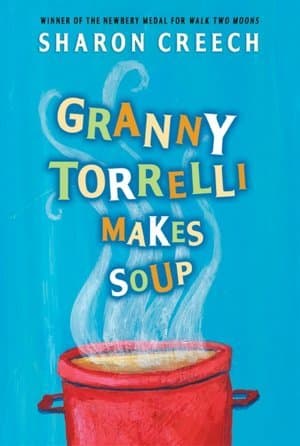
Synopsis
Covers the whole plot, including the ending.
- Difficulty
- Easy
- Pacing
- Slow
- Mood
- Heartwarming, Reflective, Gentle, Comforting
- Read it if
- You enjoy heartwarming stories about friendship, family wisdom, and finding understanding.
- Skip it if
- You prefer fast-paced plots with significant external conflict or complex world-building.
Granny Torrelli Makes Soup Plot Summary
Covers the whole plot, including the ending.
Rosie's Frustration with Bailey
Rosie, a twelve-year-old girl, begins the story by saying she is very frustrated with her lifelong best friend and next-door neighbor, Bailey. She notes their strong connection, knowing each other since birth, and how Bailey usually understands her. However, a recent incident has caused a big problem, making Rosie declare that she 'hates him today.' This initial anger sets up a story that will explore their friendship, why they argue, and Granny Torrelli's role in helping Rosie with these emotions. Rosie's strong feelings show how deep her bond with Bailey is, even when she is angry.
Granny Torrelli's Wisdom and Soup
When Rosie is upset about Bailey, she often goes to her Italian grandmother, Granny Torrelli, for comfort and advice. Granny is usually in her kitchen, carefully making a delicious soup, a recurring image in the book. As she cooks, Granny listens patiently to Rosie's complaints. Instead of giving direct advice, she tells stories from her own past, often about her childhood in Italy or her early times with Rosie's grandfather. These stories, which seem to go off-topic, always have subtle lessons about life, love, and friendship. They gently guide Rosie toward understanding without telling her what to do. The smell of the soup and Granny's warm presence create a comforting mood.
The Blindfold Game and Bailey's Sensitivity
Rosie remembers a game she and Bailey used to play where they would blindfold themselves and describe the world using only their other senses. This game was important because Bailey, who is legally blind, experienced the world differently. Rosie remembers how Bailey would clearly describe textures, sounds, and smells, often noticing things she, with her full sight, would miss. This memory highlights Bailey's unique sensitivity and how he sees the world. It also subtly shows the challenges he faces and how their friendship has always included his visual impairment, making his current hurtful actions even more confusing for Rosie.
Granny's Story of the Fig Tree
As Rosie continues to think about Bailey, Granny Torrelli tells her a story from her own childhood in Italy, about a beloved fig tree. Granny describes watching the fig tree, eager for its fruit to ripen. Her nonna would explain that some things, like figs and friendships, need time to grow and sweeten. This story is a metaphor for Rosie's relationship with Bailey. Granny explains that just as one cannot rush a fig's ripening, one cannot force a friendship to be perfect or expect quick solutions to problems. The story encourages Rosie to be patient and to value how relationships naturally grow.
The Argument Over the Race
Rosie finally shares the specific event that made her so angry with Bailey. They were having one of their usual races, but this time, Bailey, usually competitive despite his poor eyesight, deliberately let Rosie win. Rosie felt insulted by this, seeing it as pity or a patronizing act. She believed Bailey thought she could not win on her own because she is a girl, or that he felt sorry for her. This act, in Rosie's eyes, undermined their long-standing dynamic and felt like a betrayal of their equal friendship, leading to her strong feelings of hurt and anger.
Granny's Story of the Missing Button
To address Rosie's feelings of being undervalued, Granny Torrelli tells a story about a missing button from her wedding dress. She describes the frantic search for this small item, and the relief and joy she felt when it was found. The story, seemingly about a button, subtly conveys a message about perspective and how even small details or actions can hold great meaning, sometimes more than one first realizes. It encourages Rosie to consider that Bailey's actions, though hurtful to her, might have had a different, perhaps caring, intention, much like the unexpected importance of a button.
Bailey's Perspective and Apology
Eventually, Bailey comes to Rosie's house, clearly sorry. He apologizes for hurting her feelings during the race. He explains that he did not let her win out of pity, but because he wanted her to feel good. He thought she might be sad or needed encouragement, and his goal was to make her happy, not to insult her. This changes Rosie's view, as she realizes Bailey's actions, while poorly executed, came from a place of care for her. His explanation helps bridge the gap caused by the misunderstanding.
Rosie's Revelation About Bailey's Sight
During their reconciliation, Rosie truly understands Bailey's visual impairment. She always knew he was legally blind, but she had not fully grasped his daily challenges or how differently he experiences the world. She understands that his actions, including wanting her to feel good, are often filtered through his unique perspective. This realization deepens her empathy for him and helps her see that his motivations are not always what she assumes, especially given his different way of interacting with the world. It adds a new layer to her understanding of their friendship.
Granny's Story of the Invisible Thread
As Rosie processes her new understanding of Bailey, Granny Torrelli tells a story about an invisible thread that connects people who love each other, no matter how far apart they are or how many arguments they have. This thread, she explains, can stretch and tangle, but it never breaks. This powerful metaphor captures the lasting nature of Rosie and Bailey's friendship. It assures Rosie that even when conflicts happen and feelings are hurt, the basic bond of love and friendship stays. The story reinforces the idea that true connections are strong and can handle difficulties.
Reconciliation and Shared Soup
With their misunderstanding cleared up and anger gone, Rosie and Bailey sit down, often with Granny Torrelli, to share the delicious soup Granny has been making. Sharing a meal, especially Granny's comforting soup, symbolizes their reconciliation and the mending of their friendship. They talk, laugh, and perhaps plan their next adventure, their bond stronger after navigating a conflict. The soup becomes a physical representation of warmth, comfort, and the lasting power of their connection, solidifying their renewed understanding and affection for each other.
Granny Torrelli Makes Soup Characters
Rosie
Protagonist
A twelve-year-old girl navigating the complexities of friendship.
Rosie is an imaginative and sensitive twelve-year-old girl who deeply values her friendship with Bailey. She is prone to strong emotions, expressing intense anger and hurt when she feels misunderstood or betrayed. Despite her occasional outbursts, Rosie is thoughtful and reflective, often seeking wisdom from her Granny Torrelli. She possesses a keen sense of justice and fairness, which makes Bailey's actions during the race particularly upsetting to her. Her journey involves learning empathy, patience, and understanding the multifaceted nature of love and friendship.
Relationships: Bailey (Lifelong best friend, neighbor, sometimes rival); Granny Torrelli (Loving and wise grandmother, mentor)
Bailey
Supporting/Deuteragonist
Rosie's legally blind best friend, sensitive and often misunderstood.
Bailey is Rosie's lifelong best friend and next-door neighbor, who is legally blind. Despite his visual impairment, he is active, competitive, and possesses a unique way of perceiving the world through his other senses. He is deeply caring towards Rosie, though his attempts to express this care can sometimes be misinterpreted, as seen in the race incident. Bailey is sensitive and thoughtful, and his actions, while sometimes causing friction, often stem from a place of genuine affection and concern for Rosie's feelings. He represents the challenges and triumphs of navigating a friendship with unique circumstances.
Relationships: Rosie (Lifelong best friend, neighbor, sometimes rival)
Granny Torrelli
Supporting/Mentor
Rosie's wise Italian grandmother, offering guidance through stories and soup.
Granny Torrelli is Rosie's loving and sagacious Italian grandmother. She is a central figure in Rosie's life, providing comfort, wisdom, and a stable presence. Granny rarely offers direct advice, instead preferring to share stories from her own life, particularly her childhood in Italy, or fables that subtly convey profound lessons about human nature, relationships, and the passage of time. Her kitchen, filled with the aroma of her simmering soup, is a sanctuary where Rosie can process her emotions. Granny embodies patience, understanding, and the quiet power of storytelling.
Relationships: Rosie (Granddaughter, mentee)
Granny Torrelli Makes Soup Themes
The Nature of Friendship
The book explores the complexities and lasting strength of childhood friendship. It shows that even close friends can have misunderstandings and anger, but true friendship involves patience, empathy, and a willingness to understand different perspectives. Rosie and Bailey's relationship, with its competition, shared games, and deep affection, highlights how friendships grow and strengthen through conflict and reconciliation. The story emphasizes that arguments are a natural part of any deep bond and can lead to a deeper understanding and appreciation of each other, as seen in the resolution of their race-related conflict.
“Bailey, my neighbor, my friend, my buddy, my pal for my whole life, knowing me better than anybody, that Bailey, that Bailey I am so mad at right now, that Bailey, I hate him today.”
Empathy and Perspective
A main theme is the importance of understanding others' perspectives, especially when those perspectives come from unique experiences. Rosie first sees Bailey's actions during the race as an insult, not thinking about his intentions. Through Granny Torrelli's stories and Bailey's explanation, Rosie learns to see the situation from Bailey's point of view, realizing his actions came from care, not meanness, and were influenced by his visual impairment. The blindfold game further shows how Bailey sees the world differently. This theme encourages readers to look past first judgments and to develop empathy for others' unique ways of experiencing life.
“Granny says that sometimes the things that make you mad are the things that make you understand.”
The Power of Storytelling
Granny Torrelli uses storytelling to teach and guide Rosie. Instead of direct advice, she shares parables and anecdotes from her own life, often subtly reflecting Rosie's current emotional struggles. These stories, like the fig tree or the invisible thread, give Rosie a way to understand complex emotions and situations without being preachy. Listening to stories allows Rosie to reflect, draw her own conclusions, and learn lessons about patience, love, and resilience. Storytelling becomes a comforting and effective way to pass wisdom across generations and heal emotional wounds.
“Granny Torrelli tells me stories. She doesn't usually give me advice, not directly. She just tells me stories.”
Patience and Growth
The book emphasizes that important things, whether ripening fruit or a friendship, need time and patience. Granny Torrelli's story of the fig tree is a direct metaphor for this, showing that rushing or forcing outcomes does not work and that true value comes from letting things happen naturally. Rosie's initial impatience and anger with Bailey slowly turn into understanding as she processes the situation and listens to Granny's wisdom. This theme encourages accepting natural rhythms and understanding that growth, both personal and relational, happens gradually.
“Granny says you can't rush the figs. You have to let them ripen in their own time. It's the same with people, she says.”
Plot Devices & Literary Techniques
Granny's Stories
Parables and anecdotes used to convey wisdom without direct advice.
Granny Torrelli's stories function as an indirect form of mentorship and foreshadowing. Each story she tells, whether about a fig tree, a missing button, or an invisible thread, subtly relates to Rosie's current emotional state or the conflict she is experiencing with Bailey. These parables allow Rosie to draw her own conclusions and internalize lessons about patience, empathy, and the enduring nature of relationships. They provide a gentle, non-confrontational way for Granny to impart wisdom, making the lessons more impactful than direct advice would be, and they often precede Rosie's deeper understanding of a situation.
The Simmering Soup
A recurring symbol of comfort, home, and the slow process of resolution.
Granny Torrelli is almost always making soup when Rosie comes to her with her troubles. The act of making soup—a slow, simmering process that blends different ingredients into a comforting whole—serves as a powerful metaphor for the resolution of conflict and the mending of relationships. Just as the soup needs time to develop its flavors, Rosie and Bailey's friendship needs time and patience to heal. The soup also symbolizes the warmth, nourishment, and security of home and family, providing a comforting backdrop for emotional processing and reconciliation. Its aroma and taste are intrinsically linked to Granny's wisdom and the feeling of things being made right.
Bailey's Blindness
A character trait that highlights themes of perception, empathy, and unique experience.
Bailey's legal blindness is not merely a character detail but a significant plot device that drives themes of perception and empathy. It physically manifests how Bailey experiences the world differently, as shown in the blindfold game where he notices details Rosie misses. This difference in perception is crucial to the central conflict: Rosie misinterprets Bailey's actions during the race because she doesn't fully understand his unique way of interacting with the world or his motivations, which might be filtered through his visual impairment. His blindness challenges Rosie (and the reader) to consider alternative perspectives and cultivate deeper empathy.
Granny Torrelli Makes Soup Quotes
“Sometimes you have to let yourself be sad.”
“When you make soup, you make it with your heart.”
“The secret to life is to keep stirring.”
“It's good to have someone to share your memories with.”
“Sometimes the best stories are the ones that have been told a million times.”
“You can't always fix everything, but you can always offer a warm bowl of soup.”
“The past is like a soup, all the ingredients are still there, mixed together.”
“It's good to be quiet sometimes, and just listen.”
“Even when things are sad, there can still be good things.”
“You have to taste life, Rosie, every bit of it.”
“A good story has a beginning, a middle, and an end, but sometimes the end is just another beginning.”
“It's not just the ingredients, it's how you put them together.”
“Don't be afraid to try new things, Rosie. That's how you find out what you like.”
“Some things, you just know in your bones.”
Quiz
10 questions on the plot and the characters. Each answer comes with a short explanation.
Question 1
What is the primary activity Granny Torrelli uses to help Rosie and Bailey understand life lessons and mend their friendship?
- Gardening
- Making soup
- Playing board games
- Knitting
Show answer
B. Making soup Granny Torrelli often tells stories and shares wisdom while making soup, which is a central activity in the book for teaching Rosie and Bailey about life and friendship.
Question 2
Who is the protagonist of 'Granny Torrelli Makes Soup'?
- Granny Torrelli
- Bailey
- Rosie
- Rosie's mother
Show answer
C. Rosie The story is narrated by Rosie, a twelve-year-old girl, and focuses on her experiences and feelings.
Question 3
What is Rosie's initial feeling towards Bailey at the beginning of the book?
- Admiration
- Love
- Anger and hatred
- Indifference
Show answer
C. Anger and hatred The opening lines clearly state, 'that Bailey I am so mad at right now, that Bailey, I hate him today,' indicating Rosie's strong negative feelings.
Question 4
What significant physical challenge does Bailey face?
- He is blind.
- He uses a wheelchair.
- He is deaf.
- He has a speech impediment.
Show answer
B. He uses a wheelchair. Bailey uses a wheelchair, which is a significant aspect of his character and their friendship, as Rosie often helps him.
Question 5
Granny Torrelli uses a specific Italian phrase to describe how she feels about life and problems. What is it?
- La dolce vita
- Finito
- Andiamo
- Piano, piano
Show answer
D. Piano, piano Granny Torrelli frequently says 'piano, piano,' which means 'slowly, slowly,' to encourage patience and a measured approach to life's challenges.
Question 6
What is a recurring theme that Granny Torrelli emphasizes through her stories and cooking?
- The importance of material wealth.
- The value of revenge.
- Patience, understanding, and the enduring nature of love and friendship.
- The superiority of Italian culture.
Show answer
C. Patience, understanding, and the enduring nature of love and friendship. Granny Torrelli's narratives consistently highlight the importance of patience, understanding others' perspectives, and the lasting bonds of love and friendship, even through disagreements.
Question 7
What specific incident initially causes the major rift between Rosie and Bailey at the beginning of the story?
- Bailey accidentally broke Rosie's favorite toy.
- Bailey started hanging out with other friends more.
- Bailey told Rosie a secret about another friend.
- Bailey said something mean about Rosie's drawing and then pushed her.
Show answer
D. Bailey said something mean about Rosie's drawing and then pushed her. The initial conflict stems from Bailey criticizing Rosie's drawing of a dog and then pushing her, leading to Rosie's intense anger.
Question 8
How does Granny Torrelli often structure her stories to help Rosie understand a situation?
- She tells stories about famous historical figures.
- She uses fables with animal characters.
- She recounts personal anecdotes from her own past, often relating to her childhood or family in Italy.
- She reads from a book of proverbs.
Show answer
C. She recounts personal anecdotes from her own past, often relating to her childhood or family in Italy. Granny Torrelli frequently shares stories from her own life, particularly from her childhood in Italy, to illustrate her points and provide context for Rosie's current problems.
Question 9
What does Rosie discover about Bailey's feelings and perspective during their arguments, particularly through Granny's guidance?
- That Bailey is intentionally trying to hurt her feelings.
- That Bailey is often frustrated by his physical limitations and sometimes acts out because of it.
- That Bailey doesn't value their friendship as much as she does.
- That Bailey is secretly jealous of her artistic talent.
Show answer
B. That Bailey is often frustrated by his physical limitations and sometimes acts out because of it. Through Granny's stories and gentle prodding, Rosie begins to understand that Bailey's outbursts often stem from his frustration and anger about his physical limitations, rather than malice towards her.
Question 10
Which of the following best describes Granny Torrelli's approach to resolving conflicts between Rosie and Bailey?
- She directly tells them who is right and who is wrong.
- She forces them to apologize to each other immediately.
- She uses subtle storytelling and shared activities (like cooking) to guide them to understanding and empathy on their own.
- She ignores their arguments, believing they will resolve themselves.
Show answer
C. She uses subtle storytelling and shared activities (like cooking) to guide them to understanding and empathy on their own. Granny Torrelli never dictates solutions but rather uses her stories and the shared experience of making soup to subtly encourage Rosie and Bailey to reflect, understand each other's perspectives, and ultimately mend their own friendship.
Granny Torrelli Makes Soup FAQ
What is the central conflict driving Rosie's emotions at the beginning of the book?
Rosie is deeply upset and angry with her best friend, Bailey, because he has started spending more time with a new friend, Jana, and seems to be excluding Rosie. This shift in their friendship makes Rosie feel jealous and abandoned.
Who is Granny Torrelli, and what role does she play in the story?
Granny Torrelli is Rosie's wise and loving Italian grandmother. She acts as a mentor and confidante, using stories from her own past, family anecdotes, and the act of cooking to help Rosie process her feelings and understand complex emotions about friendship and life.
How does the act of making soup relate to Granny Torrelli's lessons?
Making soup is a metaphor for life and relationships, representing the careful combination of ingredients, patience, and the warmth of shared experience. As they chop vegetables and stir the pot, Granny Torrelli shares stories that illustrate her points about forgiveness, understanding, and the enduring nature of love.
What is the nature of Rosie and Bailey's friendship before the conflict arises?
Rosie and Bailey have been inseparable best friends since childhood, living next door to each other and sharing every aspect of their lives. Their bond is described as deep and intuitive, with Bailey knowing Rosie better than anyone else.
How does Granny Torrelli encourage Rosie to see Bailey's perspective?
Granny Torrelli doesn't directly tell Rosie what to do but instead shares stories from her own youth, particularly about her relationship with her childhood friend, Pardo. These stories subtly prompt Rosie to consider that Bailey might be exploring new aspects of himself or simply expanding his social circle, rather than intentionally hurting her.
What specific details does Granny Torrelli reveal about her own childhood friend, Pardo, that resonate with Rosie's situation?
Granny Torrelli recounts how Pardo, her childhood friend, once seemed to pull away or act differently, causing her confusion and pain. This parallel helps Rosie understand that such shifts in friendship are a natural part of growing up and don't necessarily signify the end of a bond.
Beyond the immediate conflict, what deeper anxieties does Rosie's anger with Bailey reveal?
Rosie's intense anger and jealousy suggest a deeper fear of abandonment and a struggle with the natural evolution of relationships as friends grow older and develop new interests. She fears losing the unique closeness she shares with Bailey.
How does Granny Torrelli's use of Italian phrases and cultural references contribute to the story's themes?
Granny Torrelli's Italian heritage, including phrases like 'cara mia' and references to Italian cooking traditions, imbues the narrative with a sense of warmth, family history, and the enduring nature of cultural roots. It reinforces the idea of connection and heritage as sources of strength and wisdom.
Is there a specific 'recipe' for making things right that Granny Torrelli offers, or is it more abstract?
Granny Torrelli doesn't offer a literal step-by-step recipe for 'making things right.' Instead, her 'recipe' is abstract, comprising empathy, patience, understanding different perspectives, and the courage to communicate, all simmered with love and memory, much like a good soup.
What is the significance of the 'lemon tree' story Granny Torrelli tells?
The lemon tree story is a metaphor for the ups and downs of life and relationships. It teaches that even when things seem sour or difficult, there's always potential for sweetness and growth, and that perseverance and care can yield beautiful results.
How does Rosie's internal monologue evolve throughout the book?
Initially, Rosie's internal monologue is dominated by anger, hurt, and self-pity regarding Bailey. As she spends time with Granny Torrelli, her thoughts gradually shift towards introspection, understanding, and a more nuanced perspective on friendship and the complexities of human emotions.
Does the book explicitly state that Rosie and Bailey's friendship returns to exactly what it was before?
The book doesn't explicitly state that their friendship returns to its exact previous state, implying that friendships naturally evolve. Instead, it suggests a path towards understanding, communication, and the strengthening of their bond through navigating the conflict, acknowledging that change is inevitable but love endures.
What message does the book convey about the nature of jealousy in friendships?
The book portrays jealousy as a natural, albeit uncomfortable, emotion that arises when a valued friendship feels threatened. It suggests that while painful, jealousy can be a catalyst for self-reflection and understanding, and that open communication and empathy are key to overcoming it.
How does the author use the senses, particularly taste and smell, to enhance the storytelling?
Sharon Creech vividly uses descriptions of cooking, the aroma of simmering soup, and the taste of fresh ingredients to create an immersive and comforting atmosphere. These sensory details ground the emotional lessons in a tangible, relatable experience, making the narrative richer and more evocative.
What is the ultimate lesson Rosie learns about love and friendship by the end of the story?
Rosie learns that love and friendship are not static but dynamic, requiring patience, understanding, and the willingness to forgive and adapt. She realizes that true bonds can withstand change and challenges, and that sometimes, giving space and understanding another's perspective is the greatest act of love.
Could Bailey's actions be interpreted as a normal part of adolescent development, rather than a deliberate slight?
Yes, Bailey's actions are highly interpretable as a normal part of adolescent development. As children grow into young adults, they naturally explore new friendships and interests, which can sometimes lead to temporary shifts in existing relationships, rather than an intentional effort to hurt a friend.
What role does memory play in Granny Torrelli's method of teaching Rosie?
Memory plays a crucial role as Granny Torrelli consistently draws upon stories and experiences from her own past and her family's history. By sharing these personal anecdotes, she provides Rosie with a broader perspective and demonstrates how past events can offer wisdom for present challenges.
How does the book's structure, with its conversational tone, support its themes?
The book's conversational, first-person narrative, often directly addressing the reader or reflecting Rosie's internal thoughts, creates an intimate and accessible experience. This structure mirrors the personal, storytelling approach Granny Torrelli uses, making the lessons feel like a shared, gentle conversation.
About the author

Sharon Creech is an American author known for her contributions to children's and young adult literature. Her notable works include "Walk Two Moons," "Love That Dog," "Chasing Redbird," "Hate That Cat," "Granny Torrelli Makes Soup," and "The Great Unexpected." Creech's writing often explores themes of identity, family, and the power of storytelling.
Similar books
- Walk Two Moons
Sharon Creech
4.0 (151k) average on GoodreadsChildren'sFeatures a young protagonist on a journey of self-discovery with a wise grandmother figure and a focus on family stories.
- Because of Winn-Dixie
Kate DiCamillo
4.0 (206k) average on GoodreadsChildren'sExplores themes of friendship, community, and finding connection in a small town setting with a gentle, reflective tone.
- Love That Dog
Sharon Creech
4.0 (39k) average on GoodreadsChildren'sAnother short, poignant novel by the same author, focusing on a child's emotional journey and the power of storytelling.
- Wonder
R.J. Palacio
4.4 (733k) average on GoodreadsChildren'sWhile both books promote empathy and understanding of differences, 'Granny Torrelli' focuses on a less visible disability (visual impairment) and the intimate dynamics of a two-person friendship, using symbolic storytelling. 'Wonder' addresses visible facial differences and broader social integration challenges within a school setting, with multiple perspectives.
- Harry Potter and the Sorcerer's Stone
J.K. Rowling
4.5 (7M) average on GoodreadsFantasyRescued from a miserable life under the stairs, an orphaned boy discovers he's a wizard destined for a magical school, where he uncovers a dangerous secret tied to the dark wizard who murdered his parents.
- The Hobbit, or There and Back Again
J.R.R. Tolkien
4.3 (2.9M) average on GoodreadsFantasyA comfort-loving hobbit named Bilbo Baggins is whisked away by a mischievous wizard and a band of dwarves on an unexpected journey to reclaim stolen treasure from a fearsome dragon, discovering courage and a magical ring along the way.





Enjoyed the summary?
A summary gives you the shape of the book. The book itself has the detail, the examples and the voice.
Find Granny Torrelli Makes Soup on AmazonAs an Amazon Associate, BookBrief earns from qualifying purchases. How we're funded