
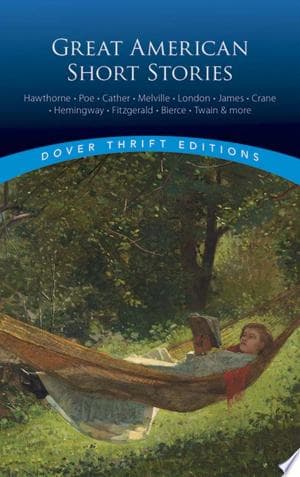
Synopsis
Covers the whole plot, including the ending.
- Difficulty
- Medium
- Pacing
- Moderate
- Mood
- Thought-provoking, classic, diverse, reflective
Great American Short Stories Plot Summary
Covers the whole plot, including the ending.
Young Goodman Brown's Temptation
Young Goodman Brown, a newly married Puritan, says goodbye to his wife, Faith, and goes into the forest for a secret, possibly wrong, reason. Deep in the woods, he meets a mysterious man, who seems to be the Devil. This figure reveals that many respected community members, including Brown's family and Faith, are involved in dark, unholy practices. Brown sees townspeople, both living and dead, at a satanic gathering. He urges Faith to resist, but he is unsure if her cry was real. He wakes up in his bed, back in the village, but the experience has permanently changed how he sees his community and his faith. He lives the rest of his life as a bitter, distrustful man.
The Tell-Tale Heart's Confession
The unnamed narrator, a careful and seemingly sane man, plans to murder an old man with a 'vulture eye' he finds disturbing. He insists he is sane while describing his careful, week-long preparations, creeping into the old man's room each night. On the eighth night, he kills the old man by suffocating him, then dismembers the body and hides the parts under the floorboards. When police arrive to investigate a neighbor's report of a shriek, the narrator confidently invites them in, believing his crime is perfect. However, he begins to hear a persistent, growing thumping sound, which he believes is the old man's beating heart, driving him to confess.
Bartleby, the Scrivener's Refusal
A Wall Street lawyer hires Bartleby, a new scrivener, for his office. At first, Bartleby is an excellent and diligent worker. Soon, though, he starts responding to requests with, 'I would prefer not to.' This refusal gradually extends to all tasks, including copying, proofreading, and eventually even leaving the office. The lawyer, a man who likes quiet and avoids trouble, becomes increasingly confused and bothered by Bartleby's passive resistance. He tries to understand and help Bartleby, but his efforts meet the same polite, firm refusal. Eventually, the lawyer moves his office, leaving Bartleby behind. Bartleby is later arrested for vagrancy and dies in prison, holding onto his preference for inaction.
The Luck of Roaring Camp's Paradox
Roaring Camp, a lawless, isolated gold mining settlement in the Sierra Nevada, is disrupted when one of its few women, Cherokee Sal, gives birth to a baby boy and then dies. The miners, unused to such an event, decide to adopt the infant, whom they name 'The Luck.' Surprisingly, the child's presence begins to civilize the camp. The miners clean up their language, appearance, and surroundings, driven by a new sense of responsibility and tenderness. They even send for a nurse and new furniture. However, a devastating flood sweeps through the camp. Kentuck, one of the most devoted miners, is found dead, clutching The Luck's lifeless body, tragically ending their brief period of refinement.
An Occurrence at Owl Creek Bridge's Illusion
Peyton Farquhar, a civilian and Confederate sympathizer, stands on a railroad bridge, about to be hanged by Union soldiers. The story details his final thoughts and sensory perceptions. Suddenly, the rope breaks, and he falls into the water, freeing his hands and swimming away, dodging bullets. He makes his way through the forest, experiencing heightened senses and a desperate urge to reach his home and family. He finally arrives at his house, sees his wife, and is about to embrace her when he feels a sharp blow to his neck and sees a blinding white light. The narrative then reveals that his escape was a vivid hallucination in his last moments. He is dead, his body swinging beneath Owl Creek Bridge.
To Build a Fire's Fatal Miscalculation
A nameless man, new to the Yukon territory, tries to travel alone on a brutally cold, minus 75-degree Fahrenheit day, despite warnings from an old-timer about the dangers of solo travel in such conditions. Accompanied only by a native husky, the man is confident in his abilities and dismisses the extreme cold. He repeatedly falls through thin ice, getting his clothing wet, and struggles to build a fire to dry himself and warm up. His first fire is put out by snow falling from a tree. Subsequent attempts are hindered by frostbitten hands and dwindling matches. As his body gives in to the cold, he makes desperate, futile attempts to kill his dog for warmth and then to run, ultimately freezing to death. The dog, sensing the man's death, leaves to find warmth and food.
The Real Thing's Artistic Struggle
An unnamed illustrator, who specializes in society portraits for magazines, hires Major and Mrs. Monarch, an impoverished aristocratic couple, to model for his high society illustrations. The Monarchs are genuinely refined and elegant, believing their authenticity will be valuable to the artist. However, the illustrator soon discovers a problem: their very 'realness' makes them unsuitable as models. They lack the versatility and expressiveness needed for different characters and emotions. Their static, unchanging perfection makes his drawings stiff and lifeless. He finds more success with his common, adaptable Italian model, Miss Churm, and a street urchin. Ultimately, he is forced to let the Monarchs go, showing the difference between reality and artistic representation.
The Storm's Passionate Interlude
Calixta, a married woman, is at home with her young son, Bibi, when a violent Louisiana storm breaks out. Her husband, Bobinôt, and their other son, Alcée, are caught outside and take shelter at a general store. Alcée Laballière, a former lover of Calixta, rides up to her house seeking shelter from the downpour. As the storm rages outside, a passionate and intense encounter unfolds between Calixta and Alcée. Their long-suppressed desires erupt, and they have a brief but fervent sexual encounter. After the storm passes, they part ways, seemingly without regret or consequence. Bobinôt and Alcée return home, none the wiser. The story concludes with a sense of natural, almost innocent, fulfillment for all involved, particularly Calixta.
Bernice Bobs Her Hair's Social Experiment
Bernice, a socially awkward and plain girl, visits her popular, manipulative cousin, Marjorie Harvey, for the summer. Bernice is a social failure, and Marjorie, exasperated, decides to help her. Marjorie teaches Bernice how to flirt, make witty conversation, and attract male attention, using the threat of 'bobbing her hair' as a tantalizing, yet forbidden, social move. Bernice, following Marjorie's advice, becomes surprisingly popular, even attracting Marjorie's admirer, Warren. Encouraged by her newfound success, Bernice genuinely says she intends to bob her hair, which was meant to be a bluff. Marjorie, feeling upstaged and betrayed, takes her revenge. In a final act of spite, Bernice cuts off Marjorie's braids while she sleeps, leaving them on Warren's porch.
The Killers' Unsettling Visit
Two professional hitmen, Al and Max, arrive in a small diner in Summit, Illinois, asking for a boxer named Ole Andreson. They reveal their intention to kill him. George, the diner owner, and Nick Adams, a customer, are held at gunpoint while the hitmen wait. Sam, the cook, is tied up in the kitchen. When Andreson doesn't show up, the hitmen leave, warning George not to inform the police. Nick, disturbed by the encounter, goes to warn Andreson, who is found lying in his room, resigned to his fate and unwilling to flee. Nick, unsettled by Andreson's passive acceptance of death, decides to leave Summit, unable to understand such fatalism. The story ends with Nick's departure, showing the widespread nature of violence and its victims' unsettling indifference.
Great American Short Stories Characters
Young Goodman Brown
Protagonist
A devout Puritan man who loses his faith.
Young Goodman Brown is a newly married, ostensibly pious Puritan man from a village steeped in religious dogma. He is initially presented as a man of faith, devoted to his wife, Faith. However, he harbors a secret curiosity or perhaps a hidden sin that draws him into the dark forest. He is naive and easily swayed by the revelations of the Devil and the apparent hypocrisy of his community. His journey is one of disillusionment, as he witnesses what he perceives as the widespread corruption of even the most respected individuals. He is ultimately a tragic figure, unable to reconcile his beliefs with his observations, leading to a life of suspicion and bitterness.
Relationships: Faith (Wife); The Devil (Tempter/Antagonist)
Narrator (The Tell-Tale Heart)
Protagonist/Antagonist
A meticulous, yet insane, murderer.
The unnamed narrator of 'The Tell-Tale Heart' is a man obsessed with his own sanity, despite clearly exhibiting signs of extreme paranoia and delusion. He is driven by an irrational hatred for the old man's 'vulture eye,' which he perceives as a threat. He is highly meticulous and cunning in his planning and execution of the murder, believing he has committed the perfect crime. His heightened senses and overconfidence ultimately lead to his downfall, as he projects his guilt onto the imagined sound of the old man's beating heart, driving him to confess. He is a classic unreliable narrator, whose declarations of sanity only serve to highlight his profound madness.
Relationships: Old Man (Victim)
Bartleby
Supporting
A scrivener who refuses to work.
Bartleby is a mysterious and enigmatic scrivener whose defining characteristic is his passive resistance, expressed through the phrase, 'I would prefer not to.' He is initially a diligent worker, but gradually withdraws from all activity, eventually refusing to even leave the office. He is gaunt, pale, and seems to possess an almost spiritual detachment from the world. His motivations are never explicitly stated, leaving his behavior open to interpretation as a protest against the dehumanizing aspects of capitalist society, a form of profound existential despair, or a mental illness. He embodies a quiet, unyielding defiance that baffles and frustrates those around him.
Relationships: The Lawyer (Employer)
The Lawyer (Bartleby)
Protagonist
A Wall Street lawyer who employs Bartleby.
The unnamed lawyer is the narrator and protagonist of 'Bartleby, the Scrivener.' He describes himself as an 'eminently safe' man, valuing ease, order, and avoiding trouble. He is initially a pragmatic and tolerant employer, but Bartleby's passive resistance challenges his composure and his understanding of human behavior. He experiences a range of emotions, from annoyance and frustration to pity and a sense of moral obligation. Despite his attempts to help Bartleby, he is ultimately unable to penetrate the scrivener's enigmatic refusal. His character serves as a foil to Bartleby, representing the conventional, comfortable world that Bartleby rejects.
Relationships: Bartleby (Employee)
Peyton Farquhar
Protagonist
A Confederate sympathizer facing execution.
Peyton Farquhar is a well-to-do planter and a civilian who is fiercely loyal to the Confederate cause. He is depicted as a romantic and somewhat naive individual, eager to prove his bravery and contribute to the war effort, even if it means acting outside official military channels. His fatal flaw is his impulsive nature and his susceptibility to deception, which leads him into the trap set by a Union scout. As he faces execution, his mind creates an elaborate, vivid fantasy of escape, demonstrating his strong will to live and his deep desire to return to his family. His character explores themes of illusion versus reality and the human mind's capacity for self-deception in the face of death.
Relationships: His Wife (Wife); Union Soldiers (Antagonists)
The Man (To Build a Fire)
Protagonist
An arrogant newcomer to the Yukon wilderness.
The unnamed man in 'To Build a Fire' is a newcomer to the Yukon territory, characterized by his overconfidence, lack of imagination, and disdain for local wisdom. He is pragmatic and logical but lacks the instinctive understanding of nature that is crucial for survival in extreme conditions. He disregards the advice of an 'old-timer' and relies solely on his own judgment and perceived strength. His struggle against the brutal cold is a testament to his hubris and his inability to learn from experience. He represents humanity's vulnerability when confronted with the raw power of nature, especially when intellect is not tempered by humility and respect for the environment.
Relationships: The Dog (Companion); The Old-Timer (Voice of wisdom (ignored))
Calixta
Protagonist
A passionate, uninhibited Cajun wife.
Calixta is a vibrant, sensual Cajun woman, portrayed as natural and uninhibited in her desires. She is a devoted wife and mother, but also possesses a strong, underlying passion that is easily ignited. During the storm, she experiences an intense moment of sexual liberation and fulfillment with her former lover, Alcée. Her character challenges conventional notions of morality and fidelity, presenting her actions not as sinful but as a natural expression of human desire, aligned with the raw power of the storm itself. She feels no guilt or regret, suggesting a more elemental, less constrained view of human relationships within her cultural context.
Relationships: Bobinôt (Husband); Alcée Laballière (Former lover/Current lover)
Bernice
Protagonist
A shy girl who undergoes a social transformation.
Bernice is initially presented as a plain, socially inept, and rather boring young woman. She is visiting her more popular cousin, Marjorie, and struggles to fit into the social scene. Under Marjorie's guidance, she undergoes a dramatic transformation, learning to charm and engage with others. This newfound popularity, however, leads to her becoming overconfident and ultimately betraying Marjorie's trust. Her journey is one of self-discovery and social manipulation, where she learns the superficial rules of popularity but also succumbs to vanity and a desire for revenge. She transitions from a passive observer to an active, albeit spiteful, participant in social games.
Relationships: Marjorie Harvey (Cousin/Rival); Warren (Love interest/Object of competition)
Marjorie Harvey
Antagonist
A popular, manipulative socialite.
Marjorie Harvey is Bernice's beautiful, popular, and socially adept cousin. She is a master of social dynamics, able to effortlessly charm and manipulate those around her. While she initially takes Bernice under her wing, her generosity is rooted in a desire to maintain her own social standing and control. She is fiercely competitive and becomes resentful when Bernice begins to overshadow her, especially in attracting Warren's attention. Marjorie represents the superficial and often cruel aspects of upper-class social life, where appearance and strategic behavior are paramount. Her actions are driven by vanity and a need to be the center of attention.
Relationships: Bernice (Cousin/Rival); Warren (Admirer)
Nick Adams
Protagonist
A young man grappling with the indifference of violence.
Nick Adams is a recurring character in Hemingway's short stories, here depicted as a young, observant, and sensitive man working at a diner. He is a witness to the arrival of the hitmen and their chilling intent to murder Ole Andreson. Nick is profoundly disturbed by the casualness of the violence and, more significantly, by Andreson's passive acceptance of his impending death. He tries to warn Andreson and understand his resignation, but ultimately finds himself unable to reconcile with such fatalism. His decision to leave Summit signifies his youthful idealism being confronted by the harsh realities of a violent and indifferent world, marking a step towards disillusionment.
Relationships: George (Co-worker/Friend); Ole Andreson (Victim (whom Nick tries to help)); Al & Max (Antagonists (indirectly))
Great American Short Stories Themes
The Dangers of Human Hubris vs. Nature
This theme explores the fatal results of human arrogance and overconfidence when facing the immense, indifferent power of nature. Characters who underestimate or disrespect nature's forces, relying only on their intellect or perceived superiority, often meet tragic ends. The wilderness is an impartial judge, showing the limits of human control and the need for humility, experience, and respect for one's environment. This theme often highlights survival through adaptation and understanding one's place within the ecosystem.
“The trouble with him was that he was not able to think about it. He was a newcomer to the land, and this was his first winter. The old-timer on Sulphur Creek had told him that no man must travel alone in the Klondike after fifty below zero. But he had laughed at him.”
Appearance vs. Reality
This theme explores how outward appearances can deceive, often contrasting sharply with underlying truths. Characters and situations are frequently not what they seem, leading to misunderstandings, disillusionment, or tragic outcomes. Whether it is hidden corruption beneath piety, the facade of sanity masking madness, or the artistic struggle between genuine article and effective representation, this theme questions how reliable perception is. It forces readers to look beyond the surface and consider the complex, often unsettling, realities beneath societal norms and personal presentations.
“He lived in the world, and was not of it. He was a being of no common order, and his nature was a riddle to the lawyer.”
The Corrupting Influence of Society
This theme examines how societal pressures, expectations, and moral frameworks can lead to hypocrisy, oppression, or a loss of individual integrity. It often critiques the superficiality of social conventions, the dangers of mob mentality, or how institutions can dehumanize individuals. Characters may conform to destructive norms, become complicit in injustice, or be ostracized for not fitting in. The theme suggests that society, despite its claims of order and progress, can be a source of deep moral decay and personal suffering, forcing individuals to confront uncomfortable truths about their communities.
“And, as he spoke, he pointed his staff at a man who was approaching through the twilight, with a slow and solemn pace, as if he were on his way to a funeral. It was good old Deacon Gookin, a very pious and exemplary member of the church.”
The Nature of Good and Evil
This theme explores the inherent struggle between good and evil, often questioning clear distinctions and examining their presence within individuals and society. It explores the sources of moral corruption, the allure of temptation, and the psychological impact of engaging with malevolence. Stories often present situations where characters must confront their own capacity for darkness or witness the blurred lines between virtue and vice in others. This theme frequently suggests that evil is not always an external force but can reside within the human heart, appearing in forms from subtle hypocrisy to overt violence.
“It is impossible to say how first the idea entered my brain; but once conceived, it haunted me day and night. Object there was none. Passion there was none. I loved the old man. He had never wronged me. He had never given me insult. For his gold I had no desire. I think it was his eye! yes, it was this! One of his eyes resembled that of a vulture—a pale blue eye, with a film over it. Whenever it fell upon me, my blood ran cold; and so by degrees—very gradually—I made up my mind to take the life of the old man, and thus rid myself of the eye forever.”
Plot Devices & Literary Techniques
Unreliable Narrator
A narrator whose credibility is compromised.
This device involves a narrator whose account of events cannot be fully trusted due to their mental state, biases, limited perspective, or deliberate deception. The unreliable narrator often provides a skewed or distorted version of reality, forcing the reader to question what is actually happening and to piece together the truth from subtle clues. This technique creates suspense, adds layers of psychological complexity, and highlights themes of perception, madness, and the subjective nature of truth. It often serves to immerse the reader in the narrator's flawed perspective, making the experience more unsettling and thought-provoking.
Symbolism
Objects or ideas representing deeper meanings.
Symbolism is the use of objects, people, or ideas to represent something else, often a more abstract or profound concept. This device enriches the narrative by adding layers of meaning beyond the literal. For instance, the forest in 'Young Goodman Brown' symbolizes the realm of temptation and hidden sin, while Faith's pink ribbons represent innocence and purity. In 'To Build a Fire,' the fire itself symbolizes life and survival, while the extreme cold represents indifferent nature. Symbolism allows authors to convey complex ideas concisely and evoke powerful emotional responses, inviting readers to interpret and engage more deeply with the text's themes.
Foreshadowing
Hints of future events.
Foreshadowing is a literary device in which an author subtly hints at future events or outcomes in the story. These hints can be direct statements, symbolic imagery, character dialogue, or atmospheric descriptions that create a sense of anticipation or unease. In 'To Build a Fire,' the old-timer's warning about not traveling alone is a clear example. In 'The Tell-Tale Heart,' the narrator's meticulous planning and repeated declarations of sanity ironically foreshadow his eventual breakdown. Foreshadowing builds suspense, prepares the reader for later developments, and adds a sense of inevitability or irony to the narrative, making the plot feel more cohesive.
Irony
A contrast between expectation and reality.
Irony is a literary device that involves a contrast or incongruity between what is said and what is actually meant (verbal irony), what appears to be happening and what actually happens (situational irony), or what the audience knows versus what a character knows (dramatic irony). In 'The Luck of Roaring Camp,' the rough miners becoming civilized by a baby is situational irony. In 'The Real Thing,' the 'real thing' models proving unsuitable for artistic representation is also situational irony. Irony often adds humor, pathos, or a critical edge to the narrative, highlighting the complexities and contradictions of human experience and societal norms.
Quiz
10 questions on the plot and the characters. Each answer comes with a short explanation.
Question 1
Who is the editor of the "Great American Short Stories" collection?
- Nathaniel Hawthorne
- Ernest Hemingway
- Paul Negri
- Edgar Allan Poe
Show answer
C. Paul Negri The book's description explicitly states it is by Paul Negri.
Question 2
Which story is the earliest included in the collection?
- "The Killers"
- "The Tell-Tale Heart"
- "Young Goodman Brown"
- "Bartleby"
Show answer
C. "Young Goodman Brown" The description states the collection begins with Nathaniel Hawthorne's 1835 tale "Young Goodman Brown."
Question 3
Which author is NOT mentioned as having a story in the collection?
- Mark Twain
- Henry James
- F. Scott Fitzgerald
- William Faulkner
Show answer
D. William Faulkner William Faulkner is not listed among the authors whose stories are featured in the collection.
Question 4
The collection spans approximately how many years of American short-story tradition?
- 50 years
- 75 years
- 100 years
- 150 years
Show answer
C. 100 years The collection starts with an 1835 story and ends with a 1927 story, covering a span of 92 years, which is closest to 100 years.
Question 5
Which of the following stories is included in the collection?
- "The Fall of the House of Usher"
- "The Tell-Tale Heart"
- "The Pit and the Pendulum"
- "The Raven"
Show answer
B. "The Tell-Tale Heart" The description explicitly mentions "Poe's 'The Tell-Tale Heart'" as one of the selections.
Question 6
The collection is described as being perfect for what purpose?
- A guide to writing short stories
- Classroom use and general fiction readers
- A historical overview of American literature
- A study of 19th-century American culture
Show answer
B. Classroom use and general fiction readers The description states, "Perfect for classroom use, this outstanding collection of tales will also prove popular with fiction readers everywhere."
Question 7
Which author is known for their stories set in the American West, and has a story in this collection?
- Edgar Allan Poe
- Jack London
- Bret Harte
- Stephen Crane
Show answer
C. Bret Harte Bret Harte is famously associated with stories of the American West, and "The Luck of Roaring Camp" is mentioned as being in the collection.
Question 8
The collection features stories from writers who represent "the most distinguished writers in the American short-story tradition." This implies the collection focuses on:
- Experimental and avant-garde short stories.
- Stories that have had a significant impact and recognition.
- Stories by contemporary American authors.
- Stories that are critical of American society.
Show answer
B. Stories that have had a significant impact and recognition. The phrase "most distinguished writers in the American short-story tradition" suggests a focus on established, influential, and highly regarded authors and their works.
Question 9
Considering the range of authors and the time period covered (1835-1927), what literary movement is *least* likely to be prominently represented in this collection?
- Romanticism
- Realism
- Modernism
- Postmodernism
Show answer
D. Postmodernism Postmodernism is a literary movement that largely emerged after the mid-20th century, well after the 1927 end date of the stories in this collection.
Question 10
The inclusion of authors like Hawthorne, Poe, and Melville alongside later writers like Hemingway and Fitzgerald suggests the collection aims to showcase:
- A singular, unified style of American short fiction.
- The evolution and diversity of American short stories over time.
- Only stories written during periods of national prosperity.
- A focus on authors who were primarily poets.
Show answer
B. The evolution and diversity of American short stories over time. The wide range of authors from different eras and styles indicates an intention to present the breadth and development of the American short story tradition, rather than a single style or theme.
Great American Short Stories FAQ
What is Great American Short Stories by Paul Negri about?
This book is a compilation of 19 of the finest short stories from distinguished American writers. It spans a century of American short fiction, starting with Nathaniel Hawthorne and ending with Ernest Hemingway.
What time period does the collection cover?
The collection spans an entire century of American short fiction, beginning with Nathaniel Hawthorne's 1835 tale 'Young Goodman Brown' and concluding with Ernest Hemingway's 1927 classic, 'The Killers.'
Which famous authors are included in Great American Short Stories?
The book features works by renowned authors such as Edgar Allan Poe, Herman Melville, Bret Harte, Jack London, Henry James, F. Scott Fitzgerald, Mark Twain, Sarah Orne Jewett, Charles Chesnutt, Kate Chopin, Stephen Crane, Willa Cather, Ambrose Bierce, Theodore Dreiser, Nathaniel Hawthorne, and Ernest Hemingway.
What are some of the specific stories included in the book?
Notable stories in the collection include 'Young Goodman Brown' by Hawthorne, 'The Tell-Tale Heart' by Poe, 'Bartleby' by Melville, 'The Luck of Roaring Camp' by Harte, 'To Build a Fire' by London, 'The Real Thing' by James, and 'Bernice Bobs Her Hair' by Fitzgerald.
Is this book suitable for classroom use?
Yes, the collection is described as perfect for classroom use, offering a diverse range of classic American short stories that can be studied and discussed.
Who would enjoy reading Great American Short Stories?
This collection is popular with fiction readers everywhere, especially those interested in the history and evolution of the American short story tradition.
What is the earliest story in the collection?
The earliest story featured in the collection is Nathaniel Hawthorne's 'Young Goodman Brown,' published in 1835.
What is the latest story in the collection?
The latest story in the collection is Ernest Hemingway's classic, 'The Killers,' published in 1927.
Does the book include stories from various literary movements?
Given the span of authors and time periods, the collection likely includes stories representing various literary movements from the 19th and early 20th centuries, offering a broad view of American literature.
About the author

Paul Negri is an author known for his contributions to fiction, particularly in the realm of short stories. His notable work, "Great American Short Stories," showcases a collection of significant American narratives, reflecting the diversity and richness of the genre.
Similar books
- Nineteen Eighty-Four
George Orwell
4.2 (5.5M) average on GoodreadsFictionWinston Smith dreams of truth and rebellion in a world where Big Brother watches all, but he confronts the terrifying power of a regime that controls not just actions, but thoughts.
- The Frozen River
Ariel Lawhon
4.4 (600k) average on GoodreadsFictionIn 1789 Maine, a heroic midwife's diary helps her expose a murder and get justice in a town that wants to silence her.
- A Man Called Ove
Fredrik Backman
4.4 (569k) average on GoodreadsFictionA stubborn widower, who lives by strict rules, finds his quiet world changed by a lively new family next door, making him face his past and find happiness in human connection.
- The Art of Racing in the Rain
Garth Stein
4.2 (452k) average on GoodreadsFictionThrough the eyes of Enzo, a wise and observant dog, a race car driver's family navigates a journey of love, loss, and resilience, learning that life's most important lessons often come in the curves, not just on the straightaways.
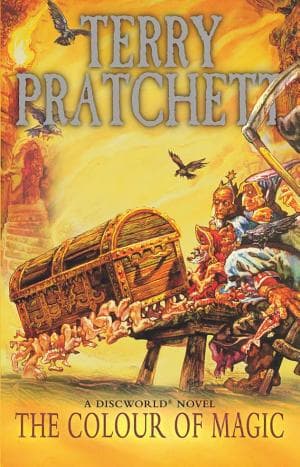
- The Colour of Magic
Terry Pratchett
4.0 (425k) average on GoodreadsFictionOn a discworld hurtling through space on the back of a giant turtle, an inept wizard and his naive, walking-luggage-toting tourist embark on a chaotic, belief-fueled journey to the very edge of their flat planet, encountering dragons that only exist if you believe in them.
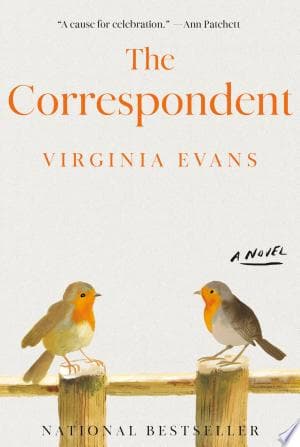
- The Correspondent
Virginia Evans
4.5 (391k) average on GoodreadsFictionA distinguished lawyer's life of carefully written letters, both sent and unsent, reveals a past heartbreak, making her confront forgiveness and the power of written words.

Enjoyed the summary?
A summary gives you the shape of the book. The book itself has the detail, the examples and the voice.
Find Great American Short Stories on AmazonAs an Amazon Associate, BookBrief earns from qualifying purchases. How we're funded