
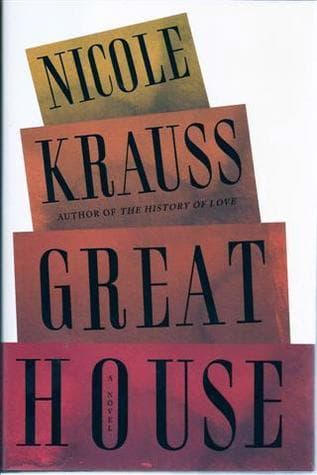
Synopsis
Covers the whole plot, including the ending.
- Difficulty
- Medium
- Pacing
- Slow
- Mood
- Melancholy, Reflective, Atmospheric, Introspective
- Read it if
- You enjoy intricate, character-driven literary fiction with a focus on memory, loss, and the objects that connect us to the past, presented through multiple, interwoven narratives.
- Skip it if
- You prefer linear plots, fast-paced action, or clear-cut resolutions, as this book is reflective, fragmented, and delves deeply into psychological landscapes.
Great House Plot Summary
Covers the whole plot, including the ending.
Nadia's Inheritance
Nadia, a novelist in upstate New York, has spent twenty-five years writing at a large, multi-drawer desk. She inherited it from Daniel Varsky, a Chilean poet who disappeared in the 1970s. Nadia had a brief, intense affair with Daniel. The desk became an important object in her life, a symbol of her connection to him and her writing. One day, a young woman arrives, claiming to be Daniel's daughter and demanding the desk back. This event disrupts Nadia's quiet life and makes her confront her past and the desk's true ownership.
Aaron's Discovery
Aaron, an elderly man in London, cares for his dying wife, Lani. As he sorts through her belongings, he finds a small, braided lock of hair. This object reveals a secret about Lani's past: a hidden child and a betrayal from decades ago. The discovery upsets Aaron, forcing him to rethink his marriage and the woman he thought he knew, even as she is dying.
Yoav's Quest
Yoav, an antiques dealer in Jerusalem, is dedicated to rebuilding his late father's study, which was stolen by Nazis in Budapest in 1944. His father, an intellectual, had a deep connection to his books and study. Yoav believes that by recreating the study, he can reconnect with his father's memory and recover what was lost. He carefully searches for furniture, books, and artifacts that match his father's descriptions, driven by a desire to mend the past.
The Desk's Journey to Chile
Daniel Varsky, a charismatic and politically active young poet in Santiago, Chile, acquires the large desk. It becomes central to his life, a place where he writes poetry, hosts intellectuals, and discusses politics. The desk symbolizes his intellectual pursuits and literary career. His relationship with the desk is personal and creative, making its eventual loss more painful. He is a hopeful figure whose life and work are tied to the desk before his disappearance during the Pinochet regime.
Nadia's Refusal and Recollections
Nadia first refuses to give the desk to the young woman who claims to be Daniel's daughter. She recounts her affair with Daniel Varsky, describing their intellectual and physical connection. She remembers the desk as a silent witness to their shared moments and her own writing, which she felt was influenced by Daniel and the desk's history. For Nadia, the desk is not just furniture; it holds memory, grief, and inspiration. Giving it up feels like erasing a part of her identity and history with Daniel.
Aaron's Confrontation with Lani's Past
As Lani's health worsens, Aaron is troubled by the secret of the lock of hair and the hidden child. He confronts Lani, but her illness makes communication difficult. He struggles to accept this new information about her past betrayal and hidden life. The discovery casts a shadow over their marriage, making Aaron question their shared history even as he faces her death. He feels hurt and confused, made worse by his inability to fully understand or forgive before it is too late.
Yoav's Father's Story
Yoav's story explores his father's experiences as a young man during the Holocaust in Budapest. His father, a scholar, saw his family's home destroyed and his study plundered by the Nazis. The loss of his books and intellectual space was not just material; it was a deep spiritual and cultural devastation. Yoav's quest to rebuild the study is an attempt to heal these wounds and honor his father's resilience and intellectual legacy.
The Desk's Hungarian Origins
The desk's story begins with a wealthy Jewish family in Hungary, specifically with the patriarch, a scholar. The desk was central to his study, a place of learning and family gatherings. It represented stability, tradition, and intellectual pursuit within the family. This peaceful past is violently interrupted by the Nazi invasion and the looting of their home, starting the desk's long journey across continents and through different hands, each adding new meaning and loss.
Nadia's Acceptance and Letting Go
After much thought about her past and Daniel's legacy, Nadia agrees to give the desk to the young woman, whom she accepts as Daniel's daughter. This act of letting go is painful but also freeing. She realizes that the desk's true meaning is not in her owning it, but in its ability to connect generations and carry the stories of its owners. Giving it up is an acknowledgment of Daniel's lasting memory and his impact on her and his family.
Aaron's Grief and Revelation
After Lani's death, Aaron grieves, but also carries the weight of her secret. He continues to think about the lock of hair and the hidden child, understanding that Lani's life was more complex and perhaps more tragic than he realized. The revelation, though painful, deepens his understanding of her, not as a perfect wife, but as a woman who carried her own burdens and made difficult choices. His journey is about accepting the hidden parts of a loved one and mourning the person she was, completely.
Yoav's Partial Restoration
Yoav continues his work of assembling his father's study. He recovers some pieces, but the task is never truly finished. The act of searching and rebuilding becomes more important than full restoration. It is a continuous process of memory, mourning, and connection to his heritage. The impossibility of full recovery mirrors the irreversible losses of the Holocaust, but the effort itself is an act of resistance against forgetting, showing the power of memory and the human need to honor the past.
The Desk's Continued Journey
The novel ends with the understanding that the desk, though physically separate in each story, is a symbol of memory, loss, and the connection of human lives across time and place. It holds the marks of all its owners, their stories, joys, and sorrows. Its journey represents the lasting legacy of objects and how they can bind people to their pasts, families, and each other, even when separated by continents and generations. The desk is not just an object but a record of human experience.
Principal Figures
Nadia
Protagonist
A reclusive American novelist haunted by a past love and a symbolic desk.
Nadia is an American novelist who has lived a solitary life for twenty-five years, deeply attached to the large, multi-drawer desk she inherited. She is intellectual, introspective, and profoundly affected by her past affair with Daniel Varsky. The desk is intertwined with her identity as a writer and her grief over Daniel's disappearance. She is initially resistant to change, viewing the desk as her personal sanctuary and a direct link to her most significant emotional experience. Her reclusiveness suggests a coping mechanism for past trauma and loss.
Relationships: Daniel Varsky (Former lover, inspiration, source of enduring grief); Daniel's Daughter (Challenger to her ownership, catalyst for change)
Aaron
Protagonist
An elderly Londoner who uncovers a shocking secret about his dying wife.
Aaron is a devoted and seemingly conventional husband, deeply committed to caring for his terminally ill wife, Lani. He is observant and reflective, but his world is shattered by the discovery of a lock of hair that reveals a profound secret about Lani's past. He grapples with betrayal, love, and the complexities of human identity, even as he faces the ultimate loss. His character embodies the pain of belated revelations and the challenge of reconciling a loved one's known self with a hidden, unknown past.
Relationships: Lani (Wife, source of both deep love and profound betrayal); The Hidden Child (Unknown offspring, symbol of Lani's secret life)
Yoav
Protagonist
An Israeli antiques dealer obsessed with rebuilding his father's plundered study.
Yoav is an antiques dealer in Jerusalem, driven by a powerful, almost spiritual, mission to reconstruct his father's study, which was destroyed by the Nazis. He is meticulous, dedicated, and deeply connected to his family's history and the trauma of the Holocaust. For Yoav, the study is more than just a collection of objects; it is a sacred space representing intellectual heritage, cultural identity, and a profound loss. His quest is an act of defiance against historical erasure and a way to honor his father's memory and resilience.
Relationships: Yoav's Father (Deceased father, intellectual, victim of the Holocaust, inspiration for Yoav's quest)
Daniel Varsky
Supporting
A charismatic Chilean poet who disappears under Pinochet's regime.
Daniel Varsky is a passionate, politically engaged, and talented young poet in Santiago, Chile. He is charismatic and intellectually vibrant, deeply committed to his art and his revolutionary ideals. He is the original owner of the desk that later goes to Nadia. His disappearance under Pinochet's regime is a central tragedy of the novel, representing not only personal loss but the broader political violence and cultural suppression of the era. His memory profoundly impacts Nadia and his unknown daughter, linking generations through his legacy.
Relationships: Nadia (Lover, fellow artist); Daniel's Daughter (Unseen child, inheritor of his legacy)
Lani
Supporting
Aaron's dying wife who harbors a deep, lifelong secret.
Lani is Aaron's wife, slowly succumbing to a terminal illness. She is largely seen through Aaron's eyes, initially as a beloved and devoted partner. However, the discovery of a lock of hair reveals a hidden past and a secret child, complicating Aaron's understanding of her. Her declining health makes it difficult for her to fully articulate her story, leaving Aaron to piece together the truth. She represents the idea that even those closest to us can harbor profound, untold histories and that identities are often more complex than they appear.
Relationships: Aaron (Husband, ultimately confronted with her hidden life); The Hidden Child (Secret offspring, a source of lifelong guilt or secrecy)
Daniel's Daughter
Supporting
The young woman who appears to reclaim the desk from Nadia.
The young woman who arrives at Nadia's doorstep claiming to be Daniel Varsky's daughter is a catalyst for change. Her appearance forces Nadia to confront her past and the true ownership of the desk. She is determined and represents the new generation seeking to reclaim their heritage and understand their parents' histories. Though her perspective is not directly narrated, her actions drive a significant part of Nadia's emotional journey, embodying the pull of generational memory and the right to ancestral legacies.
Relationships: Daniel Varsky (Father, whose memory she seeks to reclaim); Nadia (Recipient of her demand, a figure from her father's past)
Yoav's Father
Mentioned
A Hungarian intellectual whose study was plundered during the Holocaust.
Yoav's father is a scholar and intellectual from Budapest, whose life and study were brutally disrupted by the Holocaust. He is a symbol of cultural loss and resilience in the face of unimaginable devastation. His meticulous memory and his recounting of the lost study inspire Yoav's lifelong quest. Though only present through memory and fragmented stories, his intellectual spirit and the trauma he endured profoundly shape Yoav's identity and mission, representing the enduring impact of the past on subsequent generations.
Relationships: Yoav (Son, who seeks to honor his legacy)
Hungarian Patriarch
Mentioned
The first known owner of the great desk, an intellectual in pre-war Hungary.
The Hungarian Patriarch is the initial owner of the great desk, a distinguished intellectual within a wealthy Jewish family in pre-war Budapest. He represents a lost world of European culture, scholarship, and stability that was destroyed by the Holocaust. The desk in his study was a symbol of his intellectual life and family heritage. His story establishes the desk's long history and its role as a repository of knowledge and family identity before its violent displacement. He is a foundational figure in the desk's journey.
Relationships: The Desk (Original owner, for whom the desk was a centerpiece of his intellectual life)
Themes & Insights
Memory and Loss
The novel explores how people deal with personal and historical loss, and how memory tries to create permanence against its certainty. Nadia holds onto the desk as a physical reminder of Daniel, fearing that giving it up means losing him forever. Yoav's life is a quest to rebuild his father's study, fighting against the erasure of the Holocaust. Aaron's discovery of Lani's secret makes him rethink decades of shared memories. The characters are defined by what they have lost and their efforts to keep those losses alive, showing memory as a powerful, sometimes painful, force.
“What do we pass on to our children and how do they absorb our dreams and losses?”
The Power of Objects
The central desk is more than furniture; it holds the histories, emotions, and identities of its owners. It acts as a way to access memory and a silent witness to important life events. For Nadia, it links her to Daniel and her creative self. For Daniel, it was a center of intellectual and political activity. For Yoav's father, it was the heart of his intellectual world. The desk gains meaning with each owner, becoming a holder of stories and a tangible link between different lives across continents and generations. Its movement and ownership drive much of the story, showing how objects can have great symbolic and emotional weight.
“Connecting these stories is a desk of many drawers that exerts a power over those who possess it or have given it away.”
Identity and Legacy
The characters deal with who they are, who they were, and what they will leave behind. Nadia's identity as a writer is tied to the desk and Daniel's influence. Aaron questions Lani's true identity after finding her secret, and by extension, his understanding of their shared life. Yoav's identity is linked to his father's legacy and the trauma of the Holocaust; his mission is to preserve that legacy. The novel explores how personal histories, secrets, and inherited traumas shape individual identities and how these are passed on, sometimes unknowingly, to future generations. The idea of legacy goes beyond family lines to shared experiences and the objects that embody them.
“How do we respond to disappearance, destruction, and change?”
Interconnectedness and Solitude
Despite the physical distance and personal isolation many characters experience (Nadia's solitude, Yoav's singular quest), the novel shows their deep connection through the desk's shared history. The desk travels from Hungary to Chile, then to America, linking these seemingly different lives. Each character's story, while distinct, shares themes of loss, memory, and the search for meaning, creating a shared human experience. The novel suggests that even in deep solitude, people are part of a larger, invisible web of human history and shared fate, often through objects and the stories they carry.
“The desk takes on more and more meaning, and comes finally to stand for all that has been taken from them, and all that binds them to what has disappeared.”
Plot Devices & Literary Techniques
The Great Desk
A multi-drawer desk that serves as the central unifying object and symbol.
The desk is the primary plot device, acting as a tangible link between the disparate narratives. It is not merely a prop but a character in itself, accumulating history, meaning, and emotional weight with each owner. Its physical journey across continents and through different historical periods connects the characters' lives and traumas. The desk symbolizes memory, loss, creativity, and the enduring power of objects to carry stories. It serves as a catalyst for Nadia's internal conflict and represents the continuity of human experience despite profound loss and change.
Multiple First-Person Narrators
The story is told through the distinct, subjective voices of its main characters.
The novel employs multiple first-person narrators (Nadia, Aaron, Yoav) whose stories are interwoven but not directly overlapping in real-time. This device allows for deep psychological insight into each character's inner world, their unique perspectives on memory, loss, and identity. It creates a mosaic-like structure, gradually revealing the broader themes and the desk's significance from different angles. The distinct voices highlight the subjective nature of memory and how personal histories are constructed, while the common thread of the desk implicitly connects their otherwise separate lives.
Non-Linear Narrative
The story jumps between different time periods and geographical locations.
The novel's structure is non-linear, moving back and forth in time and across various geographical locations (New York, London, Jerusalem, Chile, Hungary). This device mirrors the fragmented nature of memory and trauma, allowing the reader to piece together the desk's history and the characters' connections gradually. It builds suspense and reveals information in a way that deepens the emotional impact of each revelation. The non-linear approach emphasizes how past events continue to resonate in the present, shaping characters' lives and their understanding of themselves and the world.
The Lock of Hair
A small, seemingly insignificant object that reveals a profound secret.
The lock of hair discovered by Aaron is a classic example of a 'macguffin' or a symbolic object that triggers a major plot development. Its small size belies its immense significance, unraveling a lifelong secret about Lani's hidden child. This device introduces themes of betrayal, hidden identities, and the profound impact of untold histories. It serves as a tangible piece of evidence that forces Aaron to confront a reality he never knew existed, showcasing how even the smallest artifacts can carry immense narrative weight and emotional consequence.
Great House Quotes
“Perhaps the world was like a great house, and we were but tenants, each with our own small room, occasionally venturing out into the common spaces, but mostly living in the privacy of our own narratives.”
“Memory, after all, is not a record, but a storyteller.”
“The things that bind us are often the things we cannot name.”
“A chair is not just a chair. It is a repository of all the bodies that have ever sat in it.”
“To forget is to make a choice, even if an unconscious one.”
“We leave traces, even when we think we've disappeared.”
“Every object has a secret life, a story it could tell if only we knew how to listen.”
“The past is not dead. It is not even past. It is a presence, always, in the air we breathe, the ground we walk on, the stories we tell.”
“What is a life, after all, but a series of rooms, some entered, some exited, some never seen?”
“Love, too, is a kind of haunting. It stays, long after the loved one is gone.”
“Sometimes the greatest burden is the one you choose to carry.”
“We are all made of stories, and when one story ends, another begins, often in the same place, with the same echoes.”
“The weight of absence can be heavier than the weight of presence.”
“There are things we inherit that are not visible, but are felt, deep in the bones.”
Quiz
10 questions on the plot and the characters. Each answer comes with a short explanation.
Question 1
Which character inherited the desk from a young Chilean poet who disappeared?
- Nadia
- Aaron
- An American novelist
- Dov
Show answer
C. An American novelist The front flap explicitly states that 'a reclusive American novelist has been writing at the desk she inherited from a young Chilean poet who disappeared'.
Question 2
In which city does the man caring for his dying wife discover a lock of hair among her papers?
- Santiago
- Jerusalem
- London
- Budapest
Show answer
C. London The summary states, 'Across the ocean, in the leafy suburbs of London, a man caring for his dying wife discovers, among her papers, a lock of hair'.
Question 3
What event led to the plundering of the father's study in Budapest in 1944, as recounted by the Jerusalem antiques dealer?
- A natural disaster
- Pinochet's secret police
- The Nazi occupation
- A family dispute
Show answer
C. The Nazi occupation The summary mentions, 'In Jerusalem, an antiques dealer slowly reassembles his father's study, plundered by the Nazis in Budapest in 1944.'
Question 4
What specific item connects the disparate stories and characters in 'Great House'?
- A rare book
- A lock of hair
- A desk of many drawers
- A piece of antique jewelry
Show answer
C. A desk of many drawers The front flap explicitly states, 'Connecting these stories is a desk of many drawers that exerts a power over those who possess it or have given it away.'
Question 5
What is the primary emotional response the desk comes to represent for the narrators, as stated in the summary?
- Hope for the future
- All that has been taken from them, and all that binds them to what has disappeared
- A symbol of wealth and status
- The possibility of new beginnings
Show answer
B. All that has been taken from them, and all that binds them to what has disappeared The summary explains, 'the desk takes on more and more meaning, and comes finally to stand for all that has been taken from them, and all that binds them to what has disappeared.'
Question 6
Who arrives to claim the desk from the American novelist after twenty-five years?
- The Chilean poet himself
- A girl claiming to be the poet's daughter
- An antiques dealer from Jerusalem
- The man from London
Show answer
B. A girl claiming to be the poet's daughter The summary states, 'one day a girl claiming to be the poet's daughter arrives to take it away, sending the writer's life reeling.'
Question 7
What is the central question 'Great House' explores regarding the relationship between generations?
- How do children rebel against their parents' wishes?
- What do we pass on to our children and how do they absorb our dreams and losses?
- How do parents control their children's destinies?
- The financial inheritance children receive from their parents.
Show answer
B. What do we pass on to our children and how do they absorb our dreams and losses? The summary highlights, 'What do we pass on to our children and how do they absorb our dreams and losses?' as a haunting question.
Question 8
The Chilean poet's disappearance is attributed to what specific political action?
- A coup d'état in Argentina
- Pinochet's secret police
- The Soviet KGB
- The Nazi Gestapo
Show answer
B. Pinochet's secret police The summary specifies that the Chilean poet 'disappeared at the hands of Pinochet's secret police'.
Question 9
What broader concept does the novel explore through the lens of memory, as indicated by the front flap?
- Memory's struggle to create meaningful permanence in the face of inevitable loss
- The unreliability of memory in historical accounts
- Memory as a tool for political manipulation
- The scientific process of memory formation
Show answer
A. Memory's struggle to create meaningful permanence in the face of inevitable loss The final sentence of the summary states, 'Nicole Krauss has written a soaring, powerful novel about memory struggling to creat a meaningful permanence in the face of inevitable loss.'
Question 10
The antique dealer in Jerusalem is reassembling his father's study after it was plundered in Budapest. What year is specifically mentioned for this plundering event?
- 1939
- 1945
- 1944
- 1956
Show answer
C. 1944 The summary states, 'In Jerusalem, an antiques dealer slowly reassembles his father's study, plundered by the Nazis in Budapest in 1944.'
Great House FAQ
What is the central object that connects the seemingly disparate narratives in 'Great House'?
The central object is a large, ornate desk with many drawers. It is repeatedly passed between characters across different continents and time periods, acting as a physical and symbolic anchor for their stories of loss, memory, and inheritance.
Who are the primary narrators or perspectives through which the story is told?
The novel features several distinct narrators: Nadia, the reclusive American novelist; an unnamed man in London caring for his dying wife; Aaron, the antiques dealer in Jerusalem; and likely others whose direct connection to the desk is unveiled throughout the book. Each voice offers a unique perspective on the desk's significance.
How does the desk arrive in Nadia's possession, and what event disrupts her life?
Nadia inherited the desk from a young Chilean poet who disappeared during Pinochet's regime. Her life is disrupted when a young woman arrives, claiming to be the poet's daughter, and demands the desk back, forcing Nadia to confront her past and the desk's true ownership.
What secret does the man in London uncover regarding his dying wife?
While caring for his dying wife, the man discovers a lock of hair among her papers. This seemingly small detail unravels a terrible secret, likely related to a past event or relationship that his wife kept hidden, causing him to re-evaluate their shared life.
What is Aaron's goal in Jerusalem, and how does it relate to the desk?
Aaron, an antiques dealer in Jerusalem, is painstakingly reassembling his father's study, which was plundered by the Nazis in Budapest in 1944. The desk is a crucial, perhaps the central, piece of this lost study, representing his attempt to reclaim and reconstruct his family's history and heritage.
Is there a direct genealogical link between all the characters who possess the desk, or is their connection more thematic?
While some characters, like Aaron and his father, have a direct genealogical link, the connections between all desk owners are not strictly genealogical. The novel explores a more thematic connection, showing how the desk links individuals through shared experiences of loss, memory, and the passage of history, even if they are strangers.
How does the novel subtly imply the desk's 'power' beyond its physical presence?
The novel implies the desk's power through the intense emotional attachment and profound personal revelations it triggers in its owners. It doesn't possess magical powers, but rather acts as a catalyst for memory, confession, and confronting difficult truths, almost compelling its occupants to engage with their pasts.
What is the significance of the many drawers in the desk, beyond just storage?
The many drawers of the desk symbolize the hidden compartments of memory, secrets, and untold stories within each character. They represent the layers of history and personal experience that are concealed and eventually revealed, mirroring the complex structure of the narrative itself.
How does the Chilean poet's disappearance under Pinochet's regime resonate with the broader themes of the book?
The poet's disappearance under Pinochet's regime is a powerful example of forced loss and political violence, echoing the plundering of Aaron's father's study by the Nazis. It underscores the novel's theme of how individuals and cultures grapple with sudden, violent erasure and the struggle to preserve what has been taken.
How does Nadia's reclusive nature influence her relationship with the desk and the arrival of the poet's daughter?
Nadia's reclusiveness has allowed her to build a life around the desk, using it as a sanctuary for her writing and a buffer against the outside world. The arrival of the poet's daughter shatters this isolation, forcing Nadia to confront the external reality of the desk's history and her own complicity in its ownership.
What psychological impact does the discovery of the lock of hair have on the man in London?
The discovery of the lock of hair plunges the man into a profound psychological crisis, causing him to question the authenticity of his marriage and his wife's identity. It forces him to re-evaluate their entire shared history, leading to feelings of betrayal, confusion, and a deep sense of an unknown past.
How does Aaron's meticulous reassembly of his father's study reflect a psychological need?
Aaron's meticulous reassembly of his father's study is a deeply psychological act of mourning and reclamation. It represents his desperate need to impose order on a chaotic past, to honor his father's memory, and to symbolically restore what was violently stolen, providing a sense of permanence against destruction.
How do the characters' relationships with the desk evolve from mere ownership to a deeper, more symbolic connection?
Initially, the characters might view the desk as a functional object or an inheritance. However, through their interactions, confessions, and the memories it evokes, the desk transforms into a powerful symbol of their lost loved ones, their displaced histories, and ultimately, a vessel for their personal narratives and identity.
To what extent is the desk a character in itself, rather than just a prop?
The desk functions almost as a silent character, an omnipresent witness to the unfolding lives and secrets of its owners. It doesn't act, but it exerts a profound influence, prompting reflection and revelation, and its journey through history is as central to the narrative as any human character's.
How does the novel explore the concept of 'inheritance' beyond physical possessions?
The novel expands the idea of 'inheritance' to include not just physical objects like the desk, but also memories, traumas, secrets, and the dreams and losses of previous generations. It examines how these intangible inheritances shape the identities and destinies of the characters.
What statement does 'Great House' make about the nature of memory and its struggle against loss?
'Great House' posits that memory is a powerful, yet fragile, force constantly battling against inevitable loss and destruction. It suggests that while physical objects can be taken, the stories, emotions, and the act of remembering themselves are crucial in creating a meaningful permanence.
Is there a definitive resolution to the question of who 'owns' the desk by the end of the novel?
The novel is less concerned with a definitive legal ownership of the desk and more with its emotional and symbolic ownership. The resolution, if any, often lies in the characters' understanding and acceptance of the desk's shared history and the stories it embodies, rather than a simple transfer of title.
How does the narrative structure, with multiple fragmented perspectives, contribute to the novel's themes?
The fragmented narrative structure mirrors the brokenness of memory and the scattered pieces of history the characters are trying to reassemble. By presenting multiple perspectives, the novel emphasizes the subjective nature of truth and how different individuals experience and interpret loss and connection.
About the author

Nicole Krauss is an American author best known for her four novels Man Walks into a Room (2002), The History of Love (2005), Great House (2010) and Forest Dark (2017), which have been translated into 35 languages. Her fiction has been published in The New Yorker, Harper's, Esquire, and Granta's Best American Novelists Under 40, and has been collected in Best American Short Stories 2003, Best American Short Stories 2008 and Best American Short Stories 2019. In 2011, Nicole Krauss won an award from the Anisfield-Wolf Book Awards for Great House. A collection of her short stories, To Be a Man, was published in 2020 and won the Wingate Literary Prize in 2022.
Similar books
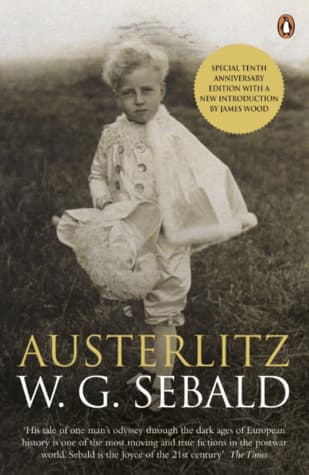
- Austerlitz
W.G. Sebald
4.0 (14k) average on GoodreadsHistorical FictionExplores themes of memory, trauma, and the search for identity through a wandering, contemplative narrative style.
- The History of Love
Nicole Krauss
3.9 (121k) average on GoodreadsLiterary FictionFeatures a similar multi-narrative structure, emotional depth, and focus on interconnected lives and objects.
- The Shadow of the Wind
Carlos Ruiz Zafón
4.3 (462k) average on GoodreadsFantasyInvolves a mysterious object (a book) that connects characters across time and reveals hidden histories, with a strong sense of atmosphere.
- The Book Thief
Markus Zusak
4.4 (1.8M) average on GoodreadsHistorical FictionWhile both Great House and The Book Thief are historical fiction novels touching upon themes of loss and the impact of war (specifically WWII and the Holocaust), their approaches differ significantly. Zusak's novel uses a highly personified narrator (Death) and focuses on the direct experiences of a young girl in Nazi Germany, offering a more immediate and visceral narrative of survival and human connection amidst atrocity. Great House, in contrast, explores the aftermath and inheritance of such historical events through multiple, often indirect, character perspectives, using a symbolic object to link disparate stories across time and geography, making it more abstract and meditative on the long-term echoes of trauma.
- The Old Man and the Sea
Ernest Hemingway
3.8 (831k) average on GoodreadsLiterary FictionA Cuban fisherman's long struggle with a giant marlin becomes a story of endurance and dignity, now retold for young adults with illustrations, phonetic guides, and writing prompts in Traditional Chinese.
- One Hundred Years of Solitude
Gabriel García Márquez
4.1 (753k) average on GoodreadsLiterary FictionThrough the multi-generational story of the Buendía family, a mythical town deals with the repeating patterns of time, love, and solitude, as the extraordinary mixes with the ordinary.




Enjoyed the summary?
A summary gives you the shape of the book. The book itself has the detail, the examples and the voice.
Find Great House on AmazonAs an Amazon Associate, BookBrief earns from qualifying purchases. How we're funded