
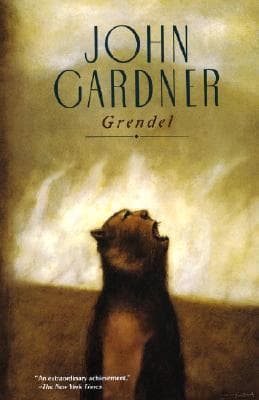
Synopsis
Covers the whole plot, including the ending.
- Difficulty
- Medium
- Pacing
- Slow
- Mood
- Philosophical, Existential, Dark, Cynical, Melancholy
- Read it if
- You enjoy philosophical retellings of classic myths, existentialism, and exploring the 'villain's' perspective.
- Skip it if
- You prefer straightforward fantasy narratives, clear-cut heroes and villains, or a fast-paced plot over deep introspection.
Grendel Plot Summary
Covers the whole plot, including the ending.
The Twelve-Year War
Grendel, a smart monster, lives in a cave with his silent mother. He watches the human world, especially King Hrothgar's busy mead hall, Hart. He feels both drawn to and disgusted by humans, particularly their ability to create and destroy. He lives a life of constant boredom and philosophical worry, broken up by his raids on Hrothgar's hall, where he eats sleeping men. This pattern of watching, thinking, and attacking has gone on for twelve years, making him the feared, unseen force bothering the Danes.
The Shaper's Arrival
A blind poet, the Shaper, comes to Hrothgar's hall. The Shaper, with his lyre and strong voice, tells tales of heroic deeds, the glory of the Danes, and the fight between good and evil, placing Grendel firmly on the evil side. Grendel is deeply moved by the Shaper's art, even though he knows the songs are made up and twist history. He finds himself drawn to the beauty and order the Shaper brings to the chaotic world, feeling a strange, almost religious awe, despite his cynicism.
The Dragon's Counsel
Bothered by the Shaper and his own inner turmoil, Grendel visits an old, powerful dragon in a cave full of gold. The Dragon is a nihilistic, all-knowing creature who dismisses all human efforts, including art, religion, and heroism, as meaningless. He tells Grendel that his purpose is to be an 'irritant,' an 'eternal enemy' to humans, forcing them to define themselves. The Dragon's cynical view greatly affects Grendel, hardening him and confirming his role as an outsider.
The Curse of Invulnerability
During their meeting, the Dragon, seemingly on a whim, casts a spell on Grendel, making him immune to human weapons. This new invincibility further isolates Grendel, as it removes any risk from his raids. He can no longer be truly threatened by humans, solidifying his role as an unchallengeable force of destruction. This curse, while making him powerful, also traps him in his monstrous identity, cutting off any remaining hope of connecting with humanity.
Wealhtheow's Arrival
Hrothgar's kingdom faces constant threats from King Hygilac. To avoid war, Hrothgar marries his beautiful sister, Wealhtheow, to Hygilac. However, Hygilac rejects her, and she returns to Hart, becoming Hrothgar's queen. Wealhtheow represents purity, selflessness, and grace, bringing peace to the hall. Grendel is briefly captivated by her beauty and goodness, feeling a moment of empathy and even considering sparing her. Her presence briefly challenges his cynical view, but his monstrous nature wins out.
Unferth's Challenge
Unferth, a boastful and insecure hero in Hrothgar's court, challenges Grendel to a fight. Grendel, amused, easily beats him but doesn't kill him, instead throwing apples at him and making fun of his idea of heroism. Humiliated, Unferth follows Grendel back to his cave, planning to fight him to the death there. However, Grendel simply carries him back to Hart unharmed, further undermining Unferth's heroic image and showing how useless human courage is against his invincibility.
The Rise of Hrothulf
Hrothgar's young nephew, Hrothulf, arrives at Hart. Grendel watches Hrothulf's subtle plans and his growing desire to take the throne from Hrothgar's young sons. Grendel sees the human capacity for betrayal and violence, even within their own families and political systems. He sees Hrothulf as another example of humanity's destructive side, further solidifying his belief in their inherent corruption and the repeating nature of power struggles.
The Death of the Shaper
The Shaper, now old and weak, eventually dies. His death is important for Grendel. Without the Shaper's songs, the world seems to lose its made-up meaning and beauty, returning to a more chaotic and uncaring state. Grendel feels a strange mix of relief and deep loss, recognizing the power the Shaper had over his own perceptions. The storyteller's death reinforces the Dragon's nihilistic message, leaving Grendel with a deeper sense of the world's ultimate meaninglessness.
The Arrival of Beowulf
A ship carrying Geatish warriors, led by the strong hero Beowulf, arrives in Denmark. Grendel, who had become comfortable in his invincibility and philosophical despair, senses a new and different kind of threat. He watches Beowulf with a mix of curiosity and worry, noting the hero's great strength and firm resolve. Beowulf's arrival marks a turning point, as Grendel's long reign of terror will now face its biggest challenge.
The Final Battle
Grendel begins his final raid on Hart. He enters the hall, expecting another easy meal, but Beowulf, pretending to sleep, meets him. A brutal battle follows. Beowulf, with superhuman strength, grabs Grendel's arm. For the first time, Grendel feels real fear and pain, realizing his invulnerability is useless against Beowulf's grip. In a desperate struggle, Grendel's arm is torn from his body. Mortally wounded, he flees the hall, leaving a trail of blood.
Grendel's Demise
Bleeding heavily, Grendel stumbles through the forest, his mind full of thoughts about his coming death. He questions his existence, his role as the 'brute existent,' and whether things happen by chance or design. He meets a tree and, in his pain, talks to it, imagining it mocking him. As he collapses at the edge of the abyss near his cave, he sees the forest animals, who always ignored him, now watching him die, their eyes filled with a strange, indifferent curiosity.
The Fall
As the animals watch, Grendel falls into the abyss. In his last moments, he cries out, 'Poor Grendel's had an accident... So may you all.' His words are a final, ironic comment on the random nature of existence and the shared fate of all beings. His death, a triumph for humanity, is presented by Grendel as a mere accident, an inevitable end to his meaningless life, leaving the reader to consider the true nature of heroism and monstrousness.
Principal Figures
Grendel
Protagonist
A monstrous, philosophical creature cursed with intelligence and isolation.
Grendel is a complex and highly intelligent monster, the narrator and protagonist of the story. He is cursed with the ability to reason and observe human behavior, leading him to a profound sense of isolation and existential despair. He views humanity with a mix of fascination, contempt, and occasional longing. His actions, though violent, are often driven by a desperate search for meaning in a chaotic world, and a reaction to his perpetual loneliness and role as the 'other.' He is deeply influenced by the Shaper's art and the Dragon's nihilism.
Relationships: Grendel's Mother (protective, primal, uncommunicative bond); Hrothgar (antagonistic, but Grendel observes him with a critical eye); The Shaper (fascinated and repulsed by his art and lies); The Dragon (mentor/antagonist, source of his nihilistic philosophy); Beowulf (final antagonist, instrument of his death)
Hrothgar
Antagonist/Supporting
The aging King of the Danes, once powerful, now haunted by Grendel.
Hrothgar is the King of the Danes, a once-great warrior and builder who established his kingdom through conquest and diplomacy. He built the magnificent mead hall, Hart, as a symbol of his power and the order he brought to the land. However, he is tormented by Grendel's relentless attacks, which undermine his authority and the very fabric of his society. He represents the human struggle for order and meaning in a hostile world, and his decline reflects the pervasive despair brought on by Grendel's twelve-year war.
Relationships: Grendel (primary antagonist, source of his suffering); Wealhtheow (his queen, a source of comfort and stability); Unferth (one of his less effective heroes); Hrothulf (his ambitious nephew, a potential threat to his lineage)
The Shaper
Supporting
A blind poet whose songs create meaning and beauty, even if based on lies.
The Shaper is a blind bard who arrives at Hrothgar's court and mesmerizes the Danes with his songs. He creates vivid narratives of heroism, divine order, and the glorious history of the Danes, effectively shaping their understanding of themselves and the world. Grendel is both intellectually aware of the Shaper's lies and deeply moved by the beauty and order his art imposes on the chaos of existence. The Shaper represents the human capacity for art, myth-making, and the creation of meaning, even if it's an illusion.
Relationships: Grendel (object of fascination and philosophical debate); Hrothgar (source of inspiration and morale for his court)
The Dragon
Supporting
A cynical, omniscient creature who espouses nihilism and cosmic indifference.
The Dragon is an ancient, gold-hoarding creature who lives in a cave. He is an embodiment of cosmic indifference and nihilism, providing Grendel with a bleak, deterministic worldview. He argues that all human endeavors are meaningless, that existence is a series of random accidents, and that Grendel's role is simply to be an 'irritant' to humanity, forcing them to define themselves. The Dragon's philosophical pronouncements solidify Grendel's cynicism and provide him with an intellectual framework for his monstrous actions, while also cursing him with invulnerability.
Relationships: Grendel (mentor/antagonist, philosophical influence)
Wealhtheow
Supporting
Hrothgar's queen, a symbol of purity, selflessness, and grace.
Wealhtheow is Hrothgar's beautiful queen, brought to him as a peace offering from a rival king. She embodies the virtues of selfless love, grace, and sacrificial giving. Her presence brings a momentary sense of peace and order to Hart, and Grendel is briefly touched by her purity, feeling a flicker of empathy. She represents the potential for goodness and light within humanity, serving as a stark contrast to the violence and ambition that Grendel usually observes. Her vulnerability also highlights the fragility of these human virtues.
Relationships: Hrothgar (his queen, a source of stability); Grendel (object of Grendel's fleeting empathy and lust)
Unferth
Supporting
A boastful but insecure hero in Hrothgar's court.
Unferth is a warrior in Hrothgar's court who prides himself on his heroism, despite a dark past (he killed his brothers). He is insecure and desperate for glory, which leads him to challenge Grendel. Grendel easily defeats him but, instead of killing him, mocks his concept of heroism and continually humiliates him. Unferth represents the flawed, often hypocritical nature of human heroism and the struggle to live up to the ideals sung by the Shaper. His failures highlight the futility of human valor against an indifferent, invincible force.
Relationships: Grendel (antagonist, object of Grendel's mockery); Hrothgar (one of his warriors)
Beowulf
Antagonist
A powerful Geatish hero who finally defeats Grendel.
Beowulf is the legendary Geatish hero who arrives in Denmark to rid Hrothgar's kingdom of Grendel. He is portrayed as a figure of immense strength, unwavering resolve, and almost supernatural power. From Grendel's perspective, Beowulf is not just a human warrior, but an almost mechanical, elemental force, embodying a primal, unthinking adherence to heroism and order. He is the ultimate, inevitable force that brings an end to Grendel's reign of terror, representing the triumph of human will and the imposition of order, even if Grendel perceives it as another form of meaningless violence.
Relationships: Grendel (final antagonist, Grendel's killer)
Hrothulf
Supporting
Hrothgar's ambitious young nephew, plotting for power.
Hrothulf is Hrothgar's young nephew who comes to live at Hart. Grendel observes his subtle, Machiavellian machinations and his ambition to seize the throne from Hrothgar's rightful heirs. Hrothulf represents the inherent treachery and political maneuvering within human society, demonstrating that even without Grendel's external threat, humans are capable of internal conflict and violence. He serves as another example of humanity's destructive potential, reinforcing Grendel's cynical view of their nature.
Relationships: Hrothgar (his uncle, whom he plots against)
Themes & Insights
The Absurdity of Existence / Nihilism
This is the main theme, heavily influenced by existentialist thought. Grendel constantly struggles with life's meaninglessness, deciding that all human efforts—heroism, art, and religion—are ultimately arbitrary. The Dragon is the main voice for this, telling Grendel his existence is just an 'accident' and the universe doesn't care. Grendel's last words, 'Poor Grendel's had an accident... So may you all,' sum up this idea, suggesting life and death are random events without grand purpose. The Shaper's death also supports this, as the world's constructed meaning fades with the storyteller.
“The world is a meaningless swirl of stuff, and you are a tiny, insignificant part of it. Your life is a mere accident. You are a brute existent.”
The Power of Art and Myth-Making
The novel explores how art, especially the Shaper's poetry, shapes human perception and creates meaning, even if based on lies. The Shaper's songs turn ordinary history into heroic epics, giving the Danes purpose, identity, and a moral structure. Grendel, despite his intellectual cynicism, is deeply affected by the Shaper's art, drawn to its beauty and the order it brings. This theme shows the human need for stories and how they can build reality, offering comfort and drive in a chaotic world. The Shaper's death makes Grendel feel the world has lost its 'pattern.'
“He knew that what he was saying was false, but I also knew that it was true. This was the terrible power of art.”
Isolation and the 'Other'
Grendel's life is defined by deep loneliness. As a monster who can think and feel, he is caught between the animal and human worlds, belonging to neither. He is the ultimate 'other,' hated and feared by humans, which forces him into an antagonistic role. His attempts to connect are met with violence or misunderstanding, reinforcing his isolation. This theme looks at the psychological cost of being an outcast and how society defines itself by creating an enemy. Grendel's constant watching of humans from afar highlights his separation and his desire for, yet inability to achieve, true belonging.
“I was Grendel, Ruiner of Meadhalls, Wrecker of Kings! But I was also Grendel, lonely and misunderstood, an outcast.”
Heroism and Its Illusions
The novel dissects traditional ideas of heroism, often showing it as flawed, self-serving, or even absurd. Grendel repeatedly mocks Unferth's heroic attempts, revealing his insecurity and the performative nature of his bravery. Grendel sees human heroes as driven by vanity, fear, or a need for the Shaper's praise, rather than true moral courage. Even Beowulf, the classic hero, is shown from Grendel's view as a cold, almost mechanical force, lacking the emotional depth that would make his heroism truly meaningful to Grendel. This theme questions the real motives behind heroic actions.
“A hero is an accident. A hero is a dead man who was in the wrong place at the wrong time.”
The Cycle of Violence and Destruction
The story points out the endless cycle of violence, both between humans and Grendel, and among humans themselves. Grendel's raids are a response to his isolation and the perceived absurdity of human life, but they also keep the cycle of fear and retaliation going. The political scheming in Hrothgar's court, especially Hrothulf's ambition, shows that humans are naturally prone to conflict even without an outside monster. This theme suggests that violence is a basic part of existence, a continuous force that shapes history and relationships, making real peace hard to find.
“The world is a machine that runs on blood.”
Plot Devices & Literary Techniques
First-Person Perspective (Unreliable Narrator)
The story is told entirely from Grendel's subjective and often biased viewpoint.
By narrating the story through Grendel's eyes, Gardner immediately challenges the traditional heroic epic. Grendel's perspective is cynical, philosophical, and often self-pitying, providing a radically different interpretation of events and characters (like Hrothgar, Unferth, and Beowulf) than would be found in the original 'Beowulf.' This device allows the reader to empathize with the 'monster' and question the black-and-white morality often presented in heroic tales. Grendel's intellectual musings and philosophical debates with himself and the Dragon shape the entire tone and meaning of the novel, making him an unreliable but compelling guide to the human world.
Symbolism (The Dragon)
The Dragon symbolizes cosmic indifference and nihilistic philosophy.
The Dragon serves as a powerful symbol of the universe's ultimate indifference and the philosophy of nihilism. His hoard of gold represents the material wealth that humans strive for, which he sees as meaningless. His ancient wisdom is entirely devoid of hope or purpose, offering Grendel a stark, deterministic view of existence. The Dragon's advice and pronouncements are pivotal in solidifying Grendel's cynicism and shaping his understanding of his own role as an 'eternal enemy.' He is less a character and more a philosophical embodiment, pushing Grendel further into his despair.
Allusion and Intertextuality (Beowulf Epic)
The novel is a direct re-telling and philosophical commentary on the Old English epic 'Beowulf'.
Gardner's 'Grendel' is a masterful example of intertextuality, directly engaging with and subverting the familiar narrative of the 'Beowulf' epic. By telling the story from the monster's perspective, it forces readers to reconsider the traditional hero-villain dynamic. The novel assumes a reader's familiarity with the original epic, using those established characters and plot points as a foundation upon which to build new philosophical and psychological layers. This device allows Gardner to explore themes of good and evil, heroism, and the nature of storytelling itself by directly referencing and recontextualizing a foundational work of Western literature.
The Zodiac Cycle
Each chapter is loosely associated with a sign of the Zodiac, reflecting Grendel's philosophical journey.
The novel's twelve chapters correspond to the twelve signs of the Zodiac, though this connection is often subtle and symbolic rather than literal. Each sign subtly influences the mood, Grendel's state of mind, or the events of the corresponding chapter. For example, the first chapter (Aries) reflects Grendel's youthful, impulsive energy, while later chapters might align with signs representing introspection, conflict, or transformation. This device adds a layer of cosmic fatalism to Grendel's journey, suggesting a predetermined path or a cyclical nature to his philosophical and physical existence, reinforcing the idea of an indifferent universe.
Grendel Quotes
“I understood that the world was nothing, a mechanical chaos of casual, brute enmity . . . I was alone.”
“The world is all a pointless accident. I exist, nothing else.”
“Poor Grendel's had an accident . . . So may you all.”
“You improve them, my boy. You improve them. . . . You are the brute existent by which they learn to define themselves.”
“They were doomed, of course, but so was I. . . . We are all of us, more or less, in the same boat.”
“So much for the truth. Truth is a dream, for madmen, drunkards, and fools.”
“I had become a carrier of the curse. I had given them a purpose, as we all must.”
“I create the whole world, blink by blink.”
“A man's got to do what a man's got to do.”
“The world resists me and I resist the world.”
“I alone exist. I alone see and hear. I alone think, at least in this way.”
“It was a silly, nay, an insane, an uncalled-for and outrageous thing to do . . . but I did it.”
“The Shaper remains, of course, but it's an old man's story. . . . A new Shaper will come.”
“I am Grendel, Ruiner of Meadhalls, Wrecker of Kings!”
Quiz
10 questions on the plot and the characters. Each answer comes with a short explanation.
Question 1
What is Grendel's initial reaction to the Shaper's songs about the glory of Hrothgar's hall and the Danes?
- He is immediately filled with rage and a desire for destruction.
- He is deeply moved and experiences a brief moment of longing for connection and beauty.
- He finds them amusing but ultimately irrelevant to his existence.
- He is confused by the human desire for such elaborate fictions.
Show answer
B. He is deeply moved and experiences a brief moment of longing for connection and beauty. Grendel is initially captivated and even moved by the Shaper's art, finding himself briefly drawn to the human world and its narratives, despite his monstrous nature.
Question 2
Which philosophical concept does the Dragon primarily espouse and attempt to teach Grendel?
- The inherent goodness of humanity and the importance of heroism.
- The power of art and storytelling to create meaning.
- Nihilism and the idea that all existence is meaningless, a mere 'brute fact'.
- The necessity of establishing a moral code for society.
Show answer
C. Nihilism and the idea that all existence is meaningless, a mere 'brute fact'. The Dragon is a nihilistic figure who teaches Grendel that the universe is indifferent, without inherent meaning or purpose, and that Grendel's role is simply to be an 'irritant' to humanity.
Question 3
What physical feature of Grendel does the Dragon magically enchant, making him invulnerable to human weapons?
- His eyes
- His skin
- His teeth
- His claws
Show answer
B. His skin The Dragon casts a charm on Grendel's skin, making him immune to all human weapons, which contributes to his feeling of isolation and invincibility until Beowulf's arrival.
Question 4
How does Grendel's interaction with Unferth challenge his understanding of heroism?
- Unferth's unwavering bravery proves the Shaper's songs of heroism are true.
- Grendel mockingly spares Unferth's life multiple times, demonstrating the futility of human heroism in the face of a true monster.
- Unferth convinces Grendel that true heroism lies in self-sacrifice for a greater cause.
- Grendel is impressed by Unferth's eloquence and reconsiders his own destructive path.
Show answer
B. Grendel mockingly spares Unferth's life multiple times, demonstrating the futility of human heroism in the face of a true monster. Grendel repeatedly spares Unferth, even carrying him back to the mead hall after Unferth attempts to fight him. This act of mocking mercy undermines Unferth's heroic aspirations and Grendel's own role as a purely destructive force.
Question 5
What is the significance of the ram in the opening chapter of the novel?
- It symbolizes Grendel's desire for a peaceful, pastoral existence.
- Its stubborn, mechanical actions represent the meaningless, cyclical nature of existence that Grendel observes.
- It foreshadows Grendel's eventual defeat by a strong, horned adversary.
- It is a metaphor for the humans' blind adherence to their religious beliefs.
Show answer
B. Its stubborn, mechanical actions represent the meaningless, cyclical nature of existence that Grendel observes. The ram's repetitive, unthinking actions against the cliff face symbolize the mechanistic, meaningless existence that Grendel perceives in the world, setting a nihilistic tone for the novel.
Question 6
Which character serves as a foil to Grendel's nihilistic worldview by embodying the human capacity for creating meaning through art and myth?
- Hrothgar
- The Dragon
- The Shaper
- Wealhtheow
Show answer
C. The Shaper The Shaper, through his songs and stories, constructs a world of meaning, heroism, and order for the Danes, directly contrasting Grendel's perception of a chaotic, meaningless existence.
Question 7
What is Grendel's ultimate fate at the hands of Beowulf?
- He is beheaded by Beowulf's sword.
- His skin is torn from his body, and he bleeds to death.
- He is trapped in a net and then burned alive.
- He is impaled by a spear and left to die in the forest.
Show answer
B. His skin is torn from his body, and he bleeds to death. In the climactic battle, Beowulf (who Grendel perceives as a winged, almost supernatural being) tears Grendel's arm and shoulder from his body, leading to his demise.
Question 8
The novel 'Grendel' is structured as a series of twelve chapters, each corresponding to what?
- The twelve labors of Hercules.
- The twelve months of the zodiac, with each chapter reflecting the characteristics of its corresponding sign.
- The twelve years Grendel terrorized Hrothgar's hall.
- The twelve major philosophical schools Grendel encounters.
Show answer
B. The twelve months of the zodiac, with each chapter reflecting the characteristics of its corresponding sign. Each of the twelve chapters in 'Grendel' is associated with a sign of the zodiac, subtly influencing the themes and Grendel's psychological state within that chapter.
Question 9
How does Grendel's perspective on the world evolve from his initial encounter with humanity to his final moments?
- He moves from curiosity to admiration, ultimately wishing to join human society.
- He shifts from a desire for connection to a cynical acceptance of his role as humanity's antagonist, confirmed by the Dragon's philosophy.
- He begins as a destructive force and gradually learns empathy through observing human suffering.
- His view remains static, always seeing humans as pathetic, foolish creatures.
Show answer
B. He shifts from a desire for connection to a cynical acceptance of his role as humanity's antagonist, confirmed by the Dragon's philosophy. Grendel initially seeks connection and meaning from humans, especially the Shaper. After his encounter with the Dragon, he adopts a more hardened, nihilistic view, accepting his role as the 'brute existent' who pushes humanity towards their 'heroic' fictions.
Question 10
What is the primary effect of Gardner's choice to narrate the story from Grendel's first-person perspective?
- It glorifies Grendel as a heroic figure, making readers sympathize with his destructive actions.
- It allows for a deep exploration of philosophical ideas and provides a complex, often sympathetic, insight into the 'monster's' motivations and internal struggles.
- It primarily serves to add a comedic tone to the otherwise serious epic of Beowulf.
- It simplifies the narrative, making it more accessible to a wider audience than the original epic.
Show answer
B. It allows for a deep exploration of philosophical ideas and provides a complex, often sympathetic, insight into the 'monster's' motivations and internal struggles. Narrating from Grendel's perspective allows Gardner to delve into the monster's inner world, exploring his intelligence, loneliness, philosophical musings, and his complex relationship with humanity, thereby re-interpreting the traditional villain.
Grendel FAQ
What is the central premise of 'Grendel'?
'Grendel' retells the Anglo-Saxon epic 'Beowulf' from the perspective of its titular monster. The novel explores Grendel's isolation, his philosophical musings on existence and meaning, and his interactions with humanity, particularly Hrothgar and the Danes, leading up to his fated confrontation with Beowulf.
Who are the key characters Grendel interacts with before Beowulf's arrival?
Grendel primarily observes and occasionally interacts with Hrothgar, the King of the Danes, whose rise to power and establishment of Heorot fascinate and enrage him. He also has significant encounters with the Shaper, whose songs create a false but compelling reality for the humans, and the Dragon, who offers him a cynical, nihilistic worldview.
How does the Shaper influence Grendel's understanding of the world?
The Shaper's poetic narratives, despite Grendel knowing them to be fabrications, deeply disturb and captivate him. The Shaper presents a world of heroic purpose, divine order, and human valor, which clashes with Grendel's own perceived chaotic and meaningless existence, causing him both anguish and a strange longing for a similar meaning.
What is the significance of the Dragon's philosophy to Grendel?
The Dragon's philosophy is one of ultimate nihilism, asserting that all existence is meaningless, life is a random accident, and the only 'purpose' is to hoard gold and pursue self-interest. This worldview initially terrifies Grendel but later becomes a default lens through which he views the world, solidifying his alienation and sense of cosmic indifference.
How does Unferth challenge Grendel's perception of heroism?
Unferth, the Danish hero, attempts to confront Grendel alone, driven by a desire for glory and an almost suicidal need to prove his heroism. Grendel mocks Unferth by refusing to kill him, instead carrying him back to Heorot unharmed, thereby denying Unferth the heroic death he craves and exposing the performative nature of human heroism.
What is the symbolic meaning of the ram Grendel encounters at the beginning of the novel?
The ram symbolizes the unthinking, instinctual, and repetitive nature of the natural world, indifferent to Grendel's philosophical ponderings or existential angst. Its mindless bleating and persistent head-butting against the wall highlight Grendel's intellectual isolation and the vast chasm between his self-awareness and the brute unconsciousness of other creatures.
How does the image of the 'gilded chairs' recur throughout the novel, and what does it signify?
The 'gilded chairs' in Heorot represent the superficiality and constructed nature of human civilization and power. Grendel often sees them as empty or as symbols of the human capacity for self-deception and the creation of elaborate, yet ultimately fragile, social structures that attempt to impose order on a chaotic world.
What is the significance of the goat Grendel observes near the end of the story?
The goat, like the ram, represents persistent, unthinking life, but it also embodies an unstoppable, almost absurd force of nature. Its relentless, futile climb up the cliff face, despite repeatedly falling, mirrors the human struggle and the Shaper's vision of striving, even in the face of meaninglessness, which Grendel finds both ridiculous and strangely compelling.
What role does Wealhtheow, Hrothgar's queen, play in Grendel's psychological development?
Wealhtheow represents a pure, selfless beauty and a sense of grace that briefly disarms Grendel and challenges his cynical worldview. Her presence introduces a moment of vulnerability and tenderness in Grendel, making him question his own monstrousness and the absolute nature of evil, though he ultimately rejects this sentiment.
How does Grendel's 'curse' from the Dragon affect his interactions with humans?
The Dragon's curse makes Grendel invulnerable to human weapons, which initially gives him a sense of superiority and further isolates him by removing any physical threat. However, this invulnerability also makes his attacks on Heorot feel like a game and removes any real danger or consequence for him, deepening his existential boredom and detachment.
In what ways does Grendel exhibit traits of an existentialist hero?
Grendel grapples with profound questions of meaning, purpose, and free will in a seemingly indifferent universe. He is acutely aware of his own consciousness and the absurdity of existence, constantly searching for self-definition and railing against the predetermined roles imposed upon him, aligning with core tenets of existentialist thought.
How does Grendel's repeated observation of the stars and the night sky contribute to his psychological state?
Grendel frequently looks to the stars, which represent the vast, indifferent cosmos that offers no answers to his existential questions. This reinforces his sense of isolation and insignificance, highlighting the cold, mechanistic nature of the universe as described by the Dragon, and deepening his despair over the lack of inherent meaning.
Is Grendel truly evil, or is he a product of circumstance and philosophical influence?
This is highly debatable. Grendel commits acts of violence, but his motivations are often rooted in loneliness, a desperate search for meaning, and the corrupting influence of the Dragon's nihilism. He sees himself as an agent of chaos, a 'brute existent,' rather than inherently malicious, suggesting his 'evil' is more a philosophical stance than inherent depravity.
What is the ultimate message about storytelling and art conveyed through the Shaper's role?
The novel suggests that storytelling, while potentially beautiful and inspiring, can also be a powerful tool for deception and the construction of false realities. The Shaper's art creates meaning where there might be none, shaping human perception and history, demonstrating both the power and the potential danger of narrative in defining existence.
How does Beowulf's arrival and ultimate defeat of Grendel serve as a climax for Grendel's philosophical journey?
Beowulf, with his seemingly unshakeable conviction and almost supernatural strength, represents the antithesis of Grendel's nihilism. His arrival forces Grendel to confront the limits of his own worldview and his perceived invulnerability, ultimately leading to a physical and philosophical defeat where Grendel, in his last moments, still grapples with the absurdity of existence.
Could Grendel be interpreted as a symbol of the human condition itself?
Yes, Grendel can be seen as a metaphor for humanity's struggle with isolation, the search for meaning in a seemingly indifferent universe, and the conflict between our intellectual capacity for questioning and our animalistic urges. His internal monologues mirror common human existential anxieties and philosophical dilemmas.
What is the significance of the phrase 'So may you all' in Grendel's final moments?
This ambiguous phrase, Grendel's last words, can be interpreted as a curse, wishing the same meaningless, painful end upon humanity, or as a sardonic acknowledgment of the shared, inevitable fate of all living things. It underscores the novel's pervasive theme of cosmic indifference and the universality of suffering and death.
How does the novel challenge traditional notions of heroism and villainy?
By telling the story from the monster's perspective, Gardner humanizes Grendel, revealing his complex inner life, while simultaneously presenting the 'heroes' like Hrothgar and even Beowulf in a more ambiguous light. The Danes are shown to be cruel, fearful, and driven by self-interest, blurring the lines between good and evil and questioning simplistic moral binaries.
About the author
John Gardner may refer to:
Similar books
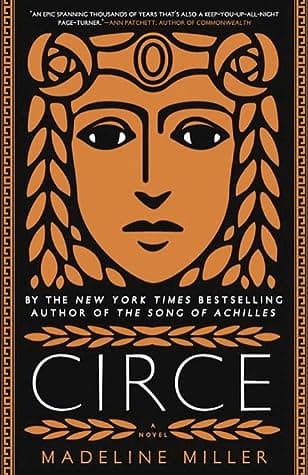
- Circe
Madeline Miller
4.3 (343k) average on GoodreadsFantasyMythological retelling from a 'monster' or 'outsider' perspective.
- The Stranger
Albert Camus
4.1 (3k) average on GoodreadsFantasyExplores themes of existentialism, absurdity, and alienation.
- Frankenstein: The 1818 Text
Mary Shelley
3.8 (1.2M) average on GoodreadsFantasyFocuses on a monstrous, intelligent being grappling with its place in the world.
- The Mists of Avalon
Marion Zimmer Bradley
4.1 (192k) average on GoodreadsFantasyLike Grendel, The Mists of Avalon (1982) reinterprets a foundational myth (Arthurian legend) from an 'othered' perspective, specifically focusing on the women and pagan traditions often marginalized in traditional narratives. Both novels challenge established heroic archetypes and moral frameworks. However, Bradley's focus is more on gender dynamics, religious conflict, and political intrigue from a feminist lens, whereas Gardner's primary concern is philosophical and existential. Grendel offers a singular, internal monster's perspective, while The Mists of Avalon provides a broader, multi-character tapestry of a society in transition.
- Harry Potter and the Sorcerer's Stone
J.K. Rowling
4.5 (7M) average on GoodreadsFantasyRescued from a miserable life under the stairs, an orphaned boy discovers he's a wizard destined for a magical school, where he uncovers a dangerous secret tied to the dark wizard who murdered his parents.
- The Hunger Games
Suzanne Collins
4.3 (6.4M) average on GoodreadsFantasyIn a future where children fight to the death on live television, Katniss Everdeen volunteers for the arena, turning a death sentence into a fight for survival and a spark of rebellion.





Enjoyed the summary?
A summary gives you the shape of the book. The book itself has the detail, the examples and the voice.
Find Grendel on AmazonAs an Amazon Associate, BookBrief earns from qualifying purchases. How we're funded