

Synopsis
Covers the whole plot, including the ending.
- Difficulty
- Medium
- Pacing
- Moderate
- Mood
- Melancholy, Profound, Humorous, Ethereal, Poignant
- Read it if
- You enjoy experimental literary fiction that blends historical facts with supernatural elements, are looking for a profound exploration of grief and human connection, and appreciate a chorus of unique, often humorous, voices.
- Skip it if
- You prefer traditional narrative structures, are sensitive to unsettling or grotesque imagery, or dislike stories that heavily feature ghosts and the afterlife.
Lincoln in the Bardo Plot Summary
Covers the whole plot, including the ending.
Willie Lincoln's Passing and the Bardo's Unveiling
In February 1862, during the early days of the Civil War, President Abraham Lincoln's eleven-year-old son, Willie, dies from typhoid fever at the White House. He is buried in a crypt at Oak Hill Cemetery in Georgetown. Unbeknownst to the living, the cemetery is a bustling purgatorial realm, a 'bardo,' where deceased souls linger, unaware they are truly dead. They refer to their coffins as 'sick-boxes' and their spectral forms as 'sick-forms.' Three main ghosts—Hans Vollman, a printer who died just before consummating his marriage; Roger Bevins III, a young man who committed suicide after a perceived romantic slight; and the Reverend Everly Thomas, a timid minister terrified of eternal damnation—observe Willie's arrival. Willie, still a child, is confused but quickly adapts to his new, eerie surroundings.
Lincoln's Grief and a Father's Vow
President Lincoln, consumed by grief, makes several secret visits to Willie's crypt, often returning late at night to hold his son's body. His sorrow and the love he projects disturb the equilibrium of the bardo. The ghosts, who normally avoid contact with the living, find themselves drawn to the President's suffering. Vollman, Bevins, and Reverend Thomas are particularly affected, sensing a unique spiritual weight in Lincoln's presence. They see his raw, human pain, which briefly makes them reflect on their own lives and deaths, though their primary focus remains their 'sick-forms' and the perceived temporary nature of their stay.
The Ghosts' Intervention and Willie's Predicament
As Lincoln continues his visits, the spectral residents of the cemetery grow concerned for Willie. Unlike most adult ghosts who cling to the illusion of being merely ill, Willie, being a child, is more susceptible to the bardo's true nature and the risk of becoming permanently trapped. The ghosts understand that if he remains in the cemetery, his soul could be twisted and his chance at moving on to the next life—or 'the matterlightblooming phenomenon' as they call it—would be lost. Vollman, Bevins, and Reverend Thomas, along with other spirits, feel an urgency to help Willie transition, realizing the President's visits, though born of love, are unintentionally anchoring Willie to the bardo.
The Collective Effort to Guide Willie
The three main narrators, joined by many other spirits including the enslaved Elizebeth Croxall, the boastful Eddy Taft, and the gossipy Mrs. Francis Hodge, try various methods to communicate with Willie and prepare him for his departure. They explain their understanding of the bardo, though their individual interpretations often conflict. They recount their own life stories and deaths, hoping to impart wisdom or at least a sense of what lies beyond. Willie, a curious and intelligent child, listens, but his attachment to his father and the novelty of his surroundings make him hesitant to leave, even as he senses the underlying strangeness and potential danger.
Lincoln's Internal Struggle and the Ghosts' Empathy
During his final, long visit to Willie's crypt, Lincoln engages in a deep internal monologue, thinking about his son's life, his own failures as a father, the toll of the Civil War, and the question of divine justice. He holds Willie's body, his thoughts a torrent of sorrow, love, and philosophical inquiry. The ghosts, particularly Vollman, Bevins, and Reverend Thomas, are deeply moved by his suffering. They experience flashes of his memories and emotions, gaining a deeper understanding of human life and the complexities of the world they left behind. This shared experience creates a growing sense of empathy among the disparate spirits.
The Merging of Souls
In a key moment, as Lincoln cradles Willie's body, his grief becomes so overwhelming that it creates an opening, a fissure between the living and the dead. The ghosts, driven by their desire to help Willie and their newfound connection to Lincoln's pain, enter his body and mind. They experience his thoughts, his memories, his sorrow, and his burden as President. This temporary possession is not malicious but an act of desperate communion, allowing them to feel the weight of his responsibilities and the depth of his love, and to subtly try to communicate with Willie through his father.
Willie's Decision and the Bardo's Warning
Inside Lincoln's consciousness, the ghosts continue their efforts to guide Willie. They explain that remaining in the bardo will lead to a horrific transformation into a 'matterlightblooming phenomenon,' a distorted, monstrous version of their former selves, forever trapped and suffering. Willie, seeing his father's love and the suffering of the other trapped souls, begins to understand the urgency. He struggles with the idea of leaving his father, but the collective wisdom and warnings of the ghosts, combined with his own innocence, push him towards a decision.
The Farewell and Willie's Ascent
With a final, tender farewell to his father, which Lincoln perceives as a fleeting, comforting sensation, Willie Lincoln makes the decision to move on. He embraces the unknown, guided by the collective good wishes of the bardo's inhabitants. His departure is a beautiful, luminous event, a 'matterlightblooming phenomenon' of a different, transcendent kind. The ghosts, who had so desperately sought to help him, witness his ascension with a mixture of relief, wonder, and a renewed, albeit brief, sense of hope for their own eventual release.
Lincoln's Transformed Perspective
After Willie's departure, Lincoln emerges from the crypt, changed. While he has no conscious memory of the ghosts or their interventions, the experience of their brief inhabitation of his mind has left a mark. He carries a heightened awareness of human suffering, a deeper understanding of the interconnectedness of life and death, and a renewed resolve for the challenges of the Civil War. His grief, though still present, is now tempered by a subtle, inexplicable sense of peace and a broader perspective on existence, influencing his future decisions and leadership.
The Lingering Bardo and the Ghosts' Reflections
Even after Willie's successful transition, the bardo remains for its other inhabitants. Vollman, Bevins, and Reverend Thomas, along with the other spirits, continue their existence in the cemetery, still largely clinging to their individual illusions and grievances. However, their collective experience with Willie and Lincoln has subtly altered them. They retain a lingering memory of the empathy they felt and the glimpse into the living world. While their personal journeys in the bardo are far from over, the event of Willie's departure is a powerful, if often unacknowledged, reminder of the possibility of release and the ultimate destination beyond their current state.
Lincoln in the Bardo Characters
Abraham Lincoln
Protagonist
The grief-stricken 16th President of the United States, mourning his son.
Abraham Lincoln is portrayed as a profoundly empathetic and burdened leader, consumed by the immense grief over his son Willie's death and the weight of the ongoing Civil War. His visits to Willie's crypt are acts of raw, personal sorrow, but also moments of profound philosophical reflection on life, death, and suffering. He is a man of deep intellect and compassion, struggling to reconcile his personal loss with his national duty. The book delves into his internal monologues, revealing his anxieties, love, and moral quandaries, making him a vessel through which the ghosts experience the living world.
Relationships: Willie Lincoln (Beloved son, whose death causes Lincoln immense grief); Mary Todd Lincoln (Wife, also grieving, but mostly off-stage); Hans Vollman (Ghost who briefly inhabits Lincoln's mind); Roger Bevins III (Ghost who briefly inhabits Lincoln's mind); Reverend Everly Thomas (Ghost who briefly inhabits Lincoln's mind)
Willie Lincoln
Central Figure
Abraham Lincoln's deceased, intelligent, and innocent eleven-year-old son, trapped in the bardo.
Willie Lincoln is the innocent, intelligent, and curious eleven-year-old son of President Lincoln, whose premature death sets the entire narrative in motion. In the bardo, he is initially confused but quickly adapts to his spectral form, showing a remarkable lack of fear. He is a sensitive and observant child, still clinging to his father's presence and the idea of returning to his family. His innocence makes him particularly vulnerable to the bardo's dangers but also more open to understanding his true state, becoming the focal point for the other ghosts' collective efforts to guide him to the next stage.
Relationships: Abraham Lincoln (Devoted father, whose love anchors Willie to the bardo); Hans Vollman (One of the primary ghosts trying to help him); Roger Bevins III (One of the primary ghosts trying to help him); Reverend Everly Thomas (One of the primary ghosts trying to help him)
Hans Vollman
Supporting
A large, perpetually aroused ghost, yearning for his unconsummated marriage.
Hans Vollman is one of the three main spectral narrators. He died in a freak accident just before he could consummate his marriage, leaving him with a perpetually engorged, spectral penis, a symbol of his unfinished business and earthly desires. He is a generally good-natured but somewhat oblivious character, constantly preoccupied with his physical state and the memory of his wife. His observations are often earthy and direct, and he is one of the first to feel a strong empathetic connection to Lincoln's grief, driving his desire to help Willie.
Relationships: Roger Bevins III (Fellow ghost, often debating and conversing with him); Reverend Everly Thomas (Fellow ghost, often debating and conversing with him); Willie Lincoln (The child he seeks to help); Abraham Lincoln (The living father he inhabits)
Roger Bevins III
Supporting
A sensitive, intellectual ghost who committed suicide over unrequited love.
Roger Bevins III is another key spectral narrator, a sensitive and poetic young man who committed suicide after a perceived slight from a lover. He is characterized by his myriad 'eyes' and 'noses' that appear and disappear on his spectral form, symbolizing his heightened sensory perception and emotional turmoil. Bevins is more philosophical and articulate than Vollman, offering observations on beauty, suffering, and the nature of their existence. His own experience with profound despair makes him particularly attuned to Lincoln's grief and Willie's vulnerability.
Relationships: Hans Vollman (Fellow ghost, often debating and conversing with him); Reverend Everly Thomas (Fellow ghost, often debating and conversing with him); Willie Lincoln (The child he seeks to help); Abraham Lincoln (The living father he inhabits)
Reverend Everly Thomas
Supporting
A timid, guilt-ridden minister ghost, terrified of eternal damnation.
Reverend Everly Thomas is the third primary spectral narrator, a timid and fearful minister who died in his sleep and is constantly tormented by the fear of eternal damnation, believing his 'sick-form' is a test. He struggles with his faith, interpreting the bardo through a lens of Christian theology, often to his own terror. His moral anxieties and constant self-reproach provide a stark contrast to the more earthly concerns of Vollman and the poetic musings of Bevins. Despite his fear, he is driven by a genuine, if often hesitant, desire to do good and help Willie.
Relationships: Hans Vollman (Fellow ghost, often debating and conversing with him); Roger Bevins III (Fellow ghost, often debating and conversing with him); Willie Lincoln (The child he seeks to help); Abraham Lincoln (The living father he inhabits)
Elizebeth Croxall
Supporting
An enslaved woman ghost, yearning for her children and freedom.
Elizebeth Croxall is a significant supporting ghost, an enslaved woman who died tragically and is desperate to find her children. Her presence highlights the historical context of slavery and its profound, lingering injustices, even in death. She is one of the more compassionate and clear-sighted spirits, less caught up in the illusions of the bardo and more focused on the deep, enduring pain of separation from her family. Her story adds a layer of social commentary and emotional depth to the ethereal landscape of the cemetery.
Relationships: Willie Lincoln (A child she feels a maternal instinct to protect); Other ghosts (Fellow inhabitants of the bardo)
Eddy Taft
Supporting
A boastful, self-important ghost, obsessed with his own perceived grandeur.
Eddy Taft is a minor but memorable ghost, a man who believed himself to be a great inventor and socialite during his life. In death, he remains boastful and self-important, constantly recounting exaggerated tales of his accomplishments and expressing disdain for others. He represents the human tendency towards vanity and self-deception, even in the afterlife. His character provides comic relief and a contrast to the more introspective or empathetic spirits, highlighting the diverse array of personalities trapped in the bardo.
Relationships: Other ghosts (Audience for his self-aggrandizing stories)
Mrs. Francis Hodge
Supporting
A gossipy, judgmental ghost, concerned with propriety and appearances.
Mrs. Francis Hodge is another supporting ghost, a prim and proper woman who died in a domestic accident. She is characterized by her gossipy nature and her persistent concern with social decorum and appearances, even in the bardo. She represents the societal constraints and judgments that can follow people beyond life. Her observations often provide a humorous, if sometimes cutting, commentary on the other spirits and their behaviors, adding to the rich tapestry of voices in the cemetery.
Relationships: Other ghosts (Subjects of her gossip and judgment)
The Matterlightblooming Phenomenon
Antagonist/Symbolic
A terrifying, distorted state of permanent entrapment for souls in the bardo.
This is not a character in the traditional sense, but a terrifying, symbolic 'antagonist' or fate within the bardo. It refers to the grotesque, distorted, and painful transformation that occurs to souls who remain too long in the liminal state, refusing to move on. Their 'sick-forms' become twisted, their memories fractured, and they are condemned to a perpetual state of suffering, often appearing as monstrous, multi-limbed, or disfigured entities. It serves as the ultimate warning and motivation for the ghosts to help Willie escape the bardo.
Relationships: Willie Lincoln (The fate the ghosts try to save him from); Other ghosts (The fate they fear for themselves)
Lincoln in the Bardo Themes
Grief and Loss
The novel explores grief, particularly through Abraham Lincoln's raw sorrow over his son Willie's death. His repeated visits to the crypt, his internal monologues, and his physical interactions with Willie's body show the depth of parental love and the agony of its loss. The ghosts, too, are manifestations of unresolved grief and attachment to their past lives, demonstrating how loss can trap individuals in a state of limbo. The collective effort to help Willie move on signifies a communal processing of loss, extending beyond individual suffering to a shared humanity.
“He knew, in that moment, that the world was not a place of order and justice, but a place of chaos and suffering, and that the only thing that made it bearable was love.”
The Nature of Life and Death (The Bardo)
The central theme is the space between life and death, the 'bardo' (a Tibetan Buddhist concept of an intermediate state). The book presents death not as an end, but as a complex transition, populated by spirits who are largely unaware of their true state, clinging to earthly illusions. Through the diverse experiences and perspectives of the ghosts, Saunders explores various interpretations of the afterlife, the lingering effects of one's earthly existence, and the necessity of letting go to move towards an unknown 'matterlightblooming phenomenon.' It questions what 'life' and 'death' are and the boundaries between them.
“We were not dead, you see. We were merely…ill. Gravely ill, it was true, but not dead.”
Empathy and Connection
A powerful theme is the transformative power of empathy, as the disparate ghosts find common ground in their concern for Willie and their shared experience of Lincoln's grief. Initially self-absorbed, they gradually develop a collective consciousness and a deep connection to Lincoln's suffering when they inhabit his body. This shared experience transcends their individual prejudices and neuroses, creating a temporary but powerful bond among them. It suggests that true connection and compassion can bridge even the divide between life and death, leading to acts of selflessness.
“And in that moment, he felt a great wave of love, not for himself, but for this suffering man, this struggling leader, this father who loved his son.”
Freedom and Imprisonment
The book explores various forms of freedom and imprisonment. The ghosts are literally imprisoned in the bardo by their unresolved earthly attachments, regrets, and illusions, unable to move on. Lincoln, though living, is imprisoned by his grief and the responsibilities of the presidency and the Civil War. The ultimate freedom for the ghosts is to accept their death and transition, while for Lincoln, it is finding a way to carry his grief without being consumed by it, allowing him to lead with renewed purpose. The character of Elizebeth Croxall also highlights literal imprisonment through slavery and the lingering desire for freedom even in death.
“The soul will not be at peace, until it has done what it was meant to do.”
The Burden of History and Legacy
The historical context of the Civil War and Lincoln's presidency forms a backdrop, connecting individual grief to national suffering. The many voices, historical and fictional, create a mosaic of American history, revealing the diverse perspectives and experiences of the era, from enslaved people to soldiers and socialites. Lincoln's internal struggle is not just personal but also deeply intertwined with the fate of the nation. The book suggests that history is not just a collection of facts but a living, breathing experience, and that the burdens of the past continue to shape the present.
“The great task remaining before us… that from these honored dead we take increased devotion to that cause for which they gave the last full measure of devotion.”
Plot Devices & Literary Techniques
Choral Narrative/Polyphony
A multitude of distinct voices narrating the story from varying perspectives.
The novel is largely told through a 'choral' or polyphonic narrative, consisting of hundreds of distinct, often conflicting, short excerpts attributed to various historical sources (real and invented) and the many ghosts in the bardo. This creates a kaleidoscopic, fragmented, and multi-perspectival view of events, particularly Lincoln's visits and the ghosts' observations. It allows for a rich tapestry of human experience, opinion, and bias, reflecting the chaotic nature of consciousness and memory, and challenging the reader to piece together a coherent truth from disparate accounts.
The Bardo
A purgatorial, liminal space between life and death.
The bardo, a concept borrowed from Tibetan Buddhism, serves as the central setting and primary plot device. It is a purgatorial state where souls linger after death, unaware they are truly deceased, referring to their coffins as 'sick-boxes' and their spectral forms as 'sick-forms.' This liminal space allows for the interaction between the living (Lincoln) and the dead (Willie and the other ghosts), driving the core conflict and the ghosts' efforts to guide Willie. It's a metaphorical space for unresolved issues, clinging attachments, and the ultimate journey of letting go.
Historical Interjections
Brief, attributed snippets of historical and fictional texts.
Throughout the novel, short, attributed quotes from various historical sources (biographies, letters, newspaper articles, diaries) are interspersed with the ghostly narratives. These interjections, sometimes factual and sometimes subtly altered or invented by Saunders, provide historical context, anchor the fantastical elements in reality, and often highlight the subjective nature of historical truth. They create a layered sense of authenticity and contribute to the polyphonic structure, revealing how Lincoln and his grief were perceived by his contemporaries.
Physical Manifestations of Unresolved Issues
Spectral forms that reflect the ghosts' earthly attachments.
A unique plot device is the way the ghosts' spectral bodies physically manifest their unresolved earthly issues or desires. Hans Vollman's perpetually engorged penis symbolizes his unconsummated marriage, Roger Bevins III's multitude of eyes and noses reflect his heightened sensitivity and emotional turmoil, and the Reverend Thomas's 'sick-form' is often contorted by his guilt and fear of damnation. These physical manifestations serve as constant reminders of their 'unfinished business' and visually represent their psychological states, making the abstract concept of spiritual limbo tangible and often darkly humorous.
Inhabitation/Possession
Ghosts briefly entering and experiencing the consciousness of a living person.
A crucial plot device occurs when the ghosts, particularly Vollman, Bevins, and Reverend Thomas, are able to briefly enter and experience Lincoln's consciousness. This 'inhabitation' is not malicious but born of extreme empathy and a desperate attempt to communicate with Willie through his father. It allows the ghosts to gain profound insight into the living world, Lincoln's immense suffering, and the weight of his responsibilities, while also subtly influencing Lincoln's perspective. It blurs the lines between living and dead, and mind and spirit, creating a powerful moment of shared experience and connection.
Lincoln in the Bardo Quotes
“We were, at that moment, in possession of a happiness that was so vast and all-encompassing that it seemed to be the only thing that had ever existed.”
“The thing about the dead is they are so terribly, terribly dead.”
“We are here to love and serve each other. That is all.”
“I was, in life, a man of some consequence, but here I am nothing.”
“The boy is not dead. He is merely sleeping.”
“We are all just stories in the end.”
“The world is a place of such beauty and such horror, and we are all caught in between.”
“I have done things I am not proud of, but I have also loved deeply.”
“The living do not understand the dead, and the dead do not understand the living.”
“We are all just waiting for something to happen, but nothing ever does.”
“The love of a parent for a child is the strongest force in the universe.”
“I am not ready to go, but I am not sure I want to stay.”
“The past is a weight we carry, but it is also what makes us who we are.”
“In the end, all we have is each other.”
Quiz
10 questions on the plot and the characters. Each answer comes with a short explanation.
Question 1
What is the primary historical event that serves as the catalyst for the novel's plot?
- The assassination of President Lincoln
- The death of Abraham Lincoln's son Willie from typhoid fever
- The start of the Civil War
- Lincoln's delivery of the Gettysburg Address
Show answer
B. The death of Abraham Lincoln's son Willie from typhoid fever The novel is centered around the historical death of 11-year-old Willie Lincoln in February 1862, which according to historical accounts led President Lincoln to visit his son's crypt multiple times. Saunders uses this event as the foundation for exploring grief and the afterlife.
Question 2
In the Tibetan Buddhist tradition referenced in the title, what does 'bardo' specifically refer to?
- A sacred text about reincarnation
- A transitional state between death and rebirth
- A type of meditation practice
- A ceremony for the deceased
Show answer
B. A transitional state between death and rebirth The bardo is a Tibetan Buddhist concept of an intermediate, transitional, or liminal state between death and rebirth. Saunders uses this framework to create the novel's purgatorial setting where Willie and other ghosts exist.
Question 3
Which narrative technique does Saunders primarily use to tell the story in 'Lincoln in the Bardo'?
- First-person narration from Lincoln's perspective
- A traditional third-person omniscient narrator
- A collage of voices from historical sources and fictional ghosts
- Epistolary format through letters and diaries
Show answer
C. A collage of voices from historical sources and fictional ghosts Saunders employs an innovative formal structure where the story unfolds through a polyphonic chorus of voices—including historical quotations, fictional ghosts' dialogues, and narrative fragments—creating a 'kaleidoscopic, theatrical panorama' as described in the book's summary.
Question 4
What is the primary reason many ghosts in the bardo refuse to move on to the afterlife?
- They are waiting for specific living relatives to join them
- They are being punished for sins committed during life
- They are in denial about their own deaths and cling to earthly attachments
- They are trapped by magical barriers created by other spirits
Show answer
C. They are in denial about their own deaths and cling to earthly attachments Most ghosts in Saunders' bardo remain because they cannot accept they have died. They cling to unfinished business, regrets, or identities from their earthly lives, exemplified by characters like Hans Vollman and Roger Bevins III who have elaborate justifications for staying.
Question 5
What significant action does President Lincoln take in the cemetery that profoundly affects the spirits in the bardo?
- He reads aloud from the Bible at Willie's graveside
- He brings flowers and toys to decorate the crypt
- He returns alone to hold Willie's body in the crypt, radiating intense grief and love
- He orders soldiers to guard the cemetery at night
Show answer
C. He returns alone to hold Willie's body in the crypt, radiating intense grief and love Based on historical accounts referenced in the novel, Lincoln visits Willie's crypt multiple times, and in one particularly powerful scene, he cradles his son's body. This act of profound parental love creates a transformative energy in the bardo that affects all the spirits present.
Question 6
Which of these characters is NOT one of the prominent ghosts who befriend and try to help Willie Lincoln in the bardo?
- Hans Vollman
- Roger Bevins III
- The Reverend Everly Thomas
- Eliza Pelham
Show answer
D. Eliza Pelham Hans Vollman, Roger Bevins III, and the Reverend Everly Thomas are three central ghostly characters who guide Willie and serve as primary narrators. Eliza Pelham is mentioned among the many ghosts but is not one of the main helpers featured in the narrative.
Question 7
How does the novel structurally incorporate historical context about the Civil War?
- Through lengthy expository chapters written by an omniscient historian narrator
- Through footnotes that provide detailed battle descriptions
- Through interwoven quotations from actual historical documents and accounts
- Through letters sent between Lincoln and his generals
Show answer
C. Through interwoven quotations from actual historical documents and accounts Saunders intersperses the ghost narrative with fragments from historical sources—newspapers, diaries, biographies—that often contradict each other, creating a collage-like effect that grounds the supernatural story in the real historical moment of 1862.
Question 8
What ultimately happens to Willie Lincoln's spirit at the climax of the novel?
- He decides to remain in the bardo with his new ghost friends
- He is forcibly taken to hell by demonic entities
- He accepts his death and moves on to the next stage of the afterlife
- He is resurrected and returns to the living world
Show answer
C. He accepts his death and moves on to the next stage of the afterlife After witnessing his father's profound grief and receiving guidance from the other ghosts, Willie comes to accept his death. This acceptance allows him to peacefully transition out of the bardo, in contrast to the other spirits who remain trapped by their denial.
Question 9
What is the nature of the 'matterlightblooming phenomenon' that the ghosts fear?
- A beautiful light show that entertains the spirits
- The process by which ghosts who fully accept their deaths permanently depart the bardo
- A periodic storm that damages ghostly forms
- Lincoln's visits which temporarily illuminate the cemetery
Show answer
B. The process by which ghosts who fully accept their deaths permanently depart the bardo The 'matterlightblooming phenomenon' is Saunders' poetic term for the violent, radiant departure of a spirit who finally acknowledges their death and moves on from the bardo. Ghosts fear it because it represents the finality they resist, yet it's also portrayed as a kind of beautiful release.
Question 10
How does Saunders use the ghosts' varied reasons for staying in the bardo to explore the novel's central thematic question?
- To show that all religions have similar afterlife beliefs
- To argue that grief is a universal experience that transcends historical periods
- To demonstrate how attachment to earthly concerns prevents acceptance of mortality and moving forward
- To prove that ghosts are merely metaphors for historical figures
Show answer
C. To demonstrate how attachment to earthly concerns prevents acceptance of mortality and moving forward Each ghost's specific denial—unconsummated marriages, artistic ambitions, moral failures—illustrates the human difficulty of letting go. This directly engages the novel's core question: 'How do we live and love when we know that everything we love must end?' by showing both the cost of clinging and the peace of acceptance.
Lincoln in the Bardo FAQ
What is 'Lincoln in the Bardo' about?
The novel follows President Abraham Lincoln grieving his 11-year-old son Willie, who died of typhoid fever in 1862. Willie's spirit becomes trapped in a transitional afterlife called the bardo, populated by ghosts who refuse to move on. The story unfolds through a chorus of voices—historical accounts, ghostly monologues, and invented narratives—as Lincoln visits Willie's crypt and the ghosts debate the boy's fate.
Why should I read 'Lincoln in the Bardo'?
It's a groundbreaking exploration of grief, love, and mortality that blends historical fiction with supernatural elements. Saunders' innovative narrative structure—using fragmented voices and documents—creates a deeply emotional and philosophical meditation on loss. The novel won the Man Booker Prize for its inventive form and profound humanity.
What is the background/setting of 'Lincoln in the Bardo'?
Set in February 1862 during the early Civil War, the primary locations are the White House where Willie dies and the Georgetown cemetery where he's buried. The bardo—a Tibetan Buddhist concept of an intermediate state between death and rebirth—serves as the supernatural setting where ghosts linger, unable to accept their deaths.
What are the most memorable quotes?
Key quotes include Lincoln's lament, 'My poor boy, he was too good for this earth,' and the ghosts' repeated refrain about their 'sick-boxes' (coffins). The Reverend Everly Thomas declares, 'We are here to be tempted. That is our purpose.' The novel's closing lines reflect on love persisting despite inevitable loss.
What writing style does the author use?
Saunders employs a polyphonic, experimental style blending historical citations (some real, some invented) with ghostly monologues. The narrative unfolds through rapid-fire dialogue fragments, creating a theatrical, chorus-like effect. This collage technique mirrors the fragmented nature of memory and the collective experience of the bardo.
What minor details add significant meaning?
The ghosts' attachment to physical objects—like Hans Vollman's perpetual erection or Roger Bevins III's multiple eyes and hands—symbolizes their unfinished earthly desires. Newspaper snippets about Civil War casualties juxtaposed with Willie's death highlight the scale of Lincoln's personal grief amid national tragedy.
What are some subtle foreshadowing moments?
Early mentions of the 'sick-form' (Willie's illness) foreshadow his transition to the bardo. Ghosts' warnings about the 'matterlightblooming phenomenon'—the painful process of moving on—hint at Willie's eventual fate. Lincoln's solitary visits to the crypt prefigure his pivotal role in the ghosts' redemption.
What unexpected character connections exist?
The ghosts—like the closeted gay man Roger Bevins III and the perpetually newlywed Hans Vollman—form a makeshift family in the bardo, united by their refusal to move on. Historical figures like President Lincoln interact with invented ghosts, blurring lines between reality and imagination. The cemetery's black caretaker, Thomas Havens, serves as a silent witness to Lincoln's grief.
What are unspoken character motivations?
Lincoln's repeated crypt visits stem not just from grief but from guilt over prioritizing the war over his son's illness. The ghosts' refusal to leave the bardo often masks deeper regrets: Bevins fears losing sensory pleasure, Vollman clings to unconsummated marriage, and the Reverend Everly Thomas dreads divine judgment for an unnamed sin.
What psychological complexities do characters exhibit?
Lincoln embodies the tension between public duty and private anguish, his grief amplified by the war's death toll. Willie's childlike confusion in the bardo contrasts with his growing awareness of death. The ghosts display denial, bargaining, and acceptance—stages of grief manifesting as supernatural stubbornness.
What are the major emotional turning points?
Willie's death shatters Lincoln's stoicism, leading to his raw crypt visitations. The ghosts' realization that Lincoln's grief is powerful enough to 'wake' Willie sparks their intervention. Lincoln's final acceptance—releasing Willie's spirit—becomes a cathartic moment for both father and the bardo's inhabitants.
How do relationship dynamics evolve?
Lincoln's relationship with Willie transforms from paternal care to posthumous spiritual connection. The ghosts progress from selfish isolation to collective action to save Willie. The bardo community learns empathy through witnessing Lincoln's grief, ultimately finding redemption by helping Willie move on.
Which parts remain ambiguous or open-ended?
The exact nature of the bardo—whether it's a universal afterlife or a personal projection—is left ambiguous. The fates of many ghosts after Willie's departure are unresolved. Historical accounts often contradict each other, leaving Lincoln's true actions and emotions open to interpretation.
What are controversial scenes or decisions?
Lincoln's physical handling of Willie's corpse—based on historical rumors—disturbs some readers. The ghosts' often-comical, grotesque appearances (like Bevins' multiplying body parts) contrast sharply with the tragic subject matter. Saunders' blending of real historical figures with invented ghosts challenges traditional biographical fiction norms.
'Lincoln in the Bardo' ending explained: how it ends & what it means
Lincoln finally accepts Willie's death and leaves the crypt, his grief transmuted into resolve to end the Civil War. Willie's spirit, aided by the ghosts' collective effort, undergoes the 'matterlightblooming phenomenon' and moves on from the bardo. The ending suggests that love requires releasing attachment, and that shared grief can lead to redemption.
What is the significance of the ghosts' physical deformities?
The ghosts' bizarre appearances—like Vollman's giant erection or Bevins' sensory organs—represent their unfinished earthly business and attachments. These corporeal distortions visually manifest their psychological hang-ups, making abstract regrets concrete within the bardo's logic.
How does the Civil War context deepen the themes?
The war's massive death toll mirrors Willie's individual death, exploring how societies process collective grief. Lincoln's burden of wartime leadership parallels his paternal guilt, showing how public and private sorrows intersect. The novel suggests that personal loss can fuel larger humanitarian resolve.
What role do historical documents play in the narrative?
Fragmented citations—some authentic, some fabricated—create a chorus of conflicting perspectives on Lincoln and Willie. This technique questions historical objectivity while emphasizing how grief transcends factual accounts. The documents anchor the supernatural elements in tangible reality.
How does the bardo challenge traditional afterlife depictions?
Unlike heaven or hell, the bardo is a non-judgmental, self-created limbo where ghosts stubbornly cling to life. It's more psychological than theological, reflecting characters' unresolved emotions rather than divine punishment. This allows Saunders to explore grief without religious dogma.
What is the purpose of the ghosts' humorous dialogue?
The ghosts' petty quarrels and comic obsessions provide levity that makes the profound grief more bearable for readers. Their humor humanizes them, preventing the novel from becoming overly morbid while highlighting the absurdity of denying mortality.
About the author

George Saunders is an American writer of short stories, essays, novellas, children's books, and novels. His writing has appeared in The New Yorker, Harper's, McSweeney's, and GQ. He also contributed a weekly column, American Psyche, to The Guardian's weekend magazine between 2006 and 2008.
Similar books
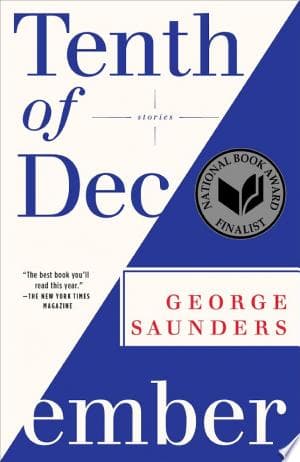
- Tenth of December
George Saunders
4.0 (62k) average on GoodreadsLiterary FictionShares Saunders' distinctive voice, dark humor, and deep humanism through interconnected short stories.
- Austerlitz
W.G. Sebald
4.0 (14k) average on GoodreadsHistorical FictionFeatures a contemplative, fragmented narrative style that delves into memory, history, and loss.
- Wolf Hall
Hilary Mantel
3.9 (166k) average on GoodreadsLiterary FictionWhile both are historical fictions, Wolf Hall adopts a more traditional, albeit highly sophisticated, third-person limited perspective focused on Thomas Cromwell, offering a deep immersion into a single character's mind and historical context. Lincoln in the Bardo, in contrast, uses a polyvocalic, fragmented narrative with dozens of distinct voices, creating a cacophony of perspectives that deliberately eschews a singular viewpoint. Mantel's prose is meticulously researched and elegantly flows, whereas Saunders' style is more experimental, incorporating historical documents directly and blending them with fictionalized ghostly testimonies.
- Gilead (Oprah's Book Club)
Marilynne Robinson
3.9 (126k) average on GoodreadsFictionBoth novels delve into profound themes of life, death, and legacy, and both feature a deeply reflective, internal narrative. However, Gilead is a first-person epistolary novel, a single, contemplative voice (Reverend John Ames) reflecting on his life and faith, creating an intimate and intensely personal experience. Lincoln in the Bardo is a sprawling, multi-voiced narrative, externalizing grief through a chorus of spirits, making it a collective meditation rather than a singular one. While Gilead uses a gentle, philosophical realism, Saunders employs overt magical realism and a highly experimental form to explore similar existential questions.
- The Old Man and the Sea
Ernest Hemingway
3.8 (831k) average on GoodreadsLiterary FictionA Cuban fisherman's long struggle with a giant marlin becomes a story of endurance and dignity, now retold for young adults with illustrations, phonetic guides, and writing prompts in Traditional Chinese.
- One Hundred Years of Solitude
Gabriel García Márquez
4.1 (753k) average on GoodreadsLiterary FictionThrough the multi-generational story of the Buendía family, a mythical town deals with the repeating patterns of time, love, and solitude, as the extraordinary mixes with the ordinary.


Enjoyed the summary?
A summary gives you the shape of the book. The book itself has the detail, the examples and the voice.
Find Lincoln in the Bardo on AmazonAs an Amazon Associate, BookBrief earns from qualifying purchases. How we're funded