BookBrief
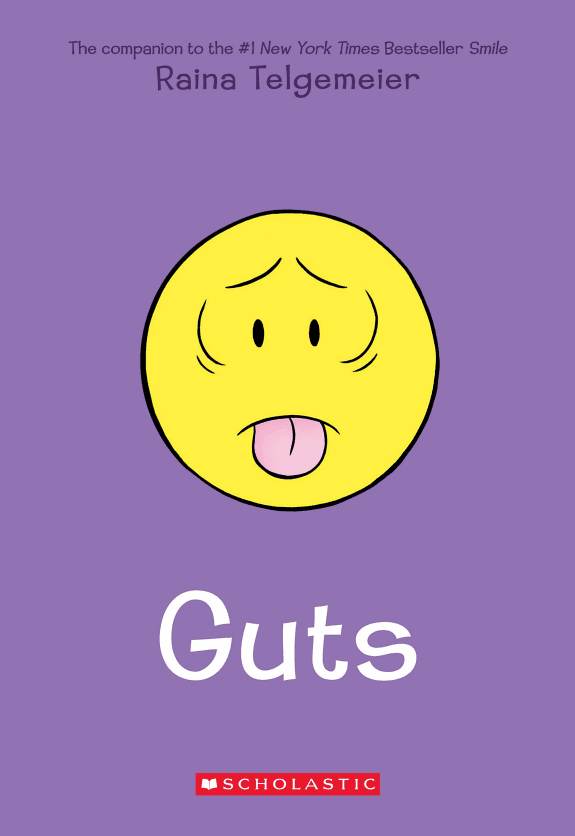
Guts: A Graphic Novel cover

Guts: A Graphic Novel Summary

Raina Telgemeier (2019)

Get the book

Goodreads Rating

4.30/ 5(70,967 reviews)

Genre

General

Summary Read

12 min

Book Length

1.5 hours

By BookBrief EditorialLast updated September 27, 2026

Track Your Reading

Sign in to track this book

My Notes

Only visible to you
A young girl struggles with stomach problems that increase her anxieties about school, friendships, and growing up.

Core Idea

Raina Telgemeier's "Guts" is a poignant and relatable graphic memoir that delves into the author's childhood struggles with anxiety, particularly focusing on her experiences with stomach-related issues and the fear of vomiting (emetophobia). The narrative explores how these anxieties manifested physically and emotionally, impacting her social life, school experiences, and family dynamics. Through honest self-reflection and vivid illustrations, Telgemeier normalizes the experience of anxiety in children, demonstrating the importance of communication, therapy, and self-acceptance in navigating mental health challenges. The book champions the idea that it's okay not to be okay and that seeking help for invisible struggles is a sign of strength. It highlights the often-overlooked connection between physical symptoms and underlying emotional distress, providing a comforting and validating voice for young readers (and adults) who might be experiencing similar feelings of worry, fear, and isolation.
Reading time
1.5 hours
Difficulty
Easy
✓ Read this if...
you are a middle-grade reader who has experienced anxiety, stomach problems, or social worries; you enjoy graphic novels that explore real-life emotional challenges; you want to feel understood and see your struggles validated; or you are a parent looking for a way to discuss anxiety with your child.
✗ Skip this if...
you are looking for a high-fantasy adventure or a complex mystery; you dislike graphic novel formats; or you prefer stories with highly dramatic external conflicts rather than internal emotional journeys.

Chat with this book

Ask anything about Guts: A Graphic Novel and get instant answers grounded in the summary.

Key Takeaways from Guts

1

The Gut-Brain Connection in Childhood Anxiety

Physical symptoms often manifest psychological distress in young people.

Quote

My stomach felt like it was doing flip-flops, just like my brain.

Telgemeier's story shows how anxiety affects children physically. What starts as a stomach bug becomes constant nausea, vomiting, and diarrhea, with no medical cause. This physical discomfort links directly to her growing worries about food, school, and friends. The book argues that children's bodies often show inner distress when they cannot express their feelings. This connection highlights the need to look past obvious symptoms when a child has ongoing physical complaints, especially when doctors find nothing. It is a strong look a...

Supporting evidence

Raina's recurring stomach issues, which doctors initially attribute to a 'bug' but later connect to anxiety through therapy, particularly her fear of vomiting and eating certain foods.

Apply this

Parents and educators should consider mental health evaluations when children exhibit chronic, unexplained physical symptoms. A holistic approach that includes therapy or counseling may be more effective than solely focusing on physical treatments.


somatizationchildhood-anxietygut-brain-axis
2

The Power of Exposure Therapy (and its Limitations)

Gradual confrontation, even if uncomfortable, is key to overcoming phobias.

Quote

Dr. Abrams said the only way to stop being scared of throwing up was to… throw up. Or at least, to stop being scared of *not* throwing up.

The book presents exposure therapy as a main way Raina handles her fear of vomiting and other anxieties. Dr. Abrams guides her through exercises, like eating 'safe' foods, then less safe ones, and holding a bucket. This gradually lessens her fears. This shows how exposure therapy works: facing feared situations in a controlled way to reduce anxiety. However, the story also shows its limits; progress is not steady, and intense fear still happens. This insight normalizes therapy, showing it as small, often uncomfortable steps, not a qui...

Supporting evidence

Raina's sessions with Dr. Abrams, where she is encouraged to eat foods she fears, discuss her fears openly, and even practice holding a bucket for potential vomiting.

Apply this

Individuals facing phobias can benefit from understanding the principles of exposure therapy. Start with small, manageable steps to confront fears, gradually increasing the challenge. Seek professional guidance for structured exposure therapy.

emetophobiacognitive-behavioral-therapyanxiety-management
3

Navigating Shifting Friendships

Childhood friendships are fluid, requiring resilience and self-advocacy.

Quote

It was hard to know who my real friends were anymore. Everyone felt… different.

Raina's social life changes a lot during her anxiety struggles. Friends like Nicole and Emily are sometimes supportive, sometimes distant, and sometimes add to her stress with 'gross-out' jokes or misunderstandings. This shows the often-hard truth of childhood friendships: they change. Children learn to deal with betrayal, misunderstanding, and how social groups naturally evolve. The book suggests that these changes, though hard, help build social strength and teach children to find truly supportive friends. Raina's later connection w...

Supporting evidence

The dynamic between Raina and her friends, particularly Nicole, who initially seems supportive but later makes insensitive comments about Raina's stomach issues, leading to a rift.

Apply this

Encourage children to communicate openly about their feelings with friends and to seek out supportive peers. Parents can help children understand that it's okay for friendships to change and that finding true connections takes time.

social-dynamicspeer-relationshipsresilience
4

The Stigma of Mental Health in Childhood

Misunderstanding and shame often accompany children's mental health struggles.

Quote

I didn't want anyone to know I was seeing a therapist. It felt like admitting I was broken.

One of the book's best insights is the quiet but constant stigma around mental health, even for a child. Raina feels great shame about her anxiety and therapy, fearing judgment from friends and misunderstanding from adults. Her first attempts to hide her struggles, and her relief when she finally tells a few trusted people, show the isolation many children feel when dealing with inner problems. The story challenges this stigma by showing therapy as a normal, helpful process and that sharing vulnerabilities can lead to more connection ...

Supporting evidence

Raina's secrecy about her therapy appointments and her internal monologue expressing fear of being seen as 'weird' or 'sick' for needing help.

Apply this

Parents and educators should foster environments where discussing mental health is normalized. Use open, non-judgmental language when talking about feelings and therapy, helping children understand that seeking help is a sign of strength.

mental-health-stigmavulnerabilitychild-psychology
5

Parental Support as a Double-Edged Sword

Well-meaning parental actions can sometimes inadvertently exacerbate anxiety.

Quote

Mom was trying to help, but sometimes her 'help' just made me feel worse.

Telgemeier shows the difficulties of parental support. Raina's mother is always loving and dedicated, taking her to doctors and therapists. However, her own anxieties and efforts to 'fix' Raina's problems sometimes add to Raina's stress. For example, her mother's repeated questions about how Raina feels or her visible worry can make Raina feel her condition is severe or that she is a burden. This insight is valuable because it acknowledges that even well-meaning parents can struggle to balance support and enabling. It suggests that pa...

Supporting evidence

Raina's mother's frequent checking in on her stomach, her visible concern, and her attempts to control Raina's food intake, which sometimes make Raina feel more scrutinized.

Apply this

Parents should strive for empathetic, non-anxious presence. Focus on validating a child's feelings without amplifying the problem, and seek professional guidance for both the child and themselves if needed to learn effective support strategies.

parenting-stylesanxious-attachmentfamily-dynamics
6

The Importance of a 'Safe Space' and Trusted Adults

Having a confidential outlet is vital for processing difficult emotions.

Quote

Talking to Dr. Abrams felt different. She wasn't my mom, she wasn't my teacher. She just… listened.

Dr. Abrams, the therapist, becomes Raina's 'safe space.' Unlike her parents or friends, Dr. Abrams provides a neutral, non-judgmental place where Raina can freely express her deepest fears and anxieties without fear of disappointing anyone or being misunderstood. This highlights a key part of mental health support: the need for a trusted adult who can offer privacy and objective guidance. The book shows that while family support matters, a professional, outside view can help a child process and heal more deeply. This shows the role of...

Supporting evidence

Raina's growing comfort and openness during her therapy sessions with Dr. Abrams, where she shares fears she couldn't articulate elsewhere.

Apply this

Ensure children have access to trusted adults, whether family members, teachers, counselors, or therapists, with whom they feel safe sharing their thoughts and feelings without judgment.

therapeutic-relationshipemotional-safetyconfidentiality
7

Food as a Source of Both Comfort and Anxiety

Eating becomes a complex emotional landscape during periods of distress.

Quote

Every bite felt like a gamble. Would it stay down? Would it make me sick?

For Raina, food changes from a simple need to a source of anxiety. Her fear of vomiting leads her to eat only 'safe' foods like plain pasta and bread, creating a cycle of nutritional worry and social isolation. This part of the book shows how anxiety can twist basic human experiences. Eating, meant for nourishment and pleasure, becomes filled with fear and control. The book's insight here strongly shows how eating disorders or restrictive eating can come from underlying anxiety, even without a desire for weight loss, and how rebuildin...

Supporting evidence

Raina's detailed descriptions of her limited diet, her fear of eating school lunch, and her eventual progress in trying new foods during therapy.

Apply this

Be mindful of children developing restrictive eating habits or showing extreme anxiety around food. Consult with a pediatrician or therapist if these behaviors emerge, as they may signal underlying anxiety or other issues.

selective-eatingfood-anxietyeating-disorders
8

The Gradual Nature of Healing and Self-Acceptance

Recovery from anxiety is a journey, not a destination, marked by small victories.

Quote

I wasn't 'cured,' but I was getting better. And that was enough for now.

Perhaps the book's most lasting message is that healing from anxiety is a process, not an event. Raina does not magically wake up without anxiety; instead, she sees gradual improvements, small wins like trying a new food or going to a social event without panic. The story avoids a simple happy ending, instead showing that she learns to manage her fears and accept that anxiety might always be part of her, but it does not have to control her. This realistic portrayal is important for young readers, offering hope without setting unrealis...

Supporting evidence

Raina's ongoing struggles even after therapy, but her increased ability to cope, exemplified by her trying pizza again and attending a party without severe panic.

Apply this

Encourage a growth mindset regarding mental health. Celebrate small progress, acknowledge setbacks as part of the journey, and emphasize that self-care and coping mechanisms are lifelong skills.

recovery-journeyself-compassioncoping-mechanisms
9

The Power of Creative Expression for Processing Emotions

Art provides a unique outlet for children to understand and externalize inner turmoil.

Quote

Drawing helped me get it all out, the scary feelings, the confused feelings, everything.

As a graphic novelist, Telgemeier shows the role of creative expression. Throughout the book, Raina sketches in her notebook. While not called therapy, these drawing moments are a vital outlet for her. Art lets her put her overwhelming inner experiences outside herself, giving shape to her anxieties and fears that might be hard to say. This insight suggests that for children, especially, creative activities like drawing, writing, or music can be very helpful tools for emotional processing, offering a non-verbal way to cope and underst...

Supporting evidence

Scenes where Raina is shown drawing in her notebook, sometimes depicting her fears or simply engaging in the act of creation as a form of self-soothing.

Apply this

Encourage children to engage in creative activities like drawing, painting, writing, or playing music. Provide opportunities and materials for self-expression without judgment, recognizing it as a valuable emotional outlet.

art-therapyemotional-expressioncreativity

Guts Quotes

“I can’t believe I’m going to school. I can’t believe I’m going to school. I can’t believe I’m going to school.”

— Raina repeats this mantra to herself as she struggles with her anxiety about returning to school.

“I felt like a fraud. Like I was pretending to be someone I wasn’t.”

— Raina reflects on her feelings of inauthenticity and the pressure to fit in.

“Sometimes you just have to face your fears. Even when they feel impossible.”

— A moment of realization for Raina as she understands the necessity of confronting her anxieties.

“It’s okay to not be okay.”

— A comforting realization that allows Raina to accept her struggles.

“I didn’t want to be the weird kid. I didn’t want to be the sick kid. I just wanted to be normal.”

— Raina expresses her deep desire to blend in and avoid being singled out due to her stomach issues.

“My stomach was a liar. It was always trying to trick me into thinking something was wrong.”

— Raina's frustration with her own body and the unpredictable nature of her physical symptoms.

“I learned that it’s okay to ask for help. It’s okay to lean on people.”

— A significant lesson Raina learns about the importance of seeking support from others.

“The more I worried, the worse I felt. It was a vicious cycle.”

— Raina describes the negative feedback loop between her anxiety and her physical symptoms.

“I started to realize that maybe my stomach problems weren’t just physical. Maybe they were connected to how I was feeling emotionally.”

— A turning point in Raina's understanding of her condition, recognizing the psychosomatic aspect.

“It felt like I was drowning, and no one could see me.”

— Raina’s feeling of isolation and being misunderstood in her struggles.

“I wanted to be brave, but I was terrified.”

— Raina's internal conflict between her desire for courage and her overwhelming fear.

“It’s hard to explain to people what it feels like to have your body betray you.”

— Raina's difficulty in communicating the distress caused by her chronic health issues.

“The stomachaches were like a secret I had to keep, but it was a secret that was hurting me.”

— Raina describes the burden of hiding her illness and the pain it caused.

“I started to see that my anxiety was a part of me, but it didn’t have to define me.”

— Raina's growing acceptance and the realization that her anxiety is not her sole identity.

Quiz

Test Your Knowledge

Ready to see how well you understood this book? Take our interactive quiz with 10 questions.

10
Questions
~5
Minutes
?
Best Score

Guts FAQ

'Guts' is a graphic novel by Raina Telgemeier that tells her true story about dealing with a recurring stomach ache. It explores her anxieties about school, friends, and food, and how she learns to overcome her fears.

About the author

Raina Telgemeier

Raina Telgemeier is an American graphic novelist known for her engaging stories aimed at young readers. Her notable works include "Smile," which explores her childhood experiences, "Drama," a tale of middle school theater, "Sisters," a graphic memoir about family dynamics, and "Ghosts," which delves into themes of culture and loss.

Enjoyed the summary?

Support the author — grab the full book.

As an Amazon Associate, BookBrief earns from qualifying purchases, at no extra cost to you. How we're funded.

Get the book